
Review · PRIVATE PALACE TOURS
PRIVATE VIP tour: El ESCORIAL Monastery & Palace & Library
El Escorial is far more than a monastery. It is a royal palace, burial place, basilica, library, art museum, and working religious complex in one stern Renaissance building. The Golden Library and the Pantheon of the Kings are the tour’s big prizes, while the Basilica gives the visit its grand visual center.
I like the private format and the guide’s art and history background. I also like that the tour includes the less-famous monks’ quarters, refectory, gardens, and trade houses, not just the headline rooms. The main consideration is stamina: 210 minutes inside a large complex is a serious visit, and private luxury transportation costs extra.
Key points to know before booking
- The Golden Library is the intellectual highlight: See Philip II’s Renaissance library, medieval codices, frescoes, and books once forbidden by the Inquisition.
- The royal crypts make Spanish history personal: The Pantheon holds kings and royal family members from the 1500s onward.
- Your group gets the guide to itself: There are no strangers sharing the tour.
- Ignacio is one named guide: Your guide may contact you before the visit to discuss details and transportation.
- The tour covers much more than the palace: Expect the Basilica, art collection, monks’ areas, gardens, Royal Villa, Habsburg Palace, and the Lonja.
- The $220 price includes the essentials: Tickets and a private expert guide are included, but luxury transport is not.
Why El Escorial deserves half a day
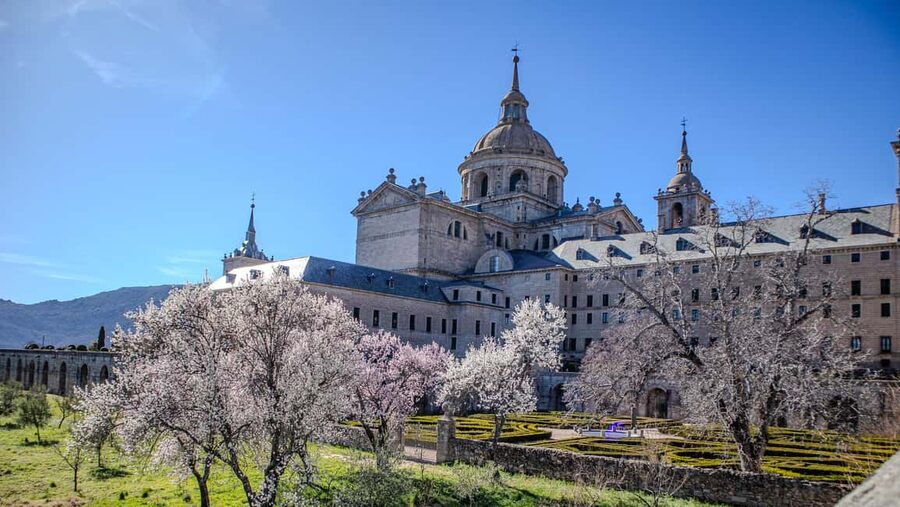
I think El Escorial works best when you give it time. It is not a quick royal-room stop where you admire a few paintings and move on. Philip II’s complex was designed to bring royal power, Catholic faith, scholarship, burial, and monastic life together under one roof.
That mix can feel severe at first. The architecture is imposing rather than playful, and the visit asks you to pay attention to rooms, corridors, tombs, books, and paintings. A private guide helps connect those parts so the building does not become a blur of grand chambers.
The tour lasts three and a half hours. That is enough time to cover the major sections without reducing the visit to a rushed checklist. You should still expect a full outing, especially because the route includes several separate parts of the complex and extensive interior visits.
The experience begins at the side-door entrance near the ticket entrance. Express security is included, which saves some waiting, though you should still arrive ready to meet your guide at the stated starting time.
More Private Palace Tours in Spain
- Alhambra Private/Small Group Tour & Nasrid Palaces Skip the Line
★ 4.5 · 921 reviews - Alhambra with Nazaries Palaces Private Tour
★ 5.0 · 605 reviews - Private Alhambra Highlights Tour Including the Nasrid Palaces
★ 5.0 · 423 reviews
The Basilica of San Lawrence sets the tone
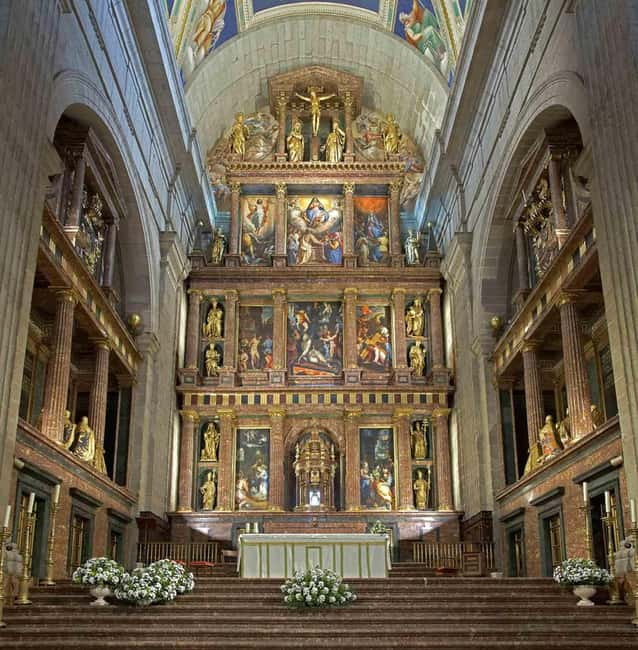
The Basilica is one of the first places that explains El Escorial’s scale. It is described as the jewel of the Spanish Renaissance, and its interior was intended to feel both royal and religious. You get a sense of how Philip II wanted the complex to function as a statement of Catholic Spain as well as a residence and monastery.
The Basilica is especially useful early in the tour because it gives you a visual key for the rest of the visit. Look for the relationship between ceremony, royal authority, and religious devotion. The point is not simply that the building is large. It is that nearly every major space had a public, spiritual, or dynastic purpose.
A guide trained in fine arts can help you read the interior rather than just admire it. The English and Spanish tours are live and private, so you can ask questions without worrying about holding up a large group.
The Pantheon and Crypts of the Kings
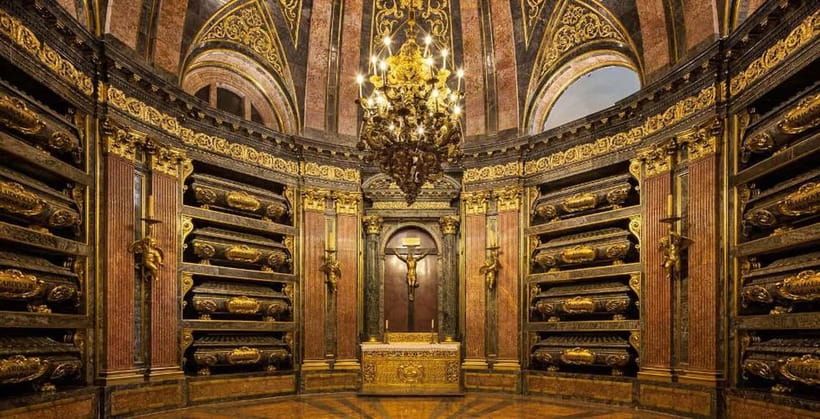
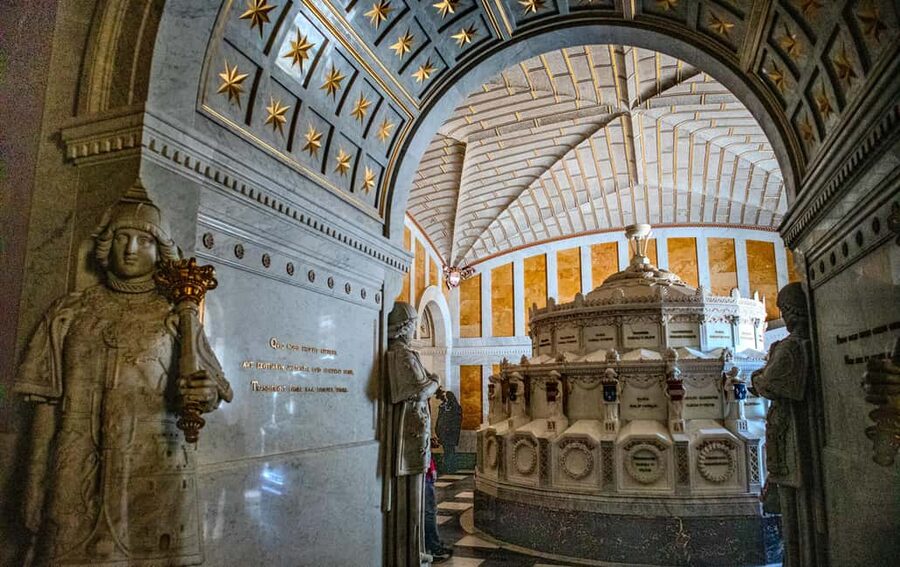
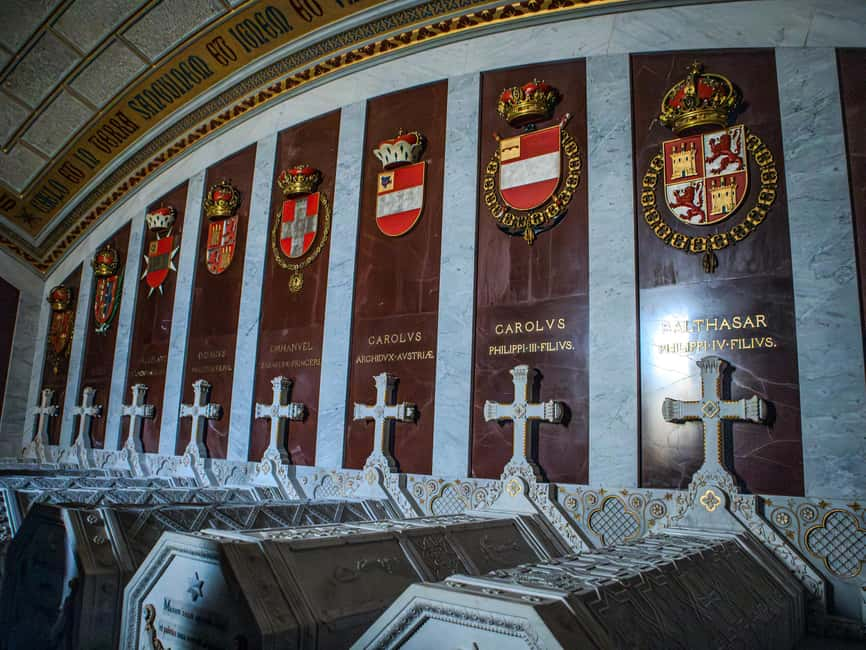
The royal burial areas are among the most memorable parts of the visit. The Pantheon of the Kings and the crypts hold Spanish royals from the 1500s onward, bringing several centuries of monarchy into a single underground setting.
This section is not light sightseeing. The crypts are formal, solemn, and closely tied to the political purpose of El Escorial. Philip II was not only creating a residence and monastery. He was creating a lasting home for the royal dynasty and a place where royal memory could be managed.
I like this stop because it turns names from Spanish history into something physical. Instead of hearing about the Habsburgs and later royal generations only in a textbook, you see where members of the dynasty were laid to rest.
Your guide can also help you understand the connection between the burial areas and the rest of the complex. The Basilica, palace, monastery, and crypts are not separate attractions placed side by side. They form one carefully planned royal institution.
The Golden Library and Philip II’s books
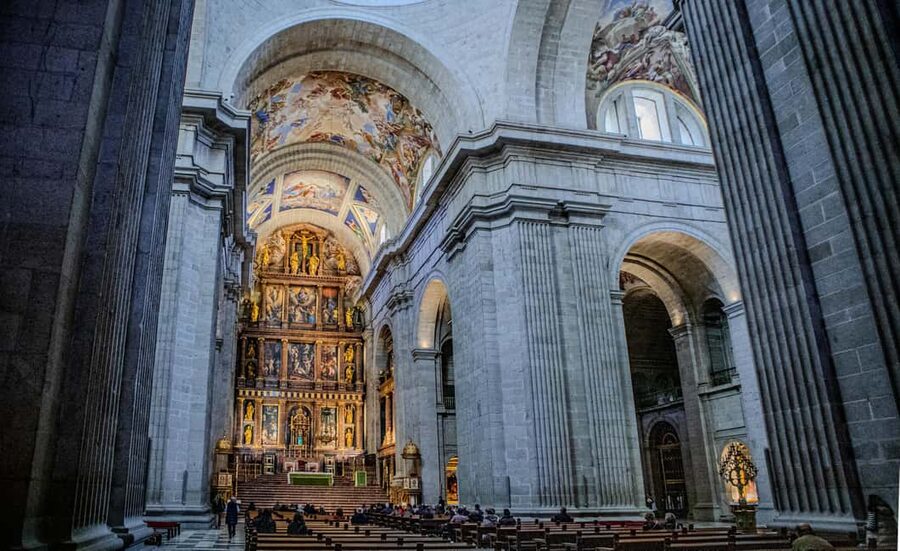
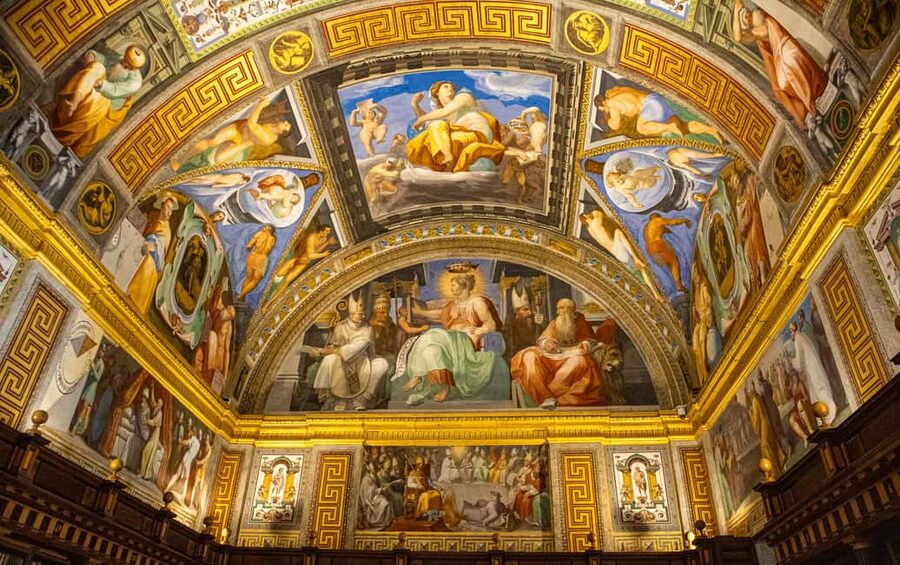
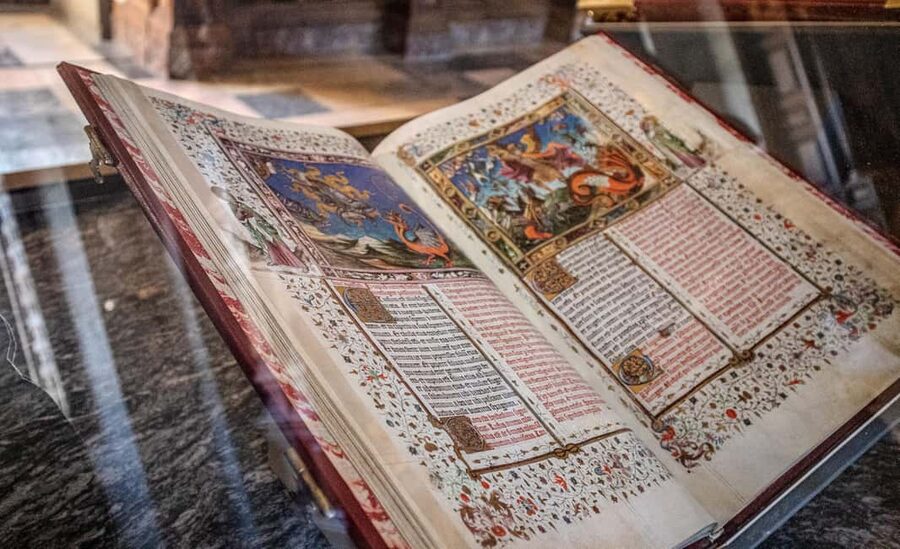
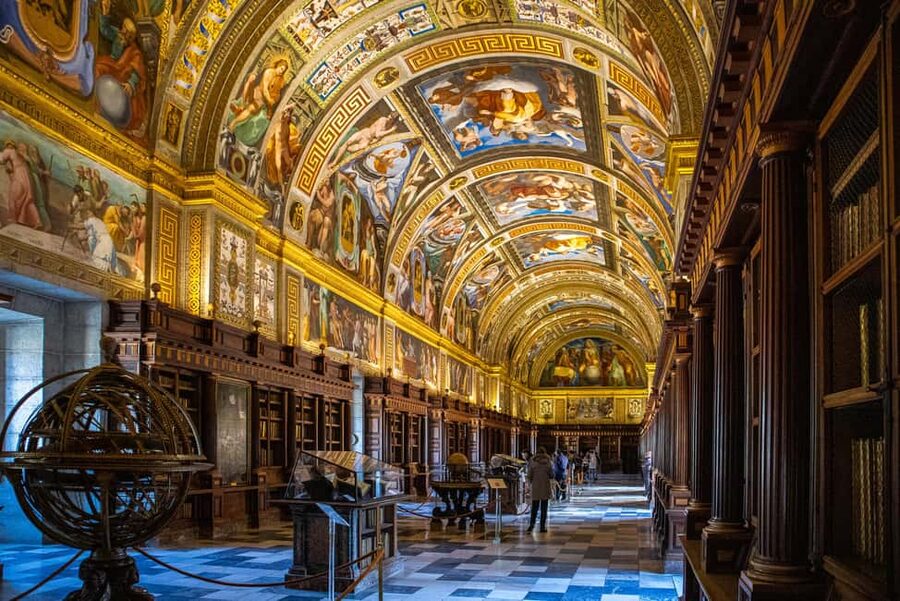
For many people, the Golden Library will be the tour’s most distinctive room. It was Philip II’s Renaissance library, and the collection reaches from medieval codices to books that were forbidden by the Inquisition.
The library is valuable for more than its contents. Its frescoes, decoration, and objects on display make the room itself part of the collection. You are seeing a place where books were treated as instruments of power, faith, science, and learning.
The mention of forbidden books adds a sharp edge to the visit. Spain’s religious authorities controlled what could be read, yet El Escorial also held books that reveal the range of Renaissance thought. That tension makes the library worth lingering over.
I would pay close attention to the way the books are arranged and to the ceiling paintings. The name Golden Library is not just a marketing flourish. Gold-toned decoration and painted surfaces give the room a ceremonial character, quite different from a modern reading room.
If you are interested in manuscripts, libraries, art, or the history of ideas, this part alone may justify choosing a private tour. A guide can point out the items and details that are easy to miss when you walk through on your own.
Same city, another grand address:
- Granada: Alhambra & Nasrid Palaces Tour with Tickets
★ 4.7 · 19,801 reviews - Granada: Alhambra and Nasrid Palaces Entry Ticket
★ 4.6 · 15,130 reviews - Madrid: Royal Palace Fast-Access Admission Ticket
★ 4.6 · 13,856 reviews - Madrid: Royal Palace Expert Guided Tour with Skip-the-Line
★ 4.7 · 8,407 reviews
Paintings by Velazquez, Tintoretto, and Titian
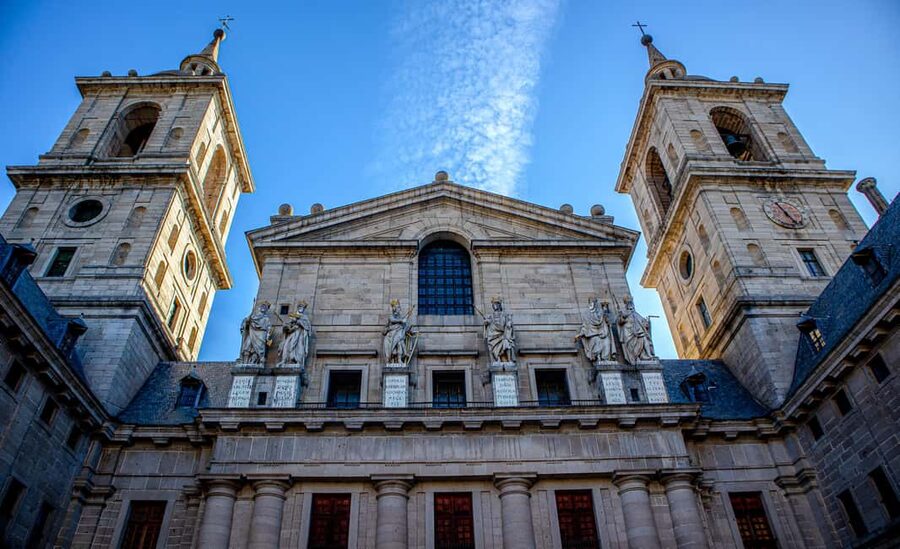
El Escorial also functions as an art collection. The tour includes paintings by Velazquez, Tintoretto, and Titian, with works placed in the monastery and related rooms.
These names matter because they show the artistic reach of the Spanish court and the European connections behind the complex. Velazquez is especially important to many visitors, but the presence of Tintoretto and Titian broadens the picture beyond Spanish painting alone.
You may find the paintings more rewarding after seeing the Basilica and royal spaces. The art is not presented as an unrelated museum collection. It belongs to the religious, political, and courtly world that shaped El Escorial.
The monks’ quarters and refectory are also part of the route. The refectory is decorated with notable paintings, including work associated with the artists above. These rooms provide useful contrast with the royal areas. You get a better idea of how the monastic community lived and ate, rather than seeing only the spaces created for kings.
This is one reason I would choose the private option over a bare entry ticket. A fine arts guide can explain why a painting matters and how it fits its room. Without that context, you may remember famous names but miss the purpose of the collection.
Habsburg Palace and the Royal Villa
The Habsburg Palace and Royal Villa show the residential side of El Escorial. After the crypts and religious rooms, these spaces help you picture the complex as a place where a ruling family lived, worked, received people, and maintained court life.
The title Royal Villa may sound like a separate estate, but it is included within the broader visit to the El Escorial complex. Your guide will lead you through the included areas and explain how the palace side relates to the monastery.
Do not expect a soft, leisure-focused palace in the style of some European royal residences. El Escorial is known for discipline and order. Even the royal spaces are connected to the severe character of Philip II’s project.
That is part of the appeal. You see a royal residence that was also tied closely to prayer, administration, books, burial, and monastic routine. The Habsburg connection gives the visit a strong political dimension, particularly if you are interested in how Spain’s monarchy presented itself.
Monks’ quarters, refectory, and daily life
The monks’ areas make the visit more grounded. Royal tombs and monumental rooms can make El Escorial feel like an abstract symbol of power. The quarters and refectory remind you that people had to live, eat, pray, study, and work here every day.
The refectory is especially worthwhile because it carries both practical and artistic value. It was a dining space, but its paintings also show how religious decoration shaped ordinary routines within the monastery.
You may notice that the tour keeps moving between grandeur and function. One moment you are looking at royal burial spaces or an imposing Basilica. The next, you are considering a dining room or monastic garden. That range is what makes the complex feel complete.
Since the tour is private, you can ask your guide to spend more time on the sections that interest you most, within the fixed three-and-a-half-hour schedule. If art is your priority, ask for more attention to the paintings. If royal history matters more, focus your questions on the Habsburg palace and crypts.
Baroque Gardens and the views beyond the walls
The gardens provide a change of pace after the interior rooms. The Monks’ Gardens, also called the Frailes gardens, were designed in a Renaissance style under Philip II. Their careful layout reflects the same sense of order found inside the complex.
The gardens are not merely a decorative extra. They help you understand how the monastery was planned as a complete environment. The religious community needed quiet outdoor areas, and the royal project used gardens to frame the building and its surroundings.
The tour also includes the Trade Houses, or Lonja, associated with the Austrians’ monastery and palace. From there, you can enjoy views toward Guadarrama National Park and Mount Abantos.
These outdoor sections are useful for perspective. Inside, the complex can feel enclosed and overwhelming. Outside, the views give you a clearer sense of its setting in the Community of Madrid.
I would not book this tour only for the gardens, since the main value is the complete complex. Still, you will appreciate the open air and the chance to absorb the setting after several hours indoors. If the weather is poor, the outdoor portion may be less enjoyable, but the major interior rooms remain the heart of the visit.
What the private format changes
A private group means you do not share the guide with strangers. That matters at El Escorial because the complex includes many sections with different purposes. You can ask why one room matters, pause over a painting, or request more explanation of the royal crypts without depending on a group’s general interests.
The guide is a historian and fine arts expert, and the tour is available in English or Spanish. Ignacio is the named guide associated with this experience, so you may be guided by him, though the supplied details do not guarantee a particular guide for every booking.
The guide also offers practical advice after the visit about restaurants, tapas bars, and services in San Lorenzo del Escorial. That is useful because the tour ends in a town worth planning around, and you may want a meal or a drink after several hours in the complex.
Transportation is the main extra to consider. Private luxury transport is optional and not included in the $220 price. The guide will contact you in advance about transportation options, so you should clarify the meeting arrangement before setting out from Madrid.
Is $220 per person good value?
At $220 per person, this is not a budget entry ticket. You are paying for admission, a private group, express security, and three and a half hours with a historian and fine arts guide.
I think the value improves as your group gets larger, since one private guide serves your party rather than a public group of strangers. It also makes more sense if El Escorial is a major reason for your day in the Madrid area and you want the whole complex explained in depth.
The price is harder to justify if you mainly want a quick look at the Basilica and palace. In that case, a less elaborate visit may suit you better. You should also add the cost of transportation if you want private luxury travel.
The included access is substantial: the Pantheon, royal crypts, Golden Library, Basilica, Habsburg Palace, Royal Villa, Baroque Gardens, monks’ areas, refectory, art collection, and Trade Houses. For someone who values expert explanation and privacy, that is a strong package.
Who should book this El Escorial tour?
I would recommend it to you if you have a serious interest in Spanish monarchy, Renaissance art, Catholic history, royal libraries, or architecture. It is also a good choice for families or small groups who want to move at their own pace and ask plenty of questions.
The tour suits English and Spanish speakers, and the experience is wheelchair accessible. You should be comfortable with an extensive visit, though, since the schedule covers a large complex rather than one compact building.
It may not be right for you if you want a casual stop, dislike long indoor sightseeing, or are trying to keep costs very low. The private format has real advantages, but you are paying for depth and personal attention.
Final verdict
Book this tour if you want El Escorial explained as a complete royal, religious, artistic, and scholarly world. The Golden Library, royal crypts, Basilica, and Velazquez connection give it plenty of headline appeal, while the monks’ areas and gardens add useful depth.
I especially like the private guide format and the chance to see the complex without strangers in your group. At $220 per person, it is best for visitors who will make full use of the expert commentary and extensive itinerary. If that sounds like your style, this is a strong way to see one of the most important historic sites in the Madrid region.
FAQ
How long does the private El Escorial tour last?
The tour lasts 210 minutes, or three and a half hours.
What is included in the price?
The price includes tickets to El Escorial Monastery and Palace, a private guided tour, express security, and visits to the Pantheon and Crypts of the Kings, Golden Library, Baroque Gardens, Basilica, Habsburg Palace, and Royal Villa.
Is this a private group tour?
Yes. The tour is exclusive to your group and does not include strangers.
Which languages are available?
The live guide is available in English or Spanish.
Is private transportation included?
No. Private luxury transportation is optional and costs extra. The guide will contact you in advance about transportation options.
Where do I meet the guide?
The meeting point is the side-door entrance to the Monastery, in front of the ticket entrance.
Is the tour wheelchair accessible?
Yes, the activity is wheelchair accessible.
Can I cancel the tour for a refund?
Yes. You can cancel up to 24 hours in advance for a full refund. You can also reserve now and pay later.
Newly added in Spain
- Alhambra Guided Tour with Generalife Gardens★ 3.5 · 216 reviews
- Alhambra Ticket and Guided Tour with Nasrid Palaces★ 4.5 · 81 reviews
- Tickets : Alhambra and Nasrid Palaces Granada Last-Minute★ 3.5 · 149 reviews
- Walking tour in Alhambra, Nasrid Palaces and Generalife★ 3.0 · 135 reviews
- Grenada: Flamenco Palace, the best show in the center★ 5.0 · 96 reviews
- Alhambra Private Tour: Nasrid Palaces and Generalife★ 5.0 · 81 reviews
- Alhambra Tour and Nazaries Palaces with Hammam Massage Experience★ 4.0 · 106 reviews
- Exclusive Private Alhambra Tour with a Historian★ 5.0 · 53 reviews
Private Palace Tours, compared.
Alhambra Private/Small Group Tour & Nasrid Palaces Skip the Line
Read our review →
Mutianyu Great Wall&Summer Palace Excursion:Group/Private Options
Read our review →
Private Tour of Sintra, Cabo da Roca and Cascais with 2 Palaces
Read our review →
Private 4hrs Venice Tour: Doge’s Palace, Grand Canal & St Mark’s
Read our review →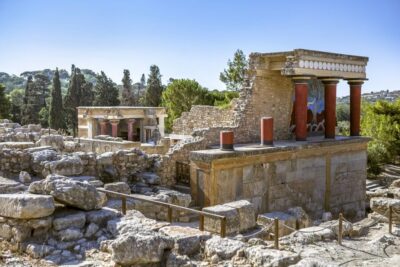
Knossos Palace Skip-the-Line Ticket & Private Guided Tour
Read our review →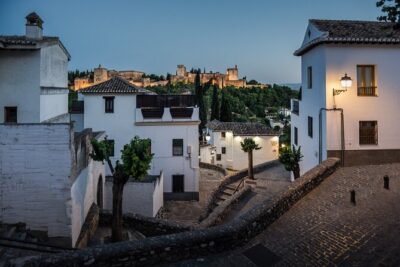
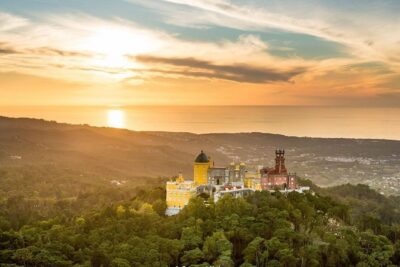
Private Tour Sintra from Lisbon Palaces of Pena and Regaleira
Read our review →
Browse the lists this tour appears in