
Review · MUSEUMS
Taipei: National Palace & Shung Ye Aborigines Museums Ticket
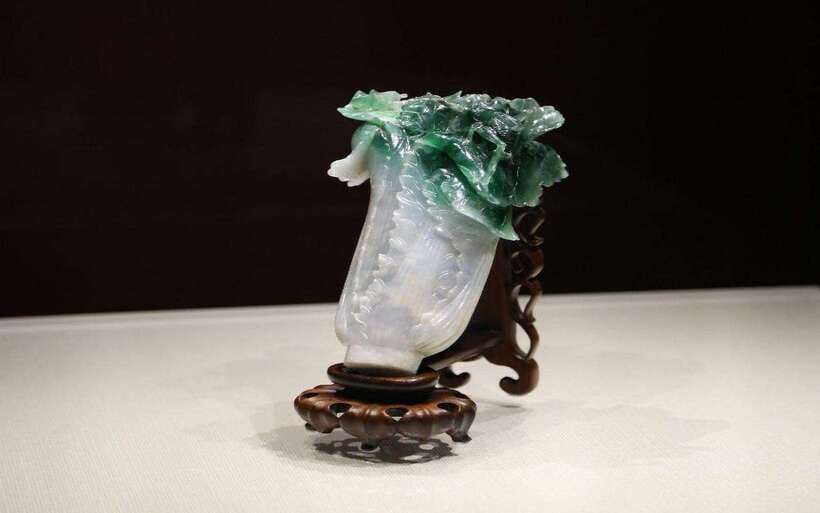
Taipei’s two-museum ticket brings together two very different sides of Taiwan. At the National Palace Museum, you’ll see Chinese art and artifacts spanning more than 5,000 years, including the famous Jadeite Cabbage and Meat-Shaped Stone. At the Shung Ye Museum, you’ll learn about the island’s 14 recognized Indigenous tribes through clothing, tools, art, and ceremonial objects.
I like the easy format: one ticket, a full day of access, and no fixed tour group pushing you from room to room. I also like the contrast between the grand imperial collection and the smaller, more personal Indigenous museum. The main drawback is scale. The National Palace Museum can feel overwhelming, while Shung Ye is compact enough to see in about 30 minutes.
Key points to know before you go
- Two very different museums in one outing: Compare China’s imperial art traditions with Taiwan’s Indigenous cultures and crafts.
- The Jadeite Cabbage is a must-see: This small but famous carving is among the National Palace Museum’s best-known objects.
- Expect thousands of years of art: Bronze ritual vessels, calligraphy, and other works cover more than 5,000 years of Chinese history.
- Shung Ye is a short visit: Its displays are important and focused, but the museum is much smaller than the National Palace Museum.
- The ticket is self-guided: Admission is included, but there is no guide, food, transport, or hotel pickup.
- Plan around access needs: Wheelchair access is limited, and the experience is not considered suitable for wheelchair users.
Why these two Taipei museums work well together
This ticket is useful because the museums tell different stories. The National Palace Museum looks mainly toward China’s long imperial and artistic traditions. Shung Ye turns your attention to the Indigenous peoples of Taiwan, whose cultures and languages developed on the island over many generations.
You can spend hours at the first museum, then use the second to shift your focus. That change matters. If you only visit the National Palace Museum, you may leave with a strong sense of Chinese court art but a less complete picture of Taiwan itself. Shung Ye adds an important local perspective.
I would treat this as a full cultural day rather than a quick sightseeing stop. The ticket is valid for one day, but the museums are not equal in size. Most of your time will likely go to the National Palace Museum, with Shung Ye serving as a shorter but worthwhile companion visit.
There is no tour guide included. You set your own pace, choose which galleries deserve close attention, and decide how long to spend with the famous objects. That freedom is useful here because the National Palace Museum’s collection is too large to absorb in one pass.
More Palace Museums in the world:
- Venice’s Best: Basilica, Doge’s Palace, Gondola & History Gallery
★ 4.5 · 2,478 reviews - Royal Palace & Prado Museum Skip the Line Guided Tour
★ 4.5 · 1,347 reviews - Venice: City Pass with Museums including Doge’s Palace
★ 4.1 · 1,020 reviews
Starting at the National Palace Museum
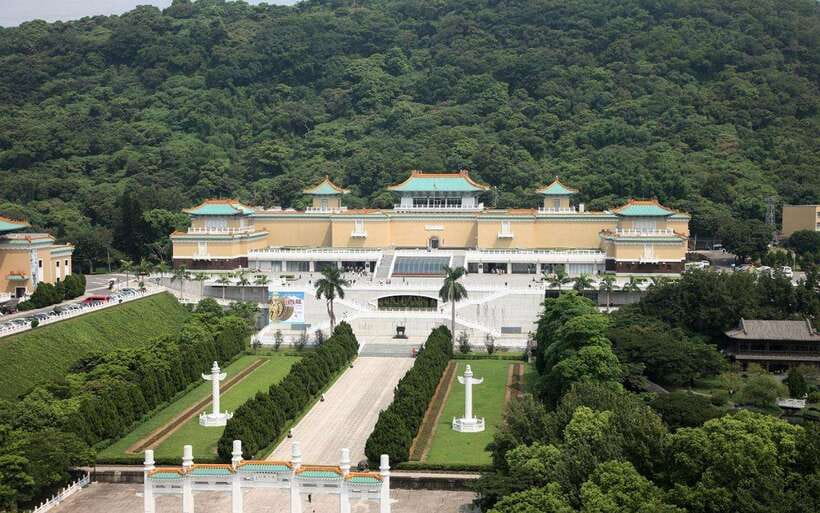
The National Palace Museum is the main event. Its collection includes ancient Chinese artifacts and artwork from more than 5,000 years of history. That range is the reason to come, but it is also what can make the visit tiring.
You’ll encounter objects connected with different Chinese dynasties and periods, including bronze ritual vessels and calligraphy scrolls. These are not simply decorative pieces. They show how writing, ceremony, craftsmanship, and court life changed over time.
I recommend beginning with the museum’s major highlights, then returning to galleries that match your interests. Trying to inspect every case can turn the visit into a test of stamina. The collection is large enough that a selective approach will usually give you more pleasure.
The museum’s layout is considered manageable despite the size of the collection. That is good news if you are worried about getting lost or spending the day wandering without a plan. You can focus on a few major rooms, pause when needed, and still come away with a strong sense of the museum.
A multilingual audio guide is worth considering. It can help you understand why a particular bronze vessel, carving, or scroll matters instead of treating each object as another beautiful item behind glass. Since this is not a guided tour, an audio guide can provide useful structure.
The Jadeite Cabbage and Meat-Shaped Stone
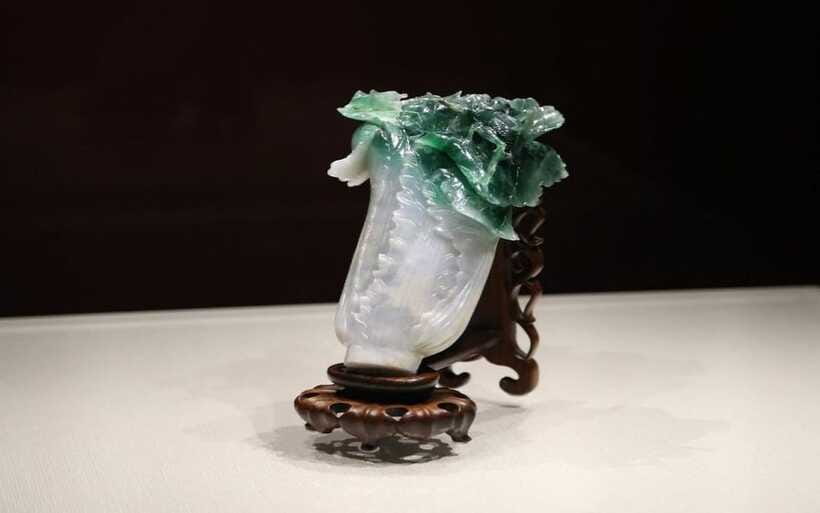
The Jadeite Cabbage is one of the museum’s signature objects. It is a small jade carving shaped like a cabbage, with careful color and texture used to create the appearance of leaves. The piece draws attention because it turns a familiar household vegetable into a finely worked object.
You may find the display area more crowded than the rooms around it, simply because the cabbage is so well known. Give yourself time to look closely rather than treating it as a quick photograph stop. Its appeal is in the detail and in the contrast between an ordinary subject and precious material.
The Meat-Shaped Stone is another famous object. As its name suggests, the carving resembles a piece of cooked pork, complete with layers that imitate skin and fat. It is a playful example of technical skill, and it helps break up the more formal feel of court objects and calligraphy.
These two pieces are popular for a reason, but they should not become your entire visit. The museum’s bronze vessels, scrolls, and other works provide the wider context. The famous objects are good starting points, not substitutes for the collection around them.
Looking beyond the famous objects
The best use of your time is to balance headline pieces with objects that explain how Chinese culture worked. Bronze ritual vessels can show the connection between art, ceremony, and power. Calligraphy scrolls reveal how writing itself became a major artistic form.
You do not need to know every dynasty or historical date before arriving. Read the labels that catch your interest, and use the audio guide if you want more help. Even a short explanation can make the difference between seeing an old object and understanding its place in a wider tradition.
The museum covers so much material that your attention may fade after several hours. I would build in pauses and avoid planning another major attraction immediately afterward. A slower visit is more rewarding than racing through every room.
This is also a good place for visitors with different interests to compromise. One person can focus on calligraphy and ceramics, while another looks for carving, bronze work, or court objects. The variety means you do not have to enjoy every gallery to find plenty worth seeing.
More Palaces to Tour in the world:
- Venice: Doge’s Palace Reserved Entry Ticket
★ 4.6 · 42,716 reviews - Paris: Versailles Palace and Gardens Full Access Ticket
★ 4.6 · 41,579 reviews - Granada: Alhambra & Nasrid Palaces Tour with Tickets
★ 4.7 · 19,801 reviews - Sintra: Pena Palace and Park Entrance Ticket
★ 4.2 · 17,410 reviews
Moving to the Shung Ye Museum of Formosan Aborigines
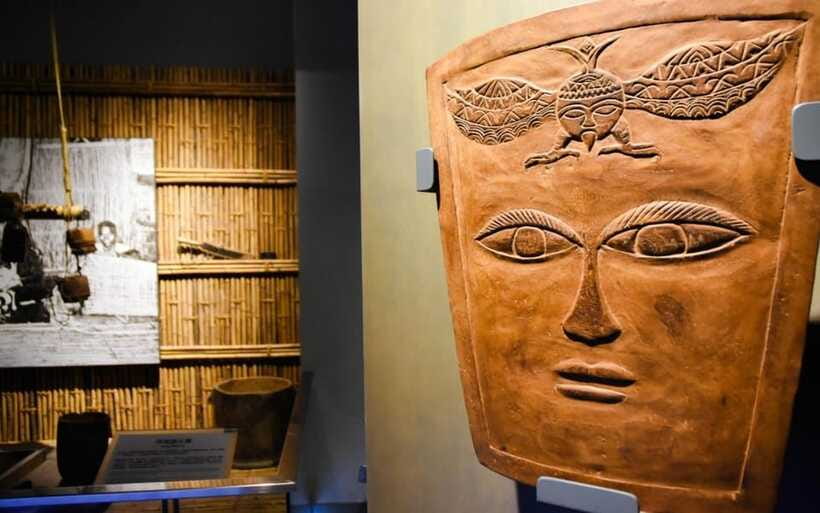
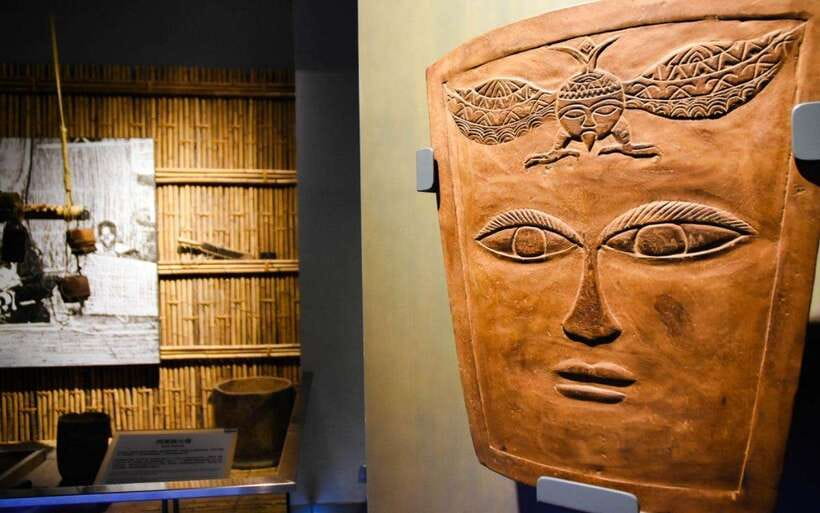
The Shung Ye Museum offers a very different experience. Instead of concentrating on imperial Chinese art, it introduces the history and culture of Taiwan’s 14 recognized Indigenous tribes.
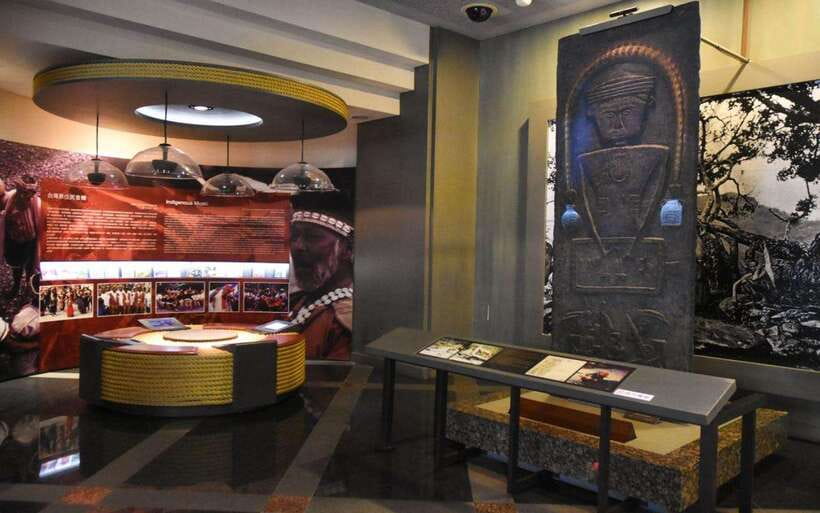
Its displays include traditional clothing, hunting tools, ceremonial objects, tribal arts, and handicrafts. These objects give you a practical view of daily life and cultural practice. Clothing shows design and identity, while tools reveal how people worked and obtained food. Ceremonial objects point to beliefs and community traditions.
Multimedia displays add sound and moving images to the exhibits. That helps bring Indigenous traditions and lifestyles into clearer focus than static cases alone can do. The museum is still modest in size, but its subject is important.
You can expect to spend much less time here than at the National Palace Museum. Around 30 minutes may be enough for a quick visit, though you can stay longer if you read every display and take time with the multimedia material.
Do not judge the museum only by its size. It does not attempt to match the National Palace Museum object for object. Its value comes from giving Indigenous cultures a clear place in your Taipei itinerary, especially when a larger museum might otherwise dominate your understanding of Taiwan.
A useful contrast in Taiwan’s cultural story
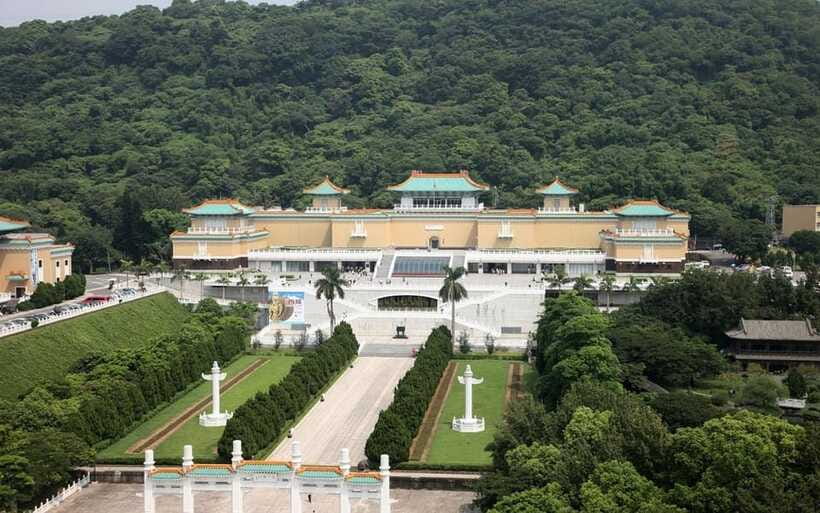
The two museums also raise different questions about identity and power. The National Palace Museum presents objects tied to long Chinese artistic and imperial traditions. Shung Ye focuses on peoples whose cultures faced severe pressure through colonialism and occupation.
That contrast makes the ticket more useful than two unrelated admissions. You are not simply visiting a large museum and then a small one. You are seeing two parts of Taiwan’s cultural story, one connected to imperial collections and the other centered on the island’s Indigenous peoples.
The Shung Ye exhibits can help you notice the limits of a China-focused view of Taiwan. Traditional clothing, tools, art, and ceremonial items show that Taiwan has its own Indigenous cultures, with distinct traditions and languages. The visit is brief, but it can change how you read the rest of your time on the island.
I would give Shung Ye your full attention even if you have only 30 minutes. Read the introductory material, watch the multimedia displays, and look for differences among the tribal collections. A quick walk through will miss much of the point.
What the $12 price really gives you
At $12 per person, this is a strong-value ticket if you plan to visit both museums. Admission to two major cultural attractions for one day costs less than many guided activities, and you do not pay for a guide you may not need.
The value depends on your interests and available time. If you only want to see the Jadeite Cabbage, the National Palace Museum alone may be enough for your schedule. If you want a broader view of Taiwan, adding Shung Ye makes the price more worthwhile.
This is not an all-inclusive tour. Food and drinks are not included, and you must arrange your own transportation. Hotel pickup and drop-off are also not part of the ticket. Think of it as a convenient admission bundle, not a guided day trip.
The one-day validity gives you room to plan, but do not assume you can rush through both in an hour or two. The National Palace Museum deserves unhurried attention, while Shung Ye works well as a shorter second stop.
Practical details that affect your visit
The ticket includes admission to the National Palace Museum and Shung Ye Museum of Formosan Aborigines. It also includes access to permanent and special exhibits. The activity has skip-the-ticket-line access, which can save time at entry.
A verified booking review describes entry as simple, using a QR code at the entrance. Keep the code ready on your phone so you are not searching for it when you reach the museum.
Flash photography is not allowed inside either museum. Food and drinks are also not allowed in exhibit areas. Plan to eat before or after the galleries rather than carrying a snack through the displays.
Wheelchair access is limited, and the activity is listed as unsuitable for wheelchair users. If you have mobility needs, confirm the current access conditions before booking rather than assuming that every gallery will be easy to reach.
The ticket offers free cancellation up to 24 hours before the scheduled visit, and you can reserve now and pay later. Those policies are useful if your Taipei plans are still changing, but check the current availability and starting information when you book.
Who will enjoy this museum combination
I would recommend this ticket to anyone who wants a self-guided cultural day in Taipei. It suits visitors who like art, history, craftsmanship, and a closer look at how different parts of Taiwan’s identity fit together.
It is especially good for:
- First-time visitors who want one major museum plus a focused Indigenous culture museum
- People who enjoy choosing their own pace rather than following a guide
- Art lovers interested in jade, bronze, carving, and calligraphy
- Visitors who want to understand more than Taiwan’s modern city life
- Families or mixed-interest groups who need a wide range of subjects
It may be less suitable if you dislike museums, have very limited time, or need a fully guided experience. The National Palace Museum can feel like too much without a plan, and the Shung Ye Museum may seem too small if you expect a second large attraction.
Should you book this Taipei museum ticket?
Book it if you want a flexible, low-cost way to see both imperial Chinese art and Taiwan’s Indigenous cultures. The National Palace Museum provides the scale and famous treasures, while Shung Ye gives the day balance and a more direct connection to Taiwan’s own peoples.
I would not book it expecting a guided tour or a packed itinerary. You receive admission, not transportation, meals, or personal interpretation. Bring patience, consider an audio guide at the National Palace Museum, and decide in advance which galleries matter most to you.
For $12, the combination offers excellent cultural value. The strongest reason to go is not simply the Jadeite Cabbage or the enormous collection. It is the chance to place those objects beside the clothing, tools, art, and ceremonial traditions of Taiwan’s 14 recognized Indigenous tribes.
FAQ
How long is the ticket valid?
The ticket is valid for one day.
What museums are included?
Admission is included to the National Palace Museum and the Shung Ye Museum of Formosan Aborigines.
Are special exhibits included?
Access to permanent and special exhibits is included.
Is a guided tour included?
No. Guided tours are not included, so you visit the museums independently.
Is food included?
No. Food and drinks are not included, and food and drinks are not allowed inside the exhibit areas.
Is transportation included?
No. Hotel pickup, drop-off, and transportation between attractions are not included.
Can I take photographs inside the museums?
Photography is permitted only under the museums’ rules, but flash photography is not allowed inside.
Is the experience wheelchair accessible?
Wheelchair accessibility is limited, and the activity is listed as unsuitable for wheelchair users.
Can I cancel the booking?
You can cancel up to 24 hours in advance for a full refund. Reserve now and pay later is also available.
Newly added in the world
- Óbidos historic village and Mafra Palace Private Tour★ 5.0 · 34 reviews
- Private Tour Sintra Palaces and Scenic Landscapes★ 5.0 · 3 reviews
- Lisbon: Pena Palace, Cabo da Roca, Cascais private tour★ 5.0 · 44 reviews
- Óbidos – Nazaré – Mafra (National Palace of Mafra)Private tour from Lisbon★ 5.0 · 2 reviews
- National Palace and Gardens of Queluz: E-ticket with Audio Guide★ 3.5 · 6 reviews
- Half day Sintra PRIVATE TOUR Pena Palace + Roca Cape (2-6people)★ 5.0 · 3 reviews
- From Lisbon Sintra Highlights Tour – Pena, Regaleira & Monserrate★ 5.0 · 79 reviews
- Mafra and Sintra: Choose 3 of 6 Palaces to visit on private tour★ 5.0 · 26 reviews
Museums, compared.
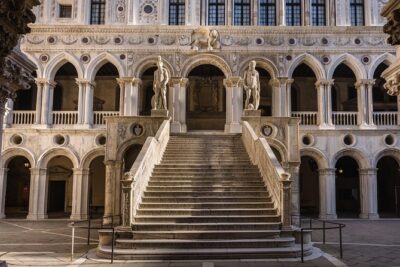
Venice’s Best: Basilica, Doge’s Palace, Gondola & History Gallery
Read our review →
Royal Palace & Prado Museum Skip the Line Guided Tour
Read our review →
City Pass with Museums including Doge’s Palace
Read our review →
Crete: Knossos Palace and Museum E-Tickets with Audio Guides
Read our review →
Venice Museum Pass & Doge’s Palace Entrance Ticket
Read our review →
Palace, Museum, Madrasa & Medina Highlights Tour
Read our review →
Browse the lists this tour appears in