
Review · PRIVATE PALACE TOURS
Private Trip to Beiteddine Palace, Deir elQamar and Mousa Castle
Beiteddine Palace is the star of this private day trip, but the real pleasure is the way the route links three very different sides of Lebanon: an Ottoman-era palace, a handmade castle built from one man’s lifelong dream, and a town shaped by several faiths. I like the private vehicle and hotel pickup, which spare you the trouble of arranging transport into the Chouf. I also like the chance to explore with a guide such as Albert or Ziad, whose work on this route has included clear explanations of Lebanese history and culture. The main drawback is that palace and castle admission costs extra, and the eight-hour day includes enough driving that the sightseeing stops are not long.
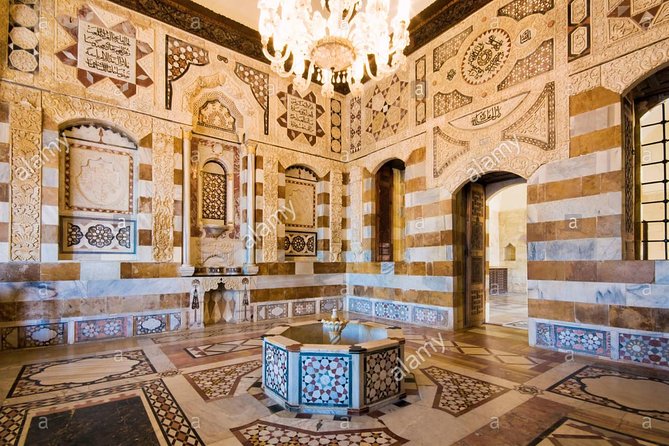
- Beiteddine Palace: See mosaics, courtyards, and a palace built by Emir Bashir Chehab II between 1788 and 1818.
- Moussa Castle: Visit a highly unusual hilltop structure built by Moussa Al Maamari from a teenage dream.
- Deir el Qamar: Walk through Lebanon’s former capital of the Emirate of Mount Lebanon, a town with Christian churches and a historic mosque.
- Small private group: Your party travels together in an air-conditioned vehicle with hotel pickup and drop-off.
- Eight-hour Chouf outing: The long day allows time outside Beirut, though driving makes up a meaningful part of the schedule.
- Flexible cancellation: You can receive a full refund if you cancel at least 24 hours before the 9:00 am start.
Why the Chouf Makes a Good Day Out from Beirut
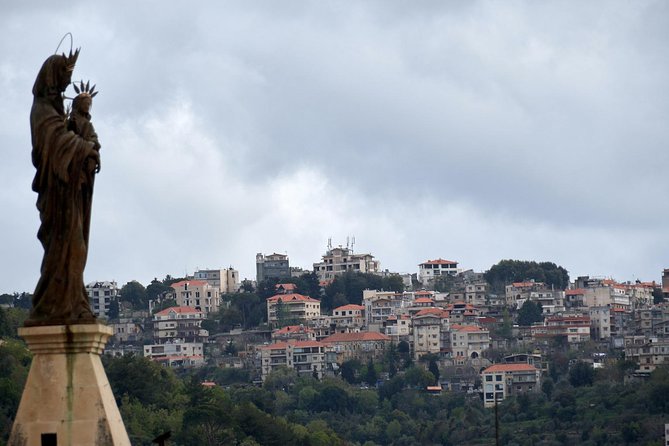
Beirut gives you city life, but the Chouf offers a very different view of Lebanon. The road rises into the mountains, and the stops focus on buildings and communities that reveal how power, religion, and local ambition shaped the country.
I like this trip because it does not rely on one attraction alone. Beiteddine gives you formal palace architecture. Moussa Castle adds a curious, personal story. Deir el Qamar brings you into an old town where a mosque, churches, and a history of different religious communities occupy the same compact setting.
The private format matters here. You are not tied to the pace of a large coach group, and your professional guide can explain the places as you go. The available information names Albert and Ziad as guides who have led this experience. Albert has been particularly useful at Beiteddine, where a guide can help you make sense of the palace’s rulers, later government use, and damaged sections.
The price is $75 per person. That is a fair figure if you value door-to-door transport, a private vehicle, and a full day with a guide. It is less of a bargain if you mainly want a quick look at one palace, since entrance fees are not included and lunch is also your responsibility.
Entering Beiteddine Palace and Its Mosaic Rooms
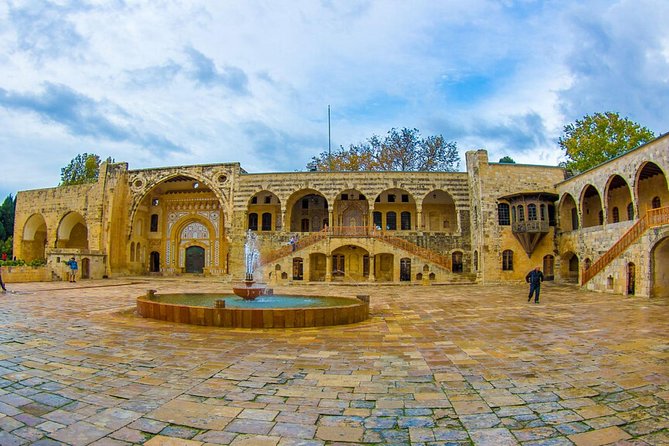
Your first major stop is Beiteddine Palace, usually reached after the drive from Beirut. Allow about 1 hour and 30 minutes here. The palace admission fee is separate, so check the current entrance cost when you book or before departure.
Emir Bashir Chehab II built the palace between 1788 and 1818. He later ruled the Emirate of Mount Lebanon, and the building reflects that political role. This was not simply a country house. It was a place where authority was displayed through courtyards, decorative rooms, stonework, and elaborate interior details.
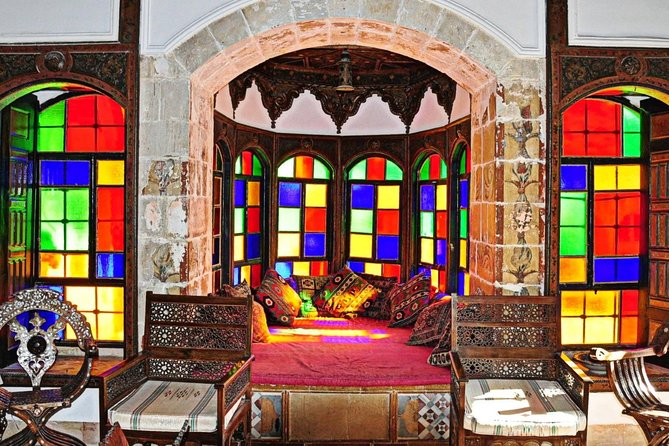
The palace name means House of Faith. That name adds a useful clue to the building’s character, though you will learn more from the guide as you move through the site. One detail worth watching for is the mosaic work. A previous account of the outing singled out the mosaics as especially beautiful, and they are a good reason not to rush this stop.
Beiteddine also carries several layers of modern history. After 1840, the Ottomans used the palace as a government building. During the French Mandate, it became a local administrative office. In 1943, it was declared the official summer residence of the president of Lebanon.
The Lebanese Civil War badly damaged parts of the palace. Some sections are now open to the public, while the remaining presidential summer residence is not fully accessible. That means you should not expect to see every part of the complex. Still, the open areas offer enough to make this the main cultural stop of the day.
A guide makes a real difference here. Albert has been specifically associated with explanations at Beiteddine and with broader discussions of Lebanese history. You will get more from the palace if you listen for the connection between its decoration and its political purpose, rather than treating it as a collection of pretty rooms.
More Private Palace Tours in Beirut:
- Guided Private Full Day Tour to Baalbek, Anjar and Chateau Ksara
★ 5.0 · 60 reviews - Guided Full-Day Private Trip to Cedars, Baalbek and Chateau Ksara
★ 5.0 · 10 reviews - Half-Day Private Tour to Baalbek & Chateau Ksara
★ 5.0 · 8 reviews
Moussa Castle and One Man’s Unlikely Project
The next stop is Moussa Castle, also called Qasr Moussa. Set on a hill between Deir el Qamar and Beiteddine, it takes about an hour to visit. Admission is not included.
Moussa Castle is unlike Beiteddine in almost every way. It was not commissioned by an emir or built as a government center. It came from the determination of Moussa Al Maamari, born on July 27, 1931. His idea began when he was 14 and wanted to impress a girl he loved.
That personal beginning gives the castle its appeal. You are not only looking at stone walls. You are seeing the physical result of a private ambition that lasted for years. The builder’s beliefs and ideas are engraved on the stones, so the site works as both a building and a personal statement.
The one-hour stop should give you time to take in the structure and its story without turning the visit into a rushed photo stop. If you enjoy unusual places built outside the usual royal, military, or religious categories, you will likely find this the most unexpected part of the day.
There is also a useful contrast between the two major buildings. Beiteddine shows you the reach of a ruler and the formal style of a palace. Moussa Castle shows you what can happen when one person holds onto an idea for a lifetime. I appreciate that the route gives you both kinds of architecture.
Deir el Qamar, the Monastery of the Moon
Deir el Qamar is only about five kilometres from Beiteddine Palace, but it has a character of its own. The name means Monastery of the Moon. You get about 30 minutes to see the town itself, followed by short visits to Fakhreddine’s Mosque and Saydet El Talle Church.
The town was once the capital of the Emirate of Mount Lebanon. It was also the first village in Lebanon to have a municipality, established in 1864. Those details give the town a civic importance that goes beyond its attractive old streets.
Deir el Qamar is also linked with many artists, writers, and politicians. Its religious past is particularly notable. People from different religious backgrounds lived there, and the town had a mosque, a synagogue, and Christian churches. The schedule only gives you a brief look, but the guide can help you understand why this small town matters.
The short time is both a benefit and a limitation. You can see the main points without spending another full day away from Beirut, but 30 minutes is not enough for a slow, unplanned wander. I would keep your expectations practical: this is an introduction to Deir el Qamar, not a long walking tour.
The town was destroyed in 1860 during fighting between Druze and Christians, and it was set on fire. Napoleon III later sent a French contingent to help rebuild it. This difficult chapter is part of what makes the town worth visiting. The restored buildings are not just decorative survivors. They point to the political and religious tensions that shaped Mount Lebanon.
Fakhreddine’s Mosque and the Town’s Religious Mix
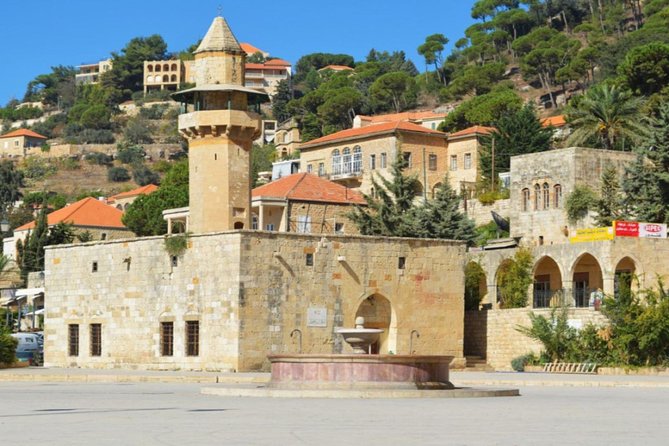
Fakhreddine’s Mosque receives about 15 minutes. Its octagonal minaret makes it easy to identify, and the building dates to 1493. It was restored in the sixteenth century by Fakhreddine I and is described as the oldest mosque in Mount Lebanon.
That is a lot of meaning for a short stop. You may not have time for a long architectural study, but you can look closely at the minaret and consider the mosque’s place in a town also known for Christian churches and its former synagogue.
This is one of the moments when a private guide helps keep the visit from becoming a quick photograph. Ask about Fakhreddine I and the mosque’s connection to the town. The supplied guide information does not promise a fixed script, so the depth of the explanation may depend on your guide and your questions.
More Palaces to Tour in Beirut:
- Deir el Qamar – Beiteddine Palace – Chouf Cedars From Beirut
★ 5.0 · 7 reviews - Deir Al-Qamar, Beiteddine Palace and Barouk Cedars Tour
★ 4.5 · 6 reviews - DeirElkamar, Beitdeen, Moussa Palace, EinwZien Grotto,Full-Day Trip PRIVATE-CAR
★ 5.0 · 5 reviews - Palace of Dreams – Oyoun El Samak – Zahlan Grotto – Jabal El Arbaaine
★ 4.5 · 5 reviews
Saydet El Talle Church and the Hilltop Legend
The final listed stop is Saydet El Talle Church, also called Our Lady of the Hill. Plan on about 15 minutes, with no admission fee.
The church dates to the fifteenth century and is one of Deir el Qamar’s important religious sites. Monk Nicolas Smisaati built a church here over the ruins of an older Phoenician temple associated with the goddess Astarte. That earlier site was later destroyed by an earthquake in 859.
The church’s story also includes a local legend. A Druze emir in Baakline is said to have seen a light coming from the hill at Deir el Qamar. He sent soldiers to investigate and instructed them to build a mosque if they found an Islamic symbol, or a church if they found a Christian one. The surviving account is cut off before the full story is given, so your guide may provide more detail on site.
Even with only 15 minutes, the church helps explain why Deir el Qamar is such a useful stop. The town’s identity comes from overlapping traditions, not from one single religious or political story.
Transport, Timing, and What the Eight Hours Really Mean
The tour starts at 9:00 am and lasts about eight hours. Hotel pickup and drop-off are included, along with private transportation in an air-conditioned vehicle. This is especially useful for a mountain day, since you do not need to find your own route from Beirut or arrange separate transfers between the sites.
The listed sightseeing time adds up to about 3 hours and 30 minutes: 90 minutes at Beiteddine, one hour at Moussa Castle, 30 minutes in Deir el Qamar, and 15 minutes at each of the two religious sites. The rest of the day is spent on the road, with the exact balance depending on traffic and the pace of the visit.
That is not a criticism. Beirut to the Chouf is not a quick city transfer, and the mountain setting is part of the reason to make the trip. Still, you should book this as a full-day outing rather than expecting eight continuous hours of sightseeing.
Lunch is not included. Since the schedule already includes driving and several stops, ask your provider how lunch fits into the day before departure. The supplied information does not name a restaurant or promise a particular meal stop.
The tour is private, so only your group participates. That gives you more control than a large shared excursion, although the available details do not promise a fully custom route or unlimited time at each site.
Guide Quality and the Value of a Private Day
Two guides are named in the available experience details: Albert and Ziad. Albert has been associated with the Beiteddine visit and with explanations of Lebanon’s history. Ziad has been described as a guide, driver, and person with strong knowledge of Lebanese history and culture.
That matters because this route contains many dates, rulers, religious traditions, and changes in government use. Without context, Beiteddine can become a palace walk, Moussa Castle can seem like an odd building, and Deir el Qamar can look like a pretty old town. A good guide ties those pieces together.
The private setup also suits you if you want to ask direct questions. You can ask why Beiteddine changed from palace to Ottoman government building, how Deir el Qamar recovered after 1860, or how Moussa Al Maamari’s personal dream became a public attraction.
The experience has received a top overall rating from the small number of published ratings available, but the sample is limited. I would treat that as a positive sign about the guides and the day, not as proof that every departure will be identical.
Is $75 a Fair Price?
At $75 per person, the main value comes from convenience and privacy. You receive hotel pickup and drop-off, private transport, an air-conditioned vehicle, and a professional guide. Those inclusions make the cost easier to justify for visitors who do not want to manage mountain transport.
The price does not cover entrance tickets or lunch. That means your final cost will be higher than the advertised figure. You should also remember that the tour spends much of its eight hours reaching and returning from the Chouf, so the value depends on your interest in the whole group of sites.
I would choose this over trying to arrange separate taxis if you want one organized day from Beirut. I would skip it if you have very limited time and only care about Beiteddine Palace, since a private day devoted to one site could give you more time there.
Who Should Book This Chouf Excursion?
I recommend this tour if you want to see beyond Beirut and prefer a private guide rather than a large group. It suits people who enjoy architecture, political history, religious sites, and unusual personal stories in equal measure.
Families and mixed-interest groups may also find the combination useful. Beiteddine offers formal architecture, Moussa Castle adds something eccentric, and Deir el Qamar provides a compact town visit with several faith traditions in view.
You should think twice if you dislike driving or want a slow, extended walk through Deir el Qamar. The town stops are short, and lunch is not included. Winter conditions can also affect mountain plans. One previous departure could not include the Chouf Cedars because of snow, so ask about road and site conditions if you are visiting during a snowy period.
Should You Book It?
Book this private Chouf day if you want a broad introduction to Mount Lebanon without arranging transport yourself. The strongest reasons are Beiteddine’s mosaics and palace rooms, Moussa Castle’s unusual personal story, and Deir el Qamar’s mix of political and religious history.
I would make sure you confirm the entrance fees, lunch plan, and seasonal road conditions before paying. If Albert or Ziad is available, that may add confidence, since both are connected with positive accounts of guiding on this route. For a full day outside Beirut at a reasonable starting price, this is a sensible choice, provided you are comfortable with extra admission costs and several hours on the road.
FAQ
Where does the private tour begin?
The tour begins in Beirut with hotel pickup. The stated start time is 9:00 am.
How long does the tour last?
The experience lasts approximately eight hours.
Is transportation included?
Yes. Hotel pickup and drop-off, private transportation, and an air-conditioned vehicle are included.
Is the tour private?
Yes. Only your group participates in the activity.
Is a guide included?
Yes. A professional guide is included. Albert and Ziad are names associated with guiding this experience.
Are entrance fees included?
No. Admission tickets for Beiteddine Palace and Moussa Castle are not included. The listed stops in Deir el Qamar have free admission.
Is lunch included?
No. Lunch is not included in the price.
What places are visited?
The route includes Beiteddine Palace, Moussa Castle, Deir el Qamar, Fakhreddine’s Mosque, and Saydet El Talle Church.
Can I cancel for a full refund?
Yes. You can cancel for a full refund if you do so at least 24 hours before the experience start time. Changes or cancellations made less than 24 hours before the start are not accepted for a refund.
Newly added in Beirut
- Full-Day Private Tour to Beiteddine, Deir El Qamar, Mousa Palace★ 5.0 · 2 reviews
- Exclusive Excursion: Discover Baalbek, Anjar, and Chateau Ksara★ 5.0 · 6 reviews
- DeirElkamar, Beitdeen, Moussa Palace, EinwZien Grotto,Full-Day Trip PRIVATE-CAR★ 5.0 · 5 reviews
- Beirut to Beiteddine: Private Journey Through Palaces & Villages★ 4.5 · 2 reviews
- Half-Day Private Tour to Baalbek & Chateau Ksara★ 5.0 · 8 reviews
- Palace of Dreams – Oyoun El Samak – Zahlan Grotto – Jabal El Arbaaine★ 4.5 · 5 reviews
- Baalback , Anjar & Chateau Ksara★ 5.0 · 7 reviews
- Deir el Qamar – Beiteddine Palace – Chouf Cedars From Beirut★ 5.0 · 7 reviews
Private Palace Tours, compared.
Alhambra Private/Small Group Tour & Nasrid Palaces Skip the Line
Read our review →
Mutianyu Great Wall&Summer Palace Excursion:Group/Private Options
Read our review →
Private Tour of Sintra, Cabo da Roca and Cascais with 2 Palaces
Read our review →
Private 4hrs Venice Tour: Doge’s Palace, Grand Canal & St Mark’s
Read our review →
Knossos Palace Skip-the-Line Ticket & Private Guided Tour
Read our review →
Private Tour Sintra from Lisbon Palaces of Pena and Regaleira
Read our review →
Browse the lists this tour appears in