Review · PALACE TOURS
Cairo:Nilometer, Manial Palace,City of The Dead With Felucca
The most revealing part of this Cairo day is the shift from royal rooms to the City of the Dead. You begin with the Nilometer, an old stone instrument once tied to farming taxes, then move through Manial Palace’s ornate rooms before seeing how people live among Cairo’s historic tombs. It is a thoughtful route through Islamic-era Cairo, not a standard pyramid circuit.
I like the private format and the unusual mix of stops. Your guide can slow down for questions, and guides named Mohamed and Mahmoud Mahdi have been praised for clear explanations and patience. I also like the final felucca ride, which gives you a quiet break after the busy streets. The main consideration is that the City of the Dead is a living residential area, so you need to be respectful and comfortable seeing poverty alongside important monuments.
Key points to know before booking
- The Nilometer measures the Nile’s past power: See the device once used to judge flood levels and help set agricultural taxes.
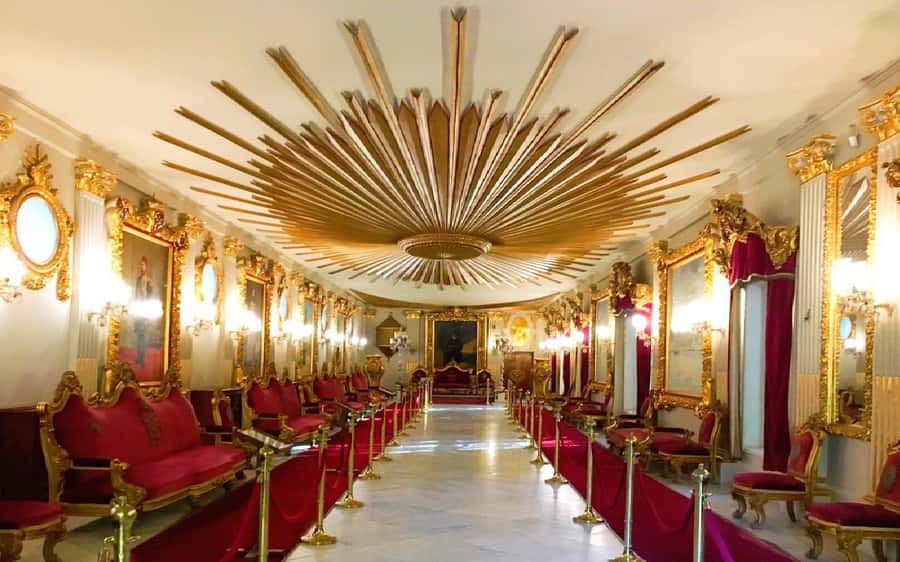
- Manial Palace mixes several design traditions: Expect Ottoman, Moorish, Persian, European Art Nouveau, and Rococo details in one royal compound.
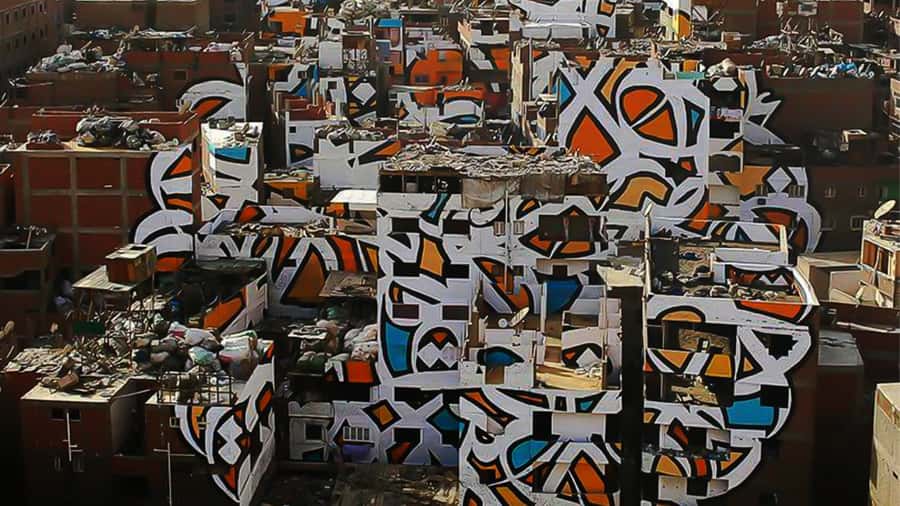
- The City of the Dead is both cemetery and neighborhood: Tombs and mausoleums share space with homes because of Cairo’s housing shortage.
- A private guide shapes the day: Mohamed and Mahmoud Mahdi are among the guides named in feedback, with patience and strong historical explanations.
- Your felucca ride ends the sightseeing gently: The traditional sailboat offers time on the Nile after the city visits.
- The $130 price covers major basics: Private transport, guide, entrance fees, bottled water during transfers, lunch, taxes, and hotel return are included.
Why this route shows another side of Cairo
Cairo is often sold through its biggest monuments, but this outing follows the city’s systems and daily life. The Nilometer explains how the Nile affected farming and taxation. Manial Palace shows how a prince used architecture to express taste and status. The City of the Dead brings you into a part of Cairo where old burial grounds became a place to live.
That combination gives the day a clear story. You move from the river’s practical importance, to royal culture, to the pressures of modern city life. I find that far more useful than a list of disconnected photo stops.
The tour is private, so the pace should be more adaptable than a large group outing. You have a private air-conditioned vehicle, a private guide, and hotel pickup and return. Bottled water is supplied during the transfers, and entrance fees are included, so you are not constantly reaching for your wallet.
The route is best for you if you want context and local scenes rather than only famous monuments. It is also a good choice if you have already seen Cairo’s headline attractions and want a different set of places. It may be less suitable if you want a short, light sightseeing day with little discussion of social issues.
More Palaces to Tour in the world:
- Venice: Doge’s Palace Reserved Entry Ticket
★ 4.6 · 42,716 reviews - Paris: Versailles Palace and Gardens Full Access Ticket
★ 4.6 · 41,579 reviews - Granada: Alhambra & Nasrid Palaces Tour with Tickets
★ 4.7 · 19,801 reviews
The Nilometer on Roda Island
The first stop is the Nilometer at the southern tip of Roda Island. Its purpose was simple but crucial: measure how high the Nile rose during the annual flood.
Before modern water controls, the river’s level affected crops, food, and tax collection. Agricultural taxes were charged only when the Nile reached a designated height, high enough to irrigate the fields. A measurement device could therefore affect the finances of entire communities.
That practical link makes the Nilometer more interesting than its modest appearance might suggest. You are not just looking at an old structure. You are seeing an early tool of government, farming, and revenue collection.
The monument dates from the period just after the Arab conquest of Egypt and is among the oldest surviving structures of its kind. Your guide can help connect the stone markings and chamber to the larger role of the Nile in Egyptian life.
I would give this stop your full attention even if you are usually drawn to grand buildings. The Nilometer does not rely on palace decoration. Its importance comes from what it tells you about how the country worked.
Photography is one of the stated highlights, but this is a place for detail rather than sweeping views. Look closely at the structure and listen to the explanation of how water levels were used. The visit should appeal to anyone interested in engineering, agriculture, administration, or the long reach of the Nile.
Manial Palace and Prince Mohamed Ali’s design
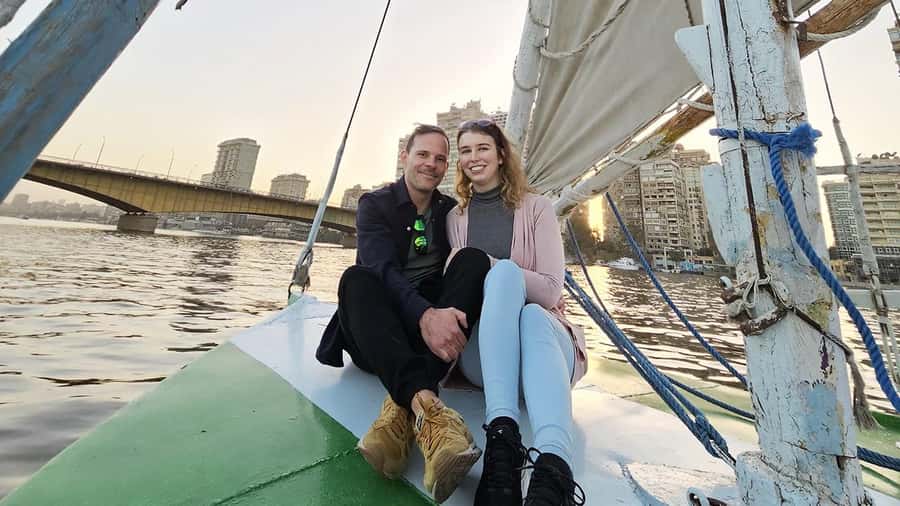
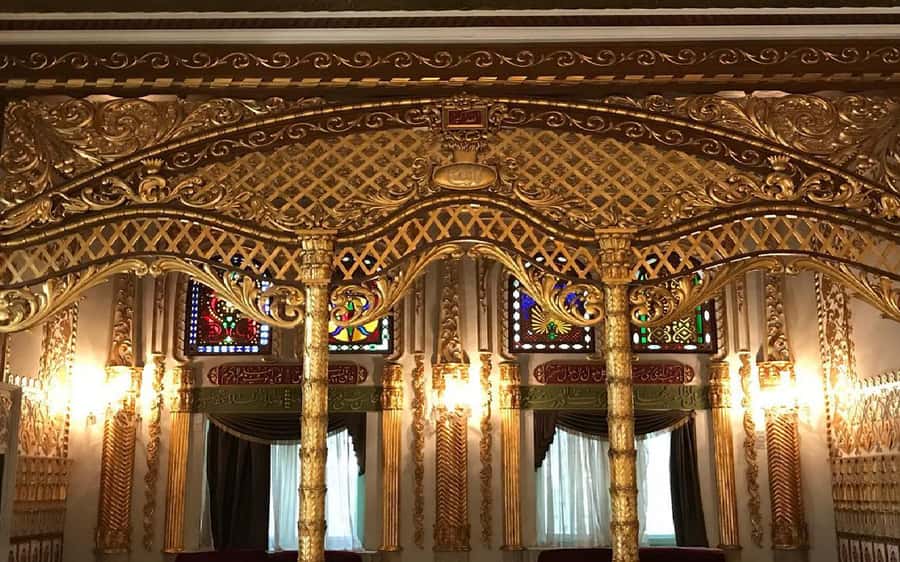
Next comes Manial Palace, built for Prince Mohamed Ali Pasha, the uncle of King Farouk. This is the day’s most decorative stop, but it is not a single-style royal residence.
The compound contains five separate buildings, each with its own style. European Art Nouveau and Rococo appear beside Ottoman, Moorish, and Persian influences. Traditional Islamic architectural elements are combined with different layouts, decorations, and materials.
That mixture is the palace’s main lesson. Instead of presenting one pure architectural tradition, it shows how a member of Egypt’s ruling family brought together ideas from several regions. The result can feel ornate and surprising, especially after the functional simplicity of the Nilometer.
The buildings are surrounded by gardens planted with rare tropical plants. The prince collected many of them during his travels, and the grounds extend along a small branch of the Nile. The gardens give you a change of pace from Cairo’s roads and dense urban setting.
You will want time here for both rooms and exterior details. The palace offers plenty of photographs, but the guide’s explanation is what makes the design choices easier to understand. Ask about the different influences as you move through the compound, rather than treating every patterned wall as decoration without a story.
The drawback is personal taste. Anyone who prefers plain or strictly uniform architecture may find the palace busy. I see that variety as the point, but you should book this day expecting elaborate interiors and a strong display of royal taste.
The City of the Dead and Cairo’s housing crisis
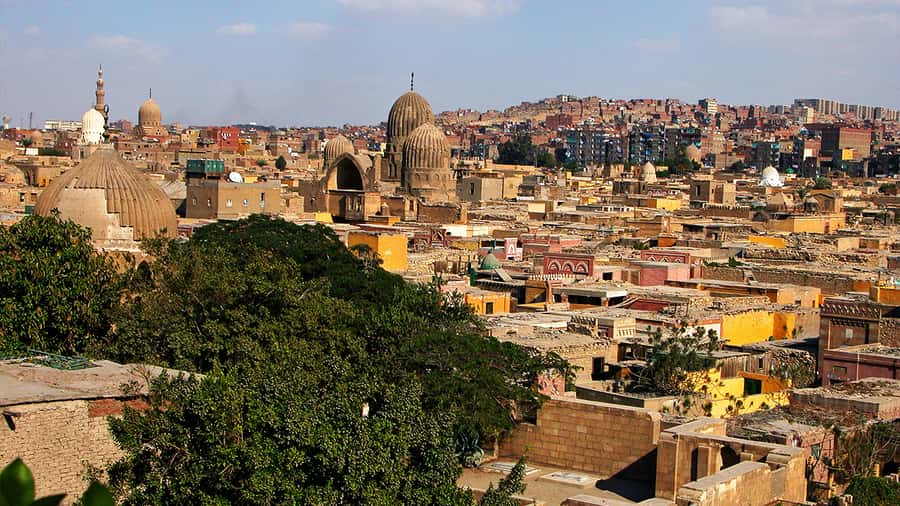
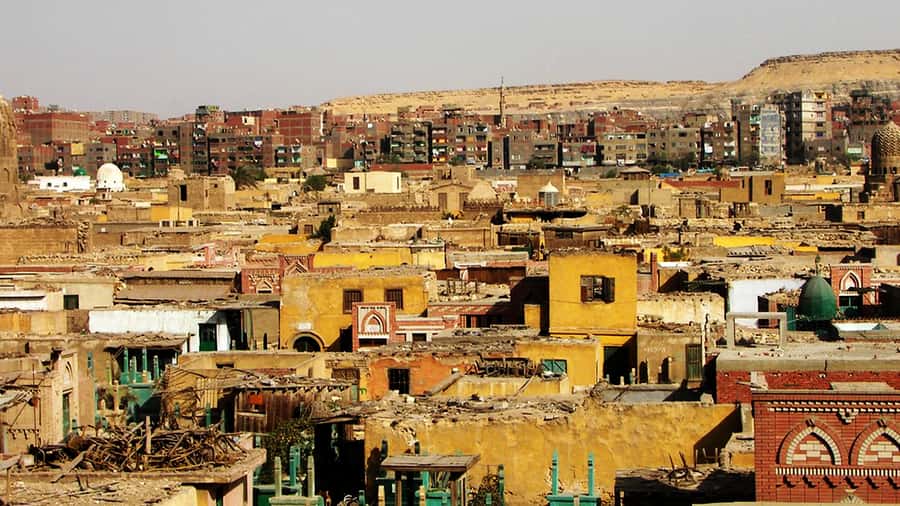
The City of the Dead is the most socially revealing stop. This vast cemetery contains tombs and mausoleums, some dating back to the Islamic conquest of Egypt in 642 AD.
It is also a place where people live. Because of Cairo’s long-running shortage of housing, families have made permanent homes among the burial grounds. You see a cemetery, an architectural record, and a residential district at the same time.
This is not a polished attraction. That is precisely why it can be so meaningful, but it also asks more of you than a palace visit. You are entering a real community, not a staged exhibit. Keep your voice and camera use respectful, and follow your guide’s advice about where to stop and what to photograph.
One particularly memorable part may be a mosque within the necropolis. The visit can feel more personal there, with the surrounding city close at hand and the older burial structures forming part of the neighborhood.
The City of the Dead helps explain Cairo beyond its monuments. The area shows how historic space gets reused when a city has more people than housing. It also reminds you that preservation and daily life can exist side by side, sometimes uneasily.
I would not choose this excursion if you want only beautiful interiors and easy photo opportunities. I would choose it if you want to understand how Cairo’s past remains part of its present. A good guide matters here, and the private format gives you a better chance to ask careful questions.
Same city, another grand address:
- Sintra: Pena Palace and Park Entrance Ticket
★ 4.2 · 17,410 reviews - Granada: Alhambra and Nasrid Palaces Entry Ticket
★ 4.6 · 15,130 reviews - Madrid: Royal Palace Fast-Access Admission Ticket
★ 4.6 · 13,856 reviews - Doge’s Palace & St. Mark’s Basilica with Terrace Access Tour
★ 4.7 · 10,697 reviews
Ending beside the Nile on a felucca
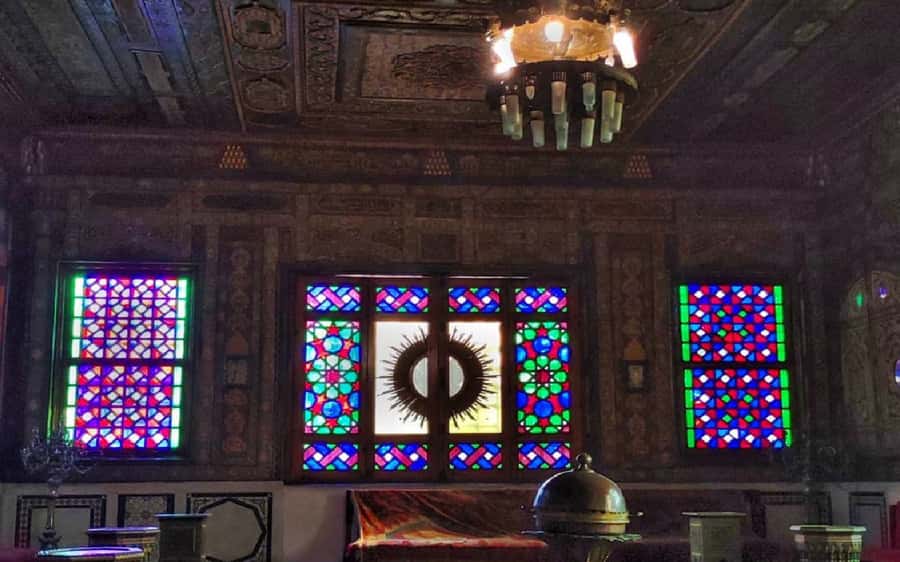
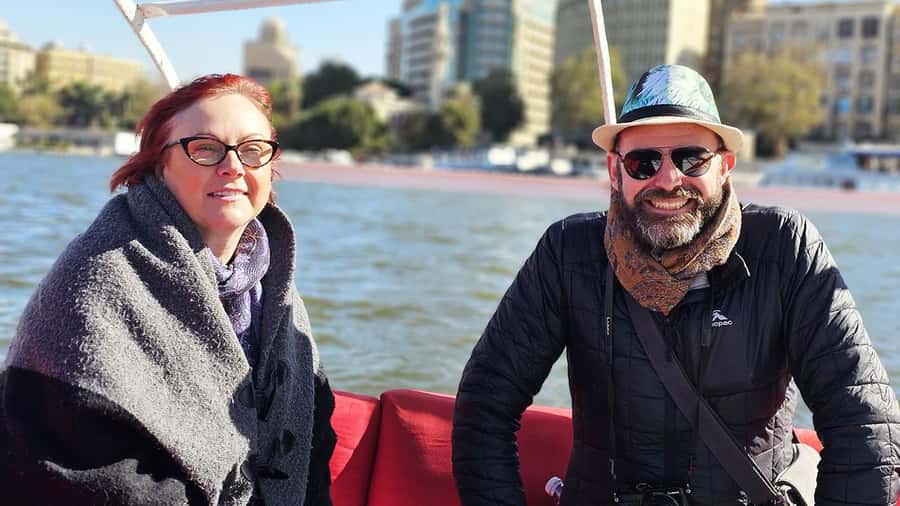
After the cemetery visit, you head to the river for a ride on a felucca. This traditional sailboat is used on the Nile and in other Mediterranean areas.
The felucca changes the mood of the day. You have spent time looking at instruments, palace rooms, tombs, and city life. On the river, the pace becomes slower and the focus shifts to the water and the passing views.
Lunch is included with the experience, and the tour information places it with the felucca portion of the day. One account describes lunch at a pleasant restaurant on the Nile before continuing to the City of the Dead, so the exact meal setting may vary. Beverages and water during lunch are not included, although bottled water is provided during the transfers.
I like having this ride at the end rather than the beginning. It gives you a chance to settle after the more demanding cemetery visit. Do not expect a long sailing expedition or a full Nile cruise. Think of it as a traditional boat ride and a calm closing scene.
The felucca is also useful for photographs, especially if you want a different view of Cairo from the water. The day’s attractions are mostly about history and city life, while the boat ride gives you a simple, open-air pause.
What the $130 price really covers
At $130 per person, this is not the cheapest way to see Cairo. It is also more than a basic transport service. The price includes a private guide, private air-conditioned vehicle, hotel pickup and return, entrance fees to all listed sites, bottled water during transfers, lunch, taxes, and service charges.
That bundle matters. Cairo sightseeing can become expensive when every entry ticket, transfer, and guide fee is added separately. Here, the important costs are placed together, and you avoid arranging transport between several parts of the city.
The value is strongest for two or more people who want a private day and prefer not to manage taxis or tickets. It is also useful if you care about explanation. The Nilometer and City of the Dead are much easier to understand with context, and Manial Palace has enough design detail to reward a good guide.
The price is less compelling if you mainly want the felucca ride or a quick look at one monument. You are paying for the full route and the private structure. The outing makes sense when you want all four elements: the Nile instrument, the palace, the cemetery district, and the boat ride.
Pickup is included from your Cairo hotel. Pickup or drop-off at Cairo Airport, Sphinx Airport, the New Administrative Capital, New Cairo, Heliopolis, Badr City, Shorouk, Rehab, Obour, Sheraton Al Matar, Sheikh Zayed City, or Madinaty costs extra. Confirm that supplement before booking if you are staying in one of those areas.
Guides, vehicles, and the day’s practical rhythm
Your transport is a private, air-conditioned vehicle, which is important in Cairo. The city’s distances and traffic can make an otherwise interesting route tiring, so having a dedicated vehicle is a real advantage.
The guide is central to the experience. The people named in the feedback include Mohamed and Mahmoud Mahdi. Mohamed was praised for explaining the palace and Nilometer clearly, while Mahmoud Mahdi was described as patient and able to answer questions. Your assigned guide may differ, but you should expect a private guide who speaks one of the listed languages.
Available languages include Arabic, German, English, Spanish, Portuguese, French, Italian, Japanese, Russian, and Chinese. State your preferred language when booking so the arrangement is clear.
The itinerary does not give a fixed start time or total duration. For that reason, confirm the pickup time directly and ask how long the operator expects the full route to take. The number of stops, traffic, time at Manial Palace, and the felucca schedule can all affect the day.
You receive bottled water during the transfers. Lunch is included, but drinks and water during lunch are not. Tipping is also not included, so carry some cash if you want to thank your guide or driver.
The provider allows cancellation up to 24 hours ahead for a full refund and offers reserve-now, pay-later booking. Those policies are useful if your Cairo plans are still shifting.
Who should book this Cairo day
I would recommend this experience to you if you want a private route that goes beyond the best-known Cairo sights. It suits visitors interested in architecture, Islamic-era history, the Nile, and present-day urban life.
It is particularly good for:
- You want a guide who can explain rather than simply point.
- You prefer a private car to arranging several local rides.
- You enjoy unusual monuments such as the Nilometer.
- You want to see a working neighborhood alongside historic tombs.
- You like ending a sightseeing day with a slower boat ride.
- You have already visited the major headline attractions.
Think twice if you want a carefree day built only around grand buildings. The City of the Dead can be confronting, and its residents deserve discretion. The palace can also feel visually dense if your taste runs toward simple design.
Should you book the Nilometer, Manial Palace, City of the Dead, and felucca tour?
Book it if you want a more layered picture of Cairo. The route connects water management, royal ambition, old burial grounds, housing pressure, and river life in one private day. That is a lot of variety for a single outing, and the included transport, entry fees, lunch, and guide make the $130 easier to justify.
I would especially choose it with a guide such as Mohamed or Mahmoud Mahdi if available, since clear explanations matter at every stop. Go with an open mind, dress and behave respectfully in residential and religious areas, and confirm the pickup supplement if you are outside central Cairo.
Skip it if you are looking only for pyramids, museums, or a short Nile cruise. For everyone else, this is a strong choice for seeing Cairo as a living city rather than just a collection of monuments.
FAQ
What sites are included in this tour?
The route includes the Nilometer on Roda Island, Manial Palace, the City of the Dead, and a felucca ride on the Nile.
Is hotel pickup and return included?
Yes. Pickup from your Cairo hotel and return after the tour are included.
Are entrance fees included?
Yes. Entrance fees to all the listed sites are included in the price.
Is lunch included?
Yes, lunch is included. Beverages and water during lunch are not included.
Is bottled water provided?
Bottled water is provided during the transfers. Water and drinks during lunch are excluded.
Is the tour private?
Yes. The experience includes a private guide and transfers in a private air-conditioned vehicle.
Which languages are available?
The listed languages are Arabic, German, English, Spanish, Portuguese, French, Italian, Japanese, Russian, and Chinese.
Does airport pickup cost extra?
Yes. Pickup or drop-off from Cairo Airport, Sphinx Airport, the New Administrative Capital, New Cairo, Heliopolis, Badr City, Shorouk, Rehab, Obour, Sheraton Al Matar, Sheikh Zayed City, or Madinaty costs extra.
Newly added in the world
- Avignon: Around The Palace Tour★ 4.5 · 13 reviews
- Ayutthaya Full-Day Tour with Bang Pa In (Summer Palace)★ 5.0 · 2 reviews
- Bali: Gate Of Heaven and Water Palace Tirta Gangga Package★ 4.7 · 3 reviews
- Aranjuez: Royal Palace Guided Tour★ 4.5 · 93 reviews
- Asia Continent & Topkapı Palace & Harem. Guided, Small group★ 4.9 · 3 reviews
- Kornik Castle and Rogalin Palace Half-Day Private Tour★ 5.0 · 2 reviews
- Antananarivo: Guided Tour and sunset in queen’s palace★ 3.9 · 13 reviews
- Royal Palace of Aranjuez Small-Group Tour with Entry Ticket★ 5.0 · 2 reviews
Palace Tours, compared.

Versailles Palace and Gardens Full Access Ticket
Read our review →


Doge’s Palace & St. Mark’s Basilica with Terrace Access Tour
Read our review →