Review · TOURS
Tombs, King’s palace & Gaddafi mosque walk (Airpals Safaris tour)
Kampala’s story comes into focus on this three-stop walking tour. You climb 304 stairs at Gaddafi National Mosque for a broad view over the city’s historic seven hills, then move into Buganda’s royal world at Kabaka’s Palace and Kasubi Tombs. I like the way the route joins city views with political and cultural history, rather than treating Kampala as a place to see only from a car.
I also like the small maximum group of 10, which should make it easier to hear the guide and ask questions. Ben, one of the named guides associated with the experience, is described as friendly and well informed. The main caution is cost: the $26 tour price covers guiding only, while the three attractions require separate entrance fees, and the stair climb is not a small one.
Key points at a glance
- 304 stairs at Gaddafi National Mosque: Reach the minaret for one of Kampala’s best elevated views and see the city’s seven historic hills.
- A direct look at Uganda’s political past: Kabaka’s Palace includes the remains of a royal car, a cannon, and Idi Amin’s torture chambers.
- Buganda’s royal burial ground: Kasubi Tombs holds the graves of four Buganda kings and remains a UNESCO site.
- A compact half-day outing: The tour allows about one hour at each stop, with the three locations linked in a practical central Kampala route.
- Small-group guiding: Airpals Safaris limits the group to 10 people, and guiding fees are included.
- Budget carefully: The $26 price does not include $10 for the palace, 25,000 Ugandan shillings for the mosque, or $20 for Kasubi Tombs.
Why these three places explain Kampala
This is a useful first look at Kampala because the stops are not interchangeable. Gaddafi National Mosque gives you the city from above. Kabaka’s Palace shows the authority of Buganda’s royal institution and the darker events tied to Idi Amin. Kasubi Tombs brings you to the ceremonial and spiritual side of the kingdom.
That combination gives the walk a clear shape. You begin with orientation, move into modern political memory, and finish at a sacred royal site. I like that progression because it helps you understand that Kampala is not simply Uganda’s capital in an administrative sense. It also grew around older Buganda institutions and hills.
The experience lasts about three hours, with roughly an hour planned at each attraction. That is enough time for a guided introduction at each site, but not so much that the outing takes over your whole day. You should still expect the pace to feel active, especially at the mosque, where the minaret climb supplies the tour’s main physical challenge.
More Palaces to Tour in the world:
- Venice: Doge’s Palace Reserved Entry Ticket
★ 4.6 · 42,716 reviews - Paris: Versailles Palace and Gardens Full Access Ticket
★ 4.6 · 41,579 reviews - Granada: Alhambra & Nasrid Palaces Tour with Tickets
★ 4.7 · 19,801 reviews
Starting at Café Javas on Namirembe Road
The meeting point is Café Javas at 40A Namirembe Road in Kampala. This gives you a clear place to meet before heading to the first attraction, Gaddafi National Mosque. The tour uses a mobile ticket, and confirmation is provided when you book.
Because the route includes three separate admissions, keep your booking details and payment arrangements handy from the start. The guiding fee is included, but entry costs are paid separately at the attractions. The stated price is $26 per person, followed by $10 for Kabaka’s Palace, 25,000 Ugandan shillings for Gaddafi National Mosque, and $20 for Kasubi Tombs.
That makes the real cost notably higher than the headline price. I would judge the value this way: if you want a guided introduction to Buganda and central Kampala, the package is convenient and focused. If you are counting every dollar, add up the admissions before booking so there are no surprises.
The group limit is 10 people. That is small enough for a guide to keep the walk together and explain details without relying only on broad, general comments. The tour is also near public transportation, which may help if you are arranging your own way to the meeting point.
Climbing the 304 stairs at Gaddafi National Mosque
The mosque is the most physical part of the tour. After entering, you receive a guided walk through the building before climbing the minaret, or tower. The route includes 304 staircases, so this is not just a quick viewpoint stop.
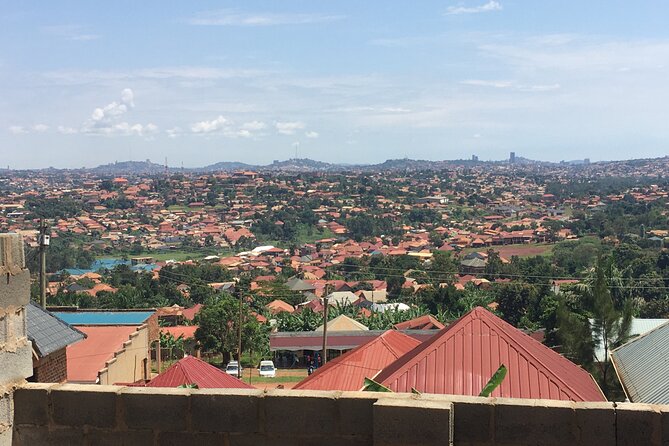
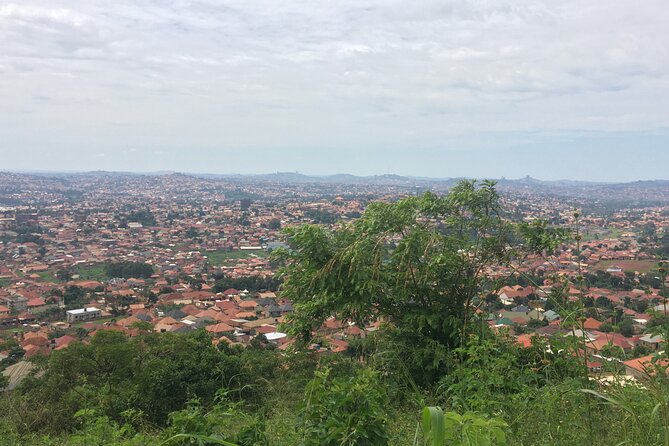
At the top, the reward is a wide view of Kampala. The city’s seven historic hills are a central part of the explanation, since they show where Kampala first began to develop. From above, the tour gives you a useful sense of how the capital is spread across its hills rather than laid out on a single flat center.
I like beginning here. It gives you a mental map before the tour turns to royal sites, and the view makes the city’s early development easier to grasp. The mosque also provides a change of pace from the later historical stops: you are moving, climbing, and looking outward rather than standing in one place.
The climb deserves honest attention. Most people can participate in the activity, but 304 stairs may be demanding if you are not comfortable with a long stairway. The tour information does not specify a lift option, so ask Airpals Safaris directly if that matters to you. Wear sensible shoes, allow yourself time on the stairs, and do not treat this portion as a minor add-on.
Admission to the mosque is not included. The stated fee is 25,000 Ugandan shillings. Since the tour spends about an hour here, the extra charge pays for more than a quick photo stop: you receive an interior visit, the climb, and the city view.
Kabaka’s Palace and the weight of Buganda’s monarchy
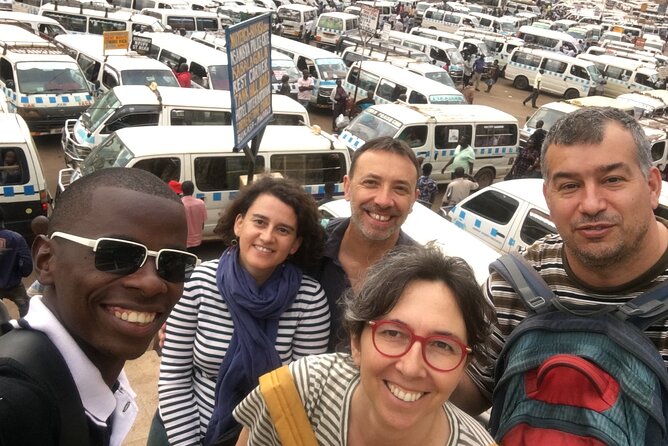
From the mosque, the group continues to Kabaka’s Palace, also known as the Lubiri. This is the stop that gives the tour its clearest account of Buganda’s kingdom and the role of its kings.
You see the remains of a royal car and a cannon gun, then enter the part of the palace grounds connected to Idi Amin Dada’s torture chambers. Those chambers change the tone of the visit. The palace is not presented only as a ceremonial home or an old royal residence. It also carries evidence of a painful chapter in Uganda’s political past.
I find that contrast valuable. You can learn about the longstanding Buganda kingdom while also confronting how the palace site was used during Amin’s rule. The tour therefore connects royal tradition with more recent national history, without asking you to visit two unrelated museums.
Plan on about an hour here. That is enough for a guided explanation and time to take in the main features, but it is not an extended archaeological visit. The admission fee is $10 and is separate from the tour price.
The palace is also where the walking route ends according to one part of the supplied meeting information, while another part says the tour ends at Kasubi Tombs. Since the stated itinerary clearly places Kasubi after the palace, confirm the final drop-off point with Airpals Safaris before you go. The important practical point is that you should expect to continue from the palace to Kasubi rather than finish after the palace visit.
Same city, another grand address:
- Sintra: Pena Palace and Park Entrance Ticket
★ 4.2 · 17,410 reviews - Granada: Alhambra and Nasrid Palaces Entry Ticket
★ 4.6 · 15,130 reviews - Madrid: Royal Palace Fast-Access Admission Ticket
★ 4.6 · 13,856 reviews - Doge’s Palace & St. Mark’s Basilica with Terrace Access Tour
★ 4.7 · 10,697 reviews
Kasubi Tombs, the royal heart of the route
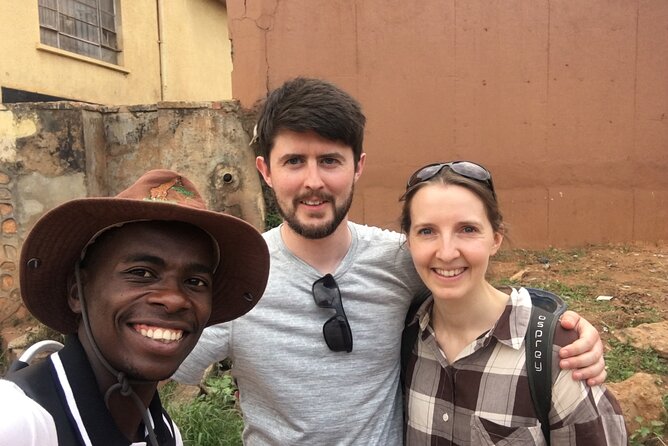
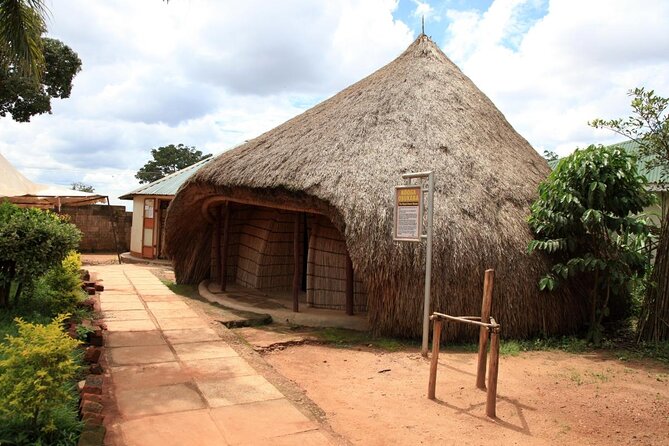
The final stop is Kasubi Tombs, a burial ground for the royal family of Buganda and a UNESCO site. Four Buganda kings are buried here, making the site more than a historical attraction. It is tied to royal memory, tradition, and the continuing importance of Buganda’s institutions.
One unusual detail is the group of 84 houses associated with the king’s wives. That number can be hard to picture, but it gives you a sense of the scale of the royal household described at the site. The buildings and burial traditions provide a different kind of understanding from the palace. At Kabaka’s Palace, you focus on political power and historical events. At Kasubi, you focus more on royal family life, burial, and custom.
The site is planned as the last one-hour stop. By this point, the day’s themes come together: the seven hills explain Kampala’s beginnings, the palace explains Buganda’s political importance and Uganda’s difficult modern past, and Kasubi shows how royal identity is preserved through tradition.
Kasubi Tombs costs $20, not including the $26 tour price. That is the largest single admission fee on the route, so it has a real effect on the total cost. Still, if you are choosing only one guided cultural visit in Kampala, this combination makes a strong case because the tombs are not treated in isolation. You arrive with some understanding of the kingdom whose kings are buried there.
What the three-hour timing really means
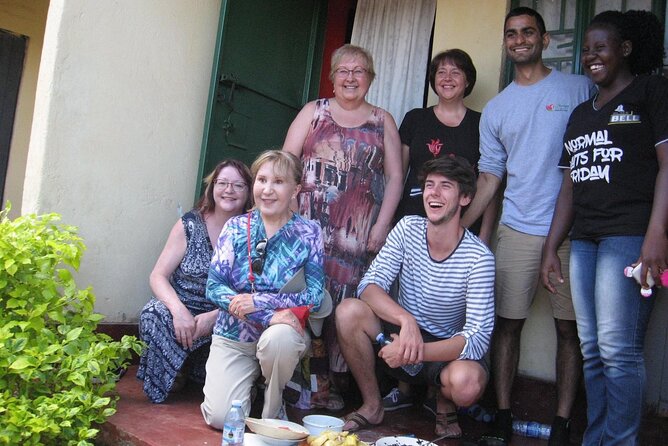
Three hours sounds generous, but the schedule is fairly tight once you account for movement between locations. Each stop is allotted about one hour, so you should expect focused guiding rather than long stretches for independent wandering.
The route is best for someone who wants a compact introduction to several major sites. You will cover more ground and gain more context than on a single-site visit, but you will not have the slow pace of a full-day cultural program. The walking element also means you should be ready to stay with the group and move from one stop to the next.
A guide matters here because the sites cover different subjects. At the mosque, you need help reading the view and understanding the seven hills. At the palace, the guide frames the cannon, royal car, and torture chambers. At Kasubi, the guide explains the burial site and the unusual scale of the royal household.
The small group limit helps. With no more than 10 people, a guide such as Ben can keep the explanations personal and answer questions without losing the group. One specific account of the experience praised Ben’s friendly manner and noted that the walk was enough to reach a daily step goal. That is a fair warning: bring curiosity, but also expect exercise.
The real price and the value of a guide
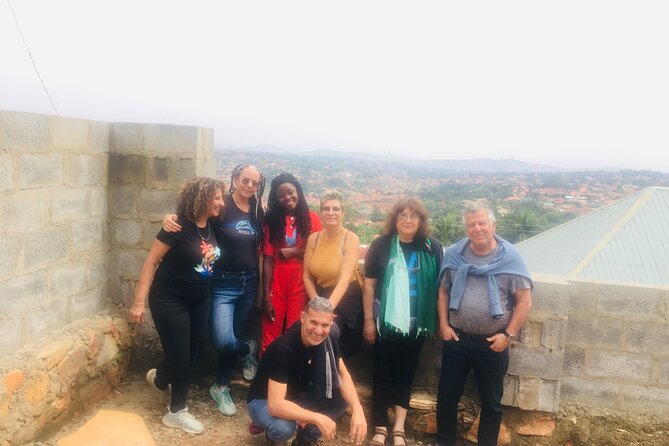
The advertised price is $26 per person, with guiding included. It does not include the three admission charges. In practical terms, budget for:
- $10 for Kabaka’s Palace
- 25,000 Ugandan shillings for Gaddafi National Mosque
- $20 for Kasubi Tombs
The final amount depends partly on the exchange rate for the Ugandan shilling fee, but the add-ons are substantial. I would not book this expecting a $26 total outing.
The value comes from the structure and explanation. You get one guide for three connected places, a planned route, and a group size capped at 10. That is useful if you are new to Kampala and want the major Buganda sites explained in one morning or afternoon.
The price is less attractive if you prefer to visit sites independently or already know the city well. The tour does not include meals, transport details between stops, or admission fees. It is paying for access to a guided experience, not an all-inclusive excursion.
Who should book this Kampala walk?
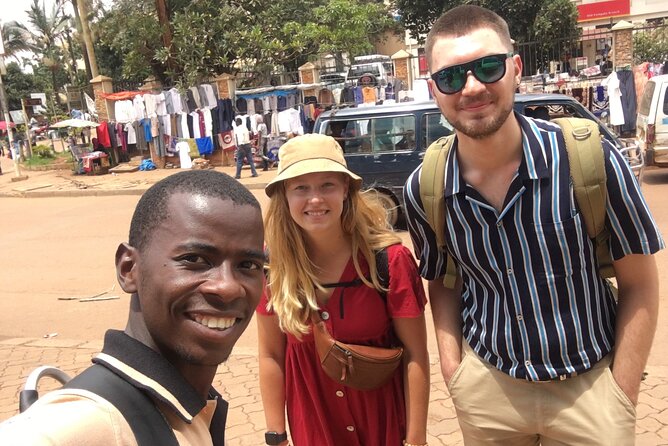
I would recommend it to someone who wants an efficient introduction to Kampala’s royal and religious landmarks. It suits people who enjoy history but do not want to spend an entire day in one museum. It is also a good match if you value a guide who can connect separate sites into one story.
The walk should work well for most people, since the activity information says most participants can take part. Still, the 304-step tower climb makes fitness and comfort on stairs important. If you have mobility concerns, ask about the mosque before booking rather than assuming the climb can be skipped.
The tour also suits visitors who prefer a small group. A maximum of 10 people is a useful middle ground: more social than a private tour, but less anonymous than a large bus group.
I would be less enthusiastic if your priority is a relaxed schedule. One hour per site leaves little room for lingering, and the mosque climb adds effort early in the route. You should also be comfortable paying separate entrance fees and checking the final meeting or end point, since the provided end information is not fully consistent.
Booking, cancellation, and practical details
Your booking confirmation arrives at the time of booking, and the experience uses a mobile ticket. The meeting point is Café Javas at 40A Namirembe Road, Kampala. The tour is near public transportation, and the group can include up to 10 people.
Free cancellation is available if you cancel at least 24 hours before the local start time. Cancellations or changes made inside that 24-hour window are not accepted for a refund.
Before you set out, I would confirm three things with Airpals Safaris: the exact start time, the final drop-off point, and the best way to handle the separate admission payments. Those questions matter because the day moves through three sites and the published end details conflict.
Should you book it?
Book this tour if you want a compact, guided introduction to Buganda, with a city viewpoint, royal palace, political history, and UNESCO burial site in one outing. The strongest features are the 304-step mosque climb, the access to Idi Amin’s torture chambers, and the chance to understand Kasubi Tombs as part of a wider royal story.
Skip it if you want a low-cost activity with no extra fees, or if a long stair climb would make the day uncomfortable. For everyone else, Airpals Safaris offers a focused way to see several of Kampala’s most meaningful sites in about three hours. Just budget beyond the $26 base price and confirm the finishing arrangements before you go.
FAQ
How long does the Tombs, King’s Palace and Gaddafi Mosque walk last?
The experience lasts approximately three hours, with about one hour planned at each of the three stops.
Where does the tour start?
The meeting point is Café Javas at 40A Namirembe Road in Kampala, Uganda.
Which attractions are included in the route?
The route visits Gaddafi National Mosque, Kabaka’s Palace, and Kasubi Tombs.
Are entrance fees included in the $26 price?
No. The tour price includes guiding fees only. Admission costs are $10 for Kabaka’s Palace, 25,000 Ugandan shillings for Gaddafi National Mosque, and $20 for Kasubi Tombs.
How many people can join the tour?
The activity has a maximum group size of 10 people.
Can I cancel for a full refund?
Yes. You can receive a full refund if you cancel at least 24 hours before the experience’s local start time. Changes or cancellations made less than 24 hours before the start are not accepted for a refund.
Newly added in the world
- Óbidos historic village and Mafra Palace Private Tour★ 5.0 · 34 reviews
- Private Tour Sintra Palaces and Scenic Landscapes★ 5.0 · 3 reviews
- Lisbon: Pena Palace, Cabo da Roca, Cascais private tour★ 5.0 · 44 reviews
- Óbidos – Nazaré – Mafra (National Palace of Mafra)Private tour from Lisbon★ 5.0 · 2 reviews
- National Palace and Gardens of Queluz: E-ticket with Audio Guide★ 3.5 · 6 reviews
- Half day Sintra PRIVATE TOUR Pena Palace + Roca Cape (2-6people)★ 5.0 · 3 reviews
- From Lisbon Sintra Highlights Tour – Pena, Regaleira & Monserrate★ 5.0 · 79 reviews
- Mafra and Sintra: Choose 3 of 6 Palaces to visit on private tour★ 5.0 · 26 reviews
Tours, compared.
Doge’s Palace & St. Mark’s Basilica with Terrace Access Tour
Read our review →
Skip-the-Line Tour of Palace and Gardens Access
Read our review →
Royal Palace Expert Guided Tour with Skip-the-Line
Read our review →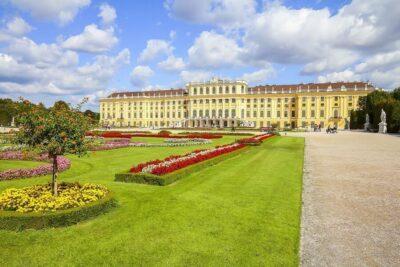
Schönbrunn Palace & Gardens Skip-the-Line Tour
Read our review →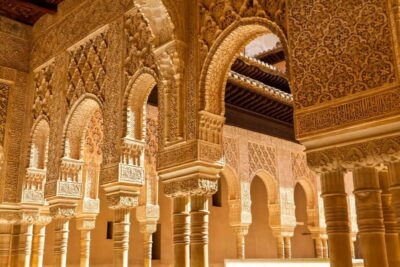
Alhambra & Gardens Tour w/Nasrid Palaces Option
Read our review →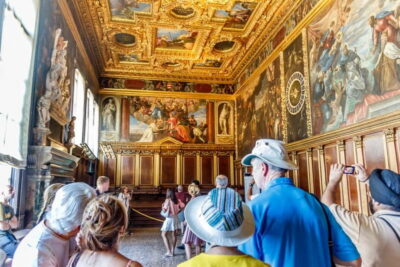
Doge’s Palace and St Mark’s Basilica Walking Tour
Read our review →