
Review · MUSEUMS
The Hague: Escher in The Palace Museum Ticket
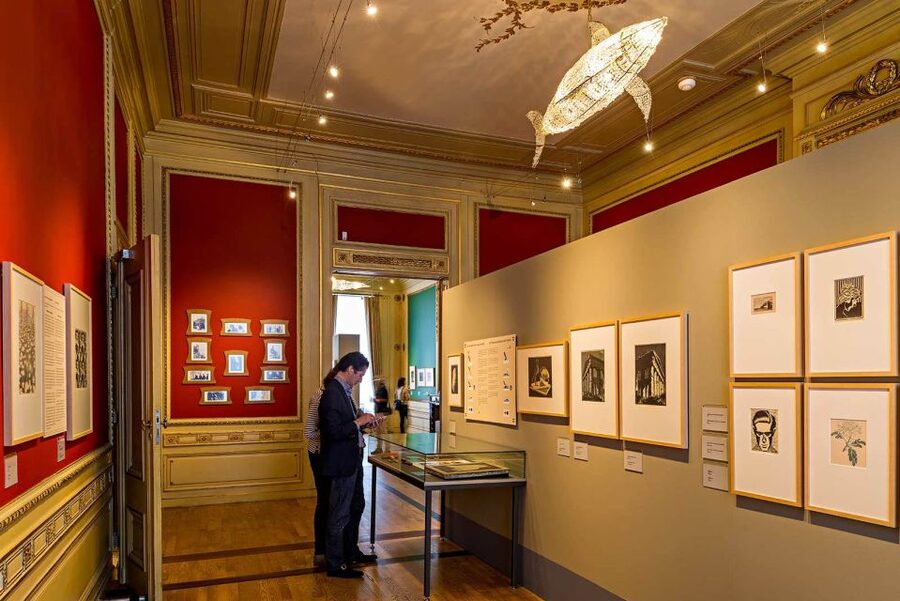
The 7-meter-long Metamorphosis III is the star here, but the setting may surprise you just as much as the art. Escher in Het Paleis fills the former Winter Palace of Queen Mother Emma, where chandeliers, ceilings, and royal rooms frame prints that turn birds into patterns and staircases into impossible loops.
I like the way the museum explains Escher’s development, rather than showing only his famous optical tricks. I also like the interactive upper-floor displays, which give children and curious adults a way to test his ideas with their own eyes and hands. The main drawback is that the palace rooms can feel small and poorly aired when the museum is busy.
Key points to know before you go
- More than 130 Escher prints: See famous works such as Day and Night and Climbing and Descending, along with less familiar pieces.
- A royal setting: The collection occupies Queen Mother Emma’s former Winter Palace, with its original royal atmosphere still intact.
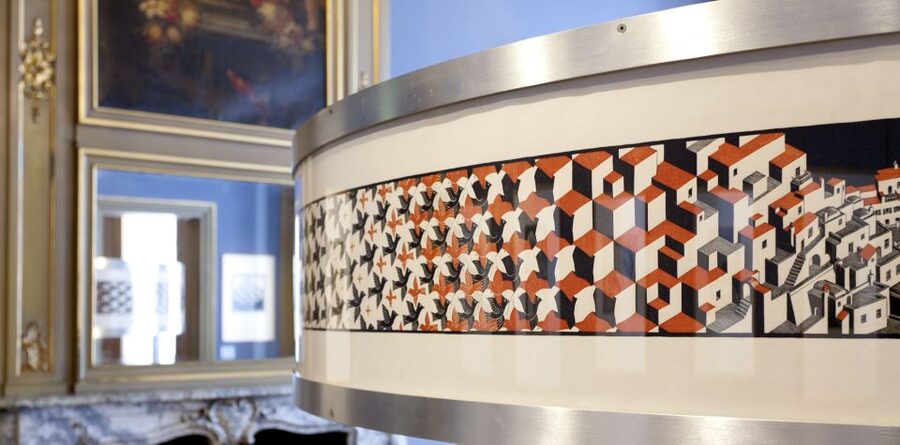
- Metamorphosis III: The huge woodcut combines time and space in a long, unusual display that rewards slow viewing.
- Hands-on exhibits: The Looking as Escher Does section uses puzzles and optical challenges to explain how Escher’s images work.
- Good for families: Children up to age six enter free with a paying adult, and a free treasure hunt adds purpose to the visit.
- Flexible ticket: The ticket is valid for 365 days, with free cancellation up to 24 hours before the booked time and a reserve-now, pay-later option.
Escher’s impossible worlds in a former Winter Palace
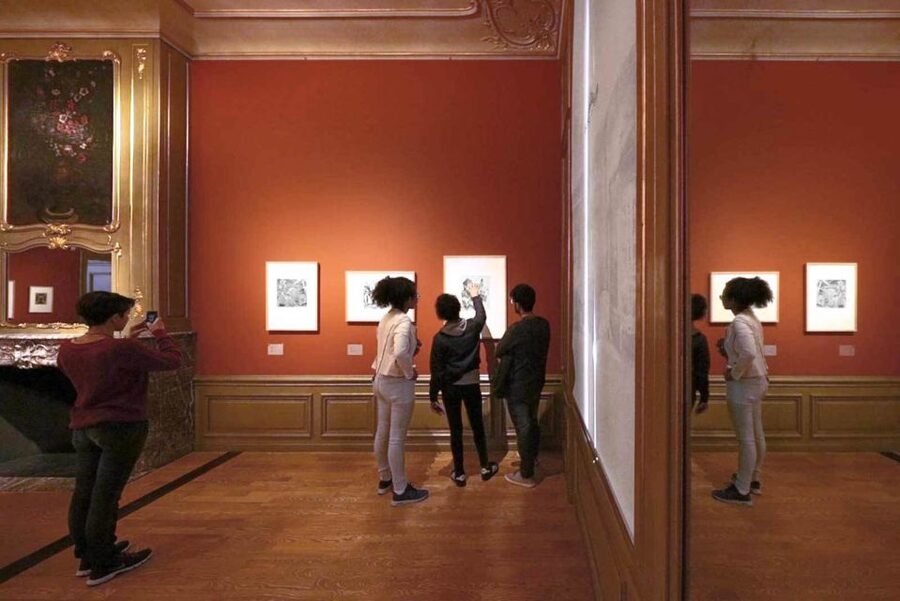
Escher in Het Paleis gives you two experiences at once. You are looking at the work of M.C. Escher, one of the best-known Dutch graphic artists, while also walking through the former winter residence of Queen Mother Emma of the Netherlands.
That pairing works unusually well. Escher’s art often makes ordinary spaces feel strange, and the palace itself has plenty of details to keep your eyes moving. Look up at the chandeliers and across the floors as carefully as you look at the prints. The building is not just a container for the collection. It is part of the visit.
The exhibition presents almost the full range of Escher’s work. You will find the familiar images of repeating creatures, endless stairs, and impossible buildings, but you will also see pieces that reveal how his style changed over time. This matters because Escher did not begin with the mathematical patterns that made him famous. His artistic path developed through different subjects and techniques before he became associated with tessellations and visual puzzles.
If you know only the most famous images, set aside time for the less familiar work. It helps explain why the later prints feel so controlled and inventive. You are not simply moving from one optical illusion to another. You are following an artist as he tested ways to represent space, order, repetition, and transformation.
More Palace Museums in the world:
- Venice’s Best: Basilica, Doge’s Palace, Gondola & History Gallery
★ 4.5 · 2,478 reviews - Royal Palace & Prado Museum Skip the Line Guided Tour
★ 4.5 · 1,347 reviews - Venice: City Pass with Museums including Doge’s Palace
★ 4.1 · 1,020 reviews
Starting with Escher’s life and artistic development
A short introductory film helps set the tone before you move through the galleries. It offers useful background on Escher’s life and gives you a framework for looking at the work rather than treating each print as a separate trick.
I recommend paying attention to the progression of the exhibition. Early and less familiar pieces show interests that later return in more complex form. By the time you reach the famous impossible scenes, you have a better sense of how carefully Escher built them.
The written information beside the works is available in English and Dutch. An audio guide is also included in English, Dutch, German, French, Chinese, Japanese, Ukrainian, and Korean. That makes the museum easier to enjoy if you want more context than a quick label provides.
The audio guide is not essential for everyone. The displays provide useful explanations, and some visitors prefer to move at their own speed. If you enjoy learning about technique and biography, though, the guide can help connect the individual prints to Escher’s wider ideas.
The famous prints, from Day and Night to endless stairs
The central galleries contain the images many people come to see. Day and Night is a good example of Escher’s ability to make a flat print appear to shift and transform. A Dutch scene changes into a pattern of birds, so the subject seems to move from one form to another without a clear break.
Climbing and Descending takes a different approach. Rows of figures appear to climb and descend the same staircase forever. The image looks simple at first, but the longer you study it, the more unsettling the logic becomes.
You will also see the repeating designs and tessellations that made Escher a favorite among mathematicians, graphic designers, architects, and anyone who enjoys a visual puzzle. The collection is useful for showing that these patterns were not isolated experiments. They became a central part of his way of thinking.
Do not rush past the pieces that are less instantly recognizable. The exhibition is strongest when it shows both the famous optical effects and the quieter work around them. That balance gives the visit more substance than a gallery filled only with poster images.
Why Metamorphosis III deserves extra time
Metamorphosis III is the museum’s largest attention-grabber. At roughly 7 meters long, the woodcut is displayed in an unconventional way that lets you follow its changes across time and space.
This is not a work to glance at and photograph before moving on. Give yourself time to trace how one shape becomes another. The scale makes the idea easier to grasp, since you can follow the movement across a long sequence instead of seeing it compressed into a small frame.
The work also shows why Escher’s art can appeal to people who do not usually spend much time in museums. You do not need a background in art theory to see the basic pleasure of watching forms transform. The visual logic is precise, but the first response is usually simple curiosity: how did he make that happen?
If the gallery is crowded, wait for a quieter moment. The length of the piece makes it difficult to appreciate when people are packed closely around it.
More Palaces to Tour in the world:
- Venice: Doge’s Palace Reserved Entry Ticket
★ 4.6 · 42,716 reviews - Paris: Versailles Palace and Gardens Full Access Ticket
★ 4.6 · 41,579 reviews - Granada: Alhambra & Nasrid Palaces Tour with Tickets
★ 4.7 · 19,801 reviews - Sintra: Pena Palace and Park Entrance Ticket
★ 4.2 · 17,410 reviews
The palace details are part of the collection
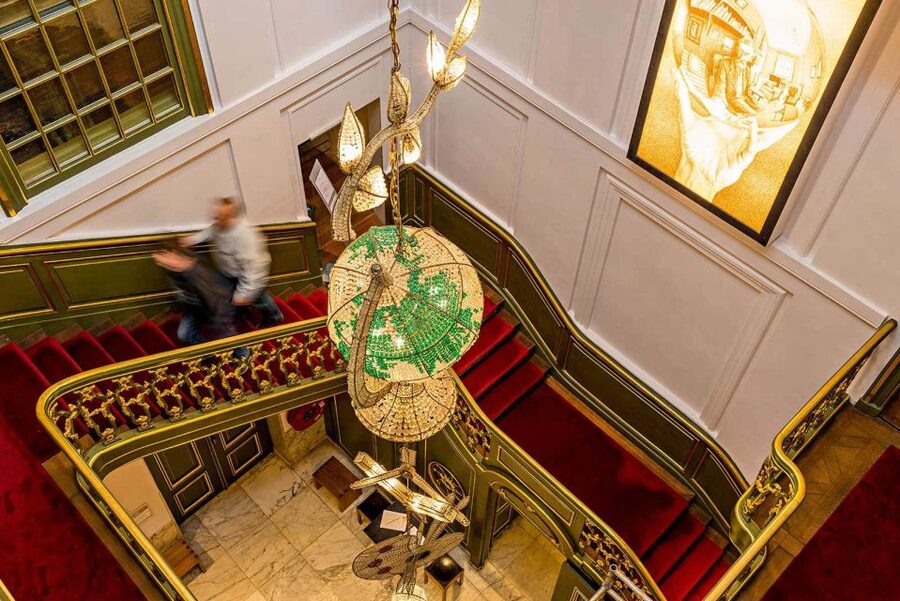
The building gives the visit a character that a modern gallery would not provide. This is the only public building in The Hague where the original royal atmosphere has been maintained, so you get glimpses of how the palace was used as well as the art itself.
The chandeliers deserve particular attention. They are easy to overlook when your focus is on the prints, but they add another layer of visual play to the rooms. Look at the ceiling and floor as you move through the museum. The interior details help make the visit feel less like a standard white-wall exhibition.
The palace is not huge, and some rooms are relatively small. That keeps the collection manageable, but it also means the museum can feel close and stuffy when visitor numbers rise. If you prefer a slower visit, allow extra time and avoid treating the exhibition as a quick march from one famous print to the next.
The building’s history is presented alongside Escher’s work, giving you a glimpse of both the artist and the royal residence. That combination is one of the strongest reasons to visit even if you are only moderately familiar with Escher.
Looking as Escher Does on the upper floor
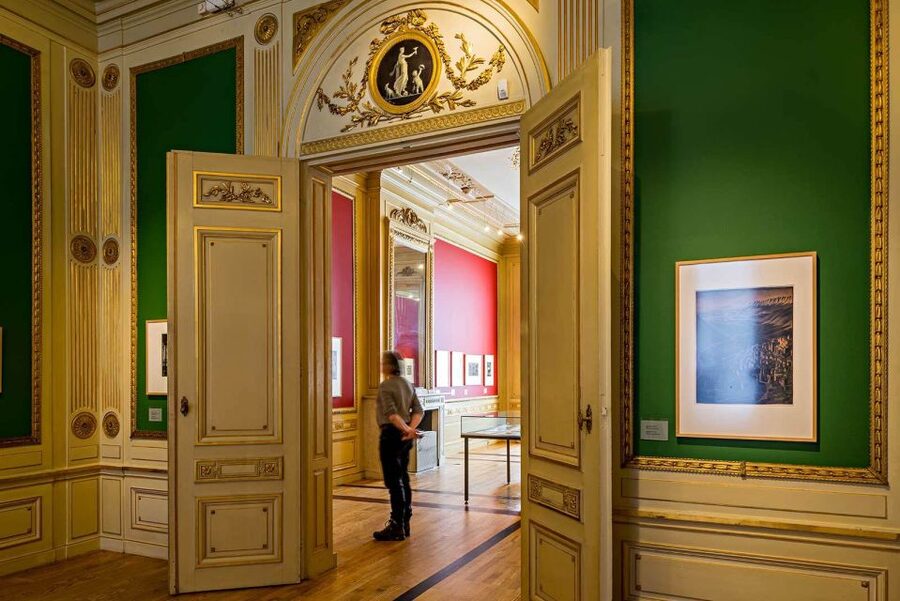
The interactive section, Looking as Escher Does, is especially useful for families and anyone who wants more than wall labels. Here you can work through puzzles with your eyes and use hands-on activities to understand some of Escher’s visual ideas.
This section explains the art by making you test it. Instead of simply being told that an image plays with perspective or repetition, you get a chance to see how your own perception can be guided or misled.
Children tend to get more from this area than from a long sequence of framed prints, especially when the visit includes the free treasure hunt. The activity gives younger visitors something specific to look for and helps break up the more thoughtful gallery sections.
Adults should not skip it. The upper floor is not just a children’s corner. It turns Escher’s methods into practical problems, and that can sharpen your understanding of the prints downstairs. If you are visiting with a family, plan enough time for the interactive displays rather than treating them as an optional five-minute stop.
How long to allow for the visit
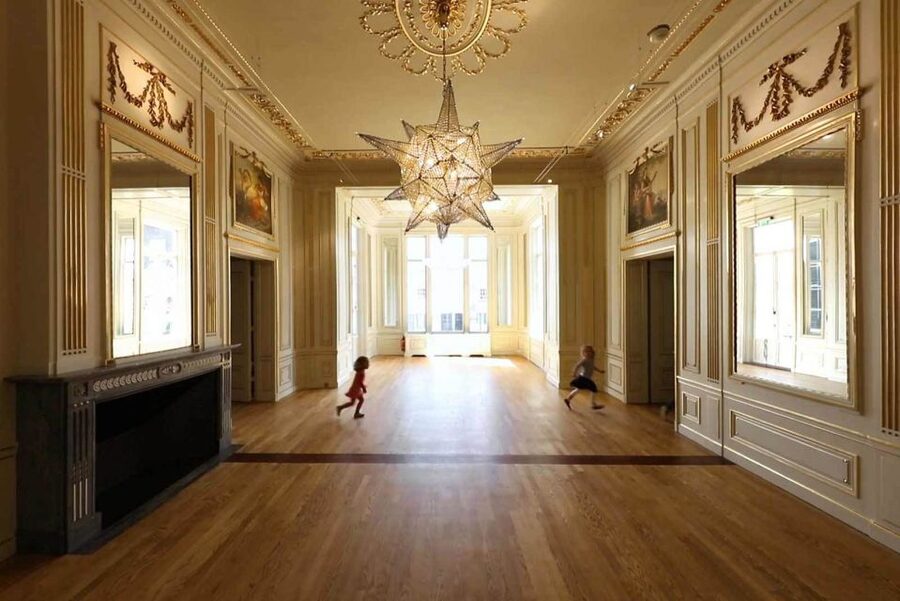
You can see the museum in about an hour if you move briskly through the rooms. I would allow closer to two hours if you want to read the information, use the audio guide, study the major prints, and spend time with the interactive displays.
The right amount of time depends on your interest in Escher. Someone who already knows the famous works may focus on the artist’s development and the palace details. A first-time visitor may need longer to understand why the images work and to compare the different kinds of illusion.
The museum is compact enough to fit comfortably into a day of sightseeing in central The Hague. It also works well as a stand-alone stop for a few hours. Nearby, you can find lunch spots and walk around the area near the lake and the Parliament buildings.
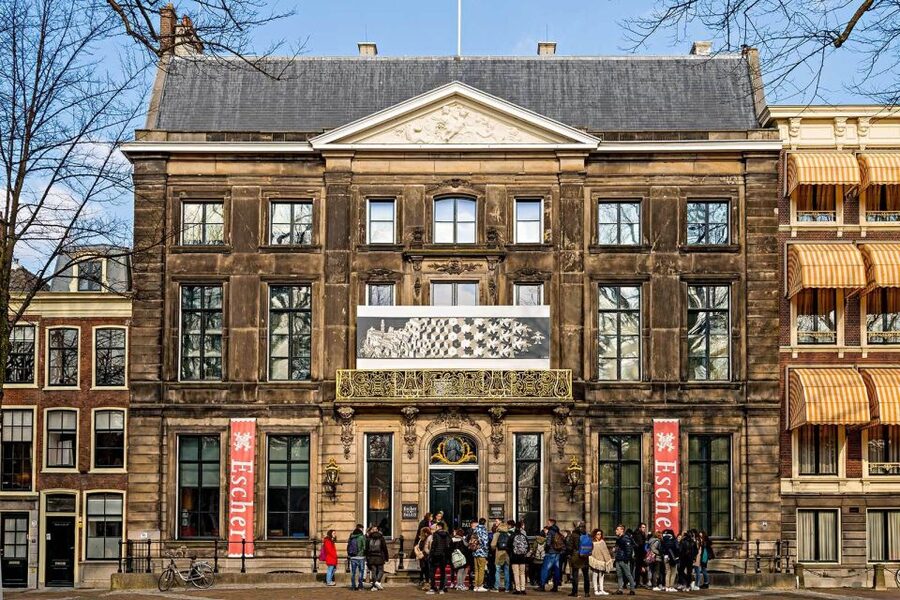
Getting to Lange Voorhout 74
The museum is at Het Paleis, Lange Voorhout 74 in The Hague. From The Hague Central Station, take tram 9 to Korte Voorhout or tram 17 to Kneuterdijk.
The location makes this an easy addition to a city visit, and it can also work as a day trip from Amsterdam if you combine it with another museum or attraction in The Hague. The ticket’s 365-day validity provides unusual flexibility, though you still need to check availability and starting times when making plans.
Large bags and luggage are not allowed inside. Travel light, or make arrangements before arriving. This is particularly important if you are coming directly from a station with suitcases.
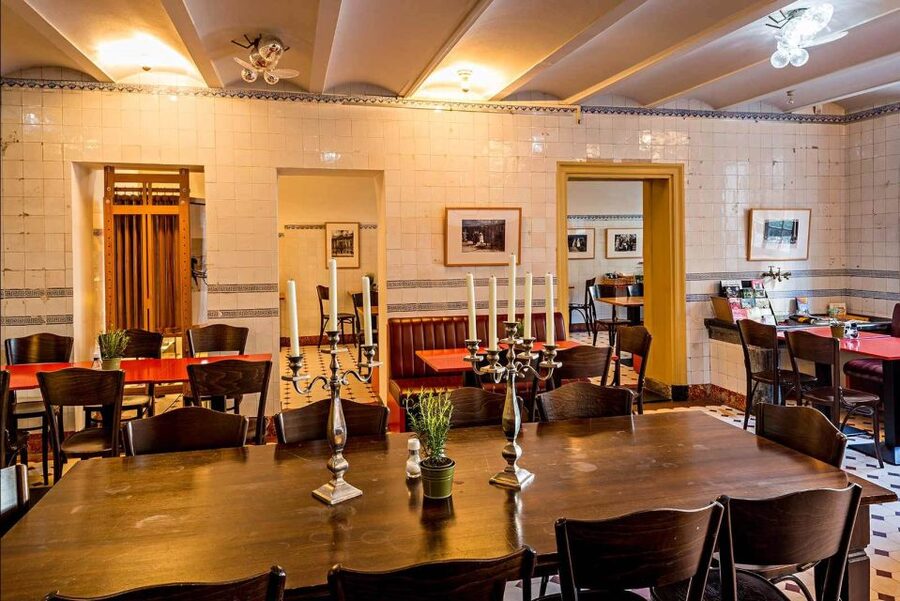
The museum has a café in the former palace kitchen. That gives you a pleasant place to pause after the galleries, and it lets you see another part of the old building rather than leaving as soon as you finish the last exhibit.
Is the $15 ticket good value?
At $15 per person, the ticket is good value if you have any interest in Escher, graphic design, mathematics, visual perception, or historic interiors. You are getting access to more than 130 prints, the large Metamorphosis III, the palace rooms, the interactive section, and an audio guide in several languages.
The price also works well for families. Children up to age six enter free with a paying adult, and the treasure hunt adds a free activity without requiring a separate family package.
The ticket is less compelling if you want a large general art museum or a guided history tour of The Hague. This is a focused collection, not a broad survey of Dutch painting. It also does not include a guided tour. A private guide for up to 20 people costs EUR 60 and must be reserved in advance.
For most independent visitors, the included audio guide and clear exhibition layout should be enough. The guided option makes more sense for a group that wants a structured explanation of both Escher and the palace.
Practical details that affect your visit
The museum is closed on Christmas Day and January 1. It remains open on Easter, King’s Day, Ascension Thursday, Whitsun, and Whit Monday.
Free cancellation is available up to 24 hours before your visit, and you can reserve now and pay later. These terms are useful if your Hague plans depend on weather, train schedules, or a changing city itinerary.
The ticket is presented as a discounted online entry, but the real value is flexibility as much as savings. You avoid having to commit to a single short visit window, since the admission remains valid for 365 days. Check the available times before booking, especially if you are visiting during a busy period.
The exhibition is suitable for children, but the palace rooms and display areas may feel tight when busy. If you are sensitive to warm or poorly aired rooms, keep that in mind and allow yourself a slower pace.
Who will enjoy Escher in Het Paleis most?
You should put this museum high on your list if you already like Escher or want to understand why his images have remained so popular. It is also a strong choice for graphic designers, students of visual perception, and anyone who likes art that asks you to look twice.
Families have plenty to do, thanks to the interactive section and treasure hunt. The museum is small enough not to overwhelm young children, while the puzzles give them a reason to stay engaged.
It also suits visitors who prefer a focused museum rather than a huge national collection. You can see a great deal in one or two hours, then continue on foot or by tram to other parts of The Hague.
You may want to choose another museum if you dislike optical puzzles or want a large collection of conventional paintings. Escher’s work can feel repetitive if you are not interested in patterns, perspective, or impossible scenes. The palace setting helps broaden the visit, but Escher remains the clear focus.
Should you book this Escher museum ticket?
I would book it if you want a compact, thoughtful museum visit with plenty for both adults and children. The combination of original Escher prints, the royal interior, Metamorphosis III, and hands-on puzzles gives you more than a quick display of famous images.
Book with a little extra time if you want to use the audio guide or read the background material. Families should plan around the treasure hunt and upper-floor activities. If you are traveling with luggage, deal with that before arriving.
At $15, this is an easy recommendation for Escher fans and a sensible choice for a first introduction to his work. The main caution is the compact, sometimes stuffy interior. Visit at a quieter time if you can, and take your time with the large works rather than rushing through the rooms.
FAQ
Where is Escher in Het Paleis located?
The museum is at Het Paleis, Lange Voorhout 74 in The Hague.
How do I get there from The Hague Central Station?
Take tram 9 to Korte Voorhout or tram 17 to Kneuterdijk.
What does the ticket include?
The ticket includes admission to Escher in Het Paleis. An audio guide is also included.
Which languages are available for the audio guide?
The audio guide is available in English, Dutch, German, French, Chinese, Japanese, Ukrainian, and Korean.
How long is the ticket valid?
The ticket is valid for 365 days. Check availability for the available starting times.
Is there a guided tour?
A guided tour is available for groups of up to 20 people at EUR 60 per guide. It must be reserved in advance.
Are children allowed in free?
Children up to six years old enter free when accompanied by a paying adult.
Are large bags or luggage allowed?
Large bags and luggage are not allowed inside the museum.
When is the museum closed?
The Palace is closed on Christmas Day and January 1. It is open on Easter, King’s Day, Ascension Thursday, Whitsun, and Whit Monday.
Newly added in the world
- Avignon: Around The Palace Tour★ 4.5 · 13 reviews
- Ayutthaya Full-Day Tour with Bang Pa In (Summer Palace)★ 5.0 · 2 reviews
- Bali: Gate Of Heaven and Water Palace Tirta Gangga Package★ 4.7 · 3 reviews
- Aranjuez: Royal Palace Guided Tour★ 4.5 · 93 reviews
- Asia Continent & Topkapı Palace & Harem. Guided, Small group★ 4.9 · 3 reviews
- Kornik Castle and Rogalin Palace Half-Day Private Tour★ 5.0 · 2 reviews
- Antananarivo: Guided Tour and sunset in queen’s palace★ 3.9 · 13 reviews
- Royal Palace of Aranjuez Small-Group Tour with Entry Ticket★ 5.0 · 2 reviews
Museums, compared.
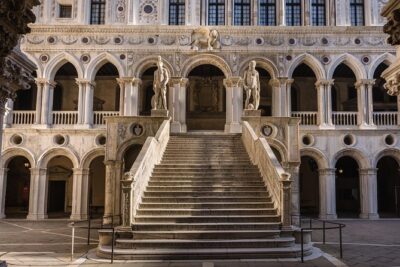
Venice’s Best: Basilica, Doge’s Palace, Gondola & History Gallery
Read our review →
Royal Palace & Prado Museum Skip the Line Guided Tour
Read our review →
City Pass with Museums including Doge’s Palace
Read our review →
Crete: Knossos Palace and Museum E-Tickets with Audio Guides
Read our review →
Venice Museum Pass & Doge’s Palace Entrance Ticket
Read our review →
Palace, Museum, Madrasa & Medina Highlights Tour
Read our review →
Madrid in a Day Tour:Royal Palace, Historic Center & Prado Museum
Read our review →Browse the lists this tour appears in