
Review · DOGE'S PALACE AND ST MARK'S TOURS
All-Inclusive Tour: Doge Palace, St Mark’s Basilica & Square
Venice reveals its character best on foot, and this tour takes you from Marco Polo’s House through quiet squares and narrow lanes before reaching the grand rooms of Doge’s Palace and St. Mark’s Basilica. I like the mix of lesser-known street corners and Venice’s headline sights, since you get both the city’s everyday texture and its ceremonial heart.
I also like that the Doge’s Palace and Basilica admissions are included, with ticket-line access helping you make good use of four hours. The main drawback is the group setup: some departures can be large, and a bilingual tour or a guide facing away from the microphone may make a few explanations hard to follow.
- Marco Polo’s House: Begin with the Venetian home linked to one of Europe’s most famous explorers.
- Santa Maria Formosa: Pause at a church tied to an unusual local legend about the Virgin Mary.
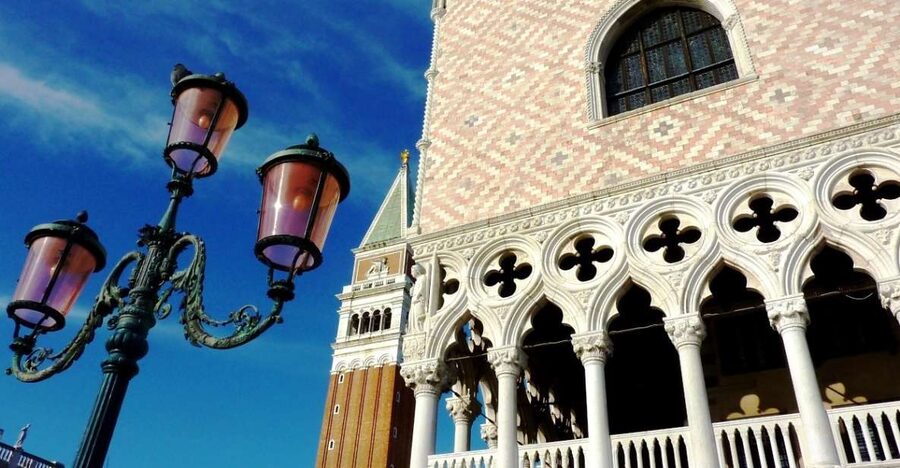
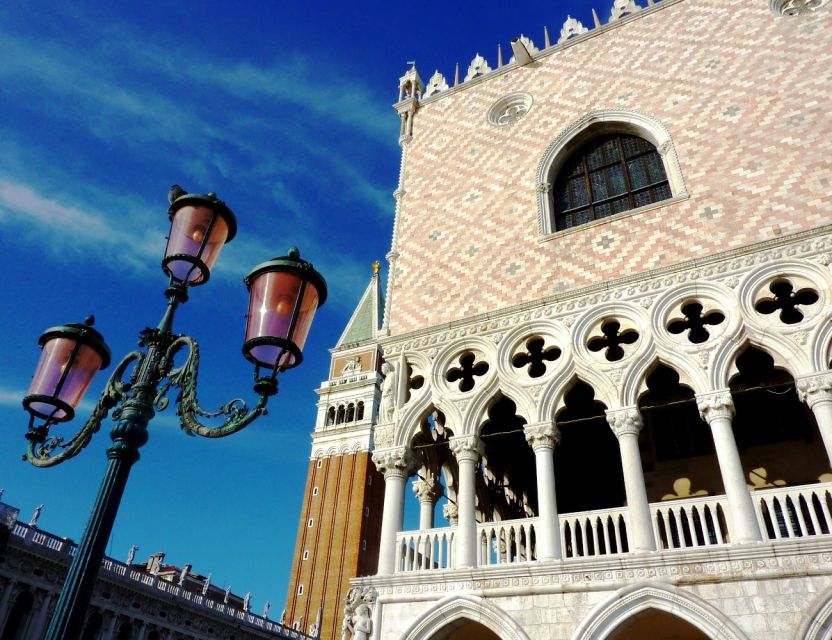
- Doge’s Palace: Walk through the former center of Venetian political power and its art-filled rooms.
- Bridge of Sighs: See the darker side of the republic’s justice system and authority.
- St. Mark’s Basilica: Admire Byzantine art, gold mosaics, marble inlays, and the Treasury.
- Practical edge: Skip the ticket lines, use a live guide in four languages, and cancel up to 24 hours ahead.
A Four-Hour Introduction to Venice’s Grand Center
At $151.80 per person, this is not a bargain-priced stroll. It is priced as a guided half-day visit with entry to two of Venice’s most important interiors, which changes the value calculation.
If you are short on time, the tour bundles several major sights into one organized route. You do not need to work out how to connect St. Mark’s Square, the Doge’s Palace, and the Basilica on your own. You also get historical explanation along the way, rather than simply walking through rooms and trying to guess what mattered.
The walking portion gives the tour some welcome variety. Venice can feel like one beautiful postcard after another around San Marco, but the route also passes through smaller lanes, canals, old houses, and local squares. You cover a fair amount of ground, so wear comfortable shoes and be ready for a warm, active morning or afternoon.
Starting Behind the Correr Museum
The meeting point is on Calle larga de l’Ascension, near the post office and behind the Correr Museum. A TURIVE staff member checks your voucher there.
This area sits close to St. Mark’s Square, but the starting point can feel crowded with several tours gathering at once. Allow a little patience while the staff sorts groups and guides. Early organization may be less polished than the tour itself, especially when multiple departures leave from the same spot.
Once the group is together, you set off on foot. The activity returns to the same meeting point at the end, which is useful if you have left luggage, planned dinner nearby, or want to continue exploring San Marco afterward.
More Doge's Palace Tours in Venice:
- Venice: Doge’s Palace Reserved Entry Ticket
★ 4.6 · 42,716 reviews - Doge’s Palace & St. Mark’s Basilica with Terrace Access Tour
★ 4.7 · 10,697 reviews - Venice: Doge’s Palace and St Mark’s Basilica Walking Tour
★ 4.4 · 6,291 reviews
Marco Polo’s House and Venice’s Narrow Lanes
The first part of the route takes you through streets associated with Marco Polo, including the house where he was born and raised. The stop is less about entering a grand museum and more about placing a famous name into the real fabric of Venice.
That is one of the pleasures of a walking tour here. A small address or weathered building can connect to a much larger story, even when the setting looks ordinary. You begin to see Venice as a working city shaped by trade, travel, and powerful families, not only as a collection of palaces.
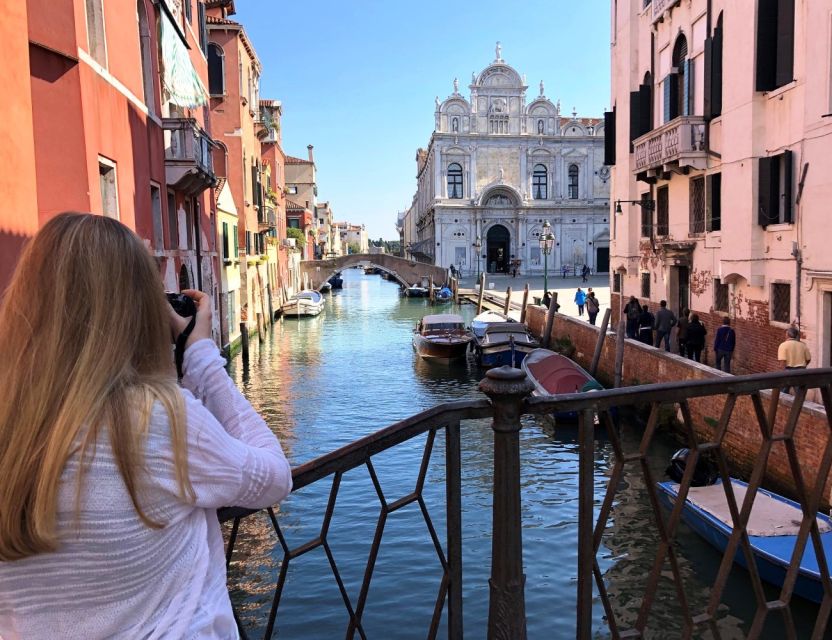
The route continues through narrow streets lined with canals and aging historic houses. You will not cover every district in Venice during four hours, but this opening section helps you get your bearings around the central area. It is especially useful if San Marco is your base and you want a better feel for what lies just beyond the square.
Santa Maria Formosa and Campo SS. Giovanni e Paolo
The walk pauses at Chiesa Santa Maria Formosa, a church connected with the story of the Holy Virgin appearing in the form of a voluptuous woman. The tale gives the stop a distinctly Venetian flavor: part religious tradition, part local storytelling, and part reminder that Venice’s monuments often come with a curious anecdote.
Next comes Campo SS. Giovanni e Paolo, described as the second-largest square in Venice. A campo is more than an open space for photographs. These squares help explain how neighborhoods functioned, giving people room to meet, worship, trade, and move between the tight streets.
I like this section because it breaks up the grand San Marco focus. You are not simply being led from one famous entrance to another. The walk gives you smaller landmarks and a sense of scale before returning to the political and religious center of the city.
The pace does require some effort. One person found that the group covered a lot of ground and that the heat made the walk hard work, though worthwhile. Plan around the weather when you can, and bring water. The route is not a passive sightseeing experience.
Returning Through the Mercerie
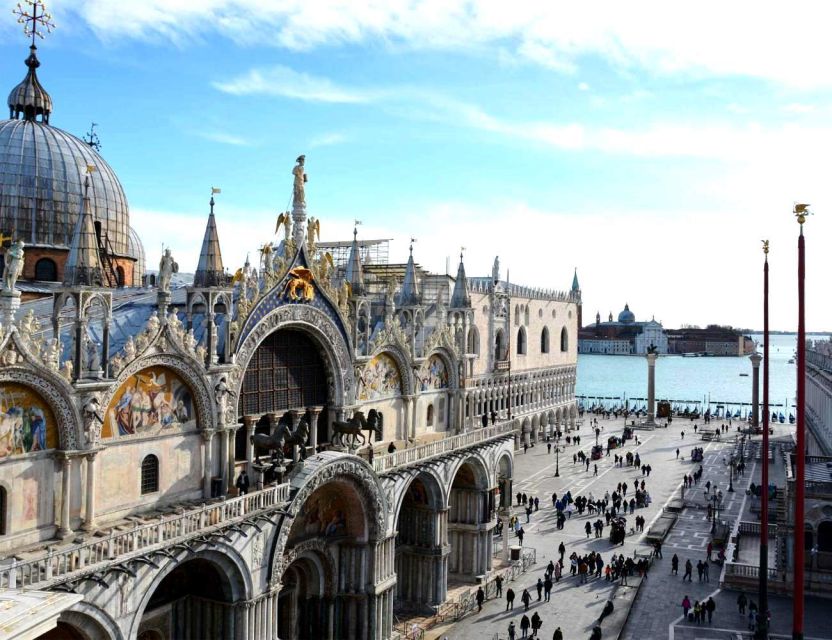
The return toward San Marco passes through the Mercerie, one of the historic commercial routes leading toward the square. This is a fitting transition. You move from quieter lanes and neighborhood spaces back toward the area where Venice concentrated trade, politics, ceremony, and religious power.
Your guide’s role matters here. A well-informed guide can point out details that you would likely miss while trying to navigate the crowds and bends in the street. One guide named Alyssia received especially strong praise for being friendly, professional, and clear, and other guides were described as offering solid historical context.
The sound system can affect the experience. Some departures provide individual headsets, which make it easier to hear while walking. On other departures, explanations may be harder to catch if the guide turns away from the microphone or if two languages are combined in one group. If you cannot hear, say so early rather than silently losing the thread.
More Palaces to Tour in Venice:
- Legendary Venice: Doge’s Palace, St Mark’s & VIP Terrace Access
★ 4.5 · 5,033 reviews - Venice: Doge’s Palace and St. Mark’s Basilica Tour
★ 4.5 · 3,734 reviews - Venice In a Day: St Mark’s, Doges Palace Gondola Ride & City Tour
★ 5.0 · 3,588 reviews - Venice: St. Mark’s Basilica & Doge’s Palace Tour with Ticket
★ 4.7 · 3,375 reviews
Entering Doge’s Palace
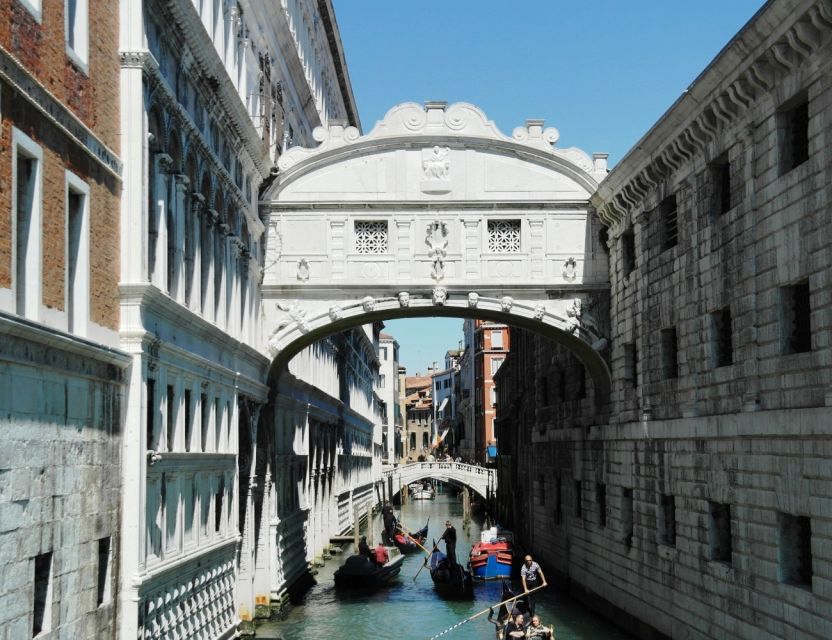
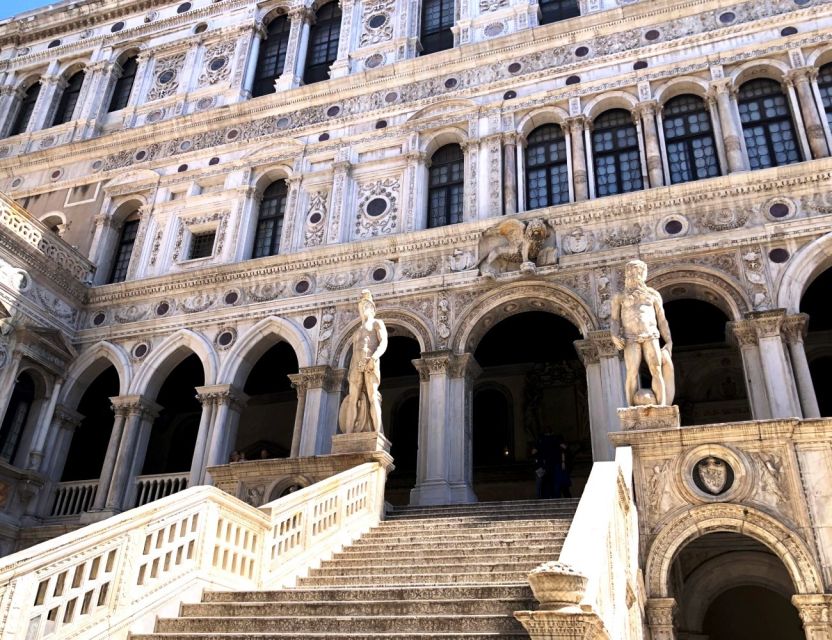
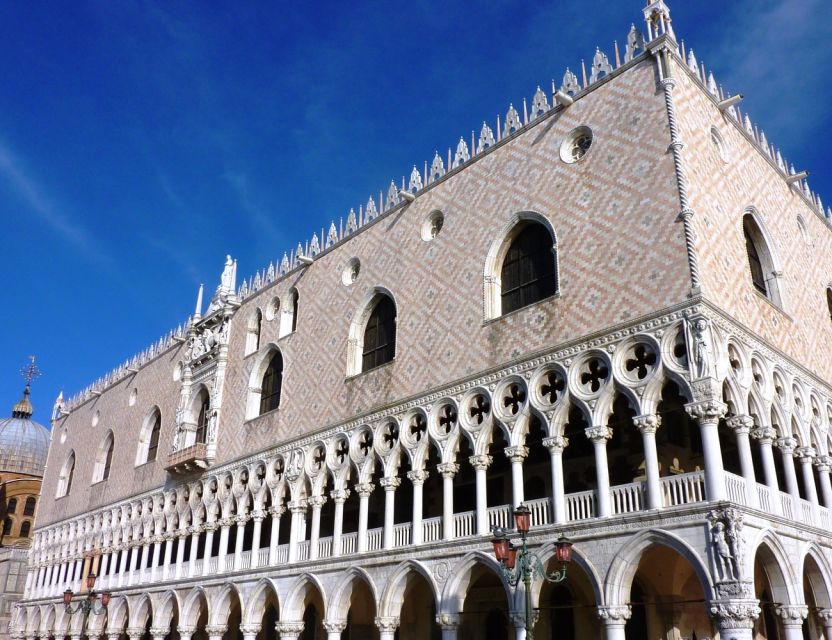
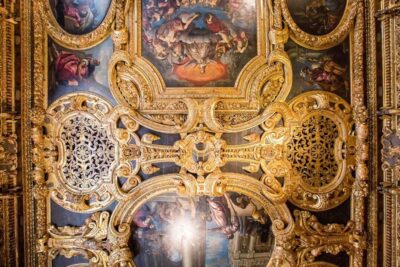
The tour then enters Palazzo Ducale, the Doge’s Palace, using the included admission and skip-the-ticket-line access. This is the point where Venice’s political power becomes visible in rooms built to impress.
Inside, expect grand halls lined with art and spaces connected to the government of the Venetian Republic. Your guide leads you through the halls of power, explaining how the palace worked and directing your attention to major paintings and decorations.
The value here is not just the building itself. The palace shows how Venice presented authority. Monumental rooms, carefully placed artwork, and formal public spaces communicated the reach of the dukes and the institutions around them. With a guide, you can connect the decoration to the political system instead of treating each room as an unrelated picture gallery.
The palace is also where the tour’s balance shifts. The opening walk is about streets, legends, and urban life. Here, the focus is power, government, art, and punishment. That contrast makes the afternoon more satisfying than a visit limited to only churches or only palaces.
The Bridge of Sighs and the Cost of Power
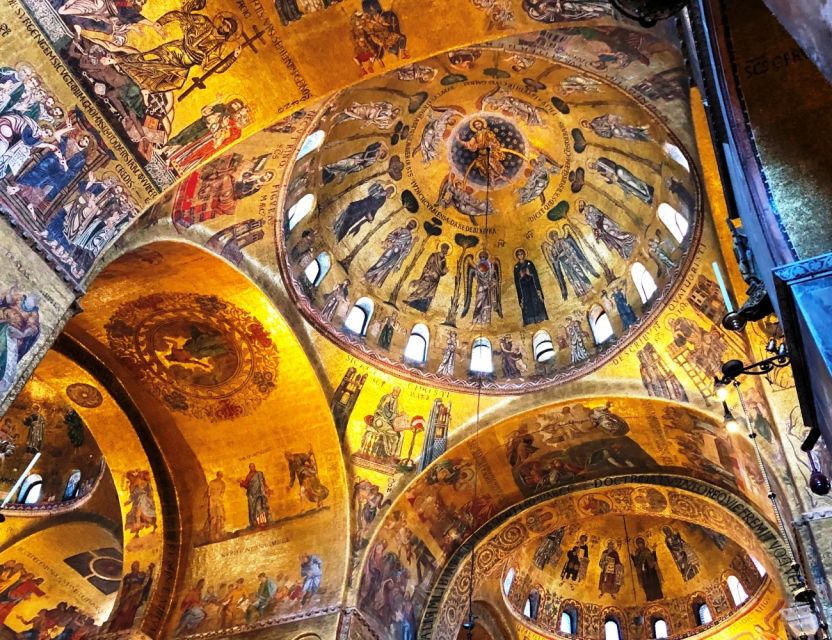
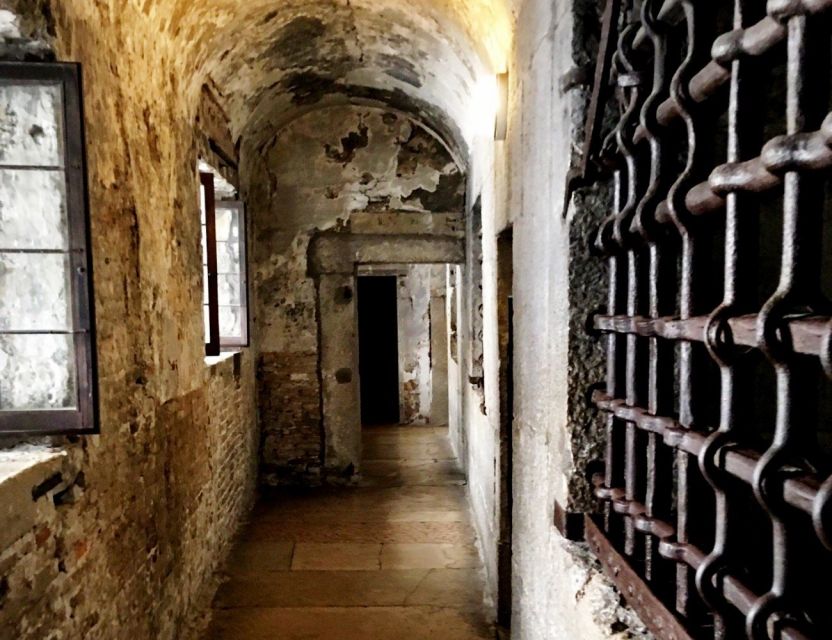
The Bridge of Sighs is one of Venice’s most photographed sights, but its meaning goes beyond the familiar view from the canals. The bridge connected the palace to the prisons, allowing prisoners to pass from the rooms of judgment toward confinement.
Your guide uses this crossing to show the consequences of Venetian authority. The bright ceremonial world of the palace had a harsher side, and the Bridge of Sighs makes that connection physical. You see where government decisions could lead, rather than hearing only about splendid rooms and successful trade.
This is a short part of the route, but it gives the palace visit a needed edge. Venice’s past was not only elegant. Its political system was powerful, disciplined, and capable of severe punishment.
Gold Mosaics Inside St. Mark’s Basilica
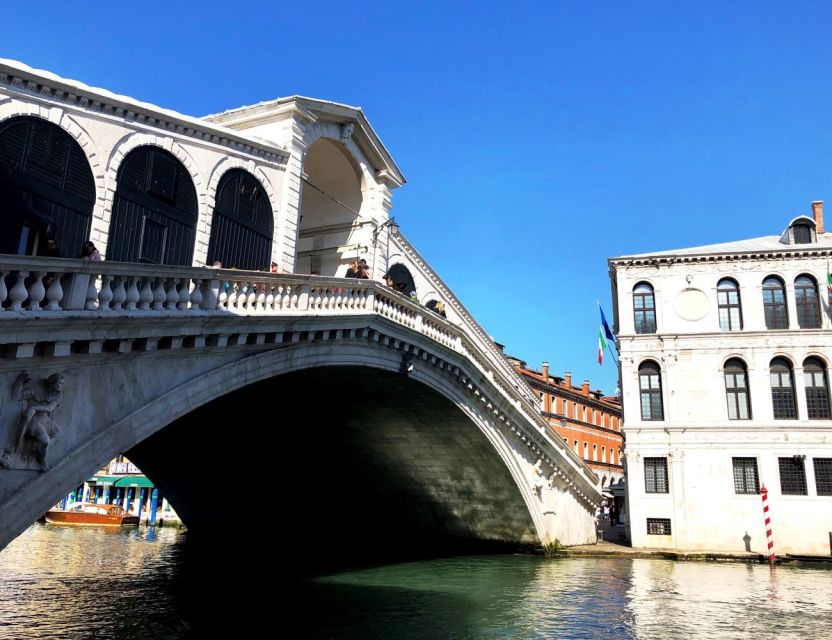
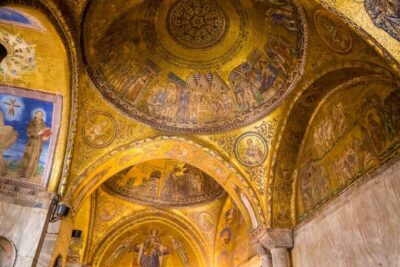
The final major stop is St. Mark’s Basilica, one of Venice’s most imposing religious buildings. Inside, the focus turns from political authority to Byzantine art, sacred decoration, and the visual language of the church.
Look for the gold mosaics and marble inlays, which give the interior its distinctive glow. The decoration is not a minor finishing touch. It shapes the entire mood of the building, covering the space with images, pattern, and color that reward a slower look.
The tour also includes fine religious art in the Treasury. This adds another layer to the basilica visit, moving beyond the main nave and its most obvious decorations. Your guide can help explain what you are seeing and why the objects and surfaces mattered to Venice’s religious and civic identity.
The Basilica portion can be the most difficult section for a large group. One departure had more than 40 people, making it possible to hear the guide but not always see what she was indicating. That is an important distinction. A microphone helps with sound, but it cannot solve a blocked view in a crowded interior.
The balcony is not included in the listed admission. An additional fee may be required if you want to visit it, so factor that in if an elevated view is important to you.
Group Size, Languages, and Guide Quality
The tour operates with live guides in English, Spanish, French, and German. That gives you a useful choice, but ask carefully about the language arrangement at booking. A tour combining two languages can slow the explanation and make it harder to follow every point.
Group size also varies in practical effect. A small group can feel personal, and one departure with Alyssia had only a very small number of participants. A larger group may still be well organized, but you will need to stay close to the guide and pay attention to the headset.
The strongest part of the guiding is the historical explanation. Guides point out details that are easy to miss even if you have visited Venice before. The main weakness is not usually the information itself, but delivery in crowded spaces. If your guide uses a microphone, keep the receiver close and check that the volume works before moving away from the meeting point.
What to Carry and What to Leave Behind
Backpacks are not allowed in St. Mark’s Basilica, even when you are traveling with a young child. A small carry bag is acceptable according to the practical guidance from the tour experience.
This is easy to overlook and can cause an avoidable nuisance. Leave large bags at your accommodation if possible. If you need to carry essentials, use a compact bag and avoid arriving with a full daypack.
The route involves several hours of walking and standing. Comfortable shoes matter more than dressing for photographs, especially in hot weather. The tour is suitable for a young child, but parents should remember that the pace, heat, and long interior visits may still be tiring.
Is $151.80 a Fair Price?
The price makes the most sense for a first visit, a short stay, or anyone who wants a guided introduction without arranging several separate entries. You receive four hours, a live guide, admission to Doge’s Palace, admission to St. Mark’s Basilica, and access intended to avoid the ticket lines.
If you are already an expert on Venetian art or prefer to move at your own pace, the cost may feel high. You will be following a fixed route and a group schedule, and the Basilica balcony costs extra if you want that addition.
For most first-time visitors with limited time, the price is defensible because it combines the city’s major political and religious sights with a street-level introduction. You are paying for structure, explanation, and time saved, not only for entrance tickets.
Who Should Book This Venice Tour?
I would choose this tour if you have one or two days in Venice and want a strong first look at the city’s central sights. It suits couples, families, and solo visitors who prefer context while walking rather than reading a guidebook at every stop.
It is also a good fit if the Doge’s Palace and St. Mark’s Basilica are priorities. The route puts both in one half-day, while the opening walk adds Marco Polo’s House, Santa Maria Formosa, Campo SS. Giovanni e Paolo, and the Mercerie.
I would hesitate if you dislike groups, need a quiet pace, or want long stretches inside the Basilica with plenty of personal viewing time. In that case, a private tour or separate self-guided visits may suit you better.
Should You Book It?
Book this tour if you want efficient coverage of Venice’s essential sights, especially on a short visit. The guides generally provide strong historical explanations, and the combination of street walking, palace rooms, prison connections, and Byzantine decoration gives you a rounded introduction to the city.
Before booking, confirm the language, prepare for group size differences, and leave your backpack behind. If you accept those limits, this is a practical way to understand why Venice’s beauty was tied to both ceremony and power.
FAQ
How long does the tour last?
The tour lasts four hours.
Where does the tour start?
It starts on Calle larga de l’Ascension, near the post office and behind the Correr Museum. A TURIVE staff member checks your voucher.
Where does the tour end?
The activity ends back at the original meeting point.
What sights are included in the walking portion?
The walk includes Marco Polo’s House, St. Mark’s Square, Chiesa Santa Maria Formosa, Campo SS. Giovanni e Paolo, and the Mercerie.
Are Doge’s Palace and St. Mark’s Basilica included?
Yes. The entrance fee to Doge’s Palace and St. Mark’s Basilica is included.
Does the tour skip the ticket line?
Yes. Skip-the-ticket-line access is included for the activity.
Which languages are available?
Live guides are available in English, Spanish, French, and German.
Can I cancel the booking?
You can cancel up to 24 hours in advance for a full refund. A reserve-now-and-pay-later option is also available.
Newly added in Venice
- Venice: Doge Palace, San Marco Basilica & Rialto Bridge★ 4.7 · 75 reviews
- Venice Doge’s Palace & St. Mark’s Semi-Private Tour, Max 6 People★ 5.0 · 192 reviews
- Venice: Doge’s Palace Historic Mysteries Guided Tour★ 3.7 · 238 reviews
- Venice 3,5 hrs tour: Doge’s Palace, St Mark’s and Hidden Gems★ 4.5 · 264 reviews
- Skip the Line Venice Doge’s Palace and St. Mark’s Basilica Tour★ 4.0 · 263 reviews
- Venice: Doge’s Palace & St. Mark’s Basilica Tour★ 4.7 · 263 reviews
- Doge’s Palace, Bridge of Sighs & Prison Skip-the-Line Tour★ 4.9 · 254 reviews
- Venice: St Mark’s, Doge’s Palace, Murano & Burano Day Tour★ 4.6 · 281 reviews
Doge's Palace and St Mark's Tours, compared.
Doge’s Palace & St. Mark’s Basilica with Terrace Access Tour
Read our review →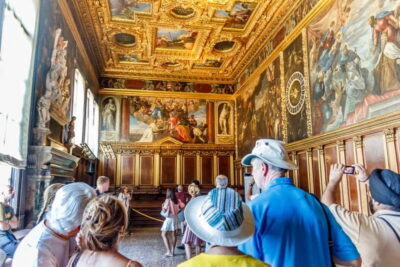
Doge’s Palace and St Mark’s Basilica Walking Tour
Read our review →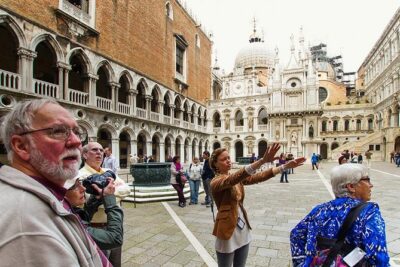
Legendary Venice: Doge’s Palace, St Mark’s & VIP Terrace Access
Read our review →
Venice In a Day: St Mark’s, Doges Palace Gondola Ride & City Tour
Read our review →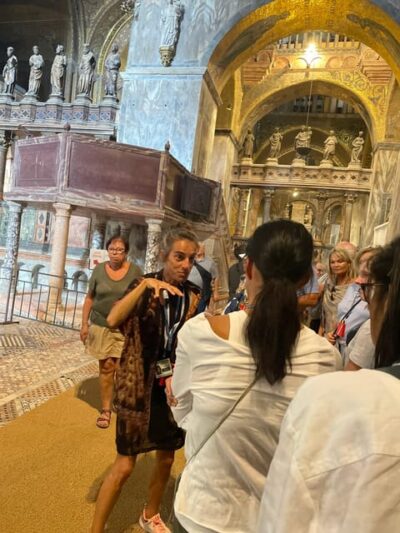
St. Mark’s Basilica & Doge’s Palace Tour with Ticket
Read our review →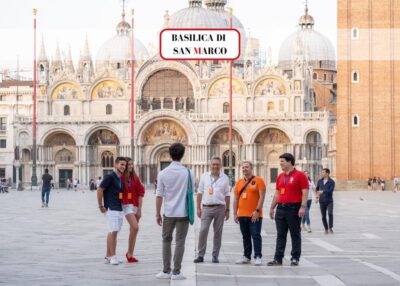
St Mark’s Basilica, Doge Palace, & Bell Tower Option
Read our review →Browse the lists this tour appears in