
Review · PALACE ENTRY TICKETS
Amsterdam: Royal Palace Entry Ticket + Audio guide
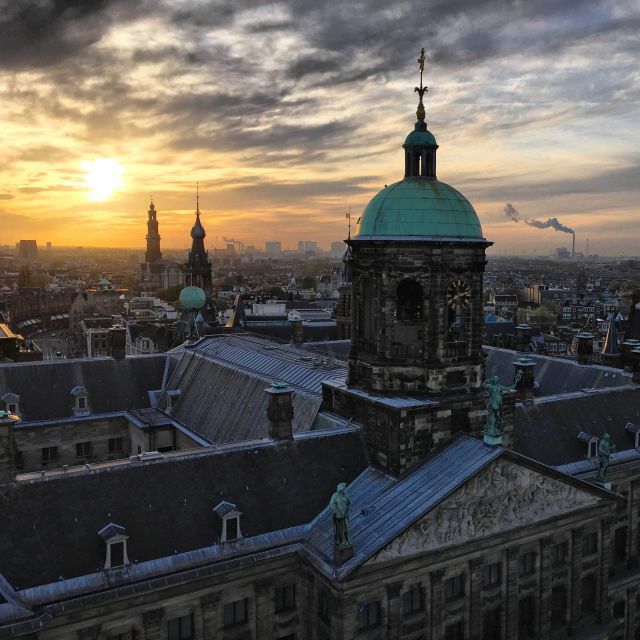
Amsterdam’s Royal Palace is less about fairy-tale turrets and more about civic grandeur. Inside, you’ll find a vast marble Citizens’ Hall, grand chandeliers, Louis Napoleon’s furniture, Dutch Golden Age paintings, and the famous Atlas carrying the heavens on his shoulders. It is still used for state visits and ceremonies, so this is a working palace, not a frozen museum set.
I like the clear multilingual audio guide, which lets you choose a shorter or longer route and stop whenever you wish. I also like the priority entrance, especially when Dam Square is busy. The main consideration is time: you can hurry through in about an hour, but 90 minutes gives the rooms and artwork proper attention.
Key points
- The Citizens’ Hall: Walk through an enormous marble chamber built to express Amsterdam’s power and wealth.
- A palace still in use: State banquets, royal receptions, award ceremonies, and official visits still take place here.
- Eight audio languages: Choose Dutch, English, German, French, Italian, Spanish, Chinese, or Russian.
- Flexible pacing: Follow a shorter route or spend up to two hours examining the rooms.
- Useful for families: Children under 18 enter free, with a children’s multimedia tour offered in Dutch and English.
- Easy central access: The palace sits on Dam Square, near several tram lines and Metro 52 at Rokin.
What the Royal Palace reveals about Amsterdam
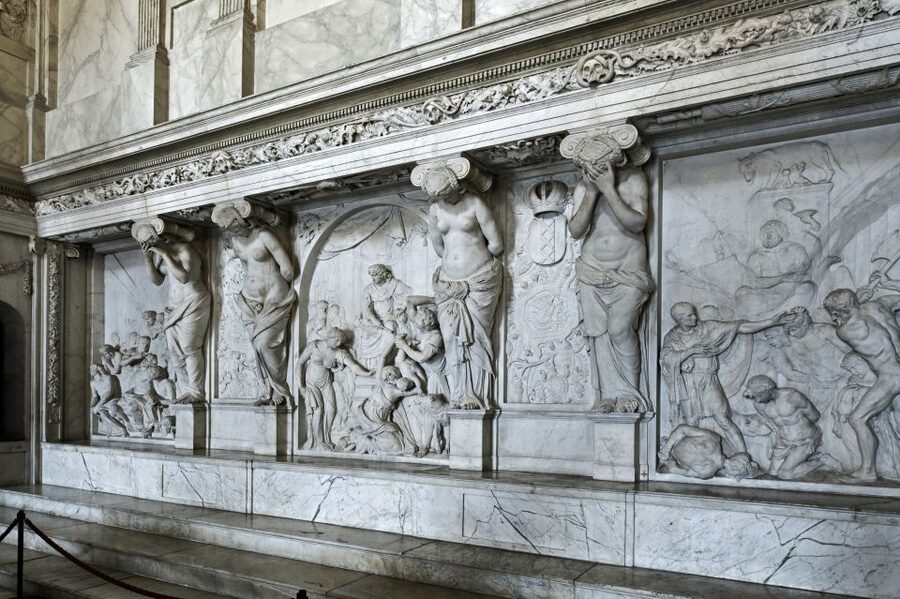
The Royal Palace of Amsterdam began as a 17th-century city building, and that origin shapes the entire visit. This was not first designed as a private royal residence. It was built to project the strength, wealth, and order of Amsterdam during the Dutch Golden Age.
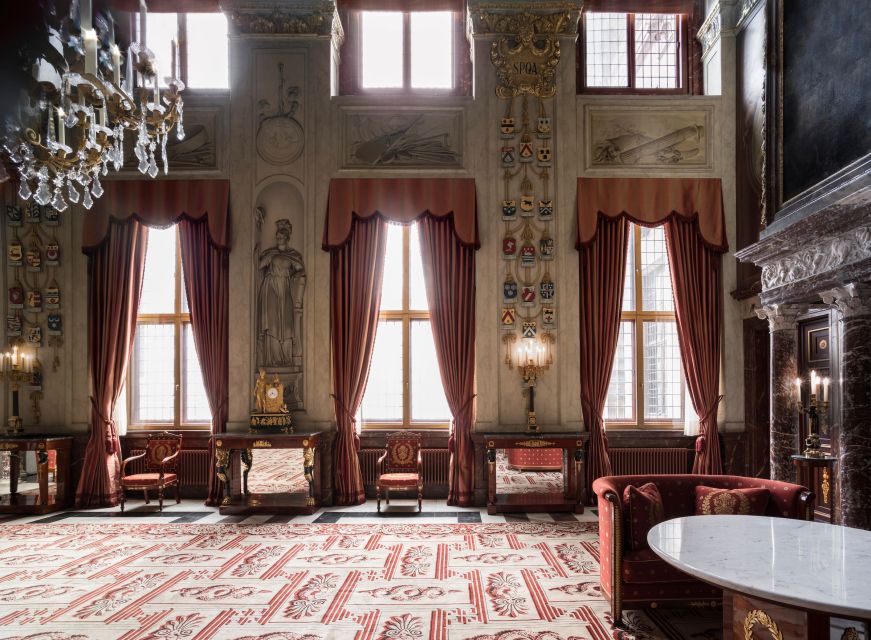
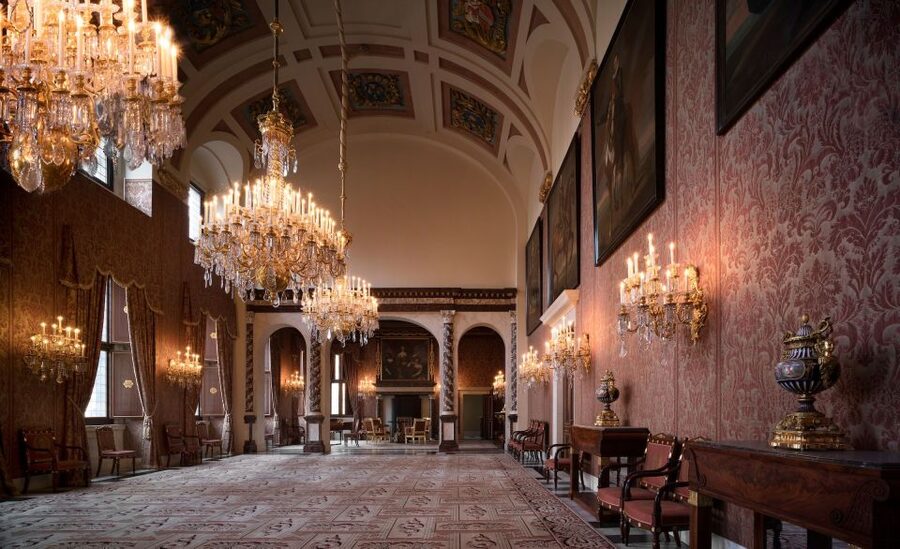
That civic purpose helps explain the scale of the interior. The building feels broad and formal rather than cozy. Marble floors, large halls, sculptures, chandeliers, clocks, and carefully arranged paintings all tell you that Amsterdam wanted its public buildings to rival the courts of Europe.
Later, the building became a royal palace. Louis Napoleon, Napoleon Bonaparte’s brother, used it as a residence during his short reign as King of Holland. The furnishings and decoration from that period remain an important part of what you see.
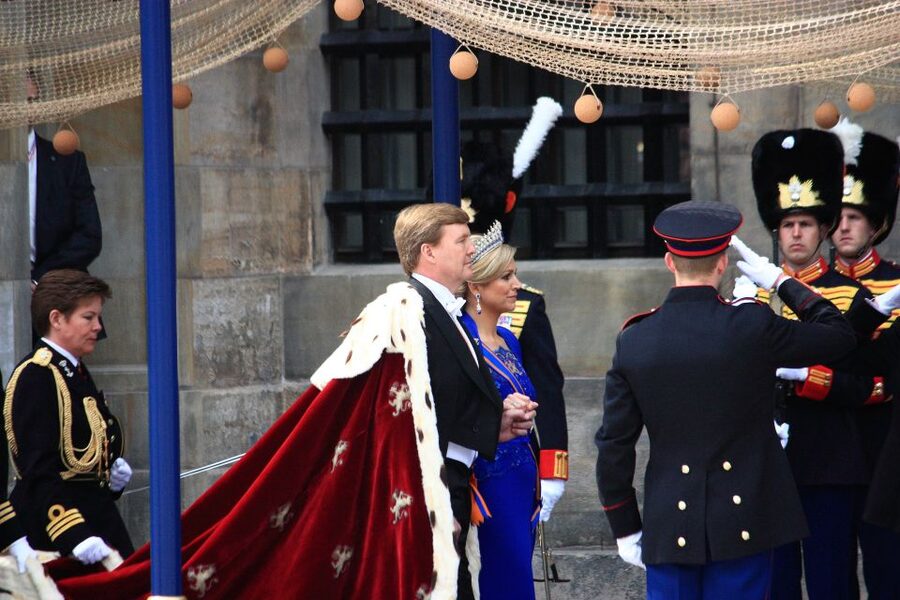
The palace still has an official role. Royal receptions, award ceremonies, state visits, and other formal events take place here. That gives the visit a useful sense of connection with the present. You are not simply walking through rooms that lost their purpose centuries ago.
More Palace Entry Tickets in the world:
- Venice: Doge’s Palace Reserved Entry Ticket
★ 4.6 · 42,716 reviews - Sintra: Pena Palace and Park Entrance Ticket
★ 4.2 · 17,410 reviews - Granada: Alhambra and Nasrid Palaces Entry Ticket
★ 4.6 · 15,130 reviews
Entering at Dam Square
The palace occupies one of Amsterdam’s most central spots, directly on Dam Square. You can reach it by tram numbers 2, 4, 12, 13, 14, 17, and 24. The nearest GVB tram stop is Dam Square, while Metro 52 serves Rokin station.
The central location makes this an easy stop to add between other sights. It also brings one practical warning: Dam Square can be crowded, and the palace entrance may not be instantly obvious if you are focused on the surrounding traffic and buildings.
With a prepaid smartphone ticket, you can use the priority lane and go to the scan desk rather than waiting at the ticket counter. That is the main reason to book ahead. The ticket costs about $15 per person, though the price of buying directly at the palace can vary. One recent price noted by a visitor was 12.50 euros for a ticket bought on site, so compare the current direct price before booking.
The advance ticket is still useful if you value time, want the flexibility to cancel up to 24 hours ahead, or prefer to reserve now and pay later. If the palace is quiet and you are already nearby, buying there may be cheaper.
The audio guide sets the pace
This is a self-guided visit, not a tour led by a named person. You receive a multimedia guide in your chosen language: Dutch, English, German, French, Italian, Spanish, Chinese, or Russian.
The guide is one of the strongest parts of the experience. It explains the building’s purpose, the people connected with it, the artwork, and the way the rooms are used. The information is organized by numbered sections, so you can connect what you hear with the room in front of you.
I recommend taking the device even if you normally prefer to read museum panels. The palace does not provide enough simple wall text to explain every room in the same way. Without the guide, you will still see beautiful architecture and furnishings, but you will miss much of the meaning behind the symbols and decoration.
You can choose a shorter route if your schedule is tight, or follow the longer version for a fuller visit. The ability to stop and start is helpful. You can pause while looking closely at a painting, skip a section that interests you less, or return to a detail without holding up a group.
Allow about an hour for a brisk visit. Give yourself 90 minutes for a comfortable tour, and up to two hours if you enjoy art, architecture, and historical detail. The audio guide is clear and easy to use, but the numbered sections are not always effortless to find. Look carefully for the next number before moving on.
The Citizens’ Hall and Atlas
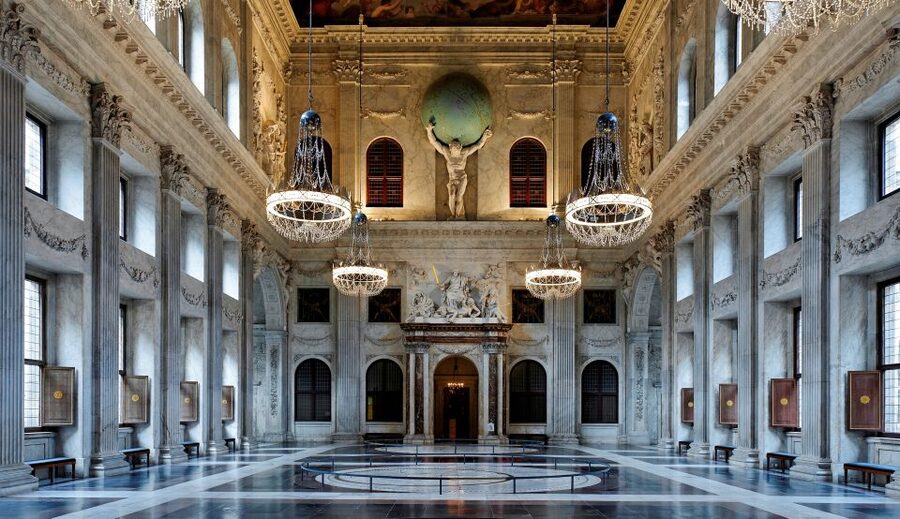
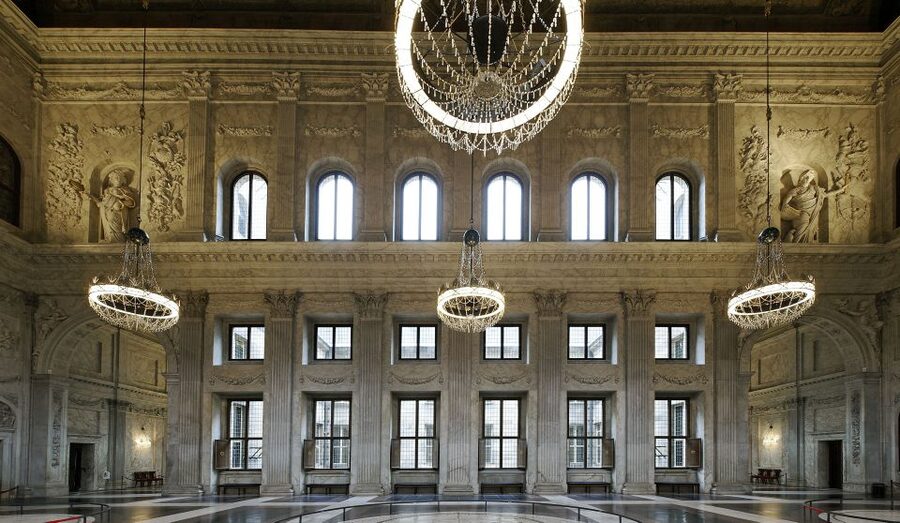
The Citizens’ Hall is the room that gives the palace its scale. Its marble floor and high ceiling create the feeling of a public stage rather than a private sitting room.
At the center of the room is the statue of Atlas, carrying the sky on his shoulders. The image has a practical and symbolic role. Atlas suggests that the world is being held up by human effort, while the room around him presents Amsterdam as a city with global reach.
Take time to look down as well as up. The marble decoration and floor imagery are part of the room’s message. The palace uses art to describe an ideal society, its government, commerce, justice, and place in the wider world.
This is also where the audio guide earns its keep. Without context, the hall can seem simply large and ornate. With the explanation, the proportions and decoration become a statement about Amsterdam’s confidence during its great commercial age.
The room can feel crowded, especially during busy periods. Keep moving around the edges and look for a clear view toward Atlas. You may need patience if several groups arrive together.
More Palace Audio Guide Tours in the world:
- Topkapi Palace and Harem Skip-the-Line-Tickets & Audio Guide
★ 4.3 · 4,745 reviews - Istanbul: Topkapi Palace and Harem Ticket with Audio Guide
★ 4.4 · 2,401 reviews - Crete: Knossos Palace Entry Ticket with Optional Audio Guide
★ 3.9 · 2,251 reviews - Istanbul: Dolmabahce Palace and Harem Fast-Track & Audio
★ 4.7 · 1,772 reviews
Paintings from the Dutch Golden Age
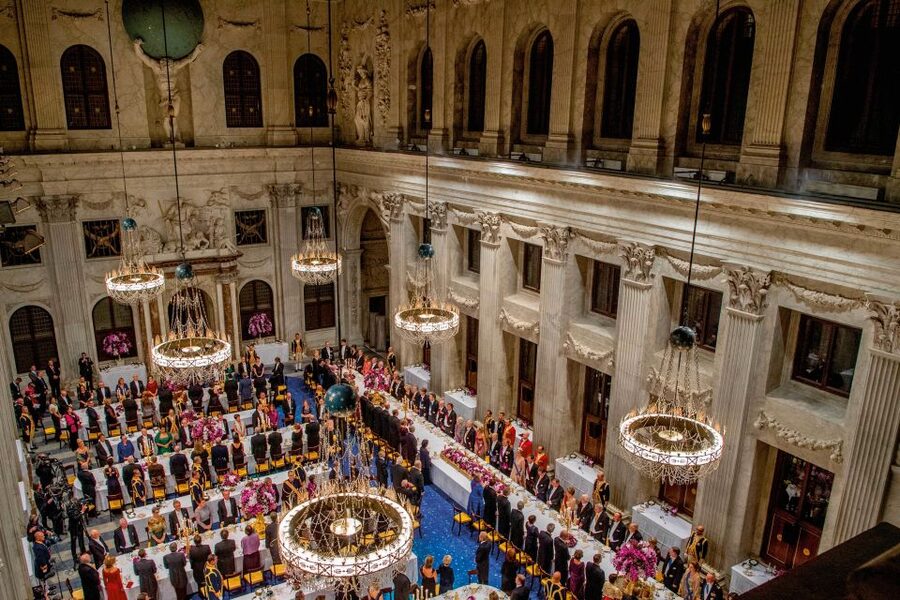
The palace contains paintings by leading artists of the Dutch Golden Age, including Ferdinand Bol and Govert Flinck. Their work adds human drama to rooms that could otherwise feel dominated by marble and furniture.
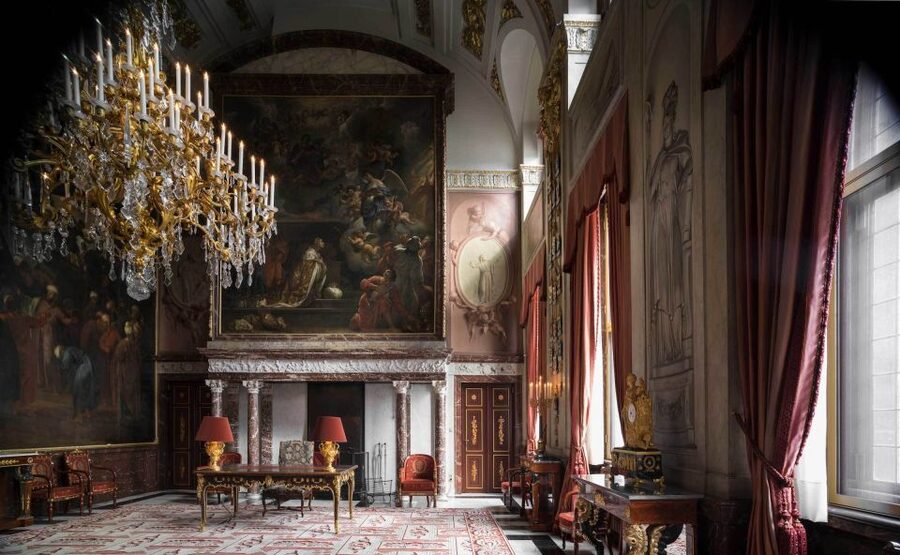
The collection is not presented as a separate art museum with endless galleries. Instead, the paintings are part of the rooms themselves. You see them in the setting for which grand civic decoration was intended, surrounded by architecture, sculpture, clocks, and furnishings.
That setting matters. In a standard gallery, you might study a painting on a plain wall. Here, you can consider how art worked as public messaging. The paintings helped communicate power, virtue, learning, and civic pride.
I suggest using the audio guide for the paintings that catch your eye, rather than trying to listen to every detail at the same speed. The palace can become visually repetitive if you treat every room as another decorated chamber. Picking a few works to examine closely makes the visit more rewarding.
The audio tour also takes a respectful but self-critical approach to the building’s past. That is useful because the palace’s wealth and decoration are connected to Amsterdam’s powerful commercial period. You get more than a polished royal story.
Louis Napoleon’s furniture and palace interiors
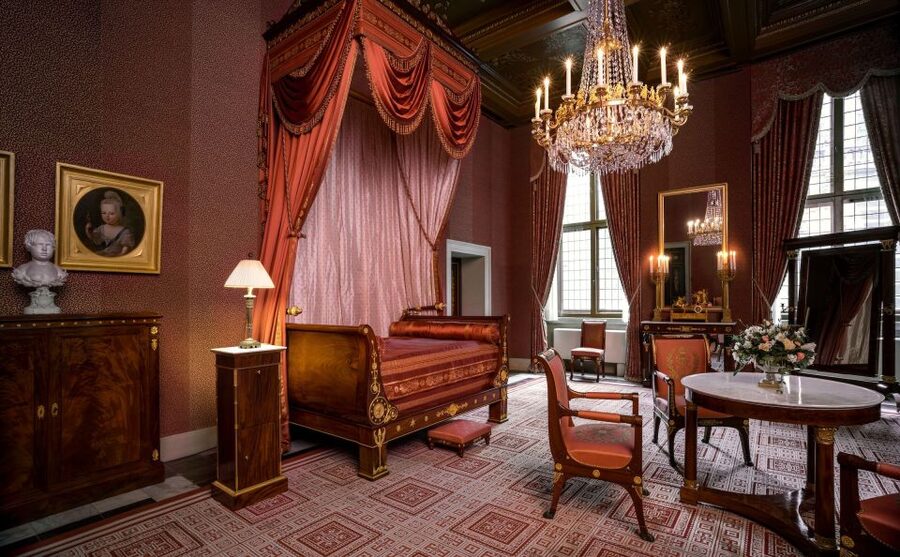
The palace’s furniture, chandeliers, and clocks from the time of Louis Napoleon show a change in taste. Compared with the civic grandeur of the older building, these objects bring a more courtly and domestic feeling.
Look for the way the rooms are furnished as complete interiors. The objects are not isolated antiques. Together they show how people wanted a palace to function, how rooms were arranged for formal life, and how royal style differed from the earlier city government.
Some rooms may begin to look similar if you rush through them. That is the main weakness of the interior for anyone with little interest in decorative arts. The audio guide helps separate the rooms by purpose and period, but you should still plan your energy.
There are limited places to sit, and some stairways can become crowded. If you have difficulty walking or need frequent rest, plan a slower visit and ask staff for help. The building is wheelchair accessible, with a lift, an accessible toilet, and wheelchairs available for visitors.
A working palace, not just a historic building
The palace’s current role gives the visit extra weight. State banquets and royal receptions are held here, and visiting heads of state may sleep in the building during official occasions.
You will not see every room at all times. Areas can be affected by royal functions or official events, and the palace remains a working institution. That is part of the appeal, but it also means the route is not exactly the same as visiting a fully inactive historic house.
The public rooms are carefully maintained, and staff help keep the visit orderly. Their assistance is useful at the entrance, cloakroom, and multimedia guide desk. Coats and bags can be left at the cloakroom, which makes it easier to concentrate on the rooms.
The rules are straightforward. Pets, smoking, food, drinks, flash photography, and video recording are not allowed. Keep your phone available for the entry ticket, but put it away once you begin looking closely at the interiors.
How long should you spend inside?
For a quick look, one hour is enough to see the main rooms and follow a shorter audio route. You will get the broad picture, but some details will pass quickly.
Ninety minutes is the sweet spot for most people. It allows time for the Citizens’ Hall, the major paintings, royal rooms, furniture, and a few pauses for photographs without flash.
Two hours works well if you enjoy listening to every section or reading the details of the decoration. An entire afternoon may be more than most people need, unless you have a strong interest in architecture, royal history, or Dutch art.
You can enter during the valid day according to the available starting times. The last entry is 45 minutes before closing, so do not plan to arrive at the very end of the day. Late afternoon can be pleasant when the palace is less crowded, but check the closing time carefully.
Small children may find the quiet atmosphere and long explanations difficult. The special multimedia tour in Dutch and English helps, and children under 18 enter free, but the visit still suits families whose children can manage a museum setting.
Is the $15 price good value?
At about $15, the experience is reasonably priced for a major central attraction, especially because the multimedia tour is included. You are paying for access to a historic building, a substantial self-guided route, cloakroom use, and a guide available in eight languages.
The value depends on how you enter. If the direct ticket is cheaper on the day and there is no line, buying at the palace may save money. If you are visiting during a busy period, the priority lane can make the advance ticket worthwhile.
The reserve-now-and-pay-later option is useful when your Amsterdam plans may change. Free cancellation up to 24 hours before the visit also reduces the risk of booking too early.
Children under 18 do not need a paid ticket. They can pick up a free ticket at the counter, so families should factor that into the total cost before booking adult tickets online.
Who should visit the Royal Palace?
I recommend this palace to you if you enjoy grand public buildings, royal rooms, Dutch art, or self-guided visits. It works especially well for people who want to explore at their own pace rather than follow a fixed group.
It is also a good rainy-day choice in central Amsterdam. The visit is compact enough to fit between other plans, but substantial enough to feel like a proper cultural stop.
You may want to skip it if you dislike audio guides, have very little time, or prefer interactive museums. The palace is quiet and formal, with few hands-on elements. Visitors who need many seats or dislike stairs should also plan carefully, even though the building has accessible facilities.
Should you book this Amsterdam palace ticket?
Book it if you want an easy look inside one of Amsterdam’s most important official buildings and expect to spend at least an hour there. The audio guide adds real value, while the shorter and longer routes let you match the visit to your schedule.
If you are already near Dam Square and find no queue, compare the on-site price first. For busy days, families, and anyone who wants to bypass the ticket line, the prepaid option is the simpler choice.
FAQ
Where is the Royal Palace of Amsterdam?
The Royal Palace is on Dam Square in central Amsterdam.
How can I reach the palace by public transport?
You can use tram numbers 2, 4, 12, 13, 14, 17, and 24. Metro 52 stops at Rokin, where you should use the exit for the palace area.
Is the audio guide included?
Yes. A multimedia tour is included with the entrance ticket.
Which languages are available for the audio guide?
The guide is available in Chinese, Dutch, English, French, German, Italian, Russian, and Spanish.
Is there a children’s tour?
Yes. A special multimedia tour for children is available in Dutch and English.
Are children under 18 free?
Yes. Children under 18 enter free, but they need to pick up a ticket at the counter.
How long does the visit take?
You can complete a shorter visit in about an hour. Allow about 1.5 hours for a fuller tour, or up to two hours if you want to listen to most sections and examine the rooms carefully.
Can I enter with a smartphone ticket?
Yes. You can show your smartphone ticket at the scan desk and use the priority lane.
Is the palace wheelchair accessible?
Yes. The building has a lift, a wheelchair-accessible toilet, and wheelchairs available for visitors.
What items are not allowed inside?
Pets, smoking, food, drinks, flash photography, and video recording are not allowed.
More Royal Palace Tours in the world
- Madrid: Royal Palace Fast-Access Admission Ticket
★ 4.6 · 13,856 reviews - Madrid: Royal Palace Expert Guided Tour with Skip-the-Line
★ 4.7 · 8,407 reviews - Dubai To Abu Dhabi: Grand Mosque, Royal Palace & Etihad Towers
★ 5.0 · 7,632 reviews - Madrid Essential: Historic Center, Plaza Mayor & Royal Palace
★ 5.0 · 6,416 reviews
Newly added in the world
- Avignon: Around The Palace Tour★ 4.5 · 13 reviews
- Ayutthaya Full-Day Tour with Bang Pa In (Summer Palace)★ 5.0 · 2 reviews
- Bali: Gate Of Heaven and Water Palace Tirta Gangga Package★ 4.7 · 3 reviews
- Aranjuez: Royal Palace Guided Tour★ 4.5 · 93 reviews
- Asia Continent & Topkapı Palace & Harem. Guided, Small group★ 4.9 · 3 reviews
- Kornik Castle and Rogalin Palace Half-Day Private Tour★ 5.0 · 2 reviews
- Royal Palace of Aranjuez Small-Group Tour with Entry Ticket★ 5.0 · 2 reviews
- Antananarivo: Guided Tour and sunset in queen’s palace★ 3.9 · 13 reviews
Palace Entry Tickets, compared.



Buckingham Palace: The State Rooms Entrance Ticket
Read our review →

Prague Castle and Lobkowicz Palace Entry Tickets
Read our review →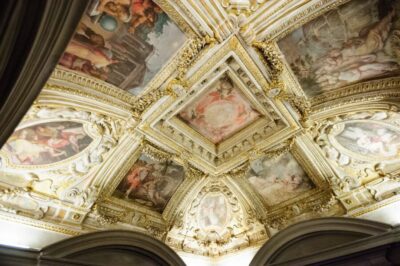
Browse the lists this tour appears in