
Review · PALAZZO VECCHIO AND PITTI PALACE TOURS
Florence: Entrance Ticket to Pitti Palace
Pitti Palace saves its best surprises for the inside. The plain, fortress-like exterior gives little warning of the sumptuous rooms, crowded picture galleries, and royal furnishings waiting beyond the doors. You’ll see Medici collections, the former royal apartments, the Treasury of the Grand Dukes, and Italian art from the late 18th century through World War I.
I like two things especially: priority entry can save a lot of time when the ticket line stretches across the square, and the palace offers more variety than another church-and-Renaissance-painting stop. The Costume Gallery, modern art, chandeliers, and decorated rooms give your eyes a welcome change of pace.
The main consideration is size. Pitti Palace is not a quick 30-minute visit, and the ticket does not automatically mean a guided tour. You’ll need to exchange your voucher at ticket-office window 3, then follow the palace route on your own, using the digital app or optional physical audio guide if desired.
Key points to know before you go
- Medici residence: Walk through the Palatine Gallery, once part of the Medici family’s home, with paintings by Raphael, Caravaggio, Titian, and Rubens.
- More than paintings: The palace includes royal rooms, the Treasury of the Grand Dukes, modern art, and costume displays.
- Useful priority access: Exchange your voucher at window 3 and avoid the regular ticket-purchase line.
- Allow two to three hours: The palace is large, and one morning can pass quickly if you stop for the rooms, art, and clothing collections.
- A good break from religious art: Italian paintings and sculptures from the late 18th century to World War I add variety to a Florence museum day.
- Audio is optional: A physical audio guide is available as an add-on in five languages, while a digital audio app is also offered.
Why Pitti Palace feels different from Florence’s other museums
Florence can wear you out with beauty. After a few days of Madonnas, crucifixions, saints, and gold backgrounds, Pitti Palace gives you a broader look at how powerful families actually lived.
The building began in 1457 for the Pitti family, with Filippo Brunelleschi credited with its design. The Medici later took over the palace and expanded it into a residence worthy of Florence’s ruling family. Later grand dukes and royal residents changed the rooms again, leaving you with layers of taste rather than one tidy museum style.
That mixture is the point. You are not entering a single gallery built to display art in a quiet, modern way. You are walking through a palace where paintings, furniture, ceilings, mirrors, textiles, and political ambition all share the same rooms.
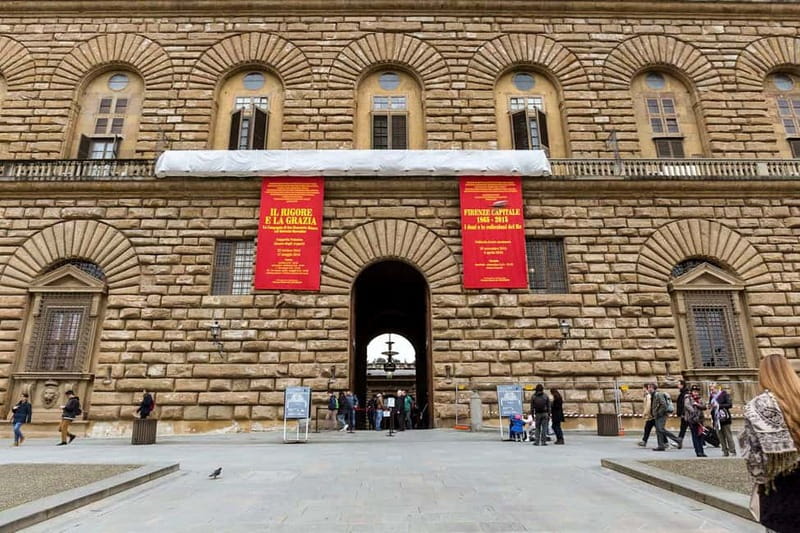
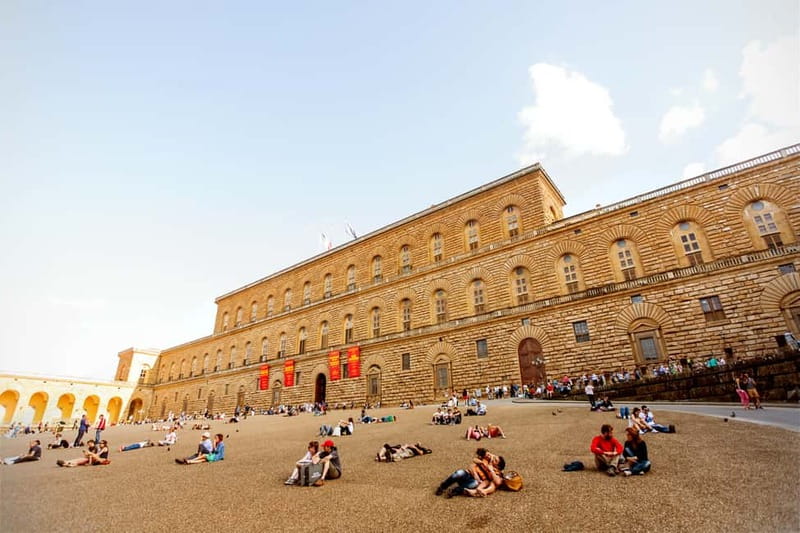
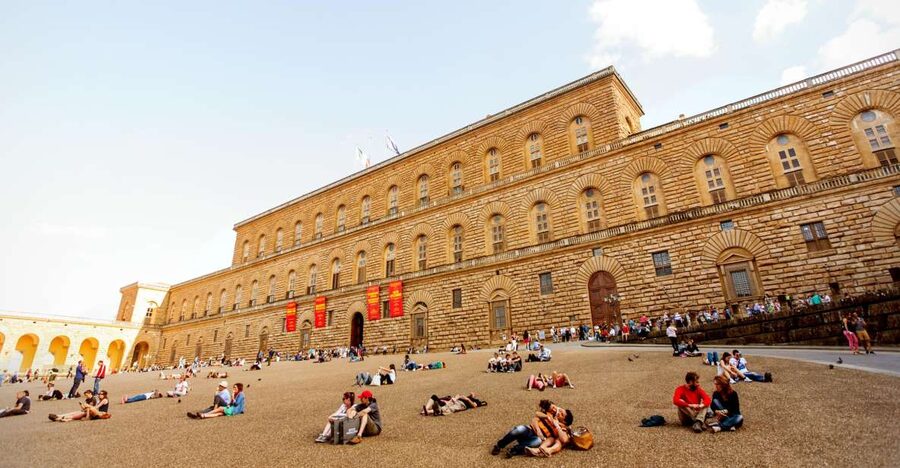
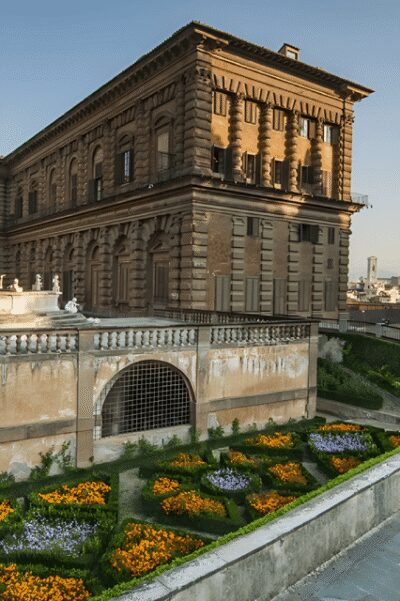
The exterior can feel austere. Do not judge the place from the square. Inside, the rooms become ornate and theatrical, with chandeliers, decorated walls, and formal furnishings. The contrast is one of the palace’s small pleasures.
More Palace Entry Tickets in Italy
- Venice: Doge’s Palace Reserved Entry Ticket
★ 4.6 · 42,716 reviews - Florence: Palazzo Vecchio Entrance Ticket & Audioguide
★ 4.4 · 4,822 reviews - Venice: Palazzo Contarini del Bovolo Entrance Ticket
★ 4.3 · 1,991 reviews
Entering through window 3 at the ticket office
The practical part is simple, but follow the instructions carefully. Go to window number 3 at the ticket office to exchange your voucher for the palace ticket. A line may form on the right for people buying tickets, while the voucher-exchange line is on the left.
That distinction matters. The value of this booking comes less from a personal guide and more from getting past the ticket-purchase queue. At busy times, the difference can be substantial. One morning, the regular line may be modest, while at another hour it can stretch far beyond the entrance.
If you have paid for the physical audio guide, collect it at the same time as your ticket. Bring your passport or identity card, as identification is listed among the required items.
The ticket is valid for one day, with the available starting times shown when you book. You are not joining a set group that moves from room to room. Once inside, you explore the palace independently and finish back at the starting point.
The palace is wheelchair accessible. For the smoothest visit, arrive with enough time to exchange the voucher before your selected entry time, even though the booking information allows some flexibility in practice.
The Palatine Gallery and the Medici picture collection
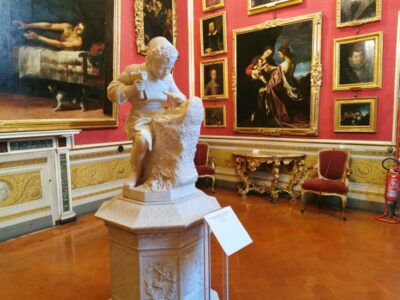
Start with the Palatine Gallery on the first floor. This is the artistic heart of the visit, but it does not feel like a spare white-wall gallery. The paintings hang in richly decorated rooms, often close together, as they might have been displayed in a princely residence.
The collection focuses heavily on 16th and 17th-century painting. You will find works associated with Raphael, Caravaggio, Titian, Pietro da Cortona, and Rubens. The names are impressive, but the setting is just as important. The rooms remind you that these paintings were collected to express status, taste, faith, and power.
Raphael is a major draw. If you have already visited the Uffizi, Pitti gives you another chance to see important Renaissance art in a different setting. Caravaggio brings a sharper, darker mood, while Titian and Rubens show the color and drama prized by wealthy collectors.
Do not rush past the ceilings. The room decoration can compete with the paintings for attention. Look up, then return to the walls and notice how the art works with the room around it.
The gallery does not follow a simple chronological path that makes every step obvious. Paintings can be arranged by collection and room rather than as a clean art-history lesson. That is part of the palace character, but it can also leave you wanting more explanation.
The digital audio app may help you get your bearings. A physical audio guide can be added in Italian, English, French, Spanish, or German. Still, do not expect every painting to receive a long, analytical discussion. If you like detailed interpretation, read the room labels as well and give yourself time to look before moving on.
Royal Apartments and the palace as a home
The Royal Apartments show the palace in domestic and ceremonial mode. Their furnishings reflect a 19th-century remodeling, and the rooms were used by the Lorraine grand dukes and later royal residents.
This section helps make sense of the art. Instead of seeing the palace only as a container for famous names, you begin to understand how the rooms functioned. Formal apartments were designed to impress visitors, mark rank, and create a stage for court life.
The rooms are elegant, often opulent, and filled with the sort of details you can miss if you focus only on paintings. Look for furniture, chandeliers, wall decoration, and the arrangement of space. The palace experience works best when you alternate between close study and simply taking in the room.
The limitation is that the route may not provide as much guidance as some visitors want. You can easily admire the rooms without understanding exactly who used each one or how the palace changed over time. If that context matters to you, use the audio option or read the posted information carefully.
More Palazzo Vecchio and Pitti Tours in Italy:
- Florence: Uffizi, Pitti Palace & Boboli Combined 5-Day Pass
★ 4.5 · 1,726 reviews - Florence: Palazzo Vecchio Guided Tour
★ 4.8 · 1,260 reviews - Palazzo Vecchio: Skip-the-Line Entry and Secret Passage Tour
★ 4.7 · 1,076 reviews - Florence: Palazzo Vecchio Entry Ticket with Audio Guide
★ 4.4 · 837 reviews
Treasury of the Grand Dukes
The Treasury of the Grand Dukes adds another layer to the visit. Its collections show the taste for precious objects and luxury that shaped court life. This is not just a stop for people who love paintings. It gives you a look at the material wealth behind the Medici and grand-ducal worlds.
The treasury is included with the palace ticket, as are temporary exhibitions available during your visit. Since temporary displays can change, the exact subject will depend on your date. Treat this area as a valuable extra rather than the main reason to book.
I recommend keeping your pace flexible here. The palace has enough rooms that a strict checklist can become tiring. If a display catches your eye, stay with it. If you are more interested in the grand rooms or modern art, move on without feeling you must inspect every case.
The Gallery of Modern Art on the second floor
The second-floor Gallery of Modern Art changes the mood completely. Its collection covers mostly Italian paintings and sculptures from the late 18th century through World War I.
This is a useful stop for anyone who wants more than Renaissance art. The works reflect later Italian tastes, including neoclassical and Romantic styles, and they occupy elegant rooms once inhabited by the Lorraine grand dukes.
The term modern can sound misleading today. Much of this art is not modern in the contemporary sense. Here, it means art from a later period than the Renaissance and Baroque collections downstairs. Expect a shift in subject, style, and atmosphere rather than experimental installations.
I like the way this gallery breaks up the visit. After the dense, historic arrangement of the Palatine Gallery, later paintings and sculpture give you fresh visual ground. It also helps place Florence in a wider Italian story, beyond the city’s famous 15th-century and early 16th-century achievements.
The gallery may be less essential if your only goal is to see the most famous Renaissance names. But if you have two or more hours, it earns its place. Several visitors find that the modern art and costume displays become unexpected favorites because they offer a different kind of museum experience.
The Costume Gallery and a welcome change of subject
The Costume Gallery is one of the palace’s most distinctive additions. Clothing can make history feel immediate in a way that another framed painting sometimes cannot.
The displays give you a break from religious and mythological scenes and show how fashion, ceremony, and social position changed over time. The collection is a strong choice for families, anyone interested in design, and people who have reached their limit with traditional art galleries.
The exact presentation can change, but the appeal is steady: fabrics, silhouettes, and formal clothing reveal what people wanted to project about themselves. A dress or suit can tell you about rank, taste, custom, and changing ideas of beauty without requiring a long lecture.
Do not assume this is a small side room you can skip. Allow time for it, especially if you have already visited the Uffizi and want a less familiar Florence museum stop. The Costume Gallery is repeatedly singled out as a highlight of the palace experience.
Views toward Santo Spirito and the Boboli area
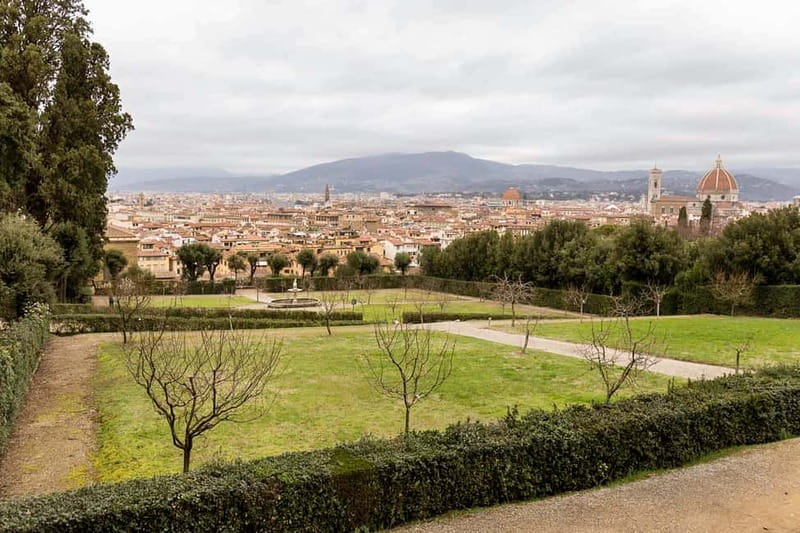
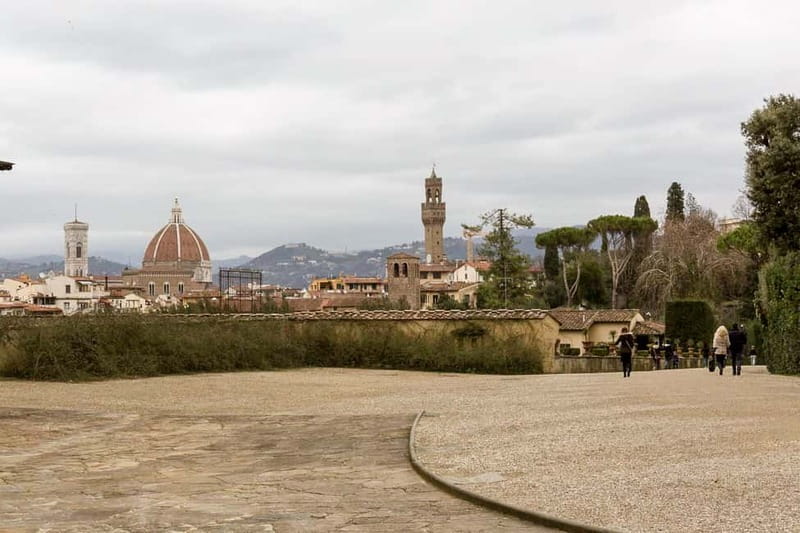
From the palace windows, you can catch views toward Brunelleschi’s Santo Spirito Basilica and the Boboli Gardens. These views add a welcome pause after the enclosed galleries.
The ticket described here covers Pitti Palace and its included museums. It does not list Boboli Gardens as part of this entrance ticket, so check the current arrangements if you want to visit the gardens too. The palace and gardens are often paired in people’s plans, but do not assume one ticket covers both.
Even without entering the gardens, the view helps you understand the palace’s position on the south side of the Arno. It also gives you a chance to step away from the crowded visual field inside and reset before continuing.
If you have time, a café stop near the palace can make the morning more pleasant. Some visitors find the area peaceful early in the day, before the square and ticket lines fill up.
How long should you allow?
The stated validity is one day, but most people should plan for two to three hours inside. You can move faster if you want only the headline paintings, but that approach misses much of what makes Pitti different.
Allow extra time if you want to read labels, use the audio material, pause in the royal rooms, and visit the costume displays. One morning may not feel long enough if you want to see every gallery properly.
An early visit is a smart choice if your schedule allows it. You can enjoy the rooms with less pressure, then continue to another Florence sight. Late afternoon can also work, and one booking experience allowed entry after arriving about 10 minutes late. Still, do not build your entire plan around flexibility. Follow the selected time and arrive prepared.
Is the $18 ticket good value?
At $18 per person, this is a solid value if you plan to use the ticket fully. You are not paying only for one famous painting. The admission includes the Palatine Gallery, Gallery of Modern Art, temporary exhibitions, Treasury of the Grand Dukes, and Costume Gallery.
The priority entry can be worth the price by itself on a busy day. Saving time in Florence has real value, especially when you have limited hours and several major sights competing for attention.
The calculation changes if you intend to rush in for 30 minutes. In that case, the palace may feel too large for the time and cost. You get the best return when you treat it as a substantial museum visit rather than a quick photo stop.
A physical audio guide costs extra if selected. The digital audio app is also available, but the supplied information does not specify whether it carries an additional charge. If you prefer to read room labels and explore at your own pace, you may not need the audio option. The palace’s main route is understandable without a personal guide, though more detailed art analysis would be useful in places.
The booking also lists 10 percent discounts at the Hard Rock Shop and Hard Rock Cafe on Via dei Brunelleschi, near Piazza della Repubblica. I would treat those as minor extras, not a reason to choose the ticket.
Who should book this experience?
I would choose this ticket if you want a museum with art, architecture, royal rooms, and fashion in one place. It suits first-time visitors who want a broad Florence experience, as well as repeat visitors looking for something beyond the Uffizi and Accademia.
It is especially good for:
- Museum lovers who want several collections under one roof
- Visitors tired of seeing only religious Renaissance paintings
- Anyone interested in palace interiors and court life
- Families and mixed-interest groups, since the costume and modern art collections add variety
- People who value time savings and want reserved entry
- Visitors with two or more hours available
It may be less suitable if you want a guided explanation at every stop, a short attraction, or a tightly organized group tour. The experience is self-guided, and the amount of information you receive depends on your labels, app, and optional audio guide.
Should you book Pitti Palace?
Yes, I would book it if you can give the palace at least two hours and want a varied museum visit. The strongest reasons are the grand interiors, the Medici connection, the Palatine Gallery, and the Costume Gallery, which keeps the experience from becoming one long parade of similar paintings.
Choose an early time if you want a calmer visit and the best chance of making the priority entry useful. Bring identification, exchange your voucher at window 3, and do not confuse the regular ticket line with the reserved-entry process.
Skip it only if your Florence schedule is already packed with major museums and you know you prefer a short, focused visit. For most people, the $18 ticket offers plenty to see, and the palace rewards the extra time.
FAQ
How long is the Pitti Palace ticket valid?
The ticket is valid for one day. Check the available booking options for the starting times offered on your date.
What does the Pitti Palace ticket include?
It includes reserved entry to Pitti Palace, the Palatine Gallery, the Gallery of Modern Art, temporary exhibitions, the Treasury of the Grand Dukes, and access to the Costume Gallery.
Does the ticket include the Boboli Gardens?
The listed ticket inclusions do not include entry to the Boboli Gardens. Check current ticket arrangements separately if you want to visit the gardens.
Where do I exchange the voucher?
Go to window number 3 at the ticket office to exchange your voucher for the entrance ticket. The regular ticket-purchase queue may be on the right, while the voucher line is on the left.
Is an audio guide included?
A physical audio guide is available if you select it as an add-on. It is offered in Italian, English, French, Spanish, and German. A digital audio app is also available.
What identification should I bring?
Bring your passport or identity card.
Can I cancel the booking?
You can cancel up to 24 hours in advance for a full refund. A reserve-now, pay-later option is also available.
Newly added in Italy
- Anagni: Entrance ticket to the Boniface VIII Palace★ 3.4 · 3 reviews
- Venice: Doge Palace, San Marco Basilica & Rialto Bridge★ 4.7 · 75 reviews
- Turin: Palazzo Madama Museum of Ancient Art Entrance Ticket★ 4.6 · 149 reviews
- Venice Doge’s Palace & St. Mark’s Semi-Private Tour, Max 6 People★ 5.0 · 192 reviews
- Colosseum, Roman Forum and Emperors’ Palace Private Guided Tour★ 5.0 · 14 reviews
- Doria Pamphilj Palace Gallery and Museum Private Tour with Local Guide★ 4.5 · 10 reviews
- Private Tour – National Museum of Palazzo Massimo★ 5.0 · 51 reviews
- Private Tour – Palazzo Barberini★ 5.0 · 23 reviews
Palazzo Vecchio and Pitti Palace Tours, compared.

Uffizi, Pitti Palace & Boboli Combined 5-Day Pass
Read our review →
Palazzo Vecchio: Skip-the-Line Entry and Secret Passage Tour
Read our review →
Pitti Palace, Boboli Garden, Palatine Gallery Tour
Read our review →Browse the lists this tour appears in