
Review · PALACE GARDENS AND GROUNDS
Private Tour of Nymphenburg Palace and Gardens
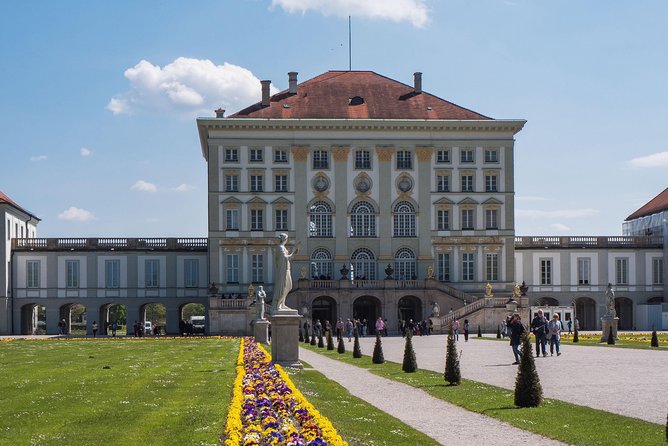
Nymphenburg Palace is more than a grand set of royal rooms. Its real appeal is the huge park behind it, where fountains, statues, canals, and four small pleasure palaces spread across the grounds. This private tour gives you time to connect the palace with the court life that shaped it, rather than simply ticking off rooms with an audio guide.
I especially like the private format, which lets you ask questions and set the pace. I also like the practical start at Munich’s Hauptbahnhof, where guide Tom Mills meets you and handles the public transport and entry arrangements. The main drawback is the amount of walking. Five hours on palace floors and garden paths is not a light outing, and several seasonal buildings close from October 16 through March 28.
Key points at a glance
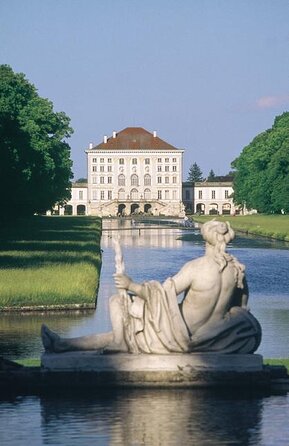
- Four hours at Nymphenburg Palace and Park: The main visit includes the palace, gardens, fountains, statues, and garden pavilions.
- Tom Mills leads the tour: He uses visual aids, humor, and stories about the Wittelsbach rulers to explain the site.
- Private and adjustable: Only your group takes part, so you can ask questions and request a slower pace or more focus on certain subjects.
- Public transport is arranged: You meet at Munich’s main train station, then travel to the palace by tram or other public transport.
- Seasonal sights matter: Amalienburg, Badenburg, Pagodenburg, and Magdalenenklause close from October 16 to March 28. The Marstallmuseum is open during that seasonal period.
- The price reflects personal attention: At $192.77 per person, this makes the most sense for people who want context, flexibility, and help with the practical details.
Why Nymphenburg works so well as a private tour
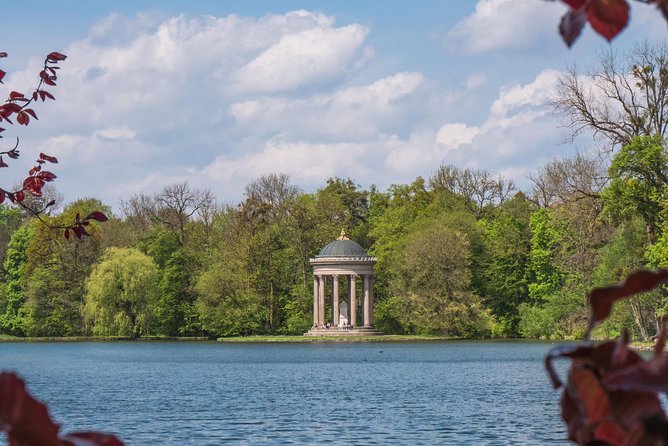
Nymphenburg was built as a summer residence for Bavaria’s ruling Wittelsbach family. The palace gives you the formal side of court life: grand rooms, royal display, political theater, and family ambition. The park gives you the private side, with hunting lodges, bathing rooms, a hermitage, and small pleasure palaces scattered away from the main building.
That mix is what makes the visit worthwhile. You are not only looking at ornate interiors. You are seeing how a ruling family used space to separate public ceremony from leisure, study, romance, hunting, and escape.
Tom Mills shapes the experience around that wider story. His explanations cover royal family politics, court routines, aristocratic flirting, and the daily work of servants. The tone is not simply a list of dates and names. His approach uses stories and humor, which helps the palace feel connected to real people rather than just painted ceilings and polished furniture.
The private setting also solves a common palace problem: too much information delivered at one speed. You can stop to ask about a painting, spend more time in a favorite room, or request more background on Bavaria and Munich. The guide has also provided visual aids, including a binder used to explain the royal family and the complicated succession stories surrounding them.
More Private Palace Tours in Germany
- Munich: Residenz Palace, Museum and Treasury Private Tour
★ 4.9 · 15 reviews - Munich Residenz Palace, Museum and Treasury Private Tour
★ 4.5 · 12 reviews - Munich: Nymphenburg Palace Skip-the-Line Private Guided Tour
★ 4.8 · 10 reviews
Meeting Tom at Munich’s Hauptbahnhof
The tour begins at Munich’s main train station, Hauptbahnhof, between 9:30 and 10:00 in the morning. The station is served by S-Bahn, U-Bahn, buses, and trams, so it is a sensible meeting point if you are staying elsewhere in central Munich.
From the station, Tom takes you by public transport to Nymphenburg. This is useful if you do not want to figure out the route, buy the right tickets, and coordinate your arrival at the palace. Entry tickets and transport arrangements are handled as part of the experience.
Be clear about the meeting plan when you book. The standard start is at Hauptbahnhof, but Tom has met people at their hotel when specifically requested. A hotel meeting can add a short walk to the transport stop, so the station is the more efficient option.
One point deserves honest attention: this is not a low-walking tour. You may walk through the station, to the tram or another public transport connection, across palace rooms, and along long garden paths. One person found the amount of walking unexpected after arranging a hotel meeting. If you have mobility concerns, ask about pacing and the meeting point before the tour.
Inside Nymphenburg Palace
The palace visit takes you through the rooms open to the public, with Tom explaining how each space fits into royal life. The grand hall is a major visual moment, and its scale helps you understand the court’s desire to impress visiting dignitaries and reinforce the ruler’s status.
The interiors are highly decorated, but the value of a private guide is the connection between the rooms. You learn about the personalities who lived there, the family relationships that affected Bavarian politics, and the difference between public ceremony and household routine.
Tom’s explanations also extend beyond the rulers. Court life depended on a large staff, and the tour discusses the servants who kept the palace running. That detail gives the polished rooms a useful counterpoint. Behind the formal dinners and aristocratic flirtation was a daily system of cleaning, cooking, carrying, organizing, and waiting.
You also receive free time to explore the palace rooms on your own. This is important. The visit is not five hours of uninterrupted speaking. After the guided portion, you can look again at details that caught your eye or simply enjoy the rooms without trying to remember every name.
If you are also visiting the Munich Residence, some palace interiors may feel familiar in their use of ceremony and decoration. That does not make Nymphenburg redundant, but it does mean the guide’s interpretation matters. The personal stories, visual aids, and explanation of how the palace worked help distinguish this visit from a quick walk through another royal residence.
The gardens are the heart of the experience
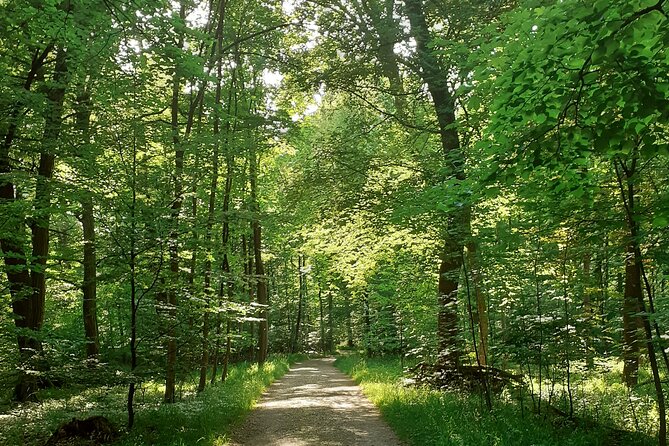
Allow real time for the gardens. The park is not a small patch behind the palace. It forms a broad setting of fountains, statues, waterways, formal design, and more natural-looking sections. The combination of French and English garden styles gives the grounds changing moods as you walk.
The garden visit also explains why the five-hour duration is reasonable. You are not rushing straight from the palace to one nearby gazebo. You walk through the grounds and reach four separate pavilions, each with a different purpose and character.
The fountains and statues provide the grand approach, but the smaller buildings are often more revealing. They show how the Wittelsbach court used the park for private pleasure and escape. I would not treat the garden section as an optional extra. It is one of the strongest reasons to choose this tour instead of visiting only the main palace rooms.
The pace can be adjusted to your group. That matters in hot weather, when one tour group was given a more considerate rhythm, and it matters for anyone who wants time to look rather than hurry. Still, the paths cover ground. Wear comfortable shoes and plan for a substantial walk.
More Palace Gardens and Grounds in Germany:
- Paris: Versailles Palace and Gardens Full Access Ticket
★ 4.6 · 41,579 reviews - Versailles: Skip-the-Line Tour of Palace and Gardens Access
★ 4.7 · 10,429 reviews - Vienna: Schönbrunn Palace & Gardens Skip-the-Line Tour
★ 4.7 · 7,739 reviews - Granada: Alhambra & Gardens Tour w/Nasrid Palaces Option
★ 4.2 · 7,022 reviews
Amalienburg, the Rococo hunting lodge
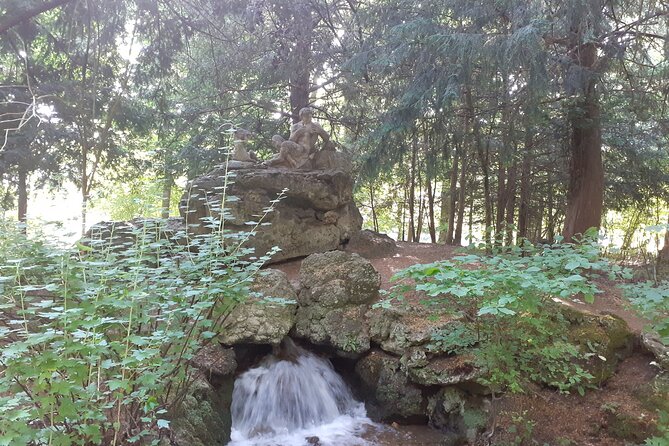
Amalienburg is a small hunting lodge built for an empress. It is known as a Rococo masterpiece, with a more intimate and playful character than the main palace.
The building gives you a close look at the court’s appetite for luxury outside the formal residence. A hunting lodge could be practical, but Amalienburg turns leisure into decoration. The smaller scale makes its design easier to appreciate at close range.
The key restriction is seasonal access. Amalienburg is closed from October 16 through March 28. If your visit falls in that period, you can still see the building from the park setting, but you should not expect to enter it.
Badenburg and the royal swimming pool
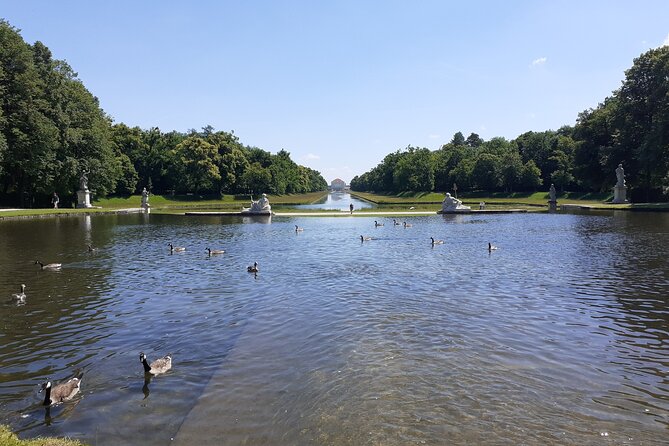
Badenburg was built around an indoor swimming pool for Elector Max Emanuel. That fact alone makes it one of the most unexpected stops in the park. It shows that royal leisure was not limited to banquets, hunting, and formal ceremonies.
The building is another example of how the park worked as a collection of private retreats. Instead of one huge palace serving every purpose, the court had separate spaces for bathing, hunting, contemplation, and entertainment.
Badenburg is also closed from October 16 through March 28. Summer visitors get the fullest version of the garden pavilion experience, while winter visitors trade the pavilions for the Marstallmuseum.
Pagodenburg, a small Chinese-inspired retreat
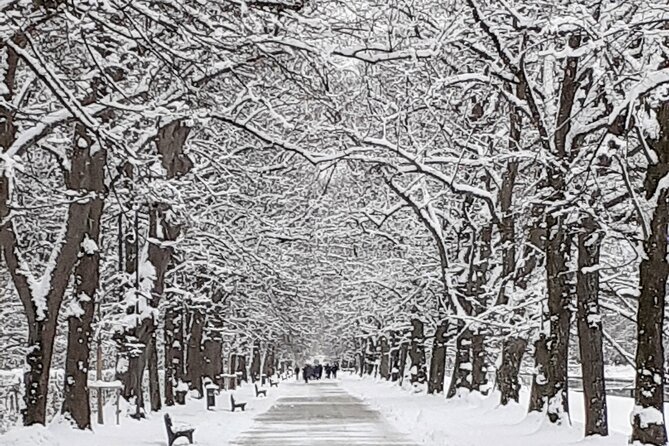
Pagodenburg was the first of the pavilions built by Elector Max Emanuel. Its design draws on Chinese-inspired decoration and creates the feeling of a miniature pleasure palace.
The value here is contrast. The main palace communicates dynastic power on a grand scale. Pagodenburg is smaller, more private, and shaped by the period’s fascination with distant cultures and decorative styles.
Like Amalienburg and Badenburg, Pagodenburg is closed from October 16 through March 28. Check the date of your visit before assuming all four garden buildings will be open.
Magdalenenklause and its quiet religious mood
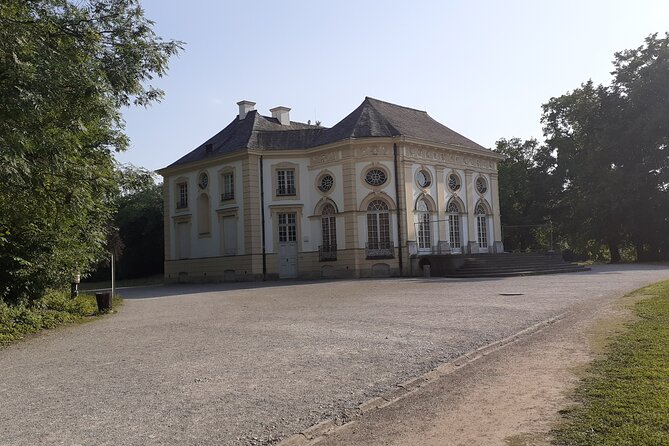
Magdalenenklause served as a hermitage where Bavarian electors and kings could withdraw from court life for contemplation and Bible study. Its purpose is very different from the entertaining and decorative buildings elsewhere in the park.
The shell grotto is one of its notable features, along with a spring associated with miracle-working claims. Those details give the stop a more curious and personal quality. It reflects the rulers’ wish to step away from ceremony, even if that withdrawal took place inside an elaborate royal park.
Magdalenenklause also closes from October 16 through March 28. If you want to see all four pavilions from inside, plan for the warmer part of the opening season.
The Marstallmuseum changes the winter experience
The Schloss Nymphenburg Marstallmuseum is the carriage museum of the Wittelsbach family. It is open during the period when the four garden pavilions are closed, from October 16 through March 28.
That seasonal switch is worth understanding before you book. A summer tour emphasizes walking through the park and entering the four pavilions. A winter tour adds the carriage collection instead. The two versions are not identical, but each offers a different view of royal life.
The carriages show the public and ceremonial side of travel. They also connect well with the palace story, since transport, appearances, and formal events were part of the machinery of court life.
What the private format adds
A private tour is most useful here for interpretation and pacing, not simply for avoiding a crowd. Nymphenburg covers a lot of ground, and the palace, garden, pavilions, and museum can feel disconnected if you visit without context.
Tom’s style is conversational and measured. People who dislike guides who talk without pause will appreciate the breathing room between stories. He has also been praised for adjusting the pace to age and weather, rather than treating the schedule as a race.
The visual aids are another practical advantage. Bavarian royal family connections can become confusing quickly, especially when several rulers share similar names and titles. A binder with images helps you place the people and events in order.
The private setup also lets you use the guide for more than Nymphenburg. Tom has offered general Munich information and restaurant suggestions after the tour. That is a useful bonus if this is one of your first days in the city, though the main value remains the palace and park visit.
Is $192.77 per person good value?
At $192.77 per person, this is a premium half-day experience. You are paying more than the cost of entering Nymphenburg on your own, so the value depends on what you want from the visit.
The price makes sense if you want an English-speaking guide, private attention, admission included, public transport handled, and a flexible pace. It is particularly useful for people who enjoy asking questions or want help sorting out the Wittelsbach family story.
It makes less sense if you prefer to wander alone, read at your own speed, or spend only an hour or two at the palace. Independent visitors can see the site without paying for a private guide, but they will need to arrange transport and tickets and build their own understanding of the palace and park.
Group discounts are available, and only your own party joins the tour. For a family or small group that would otherwise hire separate guides or split up in a large public tour, the cost can feel more reasonable.
Who should book this tour?
I would recommend it to anyone who wants Nymphenburg to make sense as a royal estate, not just a pretty palace. It suits couples, families, and small groups who value conversation and do not want a fixed public-tour script.
It is also a good match for people interested in court politics, royal personalities, architecture, gardens, and the practical workings of aristocratic life. The tour gives you a broad picture without limiting the visit to formal rooms.
You should think twice if you dislike walking, have only a short window in Munich, or plan to visit several other palaces in the same day. The five-hour duration is substantial, and the park is best enjoyed without rushing.
Book with the seasons in mind. From late March through October 15, the four pavilions are part of the main experience. From October 16 through March 28, they are closed, but the Marstallmuseum is included instead.
Final verdict: a strong choice for palace depth
I would book this tour if you want a guided, personal look at Nymphenburg and its grounds. The main palace is impressive, but the garden pavilions and the stories about court life give the visit its character.
Tom Mills is the central strength. His use of visual aids, friendly humor, practical help, and measured pacing adds value beyond simply getting through the doors. Just arrive ready to walk, confirm the meeting point, and check which seasonal buildings will be open.
For independent sightseers on a tight budget, this is more than you need. For anyone who wants the palace, park, and royal story explained in one well-paced morning, it is a worthwhile splurge.
FAQ
How long does the Nymphenburg private tour last?
The tour lasts approximately five hours.
Where does the tour begin?
The meeting point is Hauptbahnhof, Munich’s main train station, at 80335 Munich, Germany.
What time does the tour begin?
The listed start window is between 9:30 AM and 10:00 AM, Monday through Sunday.
How does the group reach Nymphenburg Palace?
The guide takes the group from Munich’s main train station to the palace using public transportation.
Is admission included?
Yes. Admission tickets for the listed stops are included.
Is this a private tour?
Yes. Only your own group participates.
Is the tour offered in English?
Yes. The experience is offered in English.
Are the garden pavilions open all year?
No. Amalienburg, Badenburg, Pagodenburg, and Magdalenenklause are closed from October 16 through March 28.
What is included during the seasonal winter period?
The Schloss Nymphenburg Marstallmuseum, which displays Wittelsbach carriages, is included from October 16 through March 28.
Can I cancel for a full refund?
Yes. You can cancel at least 24 hours before the start time for a full refund. Cancellations made less than 24 hours in advance are not refunded.
Newly added in Germany
- Munich Nymphenburg Palace & Carriage Museum Fast-Track Tour★ 4.5 · 32 reviews
- Munich Nymphenburg Palace & Carriage Museum Fast-Track Tour★ 4.9 · 57 reviews
- Munich: Residenz Palace and Hofgarten Skip-the-Line Tour★ 4.8 · 148 reviews
- Munich Residenz Palace, Museum and Treasury Private Tour★ 4.5 · 12 reviews
- Munich: Residenz Palace, Museum and Treasury Private Tour★ 4.9 · 15 reviews
- Munich: Nymphenburg Palace Skip-the-Line Private Guided Tour★ 4.8 · 10 reviews
- Dresden: Semperoper und Residenzschloss★ 4.5 · 241 reviews
- Munich: Classical Concert at the Residenz Palace★ 4.6 · 299 reviews
Palace Gardens and Grounds, compared.
Versailles Palace and Gardens Full Access Ticket
Read our review →
Skip-the-Line Tour of Palace and Gardens Access
Read our review →
Schönbrunn Palace & Gardens Skip-the-Line Tour
Read our review →
Alhambra & Gardens Tour w/Nasrid Palaces Option
Read our review →
Versailles Palace & Gardens with Transportation
Read our review →
Skip-the-Line Schönbrunn Palace & Gardens Tour
Read our review →
Versailles Palace Guided Tour & Gardens Access
Read our review →
Versailles Palace and Gardens Tour from Paris
Read our review →Browse the lists this tour appears in