
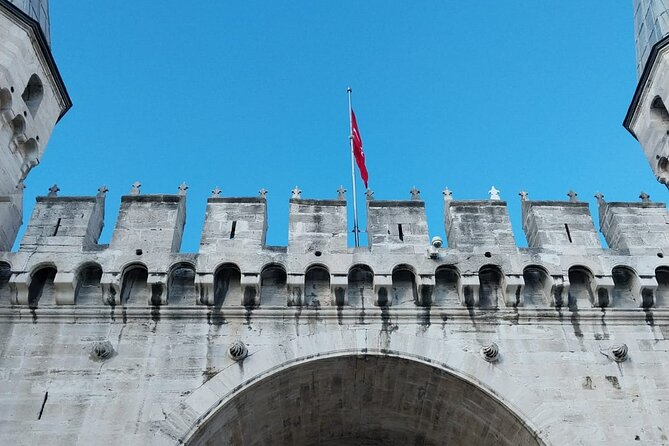
Review · TOPKAPI AND DOLMABAHCE PALACE TOURS
Topkapi Palace with Harem Walking Tour with Guide
Topkapi Palace is where Ottoman sultans lived, ruled, studied, and kept court for centuries. This tour takes you through the palace gates, gardens, kitchens, treasury, Imperial Council, and the often-missed Harem, then adds a short visit to Hagia Irene.
I like the small maximum of 10 people, which should make it easier to hear the English-speaking historian and ask questions. I also like the focus on rooms many visitors skip, especially the Harem and Hagia Irene. Guide Ulan receives specific praise for explaining the palace well.
The main catch is simple but important: your $47.66 payment covers the guide, not all admission costs. You will need to budget for entrance tickets, and the supplied price details are not perfectly consistent, so confirm the current total before you go.
Key points at a glance
- Three hours and 20 minutes of palace history: Expect a long walking visit rather than a quick photo stop.
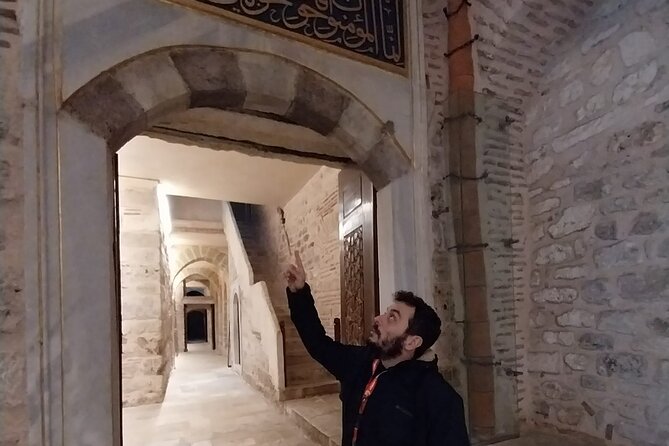
- The Harem is included in the route: You see the tiled corridors, courtyards, and rooms that many independent visitors miss.
- A small group of up to 10: This gives the guide room to explain details and answer questions.
- Hagia Irene adds a Byzantine layer: The former church helps connect Ottoman Istanbul with the city’s earlier Roman and Byzantine past.
- Admission is extra: The guide fee and entry tickets are separate, so check the latest price before booking.
- A 9:30 a.m. start: You meet at the Fountain of Sultan Ahmed III in Sultanahmet and finish at the same point.
What the Topkapi Palace tour actually covers
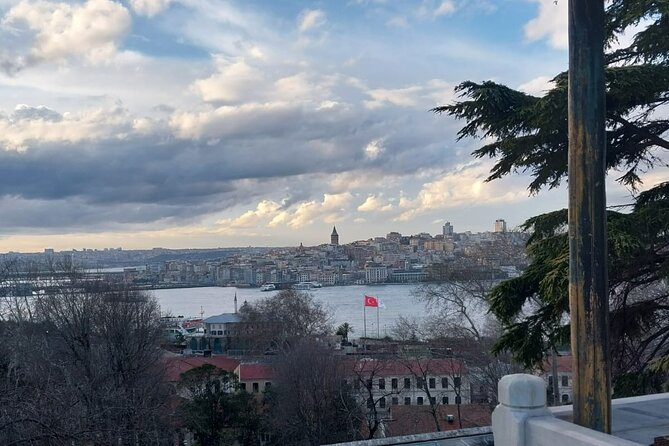
This is not simply a walk past the palace courtyard and a few grand rooms. The route is designed to explain how Topkapi functioned as a home, school, government center, and ceremonial stage for Ottoman rulers and their families.
You begin at the Bab-ı Hümayun, the Imperial Gate. From there, the guide introduces the palace as a working institution rather than just a royal residence. That distinction matters. Topkapi was where the Ottoman court handled administration, educated members of the ruling household, held official meetings, and managed access to the sultan.
The visit then moves through the palace gates and gardens. You see the Royal Mint, Babüsselam, the kitchens, the Justice Tower, the Divan-ı Hümayun, the Treasury, Babüssaade, the Chamber of Petitions, and Enderun, known as the Interior Service of the Imperial Court.
I like this broad route because it gives you a sense of how different parts of the palace fit together. The gates were not decorative entrances alone. They marked changes in access and status. The kitchens were not just a scenic old building. They served the court. The Council and Chamber of Petitions point to the business of ruling, while Enderun reflects the palace education and service system.
The guide’s role is especially useful here. Topkapi can feel like a sequence of courtyards and tiled rooms if you walk through it without context. A good explanation turns each gate and chamber into part of a larger system. Ulan is the guide specifically named in the available feedback, though guide assignments can vary.
More Topkapi and Dolmabahce Tours in Istanbul:
- Topkapi Palace and Harem Skip-the-Line-Tickets & Audio Guide
★ 4.3 · 4,745 reviews - Basilica Cistern & Hagia Sophia with Optional Topkapi Palace
★ 4.6 · 3,547 reviews - Istanbul: Topkapi Palace and Harem Ticket with Audio Guide
★ 4.4 · 2,401 reviews
Entering through Bab-ı Hümayun at 9:30 a.m.
Your meeting point is the Fountain of Sultan Ahmed III, in Sultanahmet, near Topkapi Palace. The tour starts at 9:30 a.m. and returns to the same meeting point at the end.
Starting in the morning is practical. You have the rest of the day available afterward, and the timing gives you a full visit without pushing into the evening. Still, do not treat 9:30 as a casual suggestion. Arrive early enough to find the fountain and gather with the group.
The group limit is 10 people. That is one of the better features of this experience. A group this size is more manageable in palace courtyards and narrow interior spaces than a large coach group. You should also have a better chance of hearing the guide and asking about the details that interest you.
The tour is offered in English and includes a professional English-speaking historian guide. The guide fee is included, but admission is not. That distinction caused confusion for at least one booking, so read the ticket terms carefully and keep the separate entrance cost in your budget.
The palace gates, gardens, and working court
The first two hours are devoted mainly to Topkapi Palace. The exact pace can vary, but the stated route includes a lot of ground and several major sections.
The Royal Mint gives the tour an immediate connection to the practical machinery of empire. The palace was not isolated from money, administration, or supply. It was a place where the court’s daily needs were handled on a large scale.
At Babüsselam, the Gate of Salutation, the guide can help you understand the palace’s layered security and ceremony. The sequence of gates mattered because movement through the palace was controlled. Each threshold brought you closer to the sultan’s private and official world.
The open-air area known as the Fatih Museum adds another point of interest. The supplied information does not give a full description of its displays, so you should expect the guide to place the area in the wider palace story rather than assume a specific collection or exhibit.
The palace gardens provide a needed change from enclosed rooms. You will be walking for much of the visit, so these open spaces also give you a chance to reset before the next interior section.
Kitchens, the Imperial Council, and the Justice Tower
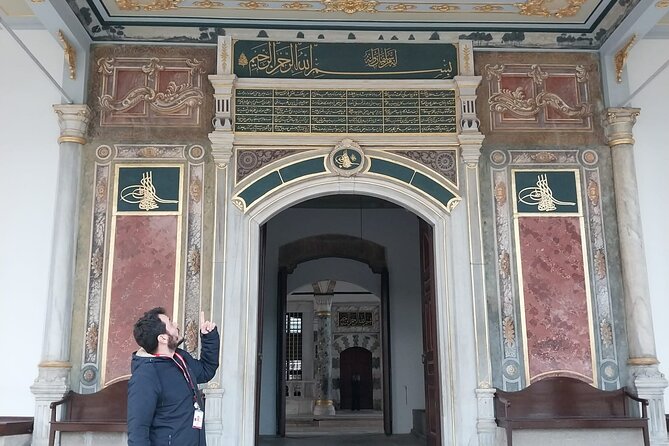
Topkapi’s kitchens are among the most useful stops for understanding everyday court life. Grand palace history can become abstract very quickly. Kitchens bring it back to food, staff, preparation, and the ordinary work required to support a royal household.
The Divan-ı Hümayun, or Imperial Council, shifts the focus from domestic life to government. This was where important matters of state were discussed. The nearby Justice Tower is one of the palace’s most recognizable features and carries a clear message about authority and oversight.
You also visit the Chamber of Petitions, a place tied to formal access to the sultan. The name alone hints at how carefully the court controlled who could approach the ruler and under what conditions.
These stops are where a guide adds the most value. Labels can identify a room, but they do not always explain how the room worked within Ottoman government. The tour promises stories and details about each part of the palace, which should help you connect the architecture with court procedure.
More Palace Walking Tours in Istanbul:
- Venice: Doge’s Palace and St Mark’s Basilica Walking Tour
★ 4.4 · 6,291 reviews - Split: Old Town and Diocletian Palace Walking Tour
★ 4.9 · 4,727 reviews - Walking Tour of Split and Diocletian’s Palace
★ 5.0 · 2,588 reviews - Bangkok: Grand Palace and Wat Phra Kaew Guided Walking Tour
★ 4.4 · 2,417 reviews
The Treasury and Enderun
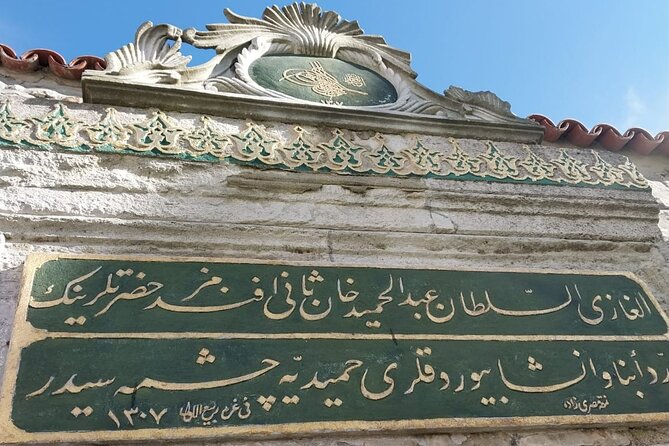
The Treasury is one of the palace’s major draws. The route includes it along with Babüssaade and Enderun, the Interior Service of the Imperial Court.
The Treasury naturally attracts attention because it contains objects linked with royal wealth and ceremony. The practical point for you is that this section can be busy and visually dense. Give yourself time to look closely rather than rushing from one display to the next.
Enderun reveals another side of palace life. It was connected with education and service inside the court. Topkapi was not only a residence where rulers relaxed. It trained people, organized officials, and maintained a strict hierarchy.
This is also where the tour’s educational approach matters. You are not just seeing wealth behind glass. You are seeing how the palace prepared people for roles within the imperial household and government.
The Harem: the most valuable extra stop
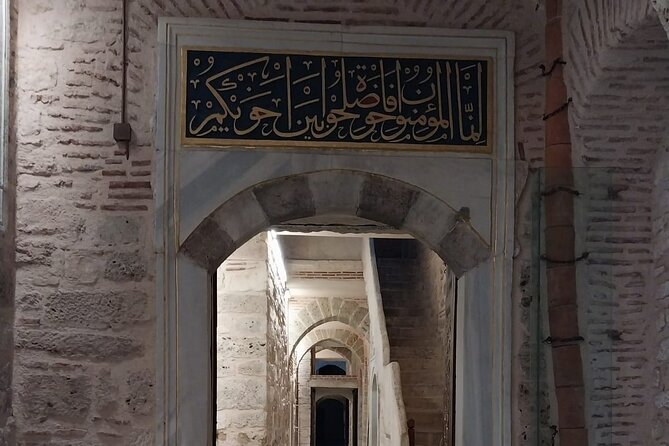
The Harem is the most distinctive part of this experience. Many people visit Topkapi but skip this section, often because it requires a separate ticket or extra planning. Here, the Harem is built into the guided route.
The section was developed at the end of the 16th century and formed a large complex of roughly 300 rooms connected by courtyards, hallways, and fountain gardens. The wider Harem complex is often described as having more than 400 rooms, so the figures should be understood as estimates for different parts of the section rather than a promise that you will enter every room.
Expect marble passages, arched doorways, tiled walls, and rooms with a more enclosed character than the public courtyards. The atmosphere is different from the Treasury or council buildings. This was the private world of the sultan’s household, guarded and governed by its own rules.
The history of the women who lived there is more complicated than the popular image of a pleasure house. The supplied information explains that many women came from Christian or Jewish backgrounds, including people from Circassia and areas now associated with Georgia and Armenia. They were converted to Islam and trained in reading, writing, music, singing, dancing, and palace service.
That context is worth hearing from a guide because the Harem is easy to reduce to gossip. The rooms point to status, education, family life, control, and ambition inside the Ottoman court. The guide can help you separate the building’s actual function from the legends that often surround it.
The Harem takes about an hour within the broader visit. That is a substantial portion of the tour, and it is one reason the experience suits people who want more than a quick look at Topkapi’s famous objects.
Hagia Irene, a quieter Byzantine stop
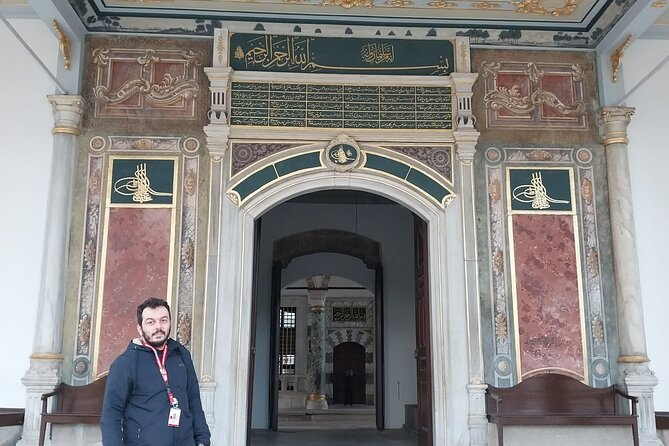
The tour also includes about 20 minutes at Hagia Irene, located in Topkapi’s outer courtyard. It was originally a Byzantine church and is described as the oldest church of the Eastern Roman Empire, as well as the second-largest church in Istanbul after Hagia Sophia.
The name means sacred peace. The building was erected on the site of an older temple in 330 and was rebuilt after the Nika Revolt of 532, when both Hagia Irene and Hagia Sophia suffered damage under the reign of Justinian.
Its later history is unusual. After Constantinople fell, Hagia Irene was not converted into a mosque. It was used for a long period as a storehouse and weapons depot, also known as the Harbiye Warehouse. It later became important to the beginnings of Turkish museology.
You only spend around 20 minutes here, so this is an introduction rather than a full church study. Still, I think it makes the tour stronger. Without Hagia Irene, Topkapi can feel like an Ottoman story standing alone. This short stop shows the older city beneath and around the palace.
How much walking and time to allow
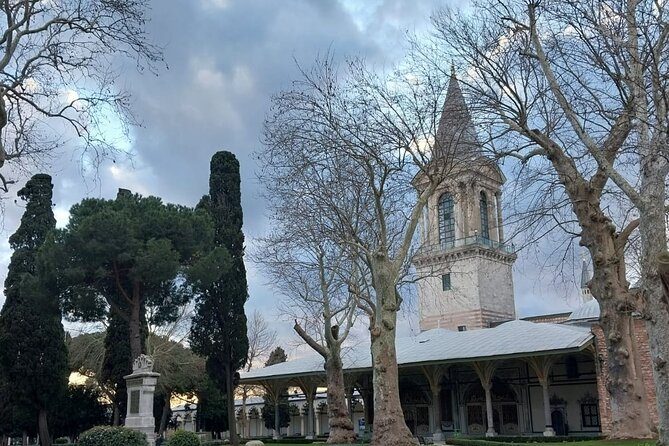
The total duration is approximately three hours and 20 minutes. One portion is listed at two hours for the main palace visit, another hour for the Harem, and about 20 minutes for Hagia Irene.
That adds up to a substantial walking morning. One direct account specifically warns that the visit takes a while and involves a lot of walking, though it considers the effort worthwhile. Plan on being on your feet through courtyards, rooms, gates, and passageways.
This is not the best choice if you want a fast introduction before lunch. It suits you better if you enjoy stopping for explanations and seeing several parts of one major site in a single visit.
The tour is near public transportation, and most people can participate. The supplied details do not specify an accessibility route, seating arrangements, or the number of stairs. If those points matter to you, ask the provider before booking rather than assuming the palace will be easy to navigate.
The real cost at $47.66 per person
The listed price is $47.66 per person. That amount pays for the guided experience, but the entrance fee is separate.
The supplied cost details give two different figures. One section lists an entrance fee of €55 per person. Another says the combined ticket for the Harem, Hagia Irene, and Topkapi Palace Museum is $26. A direct account also describes buying the official ticket through the guide for 1,500 Turkish lira and skipping the line.
Because these amounts may reflect different dates, ticket arrangements, or currency conversions, you should not assume that $47.66 is the final price. Confirm the current admission cost and exactly what it covers before purchase.
Even with the extra ticket, the value can be good if you want a guide for three hours and prefer a small group. One direct account describes the guide cost as only 10 euros at the time of booking and considers the price-to-service ratio especially strong. Prices change, so use that as a value comparison, not as a current quote.
The key question is how much context you want. If you are content to read signs and move at your own pace, the guide fee may not appeal. If you want the Harem, palace government, and Byzantine background explained in one morning, the added cost is easier to justify.
Who should book this Topkapi experience?
I would recommend it to you if you want a structured first visit to Topkapi and prefer history explained in plain English. It is especially useful if you would otherwise skip the Harem or feel unsure about how the palace’s gates, offices, gardens, and private rooms fit together.
It also suits visitors with limited time in Istanbul. The tour covers the palace’s major themes in one morning and ends back at the starting point, leaving you free to continue around Sultanahmet.
You should think twice if you dislike long guided visits, need a highly flexible schedule, or want to linger alone in every room. The fixed start time, three-hour-plus duration, and group format will not suit every style of sightseeing.
Bring patience for the walking and attention to the admission terms. The tour’s strongest feature is not simply entry to a famous building. It is the explanation of how Topkapi worked, especially in the Harem and Imperial Council areas.
Booking, cancellation, and practical details
Confirmation is provided when you book. The tour is offered in English, uses a mobile ticket, and accepts a maximum of 10 people.
Free cancellation is available if you cancel at least 24 hours before the local start time. Cancellations or changes made less than 24 hours ahead are not accepted for a refund.
Meet at the Fountain of Sultan Ahmed III in Sultanahmet at 9:30 a.m. The activity ends at the same meeting point. Since the entrance ticket is separate, allow time and money for that part of the morning.
Should you book it?
Book this tour if the Harem is high on your list, you want a small English-speaking group, and you prefer context over a quick self-guided visit. The route covers the palace’s ceremonial, domestic, administrative, and educational sides, then adds Hagia Irene for an older Byzantine layer.
Skip it if you want to set your own pace or are not prepared for separate admission costs and several hours of walking. Before paying, confirm the current entrance fee, but for a history-minded visitor, the guide-led access to the Harem makes this a sensible way to see Topkapi.
FAQ
Is the entrance ticket included in the $47.66 price?
No. The professional English-speaking guide is included, but the entrance fee is listed separately.
How much is the Topkapi Palace entrance fee?
The supplied information gives conflicting figures. One section lists €55 per person, while another lists a $26 ticket for the Harem, Hagia Irene Church, and Topkapi Palace Museum. Confirm the current price before booking.
Does the tour include the Harem?
Yes. The Harem is included as part of the guided visit, with about one hour allocated to this section.
Is Hagia Irene included?
Yes. The route includes about 20 minutes at Hagia Irene in Topkapi Palace’s outer courtyard, but its admission is part of the separate entry ticket.
How long does the experience last?
The total duration is approximately three hours and 20 minutes.
What language is the tour offered in?
The tour is offered in English and includes a professional English-speaking historian guide.
Where does the tour meet?
You meet at the Fountain of Sultan Ahmed III in Sultanahmet, near Topkapi Palace.
Where does the tour end?
The activity ends back at the meeting point.
Can I cancel for a full refund?
Yes, if you cancel at least 24 hours before the experience’s local start time. Cancellations or changes made less than 24 hours ahead are not refundable.
Newly added in Istanbul
- Walls of Constantinople and Byzantine Palace Tour★ 4.5 · 7 reviews
- Topkapi Palace and Harem Guided tour with Skip-the-Line Tickets★ 5.0 · 156 reviews
- Topkapi Palace Harem Ticket & Tour-Prepay & Balance at meeting★ 4.5 · 28 reviews
- Topkapi Palace Museum Skip The Ticket Line Tickets + Audio Guide★ 3.0 · 2 reviews
- Topkapi Palace Skip-The-Line Entry with Guided Tour★ 3.5 · 67 reviews
- Topkapi Palace and Harem Museum Ticket with Audio Guide★ 3.0 · 2 reviews
- Skip the Line: Topkapi Palace Including Süleymaniye Mosque and Ceramics Workshop in Istanbul★ 4.0 · 17 reviews
- Guided Tour to Topkapi Palace with Skip-the-Line Entry Ticket★ 3.0 · 2 reviews
Topkapi and Dolmabahce Palace Tours, compared.

Topkapi Palace and Harem Skip-the-Line-Tickets & Audio Guide
Read our review →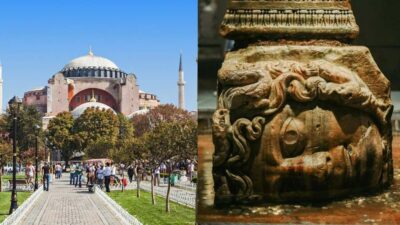
Basilica Cistern & Hagia Sophia with Optional Topkapi Palace
Read our review →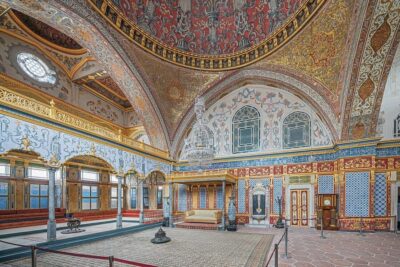
Topkapi Palace and Harem Ticket with Audio Guide
Read our review →
Combo: Hagia Sophia+Basilica Cistern Optional Topkapi Palace
Read our review →
Dolmabahce Palace and Harem Fast-Track & Audio
Read our review →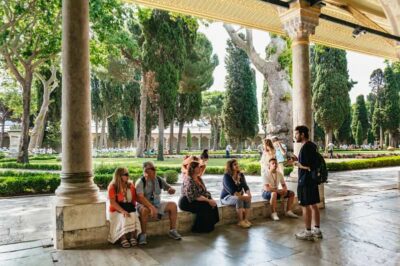
Topkapi Palace and Harem Guided Tour with Ticket
Read our review →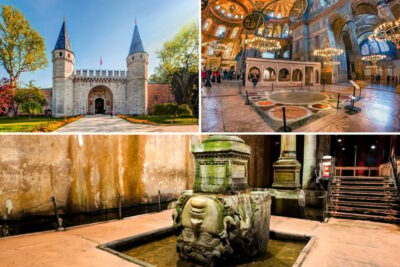
Basilica Cistern &Topkapi Palace &Hagia Sophia Combo Tickets
Read our review →
Dolmabahce Palace & Harem Skip-the-Line Entry & Audio Guide
Read our review →Browse the lists this tour appears in