
Review · EVENING EXPERIENCES
Venice: Lords of the Night Prison’s Palace Cells & Tortures
The most striking part of this visit is not a grand Venetian painting or glittering church. It is the chance to walk through the old prison palace beside St. Mark’s Square, then see the cramped cells, courtroom, inmate graffiti, and grim punishment devices that once formed part of the Republic’s justice system. You also hear how Casanova escaped from confinement under the watch of the Lords of the Night.
I like two things right away. First, the price is modest at about $11, making this an easy add-on to a day around the square. Second, the small setting and guide-led format give the place a personal feel. Guides such as Julia, Kristian, Tiziana, and Charlotte have been praised for clear explanations and lively storytelling. The main drawback is size: this is a compact museum, not a vast prison complex, and the guided visit usually lasts only 45 to 60 minutes.
Key points to know before you go
- Casanova’s escape route: Learn about his famous jailbreak and the attic area where he was held.
- Cells and inmate graffiti: Walk through real prison spaces and see marks left by prisoners.
- Old justice system: Hear how the Council of Ten oversaw crime and punishment in Venetian territory.
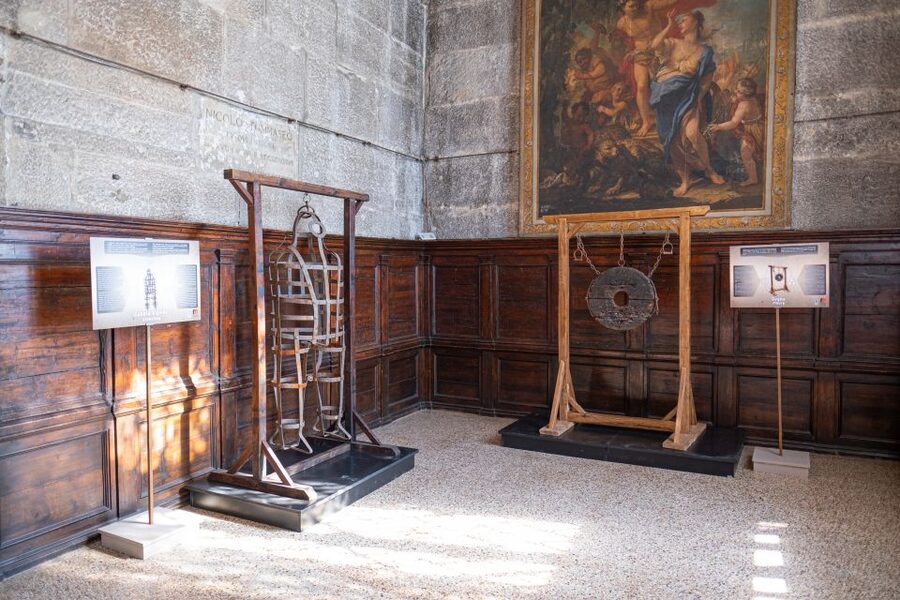
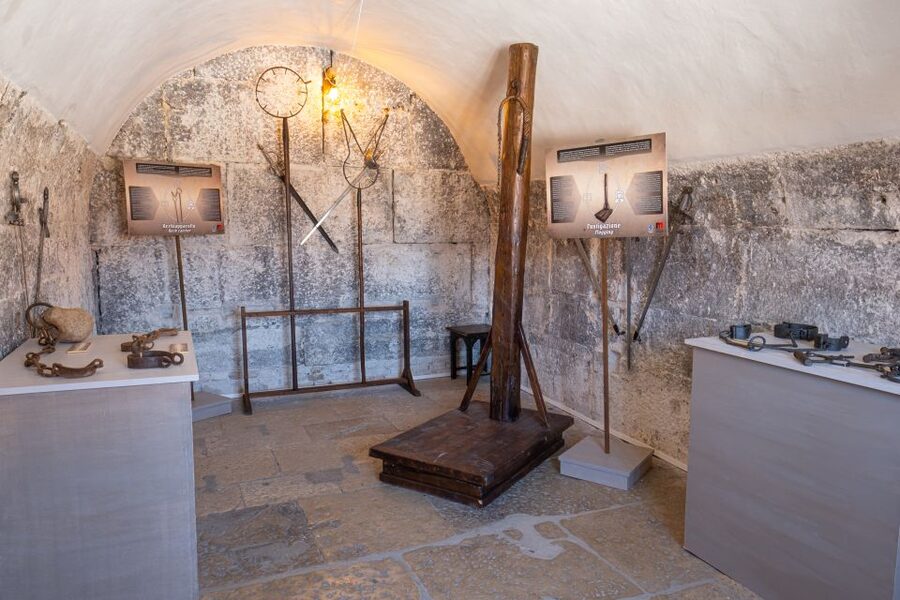
- Torture displays: View historical devices, some of which date from at least the 17th century.
- A short, central visit: The palace is beside St. Mark’s Square and fits neatly into a busy sightseeing day.
- Guide choice matters: The guided option adds stories and answers, while entry-only visitors can explore at their own pace.
A prison hidden beside St. Mark’s Square

Venice is famous for palaces, churches, and canals. The old prison palace offers a different view of the city: Venice as a strict political power with its own courts, punishments, prison cells, and surveillance.
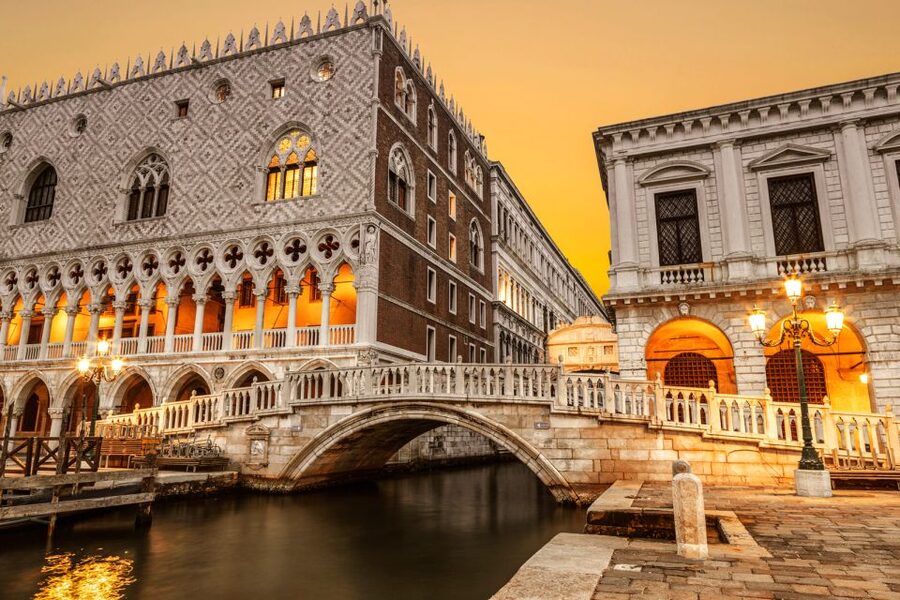
The building sits close to the Doge’s Palace, overlooking the Riva degli Schiavoni. That location matters. You are not heading to a remote museum on the edge of town. You are stepping away from the main square for a short visit and entering a place tied directly to Venetian government.
The prison was connected to the legal system run by the Council of Ten. This powerful body included Venice’s highest political figures and dealt with justice across the Venetian domains. The tour explains how that system worked, giving you more than a collection of frightening objects. You begin to see how government, law, imprisonment, and political control fit together in the old Republic.
The setting does much of the work. Cold walls, narrow rooms, heavy doors, and dim cells create a sharp contrast with the open views and polished architecture outside. I find that contrast useful. You understand Venice better when you see not only how the ruling class lived, but also how the city confined and punished people.
More Evening Openings in Venice:
- Exclusive Evening at Schönbrunn Palace: After-Hours Audiotour, Dinner, Concert
★ 4.0 · 930 reviews - Vienna: Schönbrunn Palace Evening Tour, Dinner and Concert
★ 4.4 · 889 reviews - Seoul: Palace, Temple and Market Guided Foodie Tour at Night
★ 4.9 · 750 reviews
Finding the entrance near the Doge’s Palace
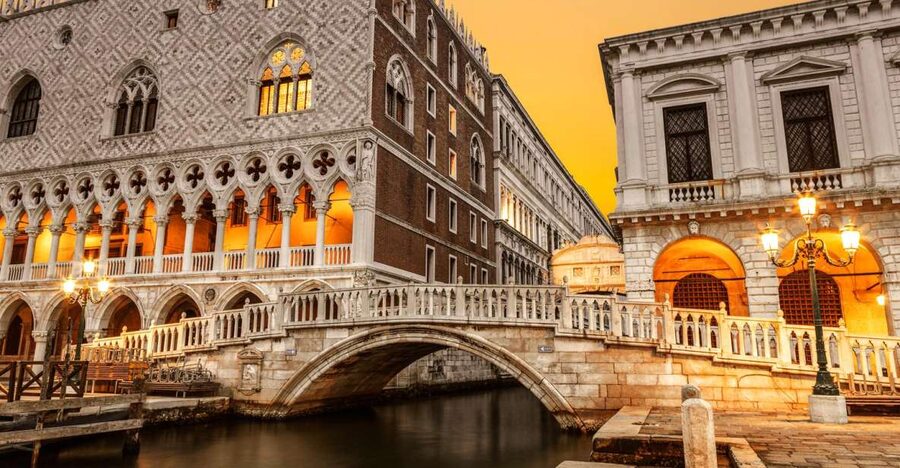
The meeting point is the Prison Palace, close to St. Mark’s Square. With the Doge’s Palace in front of you and the San Marco basin behind you, head to the right side of the palace entrance, cross the bridge, and look for the entrance to the Palazzo delle Prigioni on your left.
Give yourself a little extra time. The meeting instructions can feel less obvious than the location suggests, especially in the busy area around St. Mark’s Square. One practical detail is easy to miss: you enter the building and go upstairs. If you are joining a guided visit, check the exact starting time and arrive ready to find the interior entrance, not just the bridge outside.
The site is open from 10 a.m. to 5 p.m. The activity is listed as valid for one day, so you choose a starting time when booking. The visit does not require a full day. Most guided tours take about 45 minutes to one hour, while an entry-only visit can be shorter if you read quickly.
The building is not recommended for people with limited mobility. The route includes old interior spaces, stairs, and uneven or confined areas. If you need step-free access, this is not a safe choice based on the information provided.
The courtroom and the machinery of justice
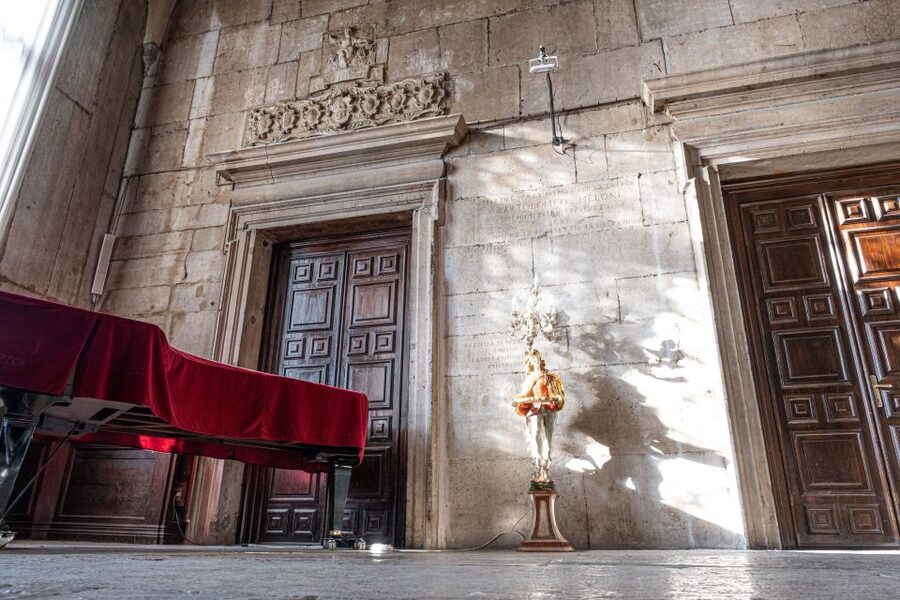
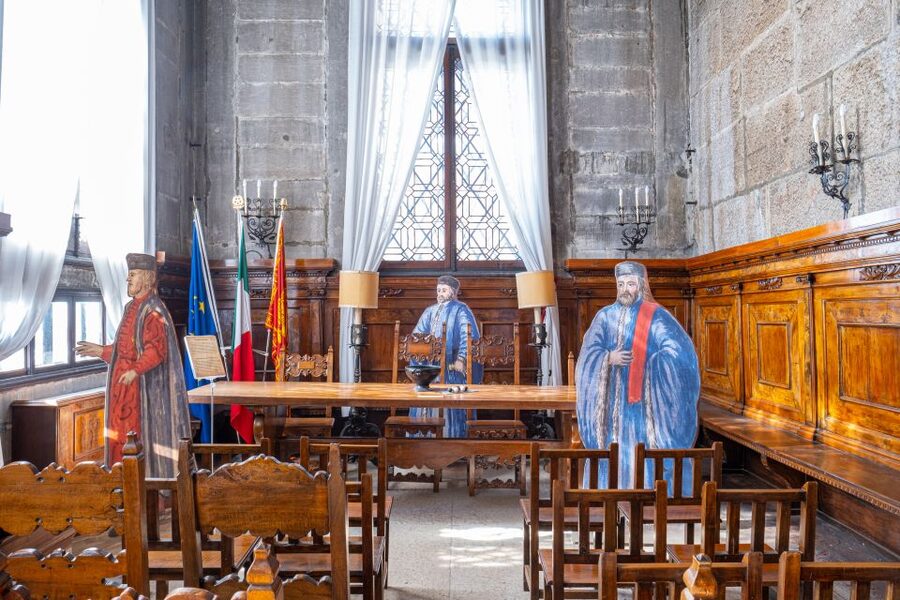
The route takes you into an imposing courtroom before leading farther into the prison. This is an important stop because it puts the torture displays and cells into a legal setting.
The Council of Ten did not simply lock people away without a system. The guide explains the council’s role in Venetian justice and the way judgments were handled. You hear about what it meant to be held by the state, how prisoners were treated, and how punishment formed part of the Republic’s power.
Do not expect a long academic lecture. The best part of this format is the mix of explanation and physical evidence. You can look at the room, listen to the guide describe the process, then move into the cramped spaces where prisoners actually lived.
The tour can be bilingual. A guide may explain the same material in English and Italian, or possibly another selected language depending on the group. This can make the visit last a little longer and may mean you hear some information twice. It also makes the experience workable for mixed-language groups.
Guides have received especially strong praise for making this material easy to follow. Julia has been noted for answering questions clearly. Kristian and Christian have led engaging visits in English and Italian. Tiziana has been described as patient and well organized, while Charlotte has been singled out for a warm approach. The exact guide depends on the day, but a live guide is the best choice if you want details that are not printed beside each object.
Cells, graffiti, and daily prison life
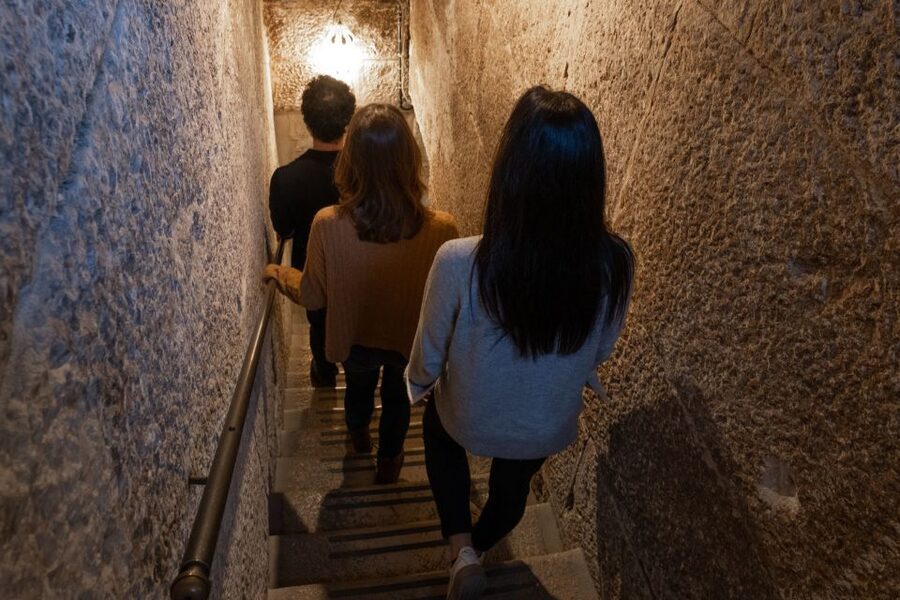
The cells are the heart of the visit. They are not grand museum rooms dressed up as prison spaces. They are real parts of the old complex, and their plain, enclosed design helps you picture the daily routine of prisoners.
You learn what inmates ate and drank, where they slept, and what confinement meant in practical terms. The information is basic but valuable. A prison is not only a place of punishment. It is also a place where people spent long hours waiting, eating, sleeping, and trying to mark time.
Actual graffiti left by inmates adds a human touch. These marks are easy to overlook if you race through the rooms, so take a moment to look closely at the walls. The graffiti connects the site to individual prisoners in a way that a general account of Venetian law cannot.
The cells are also where the museum’s smaller scale becomes clear. You will not walk through endless wings or dozens of vast rooms. Some visitors find the prison smaller than expected and finish quickly. I see that as both a weakness and a benefit. You will not spend half a day here, but you can pay attention to the details without the tiredness that comes with a giant museum.
More Palaces to Tour in Venice:
- Venice: Doge’s Palace Reserved Entry Ticket
★ 4.6 · 42,716 reviews - Doge’s Palace & St. Mark’s Basilica with Terrace Access Tour
★ 4.7 · 10,697 reviews - Venice: Doge’s Palace and St Mark’s Basilica Walking Tour
★ 4.4 · 6,291 reviews - Legendary Venice: Doge’s Palace, St Mark’s & VIP Terrace Access
★ 4.5 · 5,033 reviews
Torture devices and the darker side of Venice
The torture room and displays of punishment equipment give the visit its most dramatic edge. The objects are disturbing, and the experience is best for anyone with an interest in crime, punishment, and the harsher side of European history.
Some of the displayed devices are identified in the visitor comments as dating from at least the 17th century. The tour explains how they were used and places them within the legal system of the time. The guide can also fill in gaps when an object has only a short label.
This section may be too gruesome for very young children or anyone who dislikes images and tools connected with physical punishment. At the same time, the material is not presented only for shock. The stronger guides use the devices to explain what the Venetian authorities wanted punishment to achieve and how fear supported their system.
The balance depends partly on the guide. Some visits focus heavily on the torture equipment, while others spend more time on prison life and the court process. If your main interest is architecture or the everyday lives of inmates, say so and ask questions. If you want the grim details, the guide can usually provide them.
The secret passage and Casanova’s jailbreak
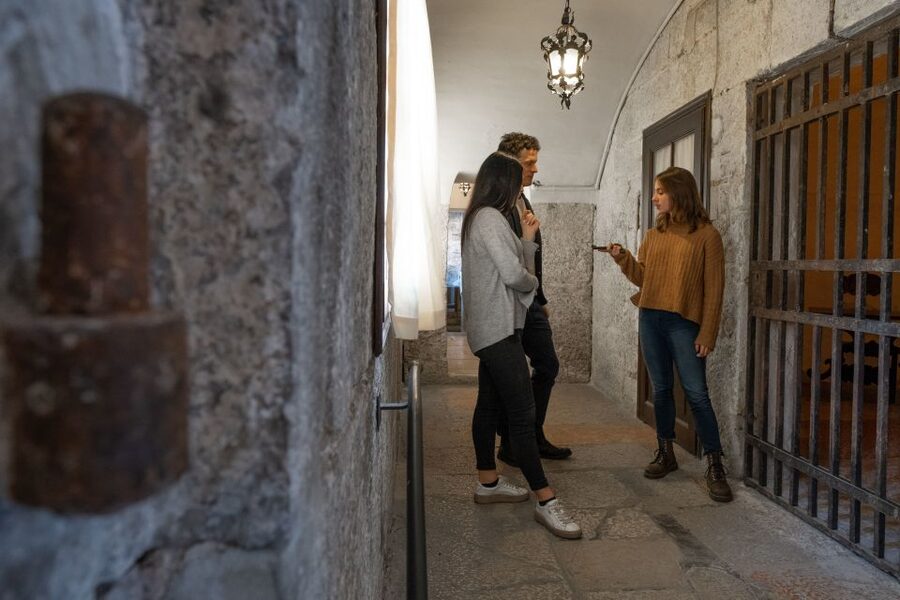
The most memorable story concerns Giacomo Casanova, who was arrested by the Lords of the Night and held in the prison complex. The visit includes the story of his escape and the route connected with it.
A 16th-century secret passage between the prison buildings forms part of the unusual appeal. It was not open to the public until recently, according to the experience details. Walking through a passage made for movement between prison areas gives you a stronger sense of the building than simply viewing a display case.
Casanova’s escape adds a touch of adventure to an otherwise grim visit. You hear how he broke out and how the attic area figured in his confinement and later escape. The story is memorable because it connects a famous Venetian personality to the actual rooms around you.
Keep your expectations measured. The attraction is not a theatrical reenactment, and it does not turn the prison into an amusement ride. The value is in standing in the setting while a guide explains the story and separates the famous escape from the broader prison system.
What the guided option adds
You can choose guided entry, entry only, or an audio-guide option, depending on the ticket available at your chosen time. The live guide is offered in Italian and English. Audio commentary is available in English, French, Spanish, and Italian.
I would choose the live guide for a first visit. The written signs give you a fair amount of information, but they cannot always explain objects that lack a full description. A guide can point out details, answer questions, and adjust the emphasis for the group.
The small-group format also helps. Some visits have had only two people, while others have included around six. A smaller group makes it easier to hear in the old rooms and easier to ask about the cells, devices, and Casanova’s story.
The possible trade-off is a bilingual tour. You may listen to the same section in two languages, which can slow the pace. If you speak English and Italian is also being used, the extra explanation may be useful, but it does reduce the amount of time spent moving through the rooms.
An audio guide suits you better if you prefer to set your own pace or do not want a bilingual presentation. Entry-only tickets work well for independent visitors who enjoy reading display panels and examining objects quietly.
How the $11 price works for a Venice day
At about $11 per person, this is one of the easier cultural stops to fit into a Venice itinerary. The price is especially fair if you take the guided option, since you are paying roughly the cost of admission while adding a live explanation.
The value is less about the number of rooms and more about the location and subject. You are close to the Doge’s Palace and St. Mark’s Square, but you get a subject that most first-time sightseeing routes do not cover in much detail.
The visit is not a replacement for the Doge’s Palace. The ticket does not include the Doge’s Palace or access to the inside of the Bridge of Sighs. That distinction is important. You may see the Bridge of Sighs from outside while crossing toward the prison, but this ticket does not take you through it.
If you want the famous interior view of the Bridge of Sighs, you need a Doge’s Palace visit. If you want a short look at the prison cells and punishment system, this ticket is the more focused and affordable choice.
The booking terms are also practical. You can cancel up to 24 hours before the visit for a full refund, and the reserve-now, pay-later option keeps your plans flexible. Check the available start times before building the rest of your day around it.
Who will enjoy this visit most
I would recommend it to you if you like unusual history, old courtrooms, prison architecture, or stories about crime and punishment. It also suits anyone who has already seen the main monuments around St. Mark’s Square and wants something less polished and more unsettling.
The visit works well for a short Venice stay. You can pair it with the Doge’s Palace area without crossing the city or giving up half a day. The timing is also helpful on a crowded sightseeing schedule because the guided route is usually about an hour.
Families can enjoy it, but parents should decide how their children will handle the torture displays. Some children may find the objects fascinating, while others may find them upsetting. The guides can make the material accessible, but the subject itself remains grim.
I would skip it if you want grand rooms, sweeping views, or a large museum collection. The prison is compact, and several areas are dark or narrow. You may also feel that the visit gives more attention to torture devices than to the prisoners themselves, depending on the guide and your questions.
Should you book the Prison Palace tour?
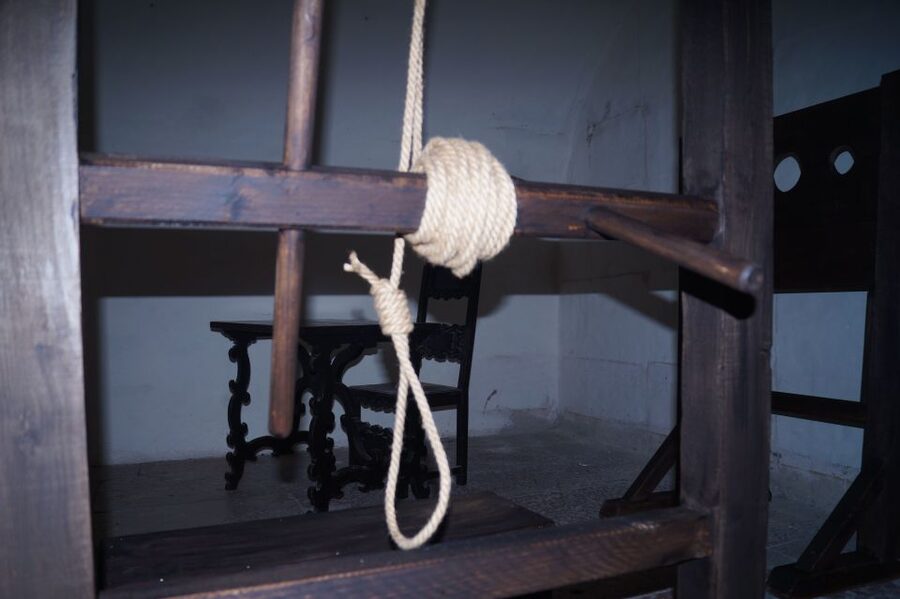
Book it if you want a low-cost, central visit that adds a darker layer to Venice. The strongest reasons are the real cells, inmate graffiti, the newly accessible passage, and the Casanova escape story. A good guide, such as the guides who have led visits with lively English and Italian explanations, makes the compact route much more rewarding.
Choose entry only or an audio guide if you prefer to read at your own speed. Pay for the live guide if you want the court system explained, need help interpreting the devices, or like asking questions.
The key point is to expect a short, focused museum visit, not a full prison complex. With that expectation, the $11 price is easy to justify, especially when you are already near St. Mark’s Square.
FAQ
Where is the Prison Palace located?
The Prison Palace is beside St. Mark’s Square, near the Doge’s Palace and the Riva degli Schiavoni. From St. Mark’s Square, head right of the Doge’s Palace entrance, cross the bridge, and look for the prison entrance on your left.
How long does the visit take?
The guided visit usually lasts about 45 to 60 minutes. Entry-only visitors may finish faster or stay longer, depending on how much time they spend reading and examining the displays.
Is the Doge’s Palace included?
No. The ticket covers the Prison Palace only. Access to the Doge’s Palace is not included.
Can I walk inside the Bridge of Sighs with this ticket?
No. Access to the Bridge of Sighs is not included. You need a Doge’s Palace visit to see the bridge from inside.
What languages are available?
Live tours are offered in Italian and English. The optional audio guide is available in English, French, Spanish, and Italian. The live tour may be bilingual.
Is the visit suitable for people with limited mobility?
No. The experience is not recommended for people with mobility impairments because the route includes old interior spaces and access conditions that may be difficult.
Can I cancel the booking?
Yes. You can cancel up to 24 hours in advance for a full refund. A reserve-now, pay-later option is also available.
Newly added in Venice
- Venice: Doge Palace, San Marco Basilica & Rialto Bridge★ 4.7 · 75 reviews
- Venice Doge’s Palace & St. Mark’s Semi-Private Tour, Max 6 People★ 5.0 · 192 reviews
- Venice: Doge’s Palace Historic Mysteries Guided Tour★ 3.7 · 238 reviews
- All-Inclusive Tour: Doge Palace, St Mark’s Basilica & Square★ 4.5 · 248 reviews
- Venice 3,5 hrs tour: Doge’s Palace, St Mark’s and Hidden Gems★ 4.5 · 264 reviews
- Skip the Line Venice Doge’s Palace and St. Mark’s Basilica Tour★ 4.0 · 263 reviews
- Venice: Doge’s Palace & St. Mark’s Basilica Tour★ 4.7 · 263 reviews
- Doge’s Palace, Bridge of Sighs & Prison Skip-the-Line Tour★ 4.9 · 254 reviews
Evening Experiences, compared.

Exclusive Evening at Schönbrunn Palace: After-Hours Audiotour, Dinner, Concert
Read our review →
Schönbrunn Palace Evening Tour, Dinner and Concert
Read our review →
Palace, Temple and Market Guided Foodie Tour at Night
Read our review →
Alhambra and Nasrid Palaces Guided Tour at Night
Read our review →
Evening at Schönbrunn Palace Vienna: 3-course Dinner and Concert
Read our review →
Seoul Night Palace & Market Food Tour with Vehicle
Read our review →
Antananarivo: Guided Tour and sunset in queen’s palace
Read our review →
Alhambra: Nasrid Palaces Guided Night Tour without tickets
Read our review →Browse the lists this tour appears in