
Review · SCHONBRUNN AND HOFBURG PALACE TOURS
Vienna: Imperial Treasury in the Hofburg Palace
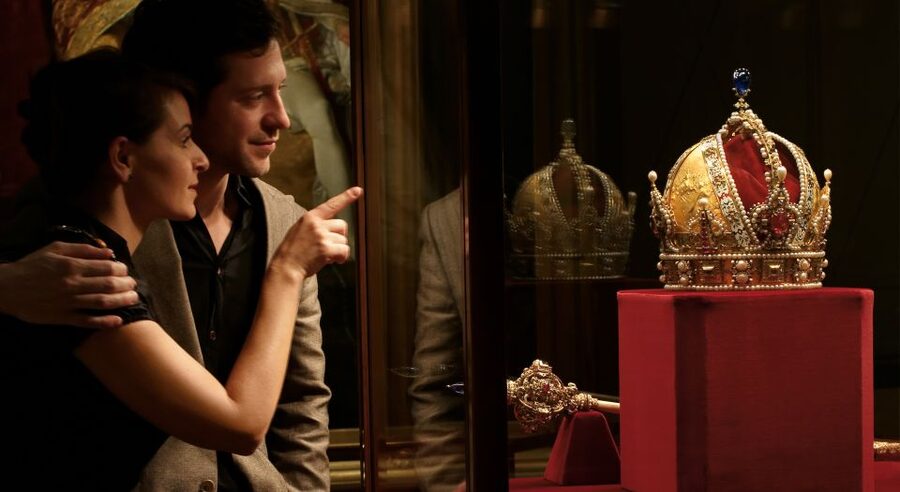
The most striking thing here is the sheer range of objects: imperial crowns, religious relics, royal jewelry, and legendary curiosities all sit inside the oldest part of Vienna’s Hofburg Palace. The Austrian Imperial Crown is the headline piece, but the huge emerald, Golden Fleece treasures, Empress Elisabeth’s jewelry, and the famous agate bowl give the visit plenty of surprises.
I like the museum’s manageable size and its unusually varied collection. You can see the main rooms in about an hour, yet a careful visit with an audio guide can take several hours. I also like the chance to connect the objects to Habsburg power, Burgundy, the Holy Roman Empire, and the court of Sisi.
The main drawback is the ticket process. A printed voucher is required, and some visitors had to exchange a voucher for a paper ticket at the counter, so this does not always function as a true skip-the-line entry. The exhibits also need time and attention, especially without a guide.
Key points to know before you go
- The Austrian Imperial Crown is the star: See one of Europe’s most famous royal crowns and the regalia of the Holy Roman Empire.
- Expect more than jewelry: Religious relics, ceremonial clothing, keys, tabards, and court objects add human detail to the display.
- Allow one to one and a half hours at minimum: That is enough for a brisk visit, but an audio guide can extend the experience considerably.
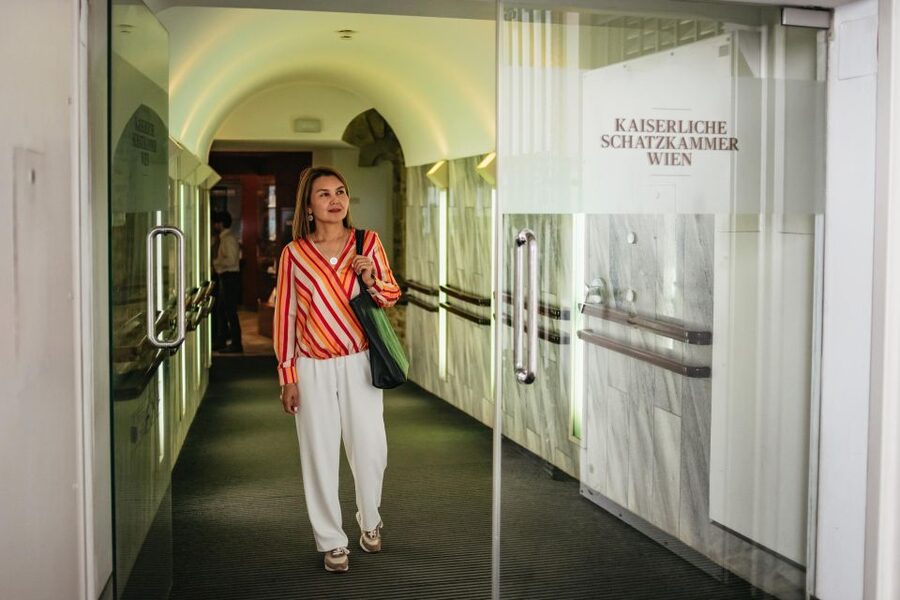
- The Swiss Wing is the setting: You enter the oldest section of the Hofburg Palace to reach the treasury.
- Bring a printed voucher: Digital confirmation may not be accepted directly at the entrance.
- Children under 19 generally enter free: Group rules differ, especially for organized school groups.
Why the Imperial Treasury feels different from an ordinary palace room
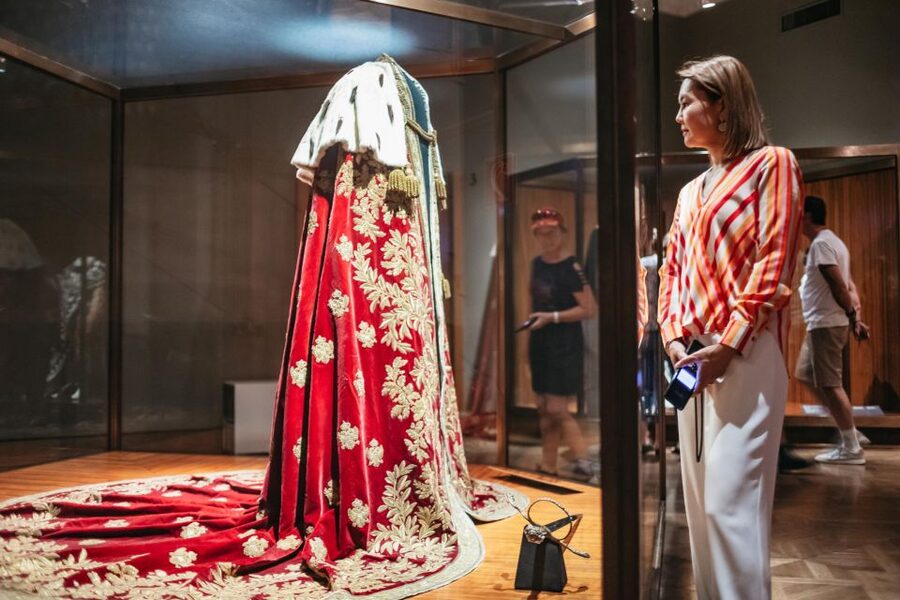
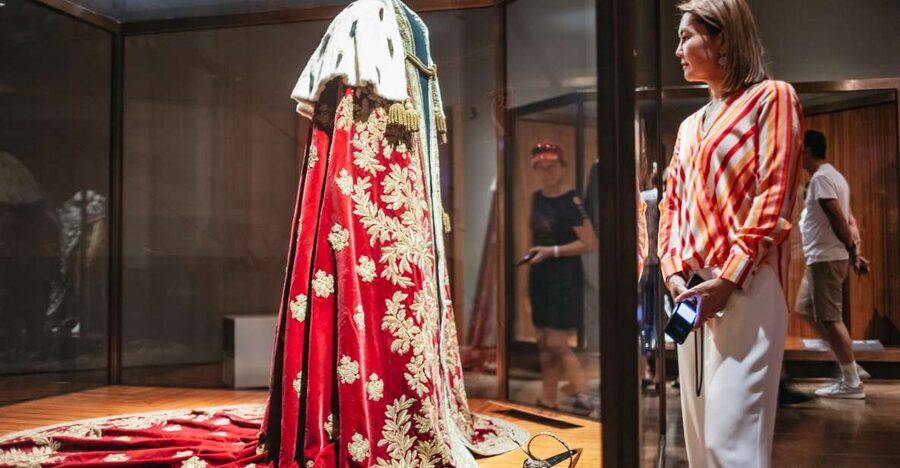
The Imperial Treasury is not simply a room filled with expensive objects. It is a record of how rulers presented authority. A crown, mantle, ceremonial key, or jeweled reliquary tells you what the Habsburg court wanted people to see, respect, and obey.
That makes the visit especially useful early in a Vienna stay. Later, you may encounter Habsburg names and symbols at the Hofburg, Schönbrunn Palace, churches, and city monuments. Seeing the actual crowns and regalia first gives those later stops more meaning.
The museum occupies the Swiss Wing, the oldest part of the Hofburg Palace. The setting matters. You are not viewing these objects in a modern art gallery removed from their original world. You are entering the palace complex where imperial life unfolded.
The collection is divided broadly between secular treasures and ecclesiastical objects. The secular side focuses on rulers, court ceremony, royal families, and inherited power. The religious side includes relics and objects tied to Christian belief, imperial devotion, and medieval tradition.
More Schonbrunn and Hofburg Tours in Vienna:
- Vienna: Schönbrunn Palace & Gardens Skip-the-Line Tour
★ 4.7 · 7,739 reviews - Vienna: Skip-the-Line Schönbrunn Palace & Gardens Tour
★ 4.8 · 5,411 reviews - Vienna: Skip the Line Schönbrunn Palace and Gardens Guided Tour
★ 4.5 · 1,540 reviews
The Austrian Imperial Crown and Holy Roman Empire regalia
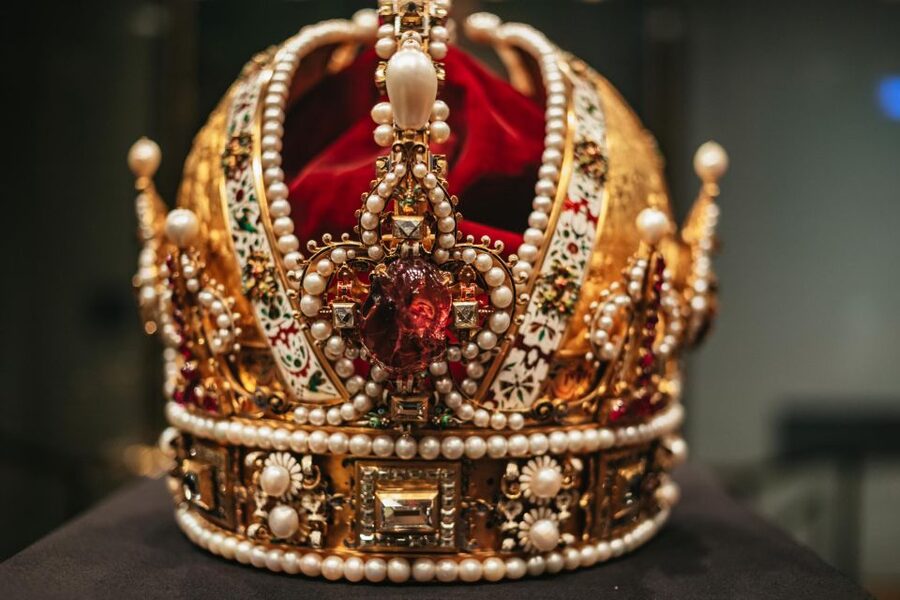
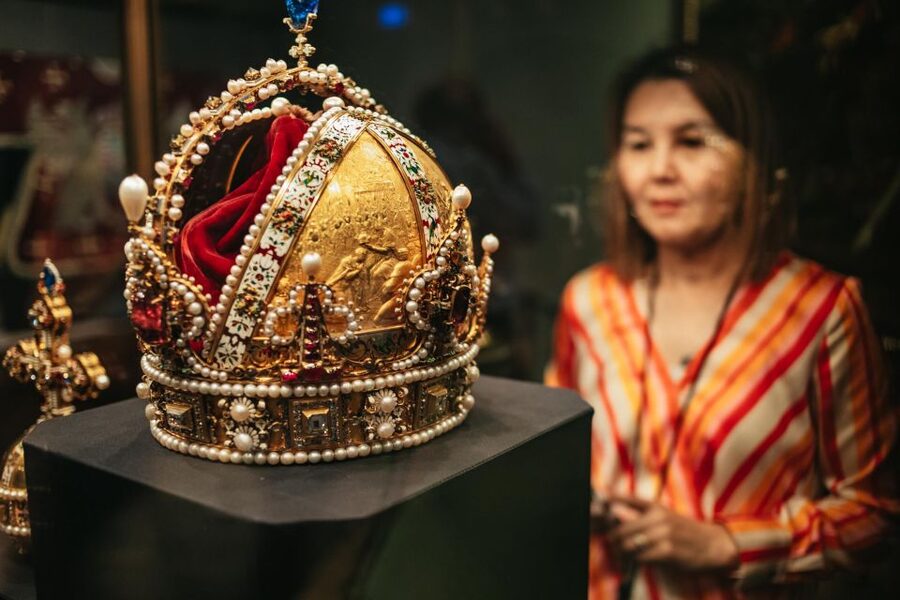
Begin with the crowns and regalia. The Austrian Imperial Crown is among the most important objects in the museum, both for its design and for what it represents. It was made for Emperor Rudolf II and later became the crown associated with the Austrian Empire.
The crown is not delicate in the way modern jewelry can be. It has a solid, formal presence, with arches, jewels, enamel work, and a tall profile designed to be seen from a distance. I find it more interesting when you consider its public role. This was not merely something to wear for decoration. It helped turn a ruler into a visible symbol of the state.
Nearby, you can see the crown jewels of the Holy Roman Empire, including the Imperial Crown. These pieces connect Vienna to a political system that lasted for centuries and covered much of central Europe. The crown was used in imperial ceremonies and carried an authority that reached well beyond the Austrian court.
Pay attention to the supporting objects. The orb, scepter, swords, robes, and other regalia complete the picture. Together, they show how ceremony worked. A ruler’s power was made visible through a carefully arranged set of objects, not just one crown.
The presentation is easy to follow in many places, though the overall layout can feel confusing at first. If you like context, take the time to read the labels instead of rushing from one glittering case to the next.
Jewels, emeralds, and the family world of the Habsburgs
The treasury also brings the imperial family closer to everyday human scale. The jewelry of Habsburg empresses and princesses includes pieces worn for court life, formal appearances, and family status.
Parts of Empress Elisabeth’s original jewelry are on display. Elisabeth, known as Sisi, remains one of the most familiar figures in Vienna’s imperial story. The jewelry helps balance the grand ceremonial objects with something more personal. You can think about how clothing and adornment shaped her public image, rather than seeing her only as a romantic palace figure.
One of the collection’s most unusual highlights is a very large emerald. The museum presents it as one of the largest emeralds in the world, and its size is memorable even if you are not a jewelry specialist. It is a good reminder that royal collections often prized unusual natural objects as much as finely made ornaments.
Look closely at the workmanship. Some pieces are impressive because of their materials, while others reward you with small details in their settings, symbols, and patterns. The strongest moments come when you stop measuring value by the amount of gold and start looking at the skill and ideas behind each object.
The jewelry rooms can be visually intense. If you try to read every label, you may need more time than expected. A short visit gives you the main sights, while a slower visit is better for anyone interested in fashion, court ritual, or the lives of royal women.
The Order of the Golden Fleece and Burgundian treasures
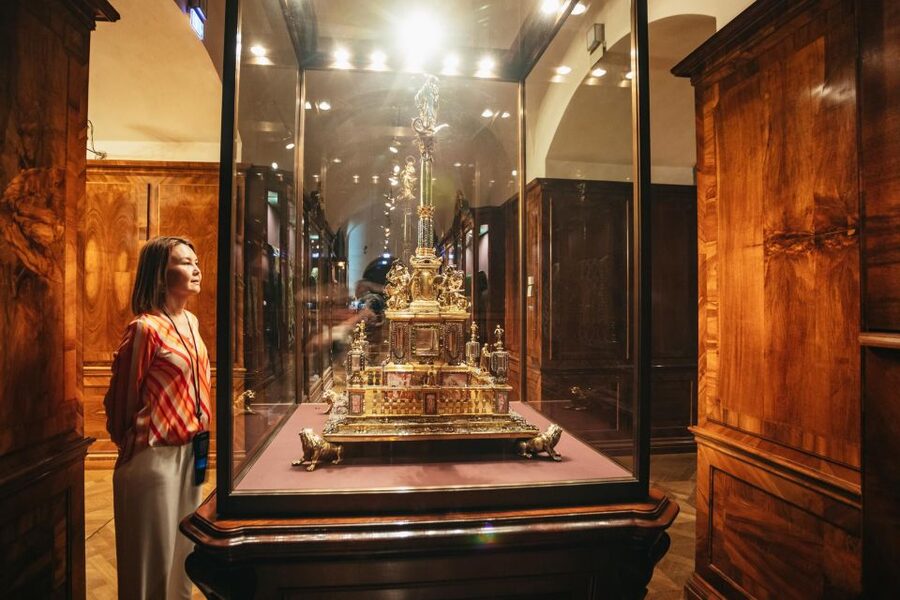
The Order of the Golden Fleece adds a different layer to the collection. This powerful chivalric order was founded in Burgundy and later became closely linked with the Habsburg dynasty.
Here, the objects are not only beautiful. They show how rulers built political ties and rewarded loyalty. Badges, ceremonial clothing, and related pieces helped create a shared identity among the order’s members.
The Burgundian collection comes from the 15th century, a period when marriage, inheritance, and alliance could redraw the map of Europe. The Habsburgs gained important possessions through these connections, and the objects in the treasury help explain how dynastic power accumulated over time.
I especially like looking beyond the obvious crowns. Court clothing, embroidered tabards, and even chamberlains’ keys can tell you about rank and access. A key may seem modest beside a diamond, but it points to the structure of palace life. Someone carried it because someone else was trusted to enter a particular room or serve a particular person.
These objects also make the museum useful for visitors who are less interested in jewels. The collection is not just a parade of precious stones. It covers administration, ceremony, religion, inheritance, and social rank.
More Palaces to Tour in Vienna:
- Vienna: Schönbrunn Palace & Garden Skip-the-Line Guided Tour
★ 4.1 · 1,240 reviews - Vienna: Panorama Train Tickets to explore Schönbrunn Palace
★ 4.3 · 1,164 reviews - Vienna: Skip-the-Line Schönbrunn Palace and Gardens Tour
★ 4.8 · 1,089 reviews - Skip-the-Line Schonbrunn Palace Guided Tour and Vienna Historical City Tour
★ 3.5 · 940 reviews
Relics, the Holy Lance, and the famous agate bowl
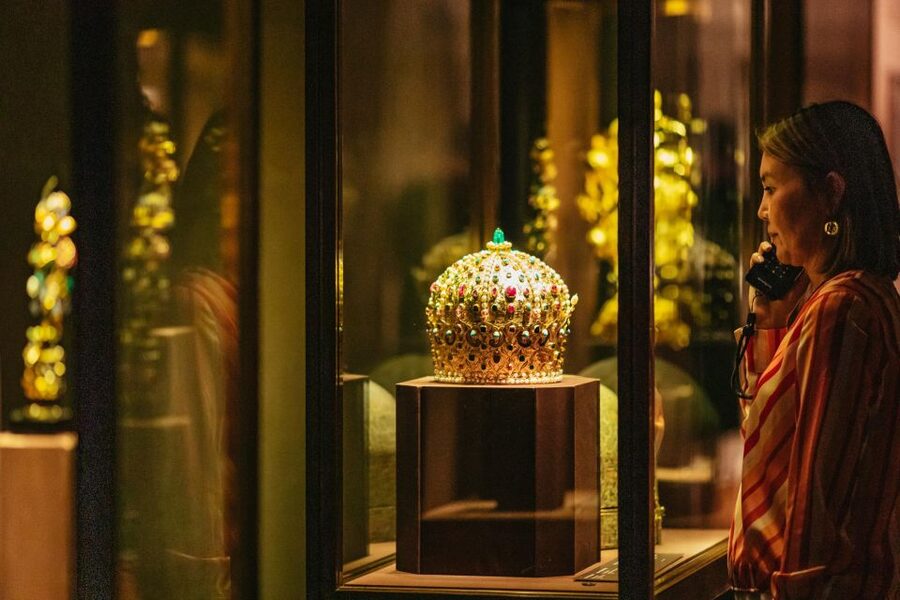
The religious section has a different mood. It includes reliquaries, sacred objects, and relics connected with Christian belief. Some are finely worked containers designed to hold something considered holy. Others are valued for their age and traditional associations.
The Holy Lance, said to date from the 8th century, is one of the most memorable objects in this part of the museum. Its importance comes not only from the object itself but from the long story attached to it. Medieval rulers and later imperial authorities treated relics as sources of spiritual and political meaning.
Then comes the large agate bowl known as the Holy Grail. The museum does not present it as a simple movie-style prop. Its fame rests on centuries of legend and speculation, as well as its striking size and material.
The collection also includes the horn of a unicorn, according to the traditional description. Today, that claim may seem unusual, but it helps you understand how people once classified and valued rare natural objects. A court collection could bring together sacred relics, unusual animals, precious stones, and objects linked to old stories.
These displays work best when you keep two questions in mind: What is this object made of, and why did people believe it mattered? The answers often reveal as much about the people who owned the object as about the object itself.
Napoleon II’s cradle and quieter objects
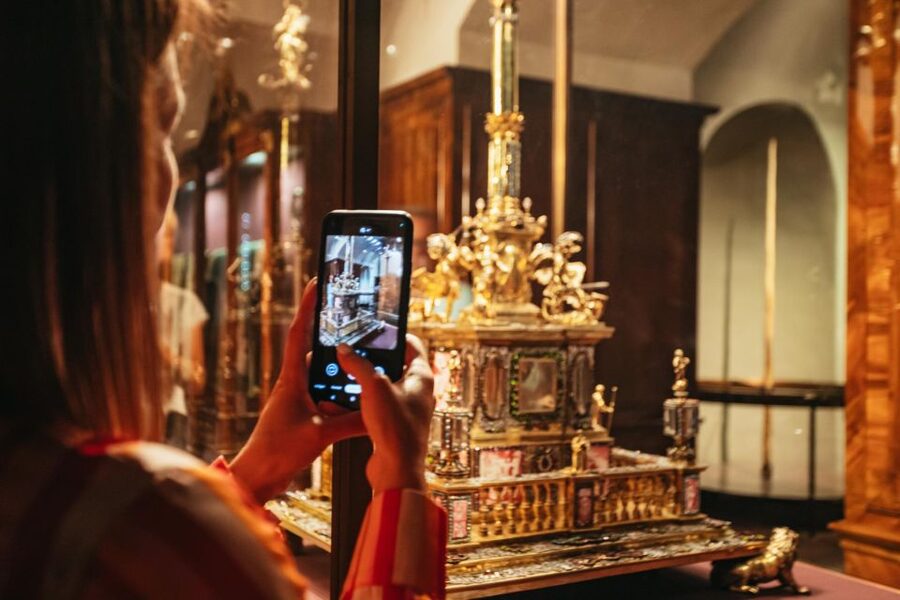
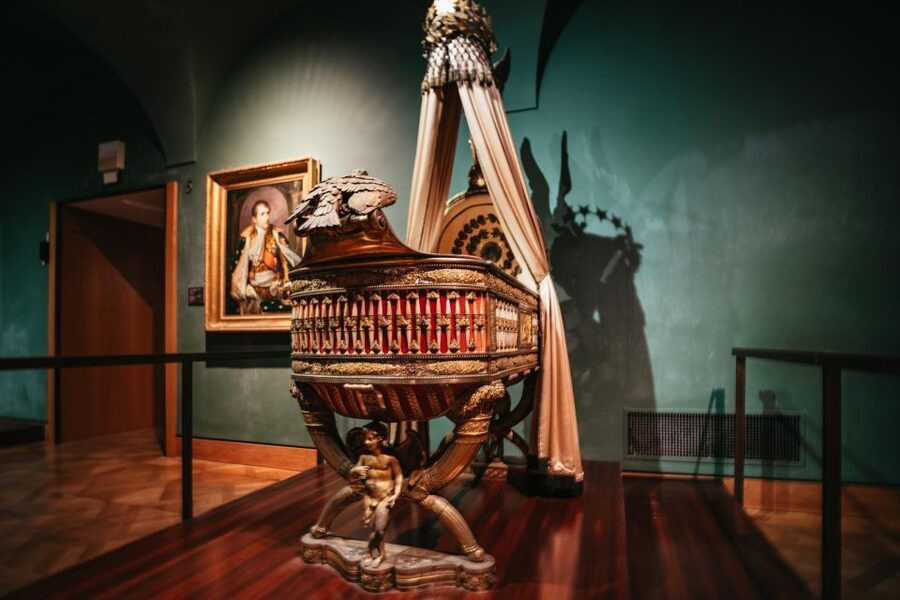
The cradle of the King of Rome, Napoleon II, is another unexpected item. It shifts the focus from imperial regalia to dynastic childhood. A cradle can show how royal birth was treated as a political event, carrying hopes about succession and the future of a ruling family.
This is one reason I recommend resisting the urge to hurry toward the crowns. The smaller objects give the collection texture. A cradle, court key, embroidered garment, or reliquary can explain palace life in a way that a large jewel cannot.
The museum’s arrangement is generally clear once you get oriented, but the route may not feel obvious immediately. Signs and directions around the broader Hofburg complex can also be limited. Give yourself a few extra minutes to locate the Swiss Wing and avoid scheduling the visit too tightly against another timed activity.
How long to spend inside
The basic visit works well as a compact stop. Many people can see the main collection in about an hour. Allow roughly 90 minutes if you want to read labels, compare the regalia, and pause at the religious objects.
An audio guide changes the pace. The ticket does not include a guided tour or audio guide, according to the stated inclusions, though some visitors have received or purchased audio assistance under different arrangements. Confirm what is available when you arrive rather than assuming it is part of admission.
A detailed audio visit can take several hours. That is worthwhile if you care about the Habsburg family, the Holy Roman Empire, sacred relics, or the political story behind the displays. If your interest is mainly visual, one hour may be enough.
The museum layout allows you to take a break and return, according to entrance staff information provided to visitors. That can help if the amount of reading becomes tiring. Ask before leaving so you understand the reentry procedure.
The $18 price and what you receive
At $18 per person, this is not the cheapest short museum visit in Vienna. Still, the price is reasonable if you value rare royal regalia, unusual relics, and a compact collection in a major palace complex.
You are paying for entrance only. A guide, if you want one, costs extra or must be arranged separately. That matters because the collection’s meaning is not always obvious from the objects alone. A guide can explain why a particular crown mattered, how the Habsburgs gained their territories, or why a relic held political value.
The small-group limit of 10 applies to the booking arrangement, but this is not presented as a standard guided tour. Do not expect a guide to lead you automatically. If you prefer a personal explanation, check the options before booking or arrange your own guide.
Children and young people under 19 generally receive free admission. School groups under 19 must register through the museum’s booking department. For adult groups of more than 10, one accompanying guide can receive free admission under the stated group rules. Smaller adult groups do not receive that guide allowance.
The flexible cancellation period and reserve-now, pay-later option add some practical value, especially if your Vienna schedule is still changing. The printed voucher requirement takes away some convenience, so plan around that.
Ticketing, access, and practical advice
The meeting point is the Swiss Wing in the Vienna Hofburg Palace. The larger Hofburg has many entrances, museums, and palace sections, so do not assume that any Hofburg doorway leads directly to the treasury.
Bring a printed voucher. Several people arrived with a digital code and had to exchange it for a paper ticket, while one ticket clerk helped a visitor who had booked from the metro without printing the voucher. That kindness may save the day, but printing in advance is the safer choice.
The experience is wheelchair accessible. If you use a guide, ask about the route and any practical details at the entrance.
Some visitors found the ticket exchange confusing and felt it weakened the benefit of booking ahead. The actual collection is the stronger part of the experience. Treat the advance booking as a way to secure admission, not as a guarantee that you will walk straight past every counter.
Who should book the Imperial Treasury?
I recommend it most strongly to anyone interested in royal families, medieval Europe, church art, jewelry, or the Habsburg period. It also suits you if you want a focused museum visit rather than a full day inside a huge institution.
Families can make it work, especially with older children who enjoy crowns, treasure, and strange legends. Younger children may lose interest in the labels, but the largest crowns, jewels, and unusual objects offer plenty of visual appeal.
You should plan carefully if your schedule is tight. The treasury may take only an hour, but the Hofburg complex can be confusing to navigate, and reading the displays can easily stretch the visit.
Should you book it?
Book the Imperial Treasury if you want to see the actual symbols of Habsburg authority rather than only palace rooms and grand façades. The Austrian Imperial Crown, Holy Roman Empire regalia, Sisi’s jewelry, the giant emerald, Golden Fleece objects, Holy Lance, agate bowl, and unusual relics make this one of Vienna’s most distinctive collections.
Skip it only if your interest in royal history, religious objects, or decorative art is very low, or if you cannot spare at least an hour. For the best experience, print your voucher, allow 90 minutes, and arrange an audio guide or a personal guide if context matters to you. At $18, it is a sound choice for a compact, memorable look at the wealth and ceremony behind Vienna’s imperial story.
FAQ
Where is the Imperial Treasury located?
The Imperial Treasury is in the Swiss Wing of Vienna’s Hofburg Palace.
How much does admission cost?
The stated price is $18 per person.
How long is the visit?
The ticket is valid for one day. The collection can be seen in about one hour, while a slower visit with audio commentary may take several hours.
Is a guide included?
No. The entrance ticket includes admission only. A guided tour is not included, and you can come with your own guide.
Is an audio guide included?
The stated inclusions do not include an audio guide. Availability and arrangements may vary, so confirm at the entrance.
Do children enter free?
Children and young people under 19 generally receive free admission. School groups under 19 must register through the museum’s booking department.
Do I need a printed voucher?
Yes. A printed voucher is required. Digital codes may need to be exchanged for a paper ticket at the ticket counter.
Is the Imperial Treasury wheelchair accessible?
Yes, the experience is listed as wheelchair accessible.
Newly added in Vienna
- Vienna: Skip-the-Line Schonbrunn Palace Private Tour★ 4.8 · 85 reviews
- Skip-the-line Schonbrunn Palace Rooms & Gardens Private Tour★ 4.5 · 81 reviews
- Vienna Private City Tour: Palaces, Churches & Sacher Cake Option★ 4.5 · 41 reviews
- Private Schönbrunn Palace and Gardens Tour★ 5.0 · 46 reviews
- Vienna: After-Hours Schönbrunn Palace Entry & Concert Ticket★ 4.4 · 236 reviews
- Evening at Schönbrunn Palace Vienna: 3-course Dinner and Concert★ 4.0 · 278 reviews
- Vienna: Schönbrunn Palace Entry Ticket with Lunch★ 4.4 · 299 reviews
- Vienna: Imperial Carriage Museum in Schönbrunn Palace Ticket★ 4.7 · 339 reviews
Schonbrunn and Hofburg Palace Tours, compared.
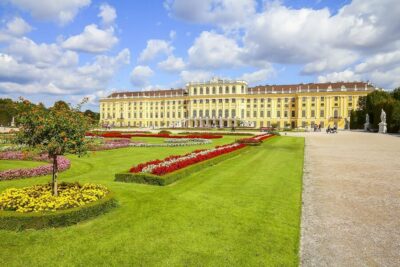
Schönbrunn Palace & Gardens Skip-the-Line Tour
Read our review →
Skip-the-Line Schönbrunn Palace & Gardens Tour
Read our review →
Bus & Schönbrunn Palace Skip-the-Line Guided Tour
Read our review →
Skip the Line Schönbrunn Palace and Gardens Guided Tour
Read our review →
Schönbrunn Palace & Garden Skip-the-Line Guided Tour
Read our review →
Panorama Train Tickets to explore Schönbrunn Palace
Read our review →
Skip-the-Line Schönbrunn Palace and Gardens Tour
Read our review →
Skip-the-Line Schonbrunn Palace Guided Tour and Vienna Historical City Tour
Read our review →Browse the lists this tour appears in