
Review · AUSTRIA PALACE TOURS
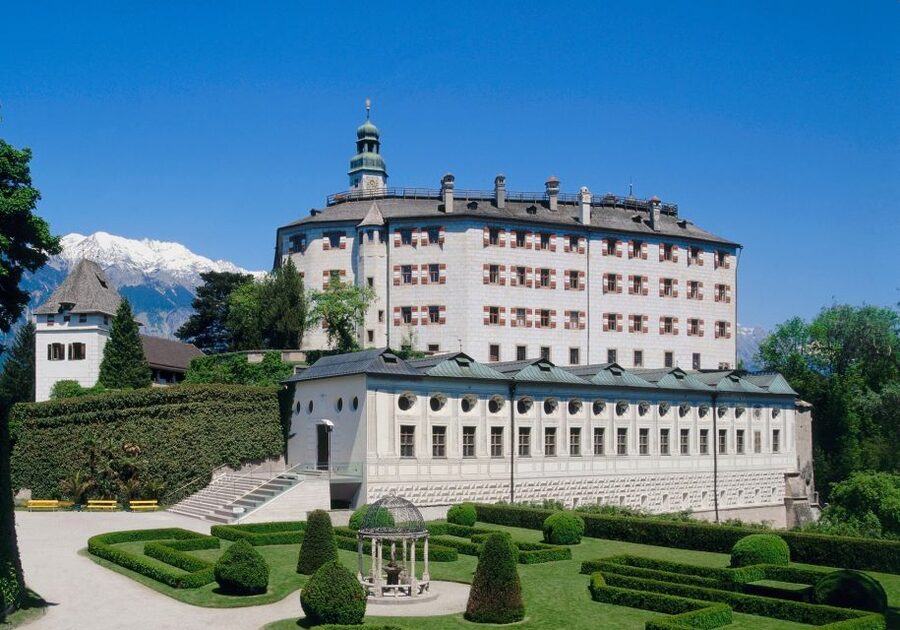
Innsbruck: Tickets for Schloss Ambras
Schloss Ambras is where Renaissance curiosity gets wonderfully odd. You’ll see coral, ivory carvings, scientific instruments, rare armor, unusual musical devices, and portraits of people once considered miracles. I love the Chamber of Art and Wonders, because it shows how people once tried to understand the whole world in one room. I also like the Habsburg portrait gallery, with more than 200 paintings and names such as Rubens, Van Dyck, and Velázquez.
The main drawback is that this ticket covers admission only. There is no audio guide or guided tour included, so you’ll need to bring your own context or pay extra for help. Still, at $16 per person and with a full day of validity, it is a strong choice for anyone who wants more than postcard views in Innsbruck.
Key points to know before visiting
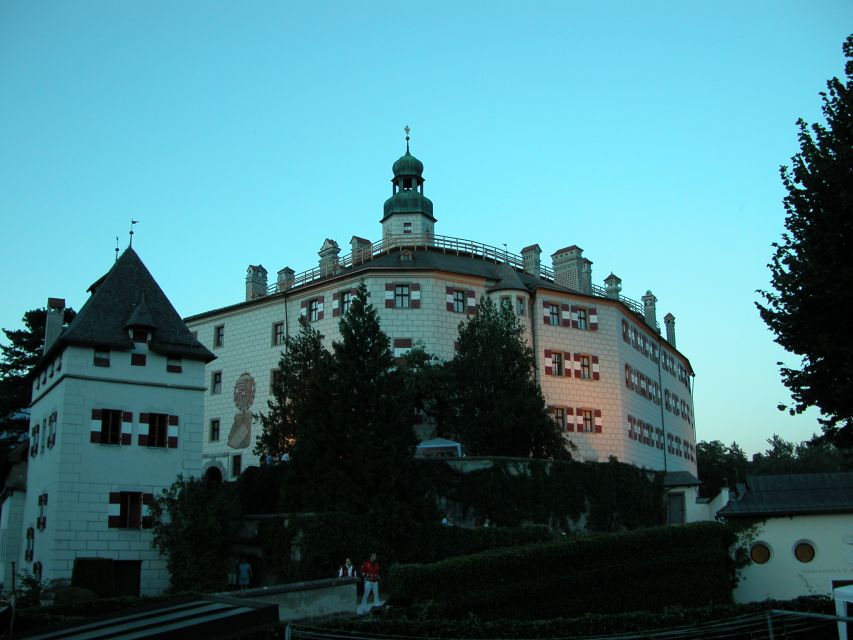
- Ferdinand II’s collection: See the rooms created around the collecting interests of the Renaissance prince who lived from 1529 to 1595.
- The strangest objects are in the Chamber of Art and Wonders: Look for coral, ivory, a compass attachment, a Ryukyu bowl, unusual instruments, and portraits of people regarded as marvels.
- The armories tell several stories: Tournament armor, ceremonial suits, generals’ armor, and the Turkish Chamber reveal both court ceremony and 16th-century fears.
- The Habsburg gallery covers centuries: More than 200 portraits run from Albrecht III to Emperor Franz II, with major works by European masters.
- The ticket lasts one day: You are not tied to a short timed visit, though the available starting times should be checked when booking.
- Bring a plan for interpretation: Admission is included, but an audio guide and guided tour are not.
Why Schloss Ambras is different from a standard palace visit
Many palace visits ask you to admire furniture, ceilings, and royal rooms in a fairly orderly way. Schloss Ambras gives you that courtly setting, but its real appeal is the mind of Ferdinand II. He collected art, objects from far-off places, scientific tools, curiosities, armor, and portraits as if a palace could also serve as a book about the world.
That makes the visit feel less like walking through a decorated residence and more like opening a Renaissance cabinet of curiosities. You are not simply looking at beautiful objects. You are seeing what one powerful collector thought was worth preserving and displaying.
I find that approach especially useful for understanding the period. A coral branch, a compass, or a portrait of a hairy man may seem unrelated at first. Together, they show a time when art, science, travel, religion, entertainment, and rumor occupied the same mental space.
The ticket is valid for one day, which gives you room to visit at a comfortable pace. The information provided does not set a fixed visit length, so you should plan around your wider Innsbruck schedule rather than treating this as a tightly timed guided outing.
More Palaces to Tour in Austria:
- Vienna: Schönbrunn Palace & Gardens Skip-the-Line Tour
★ 4.7 · 7,739 reviews - Vienna: Skip-the-Line Schönbrunn Palace & Gardens Tour
★ 4.8 · 5,411 reviews - Salzburg: Mozart Concert at Mirabell Palace
★ 4.8 · 3,498 reviews
The Chamber of Art and Wonders
Start with the Kunst- und Wunderkammer, or Chamber of Art and Wonders. This is the heart of the visit for anyone who enjoys unusual objects and ideas more than formal portrait rows.
The collection was intended to represent the knowledge of its age. That does not mean it looks like a modern science museum. Instead, it mixes works of art, natural objects, devices, foreign items, games, musical instruments, and human curiosities.
That mixture is precisely what makes it memorable. You might move from an ivory object to a piece of coral, then to a scientific item such as the attachment with compass. The Ryukyu bowl points toward contacts with distant parts of the world. The collection also includes the Tödlein, an artwork associated with death, along with objects that were considered rare, strange, or difficult to explain.
The portraits of people regarded as miracles are among the most striking parts. The hairy man, identified as the Haarmensch, reflects the Renaissance fascination with unusual human bodies. Today, you may find the presentation unsettling or old-fashioned. That is worth acknowledging. These displays do not fit modern ideas about privacy or dignity, and you should look at them with historical distance.
For families, this room may be easier to enjoy than a long sequence of formal paintings. The objects are varied, often small, and full of visual surprises. A child who is bored by dynastic portraits may pay closer attention to an unusual instrument, a strange natural object, or a curious figure.
The drawback is interpretation. Without an audio guide or guided tour included, some pieces may be hard to understand. I recommend taking your time and reading the available labels rather than rushing through. The collection rewards close attention, but it does not explain every connection in a modern, story-driven way.
The armories and Ferdinand II’s military world
The armories change the mood. Here, the focus shifts from collecting wonders to warfare, ceremony, rank, and display.
You can see rare tournament armor, ceremonial armor used for courtly feasts, and armor linked to famous generals. These pieces are not only protective equipment. Their size, decoration, and construction also communicate status. A suit made for a tournament served a different purpose from one designed for a battlefield, and ceremonial armor could be as much about appearance as defense.
This distinction helps you read the objects properly. If you view every suit as practical battle gear, you miss much of the point. Some armor was made for public spectacle, formal events, or highly controlled contests. In a court setting, military skill and visual splendor were closely linked.
The Turkish Chamber, or Türkenkammer, adds another layer. It documents both fear of the Ottoman Turks and fascination with the Orient in the 16th century. That combination is important. The room is not a neutral display of foreign objects. It reflects the political anxieties and cultural curiosity of Ferdinand II’s world.
I appreciate that the armories offer more than a collection of metal suits. They show how a European court viewed military power, foreign threats, ceremony, and exotic objects. You get a sense of how the court presented itself, and also what it feared.
For visitors who prefer paintings, the armories may be the less immediately familiar section. For anyone interested in military history, court life, or craftsmanship, they may be the most satisfying part of the palace. Give the details a chance. The differences between tournament, ceremonial, and military armor matter.
The Habsburg portrait gallery
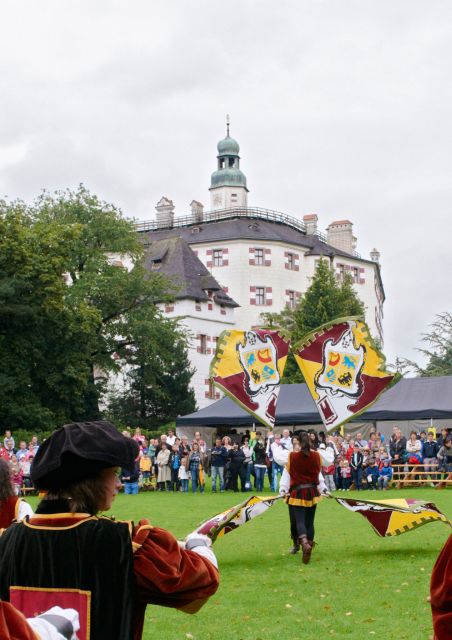
The Habsburg portrait gallery contains more than 200 paintings, covering a long span from the time of Albrecht III, who lived from 1349 to 1395, through the reign of Emperor Franz II, also known as Franz I, who lived from 1768 to 1835.
That time range gives the gallery its scale. You are not looking at one ruler’s immediate family alone. You are tracing changing ideas of power, fashion, representation, and dynasty across several centuries.
The major names include Lukas Cranach, Giuseppe Arcimboldo, Peter Paul Rubens, Anton van Dyck, and Diego Velázquez. Those artists give the collection serious weight, but the gallery is also valuable as a visual record of Habsburg identity.
Portraits can be easy to skim. I suggest slowing down enough to notice clothing, posture, facial expression, and the way each person is presented. Royal portraiture was not meant to be a casual snapshot. It was a carefully managed statement about rank and authority.
Arcimboldo’s work is especially useful for visitors who want something less conventional than standard court portraits. Rubens, Van Dyck, and Velázquez provide another kind of interest, showing how leading painters handled elite sitters and formal presentation.
The gallery may be less immediately entertaining than the Chamber of Art and Wonders. It asks you to compare paintings rather than hunt for strange objects. If you have limited time, choose the sections that fit your interests. If you enjoy dynastic history and painting, this gallery can easily justify the admission price on its own.
Same city, another grand address:
- Vienna: Bus & Schönbrunn Palace Skip-the-Line Guided Tour
★ 4.3 · 2,802 reviews - Vienna: Imperial Treasury in the Hofburg Palace
★ 4.4 · 1,791 reviews - Vienna: Skip the Line Schönbrunn Palace and Gardens Guided Tour
★ 4.5 · 1,540 reviews - Vienna: Schönbrunn Palace & Garden Skip-the-Line Guided Tour
★ 4.1 · 1,240 reviews
Antiquarium and the wider palace collection
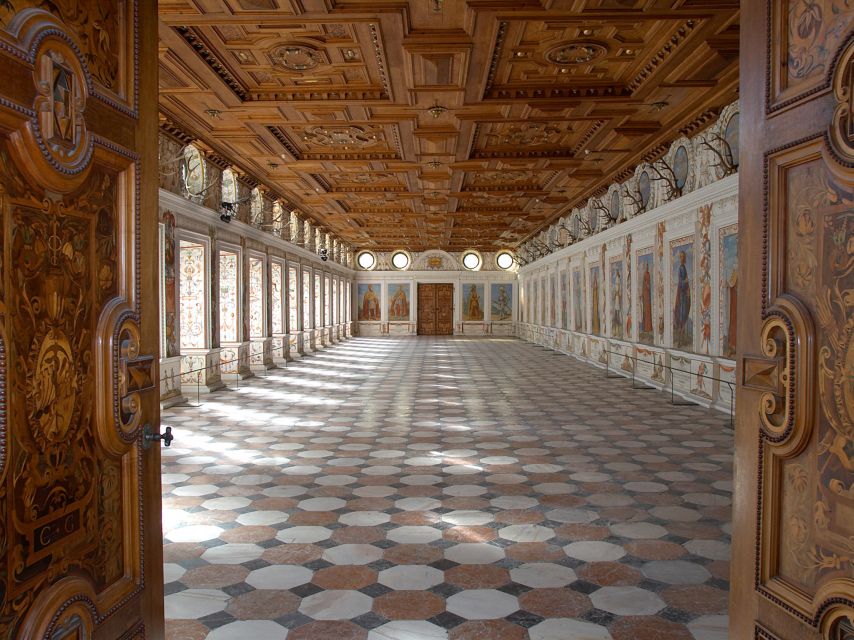
The Antiquarium is part of Ferdinand II’s collection and belongs in the visit alongside the armories and Chamber of Art and Wonders. The provided information does not list every object or room in detail, so I would not arrive expecting a fully described, room-by-room tour.
What you can expect is a broader picture of Renaissance collecting. Ferdinand’s interests were not limited to one category. He assembled art, armor, portraits, scientific objects, natural materials, items from distant places, games, and instruments.
That range is the main theme of Schloss Ambras. The palace is valuable because the collection is personal as well as historical. You see what a Renaissance prince chose to gather, organize, and show to others.
If you enjoy museums with a clear single subject, parts of this visit may feel scattered. If you like making connections between art, science, politics, and daily life, the variety becomes an advantage. I prefer to treat the palace as a series of related collections rather than expect one continuous narrative.
What the $16 ticket gives you
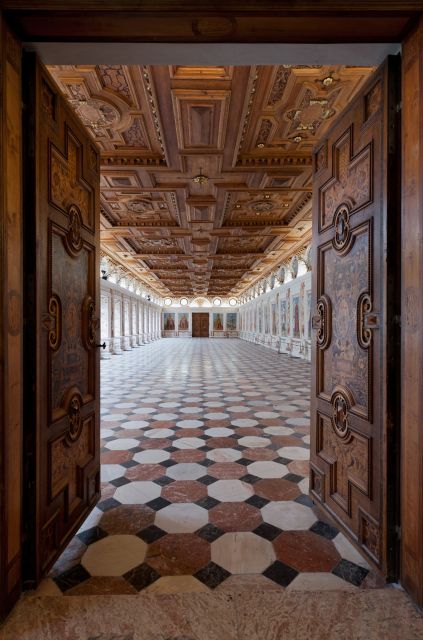
At $16 per person, the admission is reasonable for the amount of material on display. You get access to the palace collections for one day, including the Chamber of Art and Wonders, armories, Antiquarium, and Habsburg portrait gallery.
The value improves if you are already interested in Renaissance art, Habsburg history, armor, or unusual museum collections. The named artists alone give the portrait gallery real importance, while the rare objects in the wonder chamber offer something you will not get from a standard art museum.
The price is less compelling if you want an organized story told by a guide. Admission does not include a guided tour or audio guide. You can come with a private tour guide, but that adds cost and planning.
The flexible one-day validity helps. You are not buying access for only a brief time slot. Check available starting times when booking, and allow enough time to see the sections that matter most to you. I would not treat Schloss Ambras as a quick photo stop.
Free cancellation up to 24 hours in advance and a reserve-now, pay-later option also reduce the risk of fitting it into a changing Innsbruck plan. These policies are useful, but the main value still comes from the collections themselves.
Planning your visit at Schlossstrasse 20
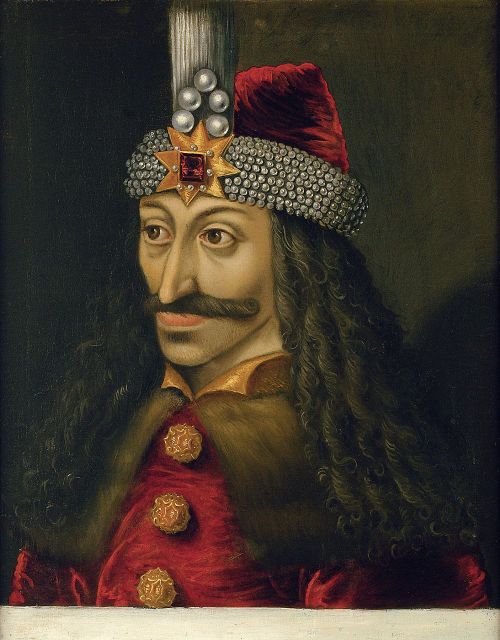
The meeting point is Schloss Ambras, Schlossstrasse 20, 6020 Innsbruck. The ticket is for admission to the site, not transportation, so you should plan your way to the palace separately.
The supplied information does not specify a required group size for ordinary admission or a fixed guided schedule. It does explain special rules for tour guides. A group of at least 10 people can have one tour guide admitted free when the guide accompanies the group to the museum. Smaller groups do not receive free admission for a guide under this arrangement.
State-certified tourist guides always receive free admission. An additional guide and an accompanying person are charged as regular paying visitors. If you are arranging a private group, check these rules carefully before assuming every guide enters without charge.
Because no audio guide is included, I would prepare in one of two ways. You can accept a quiet, self-guided visit and focus on the objects that catch your eye. Or you can arrange a guide in advance, especially if you want the political background behind the Turkish Chamber or a fuller explanation of Renaissance collecting.
There is no need to force yourself through every room at the same speed. Spend longer in the Chamber of Art and Wonders if odd objects appeal to you. Give the armories more time if you care about military history. Save energy for the portrait gallery if you want to compare major painters across several centuries.
Who will get the most from Schloss Ambras?
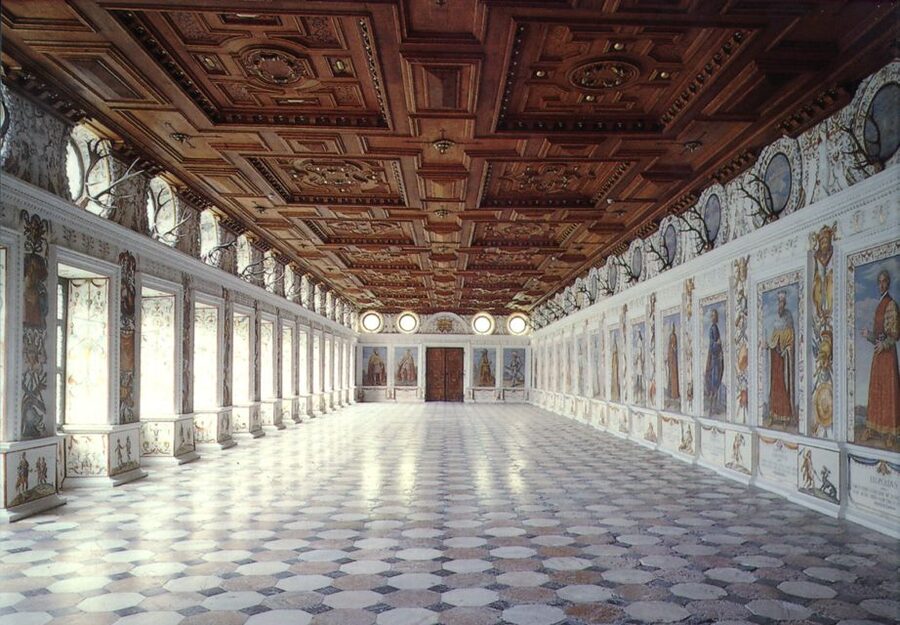
I recommend this experience to you if you like museums that mix categories rather than follow a single theme. It suits people drawn to Renaissance culture, Habsburg history, armor, portrait painting, scientific instruments, and objects from distant places.
It also has useful variety for families. The collection includes games, instruments, strange figures, armor, coral, ivory, and other objects that can hold attention better than a palace made up only of formal rooms. The unusual displays provide natural talking points, though some material may need a little explanation.
Art lovers should pay particular attention to the portrait gallery and the works connected with Cranach, Arcimboldo, Rubens, Van Dyck, and Velázquez. Military history fans should make the armories a priority. Anyone who enjoys the history of collecting will probably find the entire visit rewarding.
I would be more cautious if you want a fully guided experience included in the ticket, or if your time in Innsbruck is so limited that you can spare only a few minutes. The palace offers breadth, and breadth takes time.
Should you book this Schloss Ambras ticket?
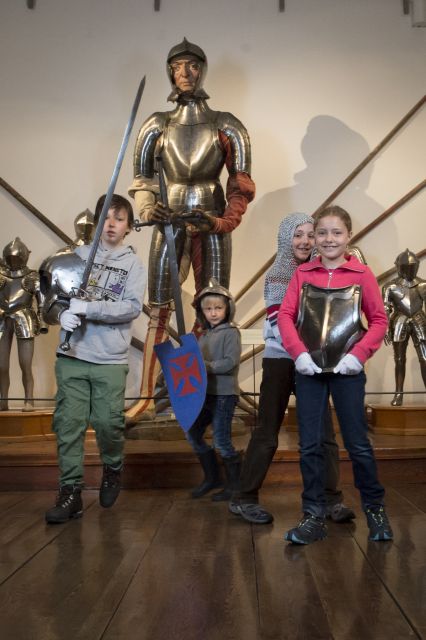
Book it if you want a museum visit with real variety and a strong Renaissance focus. The $16 price is fair for access to the wonder chamber, armories, Antiquarium, and a major Habsburg portrait collection. The one-day validity makes it easier to fit into your schedule.
Think twice if you need a guide to make every display understandable. You will need to pay extra for an audio guide or guided tour, and the ticket itself does not provide a structured explanation.
For most art, history, and family-focused itineraries in Innsbruck, Schloss Ambras is a worthwhile addition. Go for the odd objects first, stay for the armor and paintings, and give yourself enough time to appreciate how unusual Ferdinand II’s collection really was.
FAQ
Where is Schloss Ambras located?
Schloss Ambras is at Schlossstrasse 20, 6020 Innsbruck, in Tyrol, Austria.
How much does admission cost?
The listed price is $16 per person.
How long is the ticket valid?
The admission ticket is valid for one day. Check availability for the available starting times.
What is included with the ticket?
Admission to Schloss Ambras in Innsbruck is included.
Is an audio guide included?
No. An audio guide is not included. A guided tour is also not included.
Can I take a private tour guide?
Yes. You can come with a private tour guide, but the ticket information does not include the cost of that guide.
Are tour guides admitted free?
One tour guide per group booking receives free admission when accompanying a group of at least 10 people. State-certified tourist guides always receive free admission. For groups with fewer than 10 people, a guide is not admitted free under the stated arrangement.
Can I cancel the booking?
Yes. You can cancel up to 24 hours in advance for a full refund. A reserve-now, pay-later option is also available.
Newly added in Austria
- Linderhof palace from Innsbruck, drive and guide★ 4.5 · 3 reviews
- Belvedere Palace: Tour with Skip-the-Line/Transfer Options★ 4.7 · 27 reviews
- Vienna: Schönbrunn Palace Gardens Private Guided Tour★ 4.9 · 28 reviews
- Vienna: Schönbrunn Palace & Christmas Market Walking Tour★ 3.9 · 6 reviews
- Vienna: Schönbrunn Palace and City Center Guided Tour★ 5.0 · 3 reviews
- Schönbrunn Palace Private Photoshooting tour★ 5.0 · 4 reviews
- Private Vienna Night Tour – Palaces & City Lights★ 5.0 · 2 reviews
- Private Schönbrunn Palace Tour: Entrance included★ 4.8 · 5 reviews
Austria Palace Tours, compared.
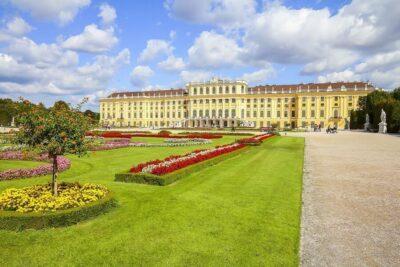
Schönbrunn Palace & Gardens Skip-the-Line Tour
Read our review →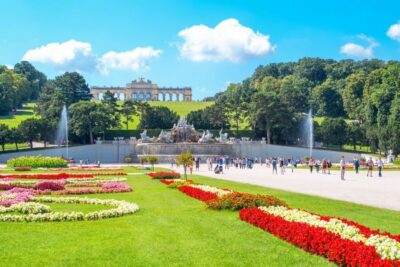
Skip-the-Line Schönbrunn Palace & Gardens Tour
Read our review →
Bus & Schönbrunn Palace Skip-the-Line Guided Tour
Read our review →
Skip the Line Schönbrunn Palace and Gardens Guided Tour
Read our review →
Schönbrunn Palace & Garden Skip-the-Line Guided Tour
Read our review →
Panorama Train Tickets to explore Schönbrunn Palace
Read our review →
Skip-the-Line Schönbrunn Palace and Gardens Tour
Read our review →Browse the lists this tour appears in