
Review · 3-HOUR EXPERIENCES
Mantova City Center and Ducal Palace: 3-Hour Guided Tour
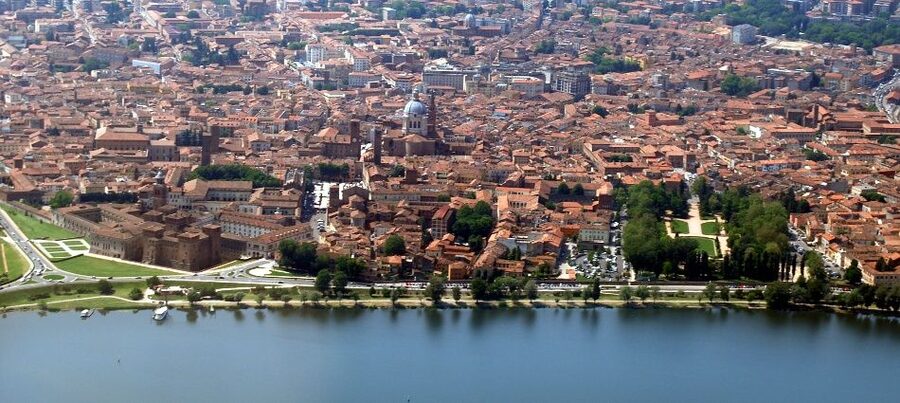
Mantova’s Ducal Palace is less a single building than a small city of corridors, courtyards, gardens, galleries, and nearly 1,000 rooms. That is the great hook here: you begin in a compact medieval center, then connect its squares and churches to the Gonzaga family’s enormous court complex. The city’s three lakes and the Mincio River add another layer, making Mantova feel tied to water as much as to brick and stone.
I like the private format for up to five people, and I like having a guide connect the Gonzaga art collection to the streets outside the palace. Guide Manuela Roversi is named as the experience provider, and her patient, personal approach has made a strong impression. The main consideration is cost: $124.61 covers the group and guiding, but Ducal Palace admission is extra, at €13 per person.
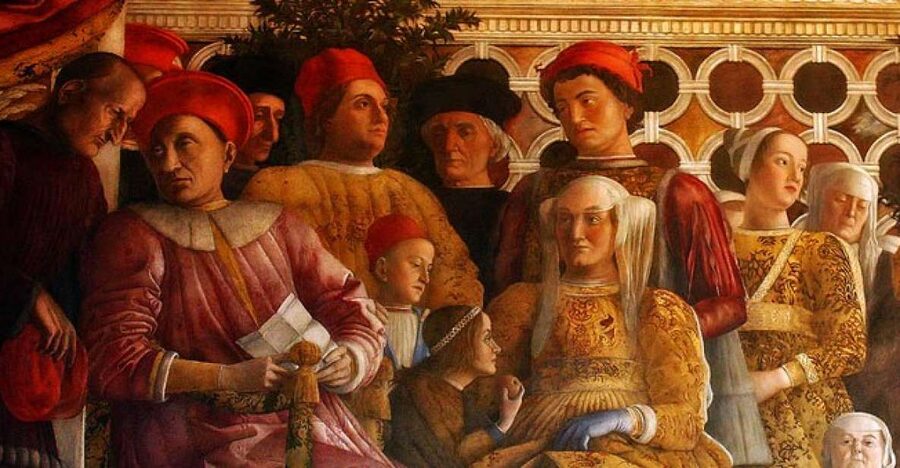
- The Ducal Palace is a vast museum complex: Expect courtyards, galleries, gardens, and major works including Mantegna’s Camera degli Sposi.
- Mantova’s water story matters: Three lakes, the Mincio River, and the medieval Rio canal help explain the city’s shape and traditions.
- The walking route covers the historic core: See Piazza Sordello, Piazza delle Erbe, Piazza Mantegna, Rigoletto’s House, and important churches.
- This is a private tour: Your group can include up to five people, with live guiding in English, Italian, Spanish, or German.
- Church timing affects the route: Churches close at noon and reopen at 3 p.m., with entry restricted during services.
- The Bibiena Theatre is an optional extra: Admission costs €2, and Mozart performed there at age 13.
Why Mantova Makes a Fine Three-Hour Walk
Mantova, also called Mantua, rises from the water in southeastern Lombardy. The city is linked with Virgil, Shakespeare’s Romeo, Verdi’s Rigoletto, and the Gonzaga family, whose rule shaped its art and architecture for centuries.
That list can sound grander than the actual place feels. Mantova is not a huge city. Its historic center is compact enough to cover on foot, yet it contains palaces, churches, medieval lanes, grand squares, and one of Italy’s largest museum complexes. A guide helps you see how those pieces fit together instead of treating each sight as an isolated stop.
The tour starts at Rigoletto’s House on Piazza Sordello, near the entrance to the inner courtyard. This is a practical meeting point because Piazza Sordello also gives you immediate views toward the Ducal Palace and Cathedral. From the first minutes, you are in the middle of Mantova’s old political center.
I especially like that the walk does not treat the city as a string of famous names. The connection between water and urban life is part of the explanation. The Mincio River, the three lakes, and the medieval Rio canal helped define Mantova’s defenses, movement, and local traditions. You get a sense of why this city developed where it did.
Piazza Sordello and the Gonzaga Court
Piazza Sordello is the natural stage for Mantova’s ruling family. From here, you can see the façade of the Ducal Palace, the Cathedral, and the surrounding medieval buildings. The square also leads your eye toward Vicolo Bonacolsi and the nearby civic spaces.
The Gonzagas ruled Mantova as a powerful noble family and turned their residence into a center for painters, architects, musicians, and craftsmen. Their influence is easiest to understand when your guide links the palace to the public spaces around it. The family’s wealth was not kept in one isolated residence. It shaped the city.
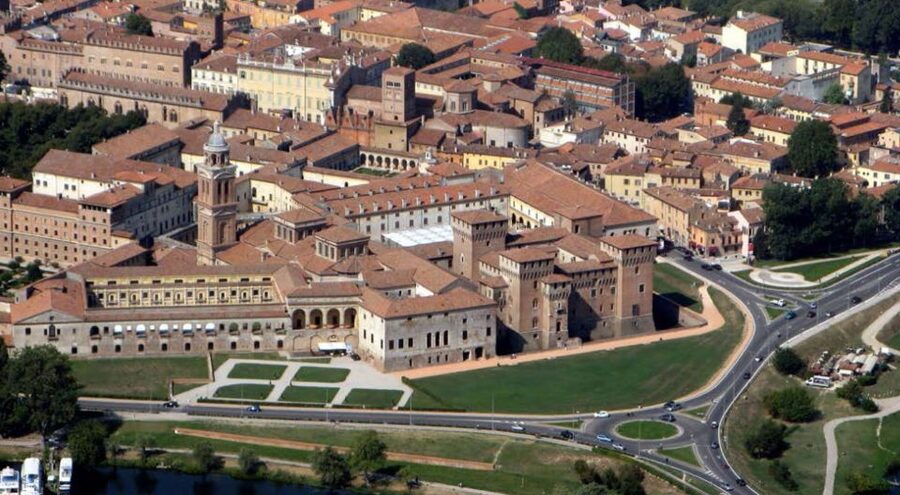
The route includes Piazza Castello, Piazza Santa Barbara, and Piazza Lega Lombarda. You will see the exterior of Saint George Castle, part of the Ducal Palace complex. Its presence helps explain the palace’s unusual character. This was both a fortified residence and a court of culture.
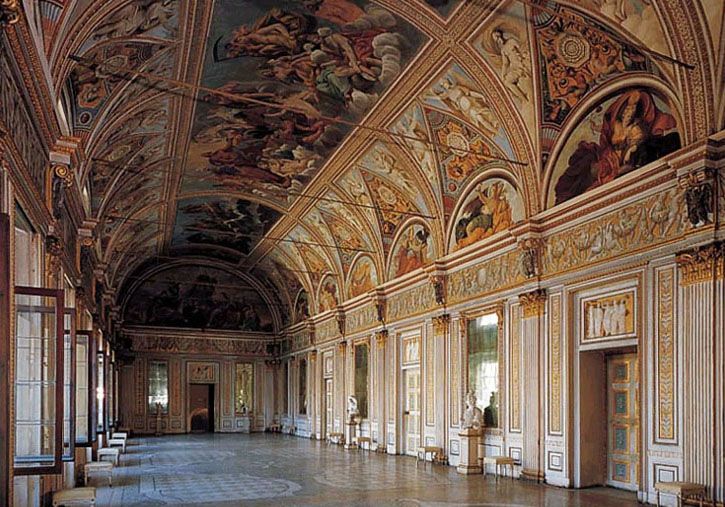
Do not expect a neat palace entrance followed by a simple sequence of rooms. The Gonzaga residence grew between the 14th and 17th centuries. Different buildings, corridors, galleries, inner courts, and gardens were joined over time. That layered design is one of the palace’s chief attractions, but it also means the visit can feel sprawling. A guide is useful here because the scale is hard to grasp from a single room.
More Three-Hour Visits in Italy:
- Alhambra, Nasrid Palaces, and Generalife 3-Hour Guided Tour
★ 4.4 · 889 reviews - Kyoto Imperial Palace & Nijo Castle Guided Walking Tour – 3 Hours
★ 4.5 · 106 reviews - 3-hour: Palace of King Jan Sobieski in Wilanow/inc. Pick-up/
★ 4.7 · 27 reviews
Inside the Ducal Palace and the Camera degli Sposi
The Ducal Palace occupies about 34,000 square meters and contains roughly 1,000 rooms. It is now Italy’s largest museum. That claim comes with a practical warning: three hours is enough for a meaningful introduction, but not for every corner of the complex.
The palace is best approached with priorities. The most famous room is Mantegna’s Camera degli Sposi, also called the Wedding Room. Its frescoes are the artistic centerpiece for many people, and the room has a special visitor limit. On the first Sunday of each month, admission to the Ducal Palace is free, but advance booking is not possible. Only 1,500 people per day can enter the room painted by Mantegna, so free admission does not guarantee access to it.
Admission to the Ducal Palace normally costs €13. The tour includes help arranging that admission, but the entrance fee itself is not included. That distinction matters when you compare the price with a simple city walk. If your main goal is the palace, budget for the ticket and confirm the entry details before you arrive.
Inside, the palace offers more than the celebrated frescoes. You can expect painted rooms, architectural details, court spaces, galleries, and works connected with the Gonzaga world. One particularly useful feature of a private guide is the chance to ask why a room matters, who used it, and how the palace expanded.
Group size is limited to 25 people inside the Castle and Ducal Palace. This private experience is already limited to five, so it avoids the issue of a large group needing extra guides or advance arrangements. For a family or small party, that makes the visit easier to manage.
Rigoletto’s House and Mantova’s Literary Links
The tour begins at Rigoletto’s House, a building tied to Verdi’s opera. The connection is theatrical rather than a claim that the fictional character lived there, but it gives you a memorable way into Mantova’s cultural identity.
Mantova has a surprising number of links with famous artists and writers. Virgil was born here, Shakespeare placed Romeo in Mantova after his exile from Verona, and Verdi used the city as the setting for Rigoletto. Your guide can place those references against the real streets, squares, and palace buildings.
This is one of the route’s stronger features because it keeps the history human. You are not only looking at stone façades. You are seeing a city that became a setting for opera and drama, while also serving as the Gonzaga capital.
Medieval Streets, Broletto, and Piazza delle Erbe
From Piazza Sordello, the walk continues through the old center toward Piazza Broletto. Here you see the medieval Palazzo del Podestà, Palazzo del Massaro, and the Arengario. These buildings reflect the civic side of Mantova, away from the family palace.
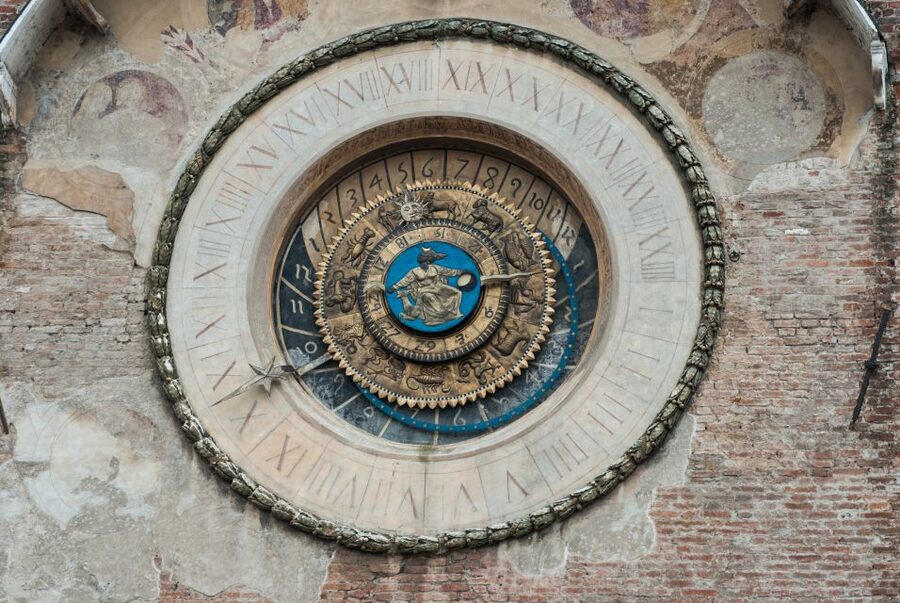
Piazza delle Erbe gives you another change of mood. The square is surrounded by the Palazzo della Ragione, the Clock Tower, and the Church of San Lorenzo. The arrangement shows how tightly public life, religion, commerce, and government were packed into the medieval center.
The façade of the Merchant’s House is another stop. Its name points to Mantova’s trading past and adds a useful counterpoint to the Gonzaga story. Not every building here needs a long visit. The value comes from seeing how the city’s commercial and political spaces connect within a short walk.
If you enjoy city details, this part of the route may be just as rewarding as the grand palace rooms. You can compare the scale of civic buildings with the court complex and see how Mantova’s center remains readable on foot.
More Palaces to Tour in Italy:
- Venice: Doge’s Palace Reserved Entry Ticket
★ 4.6 · 42,716 reviews - Doge’s Palace & St. Mark’s Basilica with Terrace Access Tour
★ 4.7 · 10,697 reviews - Venice: Doge’s Palace and St Mark’s Basilica Walking Tour
★ 4.4 · 6,291 reviews - Legendary Venice: Doge’s Palace, St Mark’s & VIP Terrace Access
★ 4.5 · 5,033 reviews
Sant’Andrea Basilica and Leon Battista Alberti
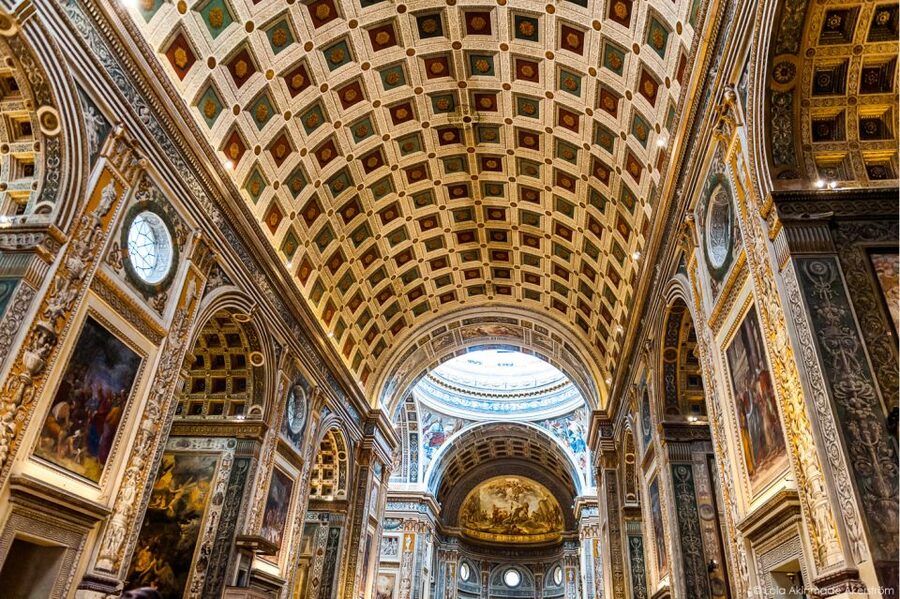
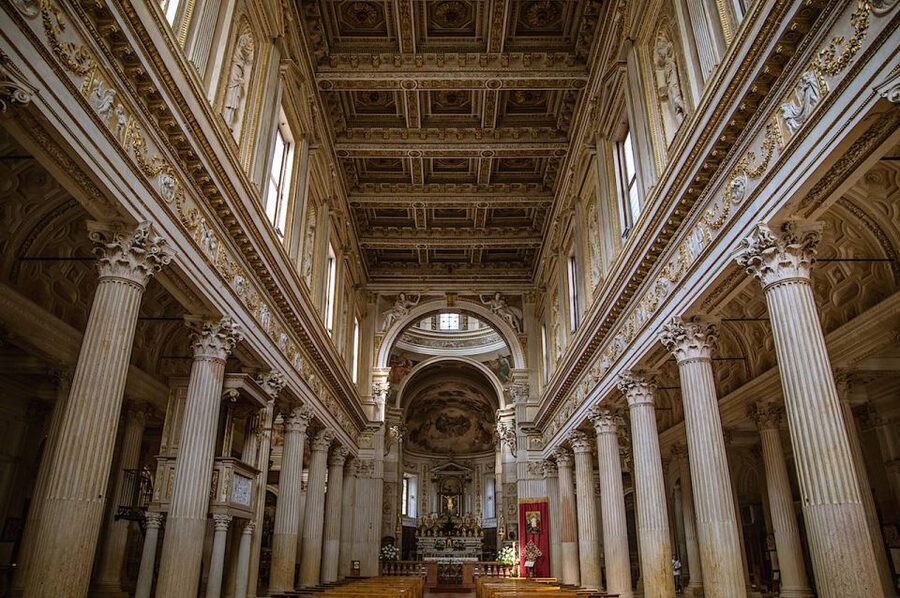
Piazza Mantegna brings you to the Basilica of Sant’Andrea, designed by Leon Battista Alberti. The basilica’s façade is one of Mantova’s defining architectural sights, and the nearby Piazza Leon Battista Alberti includes the former cloister of the Sant’Andrea Monastery.
These stops add a major Renaissance note to a tour that otherwise moves through many periods. Alberti’s work helps show how Mantova’s rulers used architecture to present power and learning. You see a different kind of ambition here than in the defensive forms of Saint George Castle.
Church access depends on the time of day and religious services. Churches close at noon and reopen at 3 p.m. During services, you cannot enter as a sightseeing visitor. Shoulders must be covered, and shorts are not allowed, so carry a wide scarf or sarong if your clothing may not meet the rule.
That timing issue is not minor. If you want to see church interiors, check the starting time carefully. A midday tour may focus more on exteriors, squares, and palace areas, while an afternoon tour may offer better access after churches reopen.
The Bibiena Theatre Option

The Bibiena Theatre is not included in the basic tour, but it can be added for €2. This small extra is appealing if you enjoy performance history. Mozart played there when he was 13 years old, which gives the theatre a direct link to European music history.
The theatre is an optional stop, not a required part of the three-hour route. If you want it, ask about fitting it into the schedule when you book. The €2 ticket is modest, but the tour already includes a full city walk and possible palace visit, so time may require a choice.
How the Price Works for a Small Group
The listed price is $124.61 per group of up to five people. That means the value improves sharply when you fill the group. For five people, the guiding cost works out to about $25 per person before Ducal Palace admission. For one or two people, the per-person cost is much higher.
You are paying for a private guide rather than a basic audio route. That matters in Mantova because the city’s story is spread across several squares and buildings. The guide can adjust the pace and explain links between the Gonzaga court, the churches, the palace, and the city’s water system.
The palace ticket is extra at €13, and the optional Bibiena Theatre ticket costs €2. If you plan to visit both, add those amounts to your total. The tour includes assistance in booking Ducal Palace admission, which is useful because access to the Camera degli Sposi has special daily limits.
The activity allows free cancellation up to 24 hours before the tour and offers reserve-now, pay-later booking. Those terms are helpful if your Mantova day is part of a changing Lombardy itinerary.
What the Guide Adds
The experience provider is Manuela Roversi, and the tour is offered in English, Italian, Spanish, and German. The private setup gives you a chance to ask questions instead of simply keeping pace with a large group.
Manuela has been described as patient, including waiting for a late arrival and using the time at the Palazzo Ducale to explain its background before moving through the collection. That suggests a guide who can slow down when context is needed. Still, you should arrive on time, since a three-hour schedule has little spare room.
One personal detail that makes this experience distinctive is the possibility of connecting individual memories with the palace collection. A visitor recognized a tapestry previously seen at an exhibition in New York, and the guide helped place that work in its Mantova setting. You may not have the same connection, but the example shows why a live guide can make an art collection feel less distant.
Who Should Book This Mantova Tour?
I would choose this tour if you want a compact introduction to Mantova with the Ducal Palace at its center. It suits couples, families, and small groups who prefer a private guide and want both major monuments and smaller urban details.
It is also a good fit if you like art but do not want to study palace history alone. Mantegna’s Camera degli Sposi is the obvious draw, yet the palace is too large to understand from one famous room. The guide can help you place the frescoes within the Gonzaga residence and wider city.
You may want a different plan if you only want a slow, unstructured walk or if you are traveling alone and watching every euro. The group price is strongest for four or five people, and palace admission is not included. Also, anyone determined to enter churches should plan around the noon closing period and religious services.
Should You Book It?
Book this tour if you want Mantova explained as a connected city, not just a list of photo stops. The best parts are the private guiding, the Gonzaga context, the water-centered story, and access planning for the huge Ducal Palace.
Before booking, confirm the starting time, decide if you want the €13 palace admission, and check whether your visit falls on the first Sunday of the month. If you are traveling with up to five people and care about art, architecture, and local history, the price is reasonable for a focused three-hour introduction.
FAQ
How long is the Mantova guided tour?
The tour lasts three hours.
Where does the tour start?
It starts at Rigoletto’s House, Piazza Sordello 23, near the inner courtyard entrance.
Where does the tour end?
The activity ends back at the meeting point.
Is the Ducal Palace entrance included?
No. Ducal Palace admission is not included, but assistance with booking the admission is provided. The listed entrance fee is €13.
What languages are available?
The live guide is available in English, Italian, Spanish, and German.
Is this a private tour?
Yes. The private group can include up to five people.
What happens on the first Sunday of the month?
Ducal Palace admission is free on the first Sunday of each month, but it cannot be booked in advance. Entry to Mantegna’s room may be impossible because only 1,500 people per day can enter it.
Can I visit the Bibiena Theatre?
The Bibiena Theatre is an optional addition and costs €2. Mozart performed there when he was 13 years old.
Are church visits always possible?
No. Churches close at noon and reopen at 3 p.m. Sightseeing entry is not permitted during services.
What clothing is required for churches?
Shoulders must be covered, and shorts are not allowed. A wide sarong is suggested if you need extra coverage.
Newly added in Italy
- Isola Bella’s palace and gardens with a private local guide★ 5.0 · 6 reviews
- Viterbo Private City Tour including Popes Tombs Conclave Palace and Duomo★ 4.5 · 3 reviews
- The Renaissance Gardens tour: Palazzo Farnese and more★ 5.0 · 5 reviews
- FLORENCE: Uffizi Gallery + Palazzo Vecchio monolingual Guided Tour – Small Group★ 5.0 · 9 reviews
- the Medici family in Florence: Palazzo Medici and Medici Chapels★ 4.5 · 10 reviews
- Palazzo Vecchio Tales – into Medici’s secrets and mythology simbols★ 5.0 · 18 reviews
- The Pitti Palace private tour: Splendours of the Royal Residence★ 5.0 · 4 reviews
- Uffizi and Palazzo Vecchio Combo Private Tour★ 5.0 · 3 reviews
3-Hour Experiences, compared.
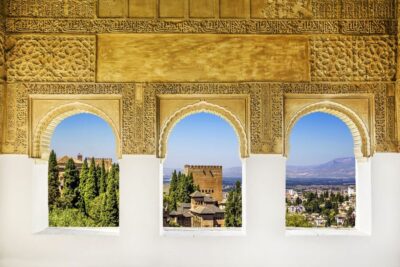
Alhambra, Nasrid Palaces, and Generalife 3-Hour Guided Tour
Read our review →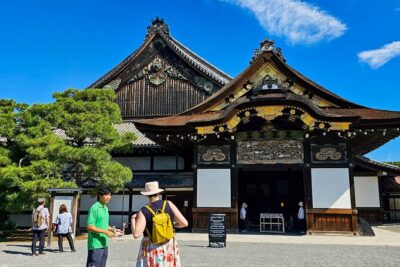
Kyoto Imperial Palace & Nijo Castle Guided Walking Tour – 3 Hours
Read our review →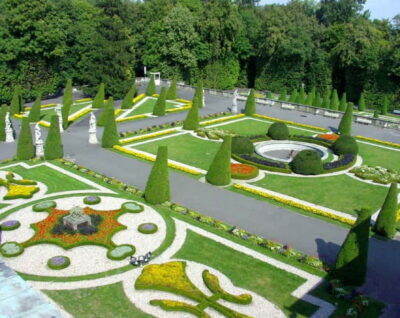
3-hour: Palace of King Jan Sobieski in Wilanow/inc. Pick-up/
Read our review →
3 hours of Tour in the Wines of Châteauneuf-du-Pape
Read our review →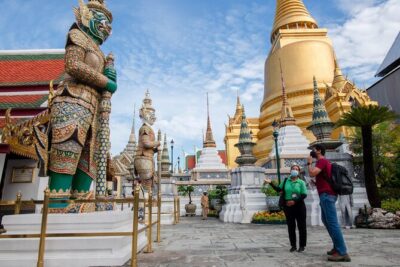
Grand Palace & Wat Arun Immersive Guided Walking Tour 3-Hour
Read our review →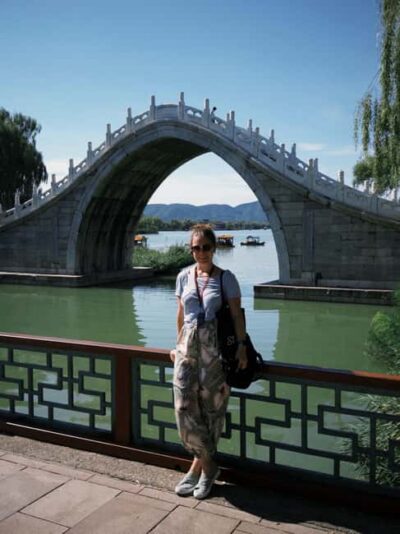
Summer Palace 3 Hours Guided Tour with Entry Ticket
Read our review →
3H private city tour of Bordeaux and vineyard in a Citroën DS
Read our review →
Browse the lists this tour appears in