
Review · PALACE WALKING TOURS
Kyoto Imperial Palace & Nijo Castle Guided Walking Tour – 3 Hours
Kyoto’s past comes into focus at Nijo Castle and Kyoto Imperial Palace, two major sites that tell very different parts of the city’s story. One recalls the power of the shoguns, the military rulers who governed Japan for centuries. The other was home to the imperial family before the capital moved to Tokyo.
I like the small maximum group of nine, which makes it easier to ask questions and hear the guide. I also like that entrance fees are included, so you can focus on the buildings, gardens, and symbolism instead of sorting out tickets. The main catch is the transfer between the sites: it is not included, and walking or arranging public transport can take a useful part of the three-hour tour.
Key points to know before booking
- Two major sites in three hours: You visit Nijo Castle and Kyoto Imperial Palace, with roughly 90 minutes planned at each.
- Small-group format: The tour is capped at nine people, giving it a more personal feel than a large coach outing.
- Strong guide element: Guides including Jasmine, Taku, Atsushi, Raphael, Vincent, and Cecilia have been praised for clear English, historical detail, and friendly assistance.
- Tickets are included: Admission to both sites is covered in the $55 price.
- Plan your own transfer: The tour begins at Nijojo-mae Station and ends at Imadegawa Station, but transport between the sites is not included.
- Useful in hot weather: Guides have been praised for keeping the group moving, pausing for water or air conditioning, and helping with photographs.
Why these two Kyoto sites work well together
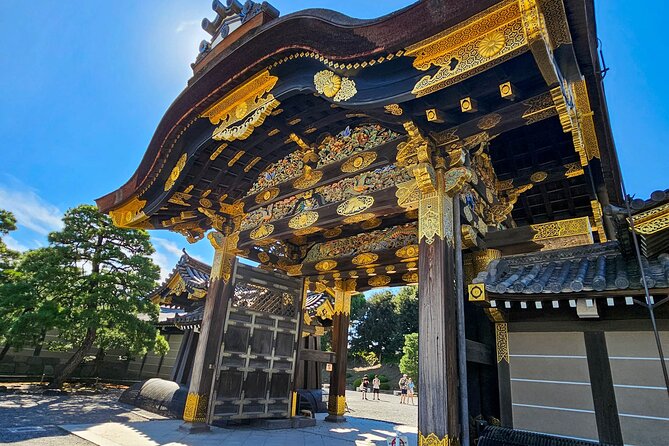
This tour gives you a compact lesson in how Japan was governed and represented before modern Kyoto became a major cultural destination. Nijo Castle shows the world of the shogun, with its controlled entrances, decorated rooms, gardens, and reminders of political authority. Kyoto Imperial Palace offers a different mood, with formal grounds and buildings tied to the imperial family.
I like this pairing because the sites are not simply two grand complexes that look alike. They help you compare military rule with imperial tradition. A guide can point out those differences as you walk, which is useful when the architecture begins to blur into a parade of tiled roofs, painted panels, gates, and gravel paths.
The tour runs for about three hours, with around 90 minutes at each location. That is enough time for a well-paced introduction, photographs, and questions, but it is not a slow, exhaustive examination of every corner. If you want to read every sign and linger in every garden, you may need to return independently.
The group size matters here. A maximum of nine people is small enough for a conversational walk, but it does not guarantee a private tour. Still, it is a sensible middle ground for people who want more personal attention than a large group can provide without paying private-tour rates.
More Palace Walking Tours in Japan
- Tokyo: Imperial Palace and Shogun Historical Walking Tour
★ 5.0 · 2,251 reviews - Tokyo Castle & Imperial PalaceーShogun Walking Tour
★ 4.7 · 1,068 reviews - Tokyo: Imperial Palace Japanese History Walking Tour
★ 4.9 · 987 reviews
Nijo Castle: shogun power in rooms and gardens
The tour starts at Nijojo-mae Station, beside Nijo Castle. This is a practical meeting point because the station is close to the entrance and the tour is near public transportation.
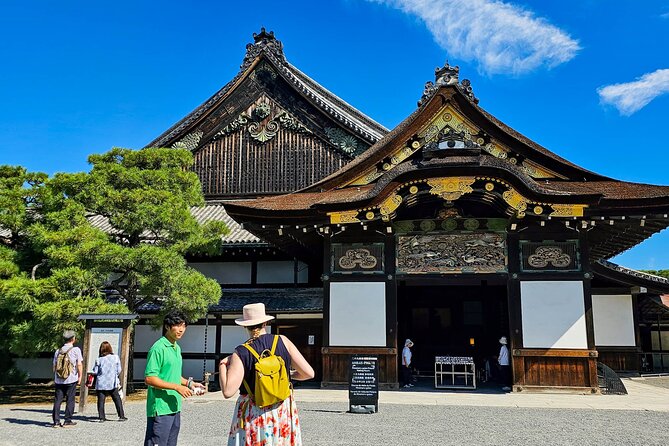
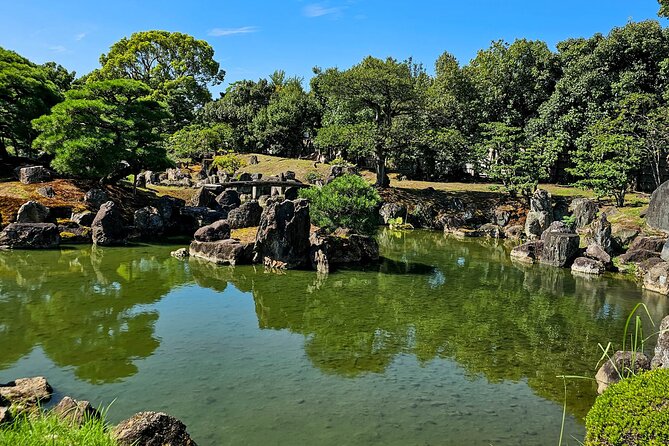
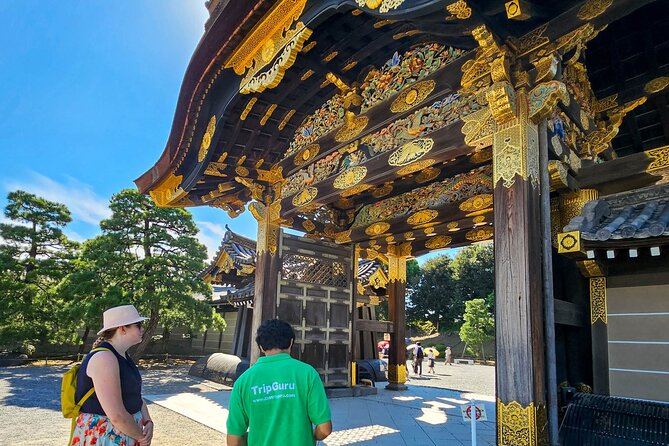
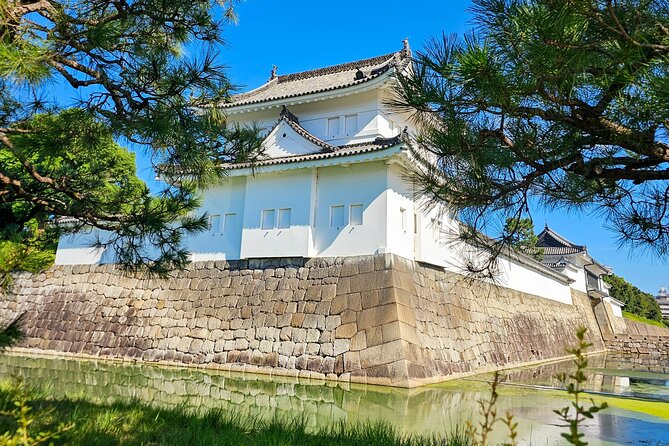
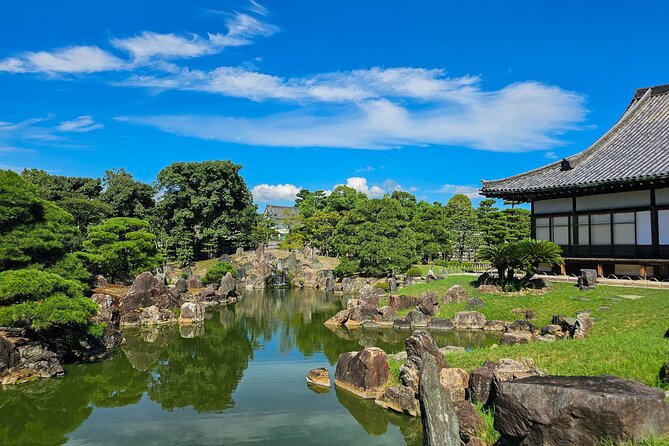
Nijo Castle is the more visually dramatic first stop. You can expect a mix of imposing architecture, carefully arranged gardens, and interiors connected with the shogun era. The castle provides a physical setting for understanding how political power worked in Japan, rather than leaving you with only names and dates.
The interiors are especially important. The painted rooms and formal spaces offer clues about rank, ceremony, and control. A good guide can explain what you are seeing in plain language, including the cultural meaning of the decorations and the role of the rooms.
Jasmine has received especially warm praise for explaining the architecture, art, and symbolism of Nijo Castle in a clear, conversational way. She has also been singled out for answering children’s questions patiently, taking family photographs, and adjusting her pace on hot days. Those are small things, but they can make a long walking visit much easier.
Other guides bring different strengths. Atsushi has been praised for adding special stories about the sites, while Taku is a local certified guide with extensive experience at both Nijo Castle and the palace. Katsuhiko has been noted for his English and his explanations of shogunate history. The guide assigned to your departure can vary, but the experience is clearly built around live interpretation rather than a simple route through the grounds.
You will have time to take photographs, but remember that this is a guided visit, not an open-ended photography session. One guide, Alex, was appreciated for giving the right amount of information while keeping the group moving. That balance is useful at a site where it is easy to spend too long in the first few rooms and rush the rest.
The castle portion should appeal to you if you want to understand how the shogun period looked and felt in practical terms. It is also the stronger half of the tour for visitors interested in decorative arts, interior design, and the way architecture communicates status.
The transfer between the castle and palace
This is the part to plan carefully. Nijo Castle and Kyoto Imperial Palace are not adjacent, and the tour does not include hotel pickup, drop-off, or transportation between the two sites.
The walking connection can take around 30 minutes, based on the experience described by one participant. Public transportation is another option, but the tour information does not specify that the guide will arrange it or that fares are included. One account also described a group being split between taxis and sent to the wrong gate, causing delays and confusion.
That appears to be an exception rather than the normal shape of the tour, but it points to a real weakness: the three-hour schedule leaves limited room for a messy transfer. Ask your guide at the start how the group will move to the palace. Keep your phone available, stay with the group, and confirm the destination before entering a taxi.
You should also treat the 90-minute time listed for each site as an approximate target, not a promise that every minute will be spent inside the monuments. If the transfer takes time, the actual sightseeing period may feel shorter.
This is the single most important practical issue when deciding if the tour suits you. If you are comfortable following directions and using public transportation, it should be manageable. If you want a completely handled door-to-door experience, this tour may feel incomplete.
Kyoto Imperial Palace: formal grounds and imperial tradition
The second stop is Kyoto Imperial Palace, and the tour ends at Imadegawa Station near the palace grounds. Here, the mood changes from shogun authority to imperial ceremony and tradition.
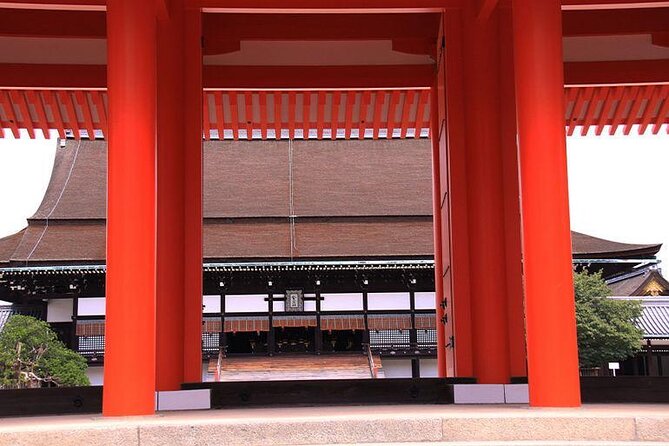
Your guide will explain how the palace served as the residence of Japan’s imperial family. You will see impressive structures, gardens, and formal spaces, with time to appreciate the layout and take photographs.
The palace grounds can be easier to appreciate with context. On your own, you may notice the scale, gates, rooflines, and open paths without fully understanding what each part was meant to express. A guide can connect the architecture to the role of the imperial household and explain how the palace differs from Nijo Castle.
Vincent has been praised for giving a detailed overview of both the castle and palace grounds. Guides such as Cecilia and Raphael have also been appreciated for enthusiasm, patience, and willingness to answer questions. Raphael, in particular, was described as patient with a long stream of questions, which is a good sign if you prefer an interactive tour rather than a fixed speech.
The palace section may feel quieter and less immediately theatrical than Nijo Castle. That is part of its appeal, but it also means you will get more from it if you are interested in Japanese history, ceremony, and architecture. If you only want dramatic interiors, you may find the castle more rewarding.
The ending at Imadegawa Station is useful. You are not left at the first site, and you can continue exploring the northern part of central Kyoto after the tour. Guides have also helped people figure out transportation to their next stop, although this should be treated as personal assistance rather than an included transfer service.
More Royal Palace Tours in Japan
- Tokyo: Imperial Palace and Shogun Walking Tour
★ 4.9 · 935 reviews - Imperial Palace East Garden and Edo Castle Walking Tour in Tokyo
★ 5.0 · 510 reviews - Kyoto: Imperial Palace & Nijo Castle Guided Walking Tour
★ 4.7 · 453 reviews - Tokyo: Imperial Palace East Gardens Walking Tour
★ 4.8 · 353 reviews
What $55 covers, and what it does not
At $55 per person, the tour includes the English-speaking guide, admission fees, and three hours of walking. It does not include meals, drinks, personal spending, hotel pickup, or transport between the two sites.
The value depends on how much help you want with interpretation. If you would otherwise buy two admissions and use an audio guide, the price is reasonable, especially with a small group and a strong guide. The tour also saves you the work of learning the basic sequence of each site before arriving.
The price is less attractive if you mainly want to wander independently. Both places can be visited without a guide, and an audio tour could cover much of the basic information at Nijo Castle. You are paying for the connection between the sites, the chance to ask questions, and the guide’s ability to explain details you might otherwise overlook.
The inclusion of entrance fees is convenient. One useful feature is that the guide handles the ticket process at each location, so you are not stopping to work out admissions on your own. Still, confirm the meeting instructions and transfer plan before the tour begins.
Group discounts may be available, but the supplied information does not give the discount amount or conditions. If you are booking for several people, check the current price before paying.
How the guides shape the experience
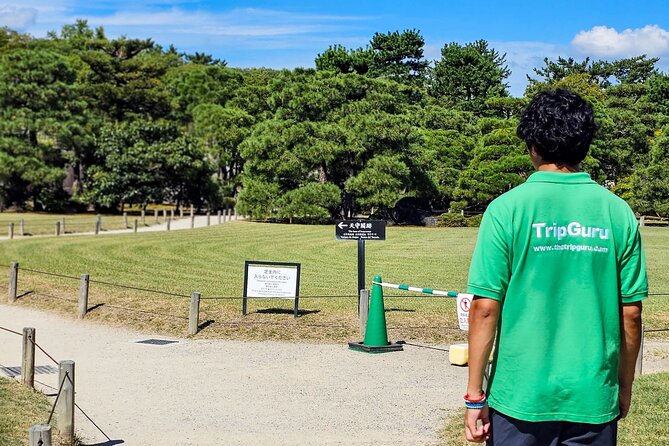
The guide is the most important variable here. The best accounts describe friendly, clear explanations, strong English, cultural context, and a willingness to answer questions beyond a set script.
Jasmine appears repeatedly as a particularly strong guide. She has been praised for explaining the shogun period, architecture, art, and cultural symbolism, while also keeping the group moving in hot weather. She has helped with photographs and, in one case, made sure the group could continue to its next destination.
Taku’s local background and experience at both sites may appeal to you if you want a more detailed historical framework. Atsushi has been praised for stories that add personality to the buildings. Raphael’s patience may suit anyone who likes to stop and ask plenty of questions.
That said, the tour is not guaranteed to be led by a particular person. You can request a guide if the operator accepts requests, but the supplied information does not promise assignment to Jasmine, Taku, or anyone else.
Most of the feedback is very positive, but two serious concerns deserve attention. One person felt the guide was focused mainly on finishing on time and did not provide enough cultural insight. Another group lost much of the tour after a taxi and meeting-point mistake, then had difficulty getting help with compensation.
Those problems do not define every departure, but they show why it is worth confirming the route and keeping contact details handy. The quality of a small-group tour can change with the guide and with how smoothly the transfer works.
Walking, weather, and pace
This is a three-hour walking experience, not a bus tour. You will move through two large historic compounds and make your own way between them. Comfortable shoes are sensible, and you should plan for outdoor exposure.
Hot weather can make the schedule feel more demanding. A guide has been praised for adding water and air conditioning breaks, but breaks are not formally listed as an included feature. Bring your own drink and be ready for a steady pace.
The tour should suit most people who can participate in a normal walking tour. The supplied information says most participants can take part, but it does not provide detailed accessibility information for wheelchairs, mobility devices, or specific surfaces. If you have mobility concerns, ask the operator before booking.
Photography is part of the appeal. The grounds offer attractive viewpoints, and guides have helped groups take photographs. You should still expect the group to move along rather than wait indefinitely for every possible picture.
Who should book this Kyoto walking tour?
I would recommend it to first-time Kyoto visitors who want an efficient introduction to two major historic sites. It is also a good choice if you enjoy asking questions, want explanations of cultural details, or prefer not to handle admissions alone.
Families may like the small group and the chance to ask questions. Jasmine, in particular, has been praised for engaging children. Older participants may appreciate a guide who keeps the pace sensible and includes pauses, though the walking and outdoor portions still matter.
This tour is less suitable if you want a private experience, complete control over your pace, or guaranteed transportation between the sites. It is also not the best choice for visitors who want a full-day historical study. Three hours gives you a useful framework, not an exhaustive examination.
The 92 percent recommendation rate and 4.7 rating from 106 reviews suggest a strong overall record, while the isolated low ratings highlight the transfer and customer-service risks. I would book it for the guide’s interpretation and small group, not because it promises a perfectly managed door-to-door outing.
Should you book it?
Book this tour if you want clear historical context, included admissions, and a small group at a moderate price. Nijo Castle and Kyoto Imperial Palace complement each other well, and a good guide can make the difference between simply seeing old buildings and understanding why they mattered.
Before booking, make sure you are comfortable arranging or following the transfer between the sites. Confirm the meeting point at Nijojo-mae Station, ask how the group will reach the palace, and allow flexibility in your plans after the tour ends at Imadegawa Station.
If those details suit you, this is a worthwhile three-hour introduction to Kyoto’s political and imperial past. If you want total independence or guaranteed transport, visit the sites on your own and use the $55 for admissions, an audio guide, and a relaxed meal instead.
FAQ
How long does the Kyoto Imperial Palace and Nijo Castle tour last?
The tour lasts approximately three hours, with about 90 minutes planned at Nijo Castle and 90 minutes at Kyoto Imperial Palace.
Where does the tour begin?
It begins at Nijojo-mae Station near Nijo Castle, at Nijojocho in Kyoto’s Nakagyo Ward.
Where does the tour end?
The tour ends at Imadegawa Station near Kyoto Imperial Palace.
Is transportation between Nijo Castle and Kyoto Imperial Palace included?
No. Hotel transfers and transportation between the two sites are not included. You may walk or use public transportation, and the transfer can take around 30 minutes.
Are entrance fees included?
Yes. Admission tickets for Nijo Castle and Kyoto Imperial Palace are included in the tour price.
How large is the tour group?
The group is limited to a maximum of nine people.
What is the cancellation policy?
You can cancel for a full refund if you cancel at least 24 hours before the experience begins. Cancellations or changes made less than 24 hours before the start time are not accepted for a refund.
More Three-Hour Visits in Japan
- Alhambra, Nasrid Palaces, and Generalife 3-Hour Guided Tour
★ 4.4 · 889 reviews - Mantova City Center and Ducal Palace: 3-Hour Guided Tour
★ 4.9 · 47 reviews - 3-hour: Palace of King Jan Sobieski in Wilanow/inc. Pick-up/
★ 4.7 · 27 reviews - 3 hours of Tour in the Wines of Châteauneuf-du-Pape
★ 5.0 · 13 reviews
Newly added in Japan
- Kyoto Imperial Palace and Nijo Castle Walking Tour★ 5.0 · 10 reviews
- Nijo Castle and Imperial Palace Visit with Guide★ 5.0 · 53 reviews
- Tokyo walking tour around Imperial Palace and Tokyo Station★ 5.0 · 3 reviews
- Tokyo: Imperial Palace, the history of Japan (ENGLISH GUIDE)★ 5.0 · 77 reviews
- Tokyo: Imperial Palace with Nostalgic Alley Kagurazaka tour★ 4.3 · 8 reviews
- Tokyo: Pvt. Tour – Edo Castle & Imperial Palace East Gardens★ 4.8 · 63 reviews
- Tokyo: Imperial Palace East Gardens and Tokyo Station Tour★ 5.0 · 16 reviews
- Tokyo: Edo Castle Ruins & Imperial Palace East Garden Tour★ 4.4 · 13 reviews
Palace Walking Tours, compared.
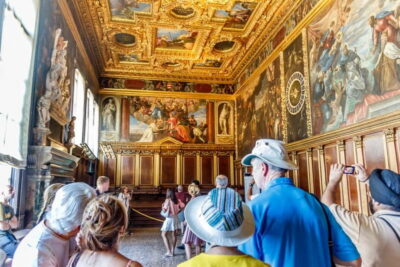
Doge’s Palace and St Mark’s Basilica Walking Tour
Read our review →
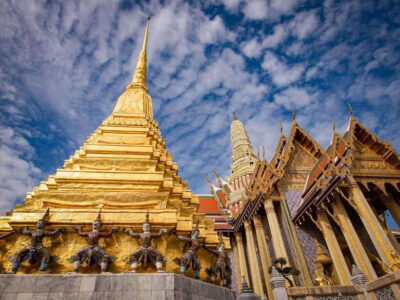
Grand Palace and Wat Phra Kaew Guided Walking Tour
Read our review →
Imperial Palace and Shogun Historical Walking Tour
Read our review →
Madrid Old Town & Royal Palace Walking Tour Skip the Line Ticket
Read our review →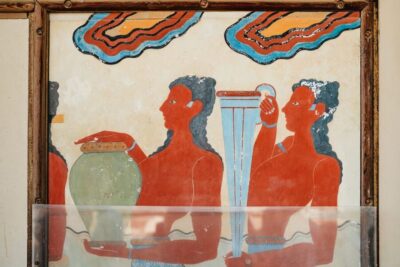
Knossos: Knossos Palace Skip-the-Line Guided Walking Tour
Read our review →
Tokyo Castle & Imperial PalaceーShogun Walking Tour
Read our review →Browse the lists this tour appears in