
Review · PALACE GARDENS AND GROUNDS
Tokyo: Imperial Palace East Gardens and Tokyo Station Tour
The most rewarding part of this tour is the way it connects Edo Castle’s stone walls and gardens with present-day Tokyo. You begin among moats, guardhouses, and ruined castle grounds, then walk through polished Marunouchi before finishing at the red-brick station. It is a neat lesson in how Tokyo changed without erasing every trace of its past.
I especially like the 30-minute guided visit to the East Gardens and the clear, lively style credited to guide Yuki. Her explanations turn the old castle grounds into a place you can picture as it was 400 years ago. The main drawback is simple: this is a walking tour, so you should expect a moderate amount of time on foot, often outdoors, with no room for a large backpack.
Key points to know
- Edo Castle comes alive through specific landmarks: See Ote-mon Gate, the Hyakunin Bansho Guardhouse, Fujimi-yagura, and the scale model of the former main keep.
- The East Gardens combine scenery with substance: Ninomaru Garden, moats, stonework, and the Honmaru area give the history a physical setting.
- Nijubashi adds a classic palace view: The route includes scenic views connected with Japan’s imperial center.
- Marunouchi changes the mood: After the gardens, modern architecture and public art show Tokyo’s business district at close range.
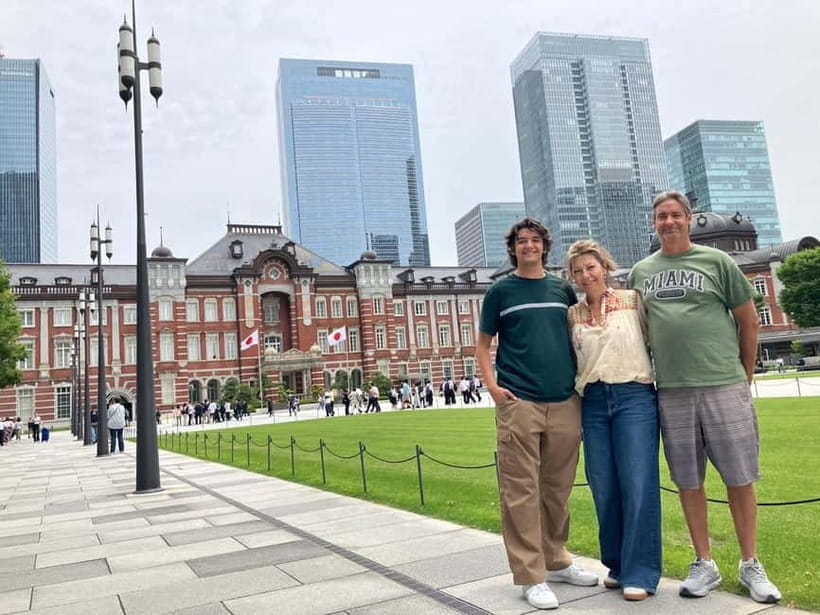
- Tokyo Station makes a handsome finish: The restored red-brick exterior provides a clear endpoint and a useful central location.
- The price pays for interpretation: At $38, you are mainly paying for an English-speaking guide and a carefully linked route, since the East Gardens themselves require no admission fee.
From Wada-kura Fountain Park to the old castle grounds
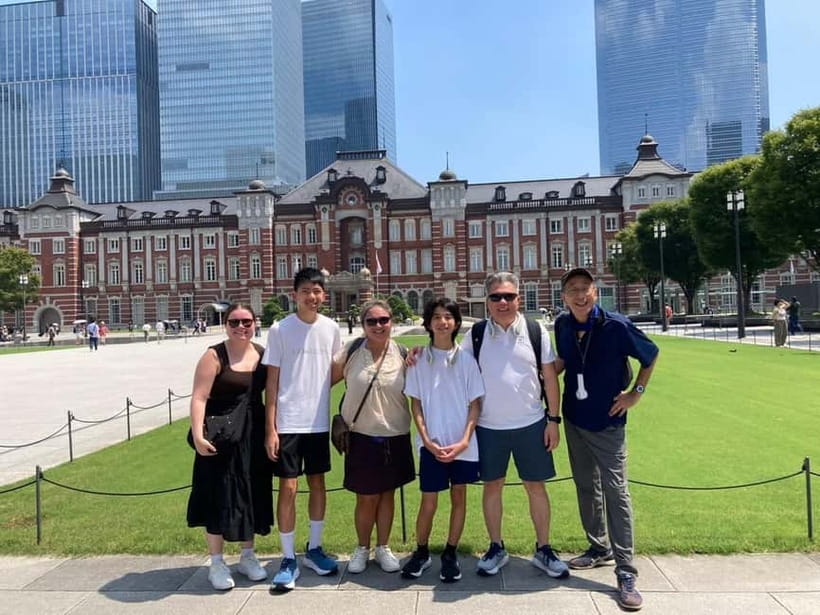
The meeting point is the Starbucks Coffee Imperial Palace Outer Garden Wada-kura Fountain Park store. This is a practical starting area because you are already beside the Imperial Palace grounds, rather than spending the first part of the tour finding a distant neighborhood.
From there, the route leads toward the East Gardens and the remains of Edo Castle. The scenery changes quickly. Moats and massive stone foundations give you a sense of the castle’s former scale, while the gardens soften the setting with planted areas, paths, and quiet corners.
I find this opening useful because it avoids a common problem with palace visits: seeing attractive walls and gardens without understanding what they did. A guide can point out how gates, guard posts, watchtowers, and castle areas worked together. That context matters here. Edo Castle was not simply a residence. It was the center of the Tokugawa shogunate, and its layout reflected defense, rank, and ceremony.
The tour includes several landmarks rather than one quick photo stop. You visit Ote-mon Gate, the Hyakunin Bansho Guardhouse, Ninomaru Garden, and other historic points. Each one gives you a different angle on the former castle compound.
More Palace Gardens and Grounds in Japan
- Imperial Palace East Garden and Edo Castle Walking Tour in Tokyo
★ 5.0 · 510 reviews - Tokyo: Imperial Palace East Gardens Walking Tour
★ 4.8 · 353 reviews - Tokyo Castle, Imperial Palace, Shogun & Garden Walking Tour
★ 5.0 · 211 reviews
Ninomaru Garden and the East Gardens in 30 minutes
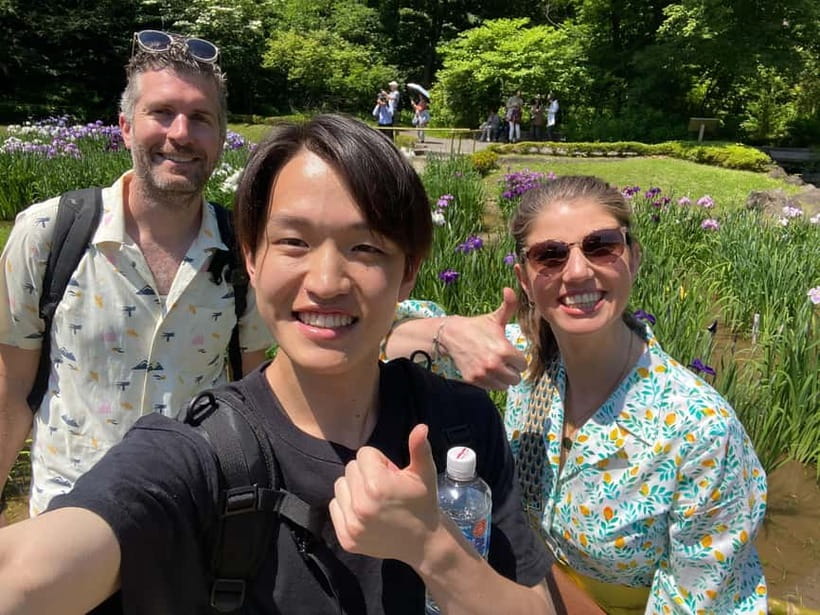
Ninomaru Garden is one of the tour’s more scenic pauses. Garden design in Japan often asks you to notice the relationship between water, stone, plants, and carefully framed views. Here, the garden also helps explain how formal castle life could exist alongside carefully shaped natural beauty.
The East Gardens are particularly valuable for first-time visitors because they give you access to part of the former Edo Castle site without an admission charge. The tour uses that free public setting well by adding interpretation you would not get from simply walking around with a camera.
The guided East Gardens portion lasts about 30 minutes. That is long enough to establish the main story, but not so long that the entire tour becomes a garden lecture. You will see the former Honmaru area, castle ruins, and the Fujimi-yagura watchtower, a surviving reminder of the castle’s defensive design.
You also see a scale model of the Edo Castle main keep. This is a useful detail because the remaining foundations can be hard to read at ground level. The model helps you picture what once occupied the site and gives the ruined stones a clearer purpose.
The guide’s role is important here. Yuki is praised for explaining the Edo period and shogunate in a way that is easy to follow, with humor and vivid descriptions of the past. That style should suit you if you want history without a dense academic lecture. The comments about being able to imagine Tokyo 400 years ago are especially relevant to this part of the walk.
The East Gardens are not an indoor museum visit. You should dress for the weather, bring water and sunscreen, and wear comfortable shoes. A hat and weather-appropriate clothing are sensible as well. Flash photography is not allowed, and backpacks are not allowed, so pack lightly.
Castle remains, imperial history, and the view toward Nijubashi
The tour also brings in Japan’s imperial story, not only the earlier shogunate period. That broadens the experience beyond Edo Castle. You are looking at a site that has carried different roles across Japanese history, from samurai government to the modern imperial center.
The views of Nijubashi provide one of the clearest visual links to the palace today. You may know the bridge from photographs, but a guide can place it within the larger setting of the Imperial Palace and Kokyo Gaien National Garden. The appeal is partly scenic and partly symbolic, since the area remains closely tied to Japan’s imperial identity.
This section works best if you like seeing famous places in context rather than collecting isolated snapshots. The tour does not promise palace interior access. Instead, it focuses on the outdoor grounds, historic remains, views, and the story of how the area developed.
You should also keep your expectations in check. The East Gardens and surrounding palace areas are broad public spaces, not a preserved castle town with buildings at every turn. Some of the strongest evidence of Edo Castle is made up of foundations, walls, gates, and interpretive displays. That is why the guide’s explanation adds real value.
The 10-minute walk into Marunouchi
The move from the palace area to Marunouchi takes about 10 minutes on foot. This short transition is one of the tour’s best ideas. You do not need a bus or train, and the change in scenery becomes part of the lesson.
Marunouchi is Tokyo’s business district, known for modern architecture, offices, public spaces, and art. After the gardens and castle remains, the sleek city setting makes Tokyo’s transformation easy to see. You move from shogunate power to imperial symbolism and then to the corporate center of modern Japan.
The tour includes guided sightseeing in Marunouchi rather than treating it as a simple route between two attractions. You can expect attention to the district’s architecture and art, along with the way older sites fit beside newer buildings.
I like this contrast because it keeps the walk from becoming a narrow history tour. You see that Tokyo is not divided neatly into old and new quarters. Modern buildings sit near the palace grounds, and the district’s design reflects the city’s current role as much as the castle ruins reflect its earlier one.
The drawback is that architecture and art stops can feel less specific if you prefer temples, traditional houses, or indoor galleries. The information provided does not promise entry into buildings or a dedicated museum visit. The focus remains on outdoor sightseeing and the city’s visible structure.
More Royal Palace Tours in Japan
- Tokyo: Imperial Palace and Shogun Historical Walking Tour
★ 5.0 · 2,251 reviews - Tokyo: Imperial Palace Japanese History Walking Tour
★ 4.9 · 987 reviews - Tokyo: Imperial Palace and Shogun Walking Tour
★ 4.9 · 935 reviews - Tokyo: Imperial Palace, Sensō-ji Temple, & Tokyo Tower Tour
★ 4.5 · 339 reviews
Finishing at red-brick Tokyo Station
The final stop is Tokyo Station, where the tour ends. The station’s restored red-brick exterior gives the walk a strong visual finish. After seeing castle stones, formal gardens, and modern office buildings, you arrive at one of Tokyo’s best-known examples of historic station architecture.
This is more than a convenient ending. Tokyo Station helps complete the tour’s story of change. The route begins with the foundations of samurai-era power and passes through the imperial and business districts before ending at a major transport landmark associated with the modern city.
The station exterior is the main focus. You should not expect a long interior station tour or rail-history presentation based on the information provided. Still, finishing here is practical. You can continue sightseeing, meet someone, or use Tokyo Station as your next transport point after the guide says goodbye.
Because the tour concludes at Tokyo Station rather than returning you to the starting point, think about your plans afterward. This point-to-point format saves you from retracing the route, but it also means you should be comfortable arranging your next stop from the station area.
What the guide adds to a $38 experience
The price is $38 per person. Since the East Gardens have no admission fee, the main value lies in the guide, the route, and the explanations connecting separate parts of central Tokyo.
That can be good value if you want the history to make sense. Without guidance, you could see a gate, guardhouse, garden, watchtower, model, bridge, office tower, and station, but miss how they belong to one larger story. The tour gives you a clear sequence: Edo Castle, imperial Tokyo, Marunouchi, and the modern railway city.
You also receive a live guide in English, Japanese, Spanish, Chinese, or French. Yuki is specifically associated with this experience, and the feedback about her points to three qualities worth seeking in a walking tour: clear explanations, humor, and careful organization. Several comments focus on how easily she made the Edo period and castle setting imaginable.
The tour received a perfect five-star rating from 16 reviews, with repeated praise for Yuki’s explanations and hospitality. I would treat that as a strong sign that the guide is central to the experience, while remembering that no walking tour can guarantee the same guide or the same personal connection on every date.
At 150 minutes, the tour is long enough to cover several districts without taking your entire day. It is a good fit for a morning or afternoon plan. You will still need time before and after the tour if you want to explore Tokyo Station, the palace area, or Marunouchi on your own.
Walking comfort, packing, and access
This is a moderate walking experience. Comfortable shoes are essential, not optional. Bring water, sunscreen, a hat, a camera, and clothing suited to the weather.
The tour is wheelchair accessible, which is an important advantage for many visitors. Even so, the route includes outdoor grounds and a moderate amount of movement, so you should check that the pace and surfaces suit your needs when booking.
Backpacks are not allowed, and smoking and flash photography are also prohibited. A small, practical bag may be more suitable, but the supplied details do not specify the permitted bag size. Pack only what you need and avoid arriving with a large daypack.
The tour runs outdoors through gardens, historic grounds, streets, and public city spaces. Weather can shape your comfort, especially in strong sun or rain. Check conditions before setting out and dress accordingly.
Free cancellation is available up to 24 hours before the tour for a full refund. You can also reserve now and pay later, which helps if your Tokyo plans are still shifting. Starting times depend on availability, so confirm the time that fits your day.
Who will enjoy this Tokyo walk most
I would recommend this tour to you if you want a guided introduction to central Tokyo’s past and present in one compact outing. It suits history fans, first-time visitors, and anyone who likes seeing famous sights in a logical sequence.
It is also a good choice if you want help with Japanese terms and institutions. The Edo period, Tokugawa shogunate, imperial history, Honmaru, Nijubashi, and castle defenses can be confusing when encountered separately. A live guide gives those subjects a human scale.
Families and mixed-interest groups may appreciate the changing scenery. One person can enjoy gardens, another can focus on architecture, and a history-minded companion can follow the castle story. The humor and simple explanations associated with Yuki should help keep the subject from feeling dry.
I would be less likely to choose it if you want extensive time alone in the gardens, access to palace interiors, a food stop, or a full museum visit. This is a guided outdoor walk with a set route. It offers breadth and context rather than long, unhurried stops at one site.
Should you book the Imperial Palace and Tokyo Station walk?
Book it if you want a short, well-organized introduction to Tokyo’s political, imperial, architectural, and transport history. The strongest reason to go is the connection between places that are easy to visit separately but more meaningful together: Edo Castle’s remains, the East Gardens, Nijubashi, Marunouchi, and Tokyo Station.
At $38, the tour makes sense when you value explanation more than admission tickets. You are paying for the guide’s time and the story tying the route together, not for a major paid attraction. Choose it early in your Tokyo stay if you want useful orientation, or later if you already know the city and want more historical detail.
Wear good shoes, carry light, and prepare for outdoor conditions. If that sounds comfortable, this walk offers a practical way to see central Tokyo through several layers of its past and present.
FAQ
How long does the tour last?
The tour lasts 150 minutes, or two and a half hours.
Where does the tour begin?
It begins at Starbucks Coffee Imperial Palace Outer Garden Wada-kura Fountain Park.
Where does the tour finish?
The tour finishes at Tokyo Station.
Is admission to the Imperial Palace East Gardens included?
The guided visit to the East Gardens is included, and no admission fee is required for entry.
Which languages are available?
Live guides are available in English, Japanese, Spanish, Chinese, and French.
Is the tour wheelchair accessible?
Yes, the activity is listed as wheelchair accessible.
What should I bring?
Bring comfortable shoes, a hat, a camera, sunscreen, water, and clothing suited to the weather. Backpacks, smoking, and flash photography are not allowed.
More Royal Palace Tours in Tokyo
- Tokyo Castle & Imperial PalaceーShogun Walking Tour
★ 4.7 · 1,068 reviews - Tokyo Castle & Imperial PalaceーShogun Walking Tour
★ 5.0 · 724 reviews - Tokyo: Imperial Palace, the history of Japan (ENGLISH GUIDE)
★ 5.0 · 77 reviews - Full Tokyo: Meiji Shrine, Imperial Palace, Asakusa & Skytree
★ 4.7 · 16 reviews
More Palace Gardens and Grounds in Tokyo
- Tokyo: Edo Castle & East Garden of the Imperial Palace Tour
★ 4.7 · 112 reviews - Tokyo: Pvt. Tour – Edo Castle & Imperial Palace East Gardens
★ 4.8 · 63 reviews - Tokyo: Edo Castle Ruins & Imperial Palace East Garden Tour
★ 4.4 · 13 reviews - Paris: Versailles Palace and Gardens Full Access Ticket
★ 4.6 · 41,579 reviews
Newly added in Tokyo
- Tokyo walking tour around Imperial Palace and Tokyo Station★ 5.0 · 3 reviews
- Tokyo: Imperial Palace, the history of Japan (ENGLISH GUIDE)★ 5.0 · 77 reviews
- Tokyo: Imperial Palace with Nostalgic Alley Kagurazaka tour★ 4.3 · 8 reviews
- Tokyo: Pvt. Tour – Edo Castle & Imperial Palace East Gardens★ 4.8 · 63 reviews
- Tokyo: Edo Castle Ruins & Imperial Palace East Garden Tour★ 4.4 · 13 reviews
- Tokyo: Edo Castle and Imperial Palace Guided Walking Tour★ 5.0 · 6 reviews
- Imperial Palace Tour: Discover Samurai History with a Guide★ 5.0 · 12 reviews
- Full Tokyo: Meiji Shrine, Imperial Palace, Asakusa & Skytree★ 4.7 · 16 reviews
Palace Gardens and Grounds, compared.

Versailles Palace and Gardens Full Access Ticket
Read our review →
Skip-the-Line Tour of Palace and Gardens Access
Read our review →
Schönbrunn Palace & Gardens Skip-the-Line Tour
Read our review →
Alhambra & Gardens Tour w/Nasrid Palaces Option
Read our review →
Versailles Palace & Gardens with Transportation
Read our review →
Skip-the-Line Schönbrunn Palace & Gardens Tour
Read our review →
Versailles Palace Guided Tour & Gardens Access
Read our review →
Versailles Palace and Gardens Tour from Paris
Read our review →Browse the lists this tour appears in