
Review · PALACE WALKING TOURS
Tokyo Castle & Imperial PalaceーShogun Walking Tour
Edo Castle was once Japan’s largest castle, and this tour helps you see the enormous fortress hiding beneath modern Tokyo. I like the way it connects samurai power with the modern Imperial Palace, and I also like the small group, which makes it easier to ask questions and keep a comfortable pace. The main drawback is simple: much of the two hours is outside, and the tour covers palace grounds rather than the interior of the emperor’s residence.
For $23, you get a clear introduction to Tokyo’s political past, from shoguns and layered defenses to the imperial family today. Guides including Anju, Fuma, Yuka, Tomo, Keiko, and Kosei have been praised for friendly storytelling, useful answers, and good photo help. Just remember that this is English only, and the gardens can be reached without a guide, so the value depends on how much explanation you want.
Key points to know before booking
- Edo Castle is mostly a story told through ruins, walls, gates, and gardens, not a preserved castle building.
- The group is limited to 10 people, giving you a better chance to hear the guide and ask questions.
- The tour lasts two hours and returns to the Starbucks at Wadakura Fountain Park.
- Anju, Fuma, Yuka, Tomo, Keiko, and other local guides are praised for warm personalities and clear explanations.
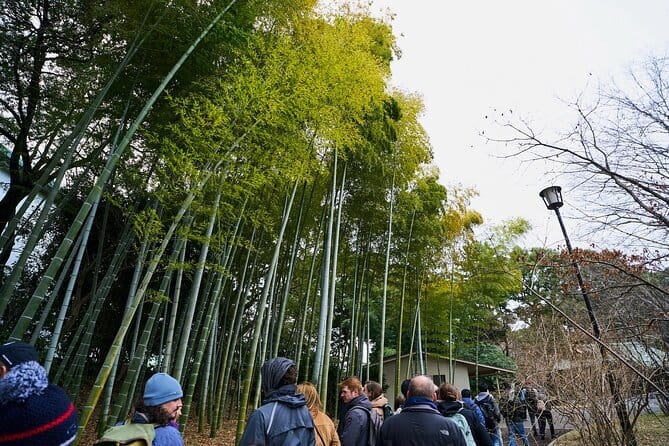
- The East Gardens and palace grounds are the visual high point, with seasonal plantings, stonework, koi, and historic structures.
- Bring weather-ready clothing, since a large part of the route is outdoors.
Why Edo Castle matters in modern Tokyo
The Imperial Palace can seem like a quiet green island surrounded by office towers and busy roads. The important thing to understand is that this was not always a royal compound in the modern sense. It began as Edo Castle, the political center of the shogunate and one of the largest fortified sites in Japan.
Your guide explains how the castle’s size and defenses protected the shogun and his retainers. Moats, gates, stone walls, watchtowers, and carefully controlled approaches made the fortress difficult to attack. Many of the original buildings are gone, but the scale remains visible if you know where to look.
That is the real purpose of this walk. You are not simply strolling through a pleasant garden. You are learning to read the grounds as the remains of a huge military and political center. A bare stone base or a massive gate can seem ordinary until you understand what once stood there and why it was placed there.
The tour also links the Edo period to Japan’s imperial system, described here as a tradition lasting 2,600 years. That long timeline can be hard to grasp from monuments alone, so having an English-speaking guide helps connect ancient traditions, the shogun’s rule, the later imperial era, and the present-day palace.
More Palace Walking Tours in Japan
- Tokyo: Imperial Palace and Shogun Historical Walking Tour
★ 5.0 · 2,251 reviews - Tokyo: Imperial Palace Japanese History Walking Tour
★ 4.9 · 987 reviews - Tokyo: Imperial Palace and Shogun Walking Tour
★ 4.9 · 935 reviews
Meeting at Wadakura Fountain Park
The meeting point is in front of Starbucks Coffee Kōkyo Gaien Wadakura Fountain Park Store, at 3-1 Kōkyo Gaien, Chiyoda City. Look for a guide holding a sign marked Local Guide Stars.
This is a practical meeting spot because it is beside the Imperial Palace grounds, and the tour finishes at the same place. You do not need to arrange a second pickup point or figure out a new route after the walk. Still, arrive with enough time to locate the correct Starbucks, since the palace area is large and several landmarks may look similar on a busy Tokyo morning.
The group size is capped at 10. That matters here. Palace grounds are broad, and a large group could easily become a moving lecture. In a small group, you can hear explanations more easily and ask about details that catch your attention. Several guides also use questions, quizzes, and conversation to keep the walk from feeling like a string of dates and names.
Sakurada Tatsumi Yagura and the first look at the defenses
The first stop is Sakurada Tatsumi Yagura, a watchtower structure that gives you an early sense of the castle’s defensive design. The scheduled stop is short, about five minutes, so expect a quick introduction and photo opportunity rather than a long visit.
This is where the tour begins to change your view of the palace. You start noticing how towers, walls, gates, and open areas worked together. The guide can point out details you might otherwise pass without a second glance.
The short timing is also a clue about the overall format. This is a moving walking tour, not a single-site lecture. You will pause often, listen, take photographs, and then continue through the grounds.
Ote-Mon Gate, the castle’s grand entrance
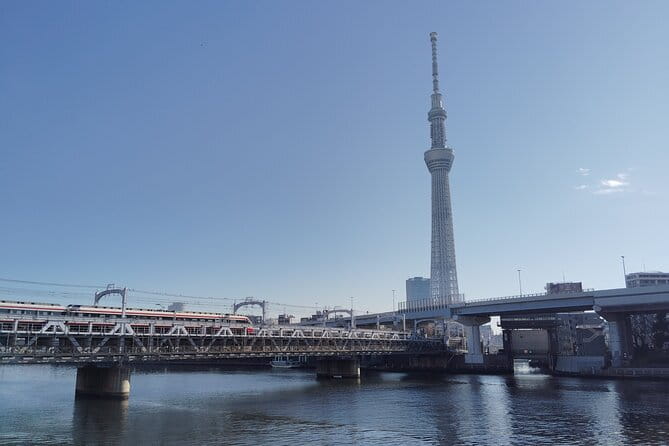
Ote-Mon Gate receives about 15 minutes, giving your guide more time to explain how people entered the castle and how access was controlled. Gates in a major Japanese castle were not just decorative entrances. They formed part of a layered defense system, with turns, walls, checkpoints, and controlled movement.
One particularly useful part of this stop is learning how the defenses were arranged in layers. Without that context, it is easy to admire the stonework and move on. With an explanation, the gate becomes evidence of how the shogunate protected its center of power.
This is also a good place to ask questions about samurai life. The tour is not limited to battle tactics. It covers the political structure of the Edo period, the role of the shogun, and the people who lived and worked within the castle compound.
More Palace Walking Tours in the world:
- Venice: Doge’s Palace and St Mark’s Basilica Walking Tour
★ 4.4 · 6,291 reviews - Split: Old Town and Diocletian Palace Walking Tour
★ 4.9 · 4,727 reviews - Walking Tour of Split and Diocletian’s Palace
★ 5.0 · 2,588 reviews - Bangkok: Grand Palace and Wat Phra Kaew Guided Walking Tour
★ 4.4 · 2,417 reviews
The Imperial Palace and the transition from shogun to emperor
The route then reaches the Tokyo Imperial Palace, with around 20 minutes for explanation, sightseeing, and photographs. The palace remains the residence of Japan’s emperor, though this walking experience focuses on the grounds rather than a full interior visit.
This stop gives the tour its widest historical reach. You hear how the site changed from the seat of shogunal authority into the center of the modern imperial system. The guide also explains how Japan’s imperial tradition has continued for centuries and how the palace functions as a symbol of the country today.
The subject can become complicated quickly, especially when the story moves between emperor, shogun, samurai government, and modern Japan. The strongest guides make those shifts easier to follow. Anju has been praised for connecting the Edo period with the present, while Kosei has been appreciated for comparing Japanese and international culture after living abroad.
You should not expect access to every palace building. The appeal is the setting, the historical explanation, and the chance to understand the grounds from the outside.
Ninomaru Garden, a quieter side of the palace grounds
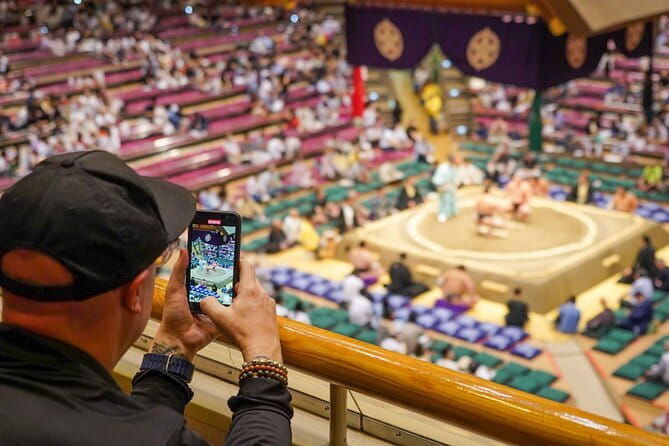
Ninomaru Garden receives about 15 minutes. After the gates and military structures, this section offers a softer view of the former castle site. The garden includes carefully maintained plantings, distinctive trees from across Japan, and water features where you may see special koi fish.
I like this change of mood. The tour is not only about fortifications and political power. It also shows how the castle grounds were designed as a place of ceremony, beauty, and private life for the ruling class.
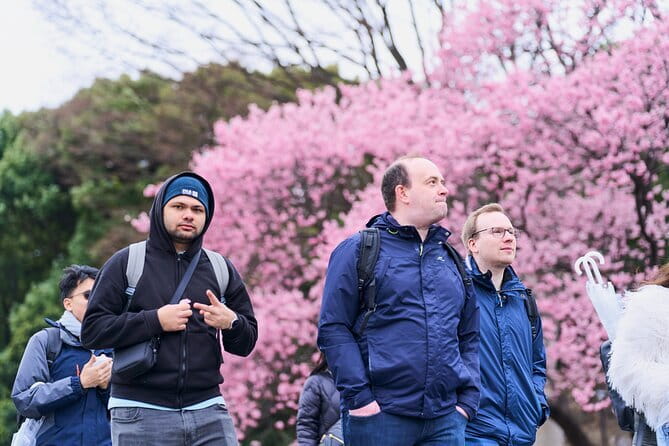
The garden is especially appealing during seasonal changes, though the exact appearance depends on the date of your visit. Bring a camera, since photography is encouraged and the garden offers some of the most attractive views on the route.
This is also a good moment to slow down. Guides have been praised for keeping the pace relaxed, and that matters in a garden. You have time to look at the trees, ponds, and stonework instead of rushing from one fact to the next.
Edo Castle ruins and the shape of the lost buildings

The Edo Castle ruins receive about 10 minutes, including a photo stop and guided explanation. You will see traces of the former castle rather than a complete reconstructed fortress. That can disappoint anyone expecting tall wooden buildings, elaborate interiors, or a castle museum.
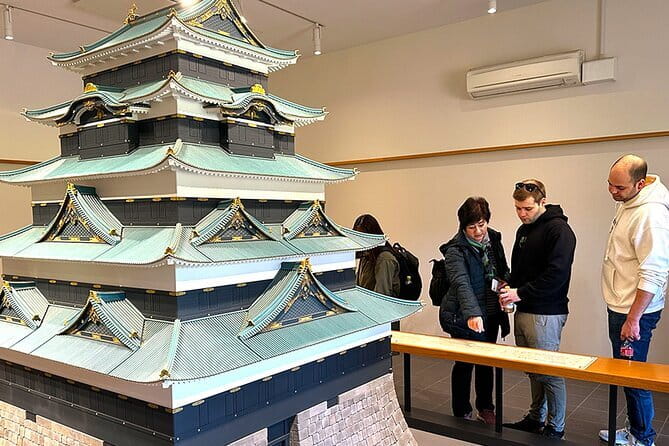
Still, the ruins are valuable because they help you imagine the scale of what disappeared. Your guide explains what the former structures looked like and how the castle fit together. A miniature model of the former palace is included, giving you a clearer picture than the remaining foundations can provide on their own.
This is one of the places where a guide makes a real difference. A stone platform can be easy to overlook. With the model and historical context, it becomes part of a much larger compound and a way to picture the shogun’s world.
The castle’s story also helps explain Tokyo’s growth. Edo developed around this seat of power, and the city that surrounds you today grew from that political center. You are walking through a site that links feudal government with the capital of modern Japan.
Imperial Palace East Gardens and the final walk
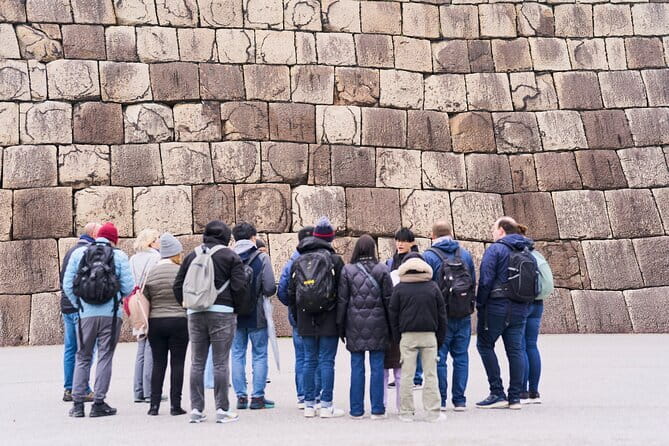
The Imperial Palace East Gardens receive about 20 minutes, making them one of the longest stops. This section combines the appeal of a public garden with the remains of a major castle site.
You can expect seasonal plantings, old stone walls, open views, and more opportunities to photograph the grounds. The variety of trees from different parts of Japan adds interest, especially if you enjoy gardens but do not know much about Japanese horticultural traditions.
The gardens are not simply an extra pleasant ending. They help show how the imperial grounds function today. The atmosphere is calmer than the streets around Tokyo Station, yet you remain close to the center of the city. That contrast is one of the best parts of the experience.
At the end, the group returns to the Starbucks meeting point. The two-hour length makes this easy to fit into a busy Tokyo day. You could schedule it in the morning before another Chiyoda visit, or use it as a gentle afternoon walk after time in the Marunouchi area.
What the guide adds for $23
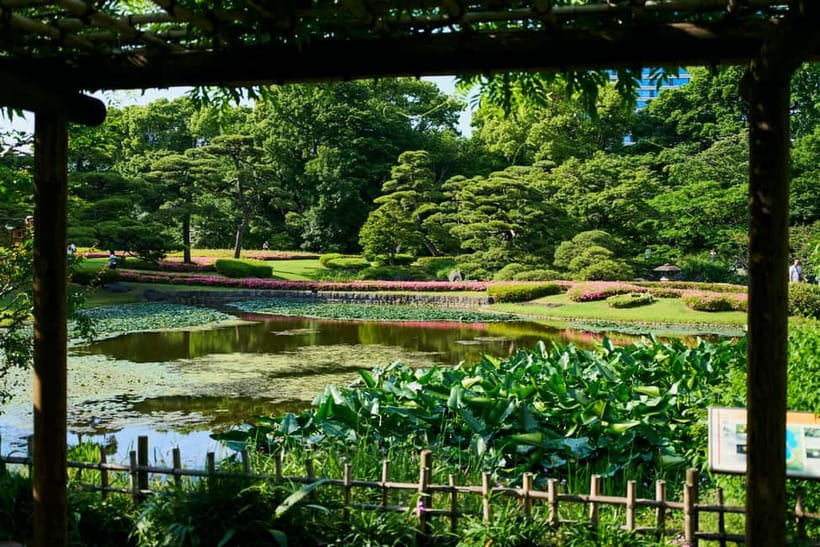
At $23 per person, the basic question is not simply how much it costs to enter the grounds. The more useful question is how much you value interpretation.
You can see the palace area and East Gardens independently, and the gardens may not require a separate admission fee. If you are content to take photographs and read signs, you may find the tour less necessary. The fee pays for the person who explains why the walls are shaped as they are, how the castle defenses worked, and how the site connects samurai government with the imperial family.
The small group improves that value. You are not paying for a large coach tour or a rushed speech delivered to dozens of people. You can ask about the Edo period, the palace, the gardens, or a detail that interests you.
Guides have also helped with practical enjoyment. Alfredo found that Yuka answered questions clearly and took good photographs. Other guides, including Fuma, Anju, Tomo, Ai, Koyo, and Mai, have been praised for friendly conversation, clear English, and an easy pace. Guide quality can vary from one departure to another, but the repeated pattern is strong: expect a young, upbeat local guide with a personal interest in Japanese history.
Walking conditions, weather, and access
Dress for the weather. A large portion of the tour takes place outdoors, and Tokyo’s heat, rain, wind, or cold can change the experience quickly. Comfortable shoes are sensible because the route includes walking between gates, gardens, palace grounds, and ruins.
There is a security check when entering the Imperial Palace area. Do not bring knives or alcohol. Keep your belongings simple so the entry process does not slow you down.
Wheelchairs are available and can be used within the Imperial Palace grounds. Some slopes and sections still require walking or going down on foot, so anyone with mobility concerns should consider the route carefully before booking.
The tour is conducted in English only. Japanese language support is not provided. If you need Japanese interpretation, this is not the right choice.
Who will enjoy this tour most
I would choose this experience if you want a short, organized introduction to Tokyo’s political history. It suits first-time visitors who want context before exploring more of Japan, as well as anyone interested in samurai culture, the Edo period, or the imperial family.
It also works well for people who enjoyed the television series Shōgun and want to sort fiction from the broader historical setting. The tour does not recreate the drama of the period, but it explains the world of shoguns, retainers, castle defenses, and the long transition toward modern Japan.
You may prefer to explore independently if you want to linger in one garden, move at your own speed, or focus mainly on photography. Two hours gives you a useful overview, but it does not allow a detailed examination of every wall, tree, or historical site.
Should you book the Tokyo Castle and Imperial Palace Shogun Walking Tour?
Book it if you want the Imperial Palace grounds to make sense, not just look attractive. The strongest reasons are the small group, the clear connection between Edo Castle and modern Tokyo, and the chance to ask questions of an English-speaking local guide.
Skip it if you expect to enter grand palace interiors or see a fully rebuilt castle. You will mostly explore outdoor grounds, ruins, gates, walls, and gardens.
For $23, this is good value for a two-hour introduction, especially if you are new to Japanese history. Bring weather-ready clothing, keep your expectations focused on interpretation rather than access, and you should leave with a much clearer picture of how samurai power, Edo Castle, and Japan’s imperial tradition fit together.
FAQ
How long does the tour last?
The tour lasts two hours and returns to the Starbucks Coffee Kōkyo Gaien Wadakura Fountain Park Store.
Where does the tour meet?
Meet in front of Starbucks Coffee Kōkyo Gaien Wadakura Fountain Park Store at 3-1 Kōkyo Gaien, Chiyoda City, Tokyo.
How do I identify the guide?
The guide will hold a sign that says Local Guide Stars.
What language is the tour conducted in?
The tour is conducted in English only. Japanese language support is not available.
How large is the group?
The tour is limited to 10 participants.
What places are visited?
The route includes Sakurada Tatsumi Yagura, Ote-Mon Gate, Tokyo Imperial Palace, Ninomaru Garden, Edo Castle ruins, and the Imperial Palace East Gardens.
Is the Imperial Palace included?
The tour includes the Imperial Palace grounds and the East Gardens. It focuses on outdoor areas, gates, ruins, gardens, and historical explanations.
Is there a security check?
Yes. There is a security check when entering the Imperial Palace. Knives and alcohol are not permitted.
Can I take photographs?
Yes. Photography is encouraged throughout the scenic parts of the tour.
Is the tour suitable for wheelchair users?
Wheelchairs are available and can be used within the Imperial Palace grounds. Some slopes and areas require walking or going down on foot.
More Royal Palace Tours in the world
- Madrid: Royal Palace Fast-Access Admission Ticket
★ 4.6 · 13,856 reviews - Madrid: Royal Palace Expert Guided Tour with Skip-the-Line
★ 4.7 · 8,407 reviews - Amsterdam: Royal Palace Entry Ticket + Audio guide
★ 4.6 · 7,889 reviews - Dubai To Abu Dhabi: Grand Mosque, Royal Palace & Etihad Towers
★ 5.0 · 7,632 reviews
Newly added in the world
- Avignon: Around The Palace Tour★ 4.5 · 13 reviews
- Ayutthaya Full-Day Tour with Bang Pa In (Summer Palace)★ 5.0 · 2 reviews
- Bali: Gate Of Heaven and Water Palace Tirta Gangga Package★ 4.7 · 3 reviews
- Aranjuez: Royal Palace Guided Tour★ 4.5 · 93 reviews
- Asia Continent & Topkapı Palace & Harem. Guided, Small group★ 4.9 · 3 reviews
- Kornik Castle and Rogalin Palace Half-Day Private Tour★ 5.0 · 2 reviews
- Antananarivo: Guided Tour and sunset in queen’s palace★ 3.9 · 13 reviews
- Royal Palace of Aranjuez Small-Group Tour with Entry Ticket★ 5.0 · 2 reviews
Palace Walking Tours, compared.
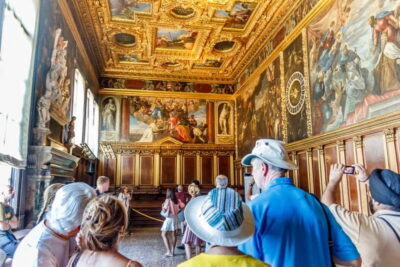
Doge’s Palace and St Mark’s Basilica Walking Tour
Read our review →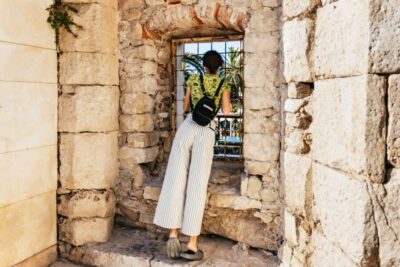
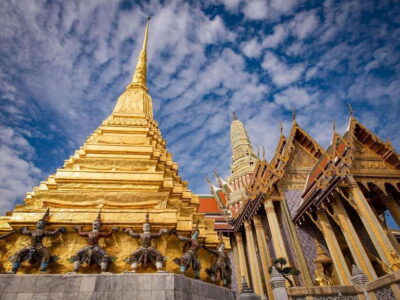
Grand Palace and Wat Phra Kaew Guided Walking Tour
Read our review →
Imperial Palace and Shogun Historical Walking Tour
Read our review →
Madrid Old Town & Royal Palace Walking Tour Skip the Line Ticket
Read our review →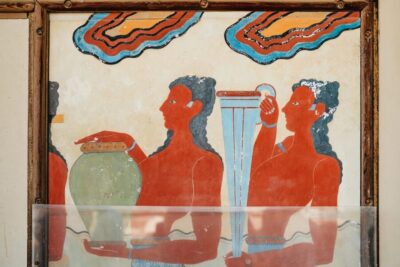
Knossos: Knossos Palace Skip-the-Line Guided Walking Tour
Read our review →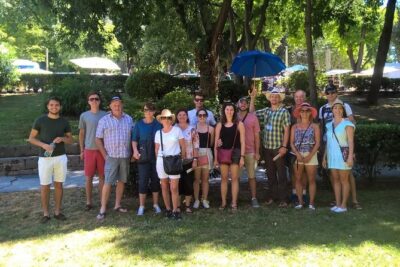

Buckingham Palace Entry Ticket & Royal Walking Tour
Read our review →Browse the lists this tour appears in