
Review · BAHIA PALACE TOURS
Marrakech: Bahia Palace, Saadian Tombs & Medina Walking Tour
Marrakech’s old city makes the most sense on foot, and this three-hour tour gives you a useful first look at its grand monuments, narrow lanes, and working souks. You move from the Koutoubia Mosque and royal Kasbah to the Saadian Tombs, Mellah, Bahia Palace, and Jemaa el-Fna.
I like the mix of famous sights and everyday streets, and I like having a local guide explain the tilework, dynasties, religion, and crafts as you go. The price is appealing at $16 per person, though you must pay separately for monument tickets, and the route may not always cover every advertised stop.
Key points to know before booking
- Three hours on foot: Expect narrow Medina lanes, monument visits, market streets, and regular stops rather than a bus-based city tour.
- Strong local guiding: Guides including Abdel, Abdul, Momo, Ismaël, and Mo have been praised for clear explanations, friendly service, and good pacing.
- Monument tickets cost extra: Bahia Palace and the Saadian Tombs are not included, with payment required in cash on-site.
- Koutoubia is exterior only: You can admire the mosque and minaret, but entry is restricted to Muslims during prayer times.
- Private or small-group choices: A private booking should give you more control over pace, questions, and photo stops.
- Good value with a caveat: The low tour price works well for orientation, but your final cost rises once entrance fees are added.
A smart introduction to Marrakech’s old city
This walk is built around the historic center, where Marrakech’s major sights sit close enough to connect on foot but far enough apart to make a guide useful. The streets can twist without warning, and the difference between a royal monument, a neighborhood lane, and a craft market is not always obvious at first glance.
You begin with a short welcome and introduction from a licensed local guide. English and French are available, and private groups can be booked if you want a quieter pace or more time for questions.
I would treat this as an orientation tour rather than a complete study of every landmark in Marrakech. In three hours, you get a solid first look at the old city and several important sites, but each stop receives a focused visit rather than a long museum-style treatment.
The meeting point depends on the option you choose, so check the booking details carefully. Wear shoes that can handle uneven walking surfaces, carry cash for tickets and small purchases, and bring a hat and water. The tour includes water, but it is sensible to carry your own supply too.
More Bahia Palace Tours in Marrakesh:
- Marrakech: Bahia Palace, Saadian Tombs, Souk and Medina Tour
★ 4.7 · 4,974 reviews - Marrakech: Bahia Palace, Saadian Tombs, & Koutoubia Mosque
★ 4.5 · 2,529 reviews - Marrakech: Bahia Palace, Madrasa Ben Youssef and Medina Tour
★ 4.7 · 1,347 reviews
Koutoubia Mosque and the city’s defining minaret
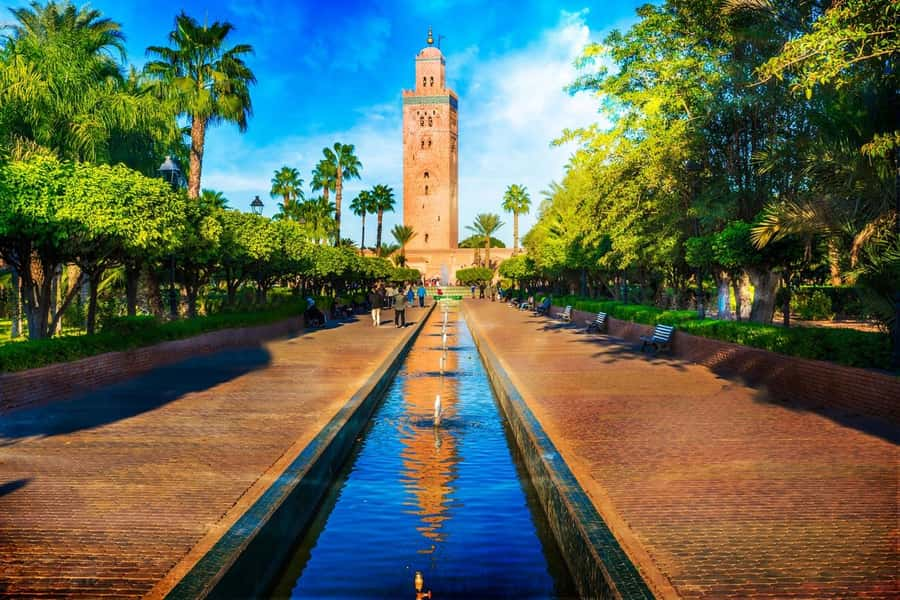
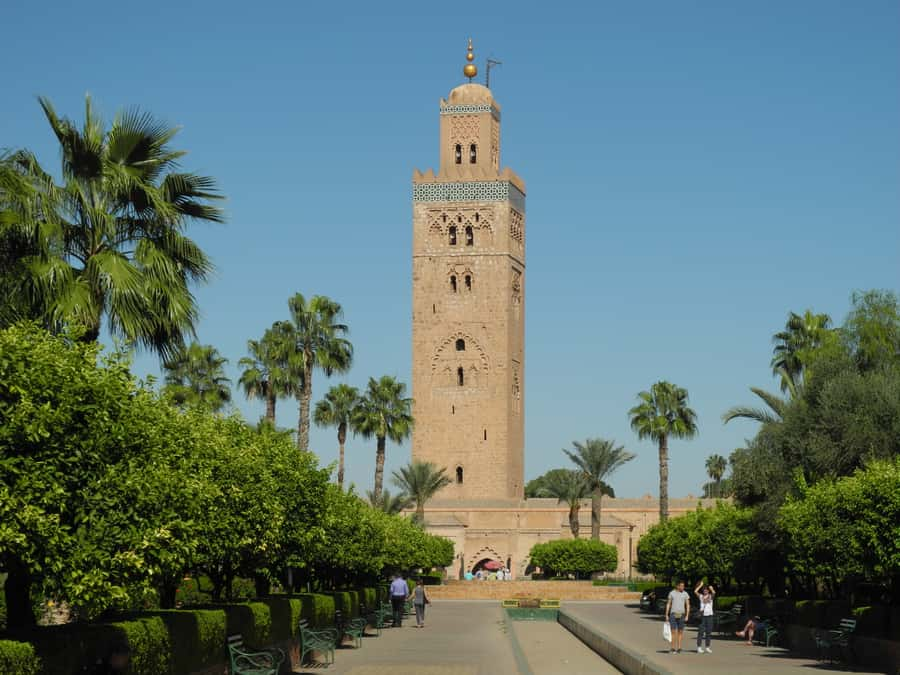
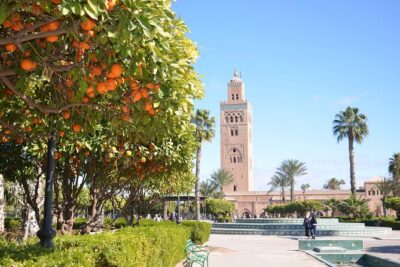
The first major sight is the Koutoubia Mosque, viewed from outside. Its tall minaret is one of Marrakech’s clearest visual markers, and the Almohad design gives the building a strong, spare form rather than the delicate look of Bahia Palace.
You will not enter the mosque. Access is reserved for Muslims during prayer times, so this stop is about the exterior, the architecture, and the role of the building in the city.
This can be a brief stop, which is useful if you have limited time, but it may disappoint you if you expected an interior visit. One practical point deserves attention: the route description mentions an exterior visit, but the exact amount of time around the mosque can vary. If you want a fuller look at the grounds, ask your guide at the start.
The mosque is also a helpful first lesson in Marrakech’s visual order. Its minaret appears repeatedly as you move through the city, helping you understand where you are even when the Medina lanes become confusing.
The Kasbah and Bab Agnaou
From Koutoubia, the walk continues toward the Kasbah, once the fortified royal quarter. Here, the tour shifts away from one isolated monument and into a neighborhood where daily life still unfolds among old walls and narrow streets.
You might see people going about ordinary errands, shopkeepers opening their doors, and residents moving through lanes that were never designed for modern traffic. That makes this section useful. You are not simply moving between ticketed sites; you are seeing how the historic center functions as a living district.
Nearby, Bab Agnaou gives you a close look at a major 12th-century gate. Its carved stonework and royal symbols make it more than a passageway. Your guide can help explain the gate’s position within Marrakech’s old defensive and ceremonial system.
Do not expect a long standalone visit here. The gate is an exterior sight, and the reward comes from examining its details while listening to the explanation. If you enjoy architecture, take a moment to study the carved shapes around the entrance rather than rushing straight through for a photograph.
Saadian Tombs and the dynasty behind the decoration
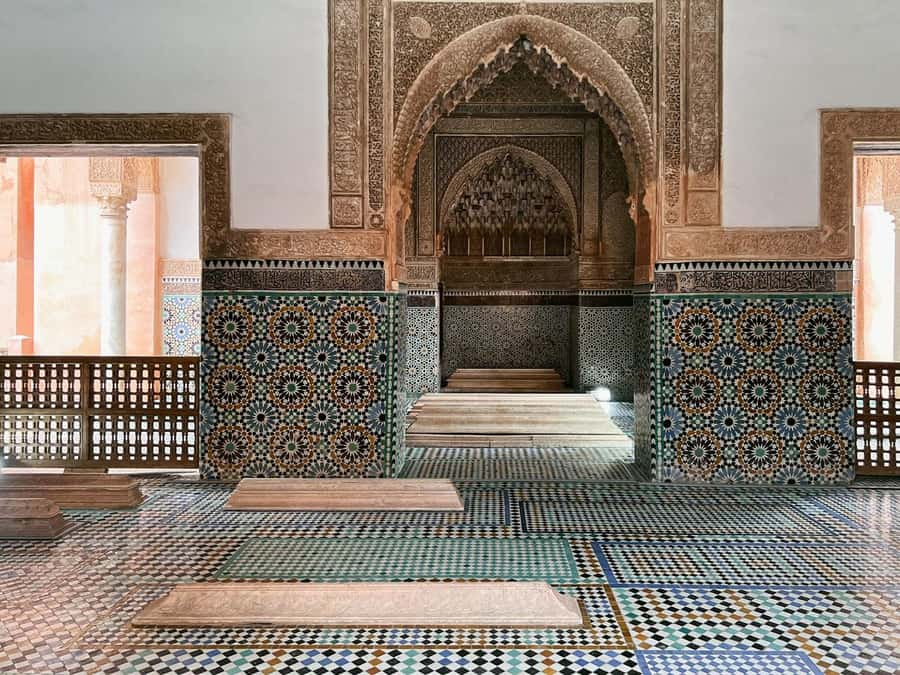
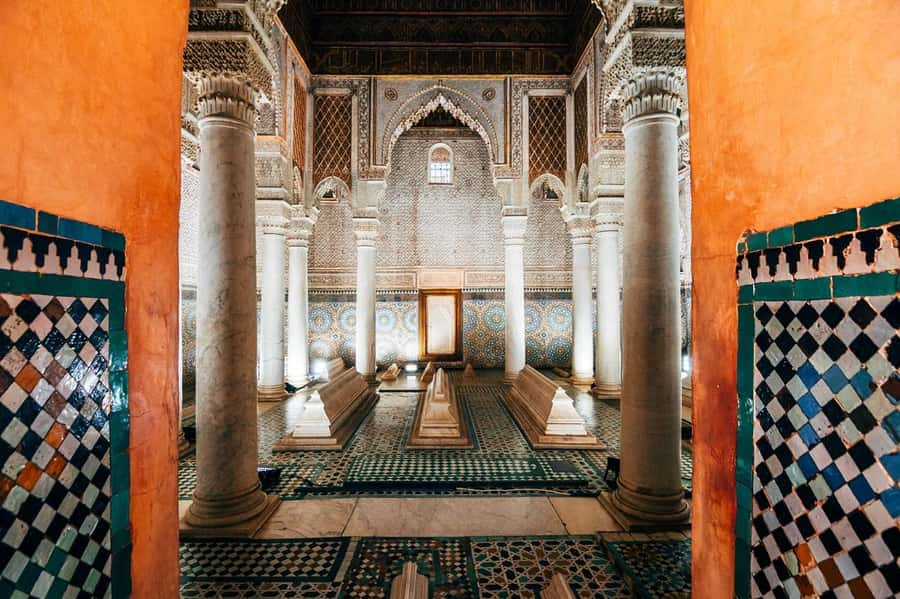
The Saadian Tombs are one of the most rewarding stops on the route. This burial complex remained hidden for centuries and was rediscovered in 1917, which adds an unusual layer to the visit. You are looking at a carefully preserved royal site that was once deliberately concealed.
Inside, the decoration is the main attraction. Expect zellij tilework, marble columns, and decorated ceilings, all arranged with a level of care that contrasts with the plain lanes outside. The site is not huge, but its compact scale lets you focus on workmanship rather than spend an hour wandering through empty rooms.
Your guide accompanies you inside, explains the setting, and then allows time for photographs and independent looking. That arrangement works well because the details deserve a quiet second glance after the history has been explained.
Crowds can gather at popular monuments, especially at peak times. Skip-the-line access helps with the ticket process, but it does not guarantee an empty interior. Internal queues may still form, so keep your expectations realistic.
Entrance is not included in the $16 tour price. You must pay in cash on-site, and you should budget for that before setting out. The activity does not give an entrance fee amount, so carry enough local cash rather than relying on a card.
More Palace Walking Tours in Marrakesh:
- Venice: Doge’s Palace and St Mark’s Basilica Walking Tour
★ 4.4 · 6,291 reviews - Split: Old Town and Diocletian Palace Walking Tour
★ 4.9 · 4,727 reviews - Walking Tour of Split and Diocletian’s Palace
★ 5.0 · 2,588 reviews - Bangkok: Grand Palace and Wat Phra Kaew Guided Walking Tour
★ 4.4 · 2,417 reviews
The Mellah, Marrakech’s former Jewish quarter
The walk then enters the Mellah, the former Jewish quarter. This part of the tour adds social and cultural context that you would miss by visiting only palaces and tombs.
The street layout and architecture offer clues about the communities that helped shape Marrakech. Your guide can point out how this area differs from the royal Kasbah and the commercial souks, giving you a better sense of how the old city was organized.
The Mellah is not presented as a separate ticketed attraction. Its value comes from walking through it and understanding its place in the city’s past. I like this kind of stop because it connects grand history to streets where people lived, worked, worshipped, and traded.
Keep your camera ready, but also pay attention to the changes in scale and design. A courtyard, doorway, or narrow lane may tell you as much about the neighborhood as a formal monument.
Bahia Palace and its quiet courtyards
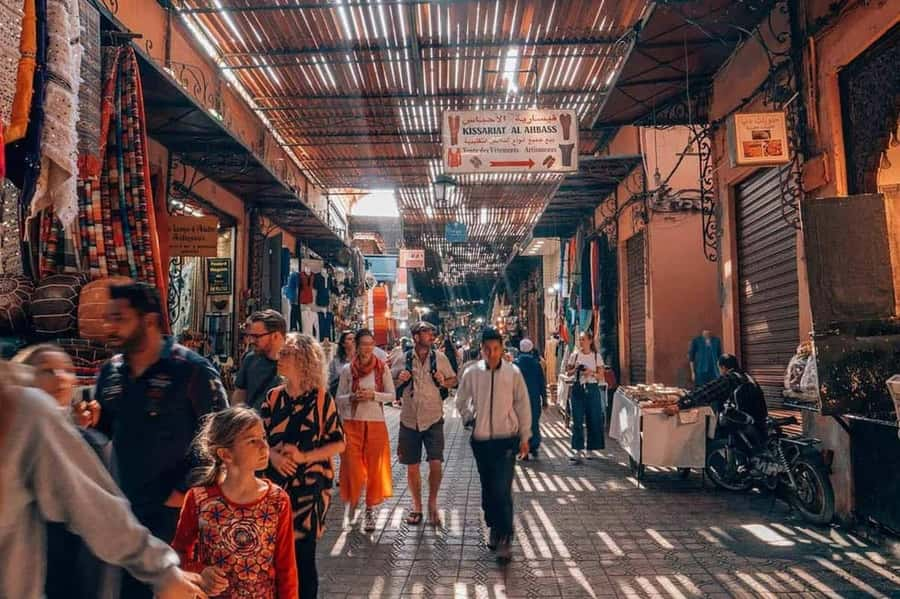
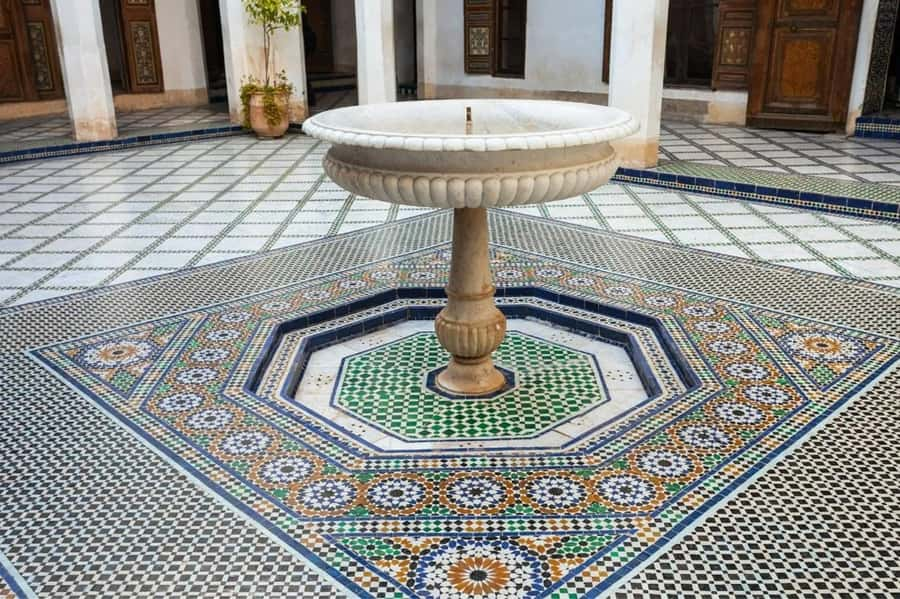
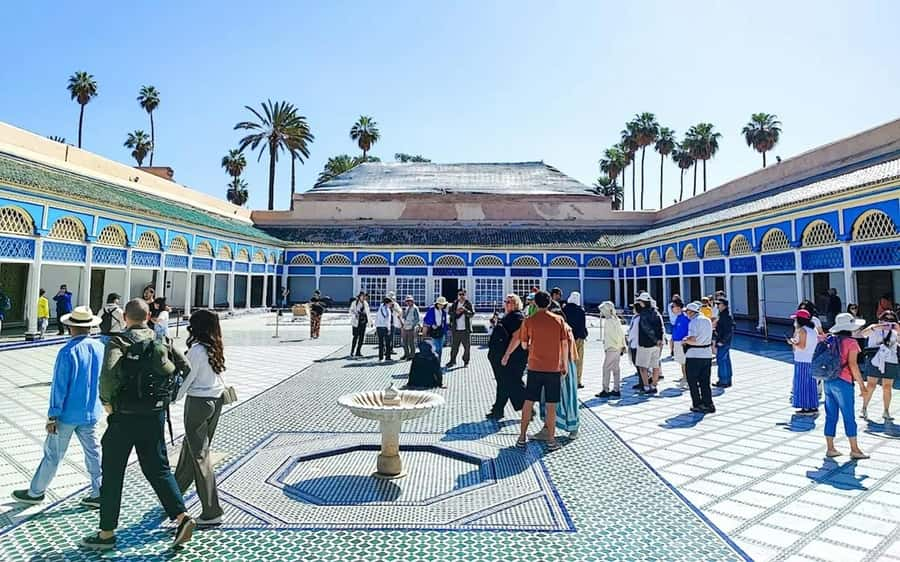
Bahia Palace brings the tour into a different world. Built in the 19th century, it was designed to display wealth, authority, and the finest decorative arts available at the time.
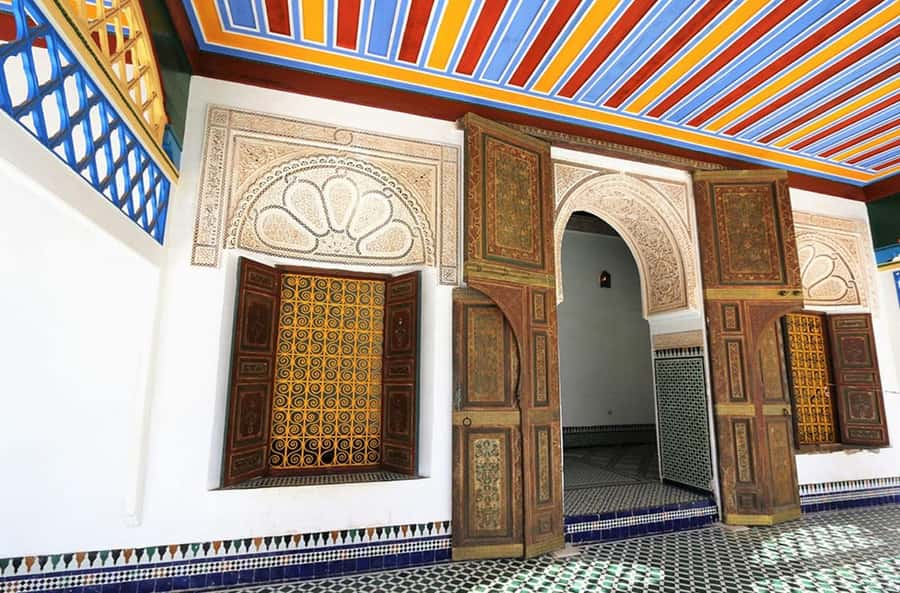
You will move through courtyards and rooms decorated with colorful tiles, carved cedarwood ceilings, and fine surface work. The palace is a useful contrast to the Saadian Tombs. The tombs express dynastic memory through a compact funerary complex, while Bahia Palace was built for power and daily court life.
The courtyards can feel calm even when the surrounding Medina is noisy. Look up as well as down. The ceilings, tile patterns, wood carving, and room proportions are easy to miss if you focus only on the most photographed doorway.
The guide joins you inside and then gives you time to look around and take photographs. Some areas may be closed for renovation, so the visit may not include every room shown in promotional material. Entrance is paid separately in cash, just as at the Saadian Tombs.
The palace is likely to be one of the tour’s strongest stops, but it can also be crowded. Skip-the-line access reduces waiting before entry, not the number of people inside the palace itself.
Souks, workshops, and the working Medina
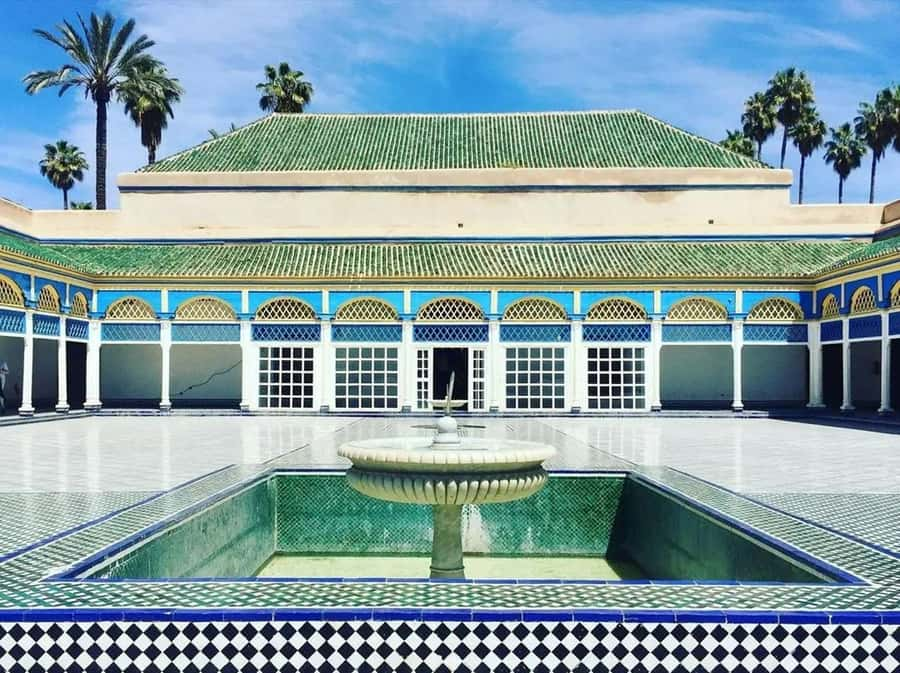
After Bahia Palace, the route heads into the souks. This is where the tour becomes less about one monument and more about the skills, smells, sounds, and trade that keep the old city active.
You will pass stalls with spices, textiles, lanterns, leather goods, pottery, metalwork, and woodcraft. Traditional workshops still operate in the market area, so you may see artisans working with familiar materials using long-established methods.
A guide is particularly useful here. Without help, you may see a series of shops and sales pitches. With context, you can better understand the difference between a craft workshop, a retail stall, and a place aimed mainly at tourists.
The tour is not described as a shopping excursion, and food and drinks are not included. You can browse and make purchases, but do not feel obliged to buy. Carry cash if you plan to shop, and keep your belongings secure in crowded lanes.
This section can be lively and close-packed. If you dislike tight spaces or find uneven walking difficult, the Medina may be tiring. The tour is specifically not suitable for people with mobility impairments, and that warning matters here more than at the palaces.
Jemaa el-Fna and the changing rhythm of the city
The experience finishes around Jemaa el-Fna Square, Marrakech’s famous public gathering place. The square gives you a wider view after the narrow Medina lanes, and it helps tie together the city’s roles as a religious center, royal capital, trading hub, and meeting place.
The exact amount of time at the square depends on the route and pace. It is best to see this as a concluding orientation point rather than a meal stop, since food and drinks are not included.
If you are visiting later on your own, the square is an easy place to recognize and use as a reference. Your guide can also help you understand how the surrounding souks connect to it.
How the guides shape the day
The strongest part of this tour is the local guiding. Abdul, who was born and raised in Marrakech, has been especially effective at explaining the city’s religion and history while keeping a steady pace. He also planned shade breaks, bathroom stops, and chances to buy cold water during a very hot June morning.
That detail matters. Marrakech can be punishing in summer, and a three-hour walk feels very different when the guide watches the heat rather than simply pushing from sight to sight.
Abdel has also been described as friendly and professional, while Momo, Ismaël, and Mo have each brought useful local information and a warm manner. Your assigned guide will depend on the date and option, so do not book expecting one specific person unless the provider confirms it.
The tour is offered in English or French. A private group is the better choice if you want to stop often, ask detailed questions, or avoid being tied to another group’s pace. A shared small group should cost less per person and can still work well if you are comfortable moving with others.
There is one practical caution: the route may not always include every planned monument. A past tour did not include the Quranic school listed in the program. Since the main advertised stops are already quite full for three hours, confirm the exact route at the beginning if a particular site matters to you.
Is $16 good value?
At $16 per person, this is a low-cost way to get a structured introduction to Marrakech’s old city. The price covers the guide and water, not monument admission, meals, or drinks.
The value comes from the explanations and route planning. You could walk past the Bahia Palace, Saadian Tombs, and Bab Agnaou alone, but you would miss much of the connection between royal power, religious tradition, local neighborhoods, and craft production.
The extra ticket costs keep the headline price from being the full cost of the morning or afternoon. Still, even after adding entrance fees, the tour can make sense if you want a guide for your first encounter with the Medina.
I would not book it as a bargain if you want every possible landmark included. I would book it as a reasonably priced introduction with several important paid sights built into one walk.
Heat, crowds, and walking comfort
The timing matters. A late-June 10:00 a.m. start was manageable because the guide planned shade, breaks, and water stops, but temperatures can rise above 100 degrees Fahrenheit. If you have a choice, consider a cooler starting time shown during booking.
Bring:
- Comfortable walking shoes
- A sun hat
- Water
- Cash for monument tickets and purchases
The walk covers historic lanes, open areas, and crowded market streets. You may need to slow down for other people, wait at interior queues, and stand in the sun between shaded sections.
The tour includes free time for photographs, but this is not an all-day leisurely stroll. You will cover several districts in three hours, so expect a steady pace with breaks rather than long periods at each monument.
Free cancellation is available up to 24 hours before the tour for a full refund, and you can reserve now and pay later. Those terms are useful if your Marrakech plans are still changing.
Who should book this walk?
I would recommend it to first-time visitors who want a fast but meaningful introduction to the old city. It suits people who like architecture, history, traditional crafts, and walking through neighborhoods rather than riding between isolated sights.
It is also a good fit if you want a guide who can explain religious restrictions, royal buildings, decorative arts, and local customs in plain language. The English and French options make it accessible to many visitors, and the private choice helps if your group has its own pace.
You may want another plan if you have limited mobility, dislike crowded lanes, or want a slow, detailed visit to every monument. You should also reconsider if the main reason for booking is entry to Koutoubia Mosque, since the tour visits only the exterior.
Should you book the Bahia Palace and Medina tour?
Book it if you want an affordable first walk through Marrakech that combines major monuments with ordinary Medina streets. The mix of Saadian tilework, Bahia Palace courtyards, the Mellah, souks, and Jemaa el-Fna gives you a useful picture of how the city’s royal, religious, commercial, and residential sides fit together.
The main cautions are clear: tickets cost extra, crowds can continue inside after the ticket line, Koutoubia is exterior only, and the exact route may vary. Choose a private group if personal attention matters, carry cash, and ask at the start whether every stop you care about is included.
For most visitors staying in Marrakech for a short time, this is a sensible way to get oriented before exploring on your own.
FAQ
How long does the Marrakech walking tour last?
The tour lasts three hours. Starting times depend on availability when you book.
What sights are included?
The route includes exterior views of Koutoubia Mosque and Bab Agnaou, the Saadian Tombs, the Mellah, Bahia Palace, the souks, the Medina, and Jemaa el-Fna Square.
Can I enter Koutoubia Mosque?
No. The tour visits Koutoubia Mosque from the outside. Entry is reserved for Muslims during prayer times.
Are entrance tickets included in the price?
No. Entry to Bahia Palace and the Saadian Tombs is not included. You must pay for those tickets in cash on-site.
Is skip-the-line access available?
Yes. Skip-the-line access is available for selected monuments. Internal queues may still occur after you enter.
What languages are available?
The live tour guide is available in English and French.
Can I book a private tour?
Yes. A private group option is available. Shared small-group options are also offered.
What should I bring?
Bring comfortable shoes, a sun hat, water, and cash. Water is included, but carrying extra water is sensible, especially in hot weather.
Newly added in Marrakesh
- Marrakech Private Medina Tour: Bahia Palace & Ben Youssef★ 4.8 · 48 reviews
- Marrakech: Bahia Palace, Madrassa & Souks Guided Tour★ 4.8 · 47 reviews
- Marrakesh: Bahia Palace, Ben Youssef Medersa & Secret Garden★ 4.8 · 55 reviews
- Marrakech Palaces and Monuments Half-Day Tour★ 4.1 · 13 reviews
- Marrakech: Bahia Palace, Saadian Tombs & Top Highlights Tour★ 4.6 · 104 reviews
- Marrakech: Medina Tour, Bahia Palace and Medrasa Ben Youssef★ 5.0 · 2 reviews
- Marrakech Palaces and Monuments Half-Day Tour★ 5.0 · 11 reviews
- Marrakech City Tour: Souks, Palaces & Hidden Gems★ 4.7 · 35 reviews
Bahia Palace Tours, compared.
Bahia Palace, Saadian Tombs, Souk and Medina Tour
Read our review →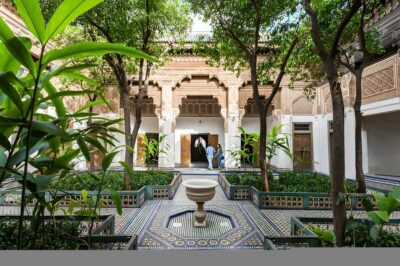
Bahia Palace, Saadian Tombs, & Koutoubia Mosque
Read our review →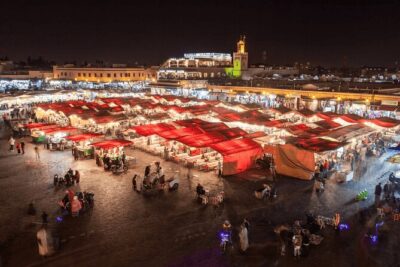
Bahia Palace, Madrasa Ben Youssef and Medina Tour
Read our review →
Bahia Palace Guided Tour with Skip-the-Line Entry
Read our review →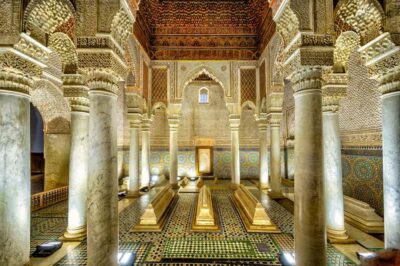
Saadian Tombs, Bahia Palace, Medina and Souk Tour
Read our review →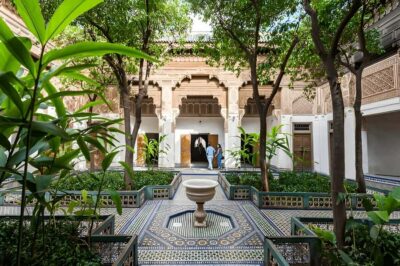
Bahia Palace, Ben Youssef Medersa, & Souks Tour
Read our review →
Bahia Palace, Madrasa Ben Youssef & Secret Garden
Read our review →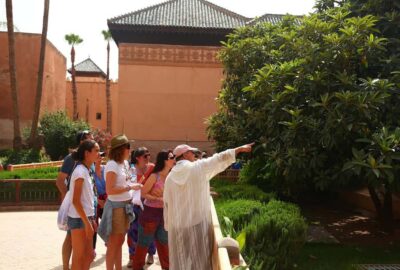
Bahia Palace, Saadian Tombs & Medina Guided Tour
Read our review →Browse the lists this tour appears in