
Review · BAHIA PALACE TOURS
Marrakech: Bahia Palace, Madrasa Ben Youssef and Medina Tour
Marrakech reveals itself best on foot, and this four-hour tour brings together the city’s big sights with the narrow lanes between them. You’ll see the outside of Koutoubia Mosque, step into the decorated rooms of Bahia Palace, and reach the calm courtyard of Ben Youssef Madrasa before the Medina starts to feel like a maze.
I like the way the tour joins grand architecture to daily life. The Mellah, artisan workshops, spice stalls, and silver shops give the historic buildings some context, while guides such as Yassine, Mouhssine, Ahmed, and Hassan are praised for clear explanations, humor, photos, and practical advice. The main consideration is cost: the advertised $19 does not include the 150 MAD in monument tickets, and the four hours involve plenty of walking.
At a glance: what makes this Marrakech walk worthwhile
- Bahia Palace’s decorated interiors: See carved cedar, painted ceilings, stucco, and zellij tilework across courtyards and palace rooms.
- Ben Youssef Madrasa’s peaceful courtyard: This former Quranic school is often the architectural high point, especially for visitors interested in Moroccan design.
- A useful first-day orientation: The route links Jemaa el-Fna, the souks, the Mellah, and major monuments, helping you get your bearings early in your stay.
- Guides who add personality: Yassine, Mouhssine, Ahmed, Hassan, and others are praised for humor, history, family-friendly explanations, and help with photographs.
- Shopping without being left alone in the souks: You receive local direction while still having time to browse spices, leather, fabrics, perfumes, pottery, metalwork, and woodcarving.
- A low headline price with extra costs: The tour is $19 per person, but Bahia Palace costs 100 MAD and Ben Youssef Madrasa costs 50 MAD per adult, payable separately in cash.
A smart first walk through Marrakech’s Medina
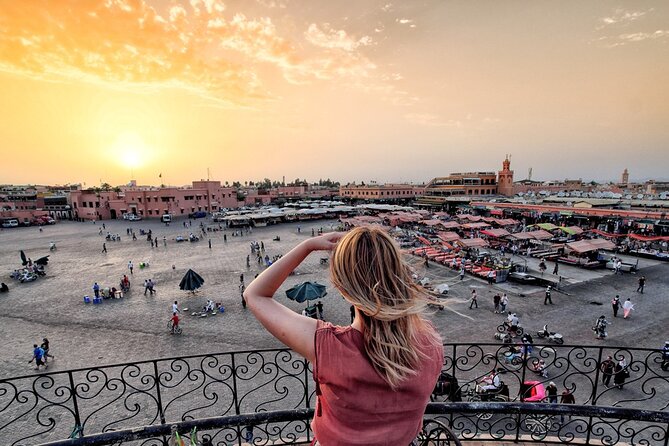
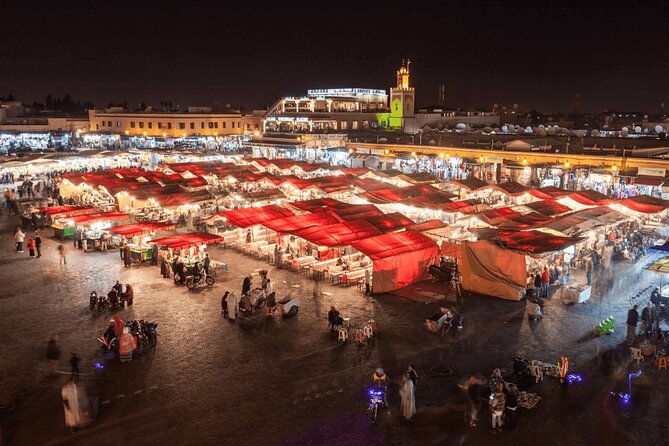
This is a strong choice for your first full morning or afternoon in Marrakech. In four hours, you move from the city’s best-known square through royal-era architecture, the old Jewish quarter, the souks, and the Medina’s winding lanes.
The route is busy, but it is not just a parade of photo stops. Your guide walks inside the monuments and explains what you are seeing, then gives you time to look around and take photographs. That matters at Bahia Palace and Ben Youssef Madrasa, where the decoration can be beautiful but difficult to understand without some context.
You meet in front of Café de France in Jemaa el-Fna unless you book the private option and are staying in a riad inside the Medina. In that case, pickup from the riad reception is included. The provider sends the guide’s name, meeting details, and practical reminders by WhatsApp a day or two before the tour.
The tour is offered in English or French. A private group option is available, while the standard choice is a small-group walking experience. Several families found the guides good with children, and one group with children aged seven and nine stayed engaged throughout the explanations.
More Bahia Palace Tours in the world:
- Marrakech: Bahia Palace, Saadian Tombs, Souk and Medina Tour
★ 4.7 · 4,974 reviews - Marrakech: Bahia Palace, Saadian Tombs, & Koutoubia Mosque
★ 4.5 · 2,529 reviews - Marrakech: Bahia Palace Guided Tour with Skip-the-Line Entry
★ 4.7 · 811 reviews
Koutoubia Mosque: an exterior introduction
The first stop is Koutoubia Mosque, Marrakech’s largest and most recognizable mosque. You will view it from outside, since entry is restricted to Muslims during prayer times.
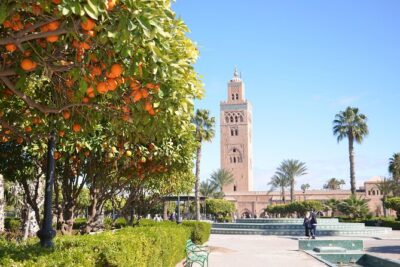
The mosque takes its name from the booksellers who once worked around it. Its Almohad design, tall minaret, and four copper globes make it a useful visual reference as you move through the city. Your guide can explain why the minaret is so important to Marrakech’s appearance and orientation.
The stop lasts about 10 minutes, so think of it as an introduction rather than a full visit. You will have time for photographs and a short explanation, but not an interior tour. This is also a good place to confirm your walking pace before entering the tighter streets.
Bahia Palace: tilework, courtyards, and palace power
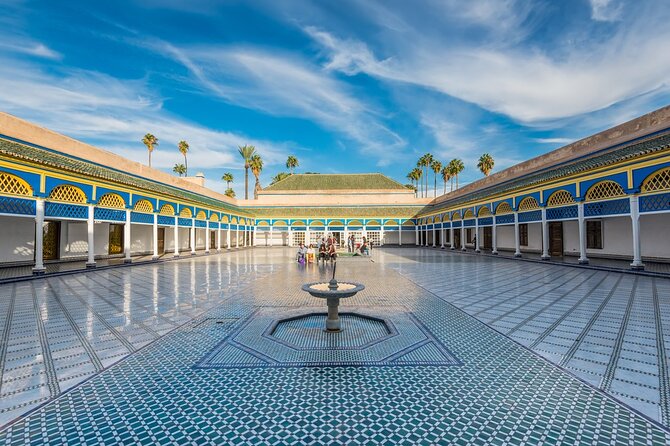
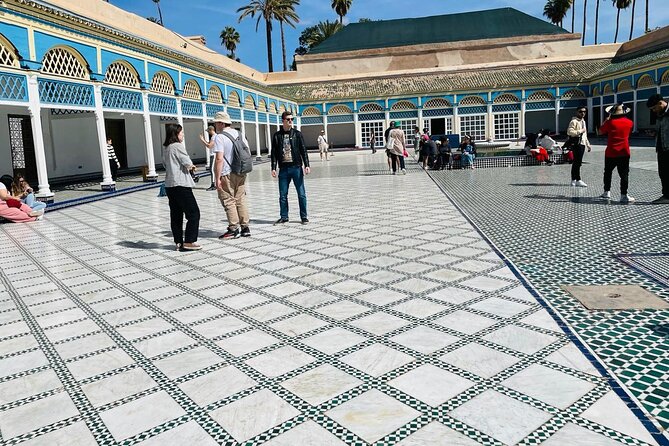
Bahia Palace receives about 45 minutes, and it deserves the time. Built in the 19th century, the palace contains 160 rooms arranged around courtyards, along with extensive gardens. The design reflects the wealth and status of Morocco’s ruling elite.
Inside, look up as well as down. Painted ceilings, carved cedar, patterned stucco, and zellij mosaics compete for attention. The workmanship is intricate enough that a guide’s explanation helps you notice how the surfaces fit together rather than seeing them as one blur of decoration.
The palace is also a lesson in movement and privacy. Courtyards bring in light and air, while rooms open into carefully arranged spaces rather than onto a single grand hallway. Your guide accompanies you inside, explains the rooms, and leaves some free time for photographs.
Some sections may be under renovation, so the exact visit can vary. Crowds are another factor. The guide can help you get past the initial ticket queue, but the palace itself may still feel crowded during busy periods.
The admission fee is 100 MAD per adult and is not included in the $19 tour price. Bring cash for this and the madrasa. For many people, Bahia Palace alone would justify a guided visit, especially if you want to understand the details rather than simply photograph them.
Mellah: a look at Marrakech’s Jewish quarter
From the palace, the route continues into the Mellah, Marrakech’s former Jewish quarter. The walk takes about 20 minutes and adds a needed social and cultural layer to the usual palace-and-souk circuit.
The Mellah was shaped by a Jewish community that once played an important role in the city. Its buildings and street plan offer a glimpse of Marrakech as a place where different communities lived and worked side by side.
This is not presented as a separate museum visit. Instead, your guide points out the neighborhood’s character as you walk through it. That makes the stop less formal and more connected to the surrounding streets. If you prefer a tour focused only on famous monuments, this may feel like a short detour. I think it improves the route by showing that Marrakech’s past was not limited to sultans and religious schools.
More Palaces to Tour in the world:
- Venice: Doge’s Palace Reserved Entry Ticket
★ 4.6 · 42,716 reviews - Paris: Versailles Palace and Gardens Full Access Ticket
★ 4.6 · 41,579 reviews - Granada: Alhambra & Nasrid Palaces Tour with Tickets
★ 4.7 · 19,801 reviews - Sintra: Pena Palace and Park Entrance Ticket
★ 4.2 · 17,410 reviews
Ben Youssef Madrasa: the architectural high point
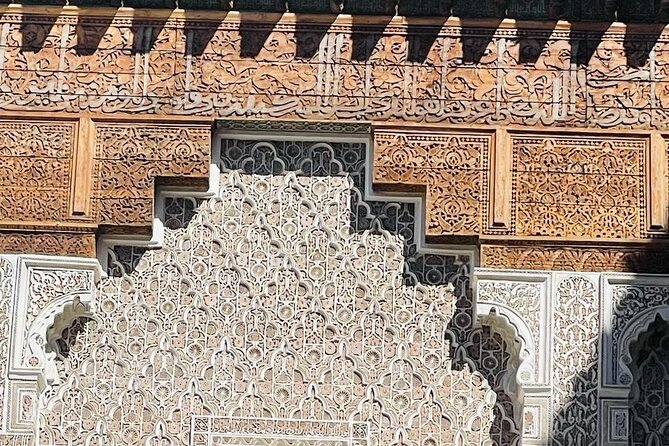
Ben Youssef Madrasa is often the tour’s most striking stop. You spend about 45 minutes here, including a guided explanation and time to look around by yourself.
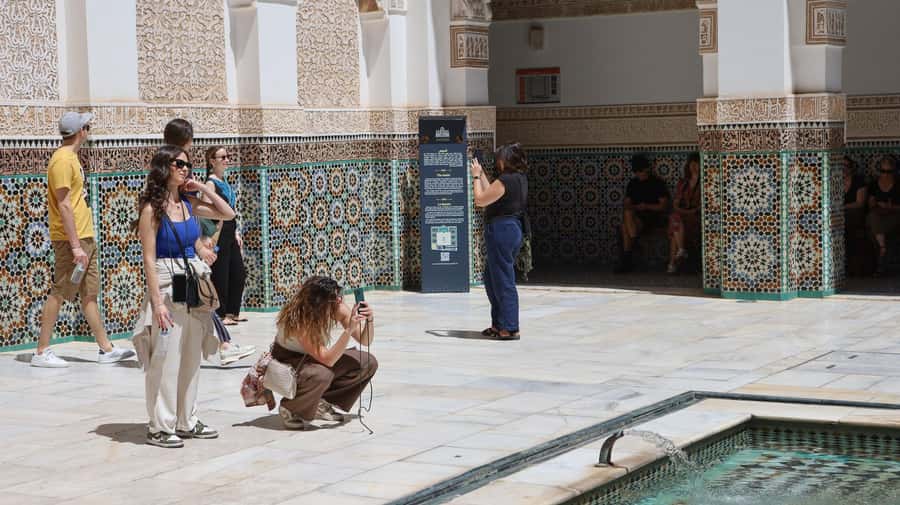
Founded in the 14th century and rebuilt by the Saadians, the madrasa was an Islamic college. Its central courtyard is quiet and carefully proportioned, with decorative stucco, zellij tilework, and carved cedar forming a controlled display of Moroccan craft.
The calm here contrasts sharply with the streets outside. That change is part of the appeal. After the noise and movement of the souks, the courtyard gives you space to study the geometry, repeating patterns, and fine carving.
Your guide goes inside with you, rather than leaving you to read a few signs on your own. This is useful because the madrasa’s beauty is easy to appreciate, but its purpose and history are less obvious without explanation. One visitor who especially liked architecture called this their favorite stop.
Admission costs 50 MAD per adult, paid separately in cash. The guide can help you avoid the first ticket queue, though crowds may still affect how long you can linger in the best photo positions.
The souks: useful direction in a maze of shops
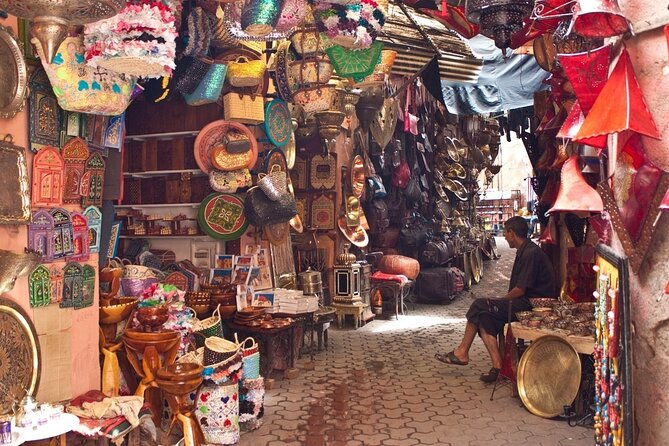
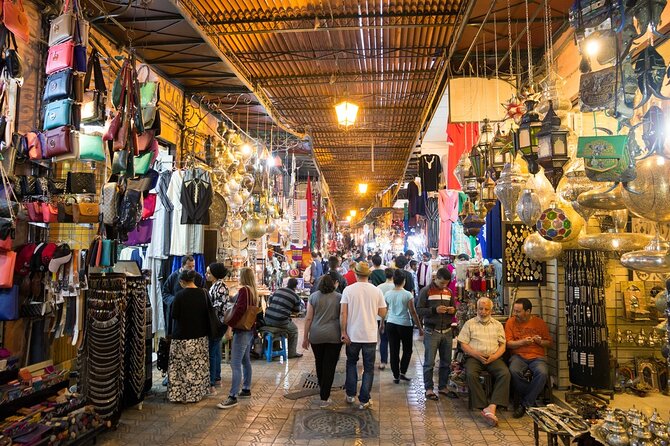
The souk portion is one of the most practical reasons to book a guide. You walk through lanes lined with spices, leather goods, fabrics, perfumes, silver jewelry, and souvenirs. The route also includes artisan workshops where you might see pottery, metalwork, and woodcarving being made.
The souks are not arranged like a simple shopping street. A guide helps you understand where you are and how to return to the main square later. Several visitors said they would have felt lost without that help, especially on a first visit.
Shopping is part of the experience, but the tone is not supposed to be a forced sales stop. Past participants described the shopping portion as natural and not pushy. Guides have also helped with specific purchases, including jewelry, and offered advice about prices and suitable shops.
You should still decide your own budget and avoid feeling obliged to buy. Some routes may include an herbalist shop, where you can hear about argan oil and other local products. Treat this as an opportunity to learn, not a requirement to purchase.
The guide may also point out places to eat, restaurants, hammams, or useful areas for the rest of your stay. Those tips can be more valuable than another formal explanation, particularly if this is your first time in Marrakech.
Jemaa el-Fna and the final Medina walk
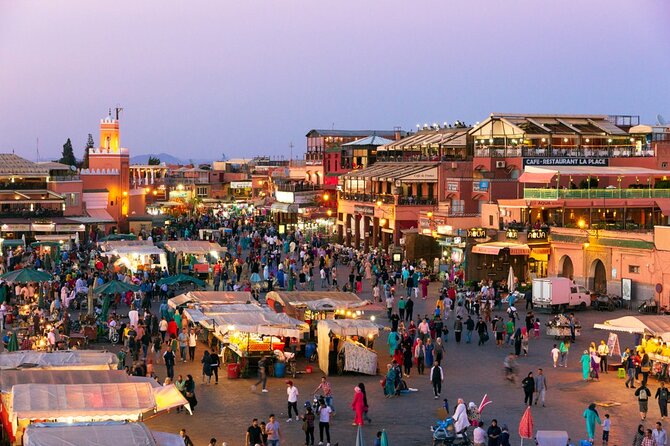
The Medina portion takes about 40 minutes, followed by around 15 minutes at Jemaa el-Fna. These are walking sections, not separate ticketed attractions.
The Medina is a UNESCO World Heritage Site, but its importance is best understood through its working streets. You pass textiles, crafts, food stalls, old buildings, and people going about ordinary business. The experience is sensory and active, with little chance of a quiet, straight path.
Jemaa el-Fna is the natural point of reference for the tour. You begin nearby and finish with drop-off at either the square’s Café de France area or another stated Medina location. Ending here gives you a practical base for returning to the souks, finding a café, or continuing independently.
Because the tour ends in the heart of the Medina, you should pay attention to the route. Ask your guide to point out landmarks you can use later. That simple orientation lesson can save you from wandering in circles after dark or after a long day.
What the $19 price really buys you
At $19 per person, the tour is inexpensive for a four-hour guided walk through several major sites. The price covers the guide, the walking route, skip-the-line assistance at the monuments, free time at each stop, and personalized tips.
The important catch is the entrance fees. Add 100 MAD for Bahia Palace and 50 MAD for Ben Youssef Madrasa per adult. Transportation, food, and drinks are also separate, so the tour is not an all-inclusive city package.
Even after adding the monument tickets, the value is good if you want a structured introduction to Marrakech. You are paying for local navigation and interpretation as much as for the sightseeing itself. The monuments are accessible on your own, but the architecture and historical connections are easier to grasp with a guide.
Private touring costs more than the shared option, but it may suit couples, families, or anyone who wants to set the pace. A private group also includes Medina riad pickup, which can be handy when finding the Café de France meeting point would be awkward.
Walking conditions, timing, and useful preparation
Wear comfortable shoes. The route includes narrow Medina lanes and several hours on foot, with no transportation between the stops. Bring water and sunglasses, especially during warmer months.
There is no scheduled meal or drink break in the stated program. One person specifically wished for a tea or cold-drink stop, so plan your hydration before starting and ask the guide if a brief pause is possible.
The tour is listed as wheelchair accessible, but it is also marked as unsuitable for people with mobility impairments. Those details suggest you should discuss your exact needs with the provider before booking. The Medina’s narrow lanes and walking demands may make the experience difficult for some visitors.
During Ramadan, monuments close earlier. Morning tours start at 9:30 instead of 10:00, and afternoon tours start at 1:00 instead of 2:00, allowing enough time to visit before closing. Check the current schedule when booking.
Free cancellation is available up to 24 hours before the tour, and you can reserve now and pay later. Those policies are useful if your Marrakech plans are still changing.
Who should book this tour?
I would choose this for a first visit, especially if you want history, architecture, and practical orientation in one half-day. It also suits families, since guides such as Ayoub and Mouhssine have been praised for keeping children interested and for adjusting the pace.
It is a good match for anyone nervous about the souks. You still have freedom to browse, but you are not left to find your way through every turn alone. The guide can also help you understand where shopping advice ends and sales pressure begins.
You may prefer a private option if you have physical limitations, a tight schedule, or strong interests in architecture and photography. The shared format is better value, but the private version gives you more control over pauses and questions.
I would not choose it if you want a slow, unstructured day or a food-focused tour. Four hours covers a lot, and the route can feel full. You will see the major highlights, but you will not have time for a long meal, a hammam, or extended shopping at every stall.
Should you book the Bahia Palace and Medina tour?
Yes, if you want an efficient first look at Marrakech with a guide who can explain what you are seeing and help you move through the souks. The strongest parts are the decorated rooms at Bahia Palace, the quiet courtyard at Ben Youssef Madrasa, and the practical navigation through the Medina.
Book it early in your stay if possible. You will learn the layout of the old city, collect restaurant and hammam suggestions, and identify shops or streets you can revisit later. Just budget for the two separate monument fees, bring water, and expect a proper walking tour rather than a gentle sightseeing outing.
FAQ
How long does the Marrakech tour last?
The tour lasts four hours. The route includes Koutoubia Mosque, Bahia Palace, Mellah, Ben Youssef Madrasa, the Medina, and Jemaa el-Fna.
Where do I meet the guide?
The standard meeting point is in front of Café de France in Jemaa el-Fna square. If you book the private option and stay in a riad inside the Medina, pickup is available from the riad reception.
Are monument entrance fees included?
No. Bahia Palace costs 100 MAD per adult, and Ben Youssef Madrasa costs 50 MAD per adult. These fees are paid separately in cash on site.
Can I enter Koutoubia Mosque?
The tour views Koutoubia Mosque from outside only. Entry is restricted to Muslims during prayer times.
What languages are available?
The live tour guide is available in English or French.
Is the tour suitable for wheelchair users?
The activity is described as wheelchair accessible, but it is also marked as unsuitable for people with mobility impairments. Contact the provider before booking to discuss your specific needs and the walking route.
Newly added in the world
- Avignon: Around The Palace Tour★ 4.5 · 13 reviews
- Ayutthaya Full-Day Tour with Bang Pa In (Summer Palace)★ 5.0 · 2 reviews
- Bali: Gate Of Heaven and Water Palace Tirta Gangga Package★ 4.7 · 3 reviews
- Aranjuez: Royal Palace Guided Tour★ 4.5 · 93 reviews
- Asia Continent & Topkapı Palace & Harem. Guided, Small group★ 4.9 · 3 reviews
- Kornik Castle and Rogalin Palace Half-Day Private Tour★ 5.0 · 2 reviews
- Antananarivo: Guided Tour and sunset in queen’s palace★ 3.9 · 13 reviews
- Royal Palace of Aranjuez Small-Group Tour with Entry Ticket★ 5.0 · 2 reviews
Bahia Palace Tours, compared.
Bahia Palace, Saadian Tombs, Souk and Medina Tour
Read our review →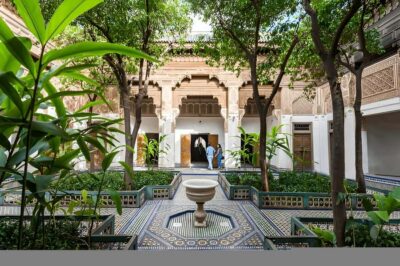
Bahia Palace, Saadian Tombs, & Koutoubia Mosque
Read our review →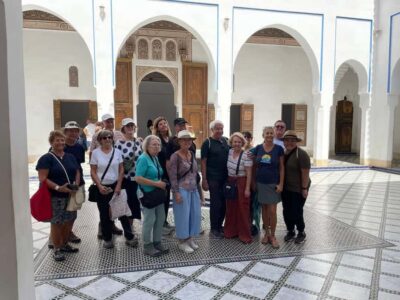
Bahia Palace Guided Tour with Skip-the-Line Entry
Read our review →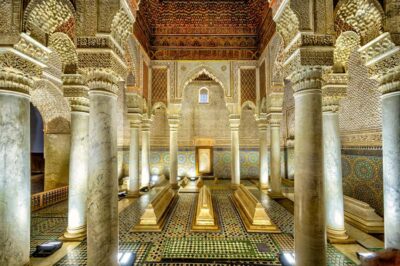
Saadian Tombs, Bahia Palace, Medina and Souk Tour
Read our review →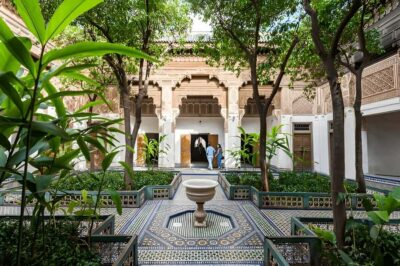
Bahia Palace, Ben Youssef Medersa, & Souks Tour
Read our review →Browse the lists this tour appears in