
Review · PALACE ENTRY TICKETS
Palazzo Falson Historic House Museum entrance ticket
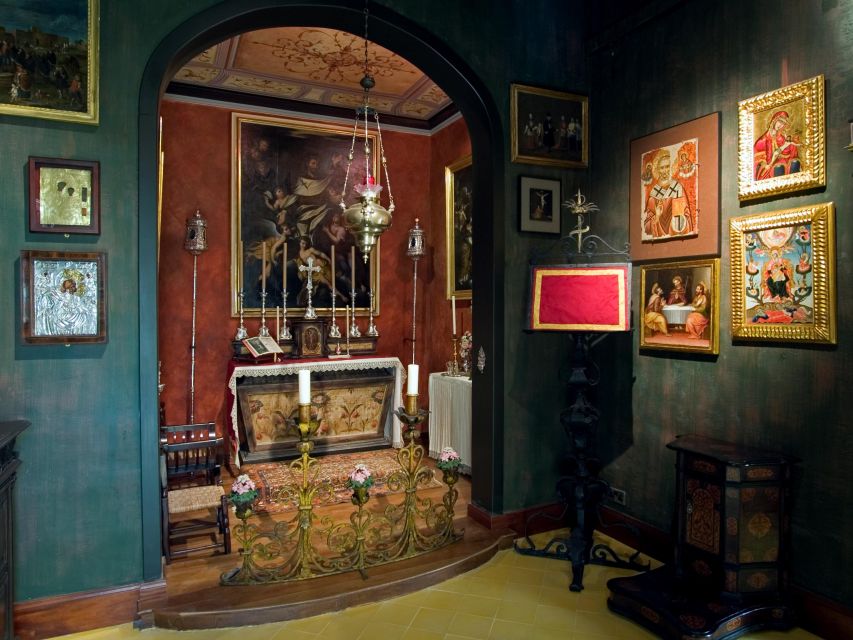
Mdina’s Palazzo Falson is not a grand palace emptied of its life. It is a medieval home packed with the things one remarkable collector chose to live with: paintings, books, silver, rugs, armour and curious objects from many places. You move through 17 rooms, each giving you another glimpse of the building and its former owner, Captain Olof Frederick Gollcher.
I like the small-house feeling here. The objects are displayed inside the rooms they were meant to occupy, so you get a better sense of daily life than in a bare historic shell. I also like the rooftop cafeteria, where a coffee and wide views of Mdina make a pleasant finish.
The main consideration is pace. There are more than 3,500 objects and a library of over 4,500 books, so a quick visit will only skim the surface. The audio guide helps, but visitors who prefer a short, simple museum stop may find the collection dense.
Key points to know before entering
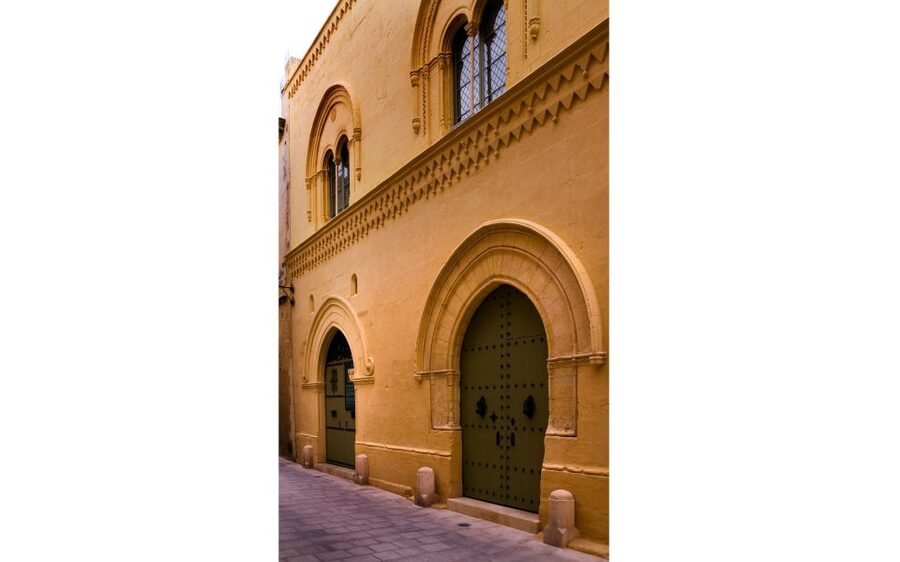
- A medieval residence in Mdina: Palazzo Falson is the second-oldest building still standing inside Malta’s former capital.
- Seventeen rooms, 45 collections: The displays cover paintings, furniture, silver, jewellery, rugs, armour, books and manuscripts.
- A collector’s home: Captain Olof Frederick Gollcher’s personal interests shaped the museum you see today.
- Important paintings: Works attributed to Mattia Preti, Jusepe de Ribera, Jakob-Ferdinand Voet, Charles Beale and Juriaen van Streeck are part of the collection.
- A rooftop pause: The upper-floor cafeteria offers views across Mdina and beyond.
- Good value for art lovers: At $15 per person, the ticket combines the house, collections and audio guide in one self-guided visit.
Why Palazzo Falson feels different from a standard museum
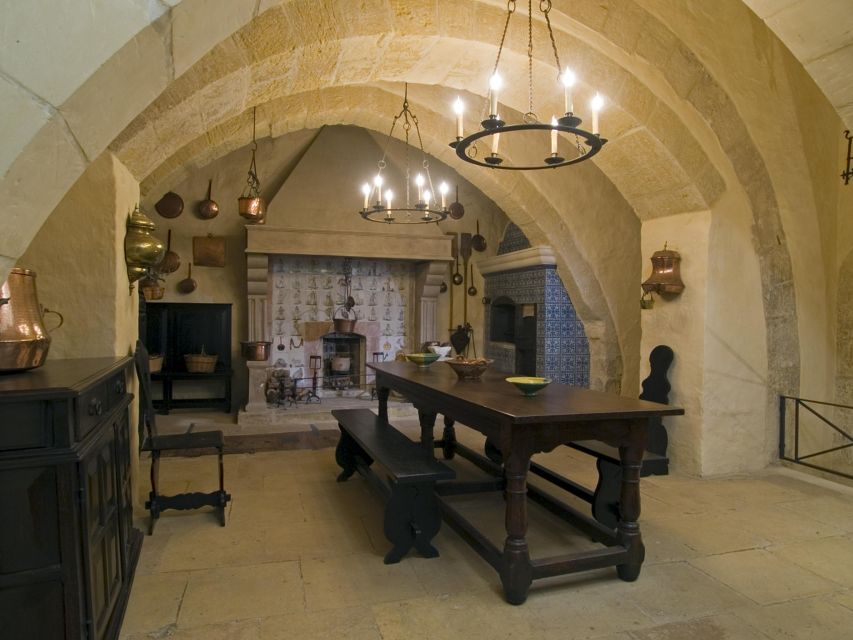
Palazzo Falson is both a building and a collection. That combination matters. In many museums, art is arranged in large galleries, separated from the domestic setting that once gave it meaning. Here, the objects occupy a former noble residence, with rooms wrapped around an internal courtyard and original living quarters on the piano nobile, the main noble floor.
That layout gives the visit a natural rhythm. You pass from one room to the next rather than marching through a long exhibition hall. A piece of furniture can be considered as part of a room, not only as an isolated object behind glass. A painting shares space with books, decorative items or household possessions. You get a clearer feeling for how collecting once worked before museums sorted everything by date, country or medium.
The building itself reaches back to the early 13th century. It was fashioned on Sicilian examples of its period and built as a family residence for Maltese nobility. The rooms at the back of the courtyard form the oldest part, while the upper level contains the original living quarters.
That age does not make the visit difficult or solemn. It simply means the palace gives you more than a collection of objects. The walls, courtyard and room arrangement are part of the evidence.
More Palace Entry Tickets in the world:
- Venice: Doge’s Palace Reserved Entry Ticket
★ 4.6 · 42,716 reviews - Sintra: Pena Palace and Park Entrance Ticket
★ 4.2 · 17,410 reviews - Granada: Alhambra and Nasrid Palaces Entry Ticket
★ 4.6 · 15,130 reviews
A home with layers of Mdina’s past
Palazzo Falson has carried several names over time, including Palazzo Cumbo-Navarra, Casa dei Castelletti and the Norman House. Its long story also touches one of Malta’s major political changes.
In the early 16th century, the property passed to Vice Admiral Michele Falson, who also headed Mdina’s town council. After Emperor Charles V gave Malta to the Knights of the Order of St. John, Grand Master Philippe Villiers de L’Isle Adam was hosted at the palace. This took place after the ceremony on November 13, 1530, when he took possession of Mdina.
That detail is useful because it places the house inside Malta’s wider story without turning the visit into a lecture. Mdina was not merely an attractive walled town for a day trip. It was Malta’s former capital, a seat of power, and a home for important families. Palazzo Falson lets you see that world through one building.
The palace was restored by Fondazzjoni Patrimonju Malti and reopened to the public in May 2007. The restoration allows you to see the structure as a house rather than only as an archaeological remnant. You should still expect an old building, not a modern gallery with wide open floors and minimal steps.
Following Gollcher’s collecting life through 17 rooms
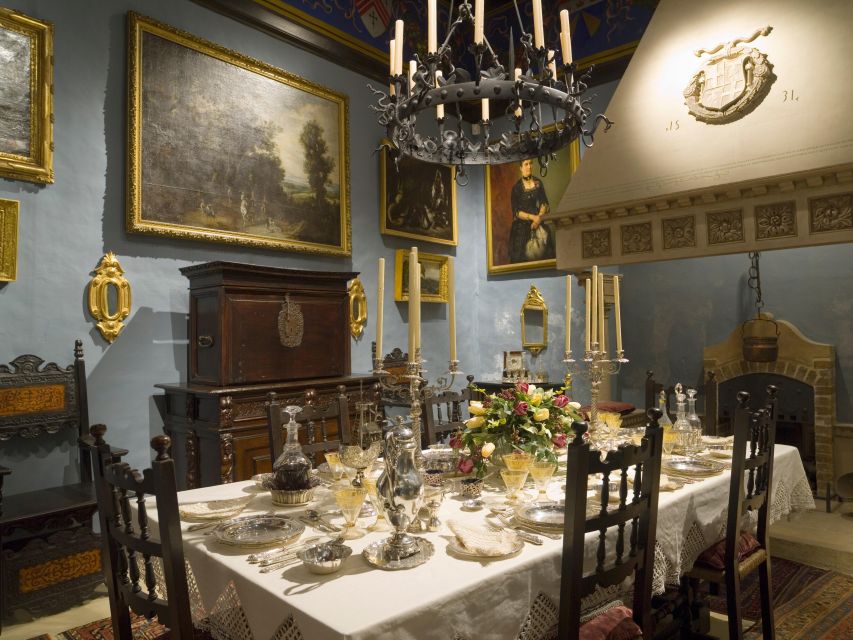
The most personal part of the visit comes from Captain Olof Frederick Gollcher, the building’s most recent owner and resident. Of Swedish descent, Gollcher was an artist, researcher, philanthropist and collector. He gathered objects from many fields, and the museum now presents that broad curiosity inside his former home.
This is not a collection built around one narrow subject. Forty-five specific collections are spread across 17 rooms. You can move from fine art to silver, from furniture to jewellery, and from Oriental rugs to armoury. The variety is the point, but it can also make the visit feel full.
I suggest using the audio guide rather than trying to identify everything on your own. It is available in English, French, German, Italian, Maltese and Spanish. Printed information is also available in a much wider range of languages, including Arabic, Chinese, Czech, Dutch, Greek, Hungarian, Japanese, Polish, Portuguese, Russian, Slovak and Swedish.
The audio guide lets you set your own pace. Spend longer with the rooms that catch your eye, then move on when the number of objects begins to blur together. With so much on display, you will get more from a selective visit than from trying to remember every item.
The paintings: a reason to slow down
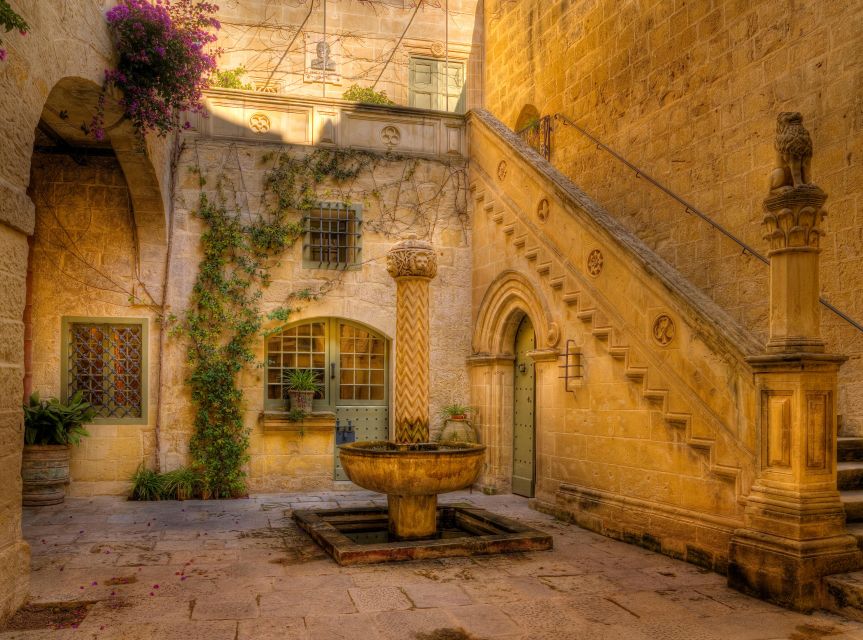
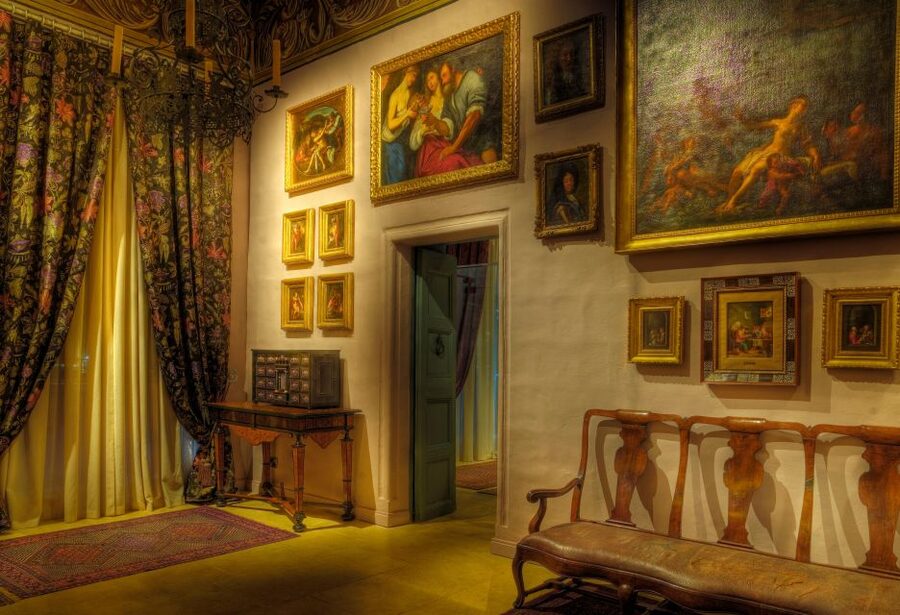
The paintings collection gives the palace some of its strongest artistic interest. It includes a number of important 17th-century works, with pieces attributed to Mattia Preti, Jusepe de Ribera, Jakob-Ferdinand Voet, Charles Beale and Juriaen van Streeck.
The word attributed is worth noting. The descriptions do not present every work as an unquestioned original by each named artist. Still, these attributions give you good reason to pay attention rather than treating the paintings as background decoration.
Mattia Preti is especially relevant to Malta, where the Italian painter and his work are closely tied to the island’s Baroque artistic tradition. Jusepe de Ribera is associated with powerful 17th-century painting, while the other names broaden the collection beyond a single school or local style.
You may not find the painting displays as easy to absorb as a purpose-built art museum. The paintings are part of a house filled with many other objects, and your attention will keep shifting. That is also part of the charm. You see art in the setting of a collector’s life, not as a stand-alone checklist.
More Palace Museums in the world:
- Venice’s Best: Basilica, Doge’s Palace, Gondola & History Gallery
★ 4.5 · 2,478 reviews - Royal Palace & Prado Museum Skip the Line Guided Tour
★ 4.5 · 1,347 reviews - Venice: City Pass with Museums including Doge’s Palace
★ 4.1 · 1,020 reviews - The Hague: Escher in The Palace Museum Ticket
★ 4.6 · 896 reviews
Silver, jewellery, rugs and armour in a domestic setting
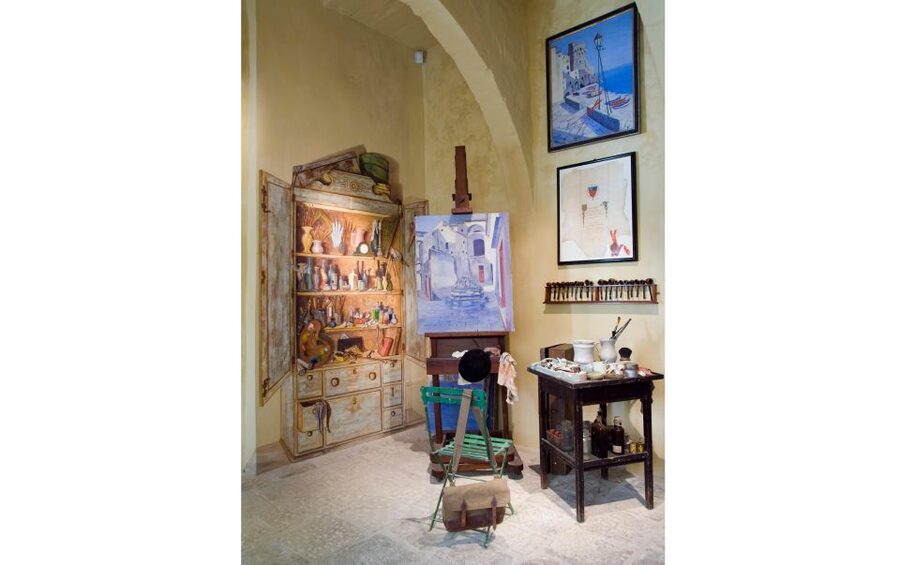
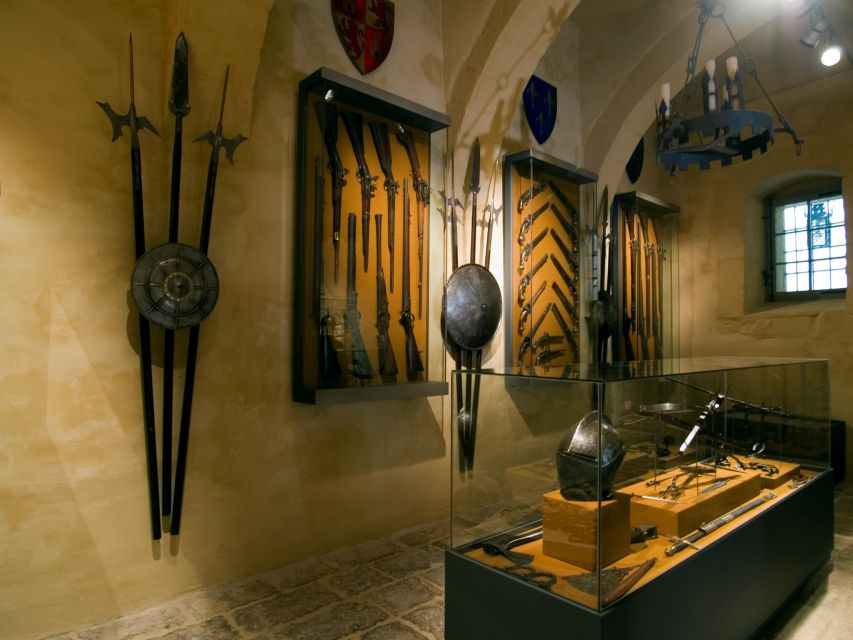
The non-painting collections give Palazzo Falson much of its character. Silver and jewellery show the decorative side of collecting, while furniture helps explain how the rooms functioned. Oriental rugs add colour and texture, and armoury brings a harder, more practical note to the house.
These displays work best when you look for contrast. A fine piece of silver may sit within a room that also reflects domestic use. Jewellery suggests status and personal taste. Armour points to the older world of protection, ceremony and military identity. Together, these objects show how a noble home could combine comfort, display and memory.
The collection contains more than 3,500 objects, so you should not expect each item to receive a long explanation. Some pieces will catch your attention for only a moment. That is fine. The pleasure comes from the steady change in subject and scale.
If you have an interest in material culture, I would allow extra time here. Furniture and household objects can tell you as much about a past society as a famous painting, especially when they remain in a period house.
The library and manuscripts
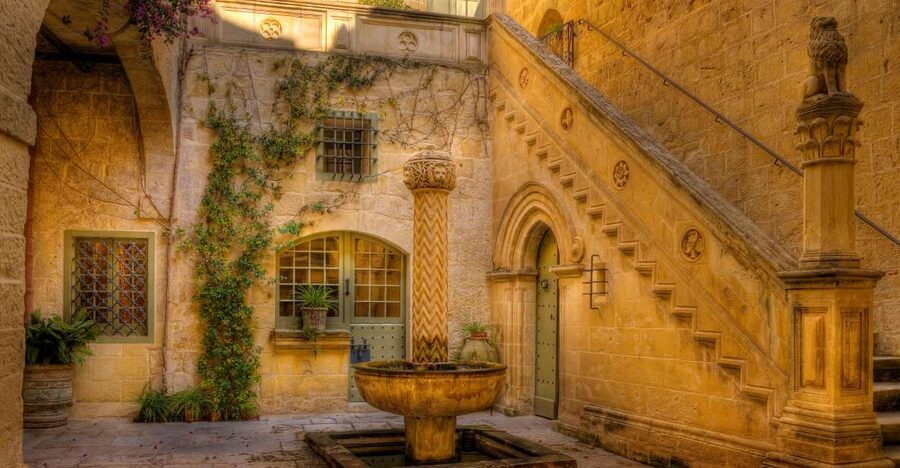
The library is one of the palace’s strongest surprises. It contains more than 4,500 books, along with highly valuable manuscripts. That number makes the library more than a decorative room. It reflects Gollcher’s intellectual interests and the habit of collecting knowledge as carefully as collecting art.
Books can be easy to overlook in a museum full of silver and paintings. Try not to rush past them. A library offers a different way into the building’s story. Paintings and furniture show taste in visible form, while books and manuscripts reveal the subjects that mattered to the collector.
The library also helps explain why the museum feels personal. This is not only a display of costly objects. It is the preserved record of someone who read, researched and gathered material over time.
You will not be able to inspect every volume closely, and the collection is too large for a short visit to explain each one. Still, the scale of the library gives the palace a sense of serious purpose.
The courtyard and noble floor
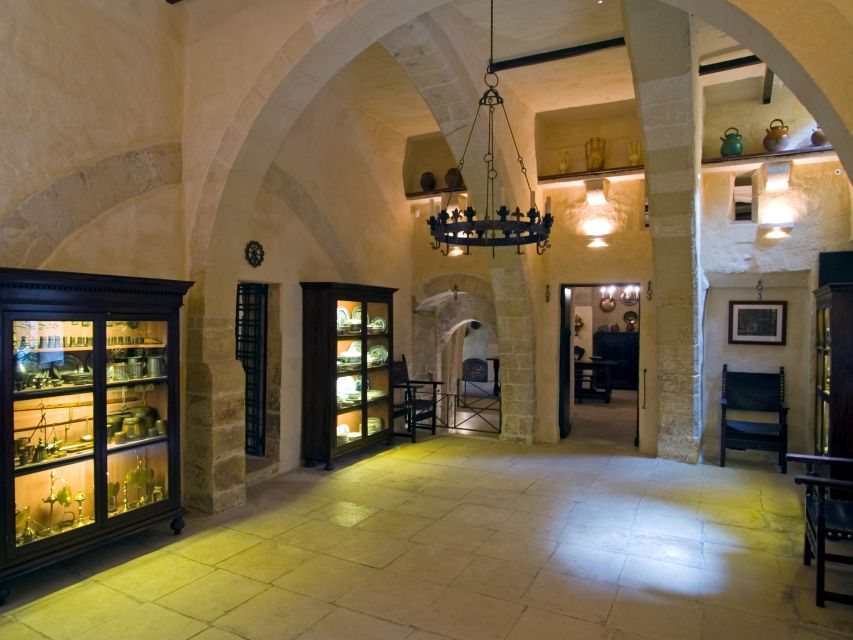
The internal courtyard helps you understand the structure of Palazzo Falson. The rooms wrap around it, giving the building an inward-facing plan that feels typical of a fortified old city. The courtyard is not simply an empty center. It explains how the palace is organized and why the rooms feel connected.
The piano nobile above contains the original living quarters. In European palace architecture, this was the important residential level, set apart from service areas and more practical spaces. Here, that upper floor helps you read the building as a family home rather than just an old façade.
The oldest rooms at the back of the courtyard add another layer. They connect the palace to its medieval origins, while later changes show that the building remained useful over many generations.
You should take a moment to look at the relationship between the rooms, not only the objects in them. The architecture is one of the best reasons to choose this museum over a collection displayed in a modern building.
Finishing with coffee above Mdina
The upper-floor cafeteria is a practical and pleasant final stop. From the terrace, you can enjoy views of Mdina and the area beyond. A recent visit included touring the house and then having coffee on the rooftop, which is exactly the kind of ending that suits this experience.
The terrace gives you a chance to change pace after the crowded collection. You have been looking closely at small objects, manuscripts and paintings. Outside, the view lets you step back and see Mdina as a walled city with a broader setting.
Do not treat the cafeteria as the main reason to buy the ticket. The museum is the substance of the visit, and the terrace works best as a bonus. Still, it adds value to a $15 admission, especially if you are already spending time in Mdina.
If you prefer to break up sightseeing with a drink, this is an easy place to do it without leaving the building.
Is the $15 ticket good value?
At $15 per person, the ticket is reasonably priced for the amount of material on display. You are paying for entry to a medieval palace, access to 17 rooms, a collection of more than 3,500 objects and a multilingual audio guide.
The value depends on your interests. Art lovers, collectors, architecture fans and people who enjoy historic homes will likely find enough here to justify the cost. If you are mainly looking for Mdina’s streets, walls and views, you may prefer to spend your time outdoors and treat Palazzo Falson as an optional indoor stop.
The ticket is valid for one day, and the experience does not require a fixed group itinerary. You can use the visit as part of a wider Mdina day. Since the attraction has a lot to see, avoid squeezing it into a few spare minutes between other plans.
A recent rating of 4.7 from 22 reviews supports the sense that the museum delivers a satisfying visit, but the practical reason to book is simpler: the ticket combines a distinctive building, a large private collection and an audio guide at a moderate price.
Who should visit Palazzo Falson?
I would recommend this museum to:
- People who enjoy historic houses more than large formal museums
- Art lovers interested in 17th-century paintings and Old Master attributions
- Readers, collectors and anyone drawn to old books and manuscripts
- Visitors already exploring Mdina who want an indoor cultural stop
- Adults and older children who can spend time with detailed displays
- Anyone who likes seeing how art objects fit into a lived-in home
The attraction is not suitable for children under six. Younger children may also find the number of delicate objects and the audio-led pace less engaging, though the stated restriction is under six.
This is a self-guided experience, so you should be comfortable choosing your own pace. An English-speaking host or greeter is available, and the audio guide provides the main interpretive support in six languages.
Practical advice for getting the most from your visit
Give yourself enough time to avoid rushing the 17 rooms. The collection is large, and the palace rewards attention to both the building and the objects.
Start with the audio guide in the language you prefer. If you try to read every printed note and examine every item equally, the visit may feel overloaded. Instead, use the guide to understand the major rooms and then linger where your interest is strongest.
Pay special attention to three areas: the medieval structure around the courtyard, the paintings attributed to major 17th-century artists, and the library with its thousands of books and manuscripts. These sections give you the clearest sense of what makes the palace more than a general collection.
Save time for the terrace. A coffee after the indoor rooms can turn the visit into a calmer part of your Mdina day.
You can also keep your plans flexible. Free cancellation is available up to 24 hours before the visit, and reserve-now-pay-later booking lets you hold a place without paying immediately.
Should you book Palazzo Falson?
Book it if you want a close look at an old Maltese home filled with art and personal possessions. The palace offers a more intimate experience than a large national museum, and the combination of medieval architecture, Gollcher’s collection, the audio guide and rooftop view makes the $15 ticket a fair buy.
Skip it if your Mdina visit is very short or if you prefer open-air sights over detailed indoor collections. You will need patience to appreciate 17 rooms and more than 3,500 objects.
For most visitors spending a full day in Mdina, I would include Palazzo Falson, especially in hot weather or when you want a cultural stop with a quiet finish. Plan to look carefully, listen selectively and leave time for coffee above the old city.
FAQ
Where is Palazzo Falson Historic House Museum?
Palazzo Falson is in Mdina, Malta’s former capital city.
How much does admission cost?
The entrance ticket costs $15 per person.
How long is the ticket valid?
The ticket is valid for one day.
What does the ticket include?
It includes entrance to Palazzo Falson Historic House Museum, an audio guide and printed information.
Which languages are available for the audio guide?
The audio guide is available in English, French, German, Italian, Maltese and Spanish.
Is Palazzo Falson suitable for children?
The experience is not suitable for children under six years old.
What can I see inside the museum?
The museum contains more than 3,500 objects across 45 collections and 17 rooms, including paintings, silver, furniture, jewellery, Oriental rugs, armoury, books and manuscripts.
Can I cancel the booking?
You can cancel up to 24 hours in advance for a full refund.
More History Tours in the world
- Madrid Essential: Historic Center, Plaza Mayor & Royal Palace
★ 5.0 · 6,416 reviews - Tokyo: Imperial Palace and Shogun Historical Walking Tour
★ 5.0 · 2,251 reviews - Dubai: Abu Dhabi Grand Mosque, Palace, and Heritage Village
★ 4.8 · 1,265 reviews - Tokyo: Imperial Palace Japanese History Walking Tour
★ 4.9 · 987 reviews
Newly added in the world
- Óbidos historic village and Mafra Palace Private Tour★ 5.0 · 34 reviews
- Private Tour Sintra Palaces and Scenic Landscapes★ 5.0 · 3 reviews
- Lisbon: Pena Palace, Cabo da Roca, Cascais private tour★ 5.0 · 44 reviews
- Óbidos – Nazaré – Mafra (National Palace of Mafra)Private tour from Lisbon★ 5.0 · 2 reviews
- National Palace and Gardens of Queluz: E-ticket with Audio Guide★ 3.5 · 6 reviews
- Half day Sintra PRIVATE TOUR Pena Palace + Roca Cape (2-6people)★ 5.0 · 3 reviews
- Mafra and Sintra: Choose 3 of 6 Palaces to visit on private tour★ 5.0 · 26 reviews
- From Lisbon Sintra Highlights Tour – Pena, Regaleira & Monserrate★ 5.0 · 79 reviews
Palace Entry Tickets, compared.



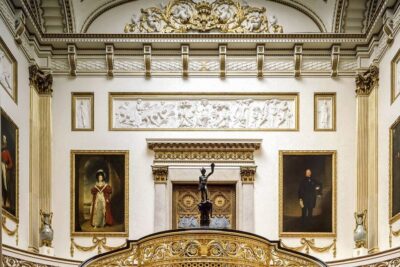
Buckingham Palace: The State Rooms Entrance Ticket
Read our review →

Prague Castle and Lobkowicz Palace Entry Tickets
Read our review →Browse the lists this tour appears in