
Review · PALAZZO VECCHIO AND PITTI PALACE TOURS
Palazzo Vecchio: Skip-the-Line Entry and Secret Passage Tour
The best part of this Palazzo Vecchio visit is not the grand public rooms, impressive as they are. It is the chance to pass through narrow stairways and secret doors into spaces most visitors never see, including Francesco I de’ Medici’s small Studiolo and Cosimo I’s Tesoretto. Guides such as Julia, Marta, Francesco, and Sara have brought the palace’s politics and family dramas to life with sharp storytelling.
I like the four-person group limit, which makes it easier to see inside tight rooms and ask questions. I also like that your ticket lets you continue through the main palace after the guided portion. The main caution is physical: twisting stairs, narrow passages, warm rooms, and tight corners make this a poor choice if you dislike confined spaces or have limited mobility.
Key points to know before booking
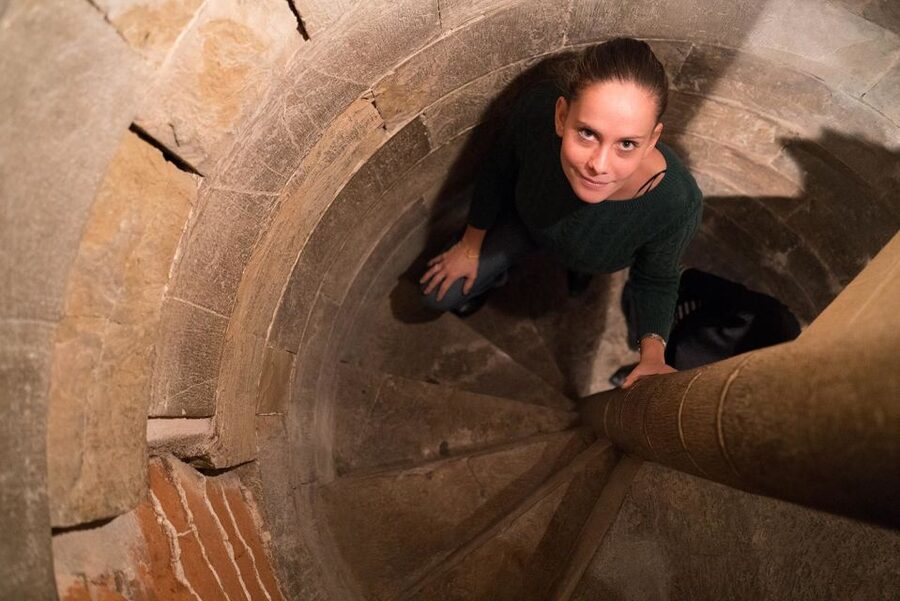
- Secret access: Enter parts of Palazzo Vecchio that are not included in a normal public visit.
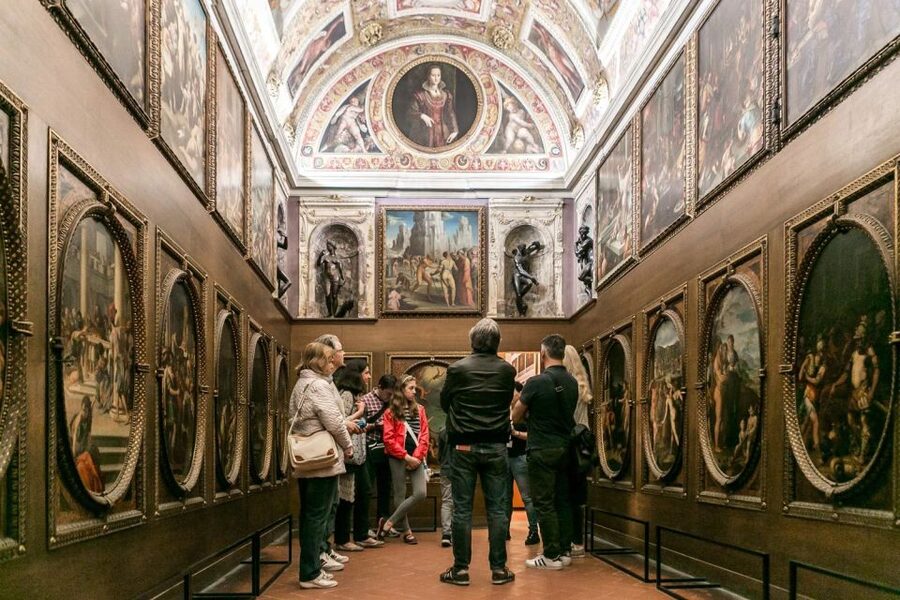
- Medici rooms: See Francesco I’s Studiolo and Cosimo I’s Tesoretto, both tied closely to Medici power and collecting.
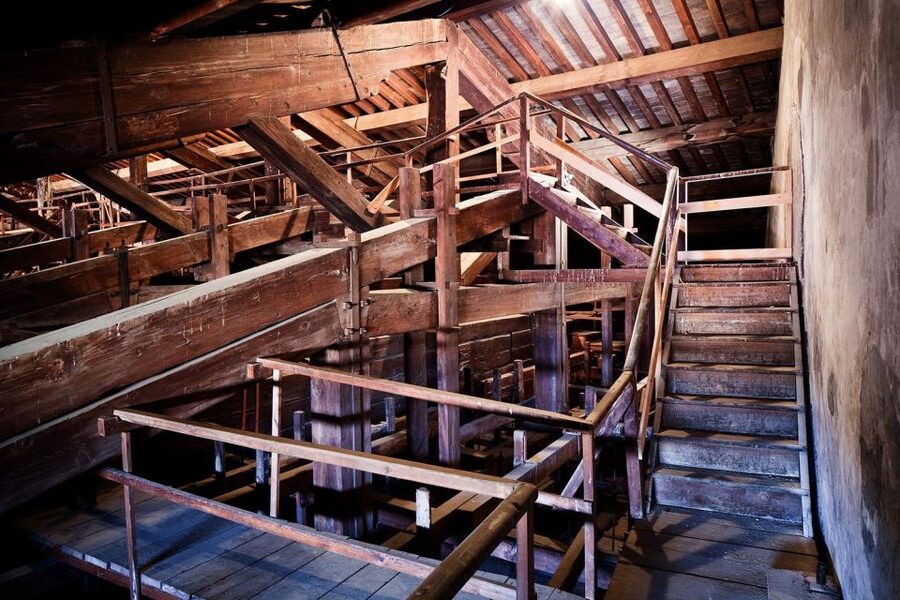
- Vasari’s engineering: Learn how the huge trussed structure supports the paneled ceiling of the Hall of the Five Hundred.
- Small group: The tour is limited to four people, giving you a close view in cramped rooms.
- 75-minute visit: The guided secret-passage portion ends in the Hall of the Five Hundred, but you can continue exploring the palace afterward.
- Physical demands: Expect narrow, curving stairs and passageways. Claustrophobia can be a real concern.
Why the secret passages change the Palazzo Vecchio visit
Palazzo Vecchio can seem like a grand civic museum at first glance: wide halls, decorated ceilings, imposing stonework, and rooms built to project Florence’s power. The secret-passage tour gives you a different angle. You see the palace as a working residence and political headquarters, a place where the Medici family could move privately, store prized objects, and control access.
That shift matters. Public rooms tell you how the Medici wanted to be seen. The concealed corridors and small chambers suggest how they actually lived and governed. A door disguised in the architecture or a stairway tucked into a thick wall makes the palace feel less like a static museum and more like a building designed around secrecy.
The tour lasts 75 minutes and is conducted in English. It is not a general guided tour of every room in the palace. Instead, the guide concentrates on the restricted sections, the people connected with them, and the way the building was altered over time.
At $37 per person, I consider it a fair price if you specifically want access beyond the standard visit. You are paying for a guided look at rooms that are not normally open to the public, not simply for admission to Palazzo Vecchio. If you only want to admire the main halls at your own pace, a regular palace visit may suit you better.
More Skip-the-Line Palace Tickets in Italy
- Skip-the-Line: Doge’s Palace & St. Mark’s Basilica Fully Guided Tour
★ 4.5 · 1,892 reviews - Venice: Doge’s Palace Skip-the-Line Tour with Prisons
★ 4.1 · 1,637 reviews - Venice: Doge’s Palace Skip-the-Line Ticket with Guidebook
★ 4.0 · 1,196 reviews
Finding the entrance in Piazza della Signoria
The entrance to Palazzo Vecchio is on Piazza della Signoria, one of central Florence’s most important squares. Once inside the palace courtyard, do not wait in the ordinary ticket line. Go to the ticket office and head directly to the InfoPoint counter to exchange your voucher for the tour ticket.
This point is worth taking seriously. The meeting instructions can feel unclear because the relevant counter is inside the building, not out on the square. Give yourself enough time to find the courtyard and InfoPoint before the start time, especially if the palace is busy or hosting a civic event.
Once you meet the guide, the small group format becomes useful almost at once. With no more than four participants, you are not trying to hear a guide across a large crowd. In tight rooms, you also have a much better chance of seeing the doors, cabinets, and architectural details being explained.
The guide may be someone such as Francesco, Francesca, Julia, Marta, Sara, or another member of the English-speaking team. The strongest tours rely on storytelling as much as dates and names. Guides have explained the palace in a personal, lively way, while still answering detailed questions about the Medici family and the building.
The first secret doorway and the palace’s private side
The tour begins by placing the secret spaces in context. You learn why the passages existed and how they related to the Medici household and the political role of Palazzo Vecchio.
The palace was not just a town hall or ceremonial building. It was also a place where powerful people needed privacy, security, and controlled movement. A concealed route could let members of the ruling family move between rooms without crossing public spaces. It could also provide a discreet way to reach private chambers or avoid unwanted attention.
The first secret entrance helps set the tone. Rather than walking straight through the most obvious doorway, you enter through a less visible route and begin to notice how the palace uses walls, panels, and corridors in surprising ways.
Some visitors expect a theatrical treasure hunt. This is more grounded than that. The interest comes from seeing real architectural features and hearing how they fit into the palace’s history. You might pass through doors behind pictures, narrow corridors, and cabinets that conceal entrances. The appeal is not a staged show. It is the feeling of being allowed into the building’s private service areas.
Gualtieri di Brienne’s mysterious stairway
One of the tour’s memorable features is the stairway built into the palace’s thick walls by the will of Gualtieri di Brienne. It is the kind of detail easy to miss during a regular visit, when your attention is drawn to the huge halls and painted ceilings.
The stairway shows how much space is hidden inside a medieval and Renaissance palace. From the outside, Palazzo Vecchio looks massive and solid. Inside, however, its walls contain routes and spaces that are easy to overlook unless someone points them out.
This is also where the physical demands become clear. The stairs are narrow and can twist as they rise or descend. You need to watch your footing and be comfortable moving through a confined route. People with limited mobility should not book this experience, and anyone prone to claustrophobia should think carefully before committing.
The tight setting is part of the appeal, but it is not a minor detail. One participant left a tour early because the enclosed spaces were uncomfortable. In summer, the secret rooms can also feel hot. Wear sensible shoes and avoid treating this as a casual stroll through open galleries.
More Palazzo Vecchio and Pitti Tours in Italy:
- Florence: Palazzo Vecchio Entrance Ticket & Audioguide
★ 4.4 · 4,822 reviews - Florence: Entrance Ticket to Pitti Palace
★ 4.5 · 4,528 reviews - Florence: Uffizi, Pitti Palace & Boboli Combined 5-Day Pass
★ 4.5 · 1,726 reviews - Florence: Palazzo Vecchio Guided Tour
★ 4.8 · 1,260 reviews
Francesco I’s Studiolo, a tiny room with a huge purpose
The Studiolo of Francesco I de’ Medici is one of the tour’s most interesting stops. It is a small study created as a private treasure room for rare and precious objects.
The room is a sharp contrast to the giant public halls. Instead of overwhelming you with size, it draws you close to the walls and details. The Studiolo reflects Francesco’s taste for collecting, science, mystery, and unusual objects. The guide helps connect the room’s design to the personality of the man who used it.
This stop works especially well with a small group. A crowded room would make it difficult to see the details or listen to the explanation. With only a few people, you can take your time looking at the decoration and trying to work out where a concealed door or panel might be.
The Studiolo also explains why this tour is more than a search for secret entrances. The passages are fun, but the rooms give them meaning. You are seeing how a Medici prince used architecture to express status and private interests.
Cosimo I’s Tesoretto and the practical side of power
The next important space is the Tesoretto, associated with Francesco I’s father, Cosimo I de’ Medici. The name suggests a small treasure room, and the room offers another glimpse of how the Medici used the palace’s private quarters.
Where the Studiolo feels tied to Francesco’s personal interests, the Tesoretto helps you think about Cosimo’s position as ruler. A small private office or treasury was not merely decorative. It was part of the machinery of government, finance, and control.
The guide’s explanation is important here because the room alone cannot tell the whole story. An art historian guide can connect the furniture, architecture, and Medici family relationships in a way that gives the space greater weight. Several guides on this tour have been praised for making those connections clear and entertaining rather than turning the visit into a list of names.
You should expect a mix of art, architecture, family history, and palace gossip. The focus remains educational, but the best guides give the Medici personalities enough character to keep the story moving.
Vasari’s great structure above the Hall of the Five Hundred
The tour ends with one of the most surprising technical details in the palace: the huge trussed structure designed by Giorgio Vasari to support the paneled ceiling of the Hall of the Five Hundred.
Most people look at the finished ceiling. This tour encourages you to think about what holds it up. The scale and complexity of the supporting structure reveal the engineering problem behind the decoration. The grand room below was designed to impress, but its ceiling also required serious planning and construction skill.
The Hall of the Five Hundred is the natural place to finish. It is Palazzo Vecchio’s great public statement, where art, government, and ceremony meet. After seeing narrow private routes and small rooms, you return to a vast hall built for public power.
This is also where the guided portion ends. You can then explore more of Palazzo Vecchio on your own, which is an important benefit. One hour is not enough to take in the full museum, and several visitors have allowed another hour afterward for the public rooms.
What you can see after the guided tour
Your ticket includes admission to Palazzo Vecchio, but the secret-passage tour itself takes up the 75-minute guided period. Once the guide leaves you in the Hall of the Five Hundred, you can continue through the rest of the palace independently.
Plan for this extra time if you care about the public interiors. The palace has far more to offer than the restricted rooms, and rushing away after the secret tour would leave out much of the building’s visual drama.
The guided portion gives you a route and a story. Your independent visit gives you time to pause, look closely, and revisit the main rooms without needing to keep up with a group. This combination works well for visitors who want both expert explanation and freedom.
Do note that the tower is not included. A separate ticket is required if you want to climb it. The secret-passage ticket does not cover every possible Palazzo Vecchio experience.
How much value do you get for $37?
At $37, the tour is not the cheapest way to enter Palazzo Vecchio. Its value depends on what you want from the visit.
I think the price is justified for three reasons. First, you get skip-the-line admission, which matters when the palace is busy. Second, you see restricted areas that a standard ticket does not normally provide. Third, the small group gives you direct access to the guide in spaces where a large tour would be awkward.
The value is weaker if you are mainly interested in the main halls, paintings, and architecture. You could spend the same 75 minutes exploring the palace independently, then decide if the additional secret-room access is worth the cost.
For families, the hidden doors and twisting passages can provide a welcome change after several conventional churches and museums. The tour has also worked well for teenagers and for adults who enjoy engineering as much as art. It is not limited to specialists, but you should have some interest in Florence, the Medici, or old buildings to get the most from it.
Who should book, and who should skip it
I would book this for a first or second visit to Florence if you want more than the standard museum route. It is especially good for:
- Anyone fascinated by the Medici family
- Visitors who enjoy architecture and construction details
- Families looking for an active, story-driven museum visit
- Repeat visitors who have already seen the main public rooms
- People who value small groups and direct contact with a guide
I would hesitate if you have limited mobility, dislike narrow spaces, or feel uneasy on winding stairs. Claustrophobia is the main concern, not merely a theoretical one. The rooms may also feel warm in summer.
The tour is conducted in English only, so you should be comfortable following a detailed explanation in English. The guide’s style can vary, but the strongest examples include Julia’s lively storytelling, Marta’s clear links between art and politics, and Francesco’s friendly, well-informed approach.
Booking and timing advice
The activity offers free cancellation up to 24 hours before the start time, and you can reserve now and pay later. Those terms help if your Florence plans are still moving around, but you still need to check the available starting times before booking.
Arrive early enough to find the internal InfoPoint counter. Do not assume the meeting point is a desk outside on Piazza della Signoria. After exchanging your voucher, follow the staff’s directions for the tour.
Wear shoes suitable for stairs and be ready to move through spaces that are not spacious or cool. If you want to see the rest of Palazzo Vecchio, keep at least another hour free after the guided tour.
Should you book Palazzo Vecchio’s secret-passage tour?
Yes, if the idea of seeing the Medici palace from behind its public face appeals to you. The combination of restricted rooms, concealed routes, the Studiolo, the Tesoretto, and Vasari’s ceiling structure gives you a more unusual visit than a standard palace admission.
I would not book it simply because the title sounds dramatic. The passages are real, but they are narrow, architectural, and historical rather than an amusement-park attraction. Go for the access and the explanation, not a theatrical stunt.
At $37, the tour earns its price when you use the included palace admission afterward. Allow two hours or more in total, accept the stairs and tight spaces, and you will come away with a much clearer sense of how the Medici lived, ruled, and moved through Palazzo Vecchio.
FAQ
How long does the Palazzo Vecchio secret-passage tour last?
The guided tour lasts 75 minutes. You can continue exploring the rest of Palazzo Vecchio independently after the guided portion ends.
What language is the tour conducted in?
The tour is conducted in English with a live guide.
How many people are in the group?
The group is limited to four participants, making it easier to hear the guide and view the small rooms.
What rooms are included in the secret-passage tour?
The tour includes access to restricted areas such as Francesco I de’ Medici’s Studiolo and Cosimo I’s Tesoretto. It also includes the mysterious stairway built into the palace walls and the structure supporting the Hall of the Five Hundred ceiling.
Does the ticket include regular Palazzo Vecchio admission?
Yes. The ticket includes skip-the-line admission to Palazzo Vecchio, and you can explore the main palace after the guided tour.
Is the tower included?
No. The tower requires a separate ticket.
Where do I meet the guide?
Enter Palazzo Vecchio from Piazza della Signoria. Once inside the courtyard, go to the ticket office and proceed to the InfoPoint counter to exchange your voucher for the tour ticket.
Is the tour suitable for people with limited mobility?
No. The tour is not recommended for people with limited mobility because it includes narrow, twisting stairs and confined passageways.
Can I cancel the tour?
Yes. You can cancel up to 24 hours in advance for a full refund. The activity also offers a reserve-now, pay-later option.
Newly added in Italy
- Anagni: Entrance ticket to the Boniface VIII Palace★ 3.4 · 3 reviews
- Venice: Doge Palace, San Marco Basilica & Rialto Bridge★ 4.7 · 75 reviews
- Turin: Palazzo Madama Museum of Ancient Art Entrance Ticket★ 4.6 · 149 reviews
- Venice Doge’s Palace & St. Mark’s Semi-Private Tour, Max 6 People★ 5.0 · 192 reviews
- Private Tour – National Museum of Palazzo Massimo★ 5.0 · 51 reviews
- Private Tour – Palazzo Barberini★ 5.0 · 23 reviews
- Colosseum, Roman Forum and Emperors’ Palace Private Guided Tour★ 5.0 · 14 reviews
- Doria Pamphilj Palace Gallery and Museum Private Tour with Local Guide★ 4.5 · 10 reviews
Palazzo Vecchio and Pitti Palace Tours, compared.
Uffizi, Pitti Palace & Boboli Combined 5-Day Pass
Read our review →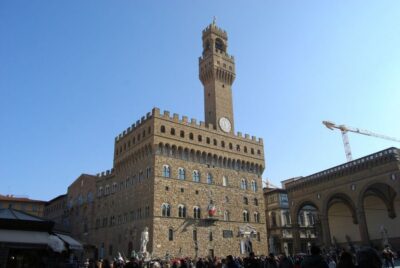

Pitti Palace, Boboli Garden, Palatine Gallery Tour
Read our review →Browse the lists this tour appears in