
Review · INDIA PALACE TOURS
Vadodara Palace, Champaner & Pavagad temple from Ahmedabad with guide
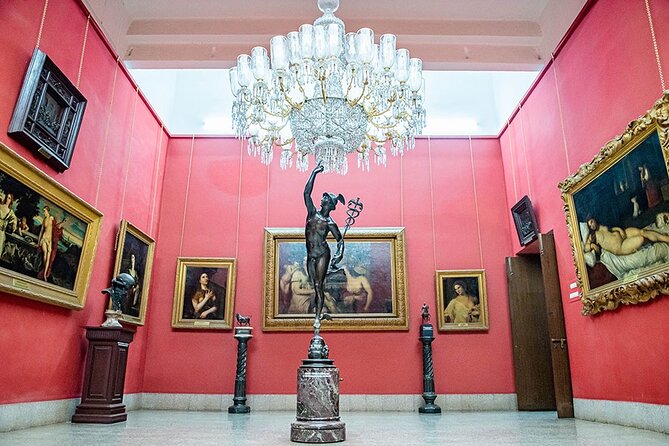
Vadodara Palace is the star of this long day out. The 500-acre estate, still home to the royal family, brings you face to face with grand interiors, mosaics, chandeliers, and paintings by Raja Ravi Varma. You then move into Gujarat’s older and more rugged past at Champaner Archaeological Park and Pavagadh Hill.
I like two things right away: private transport from your Ahmedabad hotel removes a great deal of planning, and a guide adds context to places that can otherwise feel like scattered ruins. The palace’s multilingual audio guide is another useful touch once you are inside the portion open to the public.
The trade-off is the clock. This is a 14-hour day with substantial road time, only about four and a half hours of listed sightseeing, and no food included. You get a lot in one outing, but you should expect an early start and a tiring return.
Key things to know before booking
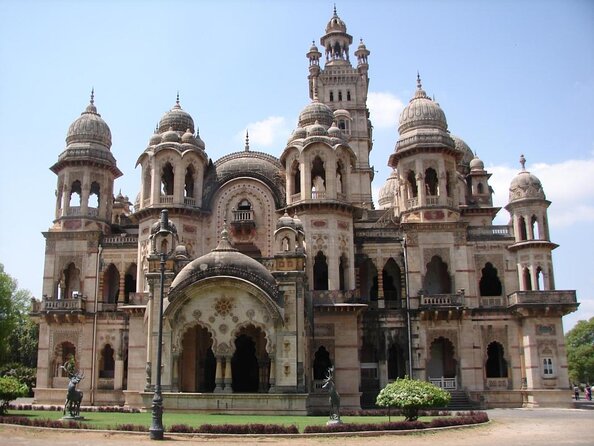
- Vadodara Palace covers 500 acres: Spend two hours seeing royal interiors, mosaics, chandeliers, and Raja Ravi Verma paintings.
- Champaner is a UNESCO World Heritage Site: Explore mosques, temples, granaries, tombs, wells, and city walls from several periods.
- Pavagadh includes a climb: A ropeway covers much of the hill, followed by about 100 steps to Kalika Mata Temple.
- The tour is private: Only your own group participates, with pickup and drop-off at Ahmedabad hotels.
- The day begins at 7:30 am: Plan for roughly 14 hours from departure to return.
- The $200 price includes key basics: Guide, hotel transport, taxes, fees, and listed admissions are covered, but meals are not.
Why this Gujarat day trip works
Ahmedabad has enough nearby sights to make planning awkward. Vadodara, Champaner, and Pavagadh each deserve attention, but arranging transport between them, timing palace entry, and figuring out the hill visit can eat up valuable holiday time.
This tour solves that problem with one private vehicle, one guide, and a fixed route. You leave Ahmedabad at 7:30 am and spend the day moving through three very different settings: a royal residence, a medieval archaeological site, and a hilltop Hindu temple.
I like the range. The palace is polished and grand. Champaner is open-air and atmospheric, with stone structures spread across a former city. Pavagadh adds a religious destination and a physical challenge. The changes keep the day from feeling like three versions of the same monument.
Still, do not mistake a full itinerary for a relaxed one. The listed sightseeing time totals about four and a half hours, so much of the 14-hour schedule is spent on the road. That is normal for a regional day trip from Ahmedabad, but it matters if you prefer slow visits or long meals.
More Palaces to Tour in India:
- Jaipur Guided City Tour: City Palace, Jantar, Hawa & Jal Mahal
★ 5.0 · 186 reviews - Tipu Palace + Koté Vishnu + Fort + KR Market + Jain Temple = Bengaluru Pété Walk
★ 5.0 · 150 reviews - Full-Day Jaipur City Tour with Amber Fort and City Palace
★ 5.0 · 99 reviews
Two hours inside Lukshmi Vilas Palace
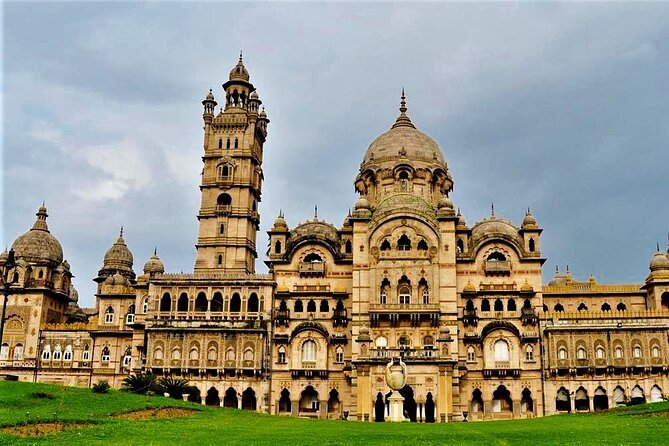
Your first major stop is Lukshmi Vilas Palace in Vadodara, built by Maharaja Sayajirao Gaekwad III in 1890. The palace remains the residence of Vadodara’s royal family, giving the visit a sense of a living royal property rather than a building preserved only for display.
The estate covers 500 acres and is described as the world’s largest private home. You will not see all of that property in a two-hour visit, but the scale helps explain the ambition of the Gaekwad rulers. The grounds include a golf course, while the public tour focuses on the palace and its decorated interiors.
Inside, look for mosaics, chandeliers, and art. Paintings by Raja Ravi Verma are a particular draw, especially if you have an interest in Indian painting or royal patronage. The palace gives you a clear picture of how a ruling family used architecture, art, and lavish decoration to express status.
A useful detail is the audio guide available in multiple languages. Your tour guide can explain the wider setting and help organize the visit, while the audio system lets you take in the interiors at your own pace. That combination is helpful because a palace can easily become a blur of rooms and decoration without some structure.
Two hours is a sensible amount of time here. You have room to notice the details without spending half the day indoors. The drawback is that the tour covers only the area open to the public, so do not expect access to every part of the private residence or the full 500-acre grounds.
The palace is also a good early stop because it offers a strong visual beginning. After the drive from Ahmedabad, you get an immediate sense of Vadodara’s royal past before turning toward Champaner’s stone ruins.
Champaner’s mosques, temples, and forgotten city walls
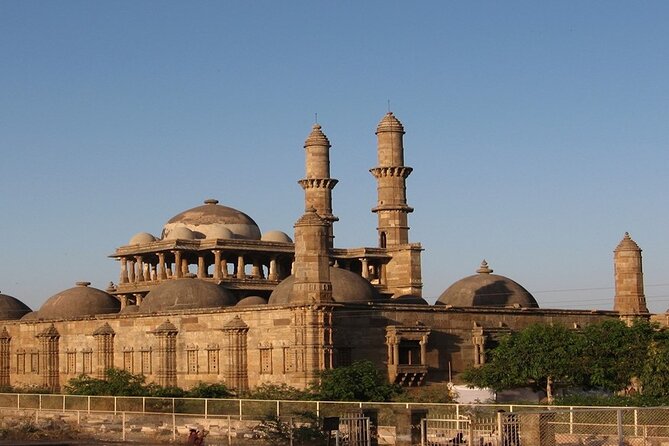
Champaner Pavagadh Archaeological Park is the most varied stop on the route. It is a UNESCO World Heritage Site, but the appeal is not one single monument. The park contains the remains of a former city, including mosques, temples, granaries, tombs, wells, and walls.
Champaner was founded in the eighth century by King Vanraj Chavda. Much later, Pavagadh became the capital of the Chauhan Rajputs around 1300 before Gujarat Sultan Mahmud Begada took it in 1484 after a two-year siege. Those changes in power help explain why the area brings together Hindu and Islamic buildings within the same broad historic zone.
The visit listed here lasts about 90 minutes. That is enough to see important structures and get a clear sense of the site, but it is not enough for a slow inspection of every ruin. I would treat this as a focused introduction rather than a complete archaeological survey.
Jami Masjid is one of the key monuments. Its carved entrance porch opens toward a courtyard surrounded by a pillared corridor. That layout gives the building a strong sense of order, and the carved stonework rewards a closer look than a quick photograph from the outside.
The temples are built in the Nagara style, with a garbhagriha, mandapa, and entrance porch. If those terms are new to you, your guide can help you identify the parts. The value of having a guide is especially clear here because the remains may not explain themselves. A wall, well, or broken platform can seem ordinary until you understand its former purpose.
Bring patience for an open archaeological setting. The experience is about reading the remains of a city, not walking through a complete monument with every room intact. Some visitors may find the scattered layout less immediately satisfying than the palace, but I like the contrast. Champaner asks you to use your imagination.
The short visit also means you should stay aware of time. There are several types of buildings to see, and it is easy to linger too long at the first mosque or temple. Your guide can help choose the most worthwhile sections.
Pavagadh Hill and the climb to Kalika Mata
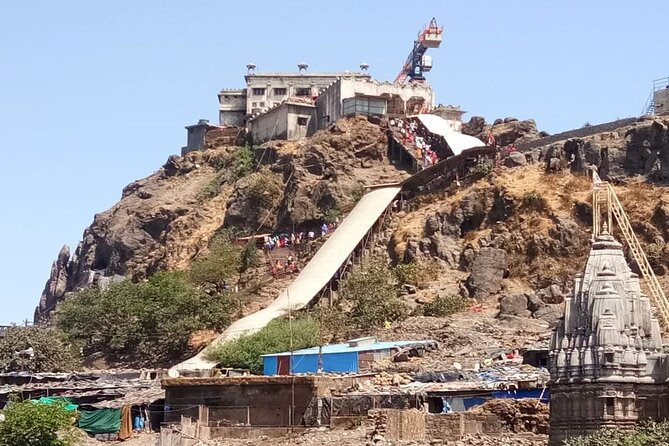
The final major stop is Pavagadh Hill, a reddish-yellow rock formation described as one of the oldest in India. Its color and exposed stone give the hill a different look from the cultivated plains around it.
The main destination is Kalika Mata Temple at the top. Pavagadh became the Chauhan Rajputs’ capital around 1300, then changed hands after Mahmud Begada’s siege in 1484. The hill therefore carries both religious importance and a strong political past.
A ropeway is available for much of the ascent. After the ropeway, you still need to climb about 100 steps to reach the temple. That makes the stop more manageable than a full climb from the base, but it is not entirely effortless. Wear practical footwear and be honest with yourself about how comfortable you are with steps.
The listed visit lasts one hour, so this is a brisk stop. You will have time to reach the temple, take in the hill setting, and return, but not much room for a leisurely pause. The exact pace will depend on ropeway timing and how quickly your group manages the final climb.
Pavagadh works well as the day’s closing visit because it feels very different from Lukshmi Vilas Palace and Champaner. The palace is controlled and ornate. Champaner is spread across historic remains. Pavagadh is more active and physical, with a climb leading to a living place of worship.
Do keep the religious setting in mind. This is not only a sightseeing viewpoint or an archaeological stop. The temple remains an important destination, so a respectful approach is appropriate.
Same city, another grand address:
- Bangalore: Palace, Temples, Fort & Markets Walking Tour
★ 4.9 · 97 reviews - Old Bangalore Historical Walk thro Palace, Temples, Fort & Market
★ 5.0 · 60 reviews - Bangalore: Walking Tour of Fort, Palaces, and Market
★ 5.0 · 58 reviews - Heritage Walk with HiTea at Falaknuma Palace
★ 4.5 · 45 reviews
The long road from Ahmedabad
The tour lasts about 14 hours and starts at 7:30 am. Pickup and drop-off at Ahmedabad hotels are included, which is one of the strongest practical reasons to choose it. You avoid arranging separate taxis, checking road routes, or negotiating transport between Vadodara, Champaner, and Pavagadh.
Because the activity is private, your group controls the rhythm more than it would on a large coach excursion. You can ask the guide to explain a carving, clarify the palace’s history, or help you use the limited time wisely. The experience provider is 5 Senses Walks.
The private format also changes how you should judge the $200 price. That amount is per person, and group discounts are available, though the exact discount is not stated. The price includes the guide, hotel transport, taxes, fees, and listed admissions. Food is not included.
For a solo visitor, $200 is a serious outlay. For a couple or small group that values a private vehicle, the arithmetic may look better, especially when you factor in the distance and the convenience of having the route organized. You are paying for access to three separate destinations in one day, not just for entry tickets.
I would not choose this tour if your main goal is to eat slowly, wander without a schedule, or spend an entire morning at one site. I would choose it if you have limited time in Ahmedabad and want to see Gujarat beyond the city without managing the transport yourself.
What to bring and how to pace the day
Food is not included, so plan ahead for the long outing. The supplied details do not specify meal stops, so confirm how food breaks are handled or bring something suitable for the road.
The day involves palace walking, open archaeological ground, and steps at Pavagadh. Comfortable shoes are a sensible choice. The final climb is only about 100 steps after the ropeway, but the full day can still feel demanding because of the early start and road time.
Keep your schedule clear after returning to Ahmedabad. A 14-hour tour beginning at 7:30 am can take up most of the day and evening. Do not pair it with an important late-night plan.
Confirmation is sent within 48 hours of booking, subject to availability. You can cancel free of charge up to 24 hours before the start time for a full refund. Changes or cancellations made inside that 24-hour window are not accepted.
Should you book this private Gujarat tour?
Book it if you want a practical, history-focused day outside Ahmedabad and value private transport more than a leisurely pace. The combination of Lukshmi Vilas Palace, Champaner’s UNESCO ruins, and Kalika Mata Temple gives you three distinct experiences in one trip.
The best reasons to go are the royal interiors, the guide’s help in making sense of Champaner, and the convenience of hotel pickup and drop-off. The multilingual palace audio guide adds useful detail, while the private format lets your own group ask questions and move together.
Skip it if a 14-hour schedule sounds exhausting or if you dislike fixed sightseeing days. The road time is real, meals cost extra, and the listed visits are fairly short.
For most visitors with only a few days in Ahmedabad, I would consider this a strong value for a private regional excursion. Just book it with the right expectations: it is a broad, busy look at Gujarat’s royal, archaeological, and religious heritage, not a slow retreat.
FAQ
What time does the tour start?
The tour starts at 7:30 am.
How long does the experience last?
The full experience lasts approximately 14 hours.
Is hotel pickup and drop-off included?
Yes. Round-trip pickup and drop-off from hotels in Ahmedabad are included.
Is this a private tour?
Yes. Only your own group participates in the activity.
What admissions are included?
Admission to Lukshmi Vilas Palace and Pavagadh Hill is included. Entry to Champaner Archaeological Park is listed as free.
Is food included?
No. Food is not included in the tour price.
Can I cancel for a full refund?
Yes. You can cancel at least 24 hours before the experience start time for a full refund. Cancellations or changes made less than 24 hours before the start are not accepted.
Newly added in India
- Hill Palace Museum With Local Style Lunch★ 5.0 · 4 reviews
- Private Full Day City Tour of Jaipur visit Amber Fort, City Palace with Lunch★ 5.0 · 3 reviews
- Jaipur City Palace, Hawa Mahal & Jantar Mantar Private Tour★ 4.5 · 4 reviews
- Private Guided Jaipur Tour: Amber Fort,City Palace, Water Palace★ 5.0 · 4 reviews
- Jaipur Full Day City Tour visit Hawa Mahal, Amber Fort & City Palace★ 5.0 · 5 reviews
- Jaipur: Amer Palace, Jal Mahal & Stepwell Private Half-Day Tour★ 5.0 · 2 reviews
- 2 Days Private tour of Jaipur with Amber Fort and City Palace★ 5.0 · 5 reviews
- Jaipur: Uncharted City Tour-Fort & Palace | Walk | Block Printing★ 5.0 · 2 reviews
India Palace Tours, compared.
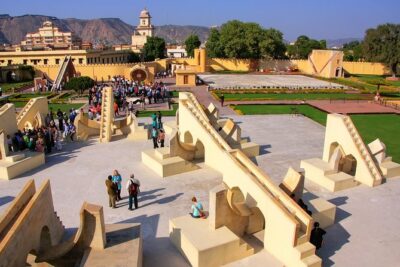
Jaipur Guided City Tour: City Palace, Jantar, Hawa & Jal Mahal
Read our review →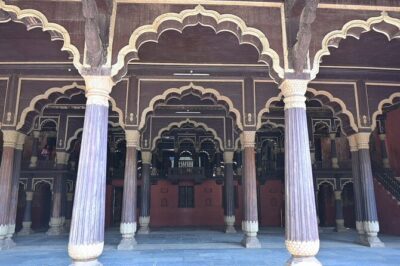
Tipu Palace + Koté Vishnu + Fort + KR Market + Jain Temple = Bengaluru Pété Walk
Read our review →
Full-Day Jaipur City Tour with Amber Fort and City Palace
Read our review →

Old Bangalore Historical Walk thro Palace, Temples, Fort & Market
Read our review →

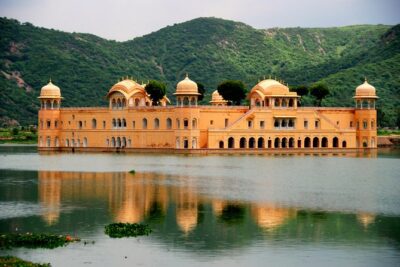
2-Day Private Tour of Jaipur from Delhi: City Palace, Hawa Mahal and Amber Fort
Read our review →Browse the lists this tour appears in