

Review · PALACE WALKING TOURS
Bangalore: Palace, Temples, Fort & Markets Walking Tour
Bangalore’s old center is not a polished museum district. It is a working city of palace courtyards, temple bells, flower sellers, cows, traffic, and narrow lanes. In three hours, this small-group walk links Tipu Sultan’s Summer Palace, Bangalore Fort, Hindu and Jain temples, and KR Market into one lively history lesson.
I like the way the tour joins grand landmarks to ordinary life. The flower market gives you more than a pretty photo, while the guides, including Vijay, Vasuki, Raghu, and Vanaja, are praised for explaining local customs, helping with photos, and keeping groups together. The main consideration is the setting: crowded streets, uneven roads, and close quarters may feel intense if you prefer a quiet sightseeing tour.
Key points to know before you book
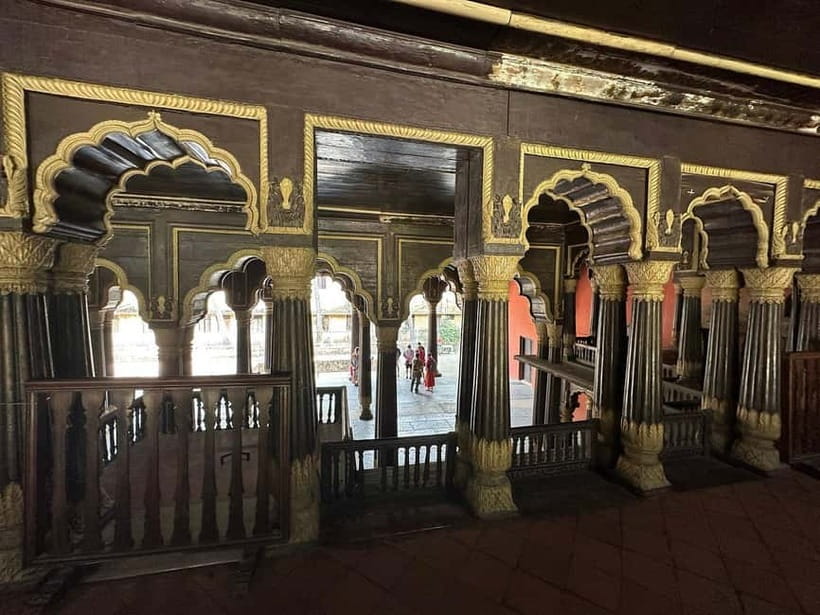
- Tipu Sultan’s 230-year-old teak palace: Begin with a striking reminder of Bangalore’s royal past.
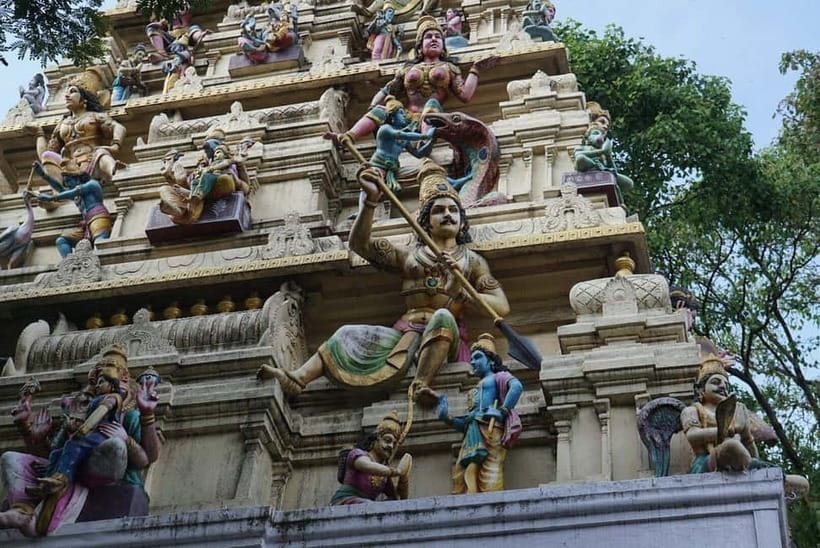
- A Hindu temple in active use: Watch devotees offer prayers at a Vishnu temple rather than simply viewing a monument.
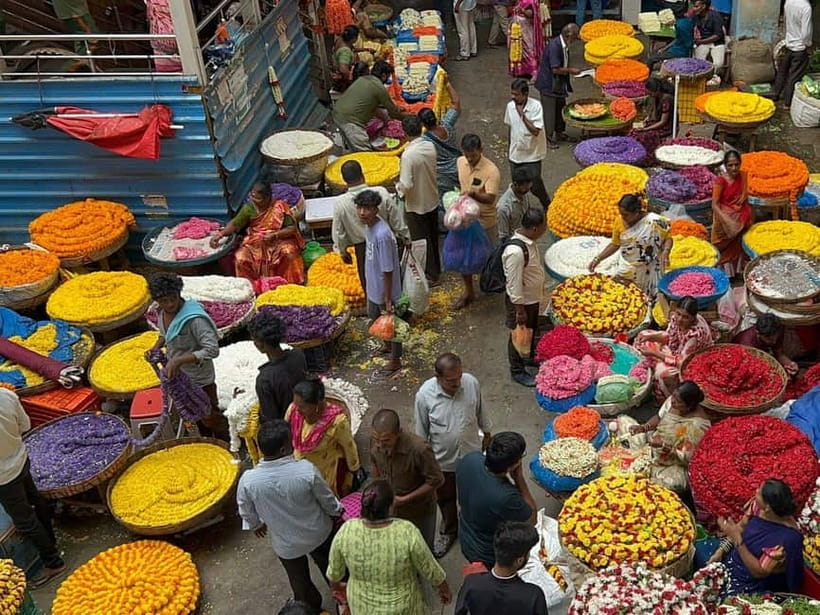
- KR Market at full volume: Flowers, fruit, vegetables, vehicles, workers, and shoppers create the tour’s most vivid scene.
- A compact history of Bangalore: Follow the city from Kempegowda and Tipu Sultan through British rule and the rise of India’s technology center.
- A maximum of 10 people: The small group makes it easier to hear the guide and stay together in crowded lanes.
- Temple-ready clothing matters: Cover your shoulders and legs, bring a headscarf and spare socks, and wear proper walking shoes.
Why this three-hour walk works so well
I would choose this tour early in a Bangalore visit, especially if I had only a day or two in the city. It gives you a useful mental map of old Bangalore while showing how the city’s past and present sit side by side.
The route is not built around one grand sight. Its strength is the contrast between stops. A wooden palace leads to a fort. A Hindu shrine leads to a Jain temple. A quiet religious interior gives way to KR Market, where the city’s trade happens at close range.
That mix helps you understand Bangalore as more than India’s technology center. You see the older city that existed before office parks and software companies, then hear how the Garden City became the Silicon Valley of India. The city’s earlier nickname, the City of Boiled Beans, also gets a place in the story.
The tour costs $32 per person. I consider that fair for a three-hour guided walk with admission to the palace, Vishnu temple, Bangalore Fort, and Jain temple. You are paying for access to several places, but the bigger value is having someone explain what you are seeing and guide you through streets that can be difficult to read at first.
Food and drinks are not included. Hotel transport is also extra, though the operator can arrange a ride to the meeting point and back for an additional fee. If you are staying outside the old center, ask about this before booking so the added cost does not surprise you.
More Palace Walking Tours in India:
- Bangalore: Walking Tour of Fort, Palaces, and Market
★ 5.0 · 58 reviews - Venice: Doge’s Palace and St Mark’s Basilica Walking Tour
★ 4.4 · 6,291 reviews - Split: Old Town and Diocletian Palace Walking Tour
★ 4.9 · 4,727 reviews
Starting at Tipu Sultan’s Summer Palace
Meet your guide at the gates of Tipu Sultan’s Summer Palace. This 230-year-old building is made from teak wood, and it offers an immediate change of pace from Bangalore’s traffic and modern business districts.
The palace is not a huge complex, so do not expect to spend hours wandering through rooms. Its value comes from the structure, the woodwork, and the story attached to Tipu Sultan and the period between the 16th and 18th centuries.
Your guide can place the palace in the wider story of Bangalore, beginning with Kempegowda and continuing through Tipu Sultan, British rule, and the city’s later growth. Guides such as Vijay and Raghu are especially good at turning dates and names into stories, while Vasuki and Vanaja are praised for their friendly way of handling questions and conversation.
This first stop also gives you a gentle start before the route moves into denser streets. Take a moment to look at the timber construction and the open spaces around the palace. It is a good place to begin taking photographs before the crowds become thicker.
Bangalore Fort and the layers of old Bangalore
The walk continues to Bangalore Fort, where you spend about 30 minutes. The fort dates to the 16th century and was later renovated, so it helps illustrate how Bangalore changed hands and purpose over time.
This is a useful stop for visitors who want more than royal architecture. A fort tells you about defense, administration, and the growth of the settlement around it. The guide’s explanation is important here because the remaining structure alone may not make the full story obvious.
Expect a sightseeing stop rather than a long exploration. The pace is designed to fit several different places into three hours, and the fort is one part of a larger route. If you want detailed architectural study or a slow photography session, you may find the time brief.
Still, the fort works well as a bridge between the palace and the city streets. You move from the world of rulers into the working center of Bangalore, where commerce and worship continue in spaces shaped by centuries of change.
The Vishnu temple and living Hindu worship
One of the most worthwhile parts of this walk is the visit to a 320-year-old Vishnu temple. This is not simply a historic building to admire from the outside. You may see Hindu devotees arriving for prayer, which gives the visit a more direct sense of how the temple functions today.
You should follow the guide’s instructions and observe quietly. Religious sites are not stage sets, and the best experience comes from watching with respect rather than treating every moment as a photo opportunity.
The temple also adds balance to the palace and fort. Those places explain power and defense. Here, the focus shifts to faith, ritual, and daily community life. Your guide can help explain the religious details and answer questions about what you are seeing.
Temple opening times can vary by season, and entry is subject to operating hours. That is worth keeping in mind if you have a tight schedule. The tour includes temple entry, but the exact experience may depend on what is open and taking place when you arrive.
More Palaces to Tour in India:
- Jaipur Guided City Tour: City Palace, Jantar, Hawa & Jal Mahal
★ 5.0 · 186 reviews - Tipu Palace + Koté Vishnu + Fort + KR Market + Jain Temple = Bengaluru Pété Walk
★ 5.0 · 150 reviews - Full-Day Jaipur City Tour with Amber Fort and City Palace
★ 5.0 · 99 reviews - Old Bangalore Historical Walk thro Palace, Temples, Fort & Market
★ 5.0 · 60 reviews
KR Market, where the tour reaches full volume
KR Market is the part I would look forward to most. The official stop allows about 30 minutes, but the impact comes quickly. You pass through an active trading area filled with fruit, flowers, vegetables, buyers, sellers, coolies, vehicles, cows, workers, walkers, and curious onlookers.
The flower section is especially memorable. Small flowers are arranged into large decorations and threaded garlands, and the colors and scents change as you move through the stalls. This is the kind of scene that is difficult to understand from a taxi window or a hotel conversation.
The market can also be the most demanding part of the walk. On a Sunday, the crowds may be especially heavy. You will need to stay close to the guide, watch your footing, and accept that progress can be slow. Narrow paths and constant movement are part of the setting, not a flaw in the tour.
Raghu is praised for allowing time to look and shop instead of rushing through the stalls. Vijay is also noted for helping visitors speak with local sellers and for keeping a group together in the crush. That kind of help matters if you want to ask about spices, flowers, or other goods but are unsure how to begin.
Bring some rupees if you want to make small purchases, though food and drinks are not part of the tour price. One stop for coffee may be available during the experience, but it should not be treated as a guaranteed inclusion. If you buy anything, keep your belongings secure and avoid blocking the narrow walkways.
The quiet turn at the Jain temple
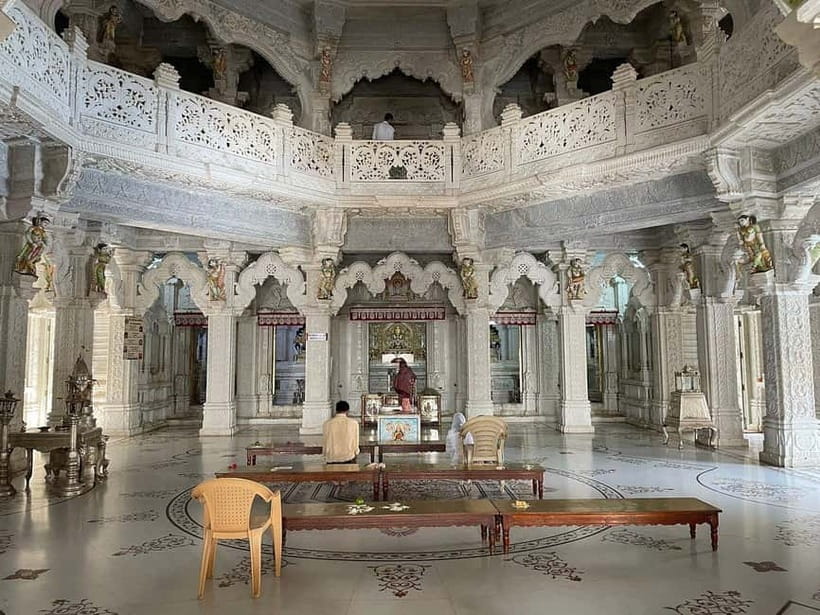
The route finishes at Shri Adinath Jain Shwetamber Mandir. After KR Market, the change in mood can be dramatic. The Jain temple offers quiet, detailed carvings, and inlay work, giving you a calmer final stop after the noise of the streets.
This is also why clothing rules are firm. Cover your shoulders and legs, and do not wear short skirts, sleeveless shirts, or see-through clothing. Bring a headscarf and spare socks. These practical details are easy to overlook, but proper dress helps you enter without awkwardness.
Wear walking shoes rather than sandals that slip easily. The route includes uneven roads and crowded, narrow streets. Some people describe the walking as light, while others emphasize the need for comfortable shoes and care in close quarters. Both points can be true: the route is not a strenuous hike, but the street conditions demand attention.
The Jain temple gives the tour a fitting close. You have seen royal power, military architecture, Hindu worship, trade, and Jain craftsmanship in a compact stretch of old Bangalore. It is a lot to take in, but the variety keeps the three hours moving.
What the guides add to the experience
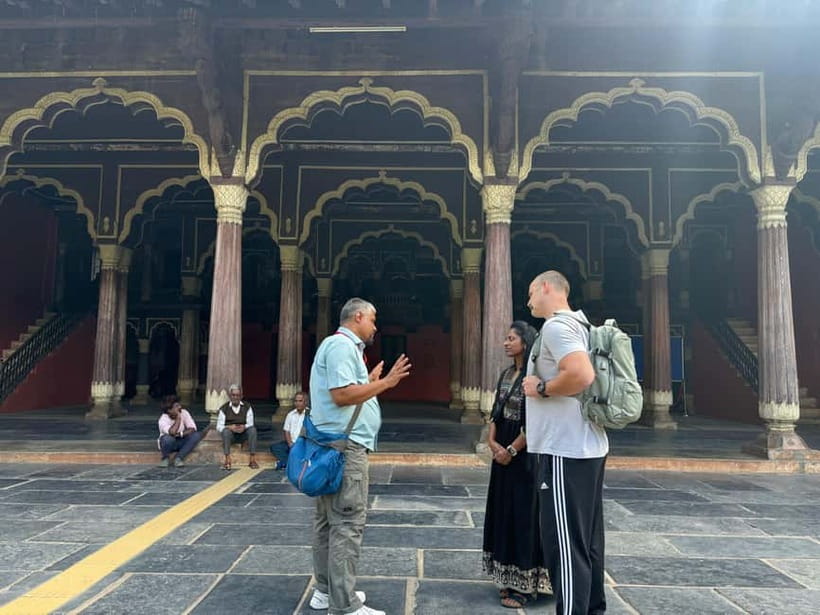
The guide can make or break a city walk, and this experience depends heavily on the person leading your group. Guides named in the tour feedback include Vijay, Vijay Kumar, Vasuki, Raghu, Vanaja, Ramesh, Varun, Kamakshi, Govinda, and Varun.
The strongest guide style here is conversational rather than purely scripted. Vijay Kumar is praised for answering questions, finding photo spots, assisting solo visitors with the Metro after the walk, and helping people navigate the market. Raghu is noted for combining historical facts with folklore and giving shoppers time to interact with traders.
Vasuki is described as funny, kind, and generous with his time. Vanaja is praised for keeping the group cared for and adding enthusiasm to the places visited. Kamakshi is particularly good at combining factual detail with storytelling, while Ramesh is noted for calmly leading visitors through crowded streets.
Because guides vary, your experience may have a different tone from another group’s. The consistent advantage is the local escort through places that can feel intimidating on a first visit. A guide can explain temple behavior, help with communication at the market, and point out details you might otherwise miss.
The group limit is 10 people. That is small enough for questions and easier movement than a large coach group. It also helps the guide watch the group when the market is crowded.
Practical details that affect your decision
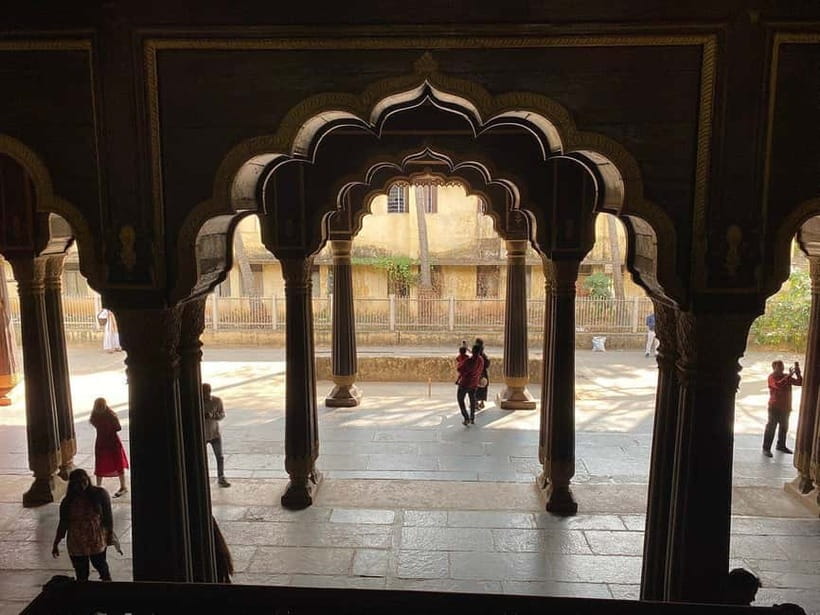
The walk lasts three hours and is conducted in English. The starting point is the gates of Tipu Sultan’s Summer Palace, and the final stop is Shri Adinath Jain Shwetamber Mandir.
You do not need to pay on the day of booking, since reserve-now, pay-later booking is available. Free cancellation is offered up to 24 hours before the start time. Starting times vary, so check the available slot before you commit to other plans.
The tour includes entry to Tipu Palace, the Vishnu temple, Bangalore Fort, and the Jain temple. Seasonal hours can affect access, so temple and monument visits may not follow the exact same pattern on every date.
Plan on walking the whole route. Transport is not included, but hotel pickup and return can be arranged for an additional fee. This may be useful if you are new to Bangalore or staying far from the old center.
Dress modestly from the start rather than trying to change later. Long trousers or a long skirt, covered shoulders, a headscarf, spare socks, and comfortable shoes will keep the focus on the sights.
Who will enjoy this Bangalore experience most
I would recommend it to first-time visitors who want a fast but meaningful introduction to the city. It works especially well for solo visitors, couples, and small groups with a free morning or afternoon.
You will like it if you want local markets, religious sites, and history in one outing. It is also useful for anyone who feels uncertain about entering temples or handling the old market alone. The guides can explain customs and help you move through crowded areas with more confidence.
It may not suit you if you want a slow palace tour, a quiet walk, or a carefully controlled route. The market is crowded, and the streets can be noisy and uneven. Visitors who choose not to enter the temples should also understand that the tour will be shorter and less complete.
The tour is not mainly about shopping, though guides may help you find spices, silk, or scarves if you ask. It is better viewed as a cultural walk with shopping opportunities, not a dedicated retail outing.
Should you book the Palace, Temples, Fort and Markets Walk?
Book it if you want to see several sides of Bangalore in one compact outing. For $32, you get four types of historic and cultural stops, an English-speaking guide, a small group, and help with the practical challenge of crossing the old city on foot.
I would book this near the beginning of a Bangalore stay. It gives you context for later visits and shows you places you might not find comfortably on your own, especially KR Market and the smaller religious sites.
Go prepared for noise, crowds, modest clothing, and uneven ground. If that sounds like part of the appeal, this is a strong introduction to old Bangalore. If you prefer polished monuments and open space, choose a quieter sightseeing option instead.
FAQ
How long does the Bangalore Palace, Temples, Fort and Markets Walking Tour last?
The tour lasts three hours.
Where does the tour start?
It starts at the gates of Tipu Sultan’s Summer Palace.
Where does the tour finish?
The walk finishes at Shri Adinath Jain Shwetamber Mandir.
What places are included?
The experience includes Tipu Sultan’s Summer Palace, a Vishnu temple, Bangalore Fort, KR Market, and the Jain temple.
Is transport included?
No. Hotel transport to the meeting point and back can be arranged for an additional fee.
What should I wear?
Cover your legs and shoulders. Do not wear short skirts, sleeveless shirts, skirts, or see-through clothing. A headscarf and spare socks are recommended.
How large is the group?
The tour is limited to 10 participants.
Is food included?
No. Food and beverages are not included in the tour price.
Newly added in India
- City Palace Udaipur Express visits with english speaks guide★ 5.0 · 9 reviews
- Udaipur: City Palace Museum Tour and Lake Pichola Boat Tour★ 5.0 · 20 reviews
- Monsoon Palace (Sajjangarh) E-bike Trail★ 4.7 · 19 reviews
- 5 Day Private Tour of Tigers, Taj Mahal and Palaces from Cochin★ 5.0 · 18 reviews
- 2-Day Private Tour of Jaipur from Delhi: City Palace, Hawa Mahal and Amber Fort★ 4.5 · 29 reviews
- Private Tour: Palaces of Bangalore★ 4.0 · 15 reviews
- Day trip to Kanyakumari beach and Padmanabhapuram palace★ 4.5 · 21 reviews
- Udaipur: Sajjangarh Monsoon Palace Day Trip with Tickets★ 4.9 · 9 reviews
Palace Walking Tours, compared.
Doge’s Palace and St Mark’s Basilica Walking Tour
Read our review →
Grand Palace and Wat Phra Kaew Guided Walking Tour
Read our review →
Imperial Palace and Shogun Historical Walking Tour
Read our review →
Madrid Old Town & Royal Palace Walking Tour Skip the Line Ticket
Read our review →
Knossos: Knossos Palace Skip-the-Line Guided Walking Tour
Read our review →
Tokyo Castle & Imperial PalaceーShogun Walking Tour
Read our review →Browse the lists this tour appears in