
Review · INDIA PALACE TOURS
Individual Gujarat tour 2024-2025 (nature and palaces)
Gujarat is one of India’s best regions for a second visit because it trades the familiar headline sights for Jain hill temples, palace hotels, craft villages, and wide salt plains. This 16-day private route links them by air-conditioned car, with your own driver and a pace that lets you stop in places most first-time itineraries skip. I especially like the mix of wildlife and culture: you have a real chance to see Asiatic lions, wild asses, and leopards, then spend the next day among weavers, palace rooms, or ancient stonework.
I also like the overnight stays in former palaces, including Neelam Bagh Palace and a palace hotel in Gondal. The main trade-off is the amount of road time. Some days involve five or six hours in the car, and Palitana requires a serious climb of about 3,700 steps each way if you walk to the temples.
Key things to know before booking
- Private travel by air-conditioned car: Your group travels alone with a private vehicle and driver rather than joining a large coach.
- Three different wildlife experiences: The price includes two leopard safaris at Jawai, one lion safari in Gir, and one wild donkey safari in the Little Rann of Kutch.
- Palitana is physically demanding: The Shatrunjaya temples sit above roughly 3,700 one-way steps, with palanquins available for a fee.
- Palace hotels are part of the experience: Neelam Bagh Palace, Gondal, and Balram Palace add atmosphere that ordinary city hotels cannot match.
- Kutch is the cultural heart of the route: You visit craft villages, textile collections, traditional shipyards, palaces, and the Great Rann’s white salt desert.
- The price includes most meals and touring: At $2,808.17 per person, the package includes accommodation, breakfast, most dinners, two lunches, private transport, and listed safaris, but not international flights.
Why Gujarat works so well for a second India trip
If you have already seen Delhi, Agra, Jaipur, or Kerala, Gujarat gives you a different picture of India. The route is less about famous monuments alone and more about the way people live, work, worship, and preserve local traditions.
You move from Ahmedabad’s old pol neighborhoods to the remains of the Indus civilization at Lothal. Later, you reach Kutch, where families make embroidery and other goods in village settings. The route then turns toward wildlife, with the lion country of Gir and the leopard hills of Jawai.
I would not choose this as a first India trip if you want India’s classic highlights. I would choose it if you want space, scenery, local handicrafts, wildlife, and unusual architecture without giving up comfort.
The private format matters here. Gujarat has long driving stretches and some places where a fixed group schedule would feel restrictive. With your own car, you can spend more time at a palace, pause in a town, or return to the hotel after a morning safari.
More Palaces to Tour in India:
- Jaipur Guided City Tour: City Palace, Jantar, Hawa & Jal Mahal
★ 5.0 · 186 reviews - Tipu Palace + Koté Vishnu + Fort + KR Market + Jain Temple = Bengaluru Pété Walk
★ 5.0 · 150 reviews - Full-Day Jaipur City Tour with Amber Fort and City Palace
★ 5.0 · 99 reviews
Ahmedabad begins with old neighborhoods and Gandhi
You arrive in Ahmedabad on day two, receive a traditional welcome, and transfer to the hotel. Rooms are available from noon, so an early arrival may involve waiting before check-in. Dinner is provided at the hotel that evening.
The first full day begins in the old city. The walk through the historic pol neighborhoods is one of the strongest parts of the trip. These old quarters were organized into compact residential areas, and walking lets you notice details that disappear from a car window.
You visit Swaminarayan Temple, Jama Masjid, and Sidi Sayad Mosque before going to Sabarmati Ashram, where Gandhi lived for several years. This gives the day a useful balance: religious architecture, old urban life, and modern India’s independence story.
The afternoon is free. You can swim or arrange a visit to an alcohol shop, where a permit can be obtained for alcohol and beer. Gujarat has alcohol restrictions, so this is a practical detail worth knowing before you arrive.
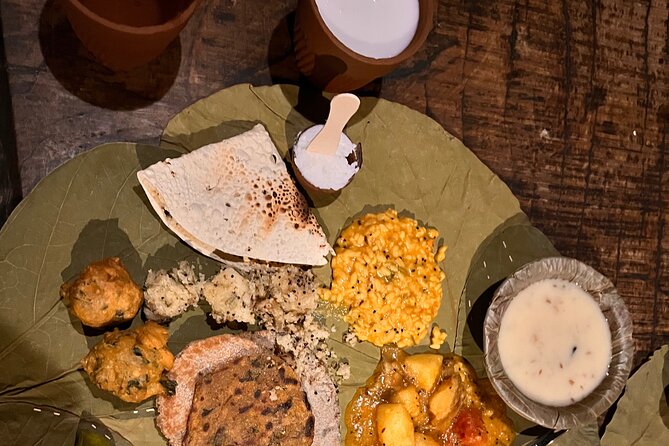
In the evening, you eat typical local food at a local establishment. That meal is valuable because it shifts the day away from monuments and toward everyday Gujarat. The sightseeing portion is listed at about four hours, leaving useful breathing room.
Lothal and Bhavnagar bring archaeology and palace comfort
The drive from Ahmedabad toward Bhavnagar takes about five hours, with Lothal as the main stop. Lothal was inhabited around 3700 BC and became a trading port connected with the Indus civilization. The ruins are a good reason to break up the road journey, especially if you enjoy archaeology and early urban history.
After Lothal, you continue to Bhavnagar and have time for a short walk through the city center. The main treat comes at check-in: Neelam Bagh Palace, a former royal residence designed by a German architect.
A palace hotel changes the feel of the trip. You are not simply using Bhavnagar as an overnight stop. You are sleeping in a building connected to the region’s ruling families, with more character than a standard business hotel. The trade-off is that palace properties can feel less predictable than modern hotels, so book this route for atmosphere rather than uniformity.
Palitana demands effort, but rewards it with scale
Palitana is one of the most important Jain pilgrimage sites in India. More than 800 temples rise above Shatrunjaya Mountain, and the ascent is a central experience rather than a quick sightseeing stop.
The climb takes around two hours up and about an hour down for a reasonably fit person, with roughly 3,700 steps in one direction. This is the day to judge honestly. Moderate fitness is required for the tour overall, but Palitana is the clearest physical test.
Palanquins can be hired if you cannot manage the stairs. The information provided says a group of four bearers charges around 50 to 60 euros and expects a tip. Carry sensible footwear, water, sun protection, and enough time to avoid turning the visit into a race.
The temples themselves are the reason to make the effort. The route gives you a close view of Jain devotion, pilgrimage customs, and the mountain setting. It is also a day when private transport helps, since you can return to your hotel and recover without having to match a larger group’s schedule.
Same city, another grand address:
- Bangalore: Palace, Temples, Fort & Markets Walking Tour
★ 4.9 · 97 reviews - Old Bangalore Historical Walk thro Palace, Temples, Fort & Market
★ 5.0 · 60 reviews - Bangalore: Walking Tour of Fort, Palaces, and Market
★ 5.0 · 58 reviews - Heritage Walk with HiTea at Falaknuma Palace
★ 4.5 · 45 reviews
Gir offers a rare chance to see Asiatic lions
An early morning safari in Gir National Park is one of the tour’s headline experiences. Gir is the only place outside Africa where lions roam freely in the wild, and the reserve also supports other animal species and many kinds of birds.
A sighting is never guaranteed, so you should treat the safari as a wildlife search, not a zoo visit. The early start is worthwhile because cooler hours are better suited to animal activity. After the safari, the afternoon is free for rest or outdoor time.
Gir also adds a human dimension. Rebari and Siddi communities live near the reserve, and the Siddi have roots in Southeast Africa. Their history includes work as merchants, sailors, servants, slaves, and mercenaries. Seeing this community in Gujarat challenges the usual idea of what Indian identity looks like.
Junagadh and Gondal combine mixed architecture with royal homes
On the way to Gondal, you visit Junagadh Fort, Bibi ka Makbara, and Buddhist caves associated with the Ashoka period. The buildings show Hindu, Muslim, and European influences in close proximity.
This is a good day for visitors who enjoy architecture more than polished museum displays. The sights are varied, and the combination makes clear how many cultural traditions meet in western India.
Gondal then supplies another palace stay. You visit the City Palace, including Navlakha Palace, which overlooks the river and rises more than 30 meters. The route also includes an Ayurvedic company, a collection of Ravi paintings, and old-timer cars.
These stops can feel eclectic, but that is part of the appeal. Gondal is not presented as one single monument. You get a small look at royal taste, local medicine, art, and transport in one afternoon. Breakfast and dinner are included at the palace hotel.
Bhuj and Mandvi reveal Kutch through crafts and old trade
You spend three nights in Bhuj, staying at a hotel beside a lake. The first stop is the Textile Museum of Kutch, which provides useful context before you visit villages and craft centers later in the route.
The next day takes you to Mandvi. A Jain temple comes first, followed by Vijay Vilas Palace. Mandvi grew wealthy through trade in diamonds and precious stones, and it remains known for traditional wooden shipbuilding.
Seeing unfinished wooden ships on the shore is one of those small details that gives the day life. It connects the town’s past trade to a working craft that is still visible. Back in Bhuj, you visit Prag Mahal and the palace commissioned by Maharao Lakhpatji in 1750. Prag Mahal uses Italian Gothic design and was damaged in the major earthquake that struck the area.
Allow six hours for the Mandvi and Bhuj sightseeing day. It is full, but the two-night stay in Bhuj keeps it from becoming a rushed one-night stop.
The Great Rann and Kutch villages are the visual high point
The northern and southern villages of Kutch are best understood as living craft communities rather than staged attractions. Families from different clans make and sell their work, and you walk through the village settings to see embroidery, fabrics, and traditional houses.
The Meghwal families in the southern villages are known for detailed embroidery. This is a place to buy carefully and respectfully. Ask about the maker and the work before treating the village as a shopping stop.
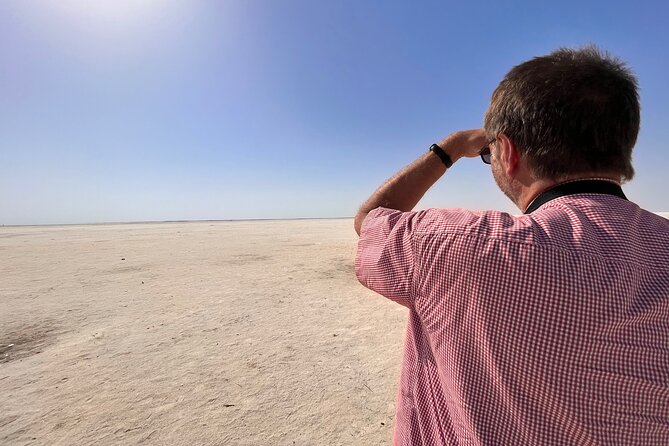
Later, you reach the Great Rann of Kutch, the White Desert. Its broad salt surface gives the day a dramatic change of scenery after the close quarters of village streets. The return to Bhuj comes in the evening, so expect a long day with limited shade.
Little Rann safari adds wild asses and birds
The route then moves to Bajana, an eco-friendly village near Dasada and the entrance to the Little Rann of Kutch. You stay at Royal Safari Camp Bajana, with lunch included that day, along with dinner and breakfast.
The late afternoon safari enters the Wild Donkey Reserve. The reserve is also a good place for birdwatching, so keep your attention beyond the main animal. The reserve offers a different kind of wildlife experience from Gir: open, dry country and wild asses instead of lions in forested terrain.
This overnight camp is useful because it puts you close to the reserve. It also breaks up the long drive toward northern Gujarat. Expect a simpler outdoor setting than the palace hotels.
Modhera, Patan, Sidhpur, and Balram Palace
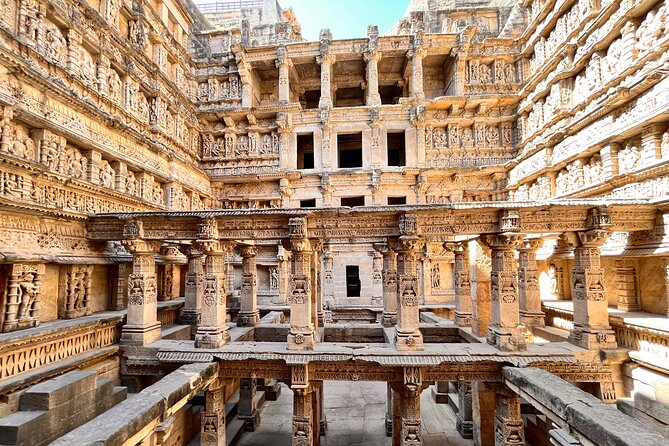
The road day to Palanpur includes three distinctive stops. Modhera Sun Temple is an 11th-century monument known for its temple design. Patan brings Rani Ki Vav, an ornate stepwell commissioned by Queen Udaymati in memory of her husband, Bhima I.
Sidhpur has houses with European influence and a street setting that feels unlike the temples and palaces earlier in the route. The final overnight is at 19th-century Balram Palace beside the Macchu River, with decorated interiors and spacious suites.
This is another five-hour driving day, so you should enjoy road travel. The reward is variety: temple architecture, underground water engineering, unusual residential buildings, and a royal retreat in one stretch.
Jawai is built around two leopard safaris
The journey toward Jawai crosses mountain scenery and includes Ranakpur Jain Temple. The temple visit is about an hour, making it a sensible cultural stop before the wildlife portion begins.
At Jawai, you take a jeep safari to look for leopards and sleep under the stars at a tented hotel. A second leopard safari follows the next day, with afternoon time free for the pool or rest.
The two safari drives give you better odds than a single outing, but wildlife is never certain. The route describes leopard sightings as common in this area, yet you should still arrive with patience. The tented accommodation is a major change from palace hotels, and that contrast is part of the route’s appeal.
Returning to Ahmedabad and judging the value
The final full day returns to Ahmedabad, with Adalaj Ki Vav on the way. The stepwell is a practical final monument because it adds one more piece of Gujarat’s architectural identity before you check in for the last night.
At $2,808.17 per person, the value depends on two things: the number of people in your group and how much you value private transport and distinctive hotels. The price includes GST, the air-conditioned vehicle, private transportation, 13 breakfasts, 14 dinners, two lunches, two leopard safaris, one lion safari, and one wild donkey safari. International flights are extra.
For a 16-day private trip with multiple wildlife activities and palace accommodation, the package covers a substantial amount. You should still clarify the exact hotel list, room arrangements, safari timing, and any fees for camera equipment or porter tips before paying.
Cancellation is free up to 24 hours before the start time. Poor weather or failure to meet the minimum number of participants may lead to a new date, a different experience, or a full refund.
Who should book this Gujarat route
I would book this tour if you are a returning India visitor who wants a private journey with strong cultural and wildlife content. It suits couples, families, and small groups who value their own car and do not want to organize a complicated route across Gujarat and southern Rajasthan.
I would think twice if you dislike long drives, early mornings, basic camp settings, or uncertain wildlife sightings. Palitana also rules out a carefree approach to fitness unless you plan to use a palanquin.
The strongest reasons to choose it are the range of experiences, the palace nights, the access to local craft areas, and the chance to see lions, wild asses, and leopards in separate habitats. The main reason not to choose it is the road mileage. If that sounds like part of the adventure rather than a burden, this is a well-shaped way to see a less familiar side of India.
FAQ
Where does the tour begin and end?
The tour begins in Ahmedabad after your arrival from Europe and ends back in Ahmedabad, with a transfer to the international airport on day 16.
Are international flights included?
No. International flights are not included. The suggested plan is to arrive in Ahmedabad on day two and book the return flight from Ahmedabad on day 16.
Is this a private tour?
Yes. This is a private activity for your own group, using private transportation and an air-conditioned vehicle.
How long does the tour last?
The tour lasts approximately 16 days.
What wildlife safaris are included?
The package includes two leopard safaris at Jawai, one lion safari in Gir National Park, and one wild donkey safari in the Little Rann of Kutch.
How difficult is the Palitana visit?
The Palitana climb involves about 3,700 steps one way. Walking up takes around two hours and returning takes about one hour. Palanquins are available for an additional fee.
Are meals included?
Breakfast is included on 13 days, dinner on 14 days, and lunch on two days. Lunch, dinner, breakfast, and overnight accommodation are included at Royal Safari Camp Bajana.
Where do you stay during the tour?
The route includes hotels in Ahmedabad, Bhavnagar, Gondal, Bhuj, Bajana, Palanpur, Jawai, and Ahmedabad again. Some accommodation is in former palaces, while Jawai uses a tented hotel.
What level of fitness is required?
A moderate level of physical fitness is recommended. The Palitana climb is the most demanding activity, and several driving days last about five or six hours.
Can the tour be canceled for a refund?
You can cancel up to 24 hours before the experience starts for a full refund. Poor weather or failure to meet the minimum number of participants can also lead to a different date or a full refund.
Newly added in India
- Hill Palace Museum With Local Style Lunch★ 5.0 · 4 reviews
- Private Full Day City Tour of Jaipur visit Amber Fort, City Palace with Lunch★ 5.0 · 3 reviews
- Jaipur City Palace, Hawa Mahal & Jantar Mantar Private Tour★ 4.5 · 4 reviews
- Private Guided Jaipur Tour: Amber Fort,City Palace, Water Palace★ 5.0 · 4 reviews
- Jaipur Full Day City Tour visit Hawa Mahal, Amber Fort & City Palace★ 5.0 · 5 reviews
- Jaipur: Amer Palace, Jal Mahal & Stepwell Private Half-Day Tour★ 5.0 · 2 reviews
- 2 Days Private tour of Jaipur with Amber Fort and City Palace★ 5.0 · 5 reviews
- Jaipur: Uncharted City Tour-Fort & Palace | Walk | Block Printing★ 5.0 · 2 reviews
India Palace Tours, compared.
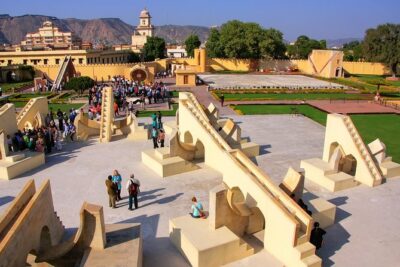
Jaipur Guided City Tour: City Palace, Jantar, Hawa & Jal Mahal
Read our review →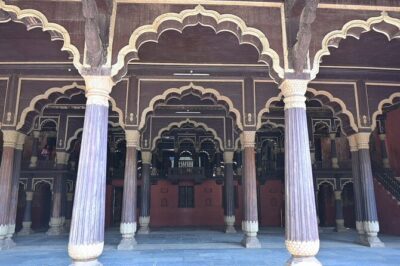
Tipu Palace + Koté Vishnu + Fort + KR Market + Jain Temple = Bengaluru Pété Walk
Read our review →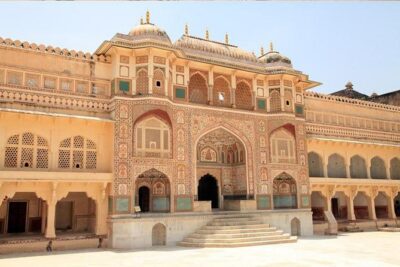
Full-Day Jaipur City Tour with Amber Fort and City Palace
Read our review →
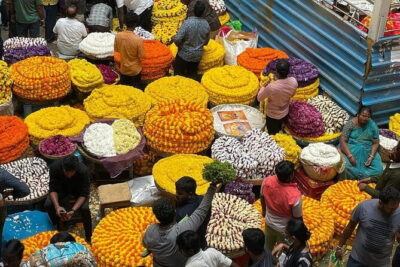
Old Bangalore Historical Walk thro Palace, Temples, Fort & Market
Read our review →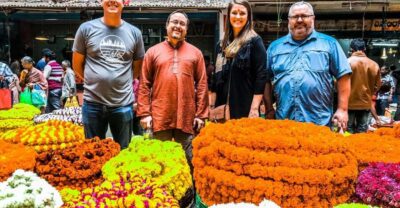
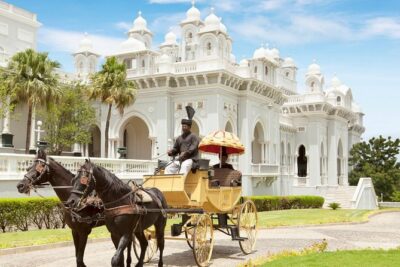
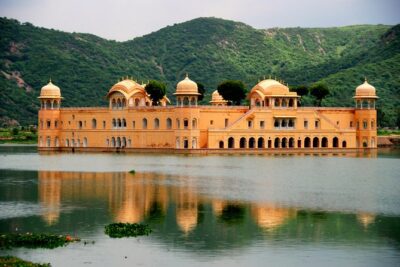
2-Day Private Tour of Jaipur from Delhi: City Palace, Hawa Mahal and Amber Fort
Read our review →Browse the lists this tour appears in