
Review · PALAZZO VECCHIO AND PITTI PALACE TOURS
Palazzo Vecchio Tales – into Medici’s secrets and mythology simbols
Palazzo Vecchio is not just a grand Florentine town hall. It is a coded family album, political stage, and lesson in Medici power. This private tour takes you from Michelozzo’s courtyard and its puzzling Austrian landscapes to the huge Salone del Cinquecento, then into rooms filled with portraits, gods, battles, and political messages.
I like the small private format and the way the tour links art to power rather than treating each room as a separate pretty picture. I also like the use of radios and headphones, especially in crowded museum rooms. The main drawback is practical: the museum is unheated in winter, and there are few places to sit while the guide is speaking.
Key points to know before booking
- Michelozzo’s courtyard: Look closely at the 1500s frescoes and ask why Austrian scenery appears in a Florentine palace.
- The Salone del Cinquecento: The tour explains how this vast ceremonial room changed over time.
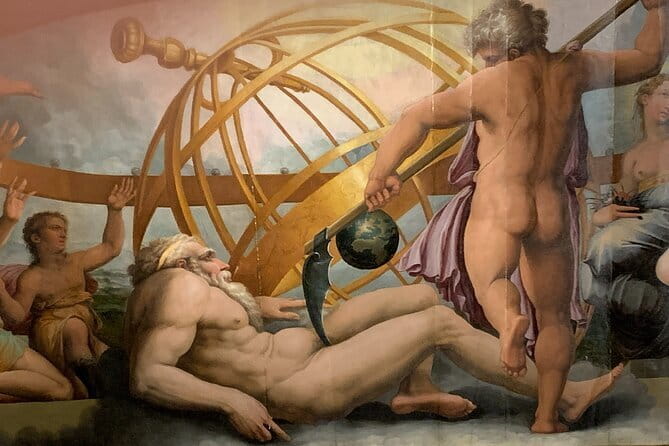
- Medici symbolism: Portraits, myths, historical scenes, and allegories reveal how the family presented its rule.
- Donatello’s Judith and Holofernes: You will see the original work, not just a reproduction or distant reference.
- Machiavelli’s office: This stop connects the building to European political thought.
- Winter comfort: The museum can be cold, and standing for much of the 1 hour 45 minute visit may be tiring.
Why Palazzo Vecchio works so well as a Medici tour

Many Florence visits focus on churches, paintings, and famous sculptures. Palazzo Vecchio gives you something different: a place where art was used to explain who should rule and why. The Medici rooms are filled with images that turn family power into a visual argument.
That makes this tour especially useful if you do not want a simple list of dates and names. You will look at portraits, mythological gods, historical events, and allegories as parts of one larger message. The guide’s job is to connect those images, and that is where the experience earns its keep.
The tour is offered in English and lasts about 1 hour 45 minutes. That is long enough to move beyond the entrance rooms, but short enough to fit into a busy Florence day. You will not see every corner of Palazzo Vecchio. Instead, the visit concentrates on the courtyard, the main ceremonial hall, and the Medici family rooms, with special attention to important works and political figures.
More Palazzo Vecchio and Pitti Tours in Florence:
- Florence: Palazzo Vecchio Entrance Ticket & Audioguide
★ 4.4 · 4,822 reviews - Florence: Uffizi, Pitti Palace & Boboli Combined 5-Day Pass
★ 4.5 · 1,726 reviews - Florence: Palazzo Vecchio Guided Tour
★ 4.8 · 1,260 reviews
Starting in Michelozzo’s courtyard
The meeting point is Piazza della Signoria, outside Palazzo Vecchio. This is a central, easy-to-find location in Florence, but it can be busy, so give yourself time to identify the exact meeting spot before the scheduled start.
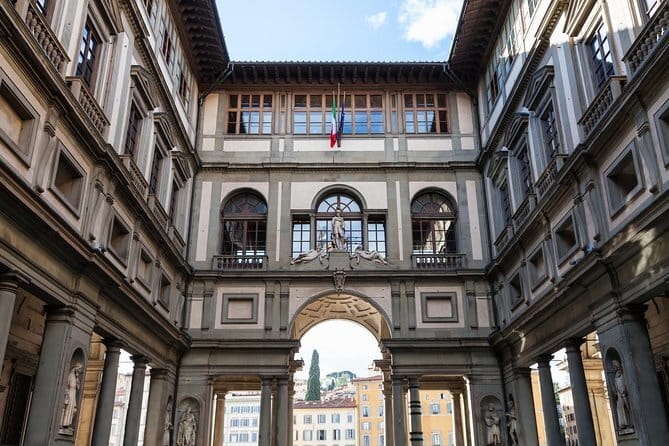
The first major stop is Michelozzo’s courtyard. Its 1500s frescoes are not mere decoration. The Austrian landscapes are an ideal example of how a building can contain a puzzle. You will learn why views from Austria appear in a Florentine palace, a question that gives the courtyard more interest than a quick look at painted walls.
This part of the tour rewards patience. Look up, notice the arrangement of the frescoes, and listen for the political or family reason behind their subject matter. Without that explanation, the scenery may seem out of place. With it, the courtyard becomes an early lesson in the visual language used throughout the palace.
The courtyard also sets the tone for the rest of the visit. Palazzo Vecchio asks you to read the building, not simply admire it. The guide points out symbols and connections that can be easy to miss when you walk through on your own.
Reading the enormous Salone del Cinquecento
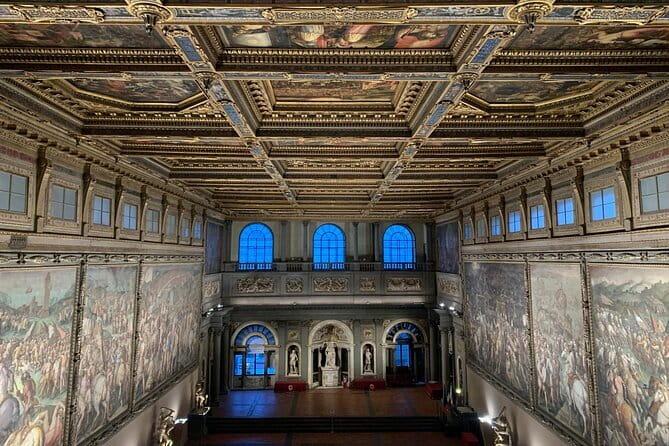
The Salone del Cinquecento is the visual heavyweight of the tour. Its scale is hard to grasp from photographs. This is a ceremonial room designed to make power feel large, formal, and permanent.
The important point is that the room did not remain fixed. Its several transformations tell you something about changing political needs and changing ideas of how Florence should present itself. The guide explains those changes while you stand in the space, allowing you to connect the room’s appearance with the events and decisions that shaped it.
You should expect to spend much of this section standing. There are not many opportunities to sit while the guide talks, and the museum may feel cold during winter. Comfortable shoes and a warm layer are sensible choices, even if the weather outside seems mild.
The included radios and headphones matter here. A large hall can make a guide’s voice hard to catch, especially when other people are nearby. The equipment lets you keep your eyes on the architecture and artwork instead of pressing close to the guide.
Entering the Medici family rooms
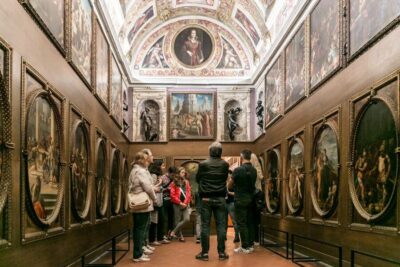
After the major hall, the tour moves into rooms linked to the Medici family. These spaces are more intimate than the Salone, but they are no less deliberate. Portraits present the family in a certain light. Scenes from history place them within a larger story. Mythological figures lend their qualities to the people and events shown around them.
This is where the title’s focus on symbols becomes most useful. A god, hero, battle, or allegory may seem like an old story placed on a wall. The guide helps you see why that particular figure appears there and what message it could send about authority, virtue, victory, or family identity.
I like this approach because it gives you a way to look at decorative rooms without needing specialist art training. You do not need to recognize every myth in advance. You need only follow the connections between the images and the people who commissioned them.
The family rooms also make the Medici presence personal. You are not looking only at public architecture. You are seeing rooms decorated with portraits and references meant to shape how the family was remembered. That human scale balances the grand public display of the Salone.
More Palaces to Tour in Florence:
- Florence: Palazzo Vecchio Entry Ticket with Audio Guide
★ 4.4 · 837 reviews - Florence: Pitti Palace and Boboli Gardens Ticket & eBook
★ 4.5 · 835 reviews - Florence: Pitti Palace, Boboli Garden, Palatine Gallery Tour
★ 4.9 · 558 reviews - Florence: Palazzo Vecchio Skip-the-Line Entry Ticket
★ 4.2 · 349 reviews
Seeing Donatello’s Judith and Holofernes
A major art stop is Donatello’s original Judith and Holofernes. This is one of the tour’s clearest reasons to choose a guided visit rather than simply wandering through the building.
The subject itself carries strong political meaning. Judith defeats Holofernes, and the image can be read through ideas of courage, resistance, and civic virtue. The guide places the sculpture within the setting and explains why it matters there.
You will also benefit from seeing the work in relation to the rest of the palace. A sculpture rarely tells its full story by itself. Its location, nearby decorations, and connection to Florence’s political world all affect how you understand it.
Do not rush this stop. Notice the figures, the action, and the way the sculpture occupies space. The tour does not treat Donatello’s work as a quick name to check off. It connects the sculpture to the building’s larger concerns about power and public identity.
Finding Machiavelli’s personal office
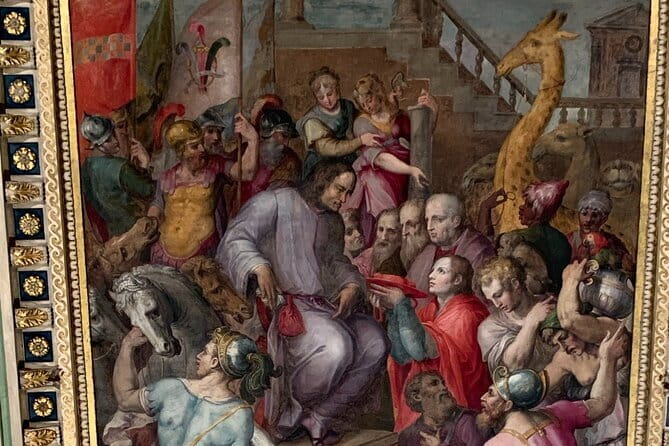
The visit also includes Niccolò Machiavelli’s personal office, an especially meaningful stop for anyone interested in political thought. Palazzo Vecchio was not only a place of ceremony. It was also a working center of government, and this room brings that practical side into view.
Machiavelli’s name is tied to questions of leadership, government, and political power. Seeing the office within Palazzo Vecchio helps place those ideas in a real civic setting rather than leaving them as abstract textbook subjects.
This stop can also change the rhythm of the tour. After the grand rooms and theatrical Medici decoration, the office offers a more direct link to the people who worked within Florence’s political system. Ask questions here if you have them. The guide, Daniele, is described as a strong storyteller who handles questions in detail, making this part particularly useful for visitors who want more than a quick biography.
The value of a private English tour

The price is $150.19 per person, and the museum ticket is paid separately at the museum on the same day. That makes the total cost higher than the headline figure, so you should account for both expenses before booking.
Still, the price buys more than entry. You get a licensed local guide, a private activity for your group, radios and headphones, and a skip-the-line reservation for a specific date and time. The reservation can save useful time in Florence, where a fixed schedule helps you plan lunch, another museum, or an afternoon walk.
The strongest value is the interpretation. If you already know Medici symbolism, Renaissance politics, and the major works inside Palazzo Vecchio, you may prefer to explore independently. If you want the building explained as a connected story, the guide adds real substance.
The private format is also worth considering for families, couples, or friends who want to ask questions without following a large mixed group. Group discounts are available, though the exact saving depends on the booking details. The tour is offered only in English, so it suits you best if you are comfortable listening to a fairly detailed explanation in that language.
The experience is often booked about 37 days ahead. That does not guarantee that every date will sell out, but it is a useful signal to plan early, particularly if your Florence schedule is tight.
Timing, comfort, and practical preparation
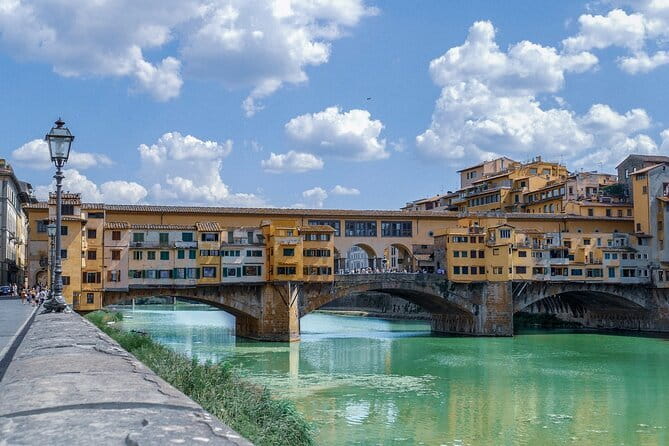
The meeting point and ending point are both at Piazza della Signoria. You do not need to arrange transportation between stops, since the visit takes place inside Palazzo Vecchio and returns to the starting point.
The timed reservation is important. Confirmation is sent within 48 hours of booking, subject to availability, so do not assume the tour is final until you receive it. The reservation is for a concrete date and time, which means late changes can be difficult.
Plan for nearly two hours on your feet. The museum is unheated in winter, and there are limited chances to sit while the guide speaks. Wear comfortable shoes and bring an extra layer in cold weather. The radios and headphones help with listening, but they do not solve the issue of standing or temperature.
Most people can take part, and service animals are allowed. The meeting point is near public transportation. The activity requires a minimum number of participants, so an occasional cancellation for that reason is possible. If that happens, you are offered another date or experience, or a full refund.
Cancellation is free up to 24 hours before the start time. Inside that 24-hour window, the payment is not refunded and changes are not accepted. Use the local Florence time when calculating the deadline.
Who will get the most from this visit
I would choose this tour if you want Florence’s art explained through power, politics, and family ambition. It is a strong match for first-time visitors who want a clear route through Palazzo Vecchio, as well as returning visitors who want a more focused look at Medici symbolism.
It also suits anyone interested in Machiavelli, Renaissance government, or the way rulers use art to shape public opinion. The courtyard’s Austrian frescoes, Donatello’s Judith and Holofernes, and Machiavelli’s office give the visit several distinct points of interest.
You may want a different plan if you dislike guided interpretation, need frequent seats, or are visiting in winter and do not want to spend time in a cold building. The museum ticket being separate may also make the cost feel less simple than a package with everything included.
Should you book Palazzo Vecchio Tales?
Book it if you want a private, English-language explanation of the palace’s art and political meaning, not just a fast walk through impressive rooms. Daniele’s storytelling and ability to answer questions are a particular plus, while the timed reservation and listening equipment make the visit easier to follow.
Skip it if you prefer to set your own pace or if the added museum ticket pushes the total beyond your budget. For most visitors who want the Medici story tied to real rooms, sculptures, and political figures, the 1 hour 45 minute format offers a focused use of your Florence time.
FAQ
Where does the tour begin?
It begins at Piazza della Signoria, Piazza della Signoria, 50122 Firenze FI, Italy.
Where does the activity end?
The tour ends back at the meeting point in Piazza della Signoria.
How long does the tour last?
The visit lasts approximately 1 hour 45 minutes.
What language is the tour offered in?
The tour is offered in English.
Is the museum ticket included in the price?
No. You pay the museum ticket directly to the museum on the same day as the tour.
What is included in the tour price?
The price includes a visit with a licensed local guide, radios and headphones, and a skip-the-line reservation for a specific date and time.
Is this a private activity?
Yes. Only your group participates in the private tour.
What can you see inside Palazzo Vecchio?
The visit includes Michelozzo’s courtyard, the Salone del Cinquecento, Medici family rooms, Donatello’s Judith and Holofernes, and Niccolò Machiavelli’s personal office.
Can I cancel for a full refund?
Yes. You can cancel at least 24 hours before the experience starts for a full refund. Cancellations made less than 24 hours before the start time are not refunded.
Is the tour suitable for most people?
Most people can participate. Service animals are allowed, and the meeting point is near public transportation. The museum can be unheated in winter, and there are few places to sit during the guide’s explanations.
Newly added in Florence
- the Medici family in Florence: Palazzo Medici and Medici Chapels★ 4.5 · 10 reviews
- FLORENCE: Uffizi Gallery + Palazzo Vecchio monolingual Guided Tour – Small Group★ 5.0 · 9 reviews
- The Pitti Palace private tour: Splendours of the Royal Residence★ 5.0 · 4 reviews
- Uffizi and Palazzo Vecchio Combo Private Tour★ 5.0 · 3 reviews
- Pitti Palace, Palatina Gallery and the Medici: Arts and Power in Florence.★ 4.5 · 223 reviews
- The Medicis: The Movie, The Family, The Palace!★ 5.0 · 9 reviews
- Small-Group Palazzo Vecchio Secret Passages Tour with Lunch Or “Gelato”★ 4.0 · 92 reviews
- Pitti Palace Private Tour With 5- Star Guide★ 3.0 · 2 reviews
Palazzo Vecchio and Pitti Palace Tours, compared.
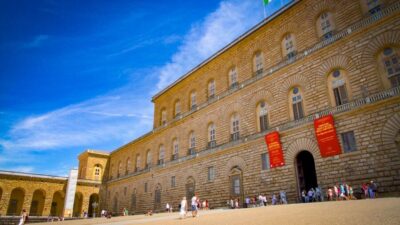
Uffizi, Pitti Palace & Boboli Combined 5-Day Pass
Read our review →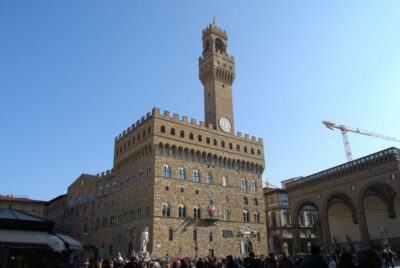
Palazzo Vecchio: Skip-the-Line Entry and Secret Passage Tour
Read our review →
Browse the lists this tour appears in