
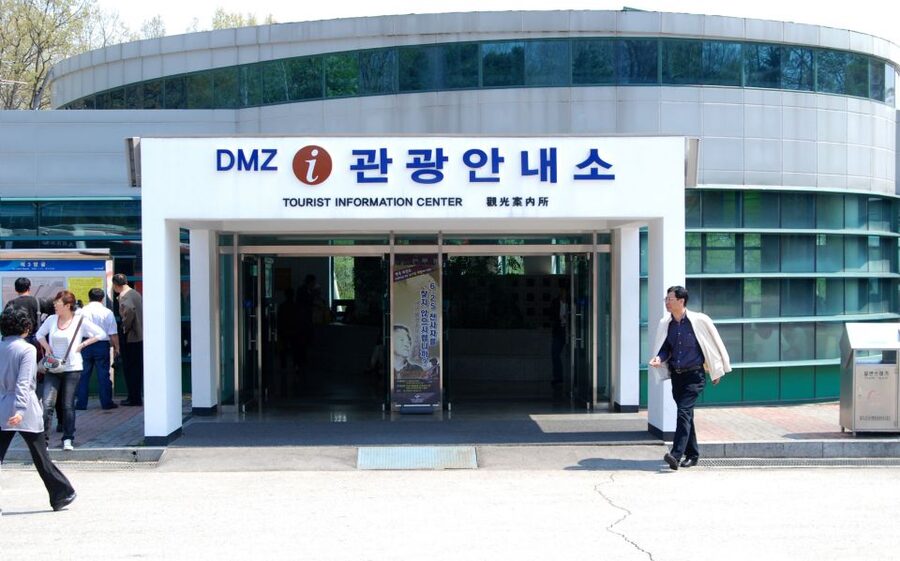
Review · GYEONGBOKGUNG PALACE TOURS
Seoul: DMZ, Gyeongbokgung Palace & City Tour
The striking part of this day is the contrast: you begin at the DMZ, where Korea’s division is still a daily fact, then visit Gyeongbokgung Palace, where kings once managed an entire state from a carefully ordered court. I like that the tour joins modern military history with royal history, and I like having a professional security guide explain what you are seeing rather than simply pointing at fences and buildings.
The main drawback is the long, tightly timed day. You must use the authorized bus, follow photo rules, carry a current passport, and wear proper shoes. Access to the DMZ can also change if military training or an official event takes place, so this is not a flexible, wander-at-your-own-speed outing.
Key points to know before booking
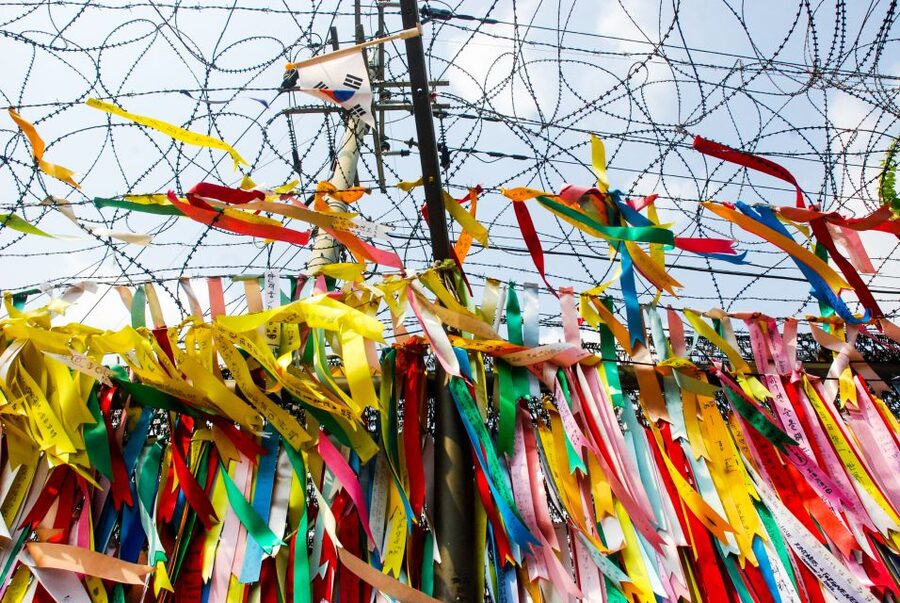
- See the DMZ’s main sights in one organized day: Visit the Third Tunnel, an observatory, Imjingak, and a war history venue without arranging separate transport.
- Hear the story from a security specialist: The guide explains North and South Korean relations, the war, and the meaning of the border area.
- Look into North Korea from the observatory: Clear conditions may let you see North Korean residents and territory across the border.
- Pair military history with royal Seoul: Gyeongbokgung Palace adds dynastic history and a very different view of how Korea was governed.
- Bring your passport and wear sneakers: These are not optional details. You need a current passport, and sandals or slippers are not allowed.
- Expect a replacement plan if needed: A military closure can switch the day to Tomorrow’s Whistle, Bunker Beat 131, Odusan Unification Tower, and the War Memorial of Korea.
Why this Seoul day works so well
At $110 per person, this is not the cheapest sightseeing day in Seoul. I think the price makes sense if you want the DMZ handled for you, with transport, entry fees, an English guide, and hotel pickup or drop-off included. The value is less about collecting a long list of stops and more about getting into a sensitive military area without having to work out the rules yourself.
The day lasts about 10 hours. That sounds long because it is long, but the distance and border procedures make a full-day schedule practical. You can sit on the coach between stops instead of managing public transport and separate tickets.
The tone matters here. The DMZ is not a theme park. It is a working border shaped by war, military policy, and families divided for generations. A guide can help you understand why a tunnel, lookout point, or checkpoint matters. Guides named Molly, Ron Han, and SP have led recent departures, with particularly strong praise for clear explanations, patience, photography help, and warm treatment of participants.
More Gyeongbokgung Palace Tours in Seoul:
- Best Seoul City Tour (Gyeongbokgung Palace,Insadong,Namsan Tower)
★ 5.0 · 1,647 reviews - Seoul City Sightseeing Tour Including Gyeongbokgung Palace, N Seoul Tower, and Namsangol Hanok Village
★ 5.0 · 1,423 reviews - Seoul Half-Day City Highlight, Palace Tour with Hanbok
★ 4.9 · 764 reviews
Starting at City Hall at 7:30 AM
The standard meeting point is Exit 7 of City Hall Station at 7:30 AM. Hotel pickup in Seoul is available as an option, which can be worth paying for if you are staying away from the city center or want to avoid finding the station before sunrise.
Confirm your exact pickup arrangement before the day. This tour enters a controlled area, and late arrivals may not fit easily into the schedule. Carry your passport in a secure but accessible place. A current valid passport is required on the day, not just a photocopy or an expired document.
Wear sneakers. You should expect walking at the DMZ, and the Third Tunnel is not a place for flimsy footwear. Sandals and slippers are not allowed. The tour is not suitable for wheelchair users, and children must travel with an adult. Unaccompanied minors are not permitted.
The Third Tunnel, built for an attack
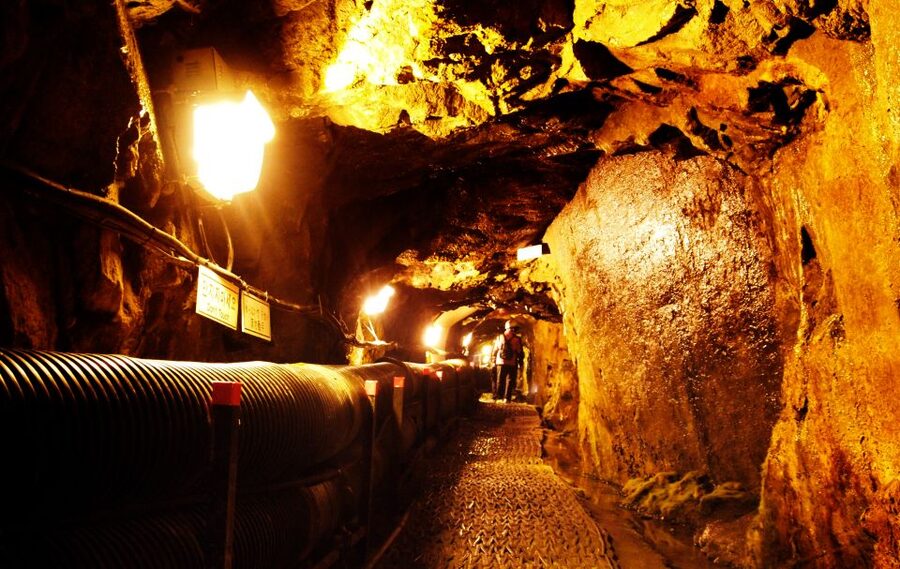
The Third Tunnel is one of the day’s most physical and memorable stops. It was constructed by North Korea as a route for an invasion of South Korea, with enough scale for military movement, including tanks according to the tour description.
The value of this stop comes from its purpose. You are not just looking at an old passage underground. You are seeing evidence of how seriously both sides prepared for another war. The tunnel gives the political story a physical form, one you can walk through rather than only hear about in a lecture.
Expect the tour to keep you moving and follow the guide’s instructions closely. The DMZ operates under military rules, so this is not a place for independent exploration. The exact amount of time and the areas open to visitors can depend on current regulations.
If you have limited mobility, this stop deserves careful thought. The tour does not provide wheelchair access, and the footwear rule is a useful clue that the day involves uneven or demanding walking.
Dora Observatory and the view toward North Korea
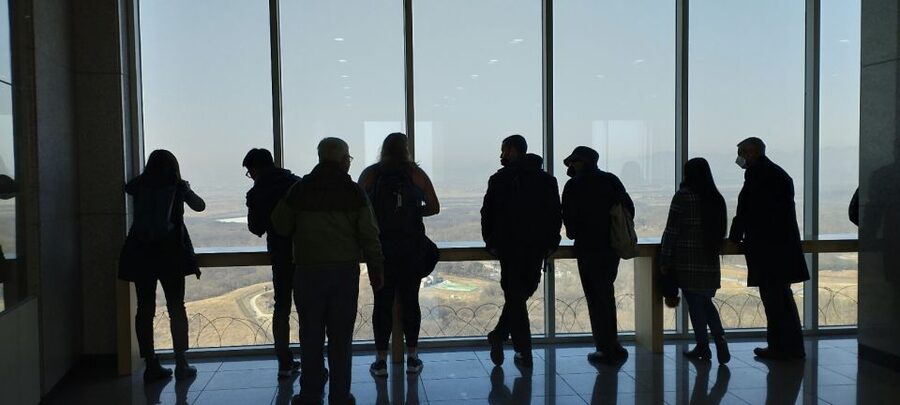
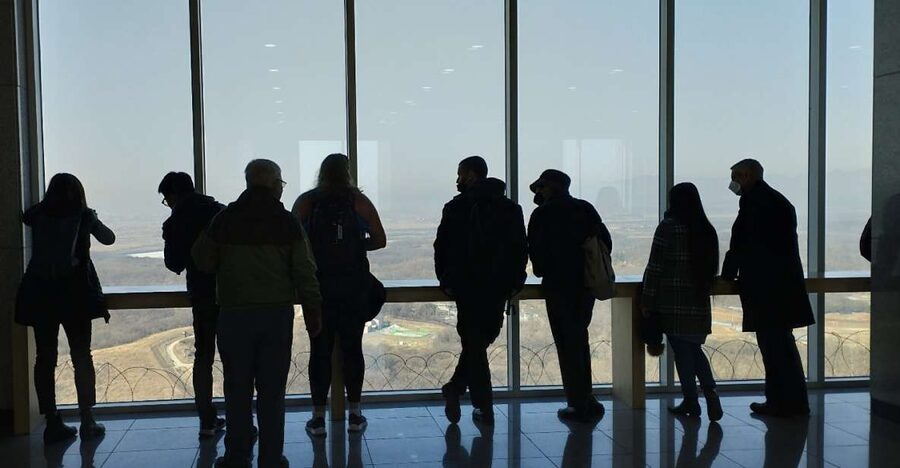
The observatory gives you a chance to look across the border toward North Korea. On a clear day, you may see North Korean residents and territory, making the division feel less like a line on a map and more like a real place occupied by real people.
This is also the stop most affected by weather and visibility. The view is not guaranteed, and you should not book the tour expecting a dramatic panorama every time. The point is the possibility of seeing across one of the world’s most closely watched borders, while your guide explains what the view means.
Photo rules are strict in the DMZ. You must follow the time limits and instructions for photography, and every tourist must remain with the authorized bus arrangement. That can feel restrictive if you are used to lingering at scenic viewpoints, but it is part of visiting an active security zone.
I appreciate that the observatory is paired with explanation. Without context, binoculars and distant buildings can be hard to interpret. With a guide, you can connect the visible scene to the division of Korea, the armistice, and the continuing relationship between North and South.
More Palaces to Tour in Seoul:
- Seoul: Gyeongbok Palace, Bukchon Village, and Gwangjang Tour
★ 4.9 · 2,321 reviews - Small-Group Royal Palace and Seoul City Tour (hotel pick-up)
★ 5.0 · 1,474 reviews - Seoul: Gyeongbok Palace, Bukchon Village, and Gwangjang Tour
★ 5.0 · 1,044 reviews - Seoul: Palace, Temple and Market Guided Foodie Tour at Night
★ 4.9 · 750 reviews
Imjingak and the War History Pavilion
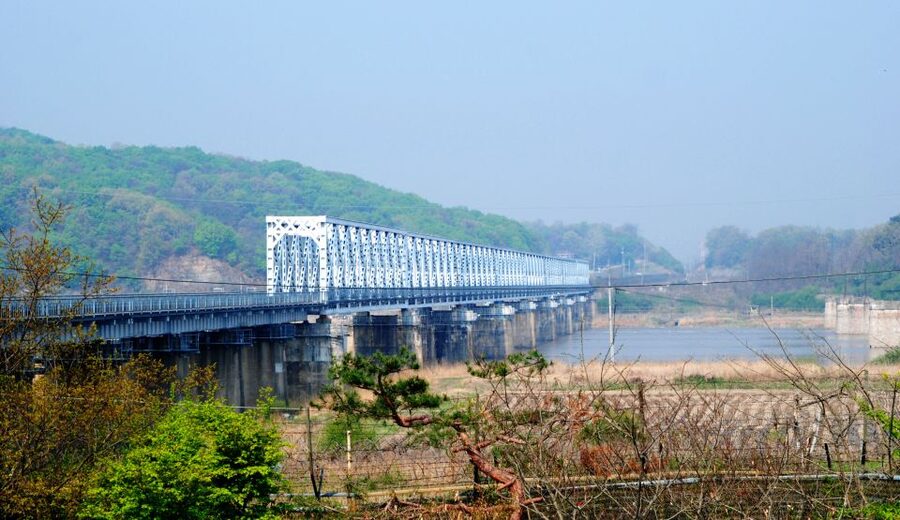
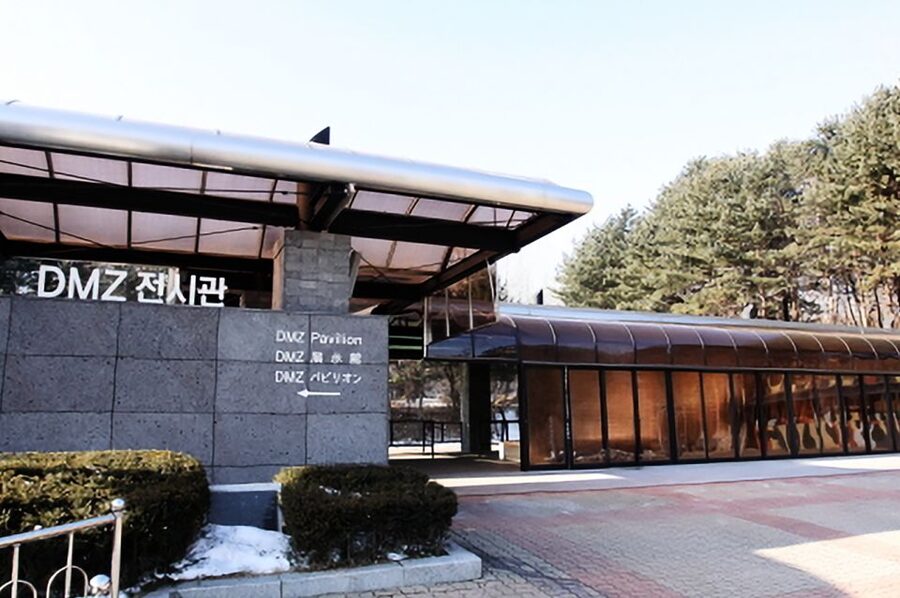
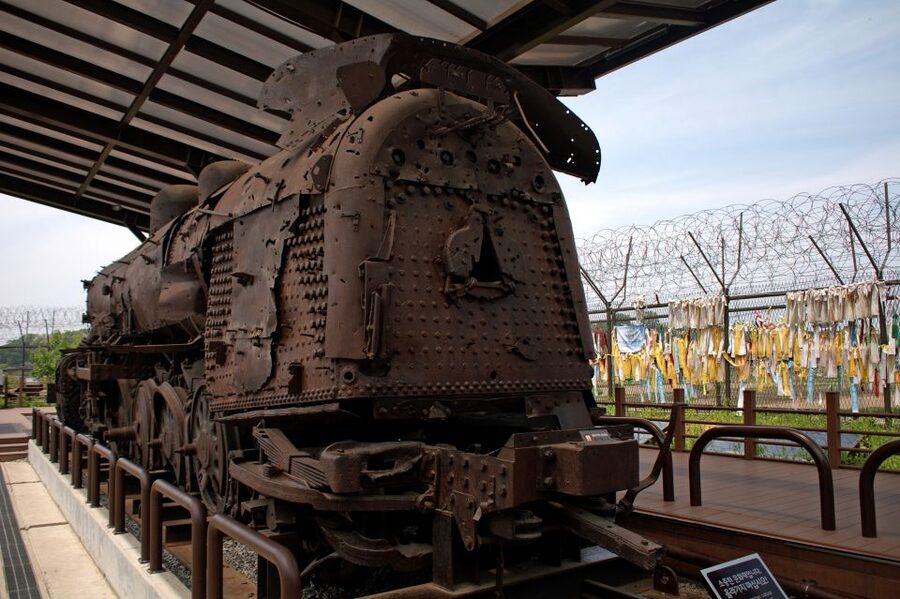
Imjingak brings the human side of the Korean conflict into view. The area helps explain the war and the lives affected by the division, while the War History Pavilion adds background to the military events and their consequences.
This is where the day can move beyond military hardware and lookout points. Korea’s division is not only a security issue. It also involves separated families, national identity, political systems, and the memory of a war that never ended with a formal peace treaty.
The supplied entry fees include access to a venue explaining the history of the war. The exact order of these stops can vary, but the broad aim remains the same: give you historical context before you leave the DMZ area.
The coach is useful here. You can rest between stops, and the guide can keep the group on schedule. The tradeoff is that you will not have much unscheduled time at each site. If you want long museum visits or quiet photography, a private arrangement may suit you better than a standard group departure.
A guide who handles serious history well
The quality of this experience depends heavily on the guide. The tour uses professional English and Korean guides, described as security specialists, to explain relations between North and South Korea.
Several named guides have drawn especially strong praise for their personal approach. Molly has been described as professional, friendly, helpful with photographs, and able to connect the war, Korean dynasties, and lesser-known stories. Ron Han, nicknamed Han Solo, has been noted for his kindness and clear tour leadership. SP has led a palace visit for a very small group and answered questions well beyond the basic itinerary.
Those details matter because the DMZ raises complicated questions. You may want to ask about the tunnel, the war, the border, or modern relations between the two governments. A guide who can answer patiently will make the day much more useful than a guide who simply keeps the bus moving.
The experience is available as a private group, which may be worth considering if you want more room for questions or have a family group. The standard format is better for keeping the cost under control and meeting other visitors, but it will follow a fixed schedule.
Gyeongbokgung Palace and the business of royal rule
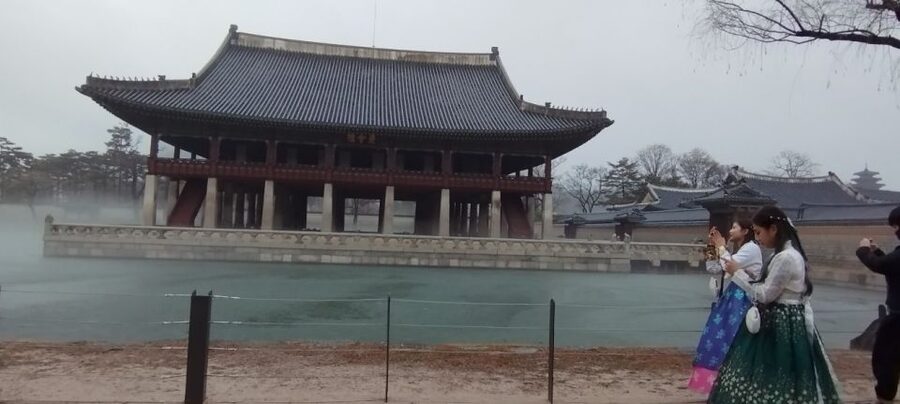
Gyeongbokgung Palace gives the day a sharp change of mood. Built as the main palace of the Joseon dynasty, it was home to the king, his family, and a large working population connected to the court.
The most interesting detail is that the palace functioned less like a private royal residence and more like a large government organization. The king relied on employees, advisers, and formal systems to run the country. That helps you see the palace as an administrative center, not just a collection of grand gates and ceremonial buildings.
I like placing Gyeongbokgung after the DMZ. At the border, you are looking at the result of modern conflict and division. At the palace, you are looking much further back at the political structures that shaped Korea. The two stops give you a wider frame for understanding Seoul.
The palace visit may be especially good with a small group. One departure had only a few participants at the palace, allowing the guide to offer what felt like a private visit, answer questions, and take photographs. Group size can change, so do not assume you will receive a private tour, but the optional private-group format gives you that possibility.
Gyeongbokgung is closed on Tuesdays. When that happens, the tour substitutes Deoksu Palace. That is important if your itinerary is built around Gyeongbokgung specifically. You will still receive a palace visit, but it will not be the same site.
Lunch, transport, and what the $110 covers
Lunch is not included in the stated price, and you should budget for your own meal and personal expenses. One recent departure included a traditional lunch, but you should not count on that unless the operator confirms it for your date.
The price does include transportation, DMZ entry, a professional guide, and hotel pickup and drop-off when selected. This is a useful bundle because the DMZ is not a casual hop-on, hop-off destination. Military access, authorized vehicles, and timing make organized transport a practical choice.
The coach also protects your energy. Ten hours is a lot of sightseeing, and you will appreciate having a seat between stops. The downside is the fixed pace. You cannot simply skip a stop, stay longer at the observatory, or change the route because you found a particular exhibit fascinating.
Free cancellation is available up to 24 hours before departure, and you can reserve now and pay later. Those terms help if your Seoul plans are still shifting, but the most important practical step is confirming availability and pickup details before the travel day.
What happens if the DMZ closes
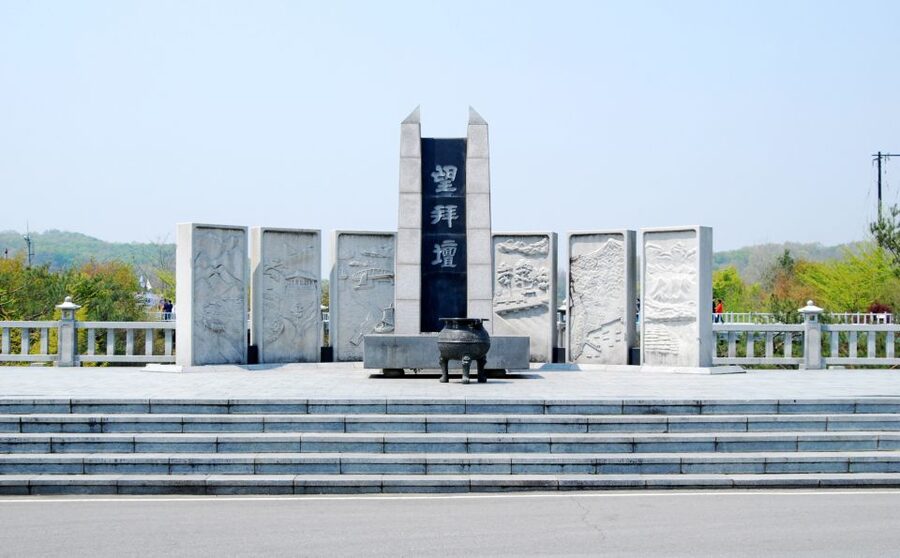
A DMZ tour is always subject to military conditions. If an unannounced training exercise or official event closes access, the day changes to another route: Tomorrow’s Whistle, Bunker Beat 131, Odusan Unification Tower, and the War Memorial of Korea.
This is not a defect in the tour. It is the reality of visiting a controlled border. Still, you should be comfortable with the possibility that the exact experience you wanted may not happen.
The replacement route keeps the focus on Korea’s division and war history, so the day does not simply turn into unrelated sightseeing. But it may not include the Third Tunnel or the same view toward North Korea. If those are your main reasons for booking, ask about current conditions close to your departure date.
Who should book this tour?
I would choose this tour if you have one full day in Seoul and want a guided introduction to the DMZ without handling transport, permits, entry fees, and military instructions yourself. It is also a good match if you want more than a border photo, since the guide connects the DMZ to the Korean War and then to the country’s royal past.
It suits first-time visitors, history fans, families with accompanied children, and anyone who values clear explanations. The named guides associated with recent departures have been praised for being warm, responsive, and good with photographs, which can make a long day feel more personal.
I would hesitate if you dislike strict schedules, have difficulty walking, need wheelchair access, or want a slow palace visit with plenty of free time. I would also think twice if seeing the DMZ itself is your only priority, since access can change and the palace is a substantial part of the day.
For most visitors, the combination is the strength. You get the Third Tunnel, a view toward North Korea, Imjingak, war-history interpretation, and Gyeongbokgung in one organized outing. Bring your passport, wear sneakers, accept the military rules, and treat the day as a serious history lesson with Seoul’s royal court added to the itinerary.
FAQ
How long does the tour last?
The tour lasts about 10 hours.
Where is the standard meeting point?
Meet at Exit 7 of City Hall Station at 7:30 AM.
Is hotel pickup available?
Yes. Hotel pickup and drop-off in Seoul are available as an optional service.
What languages are available?
The tour offers live guides in English and Korean.
Do I need my passport?
Yes. A current valid passport is required on the day of travel.
Is lunch included?
Lunch is not included in the stated tour price. Personal expenses are also excluded.
What happens if the DMZ is closed?
If military training or an official event prevents access, the tour is replaced by Tomorrow’s Whistle, Bunker Beat 131, Odusan Unification Tower, and the War Memorial of Korea.
Is Gyeongbokgung Palace visited every day?
Gyeongbokgung Palace is replaced by Deoksu Palace when Gyeongbokgung is closed on Tuesdays.
Newly added in Seoul
- Seoul: UNESCO Palace and Street Foods Guided Tour★ 5.0 · 6 reviews
- Seoul: UNESCO Sites tour: Palace, Shrine & Bukchon Village★ 4.8 · 26 reviews
- Seoul: Gyeongbok Palace and Bukchon Hanok Walking Tour★ 4.8 · 157 reviews
- Seoul: Modern Hanbok Dress Photoshoot Gyeongbokgung Palace★ 5.0 · 2 reviews
- Seoul: Professional Hanbok Photography at Gyeongbok Palace★ 4.9 · 172 reviews
- Seoul: Royal Palace Morning Tour including Cheongwadae★ 4.5 · 12 reviews
- Seoul: Gyeongbokgung Palace Tour & Lunch at Authentic Market★ 4.5 · 2 reviews
- Seoul: Gyeongbokgung Palace Half Day Tour★ 4.9 · 111 reviews
Gyeongbokgung Palace Tours, compared.
Seoul City Sightseeing Tour Including Gyeongbokgung Palace, N Seoul Tower, and Namsangol Hanok Village
Read our review →
Seoul Half-Day City Highlight, Palace Tour with Hanbok
Read our review →
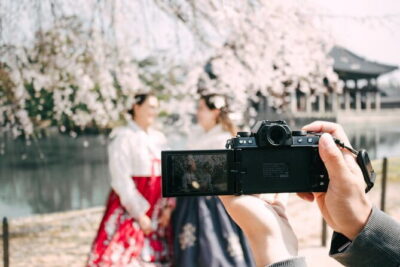
Hanbok Photoshoot and History Tour at Gyeongbokgung Palace
Read our review →
Professional Hanbok Photography at Gyeongbok Palace
Read our review →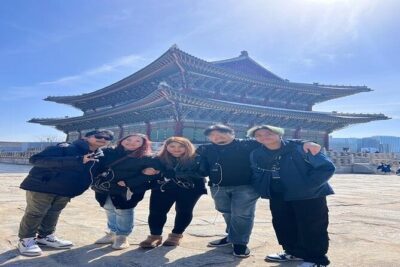
Browse the lists this tour appears in