
Review · SPAIN PALACE TOURS
Zaragoza: Aljafería Palace guided tour in Spanish
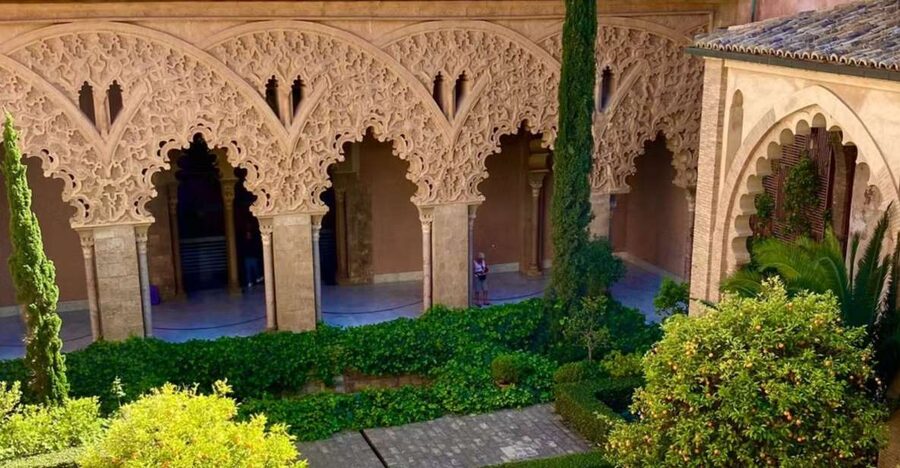
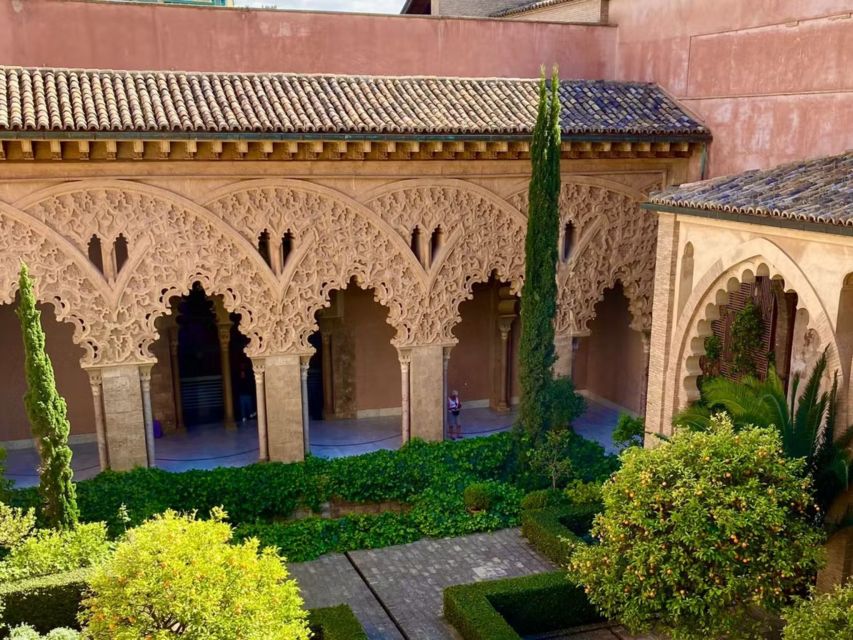
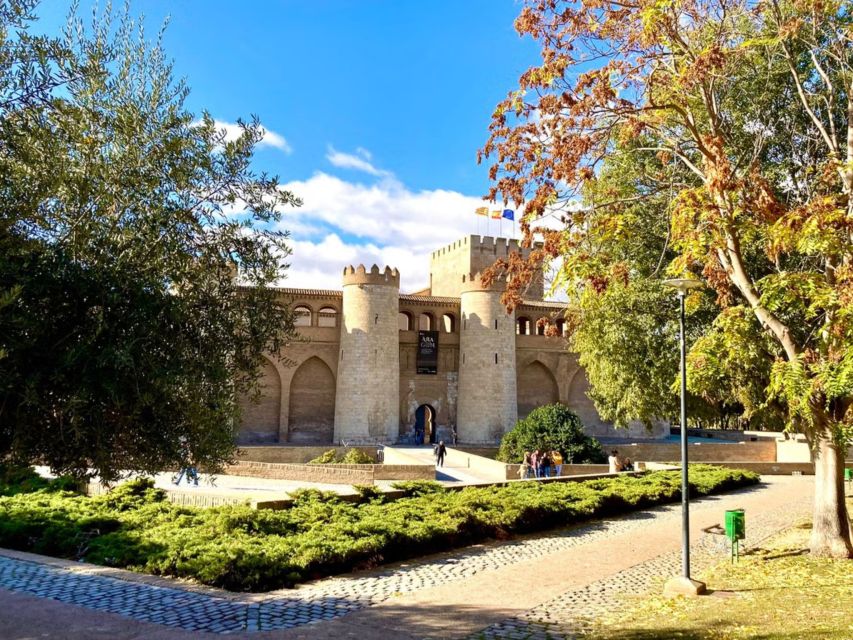
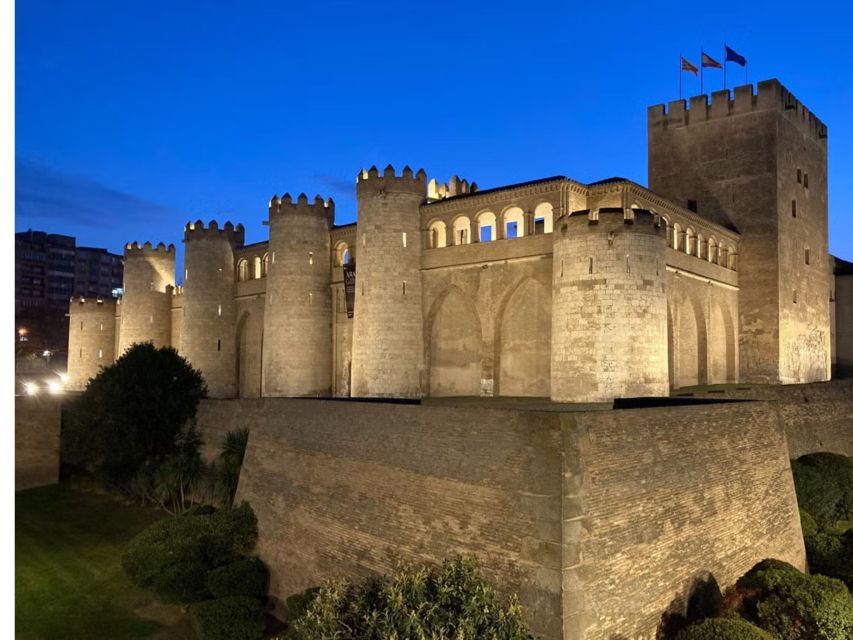
Zaragoza’s Aljafería Palace is unusual even by Spanish standards: one building contains three palaces, layered across more than a thousand years of changing power. This was once a Muslim ruler’s pleasure residence, later a royal palace, an Inquisition prison, military barracks, and now the home of the Cortes of Aragon. I like that the tour opens every room available to the public, not just the prettiest courtyard. I also like the use of models, digital reconstructions, photographs, sounds, and smells to help you picture what time has erased.
The main thing to consider is the language. This is Spanish only, and the two-hour format may feel long if you mainly want photographs or have a low level of Spanish. The palace interior has changed greatly over the centuries, so the guide’s explanation is what gives the bare walls and rebuilt spaces their meaning.
Key points to know before you book
- Three palaces in one visit: Follow the building from its ninth-century Muslim beginnings through its Christian royal and modern Aragonese chapters.
- Every public room is included: The route covers the rooms open to the public, the exterior areas, and the current plenary chamber of the Cortes of Aragon.
- A rare Muslim monument in Europe: The Aljafería is described as Europe’s northernmost Muslim palace.
- Spanish guides with strong personal style: Blanca has been praised for her sympathy and clear explanations, while Leyre’s tour has been described as lively and entertaining.
- A small-group setup: Groups of more than 10 use a radio system, making it easier to hear the guide in large spaces.
- Plan for two full hours: Arrive 5 to 10 minutes early at Calle de los Diputados, 25, beside the castle entrance.
Why the Aljafería deserves two hours
Many historic buildings are easy to admire and hard to understand. The Aljafería can be both beautiful and confusing because its purpose changed so often. One arch may belong to its Muslim era, while a nearby hall reflects Christian royal use or a much later restoration. Without context, you may see a handsome old palace. With a good guide, you can follow the political story of Aragon through the stone.
The palace began in the ninth century as the recreational residence of Abu Jaáfar al-Muqtádir, ruler of the Saraqusta taifa. Its original role matters. This was not simply a fortress built for war. It was also a place of court life, ceremony, comfort, and display, created to show the ruler’s power and refinement.
The tour presents that first chapter before moving through the building’s later uses. I value this approach because it avoids treating the Aljafería as a single frozen monument. You see how each new owner adapted the building, sometimes preserving earlier work and sometimes covering it with new forms.
The palace is part of the UNESCO-listed Mudejar Architecture of Aragon group. That designation gives the site wider importance, but you do not need to be an architecture specialist to enjoy it. The useful question is simple: which parts belong to which period, and what does each change tell you about the people who controlled Zaragoza?
More Palaces to Tour in Spain:
- Granada: Alhambra & Nasrid Palaces Tour with Tickets
★ 4.7 · 19,801 reviews - Granada: Alhambra and Nasrid Palaces Entry Ticket
★ 4.6 · 15,130 reviews - Madrid: Royal Palace Fast-Access Admission Ticket
★ 4.6 · 13,856 reviews
Starting beside the entrance at Calle de los Diputados, 25
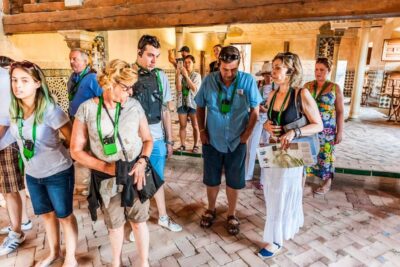
The meeting point is next to the castle entrance, before you enter the palace grounds. Look for the guide with a pink backpack, a badge around the neck, and a folder marked with the company name and GetYourGuide.
Arriving 5 to 10 minutes early is practical, not fussy. The palace can be busy, and the guide needs to gather the group before the visit begins. A late arrival could mean missing the opening explanation or struggling to find the group once it has entered.
The tour includes the palace admission, so you do not need to arrange a separate entry ticket for the guided visit. The experience lasts two hours, and starting times vary, so check the available slot when booking.
The group setup is designed to keep the talk clear. For groups larger than 10, the guide uses a radio system. That matters in courtyards and large halls, where voices can scatter and visitors can easily lose the thread of the explanation.
The Muslim palace and the Palace of Joy
The first major chapter is the Aljafería’s Muslim foundation. The ruler al-Muqtádir called his residence a palace of joy, and the name hints at its original purpose. It was meant to provide pleasure, ceremony, and a grand setting for the taifa court.
This is where the guide’s storytelling earns its place. You are not simply looking at walls that survived from the ninth century. You are being shown a royal residence shaped by Islamic court culture in medieval Zaragoza, then called Saraqusta.
The palace is especially important because of its northern location in Europe. Its Muslim origins make it a key piece of Hispano-Muslim art, and the tour places those beginnings inside the wider story of Aragon. That makes the building more than an isolated monument. It records a period when different religious and political powers shaped the same city.
You might find that some of the original palace is difficult to read with your eyes alone. Centuries of changes have altered the interior, and not every space looks as it would have in the taifa period. That is why the digital recreations, models, and photographs are useful. They help fill in the missing colors, arrangements, and forms without asking you to rely on guesswork.
The Christian royal palace and changing power
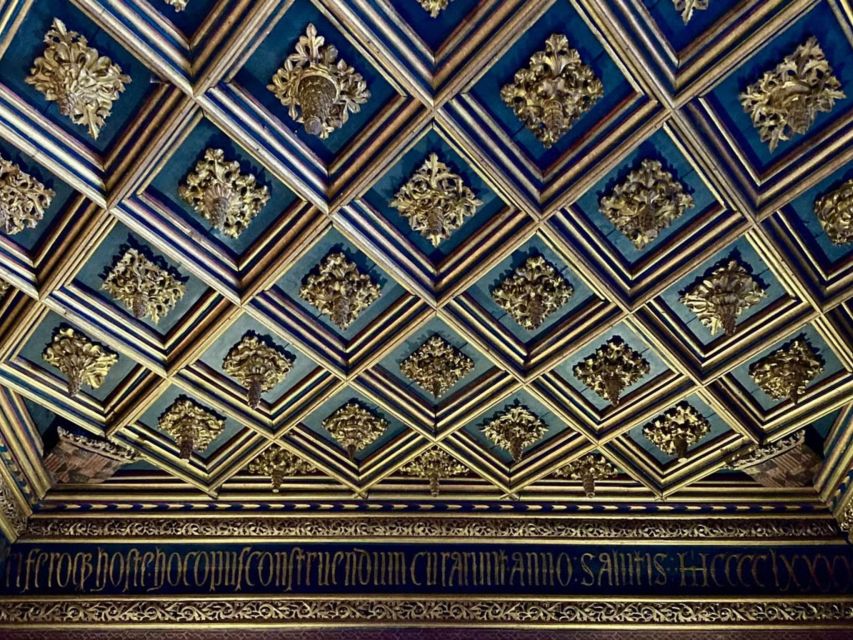
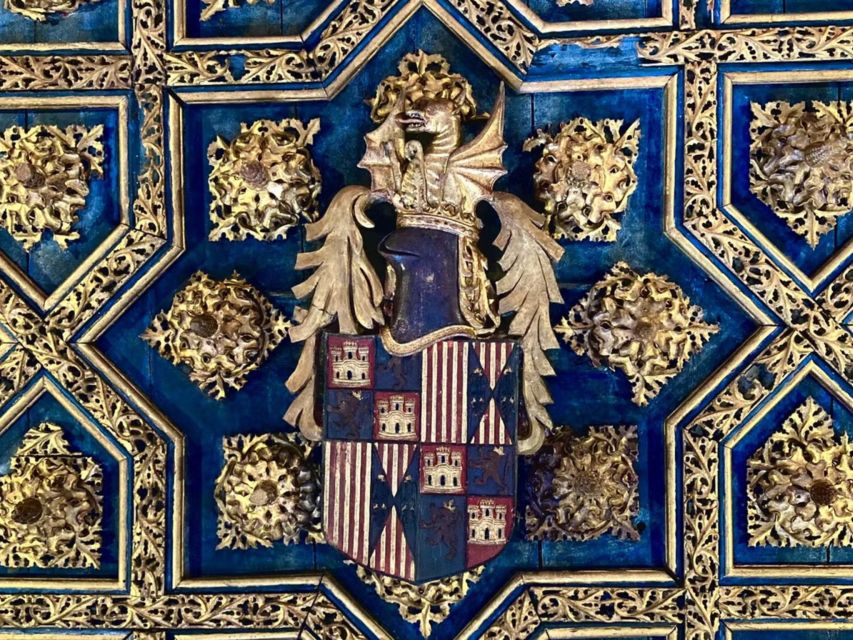
The second major chapter comes after the Christian takeover of Zaragoza. The building became a palace of the Catholic Monarchs, bringing new functions and new decoration to the earlier Muslim structure.
This part of the route shows how conquest did not always mean total destruction. Earlier architecture could be reused, reshaped, or placed within a new political setting. The result is a building where layers sit beside one another, sometimes in harmony and sometimes in sharp contrast.
I like tours that explain these changes rather than presenting medieval Spain as a simple contest between two sides. The Aljafería gives you a more complicated picture. Muslim, Christian, royal, religious, military, and political uses all left their mark.
The guide also connects the palace to the history of Aragon. That regional focus is valuable if you are seeing Zaragoza for the first time. You gain a better sense of why the city mattered, how rulers used architecture to make authority visible, and why this building remains tied to Aragonese identity.
The palace’s later Christian rooms may appeal most to visitors who enjoy grand court settings. At the same time, the interior is not preserved as a single untouched royal residence. Some rooms have been restored, altered, or adapted. Keep that in mind if you expect every space to look exactly as it did during the reign of the Catholic Monarchs.
Same city, another grand address:
- Madrid: Royal Palace Expert Guided Tour with Skip-the-Line
★ 4.7 · 8,407 reviews - Granada: Alhambra & Gardens Tour w/Nasrid Palaces Option
★ 4.2 · 7,022 reviews - Madrid Essential: Historic Center, Plaza Mayor & Royal Palace
★ 5.0 · 6,416 reviews - Fast-Track Alhambra & Nasrid Palaces Guided Tour
★ 4.6 · 5,014 reviews
The Inquisition, military years, and modern parliament
The Aljafería’s story does not end with royal use. It later served as a court and prison connected with the Holy Office, then as military barracks. These are less romantic chapters, but they are essential to understanding the building’s survival and changes.
A palace can be admired for its arches and decorative details while still carrying a harder past. The prison and military periods remind you that historic buildings often had practical uses long after their original purpose had faded. The Aljafería was not preserved simply as a museum for most of its life. It was repeatedly put to work.
The final major chapter is the building’s current role as the headquarters of the Cortes of Aragon. The tour includes the current plenary session chamber, an unusual feature that links medieval architecture with present-day regional government.
That contrast is one of the best reasons to take the full route. You move from a Muslim ruler’s leisure residence to a modern parliamentary setting within the same complex. The palace is not just a relic. It remains part of Zaragoza’s public life.
Digital recreations, models, sounds, and smells
The tour uses more than spoken explanation. Digital recreations and models help show how the palace may have looked at different points in its history. Photographs support the visual story, while sounds and smells are intended to carry you from one period to another.
These tools are particularly helpful because much of the building has not survived in its original form. You can look at an empty or altered room and struggle to picture its earlier appearance. A reconstruction gives you a working image, while the guide explains which details are known and how the room fits into the palace’s wider story.
The sensory elements may appeal to families and visitors who find a standard architecture tour too static. They also make the visit feel less like a sequence of names and dates. Still, your experience will depend on how comfortable you are following a long explanation in Spanish.
The guides Blanca and Leyre have both received especially warm praise for making the material lively and clear. Blanca is noted for her command of the subject and friendly manner. Leyre’s presentation has been described as entertaining and full of useful information. Guide assignments can change, so do not book solely to guarantee one particular person, but the feedback points to a strong emphasis on presentation.
Is $26 good value for two hours?
At $26 per person, this is not the cheapest way to enter a monument, but the value depends on how much help you want with the building’s complicated past. Admission is included, and you receive a full two-hour guided route rather than a quick look at the main courtyard.
I consider the price reasonable if you want the palace explained in sequence. The guide covers all rooms open to the public, the exterior, and the Cortes chamber. You also get access to visual and sensory material that can make the restoration and historical changes easier to follow.
The calculation is different if you prefer to move at your own pace. One visitor felt that the tour could have been shortened to about an hour and 15 minutes because the interior has not preserved enough of the past in its original form. That is a fair warning. If you mainly want the building’s best views and photographs, two hours may feel more than you need.
For history-minded visitors, though, the extra time is the point. The palace’s importance comes from its many layers, and those layers take explanation. You are paying less for a fast monument visit than for a guided history lesson inside the actual building.
Who will enjoy this Spanish-language visit?
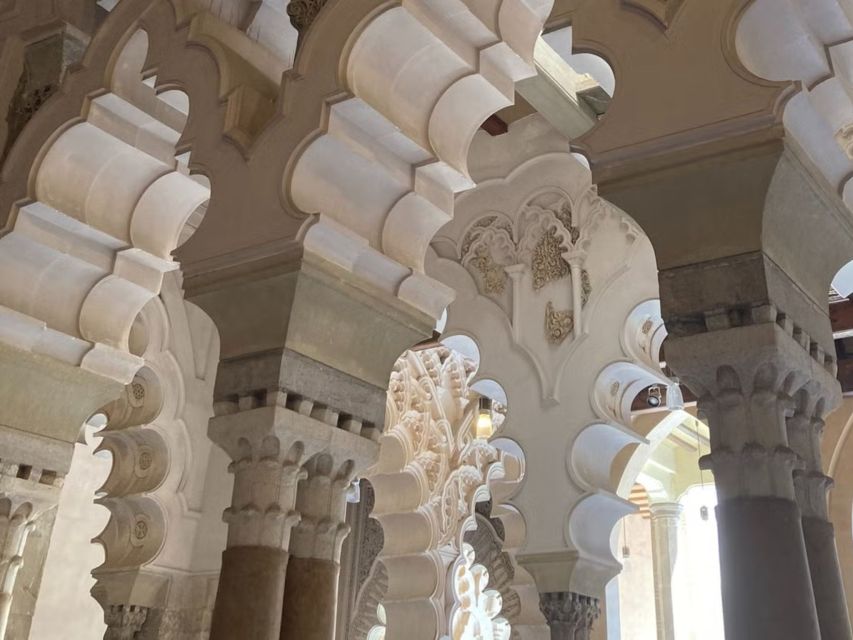
I would choose this tour if you can follow Spanish comfortably and want the palace’s changes explained as you walk. It suits people interested in Islamic Spain, medieval Aragon, royal history, religious institutions, architecture, and modern regional government.
It can also work well for families or mixed-age groups because the guide uses models, images, digital material, and sensory features rather than relying only on dates. The radio system helps when the group is larger than 10.
I would hesitate if your Spanish is limited. The activity is explicitly not recommended for people with a low level of Spanish, and there is no other language option listed. A few familiar words will not be enough for a two-hour historical explanation.
The tour is also not suitable for wheelchair users. Bikes, scooters, and flash photography are not allowed, so leave those items out of your plans and follow the palace rules during the visit.
Practical tips for a smoother visit
Arrive early and wait beside the entrance, before entering the palace grounds. The pink backpack, neck badge, and company folder make the guide easier to identify.
Wear something comfortable for standing and walking through the palace. The available information does not promise seating throughout the route, and two hours is long enough for small discomforts to become distracting.
Do not use flash photography. You can take photographs where permitted, but the palace specifically prohibits flash.
Think of the visit as a history tour with architecture in front of you, not as a quick photo stop. If you prepare for that, the length will feel more useful. If you want a short look only, a guided two-hour route may not suit your pace.
Free cancellation is available up to 24 hours before the visit for a full refund, and you can reserve now and pay later. Those options are useful if your Zaragoza schedule is still shifting.
Should you book the Aljafería Palace tour?
Book it if you want to understand why this building matters, can follow Spanish, and appreciate a monument with several identities rather than one perfectly preserved period. The strongest parts are the complete route, the guides’ lively delivery, the visual aids, and the unusual move from Muslim palace to modern parliament.
Think twice if you want a short, self-directed visit or if your Spanish is weak. The interior has been changed over time, and some rooms may not deliver the intact medieval atmosphere you expect.
For the right visitor, $26 buys more than entry. It gives you the story that ties together the arches, courtyards, royal rooms, prison years, barracks, and the Cortes of Aragon. That makes the Aljafería easier to remember and much easier to place within Zaragoza’s past.
FAQ
Is the Aljafería Palace tour conducted in English?
No. The tour is conducted in Spanish only, and it is not recommended for someone with a low level of Spanish.
How long does the guided visit last?
The guided visit lasts two hours.
What does the ticket include?
The price includes entry to the Aljafería Palace and a Spanish-speaking tour guide.
Where is the meeting point?
Meet beside the castle entrance at Calle de los Diputados, 25, before entering the palace grounds. The guide can be identified by a pink backpack, a badge around the neck, and a company folder.
Does the tour cover all areas open to the public?
Yes. The route includes all rooms open to the public, the exterior areas, and the current plenary session chamber of the Cortes of Aragon.
Is the activity suitable for wheelchair users?
No. The activity is listed as unsuitable for wheelchair users. Bikes, scooters, and flash photography are also not allowed.
Newly added in Spain
- Alhambra Guided Tour with Generalife Gardens★ 3.5 · 216 reviews
- Alhambra Ticket and Guided Tour with Nasrid Palaces★ 4.5 · 81 reviews
- Tickets : Alhambra and Nasrid Palaces Granada Last-Minute★ 3.5 · 149 reviews
- Walking tour in Alhambra, Nasrid Palaces and Generalife★ 3.0 · 135 reviews
- Grenada: Flamenco Palace, the best show in the center★ 5.0 · 96 reviews
- Alhambra Private Tour: Nasrid Palaces and Generalife★ 5.0 · 81 reviews
- Alhambra Tour and Nazaries Palaces with Hammam Massage Experience★ 4.0 · 106 reviews
- Exclusive Private Alhambra Tour with a Historian★ 5.0 · 53 reviews
Spain Palace Tours, compared.

Royal Palace Expert Guided Tour with Skip-the-Line
Read our review →
Alhambra & Gardens Tour w/Nasrid Palaces Option
Read our review →
Fast-Track Alhambra & Nasrid Palaces Guided Tour
Read our review →
Alhambra Ticket and Guided Tour with Nasrid Palaces
Read our review →
Browse the lists this tour appears in