
Review · PALAZZO VECCHIO AND PITTI PALACE TOURS
Guided tour of Palazzo Pitti: Botticelli, Caravaggio, and Raphael compared
Palazzo Pitti gives you a different side of Florence art. Instead of a quiet museum arranged by artist and period, you move through grand rooms where Raphael, Caravaggio, Botticelli, and Titian share the same walls. The setting feels like a royal home first and a gallery second.
I like two things here: the guide adds the stories that make the paintings easier to read, and the tour stays to a useful 90 minutes. Guide Stefano received especially warm praise for his skill, while audio equipment helped visitors follow the explanation. The main consideration is language: the live tour is in Italian, so this works best if you understand Italian or are comfortable with some content in its original language.
Key points at a glance
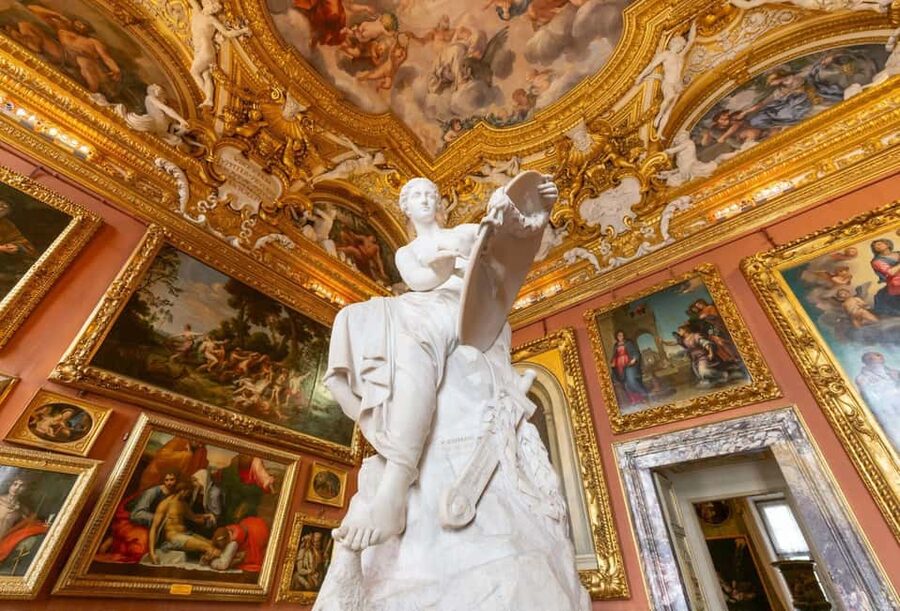
- Compare major masters in one gallery: See Botticelli, Filippo Lippi, Raphael, Caravaggio, Titian, Rubens, and Van Dyck in the rooms of the Palatine Gallery.
- Begin with a Medici palace: Learn how the Pitti family started the residence and how the Medici reshaped it through Bartolomeo Ammannati.
- A focused 90-minute visit: The length gives you a clear introduction without turning the museum into an all-day project.
- Licensed Italian guides: Guide Stefano led one highly praised visit, and audio equipment made it easier to follow the commentary.
- Look beyond the paintings: Windows frame the Boboli Gardens on one side and the roofs and workshops of Oltrarno on the other.
- Useful first-Sunday pricing: The $28 fee covers the guided visit, while museum admission is free on the first Sunday of the month.
Why the Palatine Gallery feels different
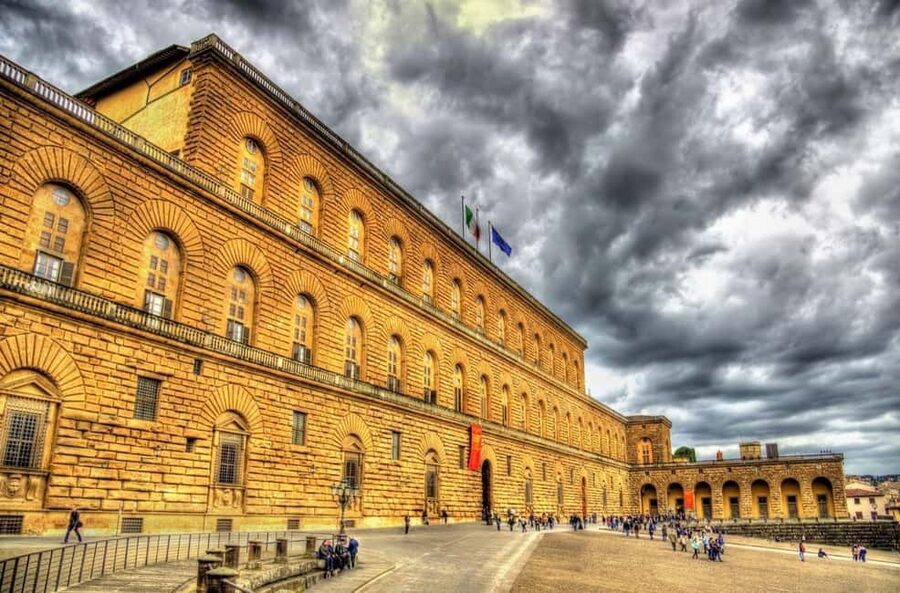
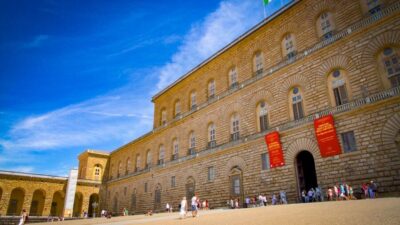
Palazzo Pitti is not simply a large building filled with paintings. It began as a 15th-century residence for the Pitti family, then passed into the hands of the Medici. The palace grew into a grand symbol of power, and its rooms still feel designed to impress visitors before they even study a single canvas.
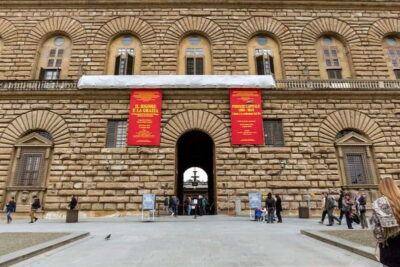
You enter through Piazza de’ Pitti, the broad square in front of the palace. The meeting point is directly in front of the entrance at Piazza de’ Pitti, 1. This is a practical location, but do not cut it close. The tour begins promptly, and you are asked to arrive 10 minutes early.
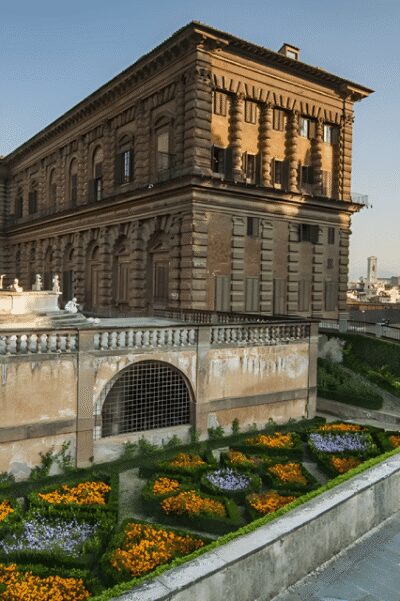
The first visual surprise is the Mannerist courtyard, linked to Bartolomeo Ammannati. It gives you a sense of the palace as architecture, not just a container for art. Look up and around before heading inside. The design sets the tone for what follows: scale, ceremony, and decoration are part of the experience.
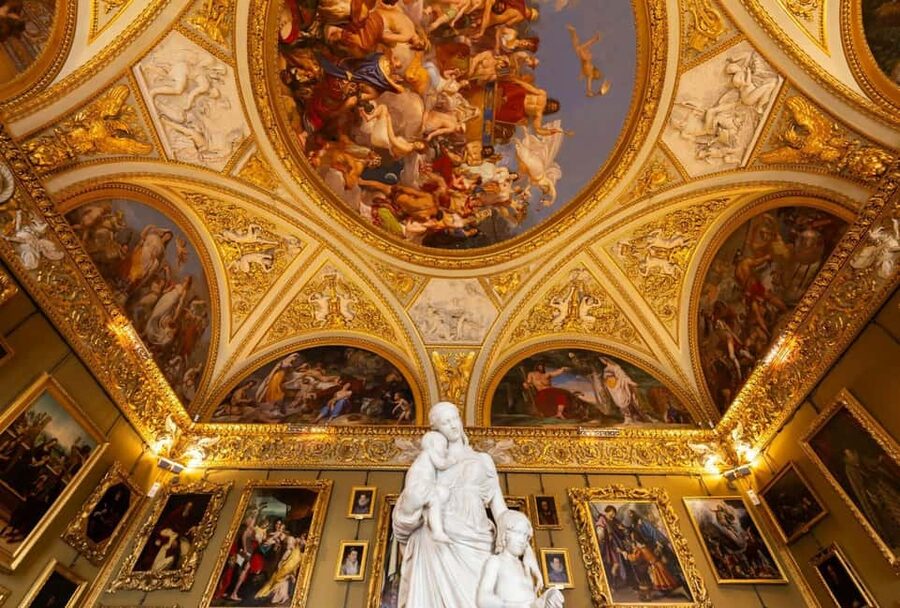
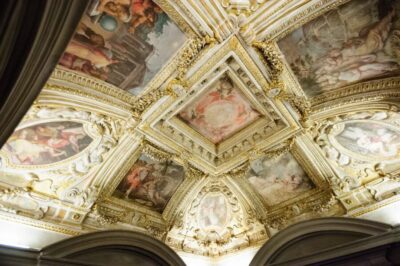
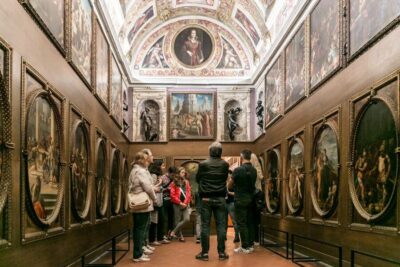
The main event is the Palatine Gallery on the palace’s principal floor. Here, the rooms are covered with stucco and Baroque frescoes. Paintings hang among elaborate decoration rather than on plain white walls. That can make the visit feel more like entering a former court residence than a modern museum.
I like this arrangement because it explains why the art was collected. These paintings were not gathered only for study. They were part of a display of wealth, taste, family power, and cultural ambition.
More Palazzo Vecchio and Pitti Tours in Florence:
- Florence: Palazzo Vecchio Entrance Ticket & Audioguide
★ 4.4 · 4,822 reviews - Florence: Uffizi, Pitti Palace & Boboli Combined 5-Day Pass
★ 4.5 · 1,726 reviews - Florence: Palazzo Vecchio Guided Tour
★ 4.8 · 1,260 reviews
Botticelli and Filippo Lippi: graceful faces and quiet detail
The tour introduces you to the softer side of Florentine painting through works associated with Botticelli and Filippo Lippi. Their figures bring a gentler mood to rooms filled with elaborate architecture and later Baroque drama.
The appeal here is comparison. You are not looking at Botticelli in isolation. You can consider his delicate faces and elegant lines beside Raphael’s balance, Caravaggio’s force, or Titian’s sensual color. A guide can point out how different artists handle faces, gestures, clothing, and emotion.
That comparison is useful if you are not an art specialist. Museum labels often give you a name and a date, but they do not always explain what separates one painter’s style from another. The guided format gives you a framework. You can leave with a clearer sense of why Botticelli feels refined and lyrical, while another painter may feel heavier or more dramatic.
Filippo Lippi adds another layer to the Florentine story. His work belongs to the city’s great tradition of religious painting, but the human presence in his figures helps connect the sacred subject to everyday feeling. Listen for the guide’s comments on expression and composition. Those small points can make a familiar Madonna or saint feel less remote.
Raphael: order, grace, and the value of looking slowly
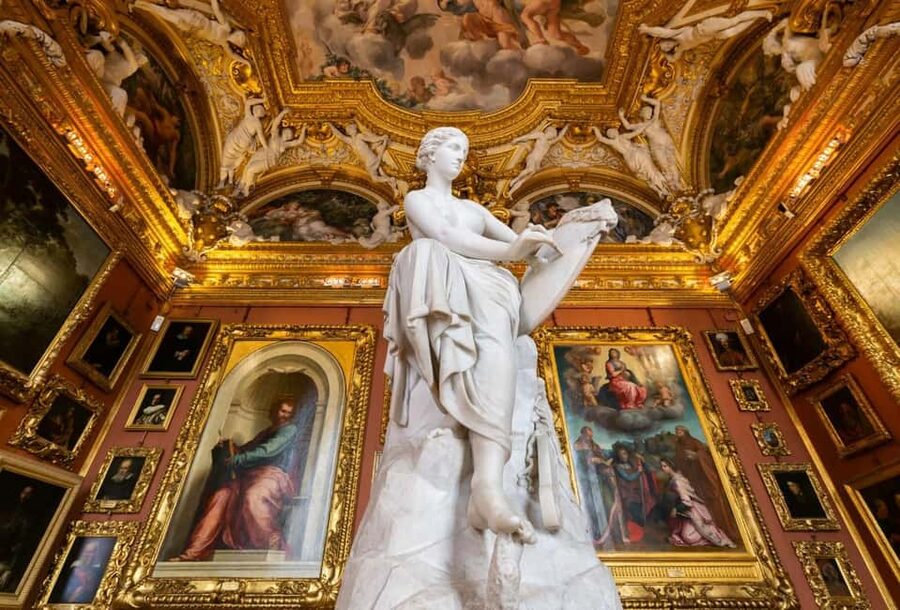
Raphael is one of the main reasons to choose this tour. His work gives you a chance to see how balance can be powerful without being loud.
In a palace full of richly decorated rooms, Raphael’s control matters. Figures, gestures, and space appear carefully arranged. The effect is graceful rather than theatrical. A guide’s explanation can help you notice how the composition leads your eye and how the faces relate to one another.
I recommend using Raphael as your comparison point. After seeing Botticelli and Lippi, ask yourself how Raphael handles softness and harmony. Then compare that with Caravaggio, whose paintings create a more immediate emotional jolt. You do not need technical art vocabulary to enjoy this. Simply notice which paintings feel calm, which feel tense, and which ask you to look at the people before anything else.
The tour’s short length helps here. You are not expected to memorize every work in the gallery. Instead, you get a guided path through major names and ideas. That is a good choice for a first visit, especially if you have a full Florence schedule.
Caravaggio: drama inside a palace of decoration
Caravaggio changes the mood. His work is known for dramatic power, and that force makes a strong contrast with the sweeter faces of Botticelli and the calm grace of Raphael.
This is where a live guide can make the greatest difference. Caravaggio’s paintings reward attention to light, gesture, and emotional tension. The subject may be religious or historical, but the people often feel close and physical. The drama comes through the way the scene is lit and staged.
The Palatine Gallery gives Caravaggio an interesting setting. You see his direct, intense approach surrounded by stucco, frescoes, and courtly decoration. That contrast tells you something about the collection itself. The gallery is not built around one artistic idea. It reflects generations of taste and collecting.
If you enjoy art but sometimes feel lost in a major museum, this section alone can justify the guide fee. The guide does not simply point out where Caravaggio is. The useful part is learning what to look for and how his work differs from the artists around him.
More Palaces to Tour in Florence:
- Florence: Palazzo Vecchio Entry Ticket with Audio Guide
★ 4.4 · 837 reviews - Florence: Pitti Palace and Boboli Gardens Ticket & eBook
★ 4.5 · 835 reviews - Florence: Pitti Palace, Boboli Garden, Palatine Gallery Tour
★ 4.9 · 558 reviews - Florence: Palazzo Vecchio Skip-the-Line Entry Ticket
★ 4.2 · 349 reviews
Titian, Rubens, and Van Dyck widen the view
The gallery does not stop with Florence and Rome. Titian brings the Venetian tradition into the discussion, while Rubens and Van Dyck add the energy of northern European painting.
Titian is associated here with sensuality and color. His work helps you see how painters from different Italian centers pursued beauty in different ways. Florence had its own artistic character, and Venice had another. Seeing them in one collection gives you a broader picture than visiting a single-artist room.
Rubens brings force and movement. Van Dyck adds a different kind of elegance. Together, they show that the Medici collection was not limited to local painters. The palace was connected to wider European artistic culture.
I appreciate this part of the visit because it prevents the tour from becoming only a checklist of famous Florentine names. You get a compact introduction to several traditions. The tradeoff is that 90 minutes cannot give every painter equal attention. The guide has to select key works, so you should treat this as a focused introduction rather than a complete study of the gallery.
The windows offer a useful break
Art museums can become tiring, especially when every room is decorated from floor to ceiling. The views from the Palatine Gallery provide a natural pause.
Look toward the Boboli Gardens, where the palace’s formal world opens onto green space. Then turn toward Oltrarno, Florence’s artisan and popular district, with its roofs and workshops. The two views make a fine contrast. One side reflects Medici grandeur and planned gardens. The other points toward the working neighborhood beyond the palace.
These views also help you locate Palazzo Pitti within Florence. You are not in a detached museum on the edge of town. You are in Oltrarno, facing a part of the city known for craft and daily life. Even a short glance outside can make the palace feel connected to the streets around it.
The panoramic views are included as part of the guided visit, but remember that the tour is not a Boboli Gardens tour. The gardens are something you see from the palace windows, not a separate walk through the grounds.
What the 90-minute format means for you
Ninety minutes is a sensible amount of time for this visit. You get enough time for the palace’s story, the gallery’s main artists, and several comparisons without giving up half your day.
The pace will be purposeful. You will not have unlimited time in front of every painting, and you should not expect a room-by-room academic lecture. The value comes from having someone choose the important works and explain how they connect.
I would choose this format if you want a strong introduction before exploring Florence on your own. It also fits neatly between other plans. Families may find the length manageable, since the guide is expected to keep the visit educational but enjoyable.
The audio equipment is a practical advantage. One visitor specifically appreciated being able to follow the explanation with the audio tools. That matters in a large or decorated room, where sound can carry unevenly. It also helps if you are standing a little farther from the guide.
The tour is wheelchair accessible, which makes it a more useful choice for visitors who need step-free access. The supplied information does not describe every route detail, so contact the provider if you need a specific accessibility arrangement.
Price, timing, and first-Sunday value
The price is $28 per person. On the first Sunday of the month, museum admission is free, so this amount pays for the guided visit rather than a standard entrance ticket.
That can be good value if you want context. You could enter the museum for free on that day, but you would not receive the organized explanation, historical stories, artist comparisons, or audio support included here. If you already know the Palatine Gallery well and prefer to set your own pace, the fee may feel less necessary.
First Sundays can also be popular. The tour still requires you to arrive 10 minutes early, and punctuality matters because visits begin on time. Plan to be in Piazza de’ Pitti before the stated start rather than arriving at the last minute.
The booking terms add flexibility. You can reserve now and pay later, and cancellation is free up to 24 hours before the tour for a full refund. These details are useful if your Florence plans are still shifting.
Who will enjoy this Palazzo Pitti tour?
I would choose this visit for several kinds of visitors:
- First-time Florence visitors who want the main artistic names explained without spending hours in the museum.
- Families looking for a guided activity with a manageable 90-minute length.
- Art lovers who enjoy comparing styles rather than seeing one painter in isolation.
- Visitors who understand Italian and want a licensed local guide.
- People visiting on the first Sunday who want to add expert commentary while museum admission is free.
I would think twice if you need an English-language tour. The live guide is Italian, and some material is presented in its original language. That does not make the visit unsuitable, but language comfort is the main issue to settle before booking.
The experience also suits you if you care about the palace itself, not only the paintings. The Mannerist courtyard, Medici connections, Baroque rooms, and views toward Boboli and Oltrarno are important parts of the visit.
Should you book it?
Book this tour if you want a short, guided introduction to one of Florence’s grandest art collections and you can follow Italian. The strongest reasons are the direct comparison between Botticelli, Raphael, Caravaggio, and Titian, the historical setting inside Palazzo Pitti, and the clear 90-minute format.
Guide Stefano was singled out for his excellent work, and the audio equipment helped make the commentary easy to follow. Those are useful signs for anyone who worries that a decorated palace gallery might feel confusing.
Skip it if you prefer to wander alone, need an English-language guide, or want a long, detailed study of every painting. For everyone else, $28 is a fair price for focused guidance, especially when museum admission is free on the first Sunday of the month.
FAQ
Where does the Palazzo Pitti tour meet?
Meet in front of the entrance to Palazzo Pitti at Piazza de’ Pitti, 1, 50125 Florence, Italy.
How long does the guided visit last?
The guided visit lasts 90 minutes.
What language is the live tour in?
The live tour guide speaks Italian. Some content is shown in its original language.
Is museum admission included in the $28 price?
On the first Sunday of the month, museum admission is free. The $28 price covers the guided visit on that day.
Which artists are discussed?
The tour includes Raphael, Caravaggio, Botticelli, Filippo Lippi, Titian, Rubens, and Van Dyck.
Is the tour wheelchair accessible?
Yes, the activity is listed as wheelchair accessible.
Can I cancel the booking?
Yes. You can cancel up to 24 hours in advance for a full refund. You can also reserve now and pay later.
Newly added in Florence
- FLORENCE: Uffizi Gallery + Palazzo Vecchio monolingual Guided Tour – Small Group★ 5.0 · 9 reviews
- the Medici family in Florence: Palazzo Medici and Medici Chapels★ 4.5 · 10 reviews
- Palazzo Vecchio Tales – into Medici’s secrets and mythology simbols★ 5.0 · 18 reviews
- The Pitti Palace private tour: Splendours of the Royal Residence★ 5.0 · 4 reviews
- Uffizi and Palazzo Vecchio Combo Private Tour★ 5.0 · 3 reviews
- Pitti Palace, Palatina Gallery and the Medici: Arts and Power in Florence.★ 4.5 · 223 reviews
- The Medicis: The Movie, The Family, The Palace!★ 5.0 · 9 reviews
- Small-Group Palazzo Vecchio Secret Passages Tour with Lunch Or “Gelato”★ 4.0 · 92 reviews
Palazzo Vecchio and Pitti Palace Tours, compared.
Uffizi, Pitti Palace & Boboli Combined 5-Day Pass
Read our review →
Palazzo Vecchio: Skip-the-Line Entry and Secret Passage Tour
Read our review →
Browse the lists this tour appears in