
Review · ITALY PALACE TOURS
Guided visit to the Ducal Palace in Mantua
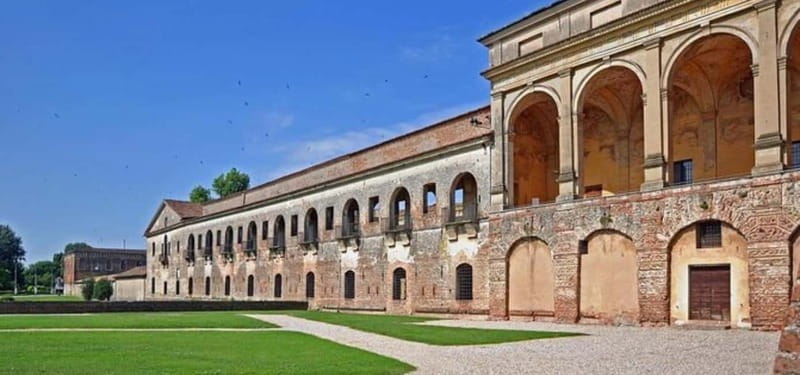
Mantua’s Ducal Palace is not a single grand building but a maze-like princely world, with courtyards, hanging gardens, apartments, squares, and the Palatine Basilica of Santa Barbara tied together. The main prize is Mantegna’s Camera degli Sposi, but the palace makes more sense when you see how art, religion, and Gonzaga power worked side by side.
I like this visit for two reasons: a licensed guide gives the palace a clear story, and the 90-minute route focuses on the rooms and artworks you most want to see. Guide Cecilia receives especially warm praise for her skill, preparation, and lively way of moving the group through the palace.
The main drawback is time. The Ducal Palace is so large that 90 minutes can only cover its essential highlights. The tour is in Italian, and one visitor specifically advised having earphones so the guide is easier to hear and unbooked visitors cannot simply follow along.
Key points at a glance
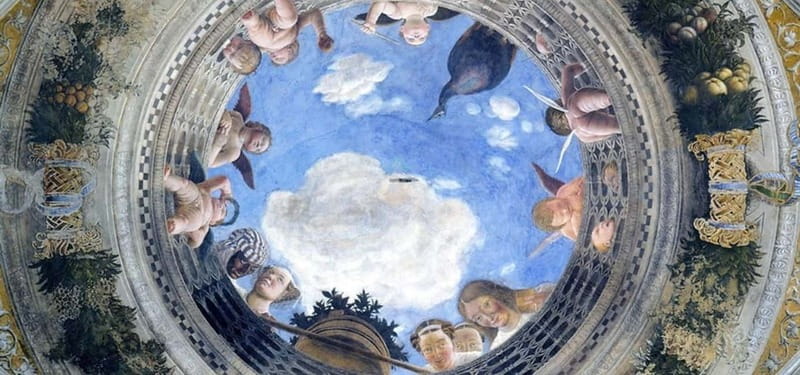
- Mantegna’s Camera degli Sposi: See one of the Renaissance’s most famous painted rooms.
- A palace that feels like a town: Courtyards, squares, apartments, gardens, and the Basilica of Santa Barbara form one sprawling complex.
- A strong art route: The visit includes works linked to Pisanello, Raphael, Giulio Romano, and Rubens.
- Guide Cecilia may lead your visit: Her storytelling, preparation, and even singing were singled out for praise.
- Useful for families: The tour is designed to combine learning with an enjoyable visit.
- Practical format: The tour lasts 1.5 hours, costs $27 per person, and is wheelchair accessible.
Why Mantua’s Ducal Palace is worth your time
The Gonzaga family ruled Mantua for centuries, and their palace tells you how a powerful Renaissance court wanted to be seen. This was not simply a private home. It was a working center of government, ceremony, religion, art, and family life.
That scale is the first thing to understand. You do not walk into one palace wing, admire a throne room, and leave. You move through a connected group of spaces, each with a different mood and purpose. One courtyard may feel open and formal, while the next passage leads into a more intimate apartment or a room covered in painted decoration.
I like that this guided visit treats the palace as a whole. Without a guide, it would be easy to admire individual rooms without grasping the Gonzaga ambition behind them. With 90 minutes, you get a focused route through the major artistic sights rather than an exhausting attempt to see every corner.
The visit is conducted in Italian, so you should be comfortable following an Italian-speaking guide. Some content is shown in its original language. If that works for you, the tour offers a direct way to experience the palace through a local guide rather than relying only on room labels.
More Palaces to Tour in Italy:
- Venice: Doge’s Palace Reserved Entry Ticket
★ 4.6 · 42,716 reviews - Doge’s Palace & St. Mark’s Basilica with Terrace Access Tour
★ 4.7 · 10,697 reviews - Venice: Doge’s Palace and St Mark’s Basilica Walking Tour
★ 4.4 · 6,291 reviews
Meeting the guide in Piazza Sordello
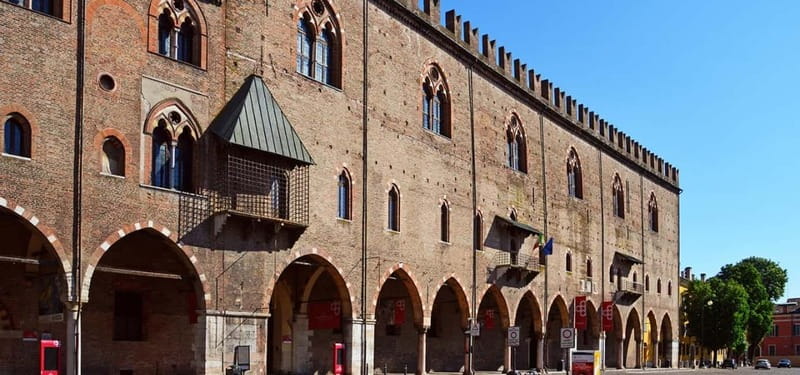
Your meeting point is in front of the Ducal Palace entrance at Piazza Sordello 40 in Mantua. This is a central and easy-to-identify setting, but you should still allow enough time to find the correct entrance and meet the guide before the start.
The activity provider, Italia in Tour, has more than 10 years of experience organizing guided visits in Italy. The guides are licensed, which matters in a complex as large as this one. A licensed guide can give structure to the route and explain why particular rooms and artists matter, instead of simply pointing out painted walls.
Guide Cecilia is the name most closely associated with the praise for this visit. Her strengths are practical ones: she is described as well prepared, clear in her explanations, and skilled at moving the group from room to room while adding details and curiosities. One unusual note also praises her singing, suggesting a guide with a lively presence rather than a flat lecture style.
Because the palace has many connected spaces, the guide’s pacing matters. You need someone who can keep the route moving without rushing the major rooms. Cecilia’s ability to draw out the essence of the Gonzaga family is especially useful when the clock is limited.
The Gonzaga apartments and palace courtyards
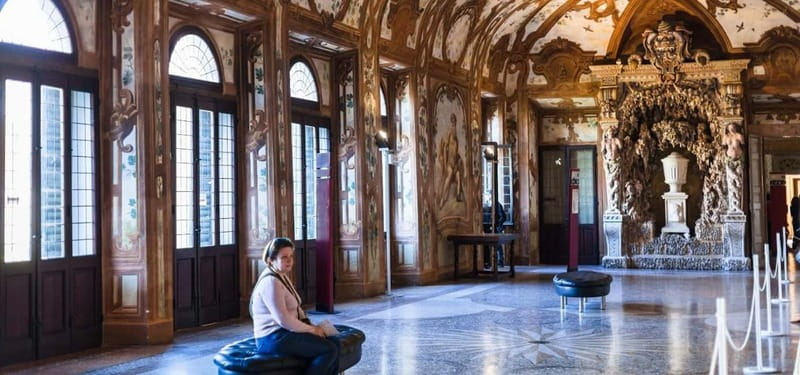
The first part of the visit introduces the palace as the Gonzaga family’s courtly world. You can expect to see elegant apartments, courtyards, squares, and architectural details that show the difference between private rooms and ceremonial spaces.
The apartments are important because they put faces and daily life behind the family’s political power. The Gonzaga story is not only about paintings by famous artists. It is also about how a ruling family arranged rooms, received people, displayed taste, and built an image of authority.
The courtyards and hanging gardens help explain the palace’s unusual layout. Rather than presenting a single straight route, the complex links separate parts of the residence. This can be visually exciting, but it can also feel confusing if you are exploring without guidance. I would pay attention to the transitions, since the way one section connects to another is part of what makes the Ducal Palace different from a simpler royal residence.
The family-friendly format is a plus here. Children may find a long list of Renaissance names tiring, but the palace’s changing rooms and grand setting give a guide plenty of material to make the visit more lively. The tour is intended to help you learn while having fun, though the Italian language remains an important consideration for families.
Pisanello’s Gothic details and early court art
The route includes Gothic details in the works of Pisanello. These pieces give you a different view of the palace from the better-known Renaissance paintings. Pisanello’s art can feel more decorative and finely worked, with attention to line, costume, and small visual details.
This stop helps show that the Gonzaga court did not suddenly become important with one famous artist. Its taste developed over time, and the palace preserves several artistic periods side by side. You can see how the family used art to signal refinement and status.
I find this part valuable because it keeps the visit from becoming a single-room pilgrimage to Mantegna. If you only come for the Camera degli Sposi, you miss the sense of artistic continuity that runs through the residence. The guide can also point out details that are easy to pass without noticing.
Same city, another grand address:
- Legendary Venice: Doge’s Palace, St Mark’s & VIP Terrace Access
★ 4.5 · 5,033 reviews - Florence: Palazzo Vecchio Entrance Ticket & Audioguide
★ 4.4 · 4,822 reviews - Florence: Entrance Ticket to Pitti Palace
★ 4.5 · 4,528 reviews - Venice: Doge’s Palace and St. Mark’s Basilica Tour
★ 4.5 · 3,734 reviews
Mantegna’s Camera degli Sposi
The Camera degli Sposi, or Bride and Groom’s Chamber, is the emotional center of the tour. Andrea Mantegna painted this celebrated room, and it is the sight most likely to define your visit.
The room matters because Mantegna treated its walls and ceiling as a complete visual setting. You are not simply looking at a framed painting. The decoration turns the chamber itself into an artwork, making the room feel more open, grand, and theatrical than its physical size might suggest.
This is where a guide earns the tour fee. A quick look can leave you impressed but unsure what you are seeing. A good explanation helps you notice the painted figures, architectural tricks, and the relationship between the room’s decoration and Gonzaga court life.
You should also keep your expectations in check. The entire palace cannot be covered in detail during a 90-minute visit, and even the Camera degli Sposi deserves more time than the schedule can give it. The benefit is that the guide makes sure you see it and understand why it matters, rather than leaving you to search through the palace on your own.
Raphael’s designs and the Corte Nuova
After Mantegna, the route continues to wall hangings designed by Raphael. These works broaden the picture of the Gonzaga collection and show how the court valued major artistic designs in more than one form.
This section is useful for comparing different kinds of Renaissance art. Mantegna’s work is built into a room, while Raphael’s designs were made for woven display. The change in medium gives the visit a fresh rhythm and reminds you that court decoration was not limited to frescoes and painted ceilings.
The tour then reaches the Corte Nuova, or New Court, decorated by Giulio Romano. This is another major change in tone. Giulio Romano’s work brings a more dramatic and inventive style to the palace, and the setting helps you see how the Gonzaga family continued to update its residence as artistic fashions changed.
I would listen closely to the guide here, because names such as Mantegna, Raphael, and Giulio Romano can blur together during a fast visit. The value of the route is not just counting famous artists. It is seeing how each artist contributed to a different chapter of the palace’s visual identity.
Rubens and the Gonzaga collection
The final major art stop is a masterpiece by Rubens. Its presence links Mantua to the wider European art world and shows that the Gonzaga collection reached beyond local or purely Italian concerns.
Ending with Rubens gives the visit a strong final note. By this point, you have seen the palace’s architecture, family apartments, religious setting, and several different forms of court decoration. Rubens helps complete the picture of a family that used art to project power well beyond Mantua.
The tour’s route is therefore carefully chosen. You move from the palace itself to its most important rooms, then through a sequence of major artists, and finally to a work that reflects the Gonzaga family’s broad cultural reach. You will not see everything, but you will see the works that best explain the family’s ambitions.
Santa Barbara and the palace’s religious heart
The Palatine Basilica of Santa Barbara is described as the beating heart of the complex. Its position within the palace shows that religion was not a separate part of Gonzaga life. Sacred space, family power, ceremony, and artistic display were closely linked.
The basilica also gives the visit an architectural pause between the apartments and art rooms. You get a sense that the palace was designed around more than comfort or appearance. It was built to support the public and private life of a ruling family.
Since the tour lasts only 1.5 hours, the exact amount of time spent in each area may vary. You should expect the guide to select the essential sights rather than provide a room-by-room survey. That is a sensible tradeoff for a first visit, especially if you want a clear introduction instead of a long, tiring circuit.
Is $27 a fair price?
At $27 per person, this is a reasonable price if you want help making sense of the palace’s major works. The admission itself is not the only value. You are paying for a licensed Italian guide, a planned route, and explanations that connect the Gonzaga apartments with the artists and spaces you see.
The price is harder to justify if you prefer to move at your own pace, read quietly, or spend a long time in one room. The palace is large enough that independent visitors may want more than 90 minutes. The tour gives you direction and context, but it cannot provide unlimited time for close viewing.
For many first-time visitors to Mantua, the balance is good. You see the Camera degli Sposi, Pisanello, Raphael, Giulio Romano, Rubens, and Santa Barbara in one organized visit. If you later want a slower look at the palace, you will at least know which areas deserve another visit.
The 4.6 rating from 14 reviews fits the overall picture: the guide quality is a major strength, while hearing the guide clearly can be a concern. One visitor specifically recommended earphones. Bring or arrange them if possible, but confirm what is available for your booking, since the supplied details do not say that audio equipment is included.
Who should book this Mantua palace tour?
I would choose this tour if you want a guided introduction to Mantua’s main Renaissance residence and prefer a clear 90-minute route. It suits art lovers who want the headline works explained, families who need a visit with a defined pace, and anyone who does not want to work out the palace’s sprawling layout alone.
It is also a good choice if you are especially interested in the Gonzaga family. The guide does not only identify paintings. The route explains how the apartments, courtyards, basilica, and artworks express the family’s power and taste.
You may want to skip it if your Italian is not strong enough for a live Italian-language tour. You may also prefer an independent visit if your priority is spending a long time in the Camera degli Sposi or examining every room at your own speed.
The palace is wheelchair accessible, which makes the visit more practical for many people. Still, the information provided does not describe specific route details, so you should confirm any personal access needs before booking.
Should you book the Ducal Palace visit?
Book it if you want the essential Ducal Palace sights in a compact format, especially the Camera degli Sposi, the Gonzaga apartments, Giulio Romano’s Corte Nuova, and Rubens. The guide is the key reason to go, with Cecilia offering the strongest reported example of the tour’s lively and well-prepared approach.
At $27, the visit offers solid value for a licensed guide and a focused introduction to one of Mantua’s most important sites. Just remember that 90 minutes is a highlight tour, not a complete examination of the palace. Choose it for structure, context, and the major artworks. Choose independent exploration instead if you want silence, flexibility, or a full day with the Gonzaga residence.
FAQ
Where does the Ducal Palace tour meet?
The meeting point is in front of the Ducal Palace entrance at Piazza Sordello 40, 46100 Mantua MN, Italy.
How long does the guided visit last?
The visit lasts 1.5 hours, or 90 minutes.
How much does the tour cost?
The listed price is $27 per person.
What language is the tour conducted in?
The live tour guide conducts the visit in Italian.
Is the Ducal Palace tour wheelchair accessible?
Yes, the activity is listed as wheelchair accessible.
Which artist’s famous room is included?
The tour includes Andrea Mantegna’s Camera degli Sposi, also called the Bride and Groom’s Chamber.
Does the visit include works connected with Raphael?
Yes. The route includes wall hangings designed by Raphael.
Which other artists are included in the tour?
The visit includes Gothic details by Pisanello, decoration by Giulio Romano in the Corte Nuova, and a masterpiece by Rubens.
Can I cancel for a full refund?
Yes. You can cancel up to 24 hours in advance for a full refund.
Can I reserve now and pay later?
Yes. You can reserve your spot and pay later, with no payment required at the time of booking.
Newly added in Italy
- Isola Bella’s palace and gardens with a private local guide★ 5.0 · 6 reviews
- Viterbo Private City Tour including Popes Tombs Conclave Palace and Duomo★ 4.5 · 3 reviews
- The Renaissance Gardens tour: Palazzo Farnese and more★ 5.0 · 5 reviews
- the Medici family in Florence: Palazzo Medici and Medici Chapels★ 4.5 · 10 reviews
- FLORENCE: Uffizi Gallery + Palazzo Vecchio monolingual Guided Tour – Small Group★ 5.0 · 9 reviews
- Palazzo Vecchio Tales – into Medici’s secrets and mythology simbols★ 5.0 · 18 reviews
- The Pitti Palace private tour: Splendours of the Royal Residence★ 5.0 · 4 reviews
- Uffizi and Palazzo Vecchio Combo Private Tour★ 5.0 · 3 reviews
Italy Palace Tours, compared.
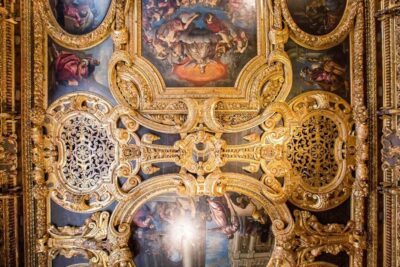
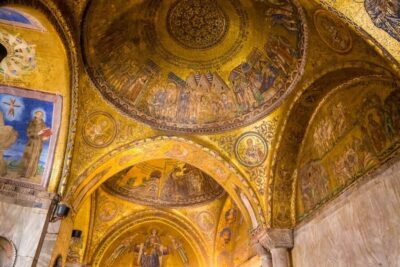
Doge’s Palace & St. Mark’s Basilica with Terrace Access Tour
Read our review →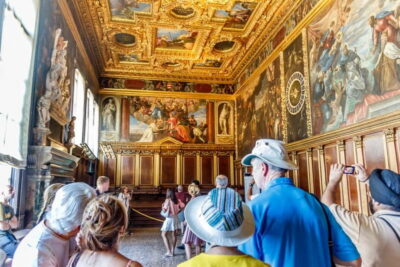
Doge’s Palace and St Mark’s Basilica Walking Tour
Read our review →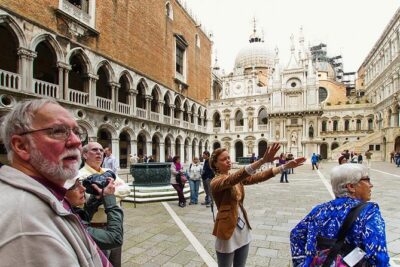
Legendary Venice: Doge’s Palace, St Mark’s & VIP Terrace Access
Read our review →
Venice In a Day: St Mark’s, Doges Palace Gondola Ride & City Tour
Read our review →Browse the lists this tour appears in