
Review · ITALY PALACE TOURS
Bari: Simi Palace and Byzantine Church Tour with Ticket
Bari’s Simi Palace hides a compact archaeological world beneath its 16th-century walls. In 80 minutes, you move from prehistoric pottery and a model of an early settlement to the remains of a Byzantine church and a Roman house. It is a useful way to see how many layers of Bari’s past sit in one place.
I like the tour’s clear focus and the fact that admission is included, so you can spend your time looking rather than sorting out tickets. I also like the rare Italian-Mycenaean ceramics, which point to Bari’s links across the Mediterranean. The main drawback is the short visit. If you want a slow museum session or a large collection of objects, 80 minutes may feel tight.
Key points to know
- Three periods in one visit: See prehistoric pottery, a Roman house, and a Byzantine church inside a 16th-century palace.
- Church remains are still readable: Three apses, part of the altar, and fragments of fresco survive.
- A scale model adds context: It helps you picture the earlier settlement and the shape of the city.
- Rare ceramics reveal trade links: Italian-Mycenaean pottery shows Bari’s place in wider Mediterranean exchange.
- Good practical flexibility: The tour lasts 80 minutes, welcomes children up to age 11 free, and offers guides in four languages.
What the Simi Palace tour actually gives you
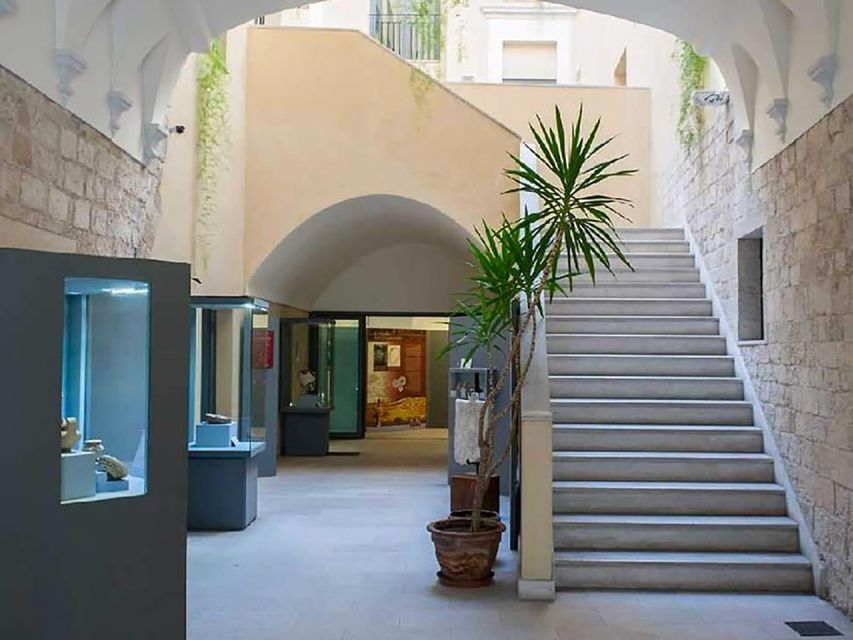
This is not a grand, all-day museum visit. It is a compact guided walk through an archaeological complex in central Bari, with the palace, church, exhibition, and Roman remains tied together in one story.
The setting matters. Simi Palace dates to the 16th century, but the ground beneath and beside it reaches much further back. The tour lets you see how a later building can preserve traces of earlier settlement, worship, and domestic life.
At $30 per person, the price is reasonable if you want an explanation along with admission. You are not paying simply to enter a room of objects. You are paying for the guide to connect pottery, building remains, and the city model into a picture of old Bari.
The value depends on your interests. If you enjoy archaeology, historic buildings, and small museums where details matter, this should give you plenty to consider. If you prefer spectacular architecture or a long list of famous paintings, this will feel more specialized.
More Palaces to Tour in Italy:
- Venice: Doge’s Palace Reserved Entry Ticket
★ 4.6 · 42,716 reviews - Doge’s Palace & St. Mark’s Basilica with Terrace Access Tour
★ 4.7 · 10,697 reviews - Venice: Doge’s Palace and St Mark’s Basilica Walking Tour
★ 4.4 · 6,291 reviews
Meeting the guide at the square
You meet at the staircase in front of the entrance to the square. Build in a few extra minutes to identify the correct meeting spot, especially if you are arriving in a busy part of Bari or carrying luggage.
The tour is offered in English, Italian, French, and Spanish. No guide name is provided in the booking information, so you cannot request a particular person in advance based on the details available here.
One useful sign comes from the French-language visit handled in May 2024. Victor from France described the guide as very capable and noted the effort made to speak French clearly. That makes the French option worth considering if you want more than a basic translated explanation.
The group can also be private. That may suit families, couples, or small parties who want to set the pace more closely, although the available information does not state the extra cost or exact private-group size.
Beginning with the archaeological display
The first part of the visit takes place on the ground floor, where the permanent archaeological exhibition introduces the site and the area around it.
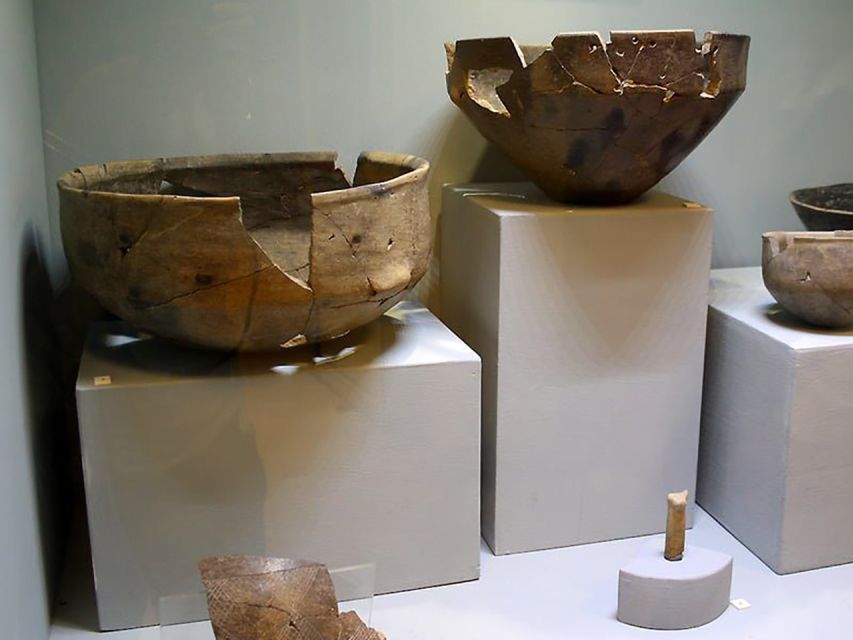
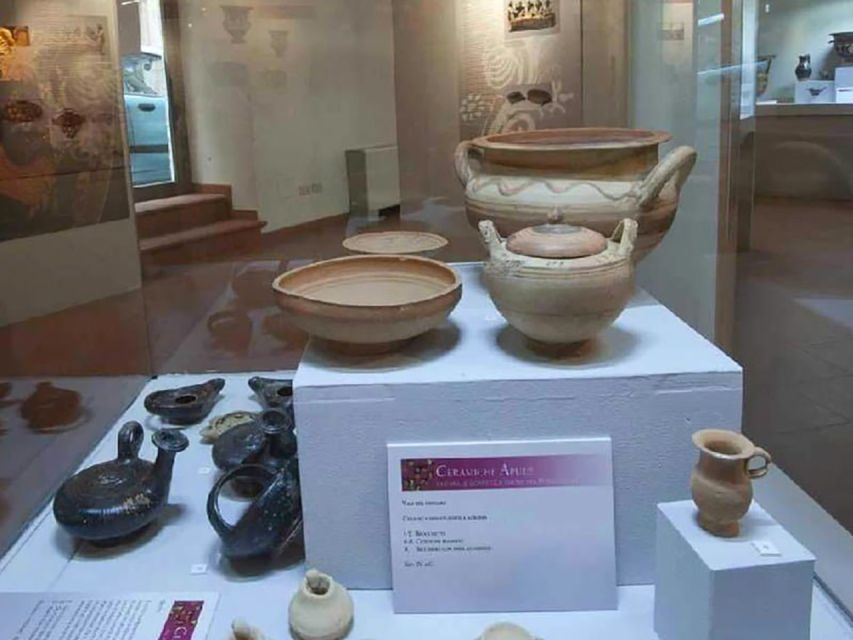
You will see artifacts ranging from a model of an original settlement to fragments of prehistoric pottery. The model is especially useful because ruins alone can be hard to read. A few low walls or foundations may tell an expert plenty, but a scale reconstruction gives you a more immediate picture of how the settlement may have been arranged.
I find this kind of display valuable at the start of a site visit. It gives you a frame for the remains that follow. Instead of seeing isolated fragments, you can begin to think about people living, trading, building, and worshipping in the same area over different centuries.
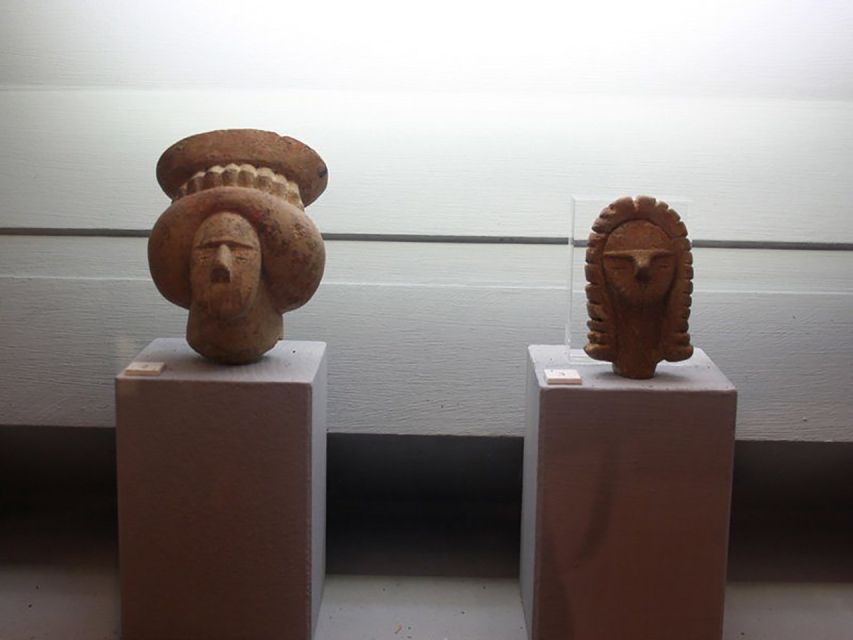
The exhibition also includes rare examples of Italian-Mycenaean ceramics. These are among the most interesting objects on the route because they show that Bari was connected to a wider Mediterranean trading network. The pottery is not just decorative material. It is evidence of movement, contact, and exchange.
Do not expect a huge collection with hundreds of rooms. The attraction is the link between the objects and the place where they were found. A guide can point out why a ceramic fragment matters, which is far more useful than reading a label without context.
Reading the Byzantine church ruins
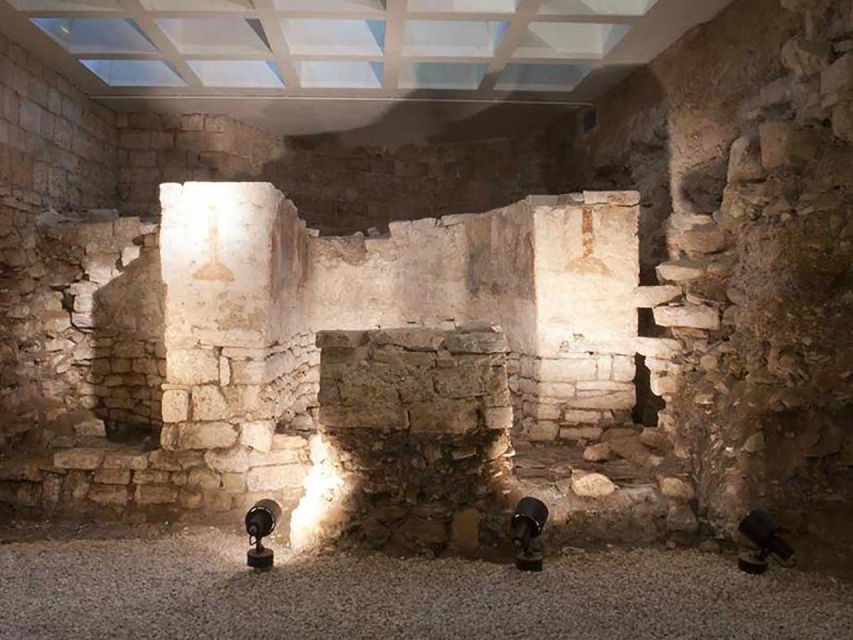
The church is the emotional center of the visit. It dates from the 9th or 10th century and was later built over by the palace. That layering gives the site its particular force. You are not looking at a church in isolation. You are seeing a medieval religious building preserved beneath a later urban structure.
Three apses can still be distinguished. Part of the altar also remains, along with fragments of a fresco. These pieces are incomplete, but they are enough to show the basic shape and purpose of the church.
The remains may reward close attention more than a quick glance. This is where the guide’s explanation matters most. Without help, you might notice curved walls, worn surfaces, and bits of painted plaster. With a clear explanation, you can understand where the altar stood and how the three apses shaped the church interior.
The surviving fresco fragments are fragile clues rather than a complete artwork. You should not come expecting bright walls or a fully restored interior. The appeal lies in seeing a small amount of original material still attached to the structure.
For visitors interested in Byzantine Italy, this section gives the tour real weight. Bari has long looked toward the eastern Mediterranean as well as the Italian peninsula, and the church offers a physical reminder of that connection. The date also places the building in a period when Byzantine influence was important in southern Italy.
Same city, another grand address:
- Legendary Venice: Doge’s Palace, St Mark’s & VIP Terrace Access
★ 4.5 · 5,033 reviews - Florence: Palazzo Vecchio Entrance Ticket & Audioguide
★ 4.4 · 4,822 reviews - Florence: Entrance Ticket to Pitti Palace
★ 4.5 · 4,528 reviews - Venice: Doge’s Palace and St. Mark’s Basilica Tour
★ 4.5 · 3,734 reviews
Spotting the Roman house beneath the later building
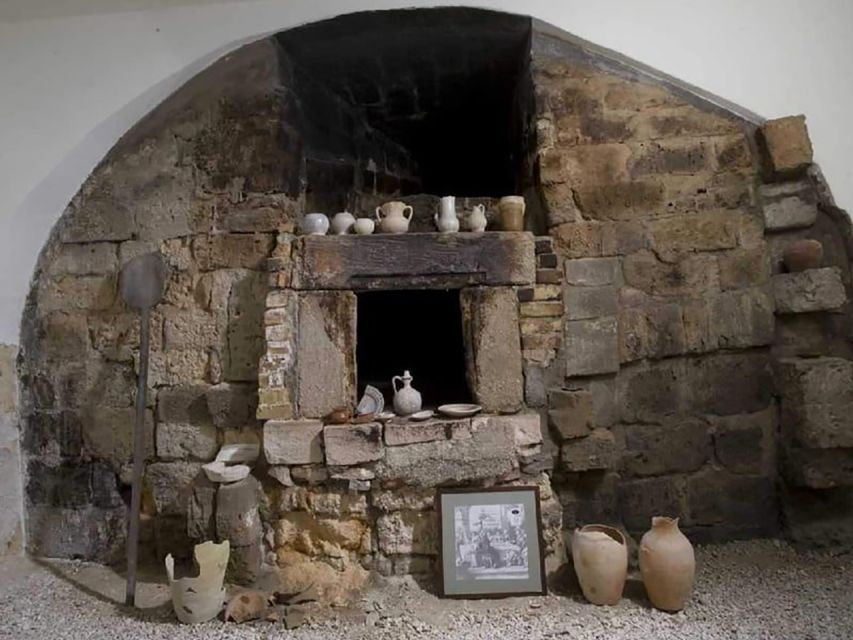
Restoration work uncovered the remains of a Roman house. This is another strong part of the visit because it adds an everyday layer to the site.
A church and palace can make history feel formal and distant. A Roman dwelling suggests ordinary domestic life: rooms, movement through the building, and the practical use of urban space. The information provided does not describe the house in detail, so you should expect remains rather than a reconstructed home.
Still, its presence helps explain why archaeological sites are rarely about one date. The palace did not erase everything that came before it. Work on the later building brought older traces back into view, allowing you to see the area as a sequence of changes rather than a single monument.
I would pay attention to how the Roman house relates to the church and palace. The tour’s best moments come from those connections. You are not simply checking three separate attractions off a list. You are seeing one piece of Bari reused and altered over time.
Why the scale model is worth your attention
The scale model may sound less exciting than old stone or pottery, but it can be one of the most helpful parts of the visit.
Archaeology often leaves you with fragments. A model supplies the missing shape. It helps you form an idea of what the original settlement looked like and how the city developed around it.
Give the model a proper look rather than treating it as a quick introduction for children. Use it to compare the imagined settlement with the remains in front of you. That simple act can make the church, house, and exhibition feel like parts of a larger place.
The model also makes the tour more approachable for families. Children up to age 11 enter free, and a three-dimensional display can give younger visitors a way into the history before the smaller pottery fragments and wall remains begin to demand patience.
The 80-minute pace and what it means for you
The scheduled duration is 80 minutes. That is long enough for a guided overview but short enough to fit into a day of exploring Bari.
You will likely appreciate the pace if you want to pair the visit with other sights, a meal, or a walk through the city. It is also a good choice when you prefer a clear beginning and end rather than an open-ended museum visit.
The limit is just as clear. You may not have time to linger over every ceramic fragment, ask a long series of questions, or study the church remains from every angle. The guide has to keep the group moving through several periods and displays.
Comfortable shoes are recommended. The tour is indoors and archaeological surfaces can require attention, but the supplied information does not describe the exact flooring or any steep internal passages. An umbrella and rain gear are also advised, likely because the meeting point and approach may involve outdoor waiting. Bring clothing suited to a short walking visit rather than dressing for a formal occasion.
The site is wheelchair accessible. That is an important advantage, though the meeting point is at a staircase in front of the square entrance. If you use a wheelchair, confirm the precise accessible approach and meeting arrangement when booking so you are not left searching around the stairs.
Languages, children, and private groups
You can book the live tour in English, Italian, French, or Spanish. This range makes the experience practical for many visitors, and the French-language service received a specific positive note from Victor after his May 2024 visit.
Children up to 11 years old have free access. That improves the family value, especially when the scale model and the variety of building periods give adults several ways to explain what they are seeing.
A private group is available. The data does not give a private supplement or group limit, so check the current option before paying. A private format could be useful if you want to ask more questions about the church or adjust the pace around children, but the standard tour is likely enough if your main goal is a concise introduction.
Is $30 a fair price?
At $30 per person, this tour sits in the affordable paid-activity range for a guided archaeological visit. The admission is included, and the guide gives structure to a site that could otherwise be difficult to interpret.
The best value comes from the combination of three things: a historic palace, a Byzantine church with visible remains, and an exhibition containing pottery, ceramics, a settlement model, and a Roman house. You are getting several periods in a single visit rather than paying for one isolated room.
The price is less compelling if you only want to walk through quickly and take a few photographs. The complex is compact, and an independent visitor who already knows the history may not need 80 minutes of guidance.
For most first-time visitors, I would judge the cost fair because the guide helps you read the evidence. Archaeological remains rarely explain themselves. A well-paced account can turn broken walls and fragments into a story about Bari’s earlier communities and its Mediterranean connections.
Who should book this experience?
I would recommend it to anyone who enjoys archaeology but does not want to commit half a day to a large museum. It suits visitors looking for a focused stop with a clear time limit.
It is also a good match for:
- Families who want a free child entry option and a visual model
- History fans interested in Byzantine buildings and Roman domestic remains
- Visitors who want an English, French, Italian, or Spanish guide
- People who prefer admission and explanation handled together
- Those with limited time in Bari who want more context than a quick walk past a historic building
I would be more cautious if you dislike incomplete ruins or expect a fully restored church. The church’s apses, altar section, and fresco fragments are meaningful, but they are remains, not a complete interior.
Art lovers seeking a large collection should also set expectations correctly. The pottery and ceramics are important for what they reveal about settlement and trade, not because the exhibition offers a huge number of display rooms.
Book it or skip it?
Book this tour if you want a short, well-organized look at Bari’s earlier layers and appreciate having a guide explain what the objects and ruins mean. The Byzantine church, especially its three apses and surviving fresco pieces, gives the visit a strong center, while the ceramics and Roman house add useful context.
Skip it if you want a long museum experience or prefer to explore ruins at your own speed. For everyone else, $30 is a sensible price for an 80-minute guided visit with admission included. Wear comfortable clothes and shoes, arrive at the staircase meeting point with a little time to spare, and let the small details do the work.
FAQ
How long does the Simi Palace and church tour last?
The guided tour lasts 80 minutes.
What is included in the price?
Admission to Simi Palace and the adjacent church is included, along with a live tour guide.
Which languages are available?
The tour is offered in Italian, French, English, and Spanish.
Is the experience wheelchair accessible?
Yes, the activity is listed as wheelchair accessible.
Do children pay the full price?
Children up to 11 years old have free access.
Can I cancel the booking?
You can cancel up to 24 hours in advance for a full refund. A reserve-now-and-pay-later option is also available.
Newly added in Italy
- Isola Bella’s palace and gardens with a private local guide★ 5.0 · 6 reviews
- Viterbo Private City Tour including Popes Tombs Conclave Palace and Duomo★ 4.5 · 3 reviews
- The Renaissance Gardens tour: Palazzo Farnese and more★ 5.0 · 5 reviews
- the Medici family in Florence: Palazzo Medici and Medici Chapels★ 4.5 · 10 reviews
- FLORENCE: Uffizi Gallery + Palazzo Vecchio monolingual Guided Tour – Small Group★ 5.0 · 9 reviews
- Palazzo Vecchio Tales – into Medici’s secrets and mythology simbols★ 5.0 · 18 reviews
- The Pitti Palace private tour: Splendours of the Royal Residence★ 5.0 · 4 reviews
- Uffizi and Palazzo Vecchio Combo Private Tour★ 5.0 · 3 reviews
Italy Palace Tours, compared.
Doge’s Palace & St. Mark’s Basilica with Terrace Access Tour
Read our review →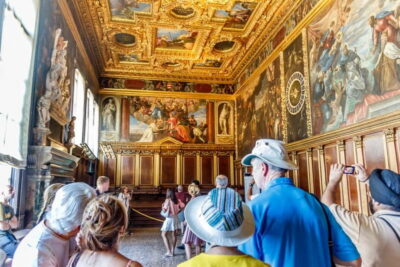
Doge’s Palace and St Mark’s Basilica Walking Tour
Read our review →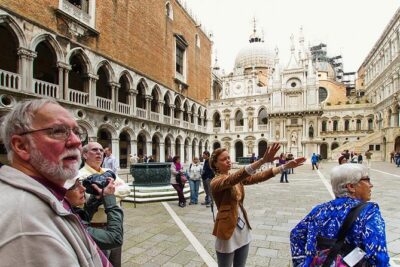
Legendary Venice: Doge’s Palace, St Mark’s & VIP Terrace Access
Read our review →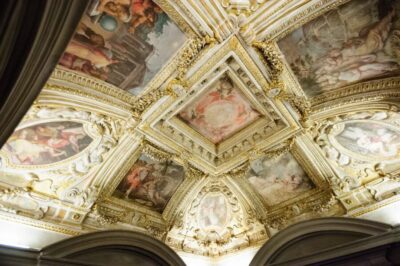

Venice In a Day: St Mark’s, Doges Palace Gondola Ride & City Tour
Read our review →Browse the lists this tour appears in