
Review · TOPKAPI AND DOLMABAHCE PALACE TOURS
Dolmabahce Palace Tour in Istanbul
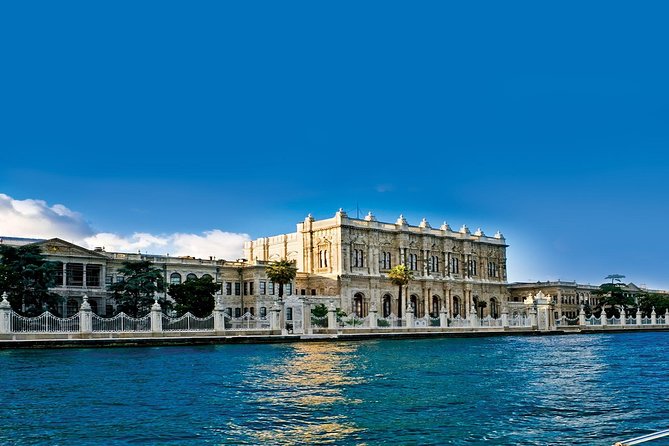
Dolmabahçe Palace is Istanbul’s grandest lesson in late Ottoman ambition: marble halls, European furnishings, crystal chandeliers, and a waterfront setting that makes Topkapı feel almost restrained. The tour also takes you across the Bosphorus Bridge, giving you the unusual pleasure of moving from Europe to Asia in about two minutes.
I like the palace’s polished interiors and the story of Mustafa Kemal Atatürk, whose room and stopped clocks add a human note to all that ceremony. I also like having transport bundled with the palace visit and a hilltop view of Istanbul. The drawback is important: traffic and hotel pickups can eat into your three-hour tour, and the quality of the guiding can vary.
Key points to know before booking
- The palace is the main event: Expect about two hours at Dolmabahçe, with the Crystal Staircase, Medhal Hall, marble rooms, chandeliers, and royal furnishings.
- Atatürk’s final connection is memorable: Palace clocks are set to 9:05, the approximate time of his death.
- No interior photography: You can take pictures outside, but cameras are not allowed inside the palace.
- The Asian-side stop depends on traffic: The coach crosses the Bosphorus Bridge, then usually visits Çamlıca Hill or Yeditepe Hill.
- Transport can be slow: Hotel collection, meeting-point changes, and Istanbul traffic have caused major delays on some departures.
- The guide makes a big difference: Guides named Bora, Osman, and Aykot received strong praise, while other departures were criticized for rushed or unclear commentary.
Why Dolmabahçe feels different from Topkapı
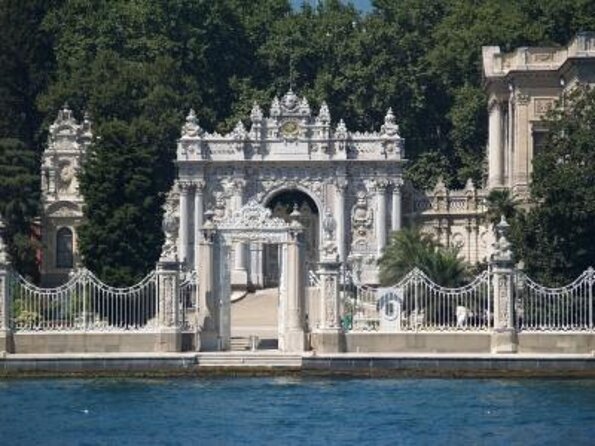
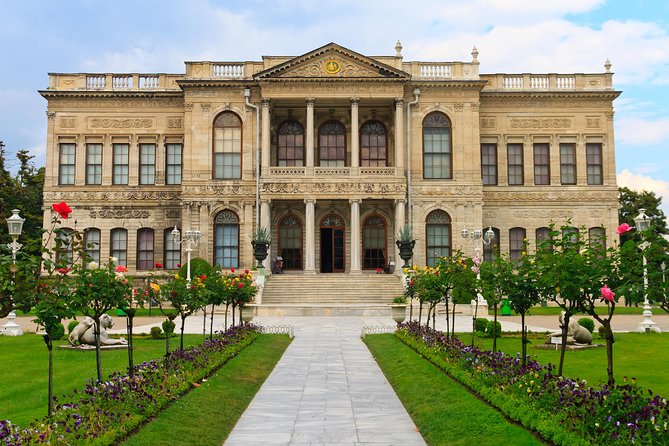
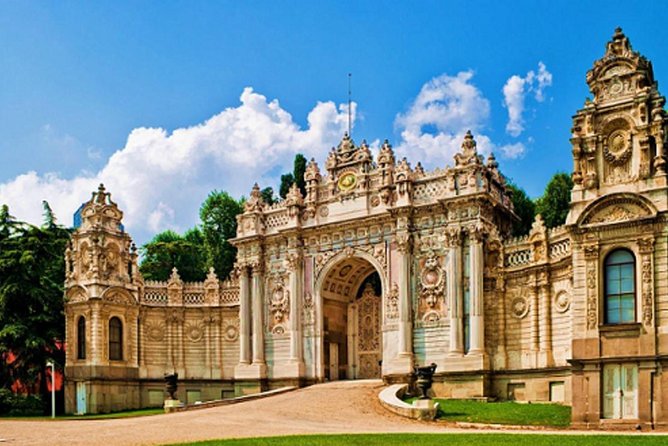
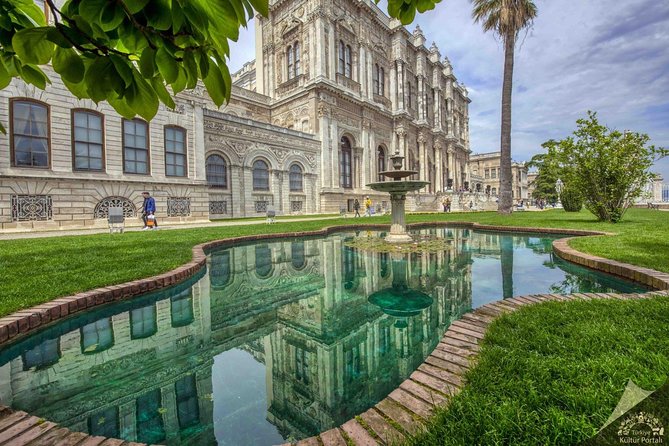
Dolmabahçe Palace was built in the 19th century as the Ottoman Empire moved toward European tastes and modern administration. Designed by the Ottoman architects Karabet and Nikogos Balyan, it occupies a large waterfront site and served as the empire’s main administrative center during its final period.
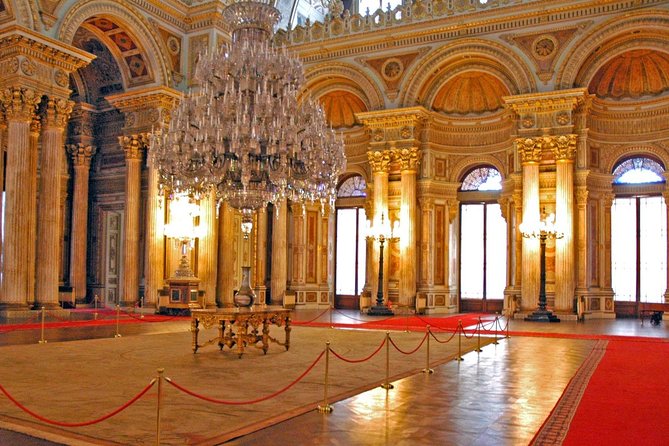
The palace is less about courtyards and tiled collections than Topkapı Palace. Here, you see grand reception rooms, European-style furniture, marble surfaces, and vast crystal fittings designed to impress foreign visitors and Ottoman officials alike. The famous chandelier weighs about 4.5 tons, a detail that tells you plenty about the palace’s approach to decoration.
I find the contrast useful. Topkapı helps you understand the older Ottoman court. Dolmabahçe shows a later sultanate trying to look modern, wealthy, and fully at home among Europe’s royal courts.
This tour concentrates on the public rooms. You should not book it expecting a full exploration of every section of the palace, especially the harem. One past visitor specifically regretted not seeing the harem area, and the advertised visit focuses on rooms such as Medhal Hall and the Crystal Staircase.
More Topkapi and Dolmabahce Tours in Istanbul:
- Topkapi Palace and Harem Skip-the-Line-Tickets & Audio Guide
★ 4.3 · 4,745 reviews - Basilica Cistern & Hagia Sophia with Optional Topkapi Palace
★ 4.6 · 3,547 reviews - Istanbul: Topkapi Palace and Harem Ticket with Audio Guide
★ 4.4 · 2,401 reviews
The palace visit takes about two hours
The tour begins with an air-conditioned coach from a central Istanbul hotel or an arranged meeting point. Once you arrive, the guide leads you inside, where the scale of the building quickly becomes clear.
Medhal Hall is one of the first important spaces. This was a formal entrance area, and it gives the guide a natural place to explain the palace’s role in Ottoman government. Listen for the shift from royal residence to administrative center. Dolmabahçe was not simply a luxurious home. It was also a working seat of power.
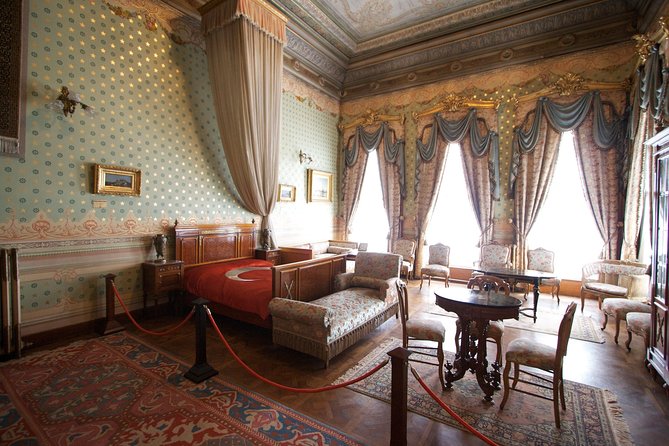
From there, you move through marble rooms with chandeliers, polished surfaces, and European furniture. The setting is carefully arranged, so take a moment to look beyond the obvious sparkle. The building tells you how the final Ottoman rulers wanted to present themselves: cultured, wealthy, and connected to the wider European world.
The Crystal Staircase is another major stop. Its red carpets and ornate fittings make it easy to picture formal arrivals and official ceremonies. The guide’s storytelling matters here. A strong guide can connect the room to court life and explain why particular materials and designs were chosen. Guides such as Bora, Osman, and Aykot were praised for clear English, good energy, and stories that held attention.
The palace itself is open to the public under controlled conditions, and interior photography is not allowed. That rule is easy to underestimate. If you enjoy taking pictures of every room, you may find the visit frustrating. You can photograph the exterior and waterfront setting, but inside you need to rely on memory and the guide’s explanation.
The walking is not described as strenuous, but you should have a moderate level of fitness. You will be moving through a large palace and standing during explanations. Comfortable shoes will make the visit easier.
Atatürk’s 9:05 story adds meaning
The palace’s connection with Mustafa Kemal Atatürk gives the tour more emotional weight. Atatürk, founder and first president of the Republic of Turkey, lived and died at Dolmabahçe.
The clocks throughout the palace are set to 9:05, the approximate time of his death. It is a simple detail, but it changes the feeling of the visit. The palace stops being only a display of chandeliers and royal furniture. It also becomes a place tied to the end of the Ottoman era and the birth of modern Turkey.
The guide explains this connection while walking through Medhal Hall and the public rooms. If you are especially interested in Atatürk, listen closely and ask questions early. Some groups have had guides who welcomed questions and gave detailed answers. Others have had guides who moved quickly or repeated information in more than one language, leaving less time for English explanation.
Crossing the Bosphorus Bridge into Asia
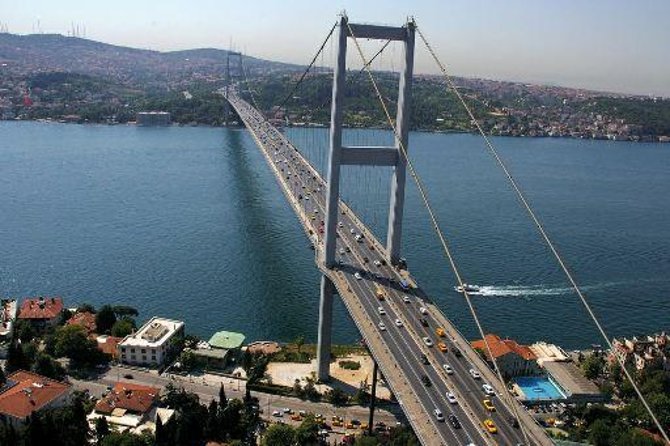
After the palace, you return to the coach and cross the Bosphorus Bridge. This is one of the tour’s most distinctive features. In a few minutes, you move from Istanbul’s European side to its Asian side, with the waterway below and the city stretching in both directions.
The bridge crossing is viewed from the coach, not presented as a long sightseeing stop. Still, it gives you a useful sense of Istanbul’s geography. The Bosphorus is not just a scenic strip of water. It is the dividing line between two continents and a working route through the city.
The timing can be unpredictable. Istanbul traffic has caused some tours to arrive late at the palace, rush the interior visit, or shorten the Asian-side stop. On one departure, the bridge portion was reportedly skipped because the schedule had fallen so far behind. Treat the bridge crossing and hill visit as valuable extras, but remember that the palace is the part you are paying for.
More Palaces to Tour in Istanbul:
- Combo: Hagia Sophia+Basilica Cistern Optional Topkapi Palace
★ 4.3 · 1,880 reviews - Istanbul: Dolmabahce Palace and Harem Fast-Track & Audio
★ 4.7 · 1,772 reviews - Istanbul: Topkapi Palace and Harem Guided Tour with Ticket
★ 4.8 · 1,726 reviews - Basilica Cistern &Topkapi Palace &Hagia Sophia Combo Tickets
★ 4.6 · 1,306 reviews
Çamlıca Hill offers the widest view
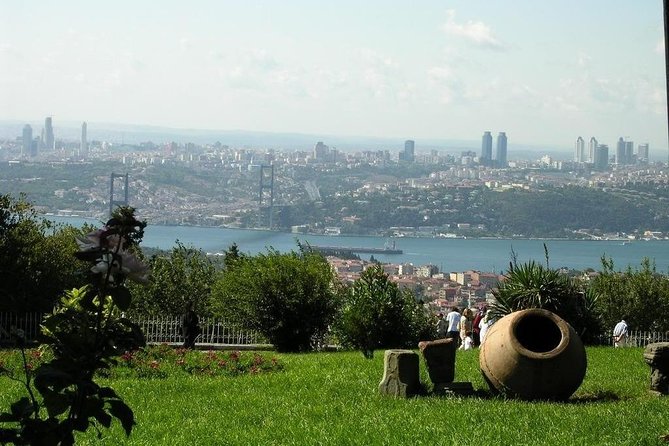
The usual hilltop stop is Çamlıca Hill, though the exact location can change to Yeditepe Hill according to traffic and the day’s schedule. Çamlıca is known for broad views across Istanbul, including the Bosphorus, Golden Horn, Marmara Sea, and, on clear days, toward the Black Sea.
This is a good place for city photographs. You can see the scale of Istanbul more clearly from above than from street level, and the view helps tie together the European and Asian sections you have just crossed.
The stop is planned for about an hour, but the way that time is used can vary. Some departures have spent too long at a café or parking area, leaving people waiting for the return coach. Food and drinks are not included, and this is not a lunch tour. Do not assume you will have time for a proper meal here.
One serious scheduling problem occurred when a participant ordered food at the hill and the group needed to leave for the palace. The tour operator’s response states that the meal took about 20 to 25 minutes and that the group continued with the other participants. The practical lesson is clear: skip a full meal during this half-day tour unless the guide specifically confirms there is time.
Transport is convenient, but traffic is the wild card
Hotel pickup sounds simple, but Istanbul’s traffic and the spread-out nature of the city can make it slow. Some departures collect people from several hotels, then transfer everyone at a central meeting point or change buses before continuing to the palace.
That arrangement can work well when the group is small and the route is flowing. The tour allows a maximum of 15 people, which is more manageable than a large coach excursion. Yet several past departures lost an hour or more to pickups, bus changes, or road congestion.
A hotel only a mile from Dolmabahçe may still be part of a long route if the operator is assembling a group across the city. If your schedule is tight, ask for the exact pickup time and meeting point when you confirm. The booking voucher may not show the actual hotel collection time clearly, and one missed tour resulted from that confusion.
Hotels that a coach cannot reach may receive an alternative meeting point from the local supplier. That can be less convenient, but it may also save time if you are willing to meet the group centrally.
The return is to the European side of Istanbul. Because the vehicle may drop off several people, your ride back can become an unplanned city tour. That is not necessarily bad, but it adds time after a long day of traffic.
The guide determines the value
The tour’s listed price is $90.31 per person. That is a significant amount for a three-hour outing, especially since food and drinks are not included. The value depends mainly on what you want from the day.
If you want someone else to handle transport, palace entry, the Bosphorus crossing, and the hilltop view, the price can make sense. You avoid arranging the palace on your own and gain context from a live guide. Skipping a ticket line can also save time at a busy attraction.
If you are comfortable using public transportation and an audio guide, the value is less convincing. Several poor experiences involved a guide leaving the group with an electronic device inside the palace, or providing only limited English while giving more of the commentary in another language. In those cases, the tour offered little that could not be arranged independently.
The strongest departures sound different. Guides Bora, Osman, and Aykot were praised for fluent English, clear explanations, friendliness, and good pacing. That is exactly what you want here. A palace like Dolmabahçe is visually impressive, but without context it can become a march from one glittering room to the next.
The advertised language is English. At the start, confirm that the entire explanation will be in English if your group has been combined with another language group. A bilingual tour can work, but it takes longer and may leave you standing around while information is repeated.
How to make the most of the three hours
I would plan this as a half-day outing, not a quick palace visit. Keep the rest of your schedule light, especially if you are visiting during a busy period or staying far from the palace.
A few practical habits will help:
- Confirm the actual pickup time, not only the start time printed on your voucher.
- Ask whether your hotel is reached directly or assigned a central meeting point.
- Arrive ready to leave promptly at each stop.
- Do not plan lunch at Çamlıca Hill unless the guide gives clear permission.
- Bring a phone or camera for exterior photos, but expect no interior photography.
- Ask early about the itinerary if visiting on a Monday or Thursday.
Dolmabahçe is closed on Mondays and Thursdays. On those days, the palace portion is replaced with Eyüp, Miniatürk, and Pierre Loti Coffee House. That is a different experience, not a minor adjustment. Check the day before booking if the palace is your main reason for taking the tour.
The tour is offered in English, includes an air-conditioned vehicle and a local guide, and provides mobile ticketing. Free cancellation is available until 24 hours before the start time. Changes or cancellations inside that window are not accepted for a refund.
Who should book this tour?
I would consider it for a first visit to Istanbul if you want a guided palace introduction without arranging transport yourself. It suits you best if you value historic explanation, prefer a small group to a huge bus tour, and have enough time to tolerate Istanbul traffic.
It is also a good fit if crossing from Europe to Asia appeals to you and you want a high viewpoint afterward. The palace, bridge, and hill combine three different views of the city in one outing.
I would hesitate if you have only one free afternoon, dislike group transfers, or want a slow palace visit with plenty of time for photographs. I would also hesitate if the harem is essential to your plans, since this outing focuses on the public rooms and may not include that section.
The attraction is worth seeing. The tour is worth booking when the transport and live explanation matter more to you than saving money or controlling your pace. Confirm the meeting time, ask about the language arrangement, and treat the Asian-side stop as a bonus rather than a guarantee. That small bit of planning can make the difference between a polished introduction to Dolmabahçe and a long day spent watching Istanbul traffic.
FAQ
How long does the Dolmabahçe Palace tour last?
The tour lasts about three hours. Around two hours are allocated to Dolmabahçe Palace, with about one hour for the Çamlıca Hill stop, though traffic can affect the timing.
Is transportation included?
Yes. The tour includes an air-conditioned vehicle, hotel pickup arrangements in central Istanbul, and return transport to the European side. Hotels that are difficult for the vehicle to reach may be assigned an alternative meeting point.
Is the tour conducted in English?
Yes. The experience is offered in English. You should confirm the language arrangement when meeting the group if participants speaking other languages are combined on the same departure.
Can I take photos inside Dolmabahçe Palace?
No. Photography is not allowed inside the palace. You can take photographs outside and at the hilltop viewpoint.
Is food included?
No. Food and drinks are not included. This is a half-day tour without lunch, so do not plan on stopping for a full meal unless the guide confirms there is enough time.
What happens if I book for a Monday or Thursday?
Dolmabahçe Palace is closed on Mondays and Thursdays. The palace visit is replaced by Eyüp, Miniatürk, and Pierre Loti Coffee House on those days.
Newly added in Istanbul
- Walls of Constantinople and Byzantine Palace Tour★ 4.5 · 7 reviews
- Topkapi Palace and Harem Guided tour with Skip-the-Line Tickets★ 5.0 · 156 reviews
- Topkapi Palace with Harem Walking Tour with Guide★ 5.0 · 5 reviews
- Topkapi Palace Harem Ticket & Tour-Prepay & Balance at meeting★ 4.5 · 28 reviews
- Topkapi Palace Museum Skip The Ticket Line Tickets + Audio Guide★ 3.0 · 2 reviews
- Topkapi Palace and Harem Museum Ticket with Audio Guide★ 3.0 · 2 reviews
- Topkapi Palace Skip-The-Line Entry with Guided Tour★ 3.5 · 67 reviews
- Skip the Line: Topkapi Palace Including Süleymaniye Mosque and Ceramics Workshop in Istanbul★ 4.0 · 17 reviews
Topkapi and Dolmabahce Palace Tours, compared.
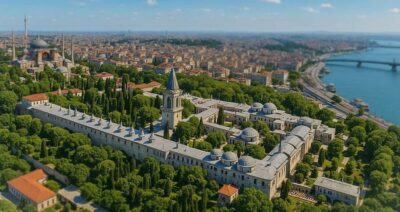
Topkapi Palace and Harem Skip-the-Line-Tickets & Audio Guide
Read our review →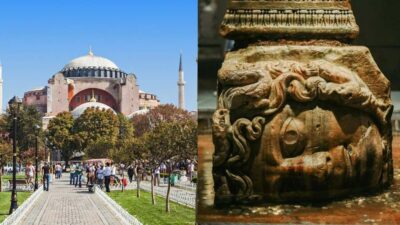
Basilica Cistern & Hagia Sophia with Optional Topkapi Palace
Read our review →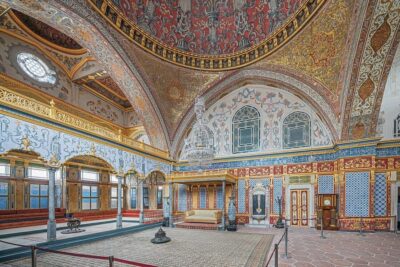
Topkapi Palace and Harem Ticket with Audio Guide
Read our review →
Combo: Hagia Sophia+Basilica Cistern Optional Topkapi Palace
Read our review →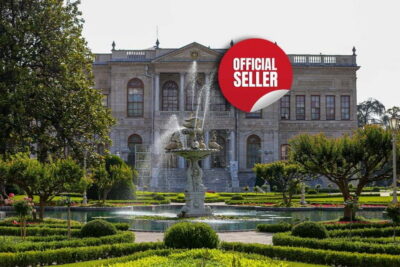
Dolmabahce Palace and Harem Fast-Track & Audio
Read our review →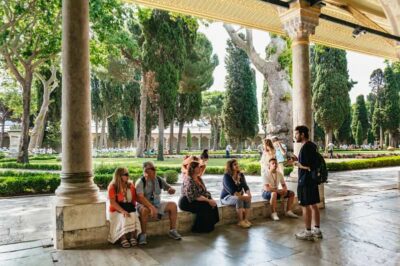
Topkapi Palace and Harem Guided Tour with Ticket
Read our review →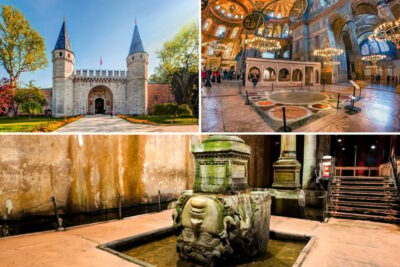
Basilica Cistern &Topkapi Palace &Hagia Sophia Combo Tickets
Read our review →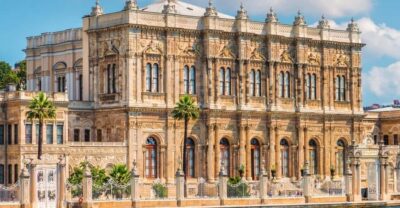
Dolmabahce Palace & Harem Skip-the-Line Entry & Audio Guide
Read our review →Browse the lists this tour appears in