Review · PALAZZO VECCHIO AND PITTI PALACE TOURS
Florence Palazzo Vecchio: Reserved Entrance Ticket & Visit
Florence’s Palazzo Vecchio is more than a handsome medieval fortress. Inside, it becomes a grand Medici stage, with political rooms covered in frescoes, private apartments, and Francesco I de’ Medici’s wonderfully strange little study. I like the reserved entrance and the chance to see rooms many visitors hurry past. I also like the mix of art and politics, especially the Hall of the 500 and the apartments of Eleonora of Toledo. The main catch is that the tower and certain restricted areas may close, so you should not book this visit only for the highest view of Florence.
The visit costs $44.94 per person and takes about one to two hours. That is fair if your guide adds useful context and the main rooms are open, but it is a steep price for a basic museum visit if the tour is rushed or you end up exploring on your own. The maximum group size is 20, though the experience may feel much better with a smaller group.
Key points to know before booking
- The Hall of the 500 is the grand centerpiece, filled with huge frescoes, political symbolism, and Renaissance decoration.
- Francesco I de’ Medici’s private study is small and unusual, a sharp contrast to the enormous public rooms.
- Eleonora of Toledo’s apartments show the private side of Medici power, with richly decorated rooms and domestic spaces.
- The guide makes a major difference, with guides such as Elisa receiving especially warm praise for clear, engaging explanations.
- Tower access is not assured, because crowds, weather, special events, or museum restrictions can close it.
- Temporary exhibitions are included, which adds value if something worthwhile is showing during your visit.
Entering Florence’s medieval town hall
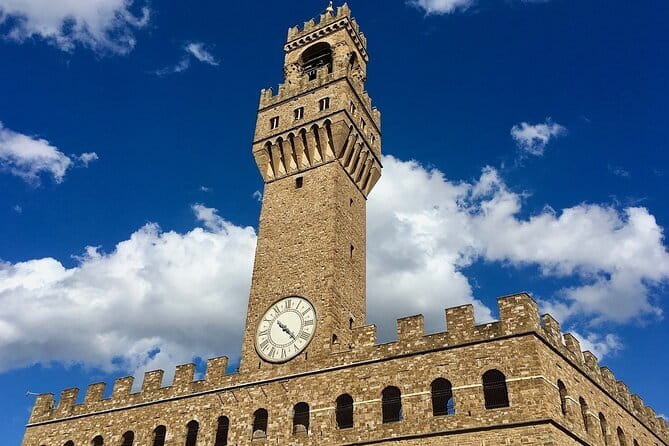
Begin at Piazza della Signoria, one of Florence’s most theatrical squares. Palazzo Vecchio faces the square with a stern medieval front, crenellated walls, and Arnolfo’s Tower rising above the rooftops. Even before you enter, the building tells you what it was built to do: project civic strength.
This was not originally a palace built for leisurely living. It was a seat of government, designed to protect Florence’s leaders and signal authority. The square outside remains one of the city’s best places to understand the old republic and the later Medici court at a glance.
Your visit begins with the building itself. Allow about 30 minutes for the exterior and initial orientation, though the actual pace depends on the guide and the group. The meeting point is Piazza della Signoria, at P.za della Signoria, 50122 Firenze FI. Since the location is central and near public transportation, it is easy to fit into a day spent around the Uffizi, Ponte Vecchio, and the Duomo.
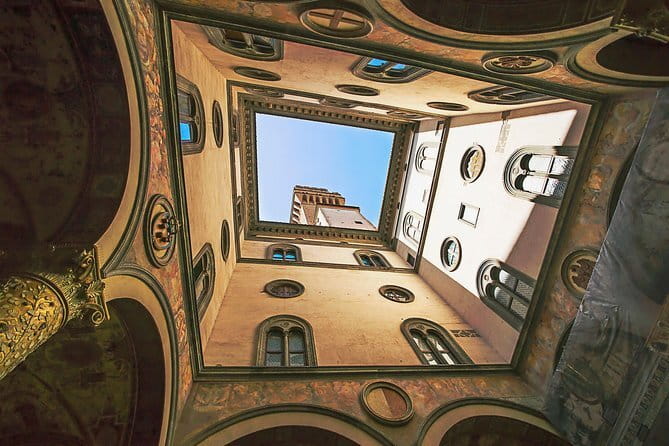
The first interior space is Michelozzo’s elegant courtyard. It offers a softer welcome than the fortress-like exterior, with decorative details that prepare you for the more elaborate rooms upstairs. A good guide uses this moment to explain how Florence moved from medieval government to Medici rule. That background matters, because the paintings inside are not decoration alone. They present a carefully shaped story about power, military victories, civic glory, and the Medici family.
More Palace Entry Tickets in Florence
- Florence: Palazzo Vecchio Entrance Ticket & Audioguide
★ 4.4 · 4,822 reviews - Florence: Palazzo Vecchio Entry Ticket with Audio Guide
★ 4.4 · 837 reviews - Florence: Palazzo Vecchio Skip-the-Line Entry Ticket
★ 4.2 · 349 reviews
The Hall of the 500 and Florence’s political drama
The Hall of the 500 is the largest and most commanding room on the visit. Its scale can make you stop talking for a moment. It was built for Florence’s governing council, so it had to accommodate political debate as well as impress anyone who entered.
Look up and around rather than focusing only on the walls. The ceiling, paintings, architectural scale, and repeated symbols all work together. The room presents Florence as powerful, orderly, and favored by history. A guide who explains those messages turns a grand hall into a readable political document.
The room is also tied to the celebrated artistic competition involving Leonardo da Vinci and Michelangelo, although the famous works planned for the walls did not survive in the form many people hope to see. That makes it especially important to have a guide who can separate the actual decoration from the stories attached to the room.
One strong guide can make this section the heart of the visit. Elisa is specifically praised for explaining the building’s history and making sure the group understood both the art and the political setting. At the same time, guide quality is not perfectly consistent. One reported problem was a guide who knew the art but did not explain the Medici rise to power in an engaging way. You should expect the architecture and objects to be impressive on their own, but the historical storytelling may vary.
Francesco I’s private study is the small surprise
After the huge public rooms, Francesco I de’ Medici’s studiolo feels like a different world. This private study was made for contemplation, collecting, and display. Its scale is intimate, and its decoration is packed tightly into the available space.
I like this room because it shows a less official side of Medici life. The Hall of the 500 tells you how rulers wanted to be seen in public. The studiolo hints at how one ruler surrounded himself with art, symbols, curiosities, and personal interests when away from ceremonies.
Do not expect a large gallery or a long stop here. The room is memorable precisely because it is compact and unusual. If your guide points out the symbolic meaning of the paintings and objects, you will get much more from it than a quick look at the walls.
The visit is advertised as including hidden chambers, but access can change. Some areas described as secret passages or restricted rooms have been closed during certain visits. Ask your guide at the start exactly which spaces are open that day, especially if those rooms are a main reason you booked.
The private apartments of Eleonora and Cosimo
The apartments associated with Eleonora of Toledo and Cosimo I de’ Medici give the tour a more personal tone. Here, the building shifts from public ceremony to court life. You can see how the ruling family occupied space, received people, and used decoration to reinforce status.
The rooms are filled with frescoes, paintings, ornaments, and details that reward a slower pace. Eleonora’s apartments are especially useful for balancing the usual Florence story, which often focuses on male rulers, artists, and military victories. Her rooms help you picture the court as a working household, not only as a political machine.
The best guides connect the rooms to family alliances, Medici ambition, and the changing role of the palace. You do not need to memorize every name. What matters is understanding how the building grew from a civic headquarters into a ducal residence filled with courtly display.
The visit usually moves quickly through these rooms. One to two hours is enough to see the main highlights, but it is not enough for a slow study of every painting. If you like reading every label or examining details at length, you may want to return independently. The ticket includes entry to the museum and temporary exhibitions, so a return visit may have value if you want more time.
More Palace Entry Tickets in Italy
- Palazzo Vecchio guided experience with entrance ticket
★ 4.5 · 249 reviews - Timed Entry Ticket to Pitti Palace and Boboli Gardens in Florence
★ 3.5 · 118 reviews - Florence Palazzo Vecchio Priority Entry Ticket with Host
★ 3.5 · 70 reviews - Florence: Pitti Palace 7 Museums Entrance Ticket & eBook
★ 4.4 · 51 reviews
Renaissance art by Michelangelo, Donatello, and Vasari
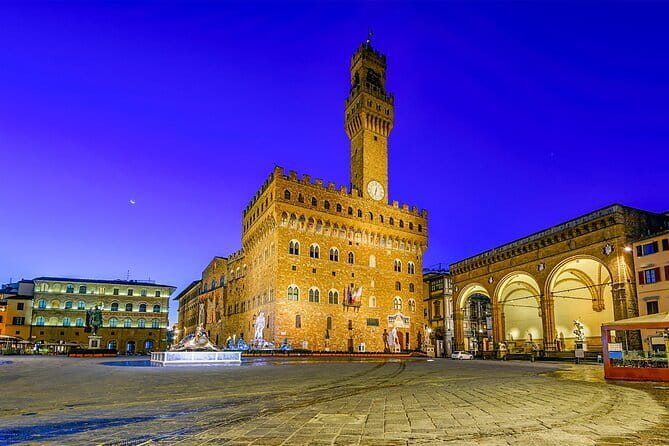
The appeal here is not one isolated masterpiece. It is the way sculpture, painting, architecture, and political history meet in the same building.
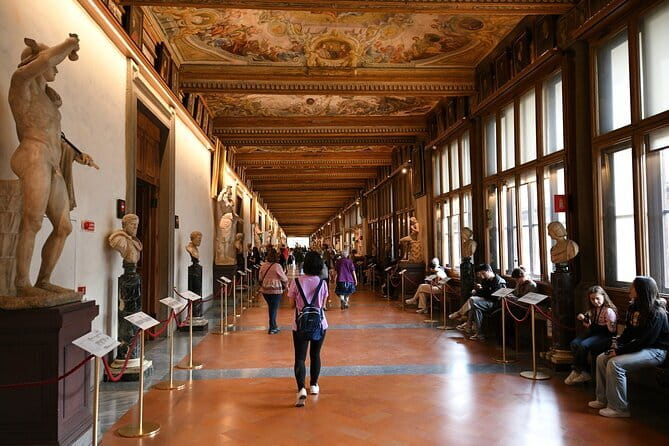
You may encounter work and decoration connected with Michelangelo, Donatello, Verrocchio, Vasari, Ghirlandaio, and Bronzino. Each name carries weight, but the experience works best when you consider how these artists served the image of Florence and its rulers.
Michelangelo and Donatello bring the force of sculpture. Vasari gives the building much of its grand political storytelling. Bronzino’s refined court style suits the Medici rooms, while Ghirlandaio and other artists help fill out the larger artistic setting of Renaissance Florence.
The guide’s role is important here. Art knowledge alone is not enough if the explanation is hard to follow or delivered without a clear story. The strongest version of this visit links what you see to the people who commissioned it and the political messages they wanted visitors to absorb.
What to expect from the tower
Arnolfo’s Tower is one of Florence’s recognizable landmarks, and a climb can add a fine view over the city and the Duomo. Some visits include access to upper levels, and sunset has been described as an especially appealing time for the view.
But you need to treat the tower as a possible extra, not a guaranteed part of this specific booking. Access has been affected by overcrowding, rain, weather conditions, fashion events, and other closures. In some cases, people were offered a chance to return the next day, but that only helps if your schedule allows it.
On one visit, the highest level was closed but a lower level still offered good views of Florence and the Duomo. That can be a reasonable substitute, but it is not the same as reaching the top. If the tower is essential, confirm access close to your visit and keep your plans flexible.
The climb also requires effort. The supplied information does not give a precise step count or accessibility details, so you should ask the operator if you have concerns about stairs or restricted access. Most people can take part in the general museum visit, but tower access may involve a different level of physical demand.
How the guided format affects the experience
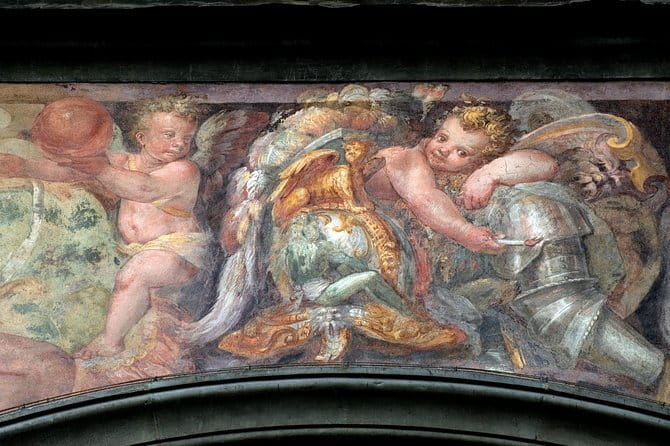
The group limit is 20 people, which is manageable in a large palace but can still feel crowded in small rooms. A smaller group is better for hearing the guide and asking questions. One especially fortunate booking had only one participant, creating a very personal experience, but you should not count on that.
Timing is another issue. Some visits have begun late, leaving less time inside. Other groups have been slowed by optional dinner arrangements, then rushed through the palace. If your start is delayed, speak up early and ask how the guide plans to protect the museum time.
Guide quality is the biggest variable. Elisa is singled out for clear explanations, a friendly manner, and careful attention to the building and tower. Other accounts describe guides who were difficult to understand or who moved too quickly. That does not mean you should avoid the experience, but it does mean the $44.94 price depends heavily on the person leading your group.
The language you select also matters. A small group does not always guarantee that the tour will run in the exact language you requested. If language is important to you, verify it before departure and contact the provider promptly if anything changes.
Is $44.94 a fair price?

At $44.94, you are paying for more than museum admission. You are paying for reserved entry, a guided explanation, and the convenience of having the main rooms organized into a short visit.
That can be good value if you have limited time in Florence and want the palace’s political story explained. A strong guide can help you understand why the Hall of the 500 matters, what the Medici rooms reveal, and how the art supports the building’s message.
The value drops if you mainly want to wander silently or spend a long time with individual works. The palace museum can be enjoyed independently, and a rushed guided visit may leave you wishing for more time. The price also feels less attractive when the tower is closed, a special room is unavailable, or the guide arrives late.
The included temporary exhibitions help tip the balance in favor of booking, but their value depends on what is showing. If you already plan to visit several Florence museums, compare this cost with a direct museum ticket and decide how much you want a guide to shape the visit.
Practical details for planning your time

The activity begins and ends at Piazza della Signoria. The central setting makes it easy to pair with nearby sights, but leave enough time to find the meeting point and identify the correct tour staff. Your confirmation is supplied at booking, and the experience is offered for a maximum of 20 people.
The visit lasts about one to two hours. I would avoid scheduling another timed attraction immediately afterward, especially if you hope for tower access or if the group starts late.
You can cancel without penalty up to 24 hours before the local start time. Cancellations or changes made within 24 hours are not refundable. If the museum changes or cancels access, contact the provider or booking service right away rather than waiting until the scheduled start.
The museum is near public transportation, and most people can take part in the general experience. Tower climbs and restricted rooms are a separate concern, so ask about those parts if mobility affects your plans.
Who should book Palazzo Vecchio?
I recommend this visit if you want Florence’s Medici story tied directly to the rooms where power was exercised. It suits first-time visitors who want an organized introduction, history fans who enjoy political context, and anyone with only a short window for the palace.
It is also a good choice if you value a guide who can point out details you would likely miss alone. The best version of the experience is personal, clear, and full of connections between the art and the people who commissioned it.
I would hesitate if your only goal is the tower, if you need guaranteed access to hidden passages, or if you prefer to move at your own pace. I would also be cautious about pairing it with an optional dinner or aperitivo unless the arrangements are clearly explained. The palace visit and the meal are separate parts of the day, and the museum should be the reason you book.
Should you book this Florence palace visit?
Yes, if you want a short guided introduction to Palazzo Vecchio and its Medici rooms, and you can accept that tower and restricted-area access may change. The Hall of the 500, Francesco I’s study, Eleonora’s apartments, and the Renaissance decoration provide plenty to see in one to two hours.
Book it for the palace and the historical explanation, not for a guaranteed rooftop view. Check the language, confirm what is open, and keep your schedule flexible. At $44.94, the experience earns its price when the guide is strong and the main rooms are available. If those conditions matter most to you, this can be a very worthwhile Florence stop.
FAQ
Where does the Palazzo Vecchio visit begin?
The visit begins in Piazza della Signoria, Florence, at P.za della Signoria, 50122 Firenze FI, Italy.
Where does the activity end?
The activity ends back at the meeting point in Piazza della Signoria.
How long does the visit last?
The visit lasts approximately one to two hours.
What rooms are included in the visit?
The visit includes the courtyard by Michelozzo, the Hall of the 500, Francesco I de’ Medici’s private study, and the private apartments of Eleonora of Toledo and Cosimo I de’ Medici.
Is the tower included?
Tower access is not guaranteed. It may be affected by overcrowding, weather, special events, or other closures. Some visits have included lower or upper viewing levels, while others have not reached the tower.
Are temporary exhibitions included?
Yes. The ticket includes temporary exhibitions held at Palazzo Vecchio.
How many people can join the activity?
The activity has a maximum group size of 20 people.
Can I cancel for a full refund?
Yes, if you cancel at least 24 hours before the experience start time. Cancellations or changes made less than 24 hours before the start are not refunded.
More Palazzo Vecchio and Pitti Tours in Florence
- Florence: Uffizi, Pitti Palace & Boboli Combined 5-Day Pass
★ 4.5 · 1,726 reviews - Florence: Palazzo Vecchio Guided Tour
★ 4.8 · 1,260 reviews - Florence: Pitti Palace and Boboli Gardens Ticket & eBook
★ 4.5 · 835 reviews - Florence: Pitti Palace, Boboli Garden, Palatine Gallery Tour
★ 4.9 · 558 reviews
Newly added in Florence
- the Medici family in Florence: Palazzo Medici and Medici Chapels★ 4.5 · 10 reviews
- FLORENCE: Uffizi Gallery + Palazzo Vecchio monolingual Guided Tour – Small Group★ 5.0 · 9 reviews
- Palazzo Vecchio Tales – into Medici’s secrets and mythology simbols★ 5.0 · 18 reviews
- The Pitti Palace private tour: Splendours of the Royal Residence★ 5.0 · 4 reviews
- Uffizi and Palazzo Vecchio Combo Private Tour★ 5.0 · 3 reviews
- Pitti Palace, Palatina Gallery and the Medici: Arts and Power in Florence.★ 4.5 · 223 reviews
- The Medicis: The Movie, The Family, The Palace!★ 5.0 · 9 reviews
- Small-Group Palazzo Vecchio Secret Passages Tour with Lunch Or “Gelato”★ 4.0 · 92 reviews
Palazzo Vecchio and Pitti Palace Tours, compared.
Uffizi, Pitti Palace & Boboli Combined 5-Day Pass
Read our review →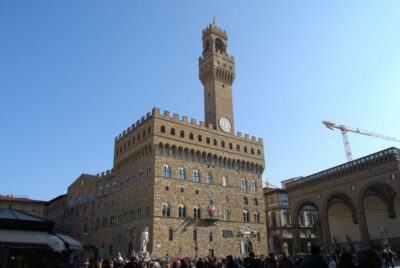
Palazzo Vecchio: Skip-the-Line Entry and Secret Passage Tour
Read our review →