Review · PALAZZO VECCHIO AND PITTI PALACE TOURS
Florence: Pitti Palace and Boboli Gardens Walking Tour
Florence’s Pitti Palace and Boboli Gardens tour pairs grand Medici art with a walk through one of the city’s most unusual outdoor spaces. I like the Palatine Gallery, where paintings by Raphael, Titian, and Rubens fill rooms once used by powerful rulers. I also like that you get time to explore the gardens on your own instead of being marched from fountain to fountain.
The guides are the strongest part of the experience. Eduardo, Raffaello, Giovanni, Alessandra, Julia, Ivan, and others have earned praise for lively storytelling and clear explanations. The main drawback is the short 90-minute duration. It gives you a useful introduction, but Boboli Gardens deserves extra time, and its grounds may look untidy in places.
Key points at a glance
- Medici palace interiors: See the Palatine Gallery and paintings by Raphael, Titian, Rubens, and other major artists.
- Florence’s landmark route: The experience brings context to Ponte Vecchio, the Duomo, Palazzo Vecchio, Basilica of San Lorenzo, and Medici Riccardi Palace.
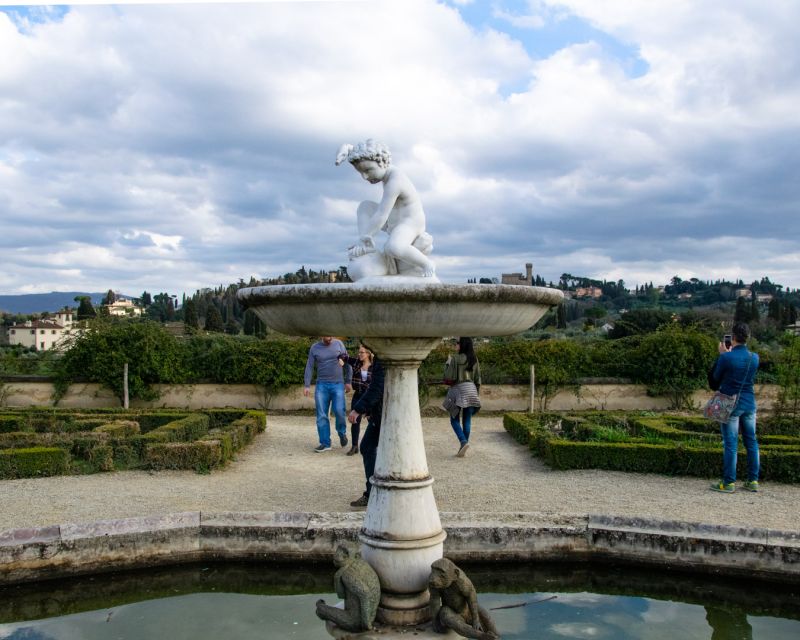
- Gardens with surprises: Boboli includes mazes, limestone-covered caves, fountains, obelisks, and old ice-making structures.
- Best city view: Climb to Cavalier’s Palace for a 360-degree panorama over Florence.
- Guide-led, then independent: The palace receives the guided attention, while you explore the 11-acre gardens at your own pace.
- Flexible booking: The tour costs $117 per person, allows cancellation up to 24 hours ahead, and offers shared or private groups.
Why Pitti Palace makes a strong starting point
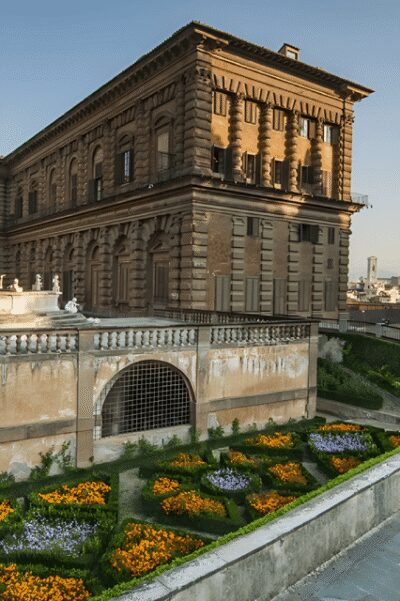
Palazzo Pitti is not a quiet little museum. It is a huge Renaissance palace on the south side of the Arno, facing the historic center across Ponte Vecchio. The building dates to 1458 and later became the home of the Medici family from the 16th century until the family’s decline in the 18th century.
That change of ownership matters. You are not simply looking at framed pictures in bare galleries. The palace helps you see how art, family power, and political ambition worked together in Florence. A guide can point out how the rooms and collections reflect the people who lived there, rather than treating each painting as an isolated object.
I would pay close attention during the explanation of the Medici period. One guest specifically wished for more detail about the family’s rule, and that is a fair point. The tour gives you an introduction to the palace and its major works, but anyone fascinated by Medici politics may want to ask direct questions or plan extra reading afterward.
The meeting point is at the entrance to the palace, so arrive with enough time to identify your guide before the group moves inside. An express security check is included, which can save some waiting, but it does not mean you should arrive at the last second.
More Palace Gardens and Grounds in Florence
- Florence: Pitti Palace and Boboli Gardens Ticket & eBook
★ 4.5 · 835 reviews - Florence: Pitti Palace, Boboli Garden, Palatine Gallery Tour
★ 4.9 · 558 reviews - Pitti Palace, Boboli Garden & Palatina Gallery Guided Tour
★ 5.0 · 264 reviews
The Palatine Gallery and its famous paintings
The Palatine Gallery is the artistic heart of this experience. Its collection includes works by Raphael, Titian, Rubens, and other important painters. The emphasis here is on Renaissance and later court art, with paintings displayed in rooms that retain the feel of a royal residence.
A guide is useful because the gallery can feel visually crowded. You may see portraits, religious scenes, mythological subjects, and richly decorated rooms competing for your attention. A good explanation helps you understand why a painting mattered to the people who commissioned it, what the artist was trying to show, and how the work fits into Florence’s wider story.
Giovanni has been singled out for explaining what motivated artists of the period, rather than simply reciting names and dates. Raffaello has also been praised for asking questions and encouraging reflection. Those details suggest the best version of this tour is not a fast list of masterpieces. It is a conversation about art, patronage, belief, and power.
The guide quality can vary from one departure to another, as it does with any tour using several local guides. Names associated with especially strong visits include Eduardo, Alessandra, Ivan, Julia, Pamela, and Giacomo. Eduardo, in particular, has been praised for humor, a sharp memory for Tuscan history, and a way of making information easy to follow.
You should still manage expectations. Ninety minutes is enough for a guided introduction, not a full museum study. If you have a special interest in Raphael or the Medici collection, tell your guide early. A small or private group may allow more room for that kind of focus.
Florence landmarks before and around the palace
The experience also connects Pitti Palace to the larger historic center. Depending on the exact route and timing, the guide discusses or points out major sights such as Ponte Vecchio, the Basilica of San Lorenzo, Medici Riccardi Palace, the Cathedral of Santa Maria del Fiore, and Palazzo Vecchio.
These landmarks give the palace context. Ponte Vecchio is more than a photogenic bridge. It connects the palace area with the city center and helps you understand how the Medici moved between their residences and offices. The Duomo, Palazzo Vecchio, and Medici Riccardi Palace show different sides of Florence: religious authority, civic government, and family power.
Do not expect a full guided visit inside every landmark named. The central focus is Pitti Palace and Boboli Gardens. The other sights function as part of the Florence walk and historical framework, with the guide helping you connect them rather than offering separate museum tours at each stop.
This is particularly useful on a first day in Florence. You get your bearings quickly, see how the city’s major pieces fit together, and can return later to the Duomo or Palazzo Vecchio with a better sense of their role.
Boboli Gardens, caves, fountains, and odd old engineering
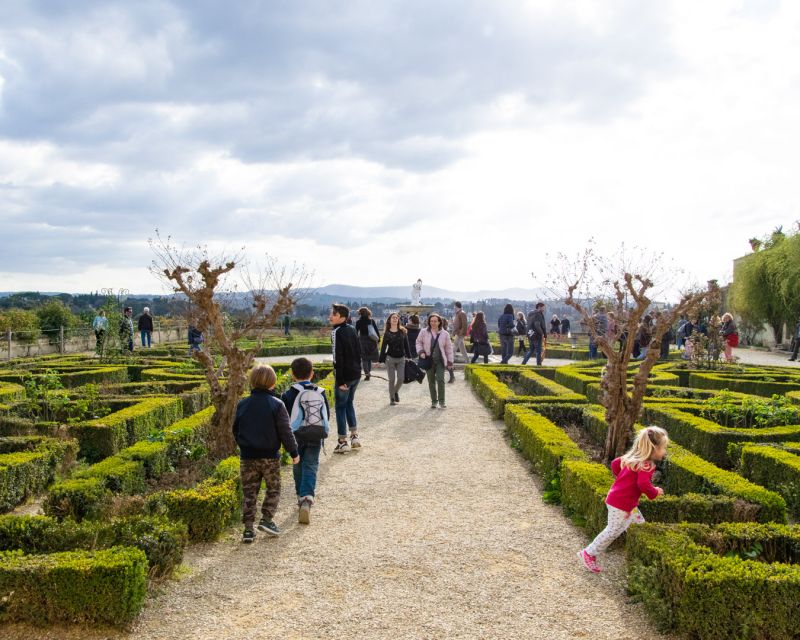
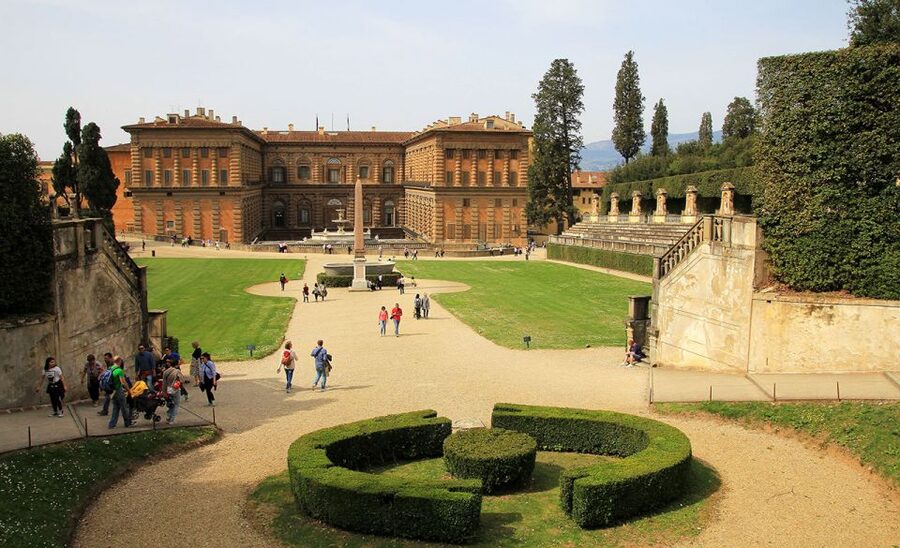
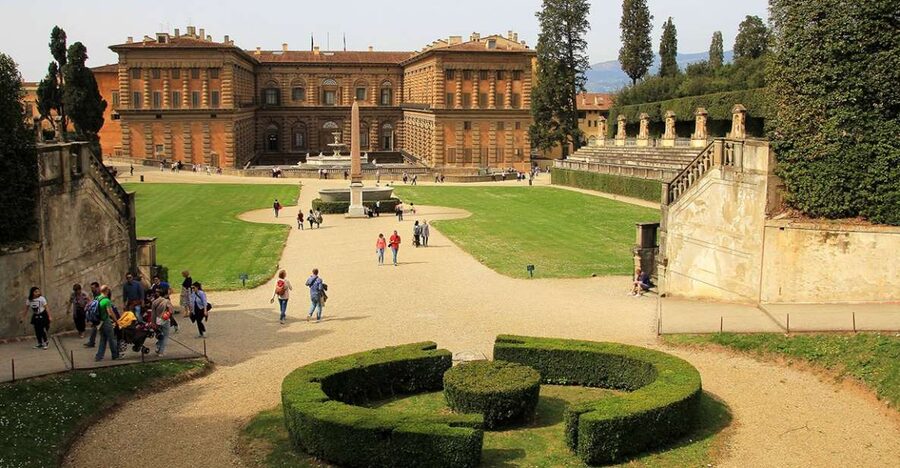
After the palace, you enter Boboli Gardens, an 11-acre outdoor complex created for the Medici. Here the format changes. The garden portion is meant to be explored independently, so you can set your own pace after the guided palace visit.
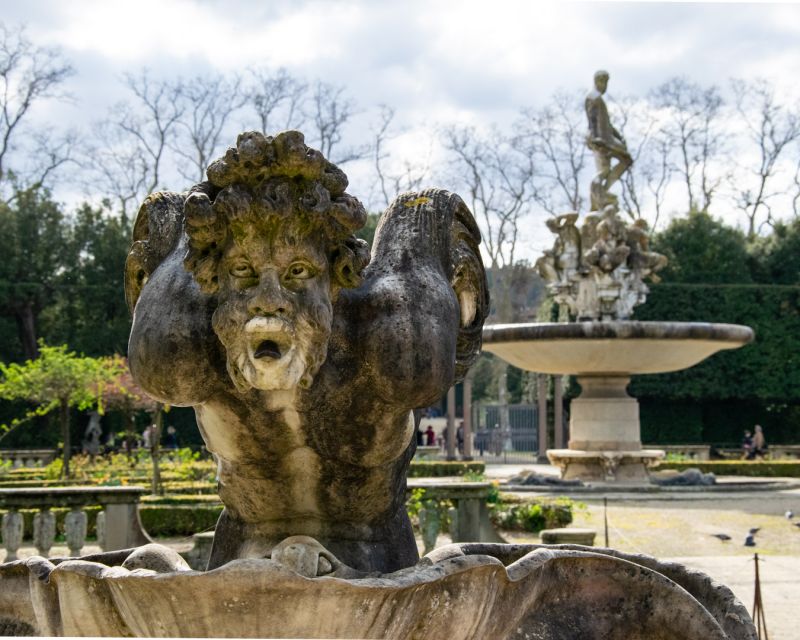
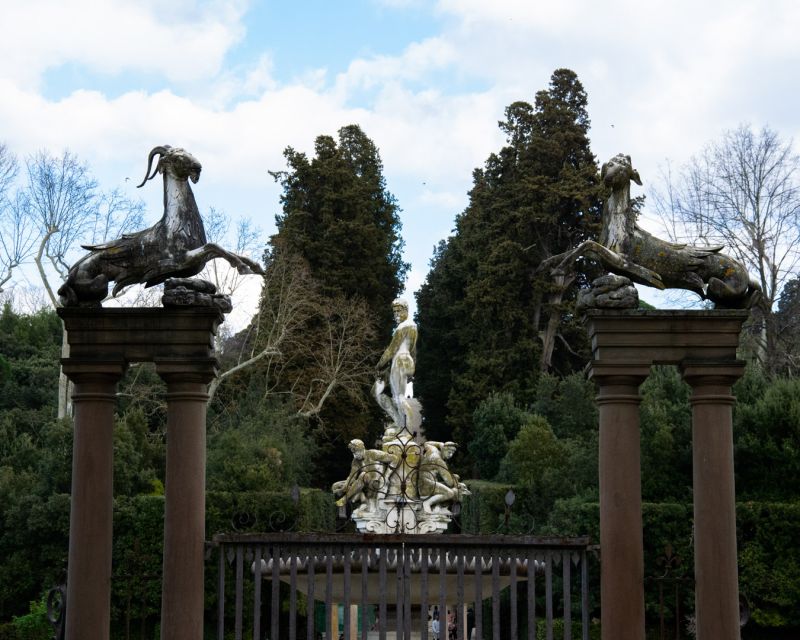
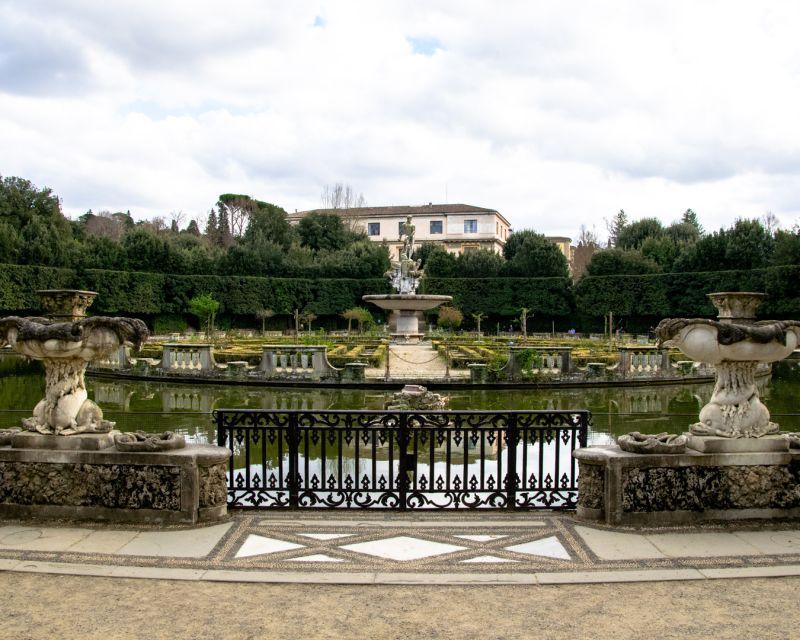
Boboli is not simply a pleasant park. Its paths were designed around Renaissance ideas of order, spectacle, and surprise. You might follow a route through formal spaces, pass fountains and obelisks, and find caves covered with limestone. The grottoes are among the most memorable features because they blur the line between architecture and nature.
The tour also draws attention to the engineering behind the garden. Bernardo Buontalenti, the architect linked to several of its features, is described here as the inventor of the first gelato. That story gives the garden a human touch, but the larger point is the Medici taste for clever machinery, theatrical effects, and controlled nature.
Look for the ice-making pyramids as well. They reflect old methods of storing and preserving ice before modern refrigeration. It is an unusual detail, and one that many visitors could easily miss while focusing on statues and views.
The gardens have a practical weakness. Maintenance can be uneven. One visit found the grounds unclean and poorly managed, while another described them as amazing. Both impressions can be true at once. Boboli is historically important and full of striking structures, but it may not look like a perfectly manicured modern garden. Expect worn paths, untidy patches, and a grand old site that shows its age.
Wear comfortable shoes and leave room in your schedule. The tour itself is short, but you can easily want more time among the paths, caves, and elevated viewpoints.
More Palace Gardens and Grounds in Italy
- Florence: Pitti Palace and Boboli Gardens Private Tour
★ 4.8 · 46 reviews - Pitti Palace and Boboli Gardens Private Tour
★ 4.7 · 38 reviews - Pitti Palace and Boboli Gardens Private Tour
★ 4.5 · 38 reviews - Caserta Royal Palace & Gardens Small Group Tour with Shuttle
★ 4.9 · 632 reviews
The climb to Cavalier’s Palace
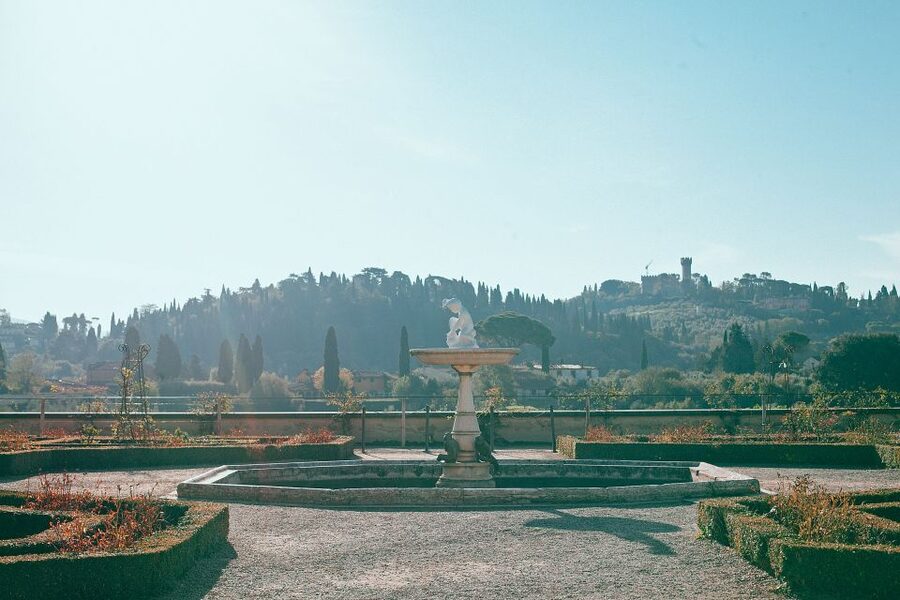
The final reward is the view from Cavalier’s Palace, the highest point of the garden. From here, you get a 360-degree view over Florence. This is one of the best reasons to stay in Boboli after the guided portion ends.
The view also helps you read the city. You can look back toward the Duomo and the dense center, then see how the palace and garden sit above the Arno. After hearing about Medici power inside Pitti Palace, the panorama gives that story a physical shape. The ruling family did not choose this setting by accident. The palace and garden controlled space, movement, and spectacle.
The climb may be tiring for some people, especially in warm weather or after a long day of museums. Wheelchair access is listed for the activity, but the garden’s historic paths and changes in elevation can still affect how comfortably you explore every section. If mobility is a concern, ask the operator for current route details before booking.
What the 90-minute format really gives you
At $117 per person, this is not a cheap admission ticket. The value depends on what you want from Florence. You are paying for a live guide, entry to Pitti Palace, entry to Boboli Gardens, historical interpretation, and an express security check.
For someone who wants a quick, organized introduction, the price can make sense. You avoid sorting out the palace story alone, and you gain a guide who can turn a large collection into a more manageable visit. This matters especially if you are new to Renaissance art or have only a short stay in Florence.
For someone who wants to inspect every room and wander Boboli for half a day, the value is less clear. The 90-minute schedule is compact, and the independent garden portion means the guide does not provide a detailed walking explanation for every path. You may want to treat the booked tour as an orientation, then return to the gardens with extra time if your schedule allows.
The private option changes the calculation. A small private group gives you more chance to ask questions and adjust the focus. Several visits became especially personal when only two people attended, allowing the guide to spend more time on the visitors’ interests. A shared group may cost the same listed amount but can feel less flexible.
Choosing the right guide style
The strongest guides on this experience combine facts with stories. Eduardo has been praised for humor and an encyclopedic grasp of Tuscan history. Raffaello brings a teacher’s approach, asking questions and making complex ideas easier to understand. Giovanni has a gift for explaining artistic motives and adding useful anecdotes.
Other guides have also been described as friendly and clear. Alessandra helped connect Florence’s history to its art, Ivan brought enthusiasm to the Medici collection, and Julia made the palace story interesting. These names are useful to know, but you cannot necessarily request a particular guide unless the operator confirms it.
Audio equipment may be a concern in a larger group. One person found the transmitter quality poor. If you have trouble hearing, move closer to the guide and say so early. In a private or very small group, this problem is less likely to interfere with the experience.
The guide’s role is most valuable inside the palace. Once you reach Boboli, take responsibility for your own route. Ask where the main caves, fountains, ice-making pyramids, and highest viewpoint are before separating from the group.
Who should book this Florence tour
I would recommend it to first-time visitors who want art and history without spending an entire day in a museum. It suits couples, families with older children, and anyone who prefers explanations from a local guide rather than reading every label alone.
It is also a good fit if you want a balanced Florence visit. The palace gives you interiors and paintings. Boboli gives you open air, city views, architectural oddities, and a change of pace.
You may want another plan if your main goal is intensive art study. The format is too brief for a close look at every important painting. It is also less suitable if you dislike uneven gardens or do not want to walk uphill.
Avoid stacking this directly after another demanding museum visit if you can help it. One guest regretted combining it with the Uffizi on the same day. Your attention is better spent on Pitti and Boboli alone, with extra time afterward for the garden.
Cancellation is free up to 24 hours before the start, and you can reserve now and pay later. Guides are available in English, French, Italian, Spanish, German, Russian, and Portuguese. Wheelchair access is listed, and private groups are available.
FAQ
How long does the Pitti Palace and Boboli Gardens tour last?
The tour lasts 1.5 hours, or 90 minutes.
What is included in the price?
The price includes a tour guide, entry to Pitti Palace, and entry to Boboli Gardens.
How much does the tour cost?
The listed price is $117 per person.
Where do I meet the guide?
Meet your guide at the entrance of the palace.
Is the tour shared or private?
The experience can be booked as a shared tour, and a private group option is available.
Which languages are offered?
Guides are available in English, French, Italian, Spanish, German, Russian, and Portuguese.
Can I cancel the booking?
Yes. You can cancel up to 24 hours in advance for a full refund.
Can I reserve now and pay later?
Yes. The booking option allows you to reserve your place and pay later.
Is the activity wheelchair accessible?
Yes, wheelchair accessibility is listed for the activity.
Should you book it?
Book this tour if you want a brisk, guide-led introduction to Pitti Palace, Renaissance art, and the main ideas behind Boboli Gardens. The best part is the human explanation inside the palace, especially when your guide adds stories about artists, Medici power, and the motives behind the paintings.
Go in knowing that the gardens are not always perfectly maintained and that 90 minutes passes quickly. If you can stay longer afterward, do it. The tour gives you the key sights and the city view, while extra time lets you explore the caves, fountains, and winding paths at your own speed.
More Palazzo Vecchio and Pitti Tours in Florence
- Florence: Palazzo Vecchio Entrance Ticket & Audioguide
★ 4.4 · 4,822 reviews - Florence: Uffizi, Pitti Palace & Boboli Combined 5-Day Pass
★ 4.5 · 1,726 reviews - Florence: Palazzo Vecchio Guided Tour
★ 4.8 · 1,260 reviews - Florence: Palazzo Vecchio Entry Ticket with Audio Guide
★ 4.4 · 837 reviews
More Palace Walking Tours in Italy
- Venice: Doge’s Palace and St Mark’s Basilica Walking Tour
★ 4.4 · 6,291 reviews - Venice: Walking tour, Doge Palace, & St. Mark’s Basilica
★ 4.5 · 884 reviews - Venice: Skip-the-Line Doge’s Palace & Basilica Walking Tour
★ 4.6 · 294 reviews
Newly added in Florence
- Palazzo Vecchio: Magnificent Private Tour★ 4.7 · 61 reviews
- Florence: Pitti Palace and Boboli Gardens Private Tour★ 4.8 · 46 reviews
- Pitti Palace and Boboli Gardens Private Tour★ 4.7 · 38 reviews
- Pitti Palace and Boboli Gardens Private Tour★ 4.5 · 38 reviews
- Palazzo Vecchio guided experience with entrance ticket★ 4.5 · 249 reviews
- Florence: Pitti Palace and Palatina Gallery Ticket and Tour★ 4.9 · 255 reviews
- Pitti Palace, Boboli Garden & Palatina Gallery Guided Tour★ 5.0 · 264 reviews
- Florence: Palazzo Vecchio Skip-the-Line Entry Ticket★ 4.2 · 349 reviews
Palazzo Vecchio and Pitti Palace Tours, compared.
Uffizi, Pitti Palace & Boboli Combined 5-Day Pass
Read our review →
Palazzo Vecchio: Skip-the-Line Entry and Secret Passage Tour
Read our review →