
Review · PALAZZO VECCHIO AND PITTI PALACE TOURS
Florence: Pitti Palace and Palatina Gallery Ticket and Tour
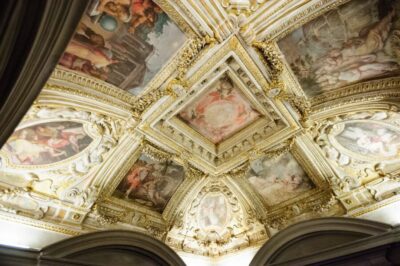
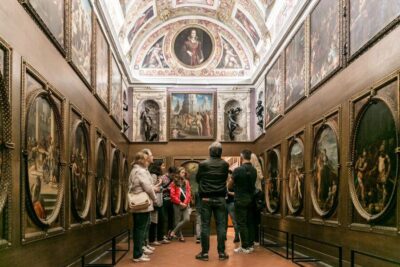
The Palatina Gallery is not a quiet row of paintings in plain white rooms. It is an old Medici palace where art hangs between lavish frescoes and stucco, often in rooms that feel as important as the pictures. I like the way this tour connects the paintings to the power and taste of the grand-dukes of Tuscany, and I like that your ticket lets you continue through the palace after the guide leaves.
The strongest feature is the guide. Camilla, Maurizio, Roberta, Marta, Daniela, and others are praised for turning difficult art into clear stories, with useful political and family context. The one drawback is physical: you will spend much of the 110-minute tour standing or walking, with no planned short breaks, so this may feel long for some older visitors.
Key points at a glance
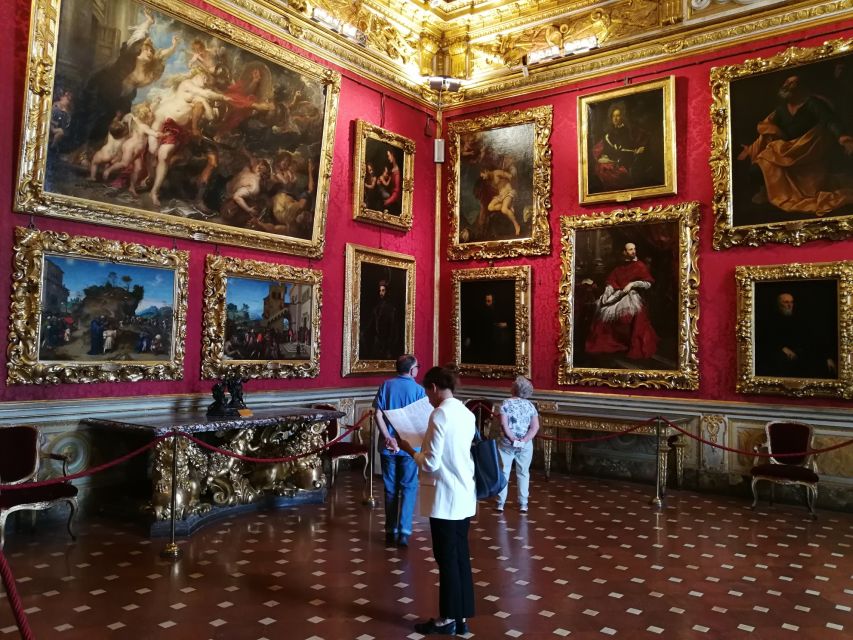
- Art in royal rooms: See works by Caravaggio, Rubens, Raphael, Titian, and other major European painters inside the former Medici residence.
- A guide who explains more than labels: The best part of the tour is the discussion of technique, symbolism, politics, and the Medici family.
- A ticket with extra mileage: After the guided visit, you can explore the other Pitti Palace museums in your own time, including the Treasury of the Grand Dukes and the Gallery of Modern Art.
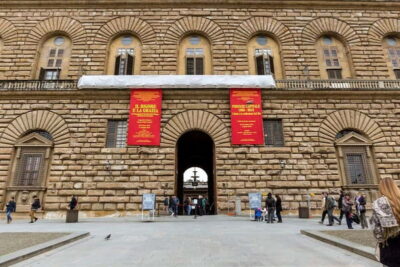
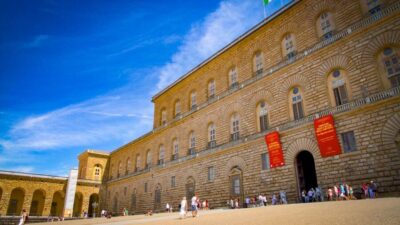
- Easy meeting point: Meet outside the central entrance on Piazza Pitti, right in front of the palace.
- Useful for first-time art visitors: Your guide helps you notice details you could easily pass without context.
- Plan for standing: The tour lasts about two hours and has no stated rest breaks, so wear comfortable shoes and pace yourself afterward.
Why the Palatina Gallery feels different from the Uffizi
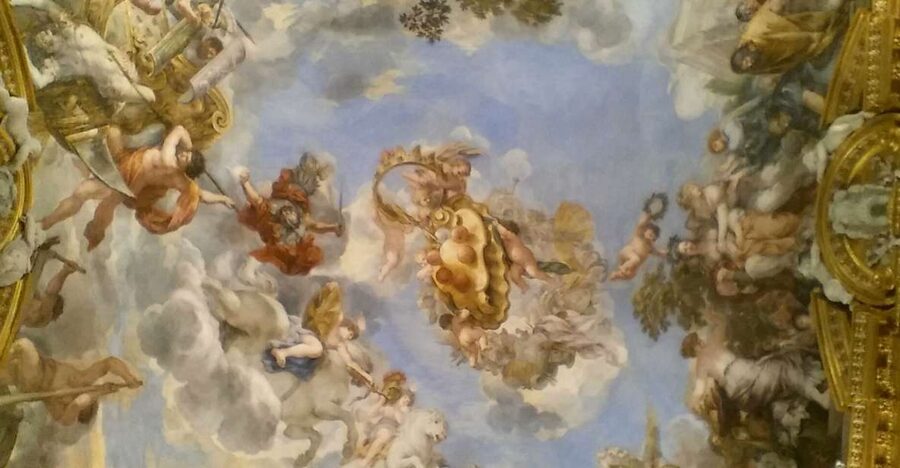
Florence’s Uffizi may be the city’s best-known painting museum, but the Palatina Gallery offers a different kind of visit. Here, the art remains in the setting of a grand palace rather than being arranged in a modern, orderly sequence.
That setting changes how you read the collection. Paintings are displayed on the walls and on dividers between rooms decorated with elaborate ceilings, painted scenes, and stucco details. You are not just looking at a Caravaggio or a Raphael. You are seeing the sort of surroundings in which rulers displayed art to impress family, officials, and important visitors.
I find that especially useful if you are interested in how art functioned in court life. The palace tells you about wealth and status before your guide has explained a single painting. Then the paintings give you a closer look at the taste and ambition of the people who lived there.
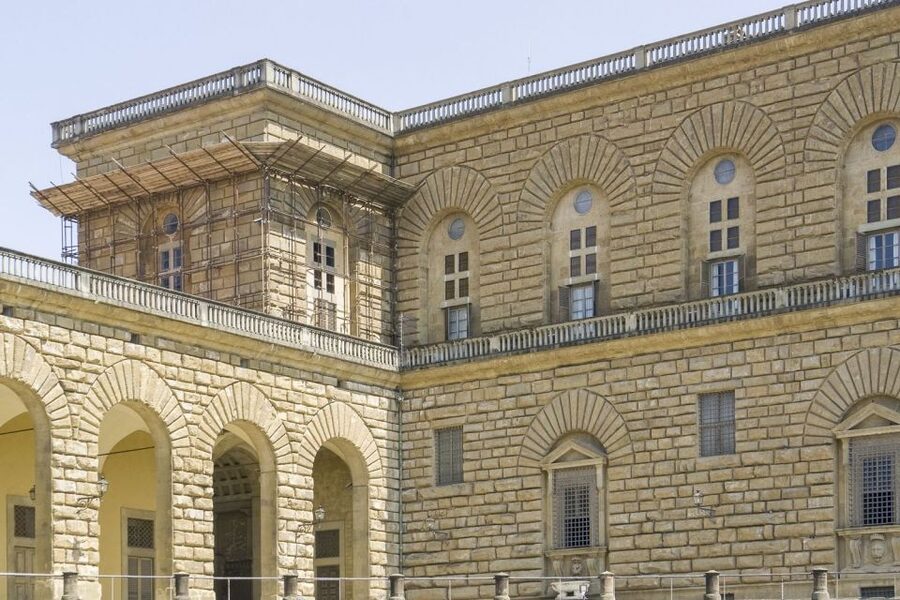
The building served as the home of the grand-dukes of Tuscany and later the King of Italy. That gives the visit two layers of history: the Medici era and the later royal period. Your guide can use the palace itself to make those changes easier to follow.
More Palazzo Vecchio and Pitti Tours in Florence:
- Florence: Palazzo Vecchio Entrance Ticket & Audioguide
★ 4.4 · 4,822 reviews - Florence: Uffizi, Pitti Palace & Boboli Combined 5-Day Pass
★ 4.5 · 1,726 reviews - Florence: Palazzo Vecchio Guided Tour
★ 4.8 · 1,260 reviews
Meeting on Piazza Pitti and getting started
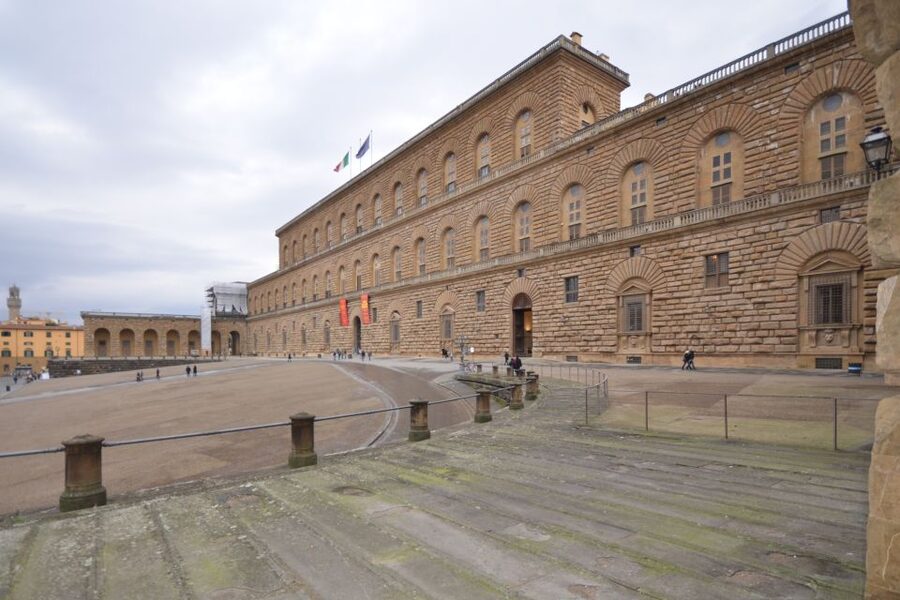
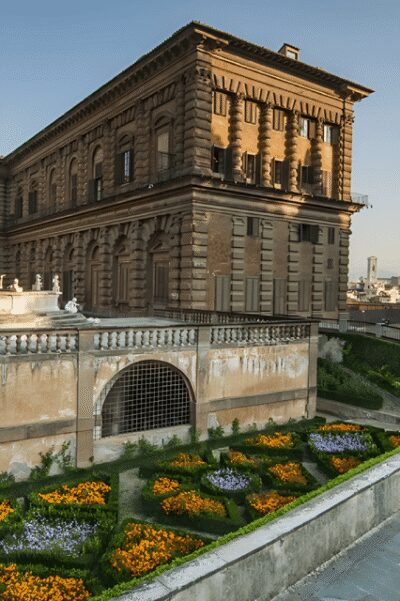
You meet your English-speaking guide on Piazza Pitti, outside the central entrance of Palazzo Pitti. This is a practical meeting point because the palace facade is large and unmistakable, but arrive with enough time to find the exact entrance area and organize your belongings.
The tour includes an entry ticket and skip-the-ticket-line access. That matters most when the entrance is busy. You are still entering a major museum, so expect the normal security and cloakroom procedures rather than an instant walk straight into the galleries.
Large bags, rucksacks, luggage, and big umbrellas must be left in the cloakroom. Flash photography is not allowed, but ordinary non-flash photography is permitted in the museums. I would carry as little as possible. A small bag makes it easier to move through the rooms and keep your attention on the guide.
The tour is listed as lasting 110 minutes, while the description also calls it a two-hour guided tour. In practical terms, plan for about two hours inside with the guide, then allow extra time if you want to see the rest of the palace.
The first rooms: palace decoration before paintings
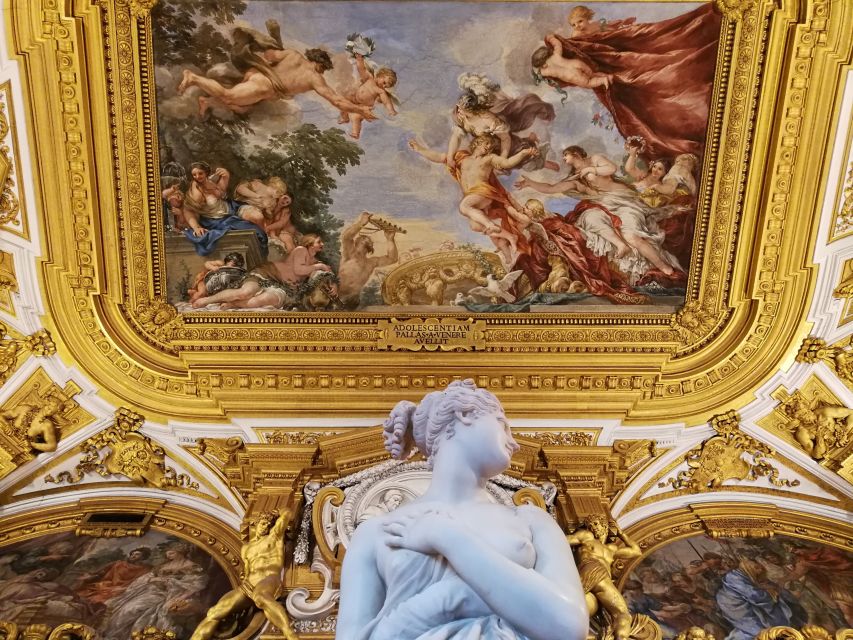
One of the pleasures of this visit is that the rooms are part of the attraction. Renaissance and later palace decoration surrounds the collection, with frescoes and stucco work framing the art.
Your guide can help you distinguish between what belongs to the architecture and what was added as part of the palace’s decorative program. Without that explanation, it is easy to focus only on famous names and miss the visual message of the rooms themselves.
This is also where the tour’s historical side becomes useful. The grand-dukes were not collecting paintings simply to fill empty walls. The palace was a place of government, family life, display, and ceremony. The decoration helped create an image of authority.
You may find the presentation less tidy than a standard museum route. Paintings can be packed into richly decorated rooms, and the visual competition between ceiling, wall, frame, and canvas is real. Some people love that atmosphere. If you prefer clear spacing and quiet walls around each work, the Palatina Gallery can feel visually crowded.
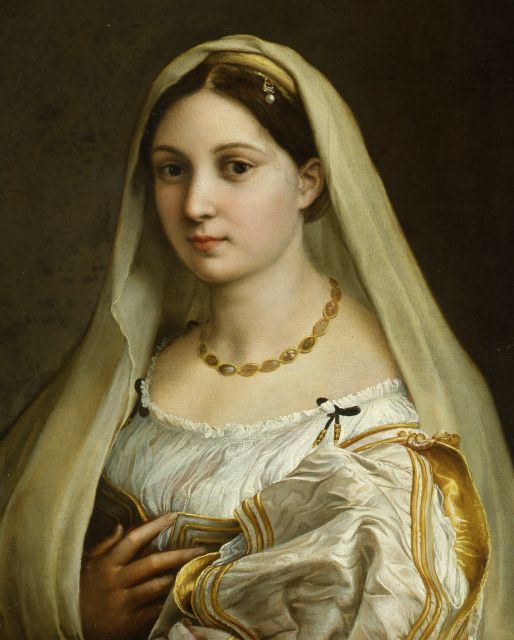
Caravaggio, Rubens, Raphael, and Titian
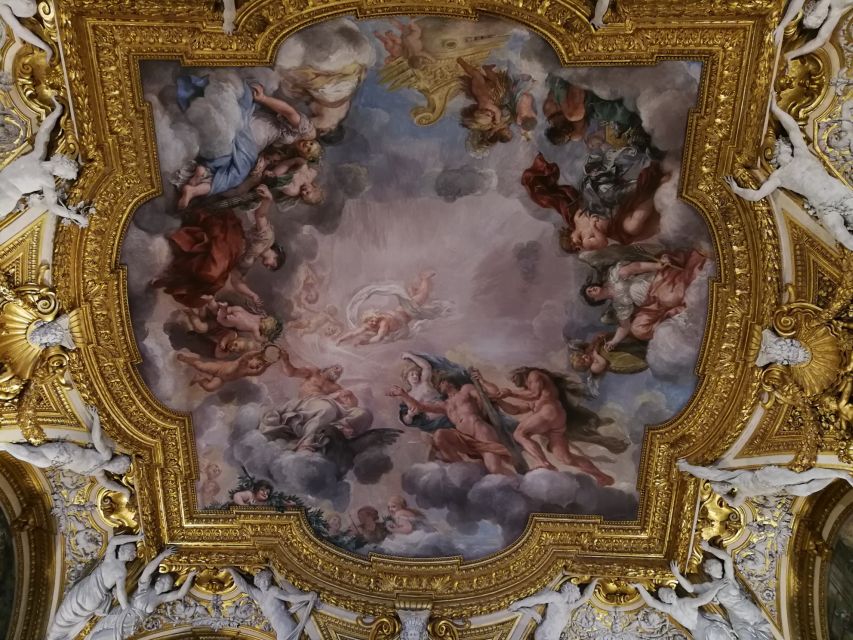
The central appeal is the chance to see major European art with a guide who can point out what matters. Caravaggio is a major draw, but the collection also includes works by Rubens, Titian, Raphael, and other important painters.
A good guide will not simply recite names and dates. The most useful explanations focus on how an artist creates an effect. You might hear about light, gesture, color, composition, facial expression, or the way a painter directs your eye across the scene.
That kind of guidance is valuable because famous paintings can be surprisingly easy to skim. You may recognize the name but still miss the small detail that makes the work important. The guides praised for this tour are particularly good at slowing down the looking process and showing you where to focus.
The discussion also places the artists in a wider European setting. Rubens, Caravaggio, Titian, and Raphael represent different periods and approaches, so the gallery can feel like a compressed lesson in changing ideas about painting.
I would not expect to see every work in equal depth during the guided portion. A 110-minute visit has to make choices. The guide will focus on selected highlights, then you can return to rooms or continue independently after the formal tour.
More Palace Museums in Florence:
- Florence: Pitti Palace, Boboli Garden, Palatine Gallery Tour
★ 4.9 · 558 reviews - Pitti Palace, Boboli Garden & Palatina Gallery Guided Tour
★ 5.0 · 264 reviews - Venice’s Best: Basilica, Doge’s Palace, Gondola & History Gallery
★ 4.5 · 2,478 reviews - Royal Palace & Prado Museum Skip the Line Guided Tour
★ 4.5 · 1,347 reviews
Medici power and the stories behind the art
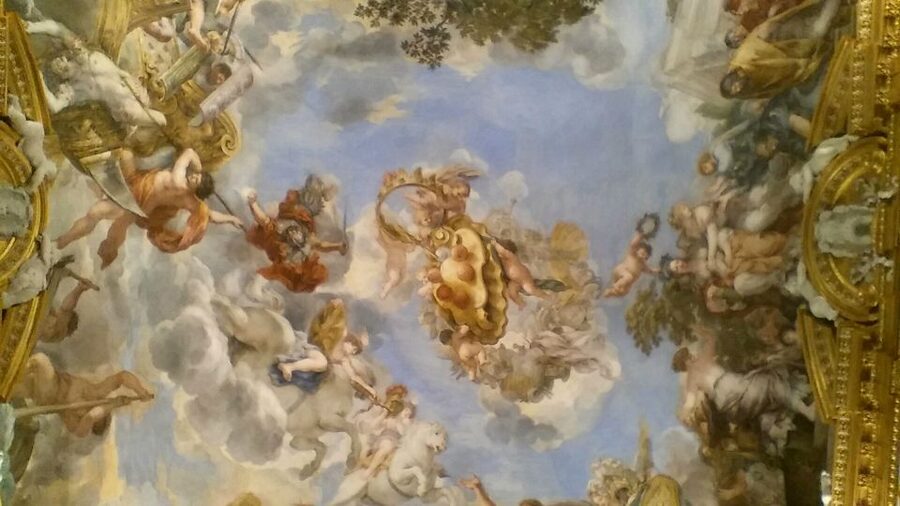
The Medici family can be hard to follow. Names, marriages, titles, rivalries, and changes in political power quickly blur together if you only read a museum label.
This is where guides such as Camilla and Maurizio are especially useful. Their talks are praised for linking the artwork to the people who commissioned, collected, or displayed it. That connection helps you understand why a particular painter mattered to Florence and why a palace room was decorated in a certain way.
Camilla is repeatedly singled out for making works of art come alive through small details. Maurizio is praised for adding political and historical context and for handling questions at length. Other guides, including Roberta, Daniela, Marta, and Fael Seiti, are also described as engaging and well prepared.
The tone is not strictly academic. Several guides use humor and invite questions, which helps prevent the Medici story from becoming a list of family members. You can ask about the art, the palace, the artists, or Florence’s development, then get an answer tied back to what you are seeing.
That interaction makes this a better choice than a basic entry ticket if you want to understand the collection rather than simply pass through it.
What the guided section does well
The strongest part of the tour is its interpretation. The guide can point out details you might miss and explain why they matter. You get help reading the paintings, not just identifying them.
The audio system has also worked well for past groups, including in crowded rooms. That is important because palace galleries can be noisy, and a guide standing a few feet away is not always easy to hear.
The tour is conducted in English. Guides have been praised for clear speech, strong command of art history, and a willingness to answer questions. One past guide was noted for speaking several languages, but this particular activity is offered in English, so do not book it expecting a multilingual tour.
The pace appears thorough rather than rushed. That is good for anyone who wants explanation, but it also means you should not expect to race through every part of Pitti Palace. The formal tour concentrates on the Palatina Gallery and the palace’s story.
Staying after the tour: the extra museums
Your ticket remains useful after the guided portion. You can continue through Pitti Palace’s other museums at your own pace, and these are included in the same palace admission.
On the ground floor, you can visit the Treasury of the Grand Dukes. The upper floor includes the Gallery of Modern Art, with Italian art from the 18th through the 20th centuries.
This extra access changes the value of the $80 price. If you only attend the guided section and leave immediately, the cost is fairly high for a roughly two-hour activity. If you stay longer and visit the additional collections, the ticket becomes more useful.
You should also allow time for the Boboli Gardens. The tour itself does not formally include a guided garden visit, but the ticket is valid for the Pitti Palace museums and the gardens are a natural continuation of the palace experience. One past participant specifically praised the hilltop view across Florence, which is a good reason to save time and phone battery for photographs.
The available information confirms access to the palace museums, but it does not promise a guided walk through Boboli Gardens. Think of the garden as an independent add-on, not part of the 110-minute guided itinerary.
Is $80 a fair price?
At $80 per person, this is not the cheapest way to enter Pitti Palace. The value rests mainly in the guide and the skip-the-line entry rather than in admission alone.
I would consider it worthwhile if you are curious about art but do not feel confident interpreting Renaissance and Baroque painting on your own. The guide’s explanations can turn a beautiful but confusing palace into a clear story about collecting, politics, technique, and status.
It is also a sensible choice for a first visit to Pitti Palace. You get an organized introduction, then have the freedom to remain inside and explore other collections. That combination is more useful than a short guided walk with no time afterward.
If you already have strong art-history training or prefer reading labels at your own pace, you may not need to spend $80. You might get more from an independent visit, especially if you plan to return to individual paintings slowly.
The price makes the most sense when you use the full ticket. Stay for the Treasury of the Grand Dukes, the Gallery of Modern Art, and, if open and included on your visit, the Boboli Gardens. Pitti Palace is large enough that leaving after the guided gallery portion would cut short the experience.
How long should you set aside?
The guided part takes about 110 minutes. Since the ticket allows you to visit the other Pitti museums afterward, I would avoid scheduling something immediately after the tour.
One past participant felt that a full day could be planned around Pitti Palace. That may be more time than every visitor needs, but it points to the main planning issue: this is not just a quick gallery stop.
For a focused visit, allow the two-hour tour plus additional time for one or two other collections. For a slower visit, add Boboli Gardens and give yourself most of the day.
The tour involves standing and walking throughout. One person specifically noted that older members of the group might have benefited from a few five-minute pauses. If you need regular rest, plan to slow down during the independent portion and consider treating the guided section as the main event rather than trying to see everything afterward.
Who will enjoy this tour most?
I would choose this experience for:
- First-time visitors to Pitti Palace who want the building and paintings explained together.
- Anyone interested in the Medici family and Florence’s political development.
- Art lovers who want context for Caravaggio, Rubens, Raphael, Titian, and other major painters.
- Visitors who enjoy asking questions rather than listening to a fixed script.
- People who want to combine a guided visit with independent museum time.
- Families or mixed groups where not everyone already knows Renaissance art.
I would be more cautious if you dislike guided pacing, have limited time, or want to see every room independently. The tour is built around selected works and sustained explanation, not a quick checklist.
It is wheelchair accessible, which is useful to know when planning. Large bags and luggage are not allowed in the galleries and must go to the cloakroom, so do not arrive loaded down with day-trip gear.
My practical advice before booking
Choose a start time that leaves you room to stay afterward. The ticket’s extra access is a major part of the value.
Wear comfortable shoes. The palace setting may look formal, but the visit still means standing and walking for close to two hours.
Bring a small bag only, and avoid a large umbrella or backpack. Non-flash photography is allowed, so you can take pictures, but keep your attention on the guide during the selected works.
If you are unsure about art, do not worry. The tour is designed to make the pictures easier to read, and the guides are praised for explaining techniques and stories in a friendly way. If you already know the major artists, ask about the palace, the Medici family, and the political setting to get more from the visit.
Cancellation is free up to 24 hours before the activity, and you can reserve now and pay later. Those terms are helpful if your Florence schedule is still shifting.
Should you book the Pitti Palace and Palatina Gallery tour?
Yes, if you want more than a quick look at famous paintings. The guide is the main reason to book, with Camilla, Maurizio, Roberta, and several other guides praised for clear explanations, humor, art knowledge, and useful historical context.
The tour is especially good for first-time visitors and anyone who wants to understand why Pitti Palace matters. At $80, it asks more than a simple museum ticket, so make the price work by staying afterward for the other palace collections and, if available, Boboli Gardens.
Skip it if you prefer complete independence or cannot comfortably stand for about two hours. For most visitors who want a guided introduction to Florence’s grandest Medici residence, this is a strong and practical choice.
FAQ
How long does the guided tour last?
The activity lasts 110 minutes, and the guided portion is also described as a two-hour tour.
Where do I meet the guide?
Meet the guide on Piazza Pitti, outside the central and main entrance of Palazzo Pitti.
What language is the tour offered in?
The live guided tour is offered in English.
Which artists can I expect to see?
The tour includes works by major European painters such as Caravaggio, Rubens, Titian, and Raphael.
Does the ticket include entry to Pitti Palace?
Yes. An entry ticket is included, along with skip-the-ticket-line access.
Can I stay inside after the guided tour?
Yes. You can continue exploring the Pitti Palace museums independently after the guided section.
What other collections can I visit with the ticket?
The ticket is valid for Pitti Palace’s museums, including the Treasury of the Grand Dukes on the ground floor and the Gallery of Modern Art on the top floor.
Are bags allowed inside?
Luggage, large bags, rucksacks, and big umbrellas are not allowed in the museums. These items must be left in the cloakroom.
Is photography allowed?
Non-flash photography is allowed. Flash photography is not permitted.
Is the tour wheelchair accessible?
Yes, the activity is listed as wheelchair accessible.
Can I cancel the booking?
Yes. You can cancel up to 24 hours in advance for a full refund.
Do I have to pay when I reserve?
No. The reserve-now, pay-later option lets you book without paying immediately.
Newly added in Florence
- Palazzo Vecchio: Magnificent Private Tour★ 4.7 · 61 reviews
- Florence: Pitti Palace and Boboli Gardens Private Tour★ 4.8 · 46 reviews
- Pitti Palace and Boboli Gardens Private Tour★ 4.7 · 38 reviews
- Pitti Palace and Boboli Gardens Private Tour★ 4.5 · 38 reviews
- Florence: Pitti Palace and Boboli Gardens Walking Tour★ 4.6 · 182 reviews
- Palazzo Vecchio guided experience with entrance ticket★ 4.5 · 249 reviews
- Pitti Palace, Boboli Garden & Palatina Gallery Guided Tour★ 5.0 · 264 reviews
- Florence: Palazzo Vecchio Skip-the-Line Entry Ticket★ 4.2 · 349 reviews
Palazzo Vecchio and Pitti Palace Tours, compared.
Uffizi, Pitti Palace & Boboli Combined 5-Day Pass
Read our review →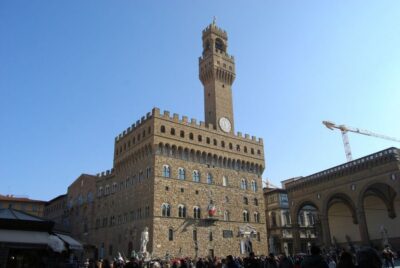
Palazzo Vecchio: Skip-the-Line Entry and Secret Passage Tour
Read our review →
Browse the lists this tour appears in