
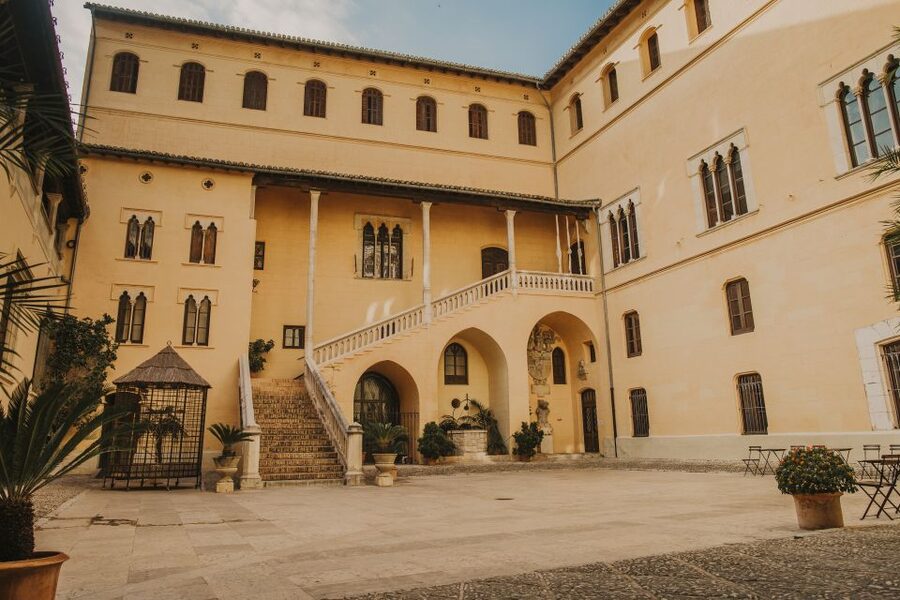
Review · PALACE ENTRY TICKETS
Gandia: Ducal Palace Entry Ticket with Audio Guide
The palace’s real showstopper is the Golden Gallery, a Baroque suite of five rooms with painted ceilings and work by Gaspar de la Huerta. I like that the audio guide gives this ornate space the attention it deserves, rather than leaving you to guess what you are seeing. I also like the chance to connect the rooms with the powerful Borgia family, including Duchess Maria Enriquez and San Francisco de Borgia.
At $9, this is an easy-value stop for anyone interested in Spanish architecture or royal history. The main consideration is simple: this is a self-guided visit, not a live tour, and the audio program lasts about 45 minutes. If you want conversation, storytelling, or a guide who can answer questions, you may find the format a little quiet.
Key points before you book
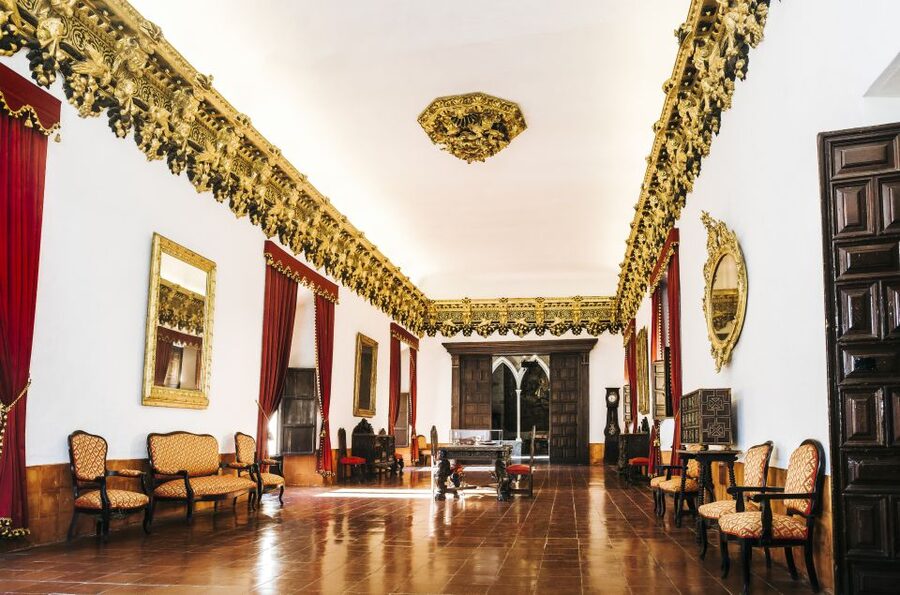
- The Golden Gallery is the palace highlight: Five Baroque rooms share oil-painted ceilings and paintings by Gaspar de la Huerta.
- The audio guide lasts about 45 minutes: It is available in Spanish, English, French, Italian, German, and Russian.
- Three architectural periods meet here: Look for Valencian Gothic, Renaissance, and Baroque details as you move through the palace.
- The Borgia family provides the human story: Learn about Duchess Maria Enriquez, San Francisco de Borgia, and the royal dukes of Gandía.
- The ticket costs $9 per person: That is a modest price for a major historic building and an included audio guide.
- The palace is wheelchair accessible: Food, drinks, pets except assistance dogs, weapons, sharp objects, alcohol, drugs, and flash photography are not allowed.
Why Gandia’s Ducal Palace deserves your time
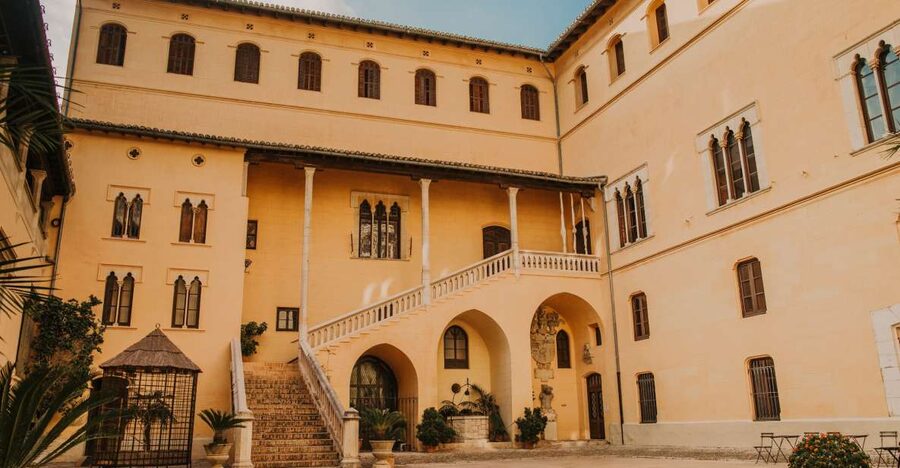
Gandia is known for its Mediterranean setting, but the Ducal Palace gives the city a different character. Inside, the story is about aristocratic power, religious influence, family ambition, and changing taste. The building was shaped over several centuries, so you are not looking at one neat architectural style. You are seeing layers of Valencian Gothic, Renaissance design, and Baroque decoration in one place.
That makes the palace more interesting than a quick room-by-room display. A pointed Gothic detail may lead to a Renaissance alteration, while a richly decorated Baroque interior shows how the palace changed as its owners gained wealth and status.
I especially like the connection to the Borgias. The family is often reduced to a few dramatic tales, but here you get a closer look at the people behind the name. Duchess Maria Enriquez and San Francisco de Borgia help turn the palace from a beautiful shell into a place shaped by real political and religious figures.
The visit also works well for a short stop in Gandia. You do not need to set aside a full day for the actual walk through the rooms. The ticket is valid for one day, and the audio guide takes about 45 minutes, so you can fit the palace into a wider visit without making it the only thing on your schedule.
More Palace Entry Tickets in Spain
- Granada: Alhambra and Nasrid Palaces Entry Ticket
★ 4.6 · 15,130 reviews - Madrid: Royal Palace Fast-Access Admission Ticket
★ 4.6 · 13,856 reviews - Córdoba: Viana Palace Gardens and Patios Entry Ticket
★ 4.5 · 880 reviews
Entering a palace shaped by three architectural periods
The first thing to keep in mind is that the Ducal Palace is not a single-period monument. Its appearance reflects the changes made over time by the people who lived there and the fashions they followed.
The 15th-century Valencian Gothic elements give the palace its historical backbone. This style is associated with strong, practical forms, but the palace also carries later decorative work that softens and enriches those earlier features. As you walk, pay attention to how the building shifts in mood from older Gothic structure to more polished Renaissance and Baroque spaces.
The Renaissance influence brings a different sense of order and refinement. Then the Baroque rooms add theatrical color and decoration. The result is a visit with visual variety. You are less likely to feel that every room looks alike, although the amount of detail can be hard to absorb without some explanation.
That is where the audio guide helps. It gives you a sequence to follow and explains why the building looks the way it does. The guide is not a live host, so you will need to keep your own pace and pay attention to the instructions, but the recorded format suits a palace where you may want time to look closely.
The Golden Gallery and its painted ceilings
The Golden Gallery is the main reason to make time for this palace. It is made up of five rooms, all tied together by a lavish Baroque design. The name prepares you for decoration, but the real attraction is the combination of architecture, painted ceilings, and ceremonial atmosphere.
The ceilings feature oil paintings, including work by Gaspar de la Huerta. Look upward as you move through the gallery. It is easy to focus on walls, doorways, and furniture, but the ceilings are central to the experience. Their purpose was not only decorative. They helped communicate wealth, taste, and rank to anyone entering these formal rooms.
I like the way the audio guide focuses attention on details you could otherwise miss. A 45-minute program is long enough to give the gallery context without turning the visit into an all-day lecture. You can pause your own looking, listen, and then take another pass at the decoration.
The gallery may be less rewarding if you prefer plain architecture or outdoor attractions. Much of its appeal comes from close observation. If you rush through, you will see an ornate interior but lose some of the meaning behind the ceilings and painted surfaces.
Hall of Eagles, Hall of Crowns, and the Holy Chapel
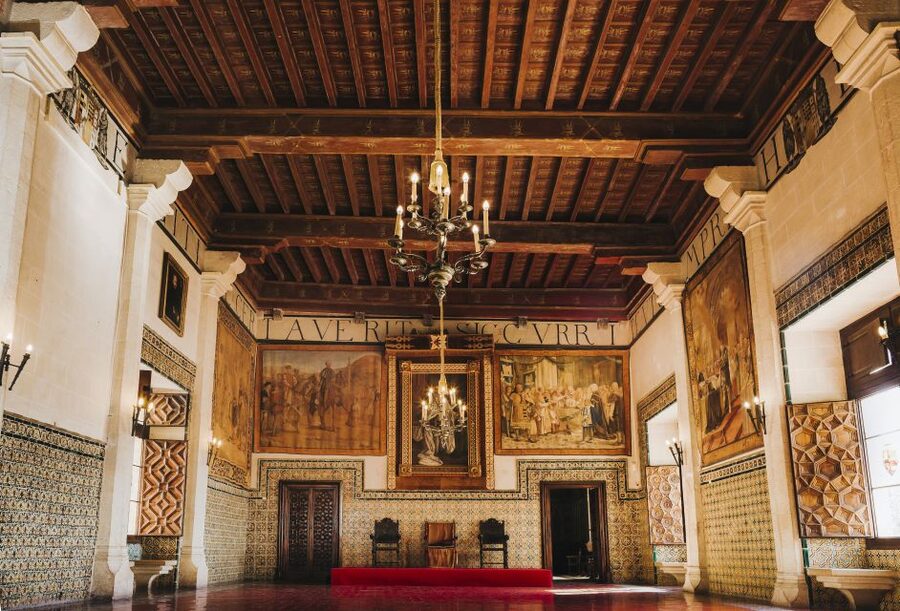
The Golden Gallery is the headline attraction, but the palace offers several other rooms with different purposes and moods. The Hall of Eagles and Hall of Crowns help show the language of authority used inside a ducal residence. Their names alone suggest the symbols you should watch for: birds, crowns, and other signs of rank and power.
These rooms are useful for understanding how the palace functioned. This was not simply a private home decorated for comfort. It was also a setting for status, ceremony, and family identity. As you listen, think about who was meant to see these rooms and what the decoration was designed to communicate.
The Holy Chapel adds a religious side to the visit. Its presence reminds you that noble life in Gandia was tied closely to faith and ceremony. The chapel gives the palace a quieter counterpoint to the more theatrical Baroque rooms.
I would not treat these spaces as separate attractions that need long stops of their own. Instead, let them build a larger picture. The palace works best when you compare the rooms: public and private, secular and religious, restrained Gothic forms and elaborate Baroque decoration.
Same city, another grand address:
- Granada: Alhambra & Nasrid Palaces Tour with Tickets
★ 4.7 · 19,801 reviews - Madrid: Royal Palace Expert Guided Tour with Skip-the-Line
★ 4.7 · 8,407 reviews - Granada: Alhambra & Gardens Tour w/Nasrid Palaces Option
★ 4.2 · 7,022 reviews - Madrid Essential: Historic Center, Plaza Mayor & Royal Palace
★ 5.0 · 6,416 reviews
Meeting the Borgia family through the rooms
The Borgia connection is one of the strongest reasons to use the audio guide rather than simply walk through on your own. The palace is linked to one of Valencia’s most influential families, and the commentary introduces important figures such as Duchess Maria Enriquez and San Francisco de Borgia.
Their stories give the building a human scale. Instead of thinking only about dates and architectural labels, you can consider how power passed through a family, how religious commitments shaped identity, and how a residence could serve both domestic and political purposes.
San Francisco de Borgia is especially important to the palace’s story, while Maria Enriquez helps broaden it beyond the most famous male figures. I appreciate that the experience points you toward both people and spaces. A room becomes easier to remember when you understand its place in the life of the family connected to it.
Do not expect a full biography of every Borgia. The audio guide is designed for a visit of about 45 minutes, so it gives you a practical introduction rather than an academic course. If you already know the family’s story, you may want to spend extra time reading or exploring Gandia beyond the palace. If the Borgias are new to you, the visit provides a useful starting point.
What the 45-minute audio guide is really like
The audio guide is included with your ticket and comes in six languages: Spanish, English, French, Italian, German, and Russian. That range makes the visit easier for many international visitors, and the German version has been praised for its pleasant voice and clear delivery.
The most useful feature is its focus. A good palace audio guide should help you understand why a room matters, not just name what is in it. Here, the commentary covers the palace’s history, the royal dukes of Gandía, the Golden Gallery, and major figures in the Borgia family.
You should plan to listen actively. Notice the room being described, then look around for the architectural or artistic details mentioned. This approach works better than letting the recording play in the background while you hurry from one space to the next.
The drawback is the lack of a live guide. You cannot ask for a simpler explanation, request more detail about a painting, or change the route to match a personal interest. Still, for $9, the audio format keeps the experience affordable and gives you control over the pace.
Some visitors find audio guides distracting if they prefer to explore silently. If that sounds like you, use the commentary selectively, especially in the Golden Gallery and the rooms tied to the Borgia family.
Is the $9 ticket good value?
For most people interested in historic buildings, yes. The $9 price includes both palace admission and the audio guide, so you are not paying separately for the basic explanation of what you see.
The value comes from the combination of scale and focus. You get an important palace, several architectural periods, a famous Baroque gallery, painted ceilings, religious space, and a connection to the Borgias. The visit is also short enough to fit into a day of exploring Gandia.
The ticket is less compelling if you only want a quick photograph or if you dislike indoor historic sites. The palace’s best details require attention, and the audio guide is central to understanding them. You are paying for an interpreted cultural visit, not simply access to a grand doorway.
Flexible booking terms add practical value. You can cancel up to 24 hours before the visit for a full refund, and the reserve-now, pay-later option lets you hold a place without paying immediately. Check the available starting times when booking, since the ticket is valid for one day but the listed schedule still matters.
Practical advice for a smoother visit
Wear something comfortable enough for standing and walking through the palace. The provided information does not specify the exact route or number of stairs, but the palace is wheelchair accessible, which is useful for many visitors planning their day.
Do not bring food or drinks into the palace. Weapons and sharp objects are prohibited, as are alcohol and drugs. Assistance dogs are allowed, but other pets are not.
Flash photography is not permitted. That rule protects the interiors and painted decoration, and it also encourages you to look carefully instead of relying on a camera flash to capture every detail. Keep your camera ready for permitted photography, but expect the experience to depend more on observation than on collecting pictures.
Choose your audio language before you begin. English, Spanish, French, Italian, German, and Russian are available. If you need time to adjust to the device or recording, allow a few extra minutes before you start the main route.
The staff has been described as very pleasant, and the palace has received praise for careful restoration. That matters here because ornate historic rooms can lose their impact when surfaces are neglected. Restoration does not make the building new, but it helps you read the decoration and appreciate the work involved in preserving it.
Who will enjoy this palace most?
I would recommend the visit to anyone who likes architecture, Spanish history, religious art, or the Borgia family. It also suits independent explorers who prefer a recorded guide and the freedom to pause whenever a ceiling or doorway catches their eye.
Families with older children may find the mix of powerful families, palace rooms, crowns, eagles, and chapel details more engaging than a purely chronological museum. The 45-minute audio program also keeps the visit from feeling too long.
It is a good fit for a short cultural stop, especially if your day already includes other parts of Gandia. The one-day validity gives you some flexibility, but you should still check the available start time rather than arriving without a plan.
I would be more cautious if you want a fully guided conversation or a large number of interactive displays. Nothing in this experience suggests a live guide, group discussion, or hands-on activity. Its strengths are the building, the restored decoration, and the clear audio commentary.
Should you book the Ducal Palace of Gandia?
Book it if you want an affordable look inside one of Gandia’s key historic buildings, especially for the Golden Gallery, the painted ceilings, and the Borgia story. At $9, the included 45-minute audio guide makes this a sensible choice for an independent visit.
Skip it only if you know you will not enjoy a self-guided indoor palace visit. For everyone else, the combination of Gothic structure, Renaissance changes, Baroque decoration, and royal family history gives you plenty to notice in a compact amount of time.
FAQ
How long does the audio guide last?
The audio guide lasts approximately 45 minutes.
Which languages are available for the audio guide?
You can use the audio guide in Spanish, English, French, Italian, German, or Russian.
What is included in the ticket?
The ticket includes entry to the Ducal Palace of Gandia and the audio guide.
Is this a live guided tour?
No. A live guided tour is not included. The experience is self-guided with the included audio guide.
Is the palace wheelchair accessible?
Yes, the Ducal Palace is wheelchair accessible.
Can I cancel my booking?
Yes. You can cancel up to 24 hours in advance for a full refund.
More Palace Audio Guide Tours in Spain
- Madrid: Royal Palace Entry with Audio Guide
★ 3.5 · 806 reviews - Salamanca: Monterrey Palace Audio-Guided Tour
★ 4.4 · 62 reviews - Ronda’s Historic Center: Self-Guided Tour + Mondragón Palace Ticket
★ 3.4 · 6 reviews - Amsterdam: Royal Palace Entry Ticket + Audio guide
★ 4.6 · 7,889 reviews
Newly added in Spain
- Alhambra Guided Tour with Generalife Gardens★ 3.5 · 216 reviews
- Alhambra Ticket and Guided Tour with Nasrid Palaces★ 4.5 · 81 reviews
- Tickets : Alhambra and Nasrid Palaces Granada Last-Minute★ 3.5 · 149 reviews
- Walking tour in Alhambra, Nasrid Palaces and Generalife★ 3.0 · 135 reviews
- Grenada: Flamenco Palace, the best show in the center★ 5.0 · 96 reviews
- Alhambra Private Tour: Nasrid Palaces and Generalife★ 5.0 · 81 reviews
- Alhambra Tour and Nazaries Palaces with Hammam Massage Experience★ 4.0 · 106 reviews
- Exclusive Private Alhambra Tour with a Historian★ 5.0 · 53 reviews
Palace Entry Tickets, compared.


Buckingham Palace: The State Rooms Entrance Ticket
Read our review →
Prague Castle and Lobkowicz Palace Entry Tickets
Read our review →Browse the lists this tour appears in