
Review · PALACE WALKING TOURS
HCM: War Remnants Museum & Independence Palace Walking Tour
The War Remnants Museum and Independence Palace tell two very different parts of Ho Chi Minh City’s twentieth-century story. One is an emotional museum of photographs, military equipment, and wartime suffering. The other is a polished government building with state rooms, private apartments, underground bunkers, and a direct link to the fall of Saigon in 1975. I like the contrast, because you do not get just one version of the past.
I also like the small-group format and flexible start times. A group of no more than 10 people is small enough for questions, and the two-hour length fits neatly into a busy day. The main drawback is that the museum can be upsetting, and the guide’s level of involvement inside each site may vary. Some tours spend more time explaining the palace, then allow you to look around the museum independently.
Key points to know before you book
- Two major sites in two hours: Visit the War Remnants Museum and Independence Palace without giving up a whole day.
- A guide who adds context: Guides including Dickies, Sunny, Tyson, Spike, Phat, Lily, and Duc Kien Nguyen have been praised for clear English and patient answers.
- Small groups of up to 10: You get a more personal walk than on a large coach excursion.
- A serious museum visit: Expect graphic photographs and difficult subjects, not a light sightseeing stop.
- No hotel transfer: Meet at Trung Nguyên Legend Café and walk between the sites.
- Strong value at $9: The price includes the guide, entrance fees, and walking tour, but not food or personal expenses.
Why these two sites belong together
If you have only a short time in Ho Chi Minh City, this pairing gives you a useful introduction to Vietnam’s modern past. The museum presents the war through Vietnamese eyes, while the palace helps explain the political setting in which the conflict played out.
That difference matters. At the museum, you will confront the human cost of war through photographs, objects, and displays about military actions and their effects on civilians. At the palace, the focus shifts to power, government, ceremony, and the final days of South Vietnam.
I would not treat this as a casual photo stop. The subject is painful, and the museum includes graphic material. Go when you have enough mental energy to pay attention. You may want a quieter activity afterward rather than another packed sightseeing stop.
The tour is also useful if you are still finding your way around the city. Your guide can explain the basic political background, answer questions about Vietnamese culture, and help connect the two buildings. Several guides have also offered practical food and drink suggestions after the tour.
More Palace Walking Tours in the world:
- Venice: Doge’s Palace and St Mark’s Basilica Walking Tour
★ 4.4 · 6,291 reviews - Split: Old Town and Diocletian Palace Walking Tour
★ 4.9 · 4,727 reviews - Walking Tour of Split and Diocletian’s Palace
★ 5.0 · 2,588 reviews
Meeting at Trung Nguyên Legend Café
The tour begins at Trung Nguyên Legend Café, at 12 Alexandre de Rhodes in District 1. Look for a guide wearing a TripGuru shirt or holding a TripGuru sign.
This is a central meeting point, but take care when arranging a Grab or Gojek. Enter the full address and check the map pin before setting off. Ho Chi Minh City has many cafés and busy streets, so a vague destination can put you at the wrong corner.
Arrive ready to walk. There is no hotel pickup or drop-off, and no private vehicle is included. Wear light, comfortable clothing and bring sunscreen, a hat, sunglasses, and water or cash for your own needs. Insect repellent is also listed as useful.
Several people have singled out guides for helping with city streets, including Phat, who was praised for helping the group cross safely. That small service matters in Ho Chi Minh City, where traffic can make even a short crossing feel like a group exercise.
Inside the War Remnants Museum
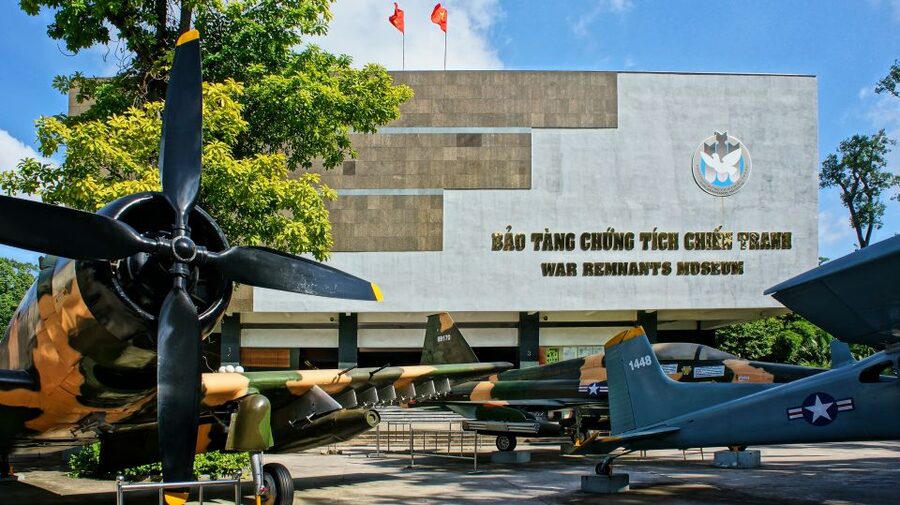
The War Remnants Museum is the most emotionally demanding part of the tour. You can expect displays dealing with the Vietnam War, French and American involvement after the Second World War, military equipment, photographs, and the effects of wartime violence.
The museum presents a clearly Vietnamese point of view. That makes it valuable, but you should also understand what you are seeing: this is not a neutral overview written in the style of a general European or North American history museum. It gives strong attention to civilian suffering, chemical warfare, military destruction, and the long human cost of the conflict.
A guide can help you understand the background before you face the most difficult displays. The best guides explain the political setting and answer questions without turning the visit into a lecture. Tom, for example, was praised for giving clear detail while handling the subject with care and respect.
The museum includes graphic photographs. One visitor described it as gruesome, and that is fair warning. You may find some rooms too intense, especially if you have little previous knowledge of the war. You are free to move at your own pace, and that flexibility is useful here.
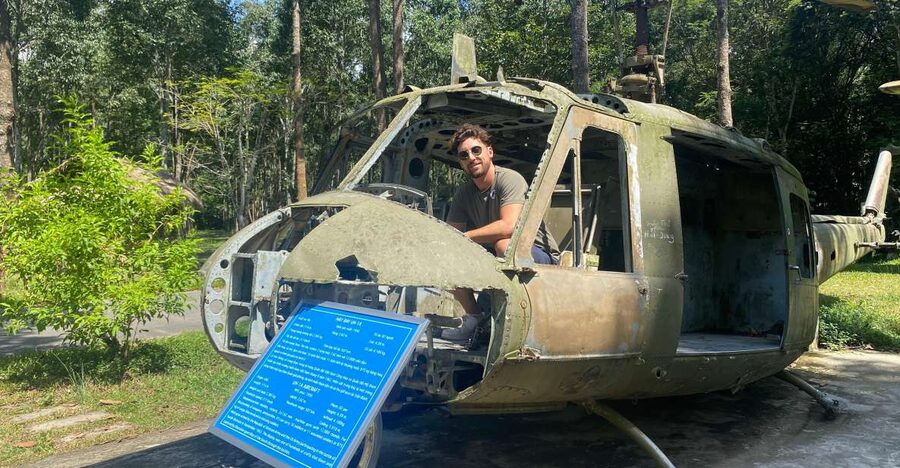
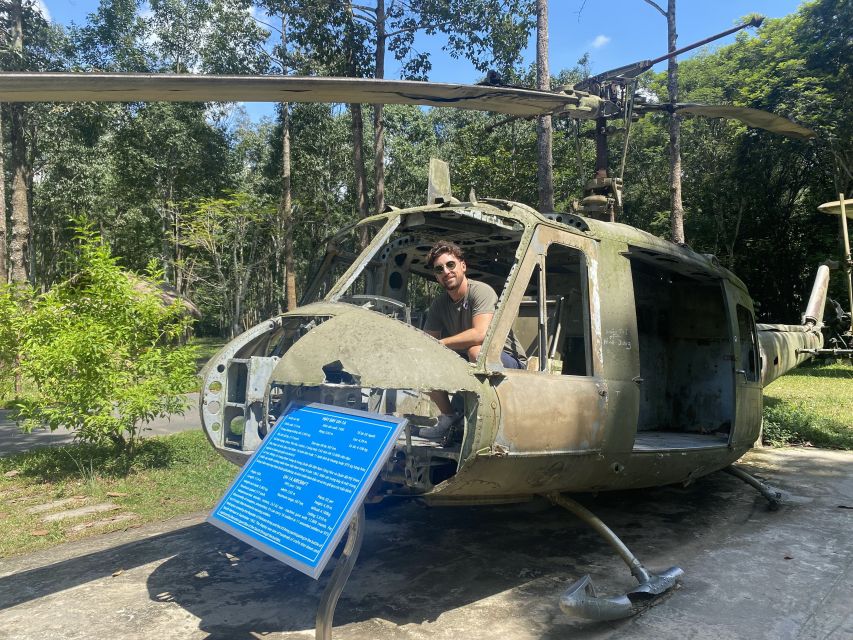
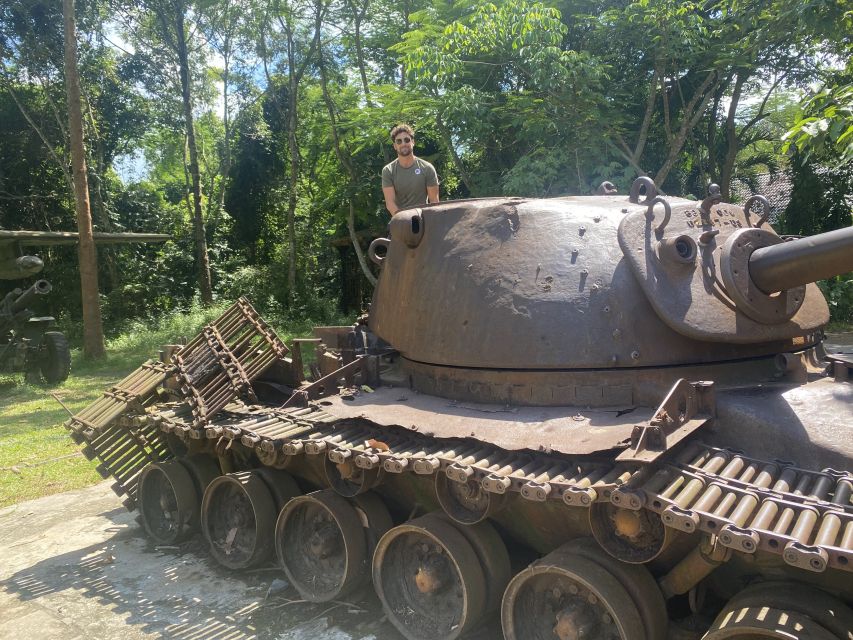
The outdoor area includes military vehicles and other equipment from the period. These large objects provide a physical counterpoint to the photographs inside. They also help show the scale and technology of the conflict, though the human stories remain the strongest part of the visit.
Plan on about an hour at the museum. That is enough for a guided introduction and a focused look at the main displays, but not enough to read every panel in detail. If you want a slow museum study, you may need to return on your own.
Walking to Independence Palace
The tour connects the museum with Independence Palace on foot. The walk keeps the experience grounded in the city rather than separating each sight behind a vehicle window.
Depending on the exact route and timing, your guide may introduce the palace before giving you time to continue through the museum, or the museum may come first as shown in the advertised schedule. The key point is that both sites are covered, but the amount of guided time inside each can vary.
This is worth keeping in mind if you are choosing the tour mainly for the palace interiors. Ask your guide early how the two hours will be divided. Guides have different styles. Some lead closely through both places, while others give a detailed explanation at the palace and let you explore the museum more freely.
The small group helps here. With up to 10 people, you can usually hear the guide and ask questions without stopping a large crowd every few minutes. If your group is smaller, the tour may feel almost private, though the experience is not advertised as a private tour.
More Palace Museums in the world:
- Venice’s Best: Basilica, Doge’s Palace, Gondola & History Gallery
★ 4.5 · 2,478 reviews - Royal Palace & Prado Museum Skip the Line Guided Tour
★ 4.5 · 1,347 reviews - Venice: City Pass with Museums including Doge’s Palace
★ 4.1 · 1,020 reviews - The Hague: Escher in The Palace Museum Ticket
★ 4.6 · 896 reviews
Independence Palace and the end of Saigon
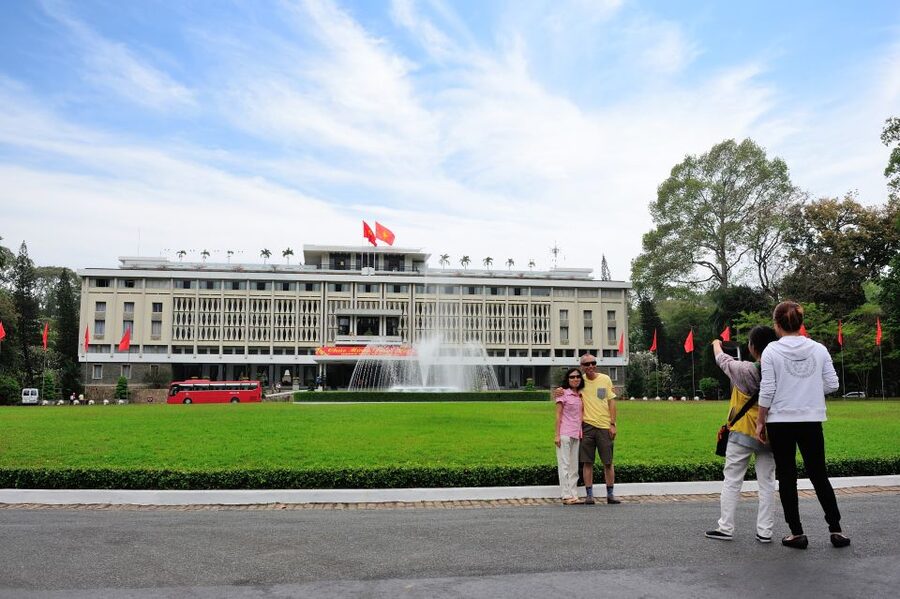
Independence Palace, also called Reunification Palace, is the tour’s most tangible political site. The building is linked to the fall of Saigon in 1975, and its rooms show how government and state ceremony operated in South Vietnam.
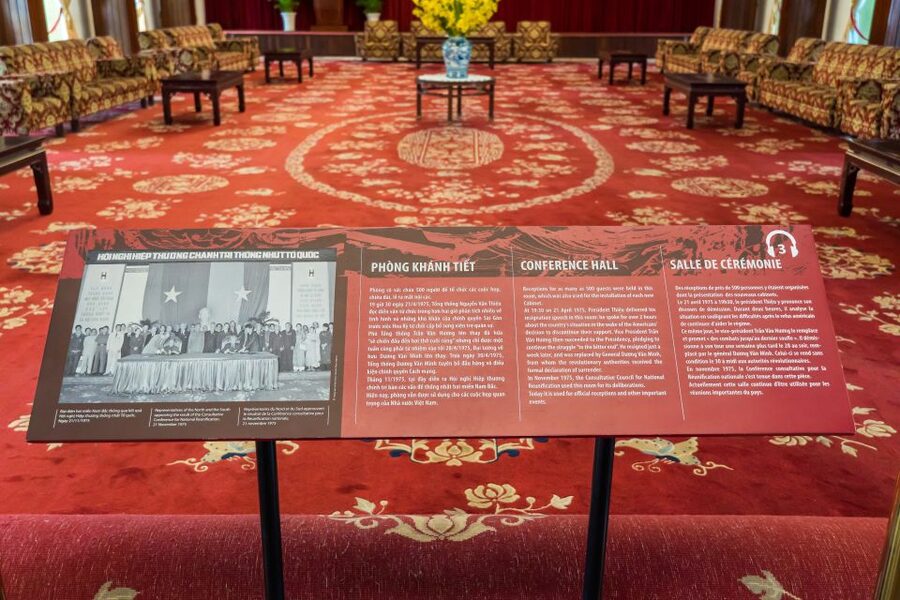
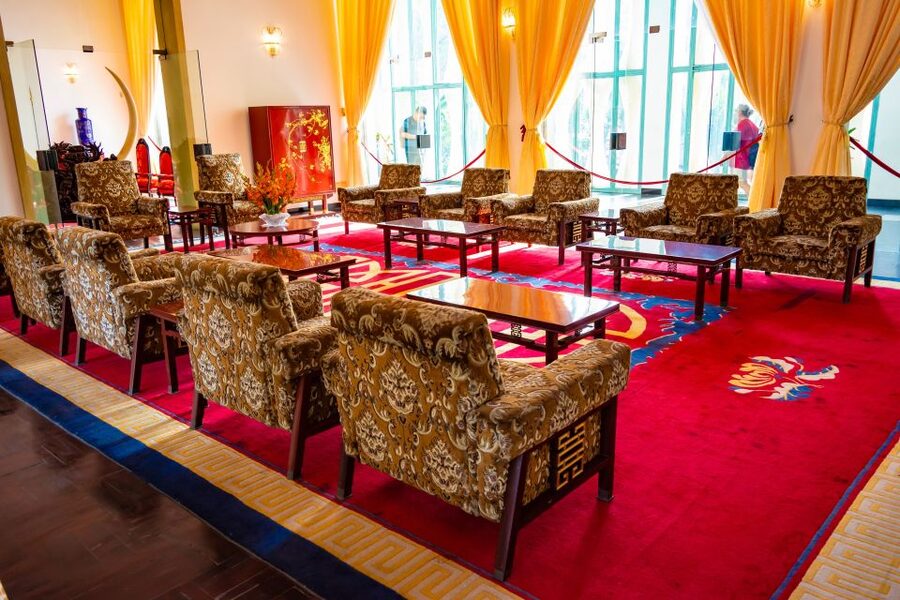
You will see formal reception rooms, state rooms, private apartments, communication areas, and underground bunkers. The building is interesting because it combines public display with practical wartime infrastructure. One minute you are looking at polished interiors used for official meetings. The next, you are considering the bunker spaces and communication rooms beneath the building.
This contrast gives the palace more weight than a simple architectural visit. The rooms are not just decorated interiors. They help you picture the political decisions, security concerns, and daily routines surrounding a government during a long and divisive war.
The guide is especially useful here. Dickies has been praised for explaining how individual rooms were used, while Tyson, also known as Son, has been noted for answering detailed questions from memory. Guides such as Sunny and Lily have also received praise for being friendly, patient, and willing to pause for questions.
You should expect the palace visit to be structured but not hurried. A good guide points out the important rooms, explains their purpose, and leaves enough time for you to look around. If you are interested in architecture, furniture, or political history, this may be the part of the tour you enjoy most.
The advertised finish is at the War Remnants Museum. That can be handy if you want more time there after the guided portion. It also means you should not assume the tour ends back at the café or at your hotel.
What the guides add
The guide is the main reason to book this as a tour instead of visiting both places alone. The buildings and museum are accessible independently, but the historical links are easier to follow when someone explains them in plain English.
The strongest guide feedback focuses on clear speech, patience, and a sensible pace. Jeroen liked a guide who gave the important facts without lingering too long in one spot. That is a good fit for a two-hour tour. You receive structure without being trapped in a long speech at every display.
English ability has generally been praised across several guides. Dickies, Sunny, Tyson, Spike, Phat, Alex, Lily, and others have been described as easy to understand and willing to answer questions. Names can change according to the date and group, so you cannot choose a particular guide in advance based on these examples.
The best way to get more from the tour is to ask questions. You might ask how the palace was used, why the war developed as it did, or how Vietnamese people remember the period today. Guides have also answered questions about customs, culture, food, and daily life, not only military events.
You should also tell the guide if you need a slower pace or more time at a particular display. Some people prefer short explanations followed by free time. Others want more background before entering each room. A small group makes that conversation easier.
Time, price, and practical value
At $9 per person, this is inexpensive for a guided visit to two of Ho Chi Minh City’s most important historical sites. Entrance fees are included, along with an English or Vietnamese speaking guide and the walking tour.
The value is strongest if you want orientation and context rather than a full museum study. You get an efficient introduction to both places, and you avoid spending time working out the political background by yourself. The fee is also low enough to make sense as a short first-day activity.
Two hours is both the strength and the limit. It works well as a morning plan before lunch or as a compact afternoon activity. One tour ended around 12:30, leaving time for lunch afterward. You can also book close to the day of travel, which helps if your plans change or the weather affects your schedule.
Do not expect a leisurely half-day museum program. If you read every caption, stop for every photograph, and ask long questions, you may need extra time beyond the official duration. One account took nearly three hours, so allow some flexibility if you want to stay longer.
The cancellation terms are practical: cancel at least 24 hours ahead for a full refund. You can also reserve now and pay later, which is useful if your city plans are not fixed. Children under seven, pregnant women, people with mobility impairments, and wheelchair users should not book this activity because it is not suited to those needs.
Who should book this walking tour
I would recommend it to first-time visitors who want a clear introduction to Vietnam’s recent past. It also suits anyone with only a few free hours, especially if you are staying in District 1 and want a central activity without arranging transport.
History-minded visitors will get the most from it, but you do not need prior knowledge. The guide can give you the basic political framework and explain why the palace and museum matter.
Families with older children may find the palace interesting, but the museum’s photographs require judgment. The experience is not suitable for children under seven, and even older children may need preparation before seeing graphic images.
This is less suitable if you want a light, cheerful outing or dislike guided explanations. It is also not ideal if you need step-free access or cannot comfortably walk between the meeting point and the sites.
Should you book it?
Book this tour if you want a short, affordable history lesson with real places attached to it. The combination of Independence Palace and the War Remnants Museum gives you political detail, personal suffering, and a useful Vietnamese viewpoint in one compact outing.
Skip it if you are looking for entertainment, extensive free time, or a gentle sightseeing walk. The museum can be confronting, and the tour may leave you wanting more time with the exhibits.
For most visitors with two spare hours, the value is excellent. Meet prepared for heat, traffic, walking, and difficult subject matter. Ask questions, keep an open mind, and allow extra time at the museum if the material catches your attention.
FAQ
How long does the tour last?
The scheduled duration is two hours. Some visits may run longer if the group spends extra time at the sites.
What sites are included?
The tour includes the War Remnants Museum and Independence Palace, also called Reunification Palace.
Where does the tour meet?
Meet at Trung Nguyên Legend Café, 12 Alexandre de Rhodes, Bến Nghé, District 1, Ho Chi Minh City.
How do I find the guide?
Look for a guide wearing a TripGuru shirt or holding a TripGuru sign.
Where does the tour finish?
The stated finish point is the War Remnants Museum.
Is transportation included?
No. This is a walking tour, with no hotel pickup or drop-off.
What languages are available?
The live guide service is available in English and Vietnamese.
How large is the group?
A small-group option is available, with no more than 10 people.
Are entrance fees included?
Yes. Entrance fees to the included sites are part of the price.
Is the War Remnants Museum suitable for young children?
Children under seven should not join this activity. The museum also contains graphic photographs and difficult wartime material.
What should I bring?
Bring sunglasses, a hat, sunscreen, comfortable clothing, insect repellent, a camera, and cash for personal expenses.
Can I cancel the booking?
Yes. You can cancel up to 24 hours in advance for a full refund. A reserve-now, pay-later option is also available.
Newly added in the world
- Avignon: Around The Palace Tour★ 4.5 · 13 reviews
- Ayutthaya Full-Day Tour with Bang Pa In (Summer Palace)★ 5.0 · 2 reviews
- Bali: Gate Of Heaven and Water Palace Tirta Gangga Package★ 4.7 · 3 reviews
- Aranjuez: Royal Palace Guided Tour★ 4.5 · 93 reviews
- Asia Continent & Topkapı Palace & Harem. Guided, Small group★ 4.9 · 3 reviews
- Kornik Castle and Rogalin Palace Half-Day Private Tour★ 5.0 · 2 reviews
- Antananarivo: Guided Tour and sunset in queen’s palace★ 3.9 · 13 reviews
- Royal Palace of Aranjuez Small-Group Tour with Entry Ticket★ 5.0 · 2 reviews
Palace Walking Tours, compared.
Doge’s Palace and St Mark’s Basilica Walking Tour
Read our review →
Grand Palace and Wat Phra Kaew Guided Walking Tour
Read our review →
Imperial Palace and Shogun Historical Walking Tour
Read our review →
Madrid Old Town & Royal Palace Walking Tour Skip the Line Ticket
Read our review →
Knossos: Knossos Palace Skip-the-Line Guided Walking Tour
Read our review →
Tokyo Castle & Imperial PalaceーShogun Walking Tour
Read our review →Browse the lists this tour appears in