
Review · ITALY PALACE TOURS
Lazing among giants – a guided tour of Palazzo Te
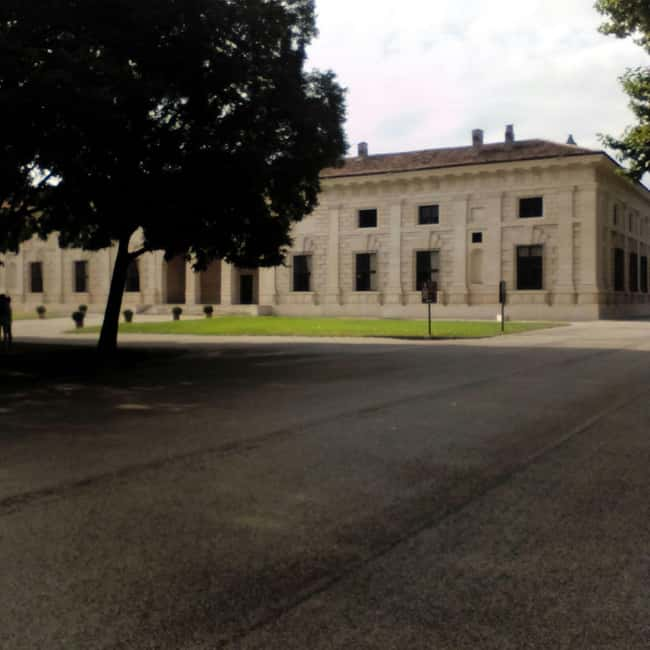
Palazzo Te was built as Duke Federico II Gonzaga’s pleasure villa, and its most startling room is the Camera dei Giganti, where painted walls, ceiling, and figures create the illusion that the room is collapsing around you. This is less a march through rooms than an hour spent decoding Renaissance visual tricks.
I like the close look at Giulio Romano’s frescoes, especially the Sala dei Cavalli and Camera di Amore e Psiche. I also like the private-group format, which gives you room to ask questions rather than follow a large crowd. The main catch is cost clarity: the $17 fee covers the guide only, and you must buy your palace ticket separately.
- The Camera dei Giganti: A theatrical frescoed room designed to overwhelm you from every angle.
- Giulio Romano’s workshop: See the work of Raphael’s former student and the artists who worked with him.
- A duke’s private retreat: Learn how Palazzo Te served Federico II Gonzaga’s leisure and love story.
- An Italian-language private tour: Eleonora Scacchetti leads the experience through the palace.
- A short, focused visit: Plan for about 90 minutes, despite the advertised one-hour duration.
- A guide-only price: The $17 charge does not include admission, transport, or food.
Why Palazzo Te Feels So Different From a Palace
Palazzo Te is not simply a grand residence filled with furniture and portraits. Federico II Gonzaga commissioned it as a suburban villa for leisure, entertainment, and private time with Isabella Boschetti, the woman he loved.
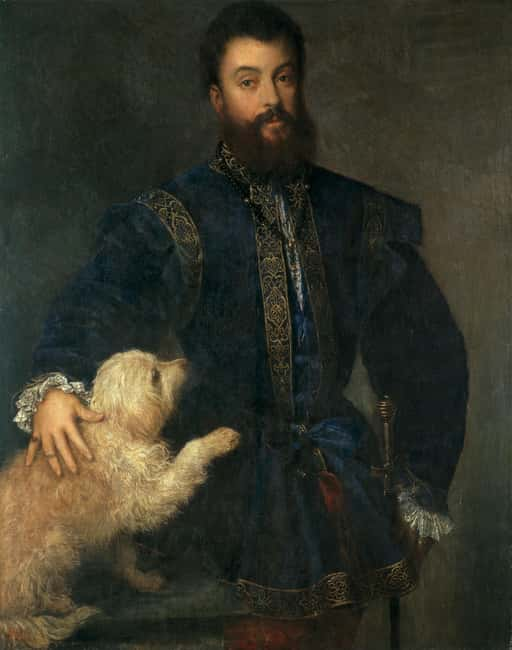
That purpose helps explain the building’s playful mood. The decoration is bold, theatrical, and sometimes deliberately confusing. Giulio Romano, a student of Raphael, filled the rooms with mythological scenes, muscular horses, twisting figures, and visual tricks that reward slow looking.
You are not being shown a plain sequence of historic rooms. You are being guided through a place where architecture and painting work together to surprise you. A doorway may frame a fresco. A painted figure may seem to push into the real room. A ceiling may appear to open into another world.
The phrase lucid deceptions captures the spirit of Palazzo Te. The illusions are not meant to fool you permanently. They are meant to make you notice how easily your eyes can be persuaded.
Starting at Palazzo Te’s Entrance
You meet at the entrance to Palazzo Te. That sounds simple, but it is worth planning your arrival carefully because admission to the palace is not part of the $17 guide fee.
Buy or arrange your entrance ticket separately, then meet Eleonora Scacchetti at the stated meeting point. Transport is not included, and neither are meals, so this works best as one part of a day in Mantua rather than a complete day tour.
The private-group setup is useful from the start. Instead of trying to hear a guide over a large crowd, you can stay close to the paintings and ask about details that catch your eye. The guide speaks Italian, and some material is presented in its original language, so this experience suits you best if you understand Italian well.
If you do not speak Italian, confirm the language issue before booking. The supplied details list Italian as the tour language, with no promise of English interpretation.
More Palaces to Tour in Italy:
- Venice: Doge’s Palace Reserved Entry Ticket
★ 4.6 · 42,716 reviews - Doge’s Palace & St. Mark’s Basilica with Terrace Access Tour
★ 4.7 · 10,697 reviews - Venice: Doge’s Palace and St Mark’s Basilica Walking Tour
★ 4.4 · 6,291 reviews
The Sala dei Cavalli and the Duke’s Display
The Sala dei Cavalli, or Hall of the Horses, is one of the key rooms on the route. Its name points to the Gonzaga family’s connection with horses, court display, and aristocratic power.
This is a good place to begin because it shows how Palazzo Te mixes pleasure with status. You are looking at decoration designed to impress, but not in the stiff way of a formal government hall. The room belongs to a villa meant for entertainment, and its painted program has more freedom and theatrical energy.
A guide adds value here by explaining what you are seeing rather than leaving you with a room full of handsome images and no context. You can ask how the room fits into the villa’s larger purpose, or how Giulio Romano and his workshop used myth and court symbols to flatter the duke.
The room also helps set up the rest of the visit. At Palazzo Te, paintings are not just placed on walls as decoration. They shape your sense of the room. That is why looking up, checking the corners, and stepping back matter.
Camera di Amore e Psiche
The Camera di Amore e Psiche, or Room of Cupid and Psyche, brings mythological storytelling into the center of the villa. The subject comes from the ancient tale of Cupid and Psyche, a story filled with love, trials, desire, and transformation.
This room is especially important when you think about why Federico commissioned Palazzo Te. The villa was connected to leisure and his relationship with Isabella Boschetti, so scenes of love were not random decoration. They helped create the mood of a private retreat where the duke could present himself through classical stories.
Expect the guide to draw your attention to the way the frescoes fill the room. Giulio Romano’s work is not quiet or restrained. The compositions are designed to keep your eye moving across walls and ceiling, linking the architecture with the painted story.
You may find that a short explanation changes how you see the room. Without context, it can be easy to focus only on color and scale. With context, you start asking why this myth was chosen, how it served the duke, and how the room worked as part of a carefully staged visit.
The Camera dei Giganti’s Great Illusion
The Camera dei Giganti is the main reason to choose this tour. It is the palace’s most dramatic room, and its effect depends on seeing the whole space at once.
The fresco shows the giants’ defeat by Jupiter, but the experience is less like studying a framed painting and more like entering a painted event. Figures surround you. The walls and ceiling connect. The boundaries of the room seem to break down.
This is where the title’s idea of lucid deceptions becomes clear. Giulio Romano used perspective and continuity to create a controlled shock. You may feel that the architecture is moving, opening, or falling around you, even though you know perfectly well that the room is still.
The effect is strongest when you take your time. Look at the ceiling, then the walls, then the points where the painted surfaces meet. Notice how the lack of a normal visual pause makes the room feel unstable.
The room also had a practical connection to the duke. It was used for private audiences, so Federico could receive people in one of the most memorable spaces in the villa. That choice tells you something about court life: power could be displayed through spectacle as much as through official ceremony.
A guide is particularly useful here because the room can overwhelm you before you know where to look. Eleonora can help separate the main figures and explain the visual plan. You will still have time to enjoy the shock of the room, but you will leave with more than a general feeling that the ceiling looked dramatic.
Same city, another grand address:
- Legendary Venice: Doge’s Palace, St Mark’s & VIP Terrace Access
★ 4.5 · 5,033 reviews - Florence: Palazzo Vecchio Entrance Ticket & Audioguide
★ 4.4 · 4,822 reviews - Florence: Entrance Ticket to Pitti Palace
★ 4.5 · 4,528 reviews - Venice: Doge’s Palace and St. Mark’s Basilica Tour
★ 4.5 · 3,734 reviews
What the Guide Adds
This experience is built around interpretation rather than access. You can visit Palazzo Te on your own, but the frescoes demand attention and some knowledge of mythology, court culture, and Renaissance art.
A private guide can connect those pieces. Instead of seeing a horse, a god, or a painted architectural detail as an isolated image, you can understand how each contributes to the duke’s message.
The strongest praise attached to this experience centers on Eleonora Scacchetti’s professional manner, competence, availability, and clear explanations. Those qualities matter in a place like Palazzo Te, where the rooms are visually crowded and easy to misread.
One useful detail is that the guide can answer questions during the visit. That sounds basic, but it changes the pace. You can stop at a detail that interests you, ask for a translation or explanation, then move on without waiting for a large group to catch up.
The private format also makes the tour more personal. You are not promised a workshop or an art-history lecture, and the visit is short. Still, you get a focused introduction to the palace’s major rooms and ideas.
One Hour or Ninety Minutes?
The timing needs a little care. The activity is advertised as lasting one hour, while the visit details say about one hour and 30 minutes. The itinerary also lists a 1.5-hour palace visit.
For planning, I would reserve 90 minutes. That gives you enough room for the stated visit length and avoids creating a tight connection afterward. The actual pace may depend on the guide, the group, and how much time you spend discussing the frescoes.
This is a compact tour, not an all-day art program. That is a benefit if you want a clear introduction before exploring more of Mantua. It may feel brief if you want to study every room in detail or ask extended questions about Renaissance technique.
Comfortable shoes and comfortable clothing are recommended. You are visiting an art-filled palace, so allow yourself time to look upward and move at an unhurried pace.
What $17 Really Covers
The $17 per-person price is for the guided experience. It does not include the entrance ticket to Palazzo Te.
That distinction is the most important budget point. If you compare this with the total cost of entering the palace, remember to add admission before deciding if the experience fits your plans. Transport and meals are also separate, though those omissions are normal for a short guided visit.
The guide fee can be good value if you care about understanding the frescoes rather than simply seeing them. Palazzo Te’s visual effects are powerful, but the symbolism and courtly purpose are not always obvious. A guide can help you make sense of what the artist was doing and why the duke wanted these particular rooms.
The value is weaker if you are looking only for a quick walk through the building. Since admission is extra, you should choose this tour for the explanation, not just for entry.
The booking terms add flexibility. You can reserve now and pay later, and cancellation is allowed up to 24 hours before the visit for a full refund. Those policies are useful if your Mantua schedule is still changing.
Practical Limits Inside the Palace
The tour is wheelchair accessible, which makes it a practical choice for visitors who need step-free access. The supplied information does not give detailed route notes, so you may want to confirm any specific mobility requirements before booking.
Pets are not allowed, although assistance dogs are permitted. Flash photography and audio recording are also prohibited. Bring your phone or camera if permitted by the palace rules, but keep the flash off.
The no-flash rule protects the artwork and also suits the atmosphere of the visit. The frescoes are meant to be viewed in the rooms themselves, not reduced to a rapid series of snapshots.
Italian is the listed language. Some content is shown in its original language, so you should not assume that the tour includes translation. For Italian speakers, this is a direct way to experience the guide’s explanations. For others, language should be your first check before paying.
Who Will Get the Most From This Visit?
I would choose this tour if you enjoy art but want help knowing where to look. Palazzo Te has enough visual drama to impress almost anyone, but the guide gives the drama a framework.
It is also a strong fit for couples interested in the building’s connection to Federico Gonzaga and Isabella Boschetti. The palace was created as a place for leisure and a love story, and that private purpose gives the rooms a more personal tone than a formal palace tour.
Families with older children may enjoy the Camera dei Giganti because its illusion is easy to grasp once someone points out how the room works. The Italian-language format remains the deciding factor.
You may prefer a self-guided visit if you speak little or no Italian, need to move at your own pace, or want to spend a long time in one room. You may also find the guide fee less appealing if you already know Renaissance art and mainly want independent time with the frescoes.
How to Make the Most of the 90 Minutes
Arrive ready to look up. Many of Palazzo Te’s best effects depend on the relationship between walls, ceiling, and painted architecture.
Keep the following habits in mind:
- Read about the separate admission ticket before arriving so there is no budget surprise.
- Wear comfortable shoes and clothing.
- Confirm that Italian is suitable for you and your group.
- Save extra time for the Camera dei Giganti rather than rushing through it.
- Ask about details that puzzle you, especially mythological scenes and painted architectural tricks.
- Do not use flash photography or record the guide.
The tour will be more rewarding if you resist the urge to treat the palace as a checklist. Let the guide explain a room, then spend a moment looking for the details that support that explanation.
Should You Book This Palazzo Te Tour?
Book it if you want a short, private introduction to Mantua’s most theatrical villa and you understand Italian. Eleonora Scacchetti’s role is especially valuable in the Camera dei Giganti, the Sala dei Cavalli, and the Camera di Amore e Psiche, where context helps the art make sense.
Think twice if you expect admission to be included, need an English-language tour, or want a very long visit. The $17 fee is reasonable for focused guidance, but the palace ticket is extra and the advertised duration is not fully consistent.
My practical call: choose this tour for interpretation, not transportation or entry. If that is what you want, the private format and attention to Giulio Romano’s visual tricks make it a useful way to see Palazzo Te.
FAQ
How long does the Palazzo Te tour last?
The activity is advertised as one hour, but the visit information says it will last about one hour and 30 minutes. Plan for roughly 90 minutes.
Is the Palazzo Te entrance ticket included?
No. The entrance ticket is excluded, and you must buy it separately at your own expense.
What language is the tour in?
The live guide speaks Italian. Some content is shown in its original language.
Who guides the visit?
The experience is provided by Eleonora Scacchetti of Guidamica Mantova Guida Turistica.
Is the tour private?
Yes. The activity is described as a private group experience.
Can I cancel and receive a refund?
Yes. You can cancel up to 24 hours in advance for a full refund. You can also reserve now and pay later.
Newly added in Italy
- Isola Bella’s palace and gardens with a private local guide★ 5.0 · 6 reviews
- Viterbo Private City Tour including Popes Tombs Conclave Palace and Duomo★ 4.5 · 3 reviews
- The Renaissance Gardens tour: Palazzo Farnese and more★ 5.0 · 5 reviews
- FLORENCE: Uffizi Gallery + Palazzo Vecchio monolingual Guided Tour – Small Group★ 5.0 · 9 reviews
- the Medici family in Florence: Palazzo Medici and Medici Chapels★ 4.5 · 10 reviews
- Palazzo Vecchio Tales – into Medici’s secrets and mythology simbols★ 5.0 · 18 reviews
- The Pitti Palace private tour: Splendours of the Royal Residence★ 5.0 · 4 reviews
- Uffizi and Palazzo Vecchio Combo Private Tour★ 5.0 · 3 reviews
Italy Palace Tours, compared.
Doge’s Palace & St. Mark’s Basilica with Terrace Access Tour
Read our review →
Doge’s Palace and St Mark’s Basilica Walking Tour
Read our review →
Legendary Venice: Doge’s Palace, St Mark’s & VIP Terrace Access
Read our review →
Venice In a Day: St Mark’s, Doges Palace Gondola Ride & City Tour
Read our review →Browse the lists this tour appears in