
Review · ROYAL PALACE TOURS
Luang Prabang: Cooking Class at the Former Royal Palace
Luang Prabang’s food traditions make the most sense when you see the ingredients first. This experience begins at the morning market, then moves to a riverside cooking terrace at Victoria Xiengthong Palace and Alame Restaurant. I like the market walk with chefs such as Noi, Noy, Nov, or Vannasone, and I like that you eat the dishes you prepare rather than watching a demonstration from the sidelines.
The main catch is the gap between the market and the cooking session. The chef may need about two hours to prepare ingredients, leaving you time for coffee, temples, or a wander. That break suits a relaxed morning, but it may disappoint you if you expect four straight hours of hands-on cooking.
Key points to know before booking
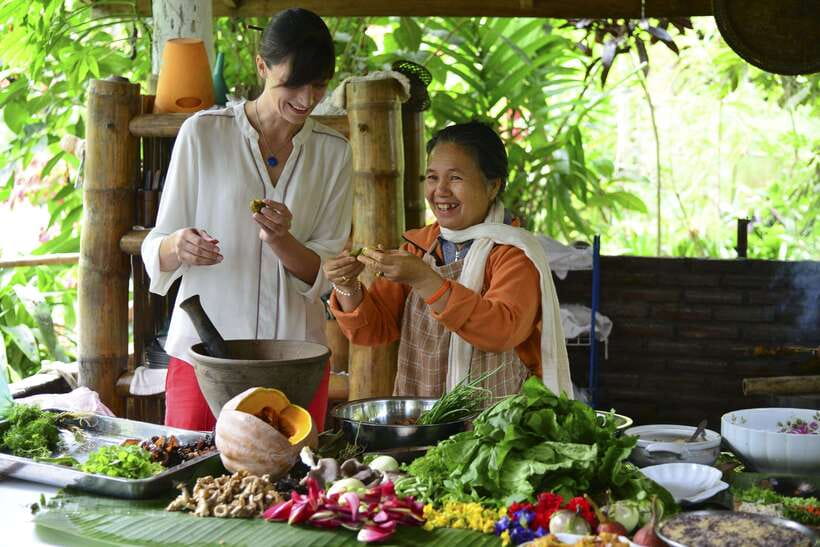
- The market comes first: Shop for herbs, vegetables, fruit, spices, and other Lao ingredients with an English-speaking chef.
- The setting is part of the appeal: Cooking takes place at Alame Restaurant, near Wat Xiengthong, with views over the Mekong.
- You work as a group: You may help prepare several dishes, but each person may not cook every recipe from start to finish.
- Menus can vary: Past classes have included soup, chicken laab, fresh appetizers, sticky rice, curries, salads, and coconut desserts.
- Vegetarian cooking is possible: Tell the provider in advance if you need a vegetarian menu.
- Plan for a relaxed half-day: The advertised duration is four hours, though the active cooking time is about two hours.
Why this Luang Prabang cooking class works
I rate this as a cultural food experience first and a cooking lesson second. You are not simply handed a printed recipe and placed at a stove. The morning market gives you a reason for each ingredient, and the cooking session shows how those ingredients become a Lao meal.
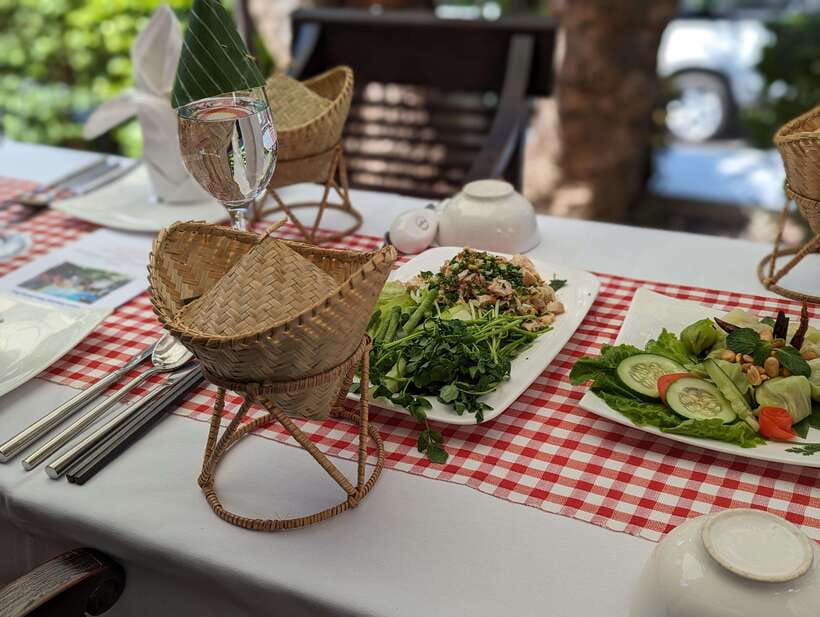
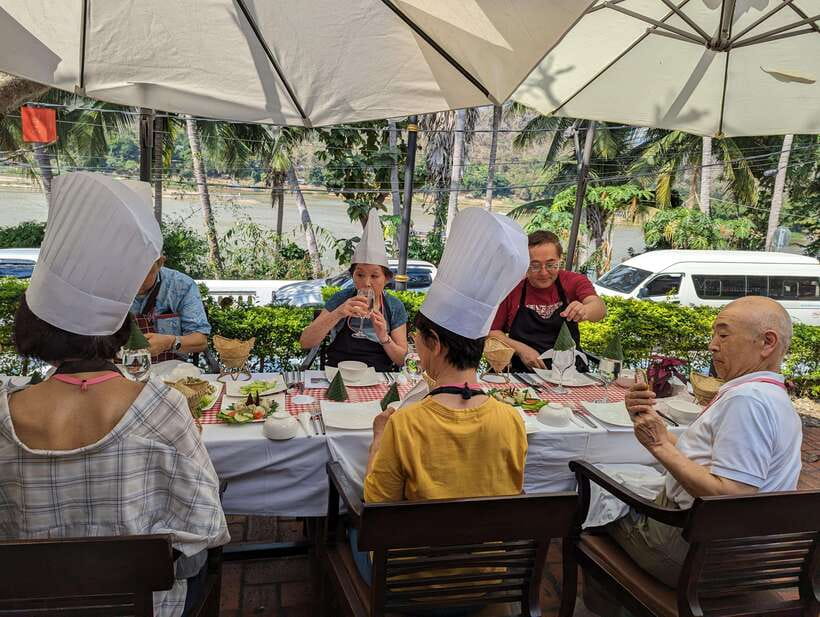
The location helps. Victoria Xiengthong Palace is close to Wat Xiengthong on Kounxoau Road in Ban Phonehueng. The class takes place at Alame Restaurant, described as a peaceful riverside setting. Several classes have been held on a terrace overlooking the Mekong, which gives lunch a calm finish and makes the meal feel connected to Luang Prabang rather than sealed inside a hotel kitchen.
I also like the small-group limit of 10 people. That is large enough for a social class but small enough for a chef to explain chopping, seasoning, and cooking techniques without shouting across a room. Some sessions have been much smaller, including one private class when only one person booked.
At $45 per person, the value is good if you want several activities in one morning. The price includes market transport by bicycle or tuk tuk, the class, and lunch. It does not include drinks or a tip. You are paying for an accompanied market visit, instruction, a full meal, and recipes to take home, not just a single cooking demonstration.
More Royal Palace Tours in the world:
- Madrid: Royal Palace Fast-Access Admission Ticket
★ 4.6 · 13,856 reviews - Madrid: Royal Palace Expert Guided Tour with Skip-the-Line
★ 4.7 · 8,407 reviews - Amsterdam: Royal Palace Entry Ticket + Audio guide
★ 4.6 · 7,889 reviews
Starting at the morning market near Wat Xiengthong
The first part of the morning takes you to Luang Prabang’s local market with the chef. Depending on arrangements, you travel by bicycle or tuk tuk. The meeting point is on Kounxoau Road near Wat Xiengthong, so this is a particularly convenient choice if you are staying in the old town or near the temple.
The market visit is more useful than a quick food stop. A chef can point out herbs, vegetables, spices, fruit, and other ingredients that are easy to pass over when you are on your own. You may see foods in their everyday setting, learn how they are used, and taste a few small items chosen by the chef.
The chef guides the shopping rather than turning it into a formal lecture. Noi, Noy, Nov, and Vannasone have led classes at different times, and the descriptions of their style are consistent: clear instructions, patience, humor, and an easy pace. The exact guide is not guaranteed, so book this for the overall experience rather than one named instructor.
Bring a hat. The market portion involves standing and walking, and the class itself requires extended time on your feet. If you have limited mobility, note that the activity is not suitable for wheelchair users.
The two-hour pause before cooking
This is the part to understand before you book. After the market, the chef may return to the restaurant to wash, cut, and arrange the ingredients. You may then have roughly two hours before the active class begins.
That pause is not wasted time in Luang Prabang, but it is not included as guided sightseeing. You can use it for coffee, nearby temples, shops, or a quiet walk. The riverside location gives you a pleasant place to slow down, though drinks are not included in the tour price.
I see this as both a strength and a weakness. If you prefer a gentle morning with room to explore, the break keeps the schedule from feeling rushed. If you want to make every dish from the first cut to the final stir, you may find the waiting period too long.
The preparation also affects how hands-on the class feels. Ingredients are often ready when you return, so you may spend more time combining, seasoning, shaping, and cooking than cleaning and chopping. That makes the session approachable for beginners, but experienced cooks may wish they had more work to do.
Cooking Lao food at Alame Restaurant
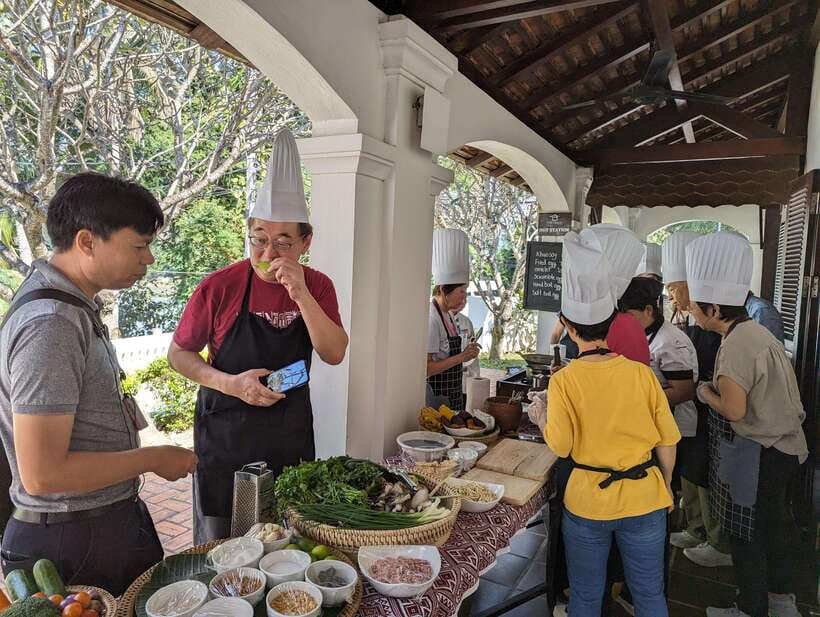
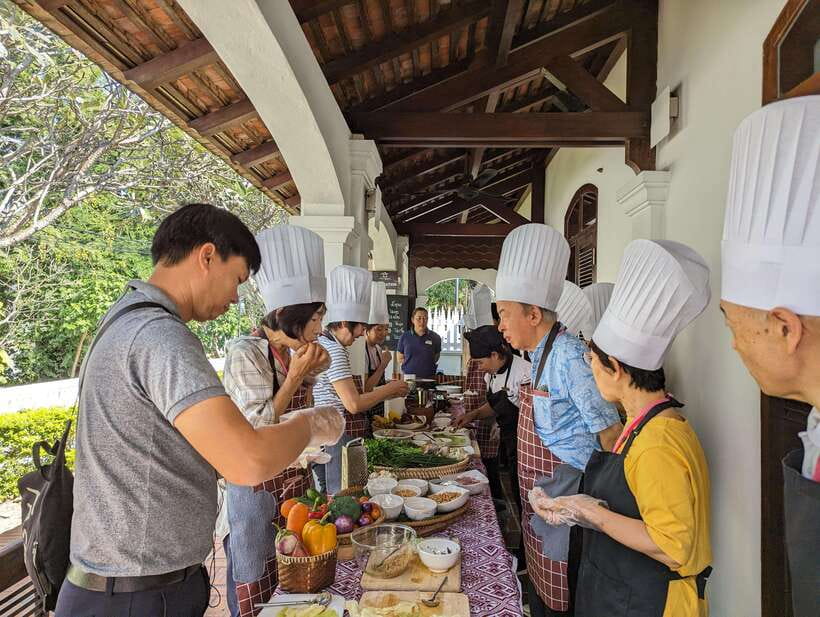
The active class lasts about two hours. You cook at Alame Restaurant, connected with the Victoria Xiengthong Palace experience and positioned near the Mekong. The class is taught in English and is designed for participation, not just observation.
Menus vary, but the dishes described in past classes give you a useful idea of the range. You might prepare sticky rice, a fresh appetizer, sour soup with pork and mushrooms, chicken laab, a Lao salad, a curry, or a coconut-based dessert. One session included soup, laab salad, and coconut dessert. Another included four dishes with rice balls in coconut milk to finish.
The food has variety in texture and flavor. Laab brings herbs and seasoning, soup adds warmth and acidity, sticky rice gives the meal its familiar Lao base, and a coconut dessert rounds things out. You learn how herbs and vegetables work together rather than treating Lao food as a single curry-based style.
The exact role of each participant depends on the group. Everyone may contribute to the shared dishes, but you may not prepare every recipe from beginning to end. One class divided tasks among the group, while another involved more cutting and cooking under the sous chef’s direction.
That arrangement can be fun when the group works well together. It also means this is not the best choice if you want an individual workstation and a complete start-to-finish lesson for every dish. Ask about the menu and participation style if that distinction matters to you.
More Cooking Classes in the world:
- Fez Cooking School at Palais Amani Experience
★ 5.0 · 94 reviews - Fez Cooking Class at Palais bab sahra
★ 5.0 · 56 reviews - Baking Workshops at Fez Cooking School at Palais Amani
★ 5.0 · 15 reviews - Private Tour: Grand Palace,Wat Phra Kaew, Museum&Cooking Class
★ 5.0 · 7 reviews
Eating your own lunch beside the Mekong
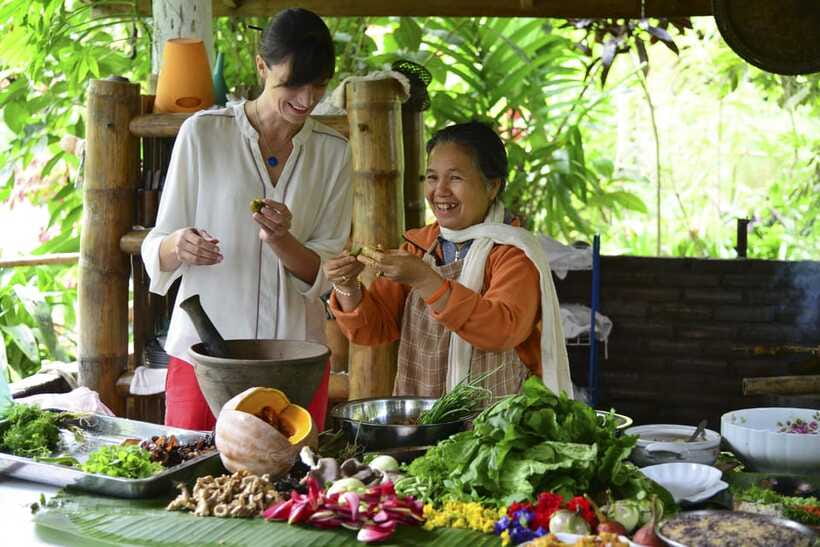
Lunch is the reward for the morning’s work. After cooking, you sit down to eat the dishes prepared by the group. The meal is served at the riverside restaurant, often on a terrace with views of the Mekong.
This final hour gives the class a clear purpose. You can taste the result while the methods are still fresh in your mind, then compare the flavors with what you expected from the market ingredients. The setting also turns lunch into part of the cultural experience, not simply a break between activities.
Drinks are not included, so budget separately if you want something beyond the meal. Tips are also not included. You receive recipes to take home, which adds practical value for anyone who wants to recreate the dishes later.
The recipes matter because Lao cooking often depends on balance and adjustment rather than one complicated technique. Once you know the ingredients and basic steps, you can explain the meal to friends and family instead of merely showing them a photograph.
What the guides add to the experience
The chef is the link between the market and the plate. A good guide can explain what an ingredient is, how it is used, and why it belongs in a particular dish. This is where the experience gains much of its value.
Noi has been praised for being kind, funny, patient, and clear. Noy has guided people through the market and then helped them produce several traditional dishes. Vannasone has led market tours that appealed even to people who already cook and have traveled widely. Nov has also been described as an easygoing guide who explains the steps well.
These names are useful when reading the booking details, but the provider does not promise a particular chef. Your guide may be someone else. What you can count on from the supplied details is an English-language instructor and a small group limited to 10 people.
The teaching style appears suited to mixed abilities. Beginners can follow direct instructions, while more experienced cooks can pay attention to local ingredients and flavor combinations. Still, the amount of individual practice can change with the group size and menu.
Who should book this cooking class
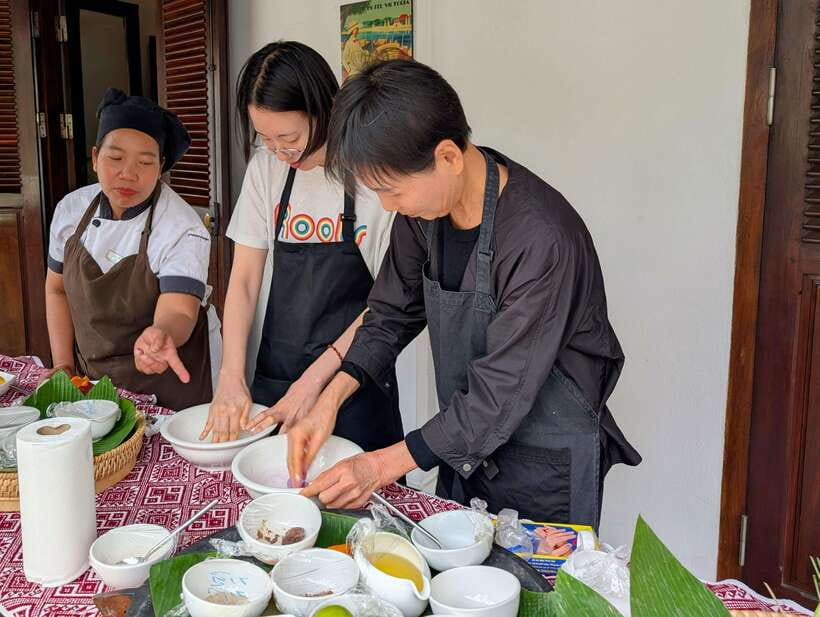
I would choose this experience if you want a manageable introduction to Lao food with a strong sense of place. It suits couples, small groups of friends, solo visitors, and families with older children who can stand for long periods.
It is especially useful early in your Luang Prabang stay. The market visit can help you recognize foods you will see elsewhere, and the recipes give you a better way to understand dishes on restaurant menus later.
Food lovers will appreciate the ingredient focus. Culture-minded visitors will like the connection between the market, the temple area, the former royal palace setting, and the Mekong. Even if you are not a confident cook, the class is structured so that you can follow the chef’s guidance.
I would hesitate if your priority is a highly technical cooking course. The class is social and shared, and the chef prepares much of the groundwork during the gap after the market. It is also a poor fit if you cannot stand for extended periods, need wheelchair access, or are traveling with a baby under one year.
The activity is not suitable for people over 95 years old. Bring a hat, and tell the provider about vegetarian needs in advance. Weapons, sharp objects, drinks in the vehicle, alcohol, drugs, and baby carriages are not allowed.
Timing, group size, and practical value
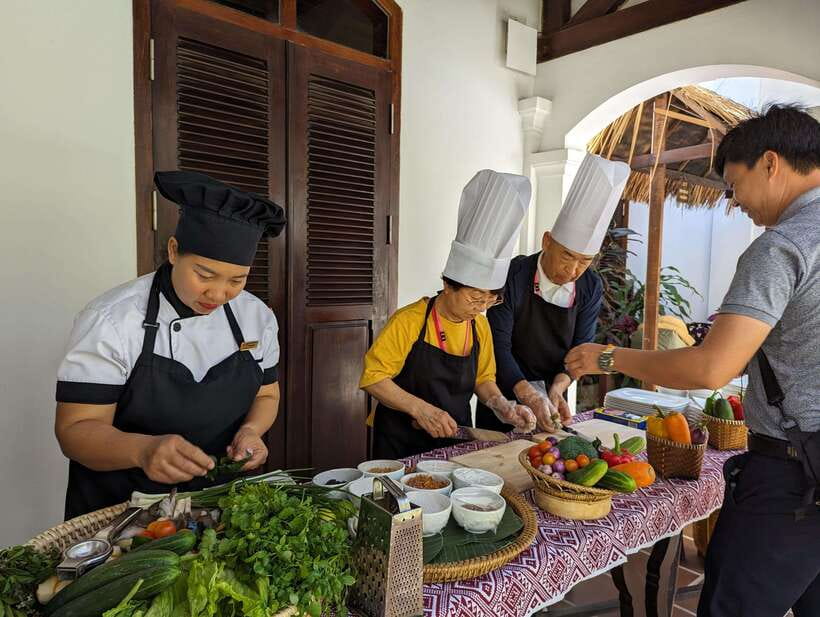
Allow four hours, even though the active schedule is often described as about three hours. The basic plan is roughly one hour for the market and sightseeing, two hours for cooking, and one hour for lunch. The additional time allows for transport and the preparation gap.
A bicycle or tuk tuk takes you to the market, and the experience returns to Victoria Xiengthong Palace. Confirm the starting time when booking because several start times may be available.
The small group limit is a real benefit here. Market stalls can be crowded, and cooking instructions are easier to follow when the chef can reach everyone. A group of seven has worked comfortably, while a solo booking may become a private session if nobody else joins.
The free cancellation policy allows cancellation up to 24 hours before the activity for a full refund. You can also reserve and pay later, which helps if your Luang Prabang schedule is still changing.
Is $45 a fair price?
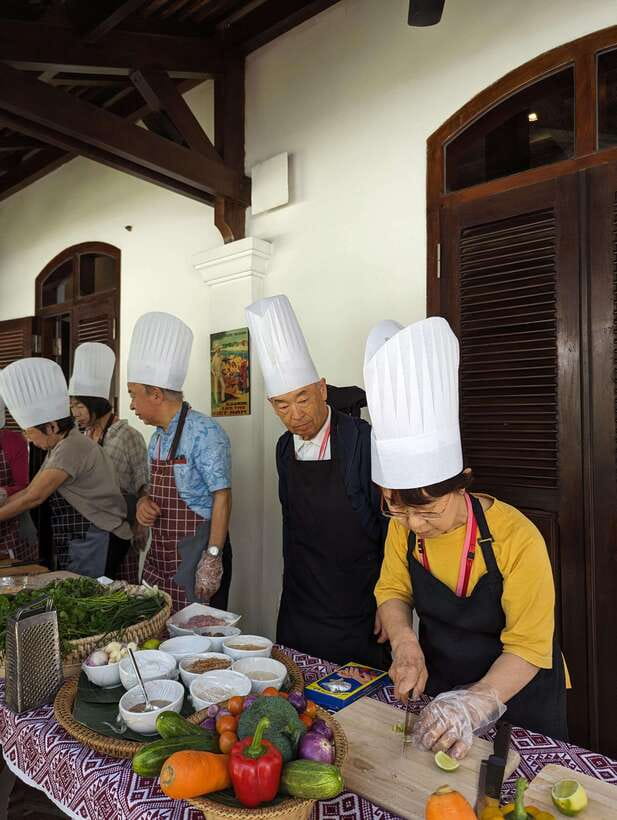
For $45, you get more than a meal. The price covers the market visit, local transport by bicycle or tuk tuk, English-language teaching, cooking, lunch, and recipes. The setting near the Mekong adds atmosphere without requiring a separate palace or riverside tour.
The value depends on what you want from the cooking. If you want a relaxed cultural morning that ends with a generous meal, the price is fair. If you want four uninterrupted hours of practical work, the two-hour preparation pause lowers the value.
I also would not book this mainly for the royal connection. The former royal palace setting gives the activity a memorable backdrop, but the strongest parts are the market, the chef’s explanations, the shared cooking, and the riverside lunch.
Should you book it?
Book this class if you want an easygoing introduction to Lao cuisine, enjoy local markets, and like the idea of lunch beside the Mekong. The combination of market shopping, cooking, and dining makes good use of a half-day in Luang Prabang.
Skip it if you need a rigorous professional lesson or dislike group cooking. Before paying, check whether a vegetarian menu can be arranged, confirm the start time, and expect a break while the chef prepares the ingredients.
For most food-focused visitors, I would book it early in the trip. You will leave with recipes, a better sense of Lao ingredients, and a meal that means more because you helped make it.
FAQ
Where does the cooking class meet?
The meeting point is on Kounxoau Road in Ban Phonehueng, near Wat Xiengthong and Victoria Xiengthong Palace.
How long does the activity last?
The stated duration is four hours. The main schedule includes about one hour at the market, two hours of cooking, and one hour for lunch.
What transport is used for the market visit?
The market visit includes transport by bicycle or tuk tuk.
Is lunch included?
Yes. Lunch made from the dishes prepared during the class is included.
Are drinks included?
No. Drinks are not included in the price.
Is the class taught in English?
Yes. The instructor language is English.
How many people can join the group?
The group is limited to 10 participants.
Are vegetarian dishes available?
Yes. Vegetarian options are available, but you need to notify the provider in advance.
What should I bring?
Bring a hat. You should also be comfortable standing for extended periods.
Can I cancel the booking?
Yes. You can cancel up to 24 hours in advance for a full refund. Reserve now and pay later is also available.
More Workshops and Classes in the world
- Skip the Line: Topkapi Palace Including Süleymaniye Mosque and Ceramics Workshop in Istanbul
★ 4.0 · 17 reviews - Fez Patisserie Class at Palais bab sahra
★ 5.0 · 7 reviews - Hands-On Pasta and Tiramisu Class in a Florentine Palace
★ 5.0 · 6 reviews - Crete in a Day: Knossos, Soap Workshops, Olive Oil & Wine Tasting
★ 5.0 · 5 reviews
Newly added in the world
- Óbidos historic village and Mafra Palace Private Tour★ 5.0 · 34 reviews
- Private Tour Sintra Palaces and Scenic Landscapes★ 5.0 · 3 reviews
- Lisbon: Pena Palace, Cabo da Roca, Cascais private tour★ 5.0 · 44 reviews
- Óbidos – Nazaré – Mafra (National Palace of Mafra)Private tour from Lisbon★ 5.0 · 2 reviews
- National Palace and Gardens of Queluz: E-ticket with Audio Guide★ 3.5 · 6 reviews
- Half day Sintra PRIVATE TOUR Pena Palace + Roca Cape (2-6people)★ 5.0 · 3 reviews
- From Lisbon Sintra Highlights Tour – Pena, Regaleira & Monserrate★ 5.0 · 79 reviews
- Mafra and Sintra: Choose 3 of 6 Palaces to visit on private tour★ 5.0 · 26 reviews
Royal Palace Tours, compared.
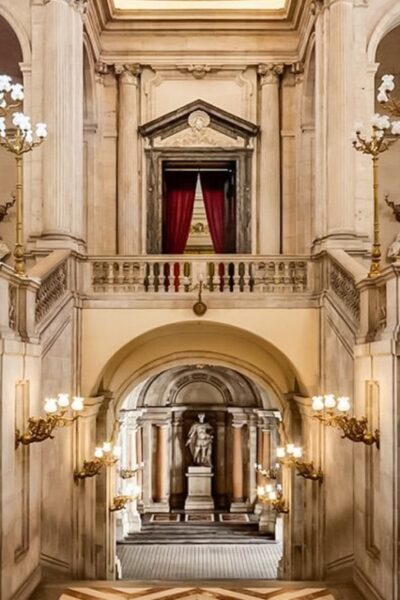
Royal Palace Expert Guided Tour with Skip-the-Line
Read our review →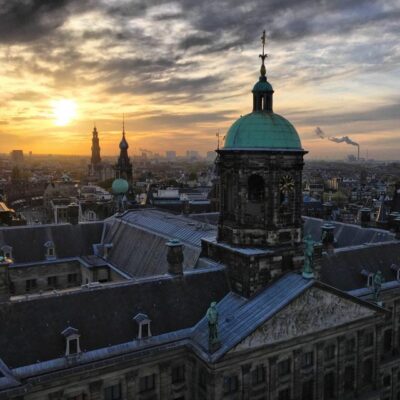
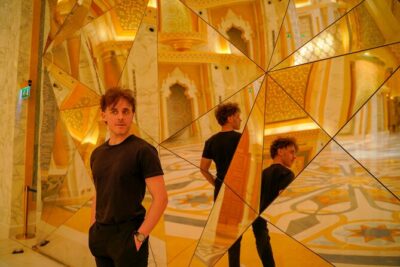
Dubai To Abu Dhabi: Grand Mosque, Royal Palace & Etihad Towers
Read our review →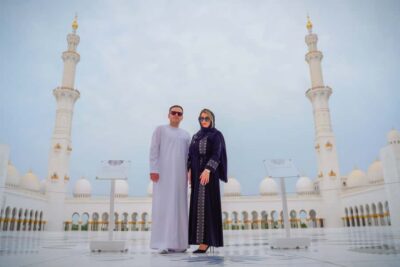
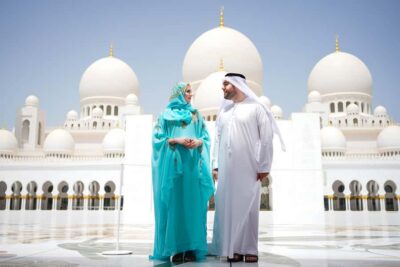
Abu Dhabi Day-Trip Grand Mosque, Royal Palace & Lunch
Read our review →
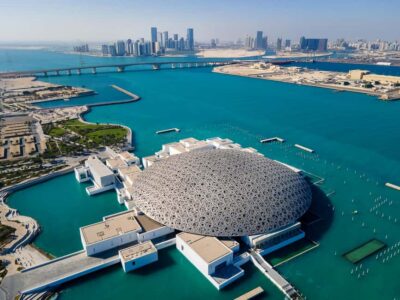
Louvre Entry & Etihad Tower/Royal Palace Options
Read our review →Browse the lists this tour appears in