
Review · HISTORICAL TOURS
Palace District Evening Culinary, Wine, and History Walk
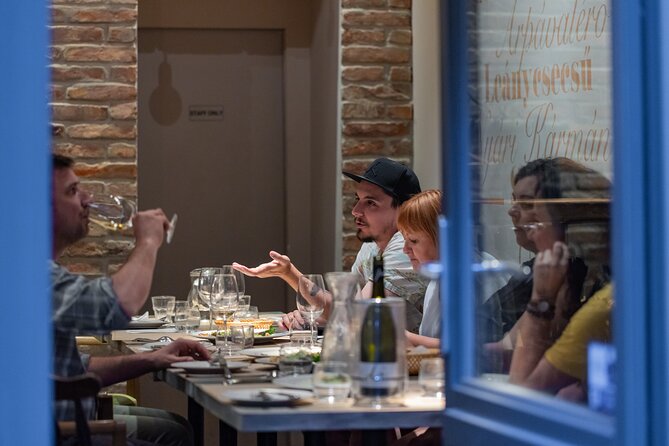
Budapest’s Palace District makes a fine dining room. On this four-hour walk, you eat your way through former aristocratic streets, university lanes, courtyards, and cafés, with six tasting stops woven into the history. I especially like the opening wine tasting at The Tasting Table and the progressive meal format, which lets you sample several local places instead of sitting in one restaurant all evening.
I also like the small group limit of eight. Guides such as Aniker, Andrea, Sarah, and Daniel have earned praise for mixing food knowledge with easy conversation. The main drawback is practical: you cover a lot of ground on foot, and the tour is not wheelchair accessible. It is also not suitable for vegans.
Key points at a glance
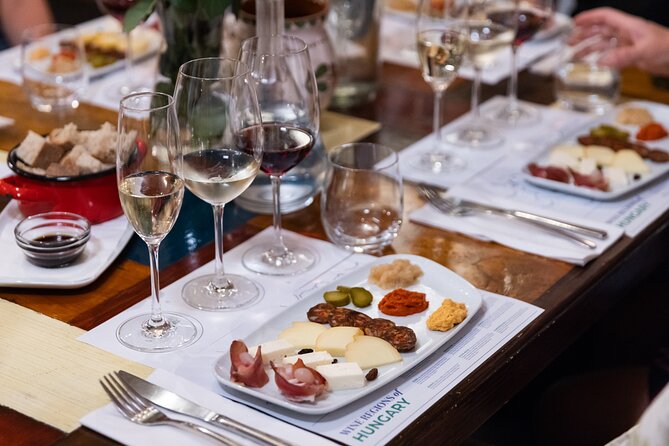
- Three Hungarian wines first: Taste sparkling, white, and red wines with a sommelier at The Tasting Table.
- Six stops make a full dinner: Expect cheese, charcuterie, bakery goods, pálinka, gulyás, local dishes, coffee, and dessert.
- The Palace District is the real setting: Walk among 19th-century palaces, university buildings, cafés, and film locations.
- History comes between bites: Hear about Hungary’s first parliament, the 1956 Revolution, the Italian community, and the area’s changing identity.
- Small groups keep it personal: The tour takes a minimum of two and a maximum of eight people.
- Plan for a four-hour evening: The pace includes eating breaks, but comfortable walking shoes still matter.
Starting at The Tasting Table near the National Museum
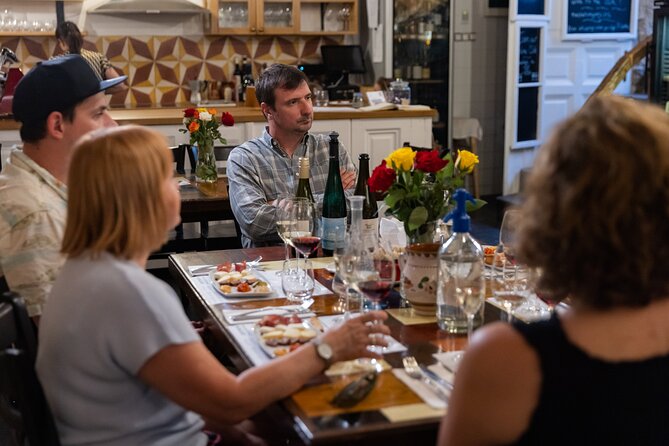
Your evening begins at The Tasting Table and Shop on Bródy Sándor utca 9 in District VIII. The meeting point is only 150 meters from the National Museum, and you can reach it in about five minutes from Astoria on metro line M2 or Kálvin tér on metro line M3. Trams 47 and 49 also stop at those transport hubs.
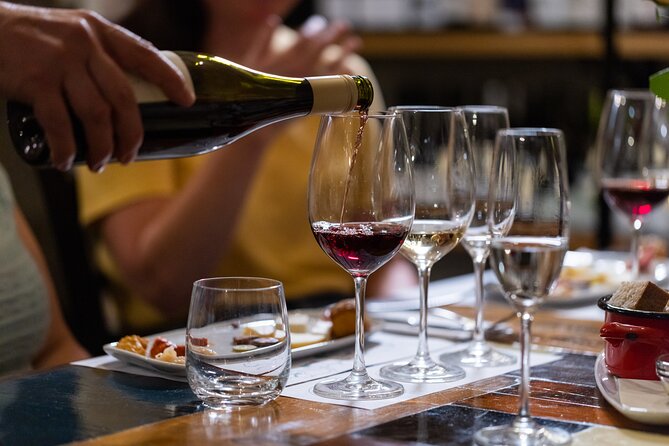
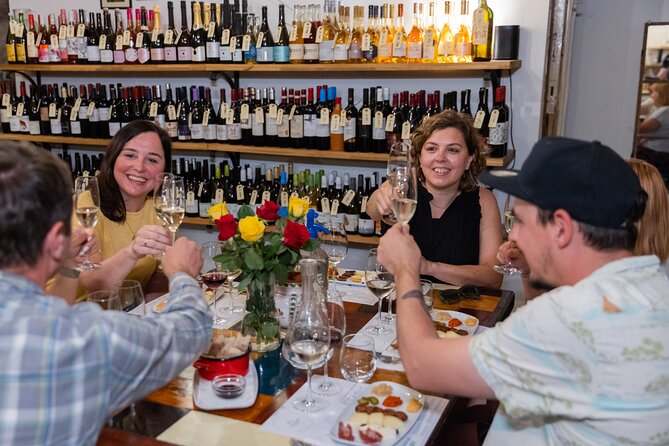
This is a useful starting point because the tour begins indoors, with food and wine before the walking gets underway. A sommelier introduces you to three Hungarian wines: sparkling, white, and red. They arrive with a platter of local cheeses and charcuterie, giving you a proper first taste rather than a token sample.
I like this opening because it sets the tone for the whole evening. You are not simply ticking off dishes. You are learning how Hungarian wine fits with local food, and you have time to settle into the group before heading into the streets.
The Tasting Table has operated in the Palace District for ten years, so this is not a random meeting point chosen for convenience. The neighborhood is the company’s home base, and that gives the walk a local focus. You begin in a place where the guides work, eat, and spend time, rather than being rushed straight toward a famous sight.
More History Tours in Hungary:
- Palace District Evening Culinary, Wine, and History Walk
★ 5.0 · 55 reviews - Madrid Essential: Historic Center, Plaza Mayor & Royal Palace
★ 5.0 · 6,416 reviews - Venice’s Best: Basilica, Doge’s Palace, Gondola & History Gallery
★ 4.5 · 2,478 reviews
Bakery treats from a family business dating to 1870
After the wine and cheese, the route continues to a family-run bakery that has been in business since 1870. The exact order of stops can vary, but the bakery visit is one of the tour’s most appealing food moments.
You taste baked goods such as pogácsa and stangli. Pogácsa is a small, savory Hungarian pastry, while stangli is a baked stick-shaped snack. These are modest foods, but they matter because they belong to everyday Hungarian eating rather than only to restaurant menus.
This stop also gives the guide a chance to explain how local ingredients and traditional baking fit into the city’s food culture. You can expect a casual pause rather than a formal meal. That helps keep the evening moving and gives your stomach time to catch up with the wine.
If you prefer polished restaurant food at every stop, this part may feel simple. I see that as part of its value. The tour is strongest when it shows you what people actually snack on, not just dishes designed for a sightseeing menu.
Pálinka in a courtyard bar
One of the more distinctly Hungarian stops brings you to a courtyard bar for pálinka, the country’s traditional fruit brandy. This is a small serving, but it is a memorable one. Pálinka can be strong, so take your time with it and listen to the guide’s explanation before treating it like a quick shot.
The courtyard setting adds to the experience. Budapest’s inner courtyards often hide behind plain street entrances, and stepping inside gives you a better sense of how these old buildings are arranged. The tour includes glimpses into buildings and courtyards that are not generally open to the public, making these transitions as useful as the tastings.
The bar is described as fun rather than formal. That matters if you want a relaxed night, though it also means this is not a polished spirits seminar. The focus is on trying a local drink in a neighborhood setting, then moving on.
Gulyás, goose liver paté, and a proper savory meal
The evening’s central food stop comes at a neighborhood bistro, where you can expect gulyás soup, goose liver paté, and other local dishes. Gulyás is often translated as goulash, though Hungarian versions may be more soup-like than the thick stews many visitors expect elsewhere.
This is the point where the walk becomes a full dinner rather than a string of nibbles. The portions are spread across several venues, but the combination of soup, paté, bakery goods, cheese, charcuterie, and other dishes adds up. One past description of the route included stew with wine, which gives you an idea of the meal’s substantial middle section.
The bistro stop is also where the connection between food and place becomes clearest. You are not being served a generic European dinner. You are tasting dishes tied to Hungarian cooking, with the guide explaining ingredients and preparation as you go.
Goose liver paté may not suit everyone, and this is not a tour built around vegetarian flexibility. Vegetarians may find some options, but the supplied information only specifically excludes vegans. If you have serious dietary restrictions, ask before booking rather than hoping the group can adjust on the spot.
More Evening Openings in Hungary:
- Venice: Lords of the Night Prison’s Palace Cells & Tortures
★ 4.0 · 1,067 reviews - Exclusive Evening at Schönbrunn Palace: After-Hours Audiotour, Dinner, Concert
★ 4.0 · 930 reviews - Vienna: Schönbrunn Palace Evening Tour, Dinner and Concert
★ 4.4 · 889 reviews - Seoul: Palace, Temple and Market Guided Foodie Tour at Night
★ 4.9 · 750 reviews
Dessert in an old coffeehouse
The final food stop is dessert at an old coffeehouse, with coffee to follow. Budapest’s coffeehouse tradition is closely tied to its literary, artistic, and social life, so ending the walk here gives the evening a fitting change of pace.
After wine, pálinka, soup, and savory foods, coffee and cake offer a calmer finish. The coffeehouse stop also helps you understand why cafés remain such an important part of Budapest’s urban culture. The setting matters as much as the dessert.
You should not think of this as a pastry-only tour. Dessert is the last part of a progressive dinner, not the main event. Still, it provides a comfortable endpoint and gives you a chance to ask the guide for restaurant, café, or sightseeing suggestions for the rest of your stay.
Several people have particularly praised guides for offering useful ideas beyond the tour itself. That makes this a good choice for your first evening in Budapest, when you may still be deciding where to eat and how to spend the next few days.
Walking through Budapest’s Palace District
Between tastings, the guide leads you through the Palace District, known in Hungarian as Palotanegyed. The neighborhood lies between Budapest’s inner and outer ring roads and takes its name from the large homes built by aristocratic families during the city’s golden age in the 19th and early 20th centuries.
The architecture is a major reason to choose this walk. Instead of moving only between famous central sights, you see elegant façades, university buildings, small cafés, galleries, and streets with a more local feel. The district is also used often for international film shoots, since its buildings can suggest other European cities.
The route includes the gardens of the National Museum. These grounds provide a welcome open stretch after the denser streets, while the museum itself helps frame the area’s political and cultural importance.
You will also hear about Hungary’s first parliament, which was housed in this neighborhood. That detail makes the palaces more than pretty façades. They belonged to a district where political life, education, and social power once met.
The 1956 Revolution and the Italian connection
The Palace District played an important part in the unsuccessful Hungarian Revolution of 1956. In particular, the Hungarian Radio building was involved in the fighting and siege. The guide connects the streets you walk with those events, giving you a sense of how political conflict shaped the neighborhood.
This is one reason a food walk can be more useful than a meal alone. The dishes keep the evening light, but the stories give the buildings meaning. You may pass an attractive façade and learn that its surrounding streets were once a scene of upheaval, not simply a backdrop for cafés.
The walk also covers the Italian community that influenced this part of town. That detail widens the story beyond aristocratic palaces and national politics. Budapest’s neighborhoods were shaped by many communities, and the guide uses food, buildings, and people to explain those connections.
The tone appears to balance serious history with an enjoyable evening. You are not signing up for a formal lecture, but you should expect more than a list of restaurant stops.
A former palace turned into a public library
One of the most striking architectural visits is a former neo-Baroque palace now used as a public library. The building includes a ballroom where Franz Joseph attended events.
This is a valuable stop because it shows how Budapest has reused old grand buildings. You see an aristocratic interior that still carries its former purpose, but now serves a public function. The tour description identifies the library as one of the city’s most beautiful public libraries, though access and the exact route through the building may depend on the evening’s arrangements.
The visit is also a reminder to look up and around. Palace District buildings often reveal their best details in entry halls, staircases, courtyards, and upper rooms. A guide who knows where to peek can make the neighborhood feel far more rewarding than a self-guided walk down the same streets.
How the small group affects the evening
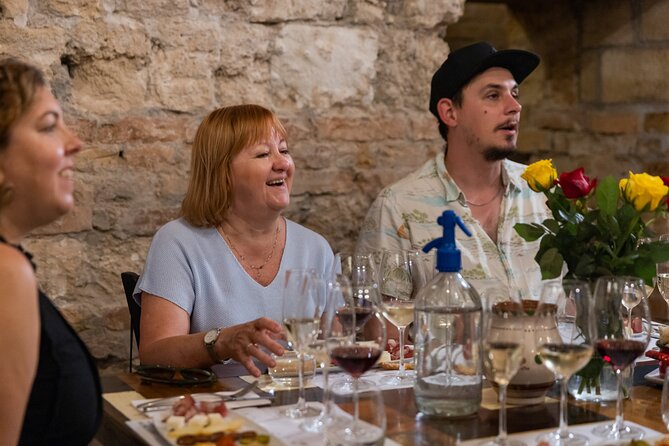
The shared tour accepts between two and eight participants. That is a useful size for a walk that involves conversation, food service, and occasional peeks into courtyards or interiors.
With eight people, you still have a social evening without the feel of a large organized group. It should also be easier to hear the guide and ask questions at each stop. With only two people, the format can become close to a private tour, although the minimum number must be met for the tour to operate.
The guide names associated with past departures include Aniker, Andrea, Sarah, Daniel, Sophia, and Franc. You are not guaranteed one particular guide, but the repeated praise for their warmth, food knowledge, and ability to answer questions is encouraging. The best guides on this kind of tour do not bury you in dates. They give you enough history to understand the street, then let the next taste keep the evening moving.
The language is English, and the experience is available daily. A private version can also be selected if you want a customized route or prefer not to share the evening with other people.
Is $145 a fair price?
At $145 per person, this is not a cheap dinner. The value comes from the combination of a full progressive meal, several drinks, a sommelier-led wine tasting, and four hours with a specialist guide.
You are paying for more than the food on the plate. The price covers six tasting stops, three wines, cheese and charcuterie, pálinka, bakery items, gulyás, goose liver paté, other local dishes, coffee, and dessert. It also includes the time and access involved in moving through a historic neighborhood with someone who can explain what you are seeing.
If you would happily spend an evening ordering one long dinner in a restaurant, this may feel expensive. If you want to sample several places and would otherwise pay separately for a wine tasting, drinks, dessert, and a guided walk, the cost becomes easier to justify.
I would book it early in your Budapest stay. The food will give you a useful introduction to Hungarian flavors, while the guide can point you toward places and areas to explore later. It is especially good for people who like to eat dinner slowly, in stages, with a story between courses.
Practical details before you book
Wear comfortable shoes. The tour includes plenty of breaks, but you still cover substantial ground on foot through the district. The route is not wheelchair accessible, and the tour is not suitable for vegans.
The experience lasts four hours, with starting times shown according to availability. It runs daily. You can cancel up to 24 hours before the start for a full refund, and the reserve now, pay later option lets you hold a place without paying immediately.
There is one important condition: the shared tour needs at least two participants and accepts no more than eight. If the minimum is not reached, the operator may cancel after confirmation and offer an alternative or full refund.
Who should book this evening walk?
Book it if you want a guided introduction to Hungarian food that feels connected to real streets and buildings. It suits first-time visitors, curious eaters, wine drinkers, and anyone who prefers a long evening of small tastings to one formal dinner.
It is also a strong choice for your first night in Budapest. You get a meal, a neighborhood orientation, local drinks, and practical suggestions for the days ahead without having to plan every stop yourself.
Skip it if you want a short food activity, a fully seated dinner, a vegan menu, or a route designed for limited mobility. The walking is a real part of the experience, not a minor detail.
For most visitors who enjoy both food and city history, I would book the Palace District Evening Culinary, Wine, and History Walk. The combination is the point: wine in a cellar, pastry from a long-running bakery, pálinka in a courtyard, gulyás in a bistro, coffee and dessert in an old coffeehouse, and a neighborhood full of political and architectural stories between each bite.
FAQ
Where does the Palace District walk begin?
It begins at The Tasting Table and Shop, Bródy Sándor utca 9, 1088 Budapest, in District VIII.
How far is the meeting point from Budapest’s main transport stops?
The Tasting Table is about 150 meters from the National Museum and roughly a five-minute walk from Astoria on metro line M2 and Kálvin tér on metro line M3. Trams 47 and 49 also stop at Astoria and Kálvin tér.
How long does the experience last?
The tour lasts four hours.
How many tasting stops are included?
You visit six tasting stops in total, including the opening stop at The Tasting Table.
What drinks are included?
The tour includes three Hungarian wines, sparkling, white, and red, served with a sommelier. It also includes pálinka, a Hungarian fruit brandy.
What food is included?
Food includes local cheese and charcuterie, pogácsa, stangli, gulyás soup, goose liver paté, other local dishes, and a coffeehouse dessert.
How many people are in the shared group?
The small group has a minimum of two participants and a maximum of eight.
Is the tour wheelchair accessible or suitable for vegans?
No. The tour is not wheelchair accessible and is not suitable for vegans.
Newly added in Hungary
- Palace District Evening Culinary, Wine, and History Walk★ 5.0 · 55 reviews
- Budapest Gödöllő Palace Royal ‘Sisi’ Residence Half-Day Tour★ 4.5 · 106 reviews
- Sisi’s Godollo Palace Tour from Budapest★ 4.0 · 56 reviews
- Sisi’s Royal Palace Tour with Hotel pickup & Cake in Palace Café★ 5.0 · 5 reviews
- Gödöllő – Half-Day Private Tour to the Royal Palace★ 5.0 · 5 reviews
- Legacy of Sissi Royal Palace of Godollo Tour with Cake and Coffee★ 4.5 · 7 reviews
- From Budapest: Royal Palace of Gödöllő Private Tour★ 5.0 · 21 reviews
- Budapest: Private 3-Hour Gödöllő Palace Tour★ 4.9 · 3 reviews
Historical Tours, compared.
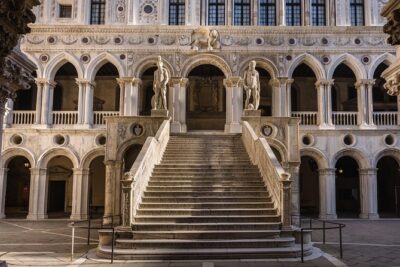
Venice’s Best: Basilica, Doge’s Palace, Gondola & History Gallery
Read our review →
Imperial Palace and Shogun Historical Walking Tour
Read our review →
Abu Dhabi Grand Mosque, Palace, and Heritage Village
Read our review →

Skip-the-Line Schonbrunn Palace Guided Tour and Vienna Historical City Tour
Read our review →
Madrid in a Day Tour:Royal Palace, Historic Center & Prado Museum
Read our review →
Basilica, Doge’s Palace, History Gallery & Bell Tower Option
Read our review →
Browse the lists this tour appears in