
Review · GYEONGBOKGUNG PALACE TOURS
Seoul: Deoksugung Palace Heritage Walking Tour
Deoksugung Palace gives you one of Seoul’s most useful history lessons in a small area. Here, Joseon royal tradition meets Western architecture, while nearby streets tell the story of Korea opening to foreign influence, modern education and political change.
I like the way this walk joins famous places with less obvious ones, especially Jeongdong-gil and Donuimun Museum Village. I also like the guide-led format: a strong guide can connect palace buildings, embassies, churches, monuments and street life into one clear story.
The main drawback is the pace. Three hours covers a lot of ground, and this is a walking tour with only a short café break. Wear good shoes, and do not expect long, quiet visits at every stop.
Key points to know before you book
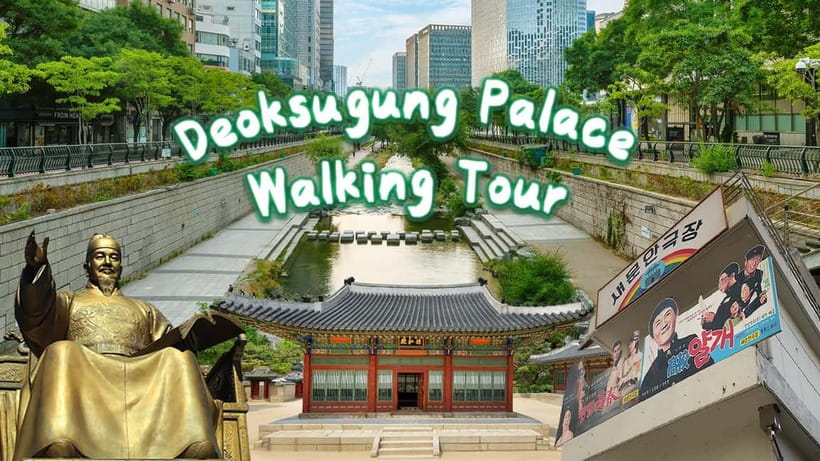
- Deoksugung Palace mixes royal Korean buildings with Western-style architecture, a useful introduction to Korea’s late Joseon period.
- Jeongdong-gil reveals the foreign influence that helped shape modern Korea, including missionary schools, churches and embassies.
- Donuimun Museum Village preserves Seoul homes from the 1900s through the 1980s, giving you a look at everyday city life.
- Gwanghwamun Square explains national monuments and public memory, not just Seoul’s main civic space.
- Cheonggyecheon provides a gentle finish, with a former drainage channel now serving as a central walking route.
- The tour costs $56 per person for three hours, with palace and museum village admission included, but food and transportation are extra.
Why this walk tells Seoul’s story so well
Many Seoul tours focus on one palace, one market or one royal gate. This walk works differently. It moves through a chain of places that explain how Seoul changed from a Joseon capital into a modern global city.
You begin at Deoksugung, where royal history provides the foundation. Then you follow Jeongdong-gil, a road linked to foreign missionaries, schools, churches and embassies. Donuimun Museum Village shifts the focus from kings and diplomats to ordinary buildings and daily life. Gwanghwamun Square brings the story into the national present, while Cheonggyecheon shows how Seoul has reshaped its urban center.
I like this progression because it gives each stop a job. You are not simply collecting sights. You are following Korea’s movement from royal rule, through foreign contact and political change, into modern city life.
The experience is available as a private group or a shared group walk. Both options use live guides in English or Korean. A private format may suit you if you want to ask many questions or set a more personal pace. A shared walk usually makes more sense if you want a social outing and a lower-pressure way to learn the city.
More Gyeongbokgung Palace Tours in Seoul:
- Best Seoul City Tour (Gyeongbokgung Palace,Insadong,Namsan Tower)
★ 5.0 · 1,647 reviews - Seoul City Sightseeing Tour Including Gyeongbokgung Palace, N Seoul Tower, and Namsangol Hanok Village
★ 5.0 · 1,423 reviews - Seoul Half-Day City Highlight, Palace Tour with Hanbok
★ 4.9 · 764 reviews
Starting at City Hall and entering Deoksugung
The meeting point is in front of the Deoksugung Palace ticket office, near Exit 2 of City Hall Station. This is a practical place to begin because it is easy to identify, and the palace sits right in the middle of Seoul’s modern administrative district.
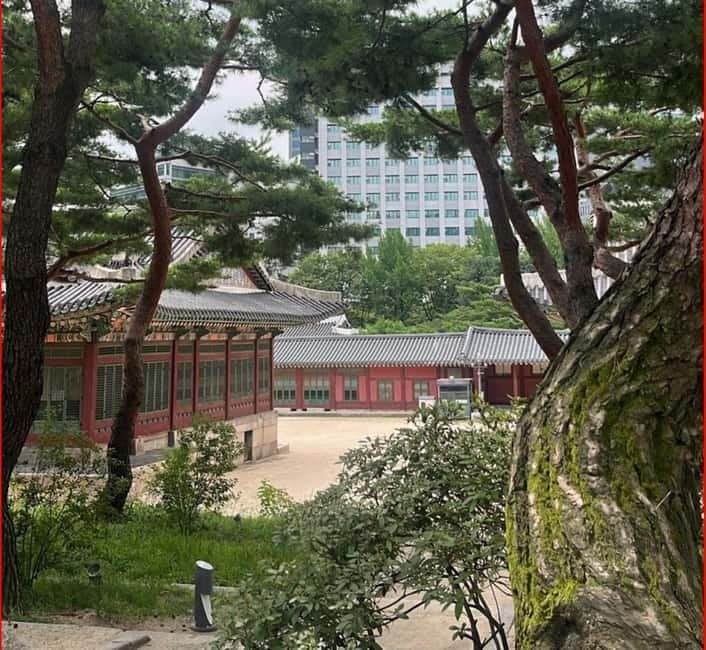
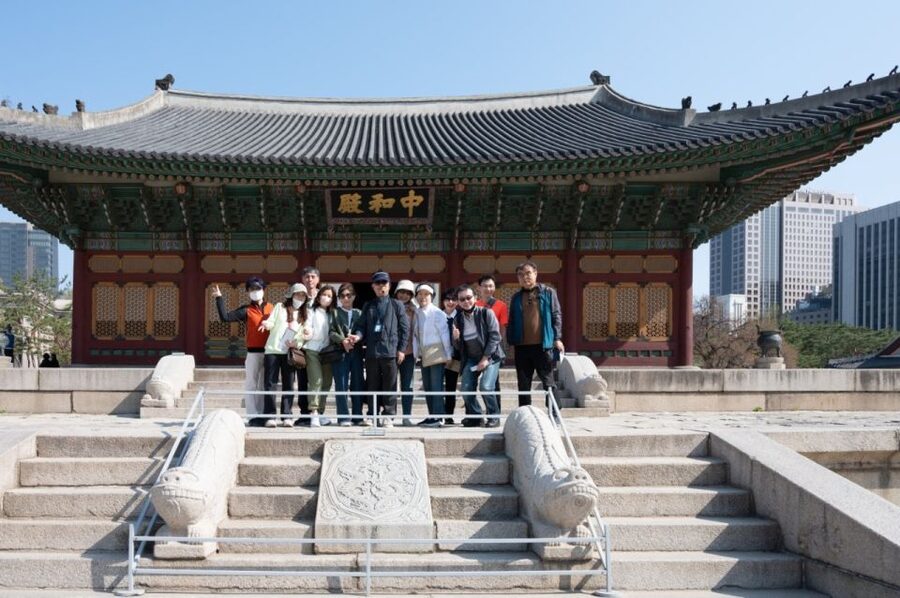
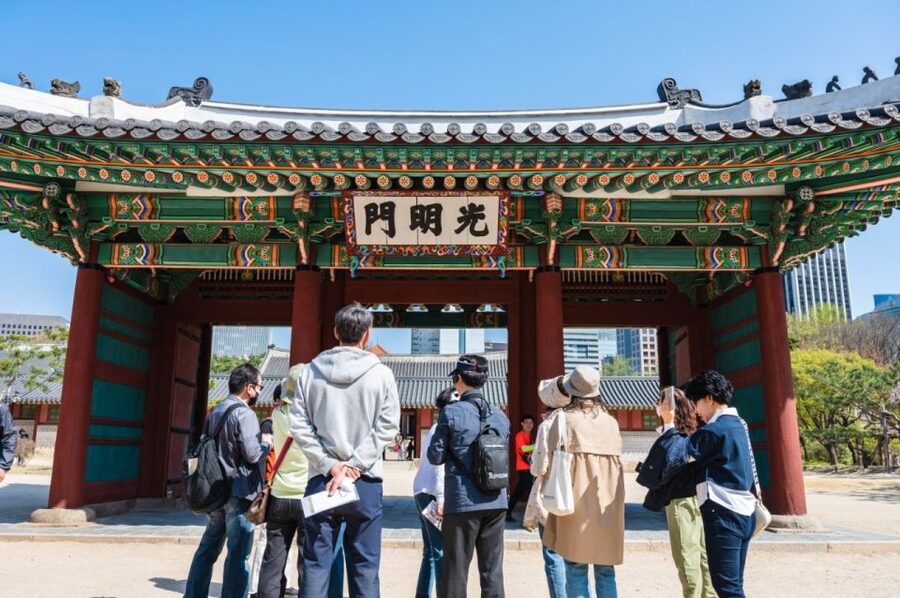
Your first major stop is Deoksugung Palace, with about 45 minutes for a guided visit. The palace dates back to the late 14th century and began as the residence of a royal relative. After the Japanese invasion of 1592, it became a principal palace.
That change matters. Deoksugung is not only a collection of old buildings. It reflects a period when the royal court faced war, political pressure and a changing world. Your guide uses the site to explain the late Joseon Dynasty and the wider 500-year Joseon legacy.
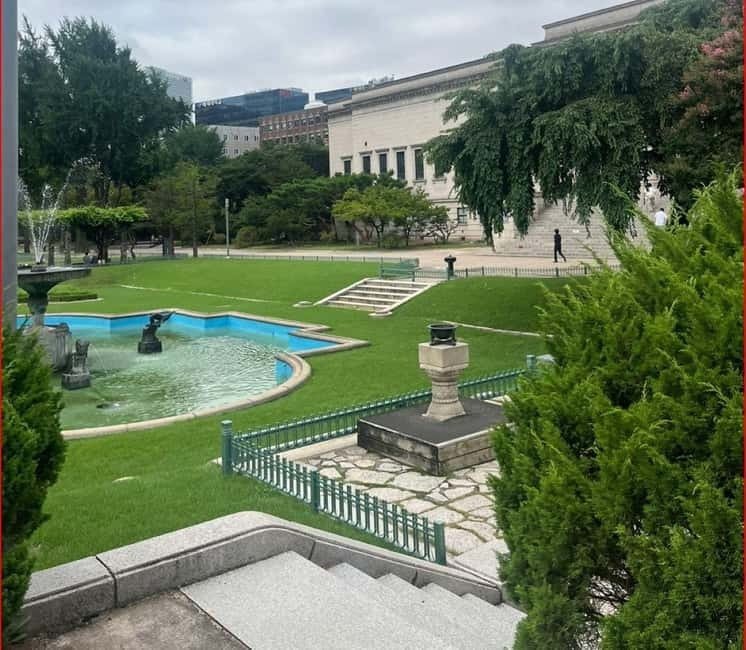
The palace is particularly interesting because Korean and Western elements appear together. That combination helps you see Korea at a turning point. Traditional royal spaces share the setting with buildings and influences tied to Korea’s contact with foreign powers.
A 45-minute visit is enough for a guided introduction, but it is not a leisurely palace afternoon. If you like stopping at every building for photographs, you may want to return on your own after the tour. The value here is the explanation: the guide gives the palace a clear place in Korea’s political story.
One guide named in connection with this experience is Mitch. He has answered questions not only about the sites, but also about Korean working culture and the school system. That is useful if you prefer a guide who can move from a carved roof or royal residence into everyday life today. Guide assignments can vary, so Mitch may not lead every departure.
Jeongdong-gil and the foreign institutions that changed Seoul
After Deoksugung, the walk continues through Jung-gu and along Jeongdong-gil. This section takes about 20 minutes of sightseeing and walking, with several points passed along the route.
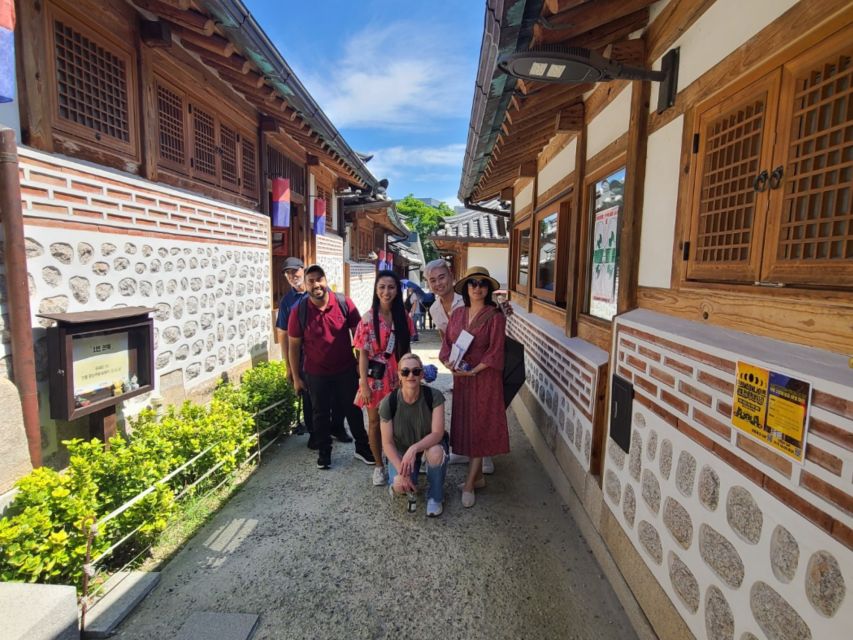
Jeongdong-gil is important because foreign missionaries and diplomats once worked here. The road includes the former site of Paichai Academy, Chungdong First Methodist Church, the Russian Embassy and Gyeonggyojang.
Each place points to a different part of Korea’s opening to the outside world. Schools and churches brought new forms of education and religion. Foreign diplomatic buildings show how international relations became part of Seoul’s daily reality. Gyeonggyojang adds another layer of modern political history.
I like this section because it feels less staged than a palace visit. You are walking through a working part of the city, where historical buildings and present-day streets share the same space. The guide’s role matters here. Without context, you might pass these sites without knowing why they count.
The tradeoff is that some stops are viewed from the street or passed during the walk rather than entered for a long visit. Treat Jeongdong-gil as a connected history lesson, not a series of full museum visits.
The 15-minute café break
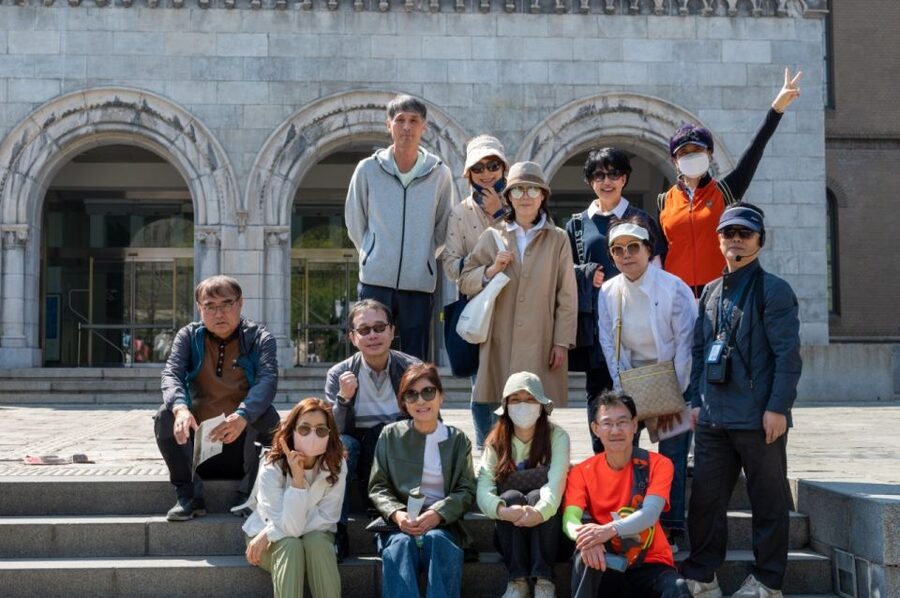
The schedule includes a 15-minute break at a local café for coffee or tea. Food and drinks are not included, so you pay for anything you order.
This is a short pause, not a full meal stop. It gives you a chance to sit down, ask follow-up questions and reset before the next stretch of walking. If you need lunch, plan it before or after the tour rather than counting on this break.
A short café stop can also help you judge the pace of the day. The walk keeps moving, and the break is the only planned rest period. If you have limited stamina, use it well and wear comfortable shoes from the start.
More Palace Walking Tours in Seoul:
- Seoul: Gyeongbok Palace and Bukchon Hanok Walking Tour
★ 4.8 · 157 reviews - Venice: Doge’s Palace and St Mark’s Basilica Walking Tour
★ 4.4 · 6,291 reviews - Split: Old Town and Diocletian Palace Walking Tour
★ 4.9 · 4,727 reviews - Walking Tour of Split and Diocletian’s Palace
★ 5.0 · 2,588 reviews
Donuimun Museum Village and Seoul’s changing homes
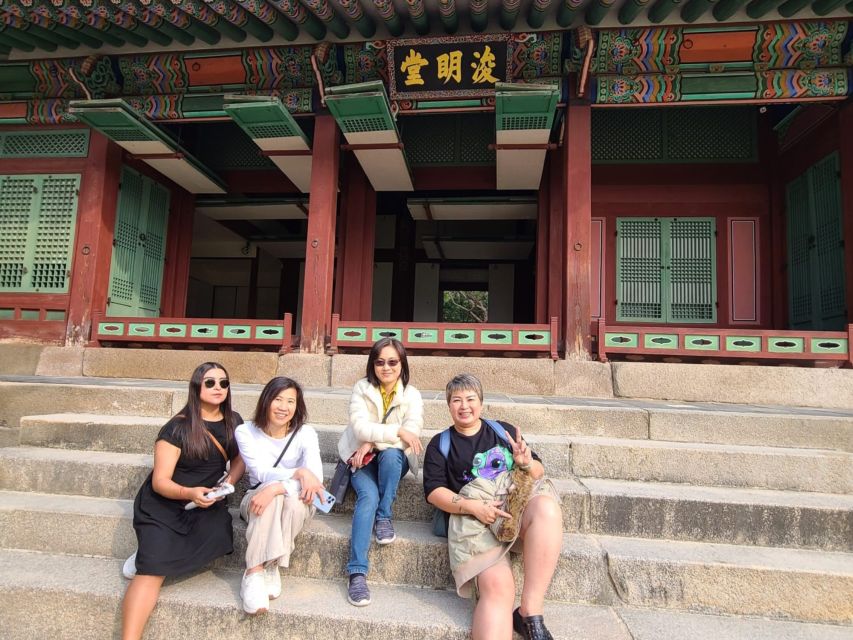
The next major stop is Donuimun Museum Village, with about 20 minutes for a guided visit. This outdoor village preserves 40 of the 63 houses in the historic Saemunan district.
The buildings range from the 1900s through the 1980s. That span makes the village valuable because it shows Seoul beyond royal courts and national monuments. You get a sense of how the city’s built environment changed across the 20th century.
I especially like this stop for visitors who want more than palace architecture. Homes and neighborhood buildings can explain social change in a direct way. They show the move from older urban forms to the more modern Seoul you see outside the village.
The visit is brief, so you should not expect to explore every house in detail. The guide provides the larger picture, and you can note the village as a place to revisit if you want more time with Seoul’s domestic architecture.
The village was founded in September 2017, and its preservation gives the walk a clear connection to present-day conservation. Seoul continues to develop at a fast pace, so keeping a group of older houses together helps protect a part of the city that could otherwise disappear.
Walking toward Gwanghwamun Square
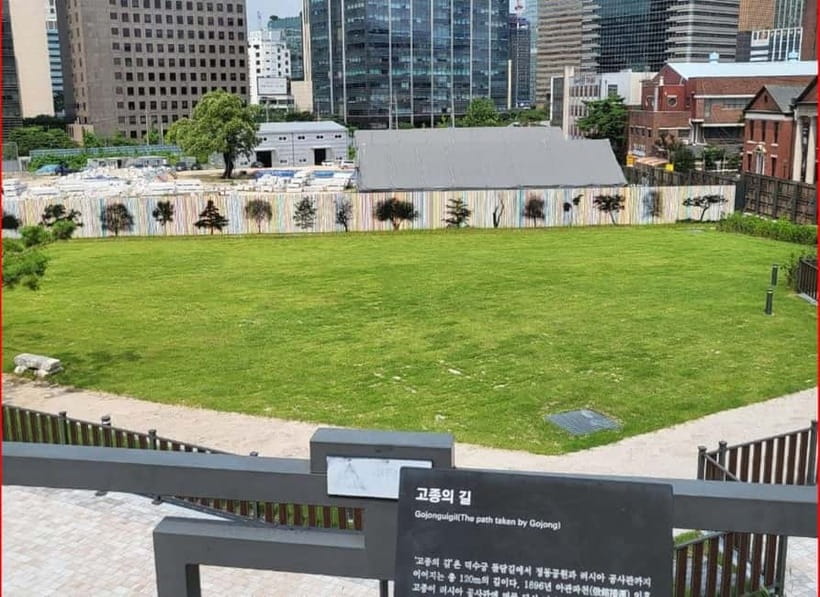
From Donuimun Museum Village, you continue on foot for about 20 minutes. This transfer is part of the experience, not dead time. It lets you move between older neighborhood fabric and the broad civic spaces around Gwanghwamun.
The route may feel more urban here. You should expect ordinary city streets between the main attractions, with the guide explaining how the areas connect. This is one reason the tour suits people who want to understand Seoul as a city rather than visit isolated monuments.
The walking distance also explains why comfortable shoes are listed as essential. The tour lasts three hours, and the stops are connected on foot. Transportation is not included, so you are responsible for reaching the start and continuing on foot during the experience.
Gwanghwamun Square and the symbols of modern Korea
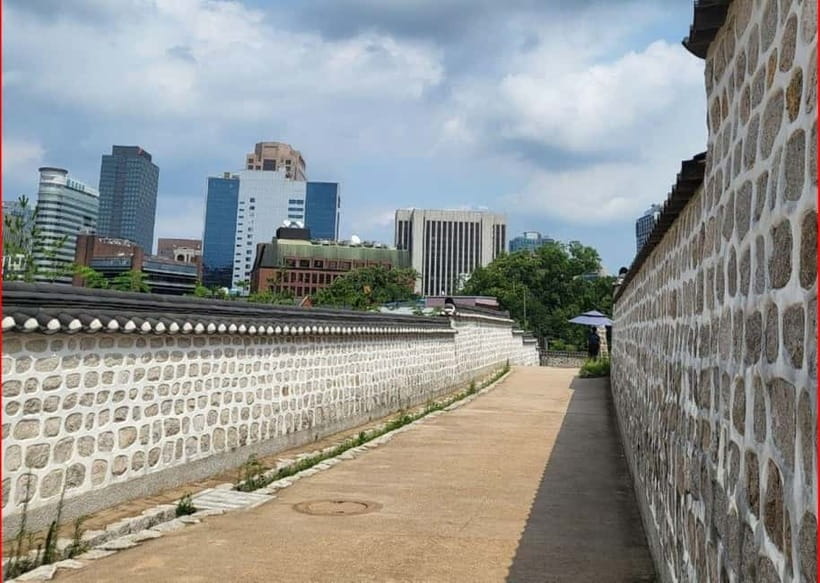
Gwanghwamun Square receives about 30 minutes of guided sightseeing. This is one of Seoul’s main public spaces, surrounded by major civic and cultural landmarks.
The guide explains the stories behind the square’s statues and monuments, linking them to important moments in Korea’s national development. The point is not simply to identify who is represented. You learn why these figures and symbols matter, and what they say about Korean cultural values.
This stop is helpful after the palace and Jeongdong-gil because it brings earlier history into a modern public setting. Deoksugung shows royal power. Jeongdong-gil shows foreign contact and institutional change. Gwanghwamun asks how Korea remembers its progress and defines its national identity.
The square is also a good place to pause and look around. Its scale differs sharply from the enclosed palace grounds and narrower historic streets. That contrast helps you see how Seoul’s public spaces have changed over time.
You may want more time for photographs or independent exploration, especially if the square is busy. The guided portion is about half an hour, so keep your expectations focused on interpretation rather than a long free stop.
Finishing at Cheonggyecheon
The tour ends at Cheonggyecheon, at 1 Cheonggyecheon-ro in Jongno-gu. The final 30 minutes are set aside for sightseeing and walking beside the stream.
Cheonggyecheon was once an unattractive drainage channel. It has since been renovated into a major cultural focus in central Seoul, with sculptures, restaurants, cafés and occasional festivals along the route.
I like ending here because the stream gives the tour a practical urban lesson. Seoul has not only preserved old places. It has also changed a neglected piece of infrastructure into a public place for walking and city life.
The stream is a pleasant finish, but it is still part of central Seoul. Do not expect a quiet natural retreat. The appeal is the contrast between water, art, food and dense city streets. After the tour, you can continue along the stream or stop at a nearby café or restaurant, though those costs are your own.
Is $56 good value for three hours?
At $56 per person, this is not the cheapest way to see the area. The value depends on how much you want explanation rather than simple admission to the sights.
Your fee includes an English-speaking historical guide and entrance tickets. It also combines several places that are spread across different parts of central Seoul. Paying separately for entry and trying to connect the history yourself may cost less, but you would lose the guide’s linking story.
The strongest value comes from the range of subjects covered in one morning or afternoon: Joseon royalty, the 1592 invasion, foreign missions, education, diplomacy, preserved homes, national monuments and urban renewal.
The price is easier to justify if you ask questions. One of the tour’s praised strengths is the guide’s ability to discuss subjects beyond the buildings, including Korean school life and working culture. If you want only quick photos, the cost may feel high. If you want a clear introduction to Seoul’s history and modern identity, it is more reasonable.
Private groups are available, but the supplied price is listed per person and does not explain the private-group surcharge. Check the current option and price before booking.
Who should book this walk?
I would choose this tour if you are visiting Seoul for the first time and want a guided introduction that goes beyond the most famous palace gates. It is also a good fit if you have already seen Gyeongbokgung or Bukchon and want a different historical angle.
The walk suits you if you enjoy asking questions, connecting places and learning how politics, education, religion and city planning shaped Korea. It is less suitable if you want a slow photographic tour, a food-focused outing or a ride between sights.
Families with older children may find the sequence useful, especially if a guide keeps the political history clear. Anyone with mobility concerns should note that this is a walking experience with several connected sections and only a 15-minute café break.
Book with enough time to reach City Hall Station Exit 2. Bring comfortable shoes and an instant messaging method for emergency contact and location sharing on the day.
My verdict: a smart history walk for curious first-time visitors
I would book this tour if I wanted Seoul’s major stories explained in one compact route. The best parts are the links between Deoksugung, Jeongdong-gil and Gwanghwamun Square, plus the less familiar stop at Donuimun Museum Village.
The walk is not designed for lingering at every site. It asks you to keep moving, listen closely and accept a short café break instead of a long rest. But that brisk format lets you see how royal Seoul, foreign-influenced Seoul and modern civic Seoul fit together.
Choose the private option if personal questions matter most. Choose the shared walk if you want a structured introduction at a fixed three-hour pace. Either way, the experience makes the most sense for you if history is part of the reason you came to Seoul, not just a backdrop for photographs.
FAQ
Where does the tour begin?
It begins in front of the Deoksugung Palace ticket office, near Exit 2 of City Hall Station in Seoul.
Where does the tour finish?
It finishes at 1 Cheonggyecheon-ro, Jongno-gu, Seoul, South Korea.
How long does the walking tour last?
The experience lasts three hours.
What languages are available?
Live guides are available in English and Korean.
Is a private group option available?
Yes. You can choose a private group experience or a shared group adventure.
Is the Deoksugung Palace entrance included?
Yes. An entrance ticket is included.
Is Donuimun Museum Village admission included?
The experience includes pre-booked tickets to Donuimun Museum Village.
Are food and drinks included?
No. Food and drinks are not included. The tour includes a short café break, but you pay for your own coffee, tea or other purchases.
Do I need transportation during the tour?
Transportation is not included. The route is walked between the listed stops.
What should I bring?
Bring comfortable shoes. You should also have an instant messaging method available for emergency contact and location sharing on the day of departure.
More History Tours in Seoul
- Hanbok Photoshoot and History Tour at Gyeongbokgung Palace
★ 5.0 · 276 reviews - Seoul: Colonial History Tour with Prison&Palace, Market Food
★ 5.0 · 5 reviews - Madrid Essential: Historic Center, Plaza Mayor & Royal Palace
★ 5.0 · 6,416 reviews - Venice’s Best: Basilica, Doge’s Palace, Gondola & History Gallery
★ 4.5 · 2,478 reviews
Newly added in Seoul
- Seoul: UNESCO Palace and Street Foods Guided Tour★ 5.0 · 6 reviews
- Seoul: UNESCO Sites tour: Palace, Shrine & Bukchon Village★ 4.8 · 26 reviews
- Seoul: Gyeongbok Palace and Bukchon Hanok Walking Tour★ 4.8 · 157 reviews
- Seoul: Professional Hanbok Photography at Gyeongbok Palace★ 4.9 · 172 reviews
- Seoul: Royal Palace Morning Tour including Cheongwadae★ 4.5 · 12 reviews
- Seoul: Modern Hanbok Dress Photoshoot Gyeongbokgung Palace★ 5.0 · 2 reviews
- Seoul: Gyeongbokgung Palace Tour & Lunch at Authentic Market★ 4.5 · 2 reviews
- Seoul: Gyeongbokgung Palace Half Day Tour★ 4.9 · 111 reviews
Gyeongbokgung Palace Tours, compared.
Seoul City Sightseeing Tour Including Gyeongbokgung Palace, N Seoul Tower, and Namsangol Hanok Village
Read our review →
Seoul Half-Day City Highlight, Palace Tour with Hanbok
Read our review →
Hanbok Photoshoot and History Tour at Gyeongbokgung Palace
Read our review →
Professional Hanbok Photography at Gyeongbok Palace
Read our review →
Browse the lists this tour appears in