
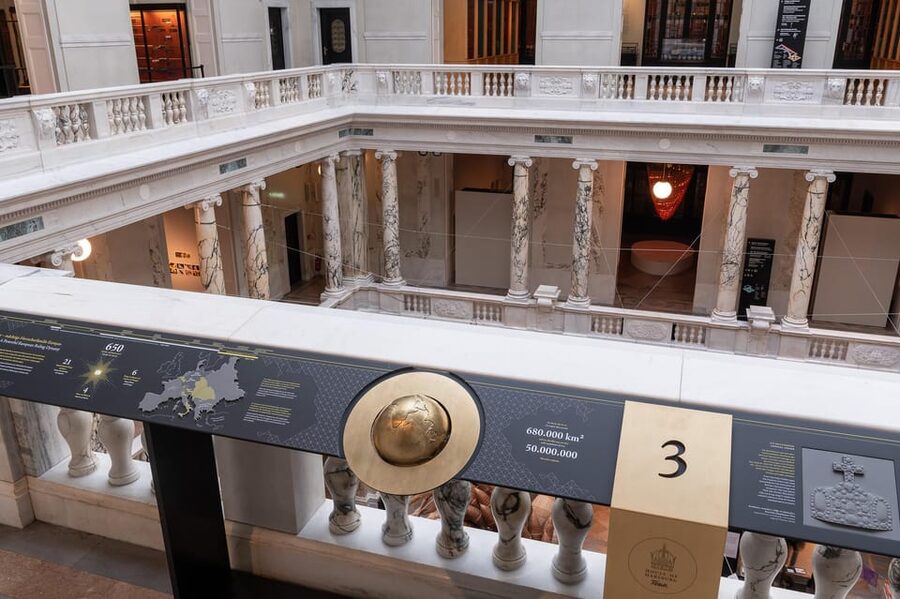
Review · SCHONBRUNN AND HOFBURG PALACE TOURS
Vienna: Imperial Treasury & New Hofburg Palace Combo Ticket
The most striking part of this experience is the chance to see objects tied directly to the Habsburg rulers, not just grand rooms built for them. At the Imperial Treasury, you can stand close to the Austrian Imperial Crown, the Holy Roman Crown, the Holy Lance, and an emerald of remarkable size. At the New Hofburg, armor and musical instruments show a more human side of power, including a fortepiano once played by Mozart.
I like the 10-day validity, which lets you split the museums across your Vienna schedule. I also like the audio guide at the New Hofburg, especially because the collections are large and cover the Habsburg story from the late Middle Ages to Empress Sisi. The main drawback is practical: you may still need to exchange your voucher for paper tickets, and the two entrances can be confusing to find.
Key points
- See the Austrian Imperial Crown and Holy Roman regalia in the oldest part of the Hofburg, the Swiss Wing.
- Compare royal ceremony with military power through the Imperial Armoury’s armor, weapons, and mounted suits.
- Hear the Habsburg story in 10 languages with the New Hofburg audio guide, including English, German, French, Spanish, Chinese, Japanese, Korean, Czech, and Hungarian.
- Find musical links to famous composers, including Mozart’s fortepiano and a wax bust of Joseph Haydn made to show him as he appeared in life.
- Use the ticket over 10 days, making it easier to see the Treasury and New Hofburg on separate visits.
- Plan for a little wayfinding, since the Imperial Treasury entrance at the Swiss Wing is not always easy to spot.
The Imperial Treasury: crowns, jewels, and dynastic power
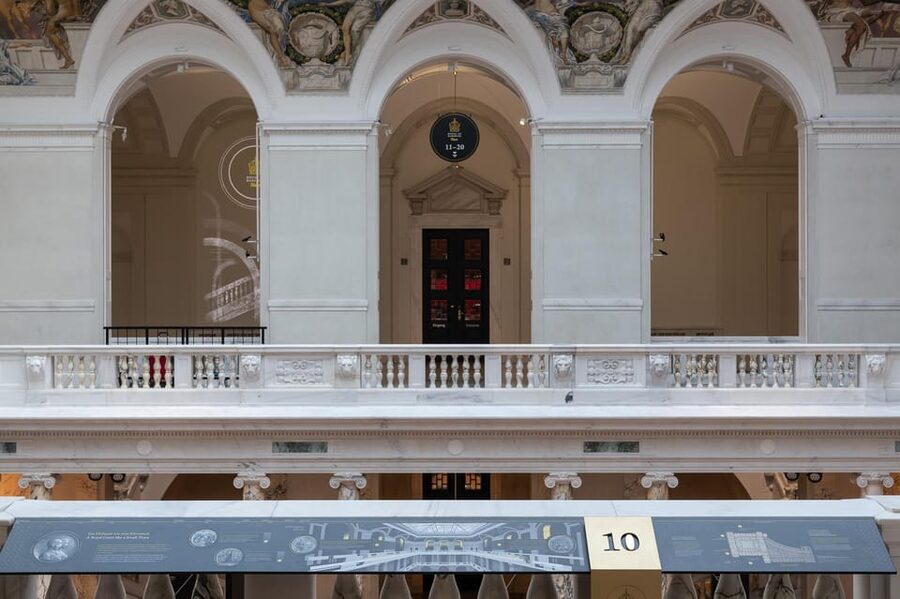
Begin at the Imperial Treasury in the Swiss Wing, the oldest part of the Hofburg complex. This is the best stop if you want the most concentrated display of royal objects. The rooms are not about daily life. They are about authority, ceremony, religion, and the careful display of power.
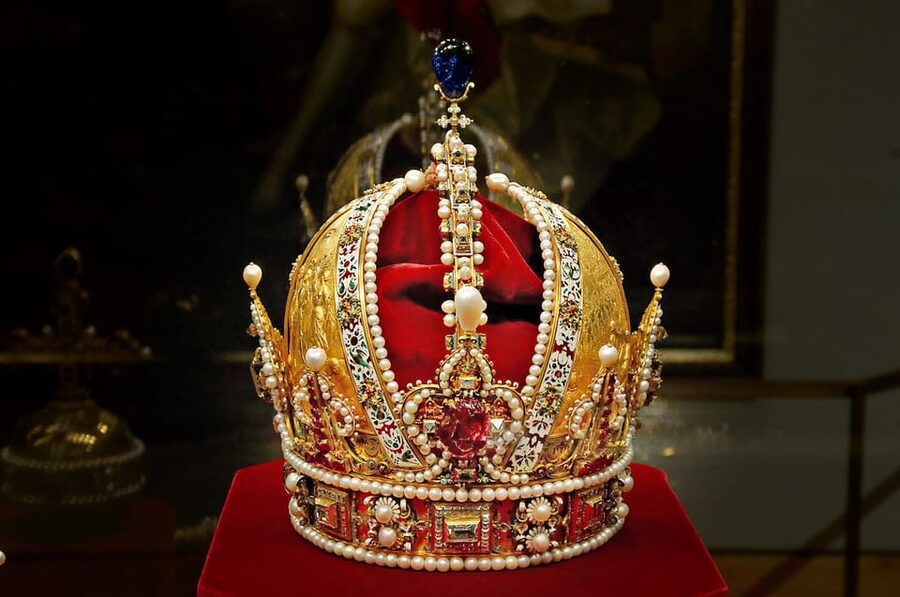
The Austrian Imperial Crown is the headline piece. Seeing it in person gives you a better sense of how much meaning rulers placed in a single object. It was not simply expensive jewelry. It represented the dynasty itself, designed to be seen and remembered.
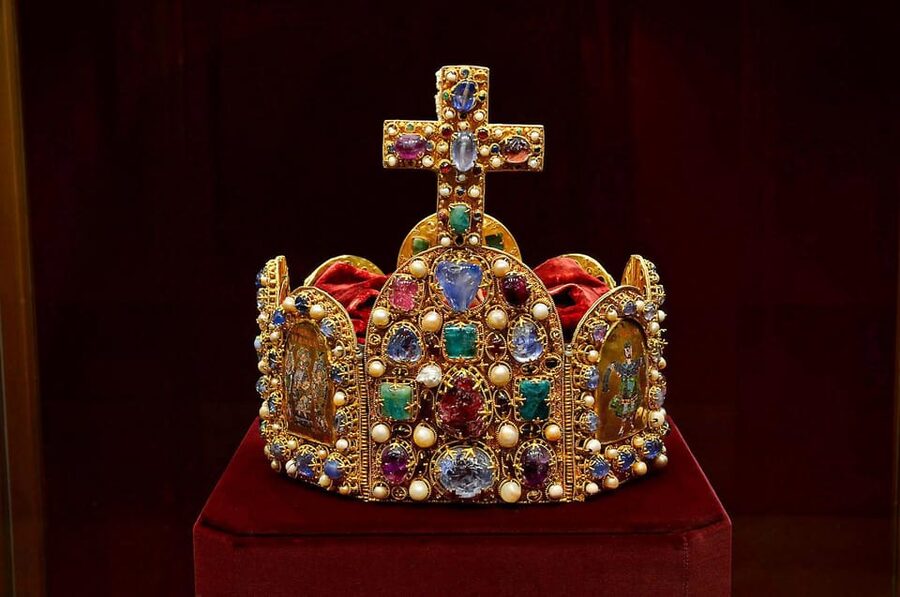
The collection also includes imperial treasures connected with the Holy Roman Empire. Look for the Reichskrone, or Holy Roman Crown, and the Holy Lance. These objects carry an older political and religious story, one that reaches back before the Austrian Empire became the main Habsburg stage.
Jewelry gives the Treasury its flashiest moments. One emerald is among the largest in the world, and the collection includes precious stones that make the former wealth of the dynasty easy to understand. If you enjoy close views of crowns and jewels, this is likely to be your favorite part of the ticket.
The display is not all sparkle. You will also see textiles, old ceremonial objects, and historical pieces that may feel less immediately impressive. One useful approach is to focus on what each item was meant to do. Was it worn at a coronation? Used in a religious ceremony? Shown to visiting diplomats? That turns a room of old objects into a record of how the Habsburgs presented themselves.
The Treasury does not include an audio guide with this combination ticket, so you need to bring your own context or read the labels carefully. This matters because the New Hofburg has a structured audio tour, while the Treasury experience is more self-directed.
More Schonbrunn and Hofburg Tours in Vienna:
- Vienna: Schönbrunn Palace & Gardens Skip-the-Line Tour
★ 4.7 · 7,739 reviews - Vienna: Skip-the-Line Schönbrunn Palace & Gardens Tour
★ 4.8 · 5,411 reviews - Vienna: Imperial Treasury in the Hofburg Palace
★ 4.4 · 1,791 reviews
Finding the Swiss Wing entrance
You can start at either museum, but the Treasury entrance is at Schweizerhof, or Swiss Court. This is inside the Hofburg complex, and the museum can be harder to locate than you might expect. Clear signs are not always easy to spot, so allow extra time to find the correct doorway.
The New Hofburg entrance is at the Weltmuseum Wien on Heldenplatz. Since both sites are part of the Hofburg, it is easy to assume the ticket gives you one simple route through the palace. In practice, you should treat them as two separate museum stops.
The voucher exchange can also require a paper ticket. That means the pass may not let you walk straight through every entrance. Staff have sometimes needed to clarify exactly which areas the ticket covers, so keep the ticket details available and ask before joining a queue.
This is not a guided group tour. You choose your starting point and your pace. That freedom is useful, but you are responsible for finding the right entrance and deciding how to divide your time.
The New Hofburg audio tour and the Habsburg story
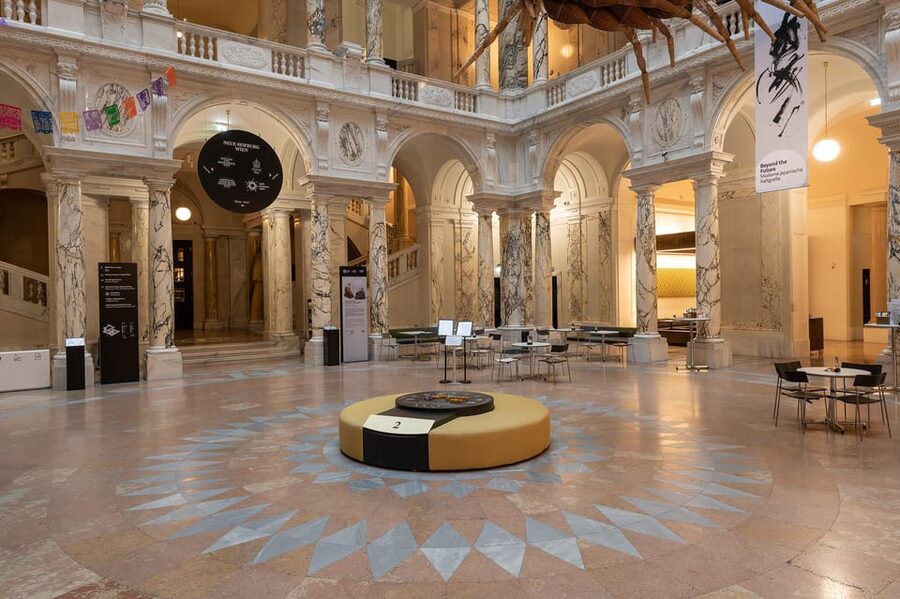
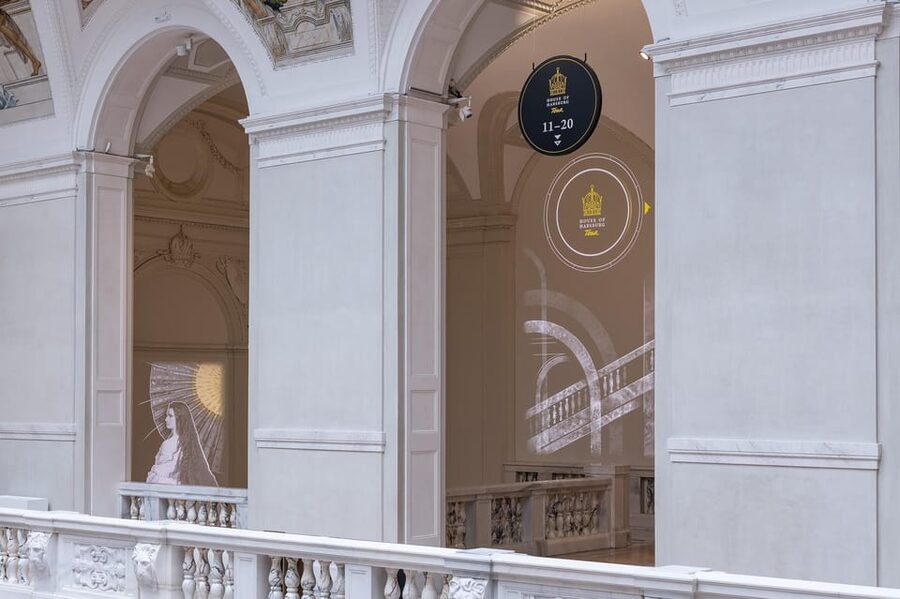
The New Hofburg is the stronger half of the experience for many people because the audio guide gives the visit a clear shape. The House of Habsburg tour follows the dynasty from its medieval beginnings through its rise, its imperial peak, and its later years.
You will hear about the dynasty’s founding figures and later rulers, including Empress Elisabeth, better known as Sisi. The audio guide is available in 10 languages: German, English, Czech, Hungarian, Spanish, French, Korean, Chinese, and Japanese.
The palace wing itself adds weight to the story. You are exploring a former residence, not a modern museum building without a connection to the people it describes. That setting helps explain how the Habsburgs used court life, ceremony, military display, and culture to maintain their position.
Allow plenty of time here. The New Hofburg collections are large, and you could easily spend three hours exploring them. If you rush in after seeing the Treasury, you may miss some of the best material.
The audio guide is especially useful for visitors who want a clear narrative rather than a quick look at objects. It helps connect the dynasty’s rulers with the collections around you. If you prefer to read every label and examine every display, the guide may not be enough on its own, but it gives you a solid route through the museum.
The Imperial Armoury: armor on foot and horseback
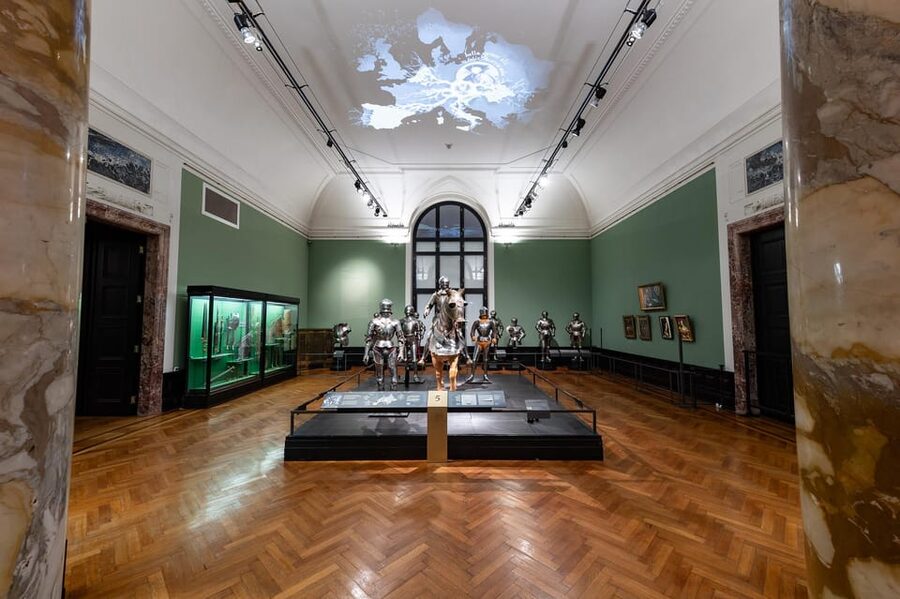
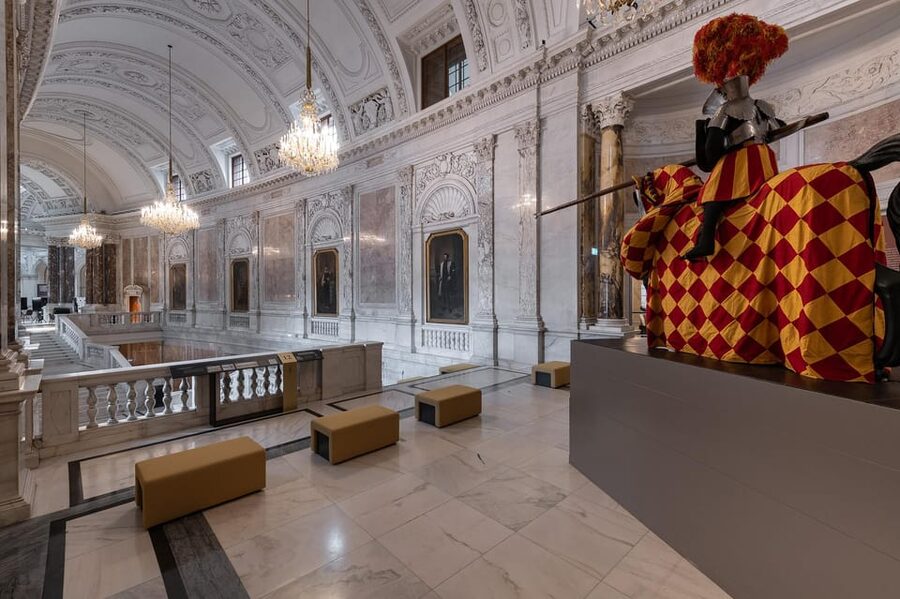
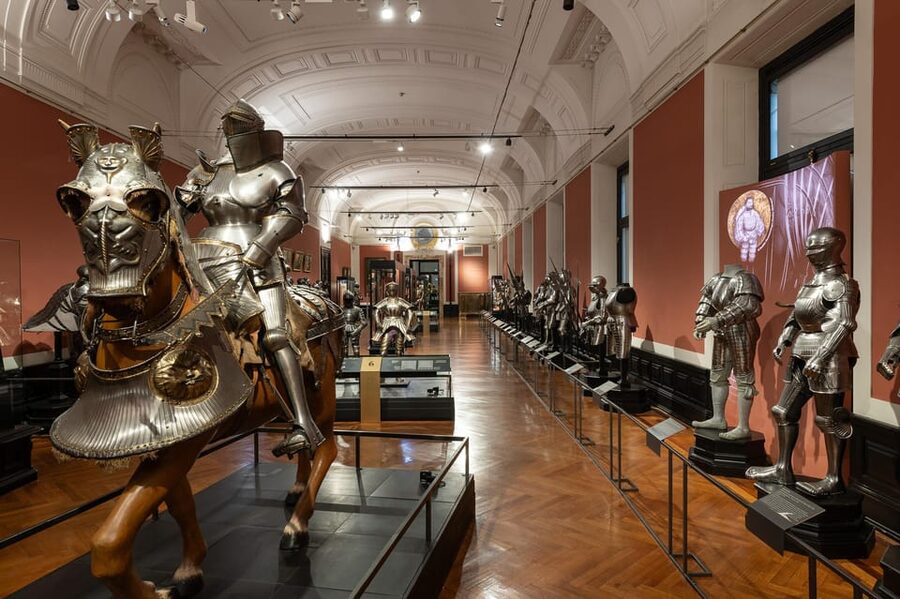
The Imperial Armoury is the most visually dramatic part of the New Hofburg for many people. Expect suits of armor, weapons, and mounted armor displays. Seeing so many armored figures on horseback gives the collection more force than a row of helmets and swords in glass cases.
The military material also changes the tone of the visit. The Treasury presents rulers through crowns, jewels, and sacred objects. The Armoury shows how aristocratic power was protected and displayed in battle. Together, the two museums explain both the image of Habsburg authority and the machinery behind it.
The armor is not simply old equipment. It shows how much effort went into making a ruler or nobleman look protected, important, and ready for combat. The mounted suits are particularly effective because they show the relationship between rider, horse, and ceremony.
If your main interest is jewelry, you may find the Armoury less appealing than the Treasury. If you enjoy weapons, armor, or European court culture, it may be the highlight. One useful tip is to avoid assuming that the Treasury is automatically the best part because it contains the famous crowns. The New Hofburg has more material to explore and a stronger audio explanation.
The Armoury also makes a good choice for mixed-interest groups. Someone drawn to military objects can spend time here while another person focuses on musical instruments or the Habsburg audio tour.
More Palaces to Tour in Vienna:
- Vienna: Skip the Line Schönbrunn Palace and Gardens Guided Tour
★ 4.5 · 1,540 reviews - Vienna: Schönbrunn Palace & Garden Skip-the-Line Guided Tour
★ 4.1 · 1,240 reviews - Vienna: Panorama Train Tickets to explore Schönbrunn Palace
★ 4.3 · 1,164 reviews - Vienna: Skip-the-Line Schönbrunn Palace and Gardens Tour
★ 4.8 · 1,089 reviews
Musical instruments and the Mozart fortepiano
The Collection of Historic Musical Instruments provides a welcome change from royal regalia and armor. Its most memorable object is a fortepiano once played by Mozart. That detail gives the collection a direct connection to music history rather than a general display of old instruments.
You can also see the only wax bust described as showing Joseph Haydn as he appeared in life. It is a small but unusual detail, and it gives the musical collection a more personal quality.
This section is valuable because it shows the Habsburg world through sound and performance. Courts did not express power only through uniforms and ceremonies. Music was part of court life, public image, and cultural ambition.
You should not expect a concert or a demonstration. The experience is museum-based, with historic objects and interpretation. Still, the Mozart connection gives you something concrete to look for, especially if you have already seen enough crowns and armor for one afternoon.
How the two museums work together
The ticket makes sense because the Treasury and New Hofburg answer different questions. The Treasury asks how the Habsburgs wanted power to look. The New Hofburg asks how that power operated through residence, warfare, music, and dynastic storytelling.
At the Treasury, you see concentrated luxury. At the New Hofburg, you get scale and variety. The Treasury can be the sharper visit if you have only a short period, while the New Hofburg rewards a longer stay.
The two stops also differ in presentation. The New Hofburg includes an audio guide, which helps you follow the dynasty’s rise and fall. The Treasury is more dependent on your own attention to labels and objects.
I would visit the Treasury first if crowns and jewels are your main reason for booking. You get the most famous objects early, then can spend as much time as you like at the New Hofburg. If you want the historical story first, start at the New Hofburg and let the audio guide introduce the dynasty before you see its ceremonial treasures.
Since the ticket is valid for 10 days after first activation, you do not need to force both museums into one long session. That is one of the best features of the deal. You can place the Treasury on a shorter museum visit and return to the New Hofburg when you have several free hours.
Is $40 a good value?
At $40 per person, this is not a bargain ticket for a quick look. It becomes better value if you use all the included access: the Imperial Treasury, the New Hofburg Palace, the Weltmuseum Wien, the Collection of Historic Musical Instruments, and the Imperial Armoury.
The New Hofburg is where the price earns its keep. The collections are large enough to occupy several hours, and the audio tour gives you more than a simple entrance ticket. The Treasury adds the famous crowns, jewels, and imperial objects that many people come to the Hofburg hoping to see.
The value drops if you only want a short visit to the Treasury. Some of the less glittering displays may not hold your attention, and you do not get a live guide or a Treasury audio tour. The combination works best for people who want several museum collections rather than one headline object.
The 10-day validity improves the calculation. You can use the ticket on different days instead of paying for separate short visits or rushing through both museums. If your Vienna schedule includes time for at least two substantial museum visits, the price is easier to justify.
Who should book this experience?
I recommend it most for adults and older teenagers interested in royal history, armor, decorative objects, music, and the Habsburg dynasty. Children under 14 are not suitable for this activity, so families with younger children should choose another Hofburg experience.
History-minded visitors will appreciate the combination of objects and explanation. Museum fans will like the chance to move between royal treasure, military collections, and historic instruments. The audio guide also helps if you prefer to explore independently rather than join a scheduled group.
This is less ideal if you dislike large museum collections or want a live person to answer questions. There is no live tour guide. It is also not the best choice if you have only 30 minutes and want a single quick sight.
The experience is wheelchair accessible. The ticket also allows free cancellation up to 24 hours in advance, and you can reserve now and pay later, useful if your Vienna plans are still changing.
Should you book the Imperial Treasury and New Hofburg combo?
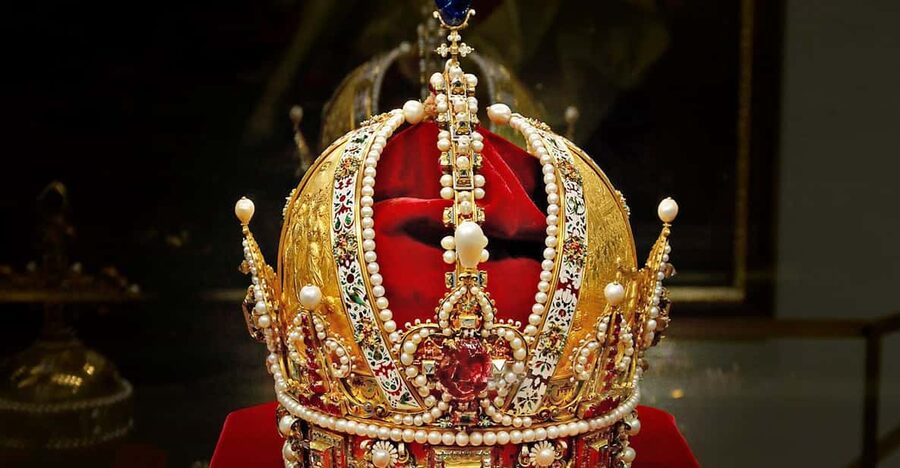
Book it if you want more than a glimpse of the Hofburg. The Imperial Treasury delivers the crowns and jewels, while the New Hofburg gives you armor, musical instruments, Mozart’s fortepiano, and a useful audio-led account of the Habsburg dynasty.
I would skip it only if your time is very short, your main goal is a live guided tour, or you have no interest in military and historic instrument collections. For everyone else, the 10-day validity makes this a flexible way to cover several important Hofburg museums without rushing.
Start with the Treasury if the Austrian Imperial Crown is your priority. Start with the New Hofburg if you want the clearest story and the longest visit. Either way, check the entrance carefully, keep time for the paper-ticket exchange, and do not assume the grand palace complex will guide you to the right museum on its own.
FAQ
How much does the combo ticket cost?
The listed price is $40 per person.
How long is the ticket valid?
The ticket is valid for 10 days from the time you first activate it.
Can I visit the two sites on different days?
Yes. The 10-day validity allows you to split your visits instead of seeing both museums in one session.
Where can I start the visit?
You can start at the New Hofburg Palace entrance at the Weltmuseum Wien on Heldenplatz, or at the Imperial Treasury in the Swiss Wing, known as Schweizerhof.
Is a live tour guide included?
No. The ticket does not include a live guide.
Is an audio guide included?
Yes. The New Hofburg includes an audio guide for the House of Habsburg tour.
Which languages are available for the audio guide?
The audio guide is available in German, English, Czech, Hungarian, Spanish, French, Korean, Chinese, and Japanese.
What can I see at the Imperial Treasury?
You can see the Austrian Imperial Crown, the Reichskrone or Holy Roman Crown, the Holy Lance, major jewels, and an emerald among the largest in the world.
What collections are included at the New Hofburg?
The ticket includes the Weltmuseum Wien, the Collection of Historic Musical Instruments, and the Imperial Armoury, along with the House of Habsburg audio tour.
Is the experience suitable for children under 14?
No. The activity is not suitable for children under 14.
Is the experience wheelchair accessible?
Yes. The activity is wheelchair accessible.
Can I cancel the booking?
Yes. You can cancel up to 24 hours in advance for a full refund.
Newly added in Vienna
- Private Schönbrunn Palace and Gardens Tour★ 5.0 · 46 reviews
- Skip-the-line Schonbrunn Palace Rooms & Gardens Private Tour★ 4.5 · 81 reviews
- Vienna: Skip-the-Line Schonbrunn Palace Private Tour★ 4.8 · 85 reviews
- Vienna Private City Tour: Palaces, Churches & Sacher Cake Option★ 4.5 · 41 reviews
- Vienna: After-Hours Schönbrunn Palace Entry & Concert Ticket★ 4.4 · 236 reviews
- Evening at Schönbrunn Palace Vienna: 3-course Dinner and Concert★ 4.0 · 278 reviews
- Vienna: Schönbrunn Palace Entry Ticket with Lunch★ 4.4 · 299 reviews
- Vienna: Imperial Carriage Museum in Schönbrunn Palace Ticket★ 4.7 · 339 reviews
Schonbrunn and Hofburg Palace Tours, compared.
Schönbrunn Palace & Gardens Skip-the-Line Tour
Read our review →
Skip-the-Line Schönbrunn Palace & Gardens Tour
Read our review →
Bus & Schönbrunn Palace Skip-the-Line Guided Tour
Read our review →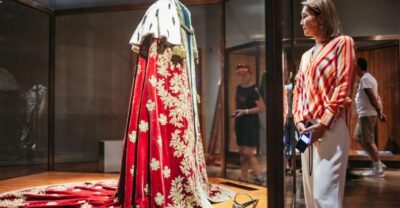
Skip the Line Schönbrunn Palace and Gardens Guided Tour
Read our review →
Schönbrunn Palace & Garden Skip-the-Line Guided Tour
Read our review →
Panorama Train Tickets to explore Schönbrunn Palace
Read our review →
Skip-the-Line Schönbrunn Palace and Gardens Tour
Read our review →Browse the lists this tour appears in