
Review · GYEONGBOKGUNG PALACE TOURS
Seoul: Deoksugung Palace Night Tour
Deoksugung Palace gives you a compact, atmospheric look at Korea’s modern royal story. The walk moves from the main throne hall to the emperor’s bedroom and a coffee room, while Korean palace design meets Western influence in an unusually small area. I like the setting and the clear historical focus, especially the way the tour connects palace buildings to Emperor Gojong’s fight to protect Korean sovereignty.
I also like that you can stay inside after the two-hour walk and take more photos at your own pace. The main drawback is scheduling: weekend and holiday reservations cannot be confirmed, and the tour may be canceled if fewer than four people book. Check the meeting details sent by email or WhatsApp before you set out.
Key points at a glance
- Daehanmun Gate to Jungkwanheon: Follow a logical route through the palace’s main historic buildings.
- A modern royal story: Learn about Emperor Gojong, the Daehan Empire, and Japanese colonial rule.
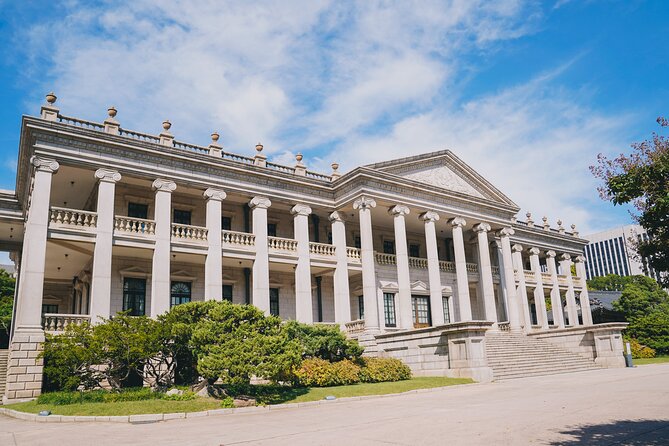
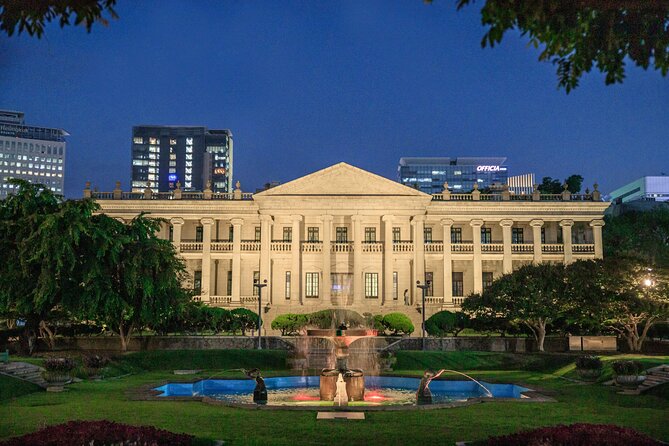
- East meets West: See traditional Korean architecture alongside Western-influenced palace design.
- English-speaking guides: Sally Sung, Joy, and Alan have each led tours praised for clear explanations and patient answers.
- Flexible finish: Stay behind after the guided walk for extra photos and quiet exploration.
- Two hours for $38: A reasonable choice if you want context, not just a quick palace visit.
Why Deoksugung feels different from Seoul’s other palaces
Deoksugung is not presented simply as a pretty royal compound. Its importance comes from the troubled period when Korea was trying to act as a modern independent state while facing intense Japanese pressure.
The palace served as royal quarters for 13 years. Emperor Gojong, the first and last emperor of the Daehan Empire, struggled to regain sovereignty while Japan occupied and controlled Korea. That political story gives the buildings added weight. You are not only looking at gates, halls, and courtyards. You are following the spaces connected to a short and painful chapter in Korea’s modern history.
The tour’s focus is useful because Deoksugung can be easy to treat as a short photo stop. The architecture is attractive, but the story explains why the palace matters. I especially value tours that connect physical places to decisions, pressure, and personal lives. Here, the palace becomes a setting for the collapse of royal authority and the effort to preserve it.
The two-hour length is also sensible. You get enough time for explanation without committing half a day to one site. Since the palace is in central Seoul, the experience fits neatly into a day built around City Hall and nearby sights.
More Gyeongbokgung Palace Tours in Seoul:
- Best Seoul City Tour (Gyeongbokgung Palace,Insadong,Namsan Tower)
★ 5.0 · 1,647 reviews - Seoul City Sightseeing Tour Including Gyeongbokgung Palace, N Seoul Tower, and Namsangol Hanok Village
★ 5.0 · 1,423 reviews - Seoul Half-Day City Highlight, Palace Tour with Hanbok
★ 4.9 · 764 reviews
Meeting outside City Hall Station
Your meeting point is outside Exit 1 of City Hall Station. This is a practical starting place, but do not rely on simply showing up at the station and finding a group by chance.
The exact meeting time and any updated meeting information are sent by email or WhatsApp. Read those messages before leaving your hotel, particularly if your booking is close to the tour date. The supplied information says reservations cannot be confirmed on weekends and holidays, so weekday planning is the safer option.
The tour can run in the morning or evening, depending on available starting times. An evening walk may give the palace a more subdued look, while a morning start can fit well before other sightseeing. You need to check the available time when booking rather than assume that every departure is at night.
Wear comfortable shoes. The tour is a walking visit inside a historic palace, and the best experience comes when you can pay attention to the guide rather than worry about tired feet.
Entering through Daehanmun Gate
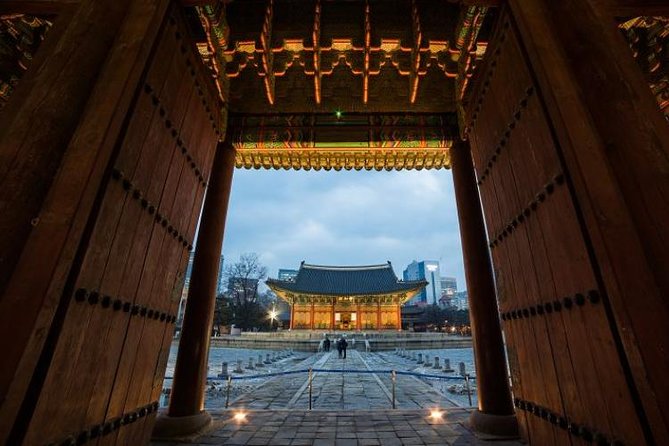
The walk begins at Daehanmun Gate, the main entrance to Deoksugung Palace. This gives the tour a clear beginning and lets your guide introduce the site before the buildings start to blur together.
A guide can help you notice how the palace works as a royal compound, rather than leaving you to recognize only the largest hall. The opening explanation also sets up the political story that follows. You learn why this palace mattered during the Daehan Empire and how Japanese colonial rule affected the royal household.
The entrance fee is included in the $38 price. That matters because you are paying for both access and a live English explanation, not just a walk to the gate. If you already know Korean royal history well, the added value may be smaller. If you are new to the period, the context is likely the main reason to book.
Junghwajeon, the main throne hall
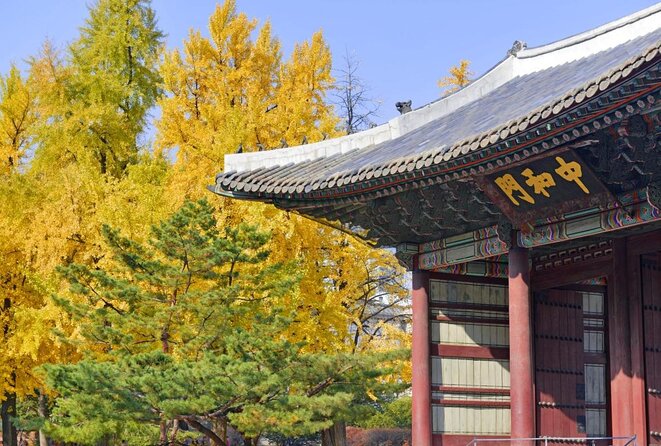
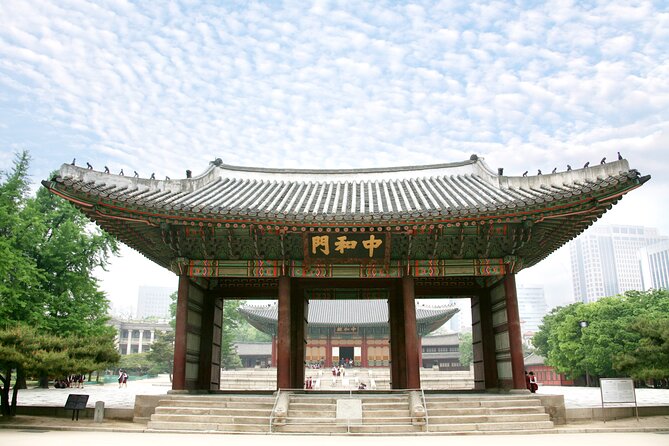
Junghwajeon is the palace’s principal throne hall and one of the tour’s key stops. This is where the route shifts from general orientation to the formal side of royal life.
Your guide explains the hall in relation to the Daehan Empire and the authority Emperor Gojong was trying to defend. That connection is more useful than a list of architectural details alone. You can look at the building while considering what royal power meant at a time when outside control was growing.
The tour also uses Junghwajeon to show Korean-style architecture. Deoksugung becomes especially interesting because traditional palace forms appear beside buildings shaped by Western influence. You do not need a specialist background to follow the contrast, but you should expect the guide to focus on what the mix says about Korea’s changing position.
This is a stop where a good guide makes a real difference. Sally Sung has been praised for giving detailed answers and handling questions precisely. Joy has also received strong praise for making the experience both interesting and pleasant. Those details matter if you enjoy asking questions instead of simply following a fixed speech.
More Evening Openings in Seoul:
- Seoul: Palace, Temple and Market Guided Foodie Tour at Night
★ 4.9 · 750 reviews - Seoul Night Palace & Market Food Tour with Vehicle
★ 5.0 · 275 reviews - Venice: Lords of the Night Prison’s Palace Cells & Tortures
★ 4.0 · 1,067 reviews - Exclusive Evening at Schönbrunn Palace: After-Hours Audiotour, Dinner, Concert
★ 4.0 · 930 reviews
Seokeodang and the personal side of King Gojong
The route continues to Seokeodang, described as King Gojong’s most beloved building. That detail brings the story closer to the individual monarch.
A throne hall tells you about ceremony and public authority. A favored building suggests preference, comfort, or personal attachment. The contrast helps prevent the tour from becoming only a lesson about treaties and political failure. You get a sense that the palace was also a place where a person lived and tried to manage an uncertain world.
The guide’s interpretation is important here because the stop is likely to mean more than its appearance suggests. Ask questions if you want to understand why this building mattered to Gojong and how it differed from the formal royal spaces.
The tour does not promise entry into every room or access to areas beyond the stated route. One piece of feedback expressed a wish connected to entering the parliament, but that is not part of the described experience. Plan on a palace walk through the named buildings, not a wider government or political-site visit.
Hamnyeongjeon, the king’s bed chamber
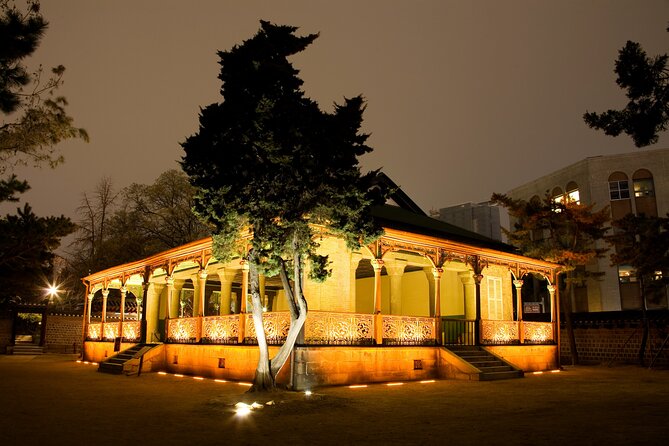
Hamnyeongjeon was the king’s bed chamber. It is a quieter stop, but it adds an important human scale to the route.
After seeing the throne hall, you can now consider where Gojong rested and lived. The palace’s political story becomes less abstract when the route includes a private royal space. The building helps you picture the difference between public ceremony and the restricted life of a monarch under pressure.
I like this progression through the palace. The tour moves from entrance, to official authority, to personal preference, and then to private life. That order makes the two hours feel like a connected story rather than a collection of unrelated buildings.
The guide may also explain how royal spaces fit into Korean architectural traditions. Since the tour specifically focuses on the meeting of Korean and Western styles, listen for how the buildings reflect a period of change. The value is in seeing the palace as part of a country trying to modernize while defending its independence.
Jungkwanheon, coffee and Western influence
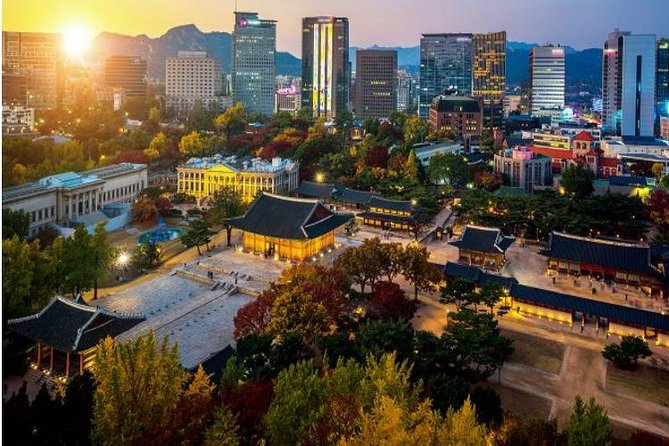
Jungkwanheon is perhaps the most distinctive stop because it was the cafeteria where Emperor Gojong enjoyed coffee. That single detail makes the building memorable.
Coffee inside a Korean royal palace may sound like a small curiosity, but it points directly to the cultural shifts of the period. Deoksugung’s story is not isolated from the outside world. Western customs and architectural ideas were entering royal life, even as Korea faced colonial pressure.
This is where the tour’s East-meets-West theme becomes especially concrete. Instead of treating Western influence as a vague idea, you see it connected to a particular building and a particular royal habit. I find that kind of detail easier to remember than a string of dates.
Do not expect the tour to become a food or coffee tasting. The coffee reference is historical, and the stated route focuses on the building and its place in Gojong’s life. Still, it is one of the stops most likely to stay with you after the tour.
Daylight or evening: which time suits you?
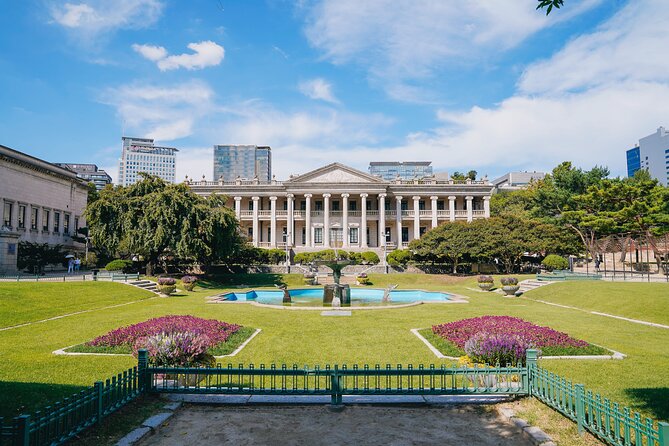
The experience is described as a morning or evening walk, with starting times dependent on availability. The choice affects the mood more than the content.
An evening visit should appeal to you if you want a calmer palace atmosphere and a different view of the buildings after the main daytime rush. The title emphasizes a night tour, but the available information also allows morning departures, so confirm your selected time before booking.
A morning start may suit you better if you have a full Seoul schedule and want to use the rest of the day elsewhere. It can also help if you prefer to take photographs in daylight.
The guide is the constant feature in either case. The palace’s appearance changes with the hour, but the historical explanation remains the reason to choose this activity over an unaccompanied visit.
What the $38 price really covers
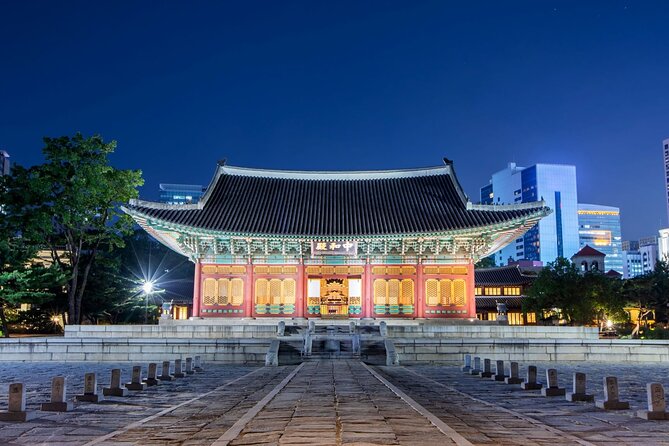
At $38 per person, this is not the cheapest way to enter a palace. The entrance fee alone is unlikely to justify the full price. The value comes from the live English guide and the focused explanation of a complicated historical period.
You are paying for a two-hour route with a local guide, the entrance fee, and the chance to ask questions as the story unfolds. That is worthwhile if you want to understand the Daehan Empire, Gojong’s position, and the effect of Japanese colonial rule.
The price is less attractive if you only want attractive buildings and quick photos. You can stay after the guided portion, which helps, but the main benefit remains interpretation. I would book it for historical context, not simply for access.
The strong feedback about Sally Sung, Joy, and Alan supports the idea that guide quality can make or break the value. Sally has been praised for detail and precise answers. Joy has been singled out as an especially good guide, while Alan’s explanations have been described as clear and interesting. Guides can vary, but these names give you a useful sense of the experience you may receive.
Practical limits you should know before booking
The tour requires at least four participants. If fewer than four people book, the activity may be canceled, with notice sent through WhatsApp. That is the biggest practical uncertainty and one reason not to build an unchangeable schedule around it.
Weekend and holiday reservations cannot be confirmed. Choose a weekday if your plans allow, and watch for the confirmation message rather than assuming your preferred date is secure.
Free cancellation is available up to 24 hours before the tour. Same-day cancellations and no-shows receive no refund. You can also reserve now and pay later, which helps if you are still arranging your Seoul schedule.
The tour is wheelchair accessible, according to the supplied information. Since the experience takes place in a historic palace, you should still confirm any route concerns when you receive the meeting details.
English is the available tour language. Comfortable shoes are the only stated item to bring, but a phone that can receive email or WhatsApp messages is sensible because that is how meeting updates are sent.
Who should take this palace walk?
I would recommend this tour to first-time Seoul visitors who want more than a quick look at royal architecture. It is also a good fit if you are interested in the transition from traditional Korean rule to the modern Daehan Empire and the pressures of Japanese colonialism.
History-minded visitors will get the most from the route. The buildings are the framework, but the political story is the real subject. You should choose this experience if you enjoy stopping to ask why a place mattered, not just photographing it.
It also suits travelers with limited time. Two hours is long enough for a guided introduction and short enough to fit between other central Seoul plans. The City Hall meeting point makes it easy to combine with nearby sightseeing, though the tour itself does not include transportation beyond meeting at the station.
Families and mixed-age groups may find the route manageable because the palace stops are varied. The coffee story at Jungkwanheon and the personal connection to Seokeodang offer memorable details alongside the heavier political material.
I would hesitate to recommend it if you dislike guided walks, need a guaranteed small group, or have only a weekend available. The minimum participant rule and weekend confirmation issue require some flexibility.
Should you book the Deoksugung Palace Night Tour?
Book it if you want a short, focused introduction to one of Korea’s most difficult modern chapters. The route covers Daehanmun Gate, Junghwajeon, Seokeodang, Hamnyeongjeon, and Jungkwanheon, and the guide links those places to Emperor Gojong’s royal life and struggle for sovereignty.
The strongest reason to choose it is the live explanation. Guides such as Sally Sung, Joy, and Alan have been praised for clear, patient, detailed storytelling, which is exactly what this palace needs.
Skip it if your main goal is an unstructured photo visit or if your schedule cannot tolerate a possible cancellation for low numbers. For everyone else, $38 is fair value for two hours of access, history, and questions, especially if you stay afterward to look around on your own.
FAQ
Where does the Deoksugung Palace tour meet?
Meet your guide outside Exit 1 of City Hall Station. The exact meeting place and time are also sent by email or WhatsApp.
How long does the tour last?
The guided experience lasts two hours. You may stay behind afterward to explore and take photos at your own pace.
What language is the tour conducted in?
The tour is conducted in English with a live English-speaking guide.
What buildings are included in the route?
The stated route includes Daehanmun Gate, Junghwajeon, Seokeodang, Hamnyeongjeon, and Jungkwanheon Hall.
Is the palace entrance fee included?
Yes. The entrance fee and local tour guide are included in the price.
Can I cancel for a full refund?
You can cancel up to 24 hours before the tour for a full refund. No refund is issued for a no-show or cancellation on the day of the tour.
What happens if fewer than four people book?
The tour may be canceled if fewer than four participants book. Notice of cancellation is sent by WhatsApp.
Newly added in Seoul
- Seoul: UNESCO Palace and Street Foods Guided Tour★ 5.0 · 6 reviews
- Seoul: UNESCO Sites tour: Palace, Shrine & Bukchon Village★ 4.8 · 26 reviews
- Seoul: Gyeongbok Palace and Bukchon Hanok Walking Tour★ 4.8 · 157 reviews
- Seoul: Modern Hanbok Dress Photoshoot Gyeongbokgung Palace★ 5.0 · 2 reviews
- Seoul: Professional Hanbok Photography at Gyeongbok Palace★ 4.9 · 172 reviews
- Seoul: Royal Palace Morning Tour including Cheongwadae★ 4.5 · 12 reviews
- Seoul: Hanbok Photo Tour at Gyeongbokgung Palace★ 5.0 · 9 reviews
- Seoul: Gyeongbokgung Palace Tour & Lunch at Authentic Market★ 4.5 · 2 reviews
Gyeongbokgung Palace Tours, compared.
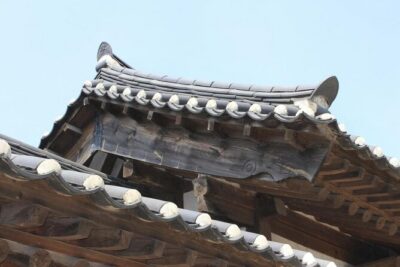
Seoul City Sightseeing Tour Including Gyeongbokgung Palace, N Seoul Tower, and Namsangol Hanok Village
Read our review →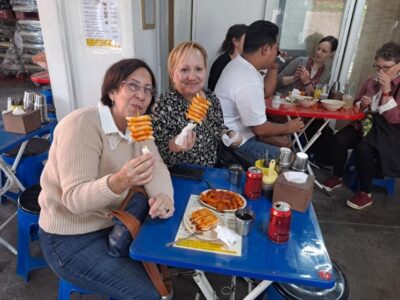
Seoul Half-Day City Highlight, Palace Tour with Hanbok
Read our review →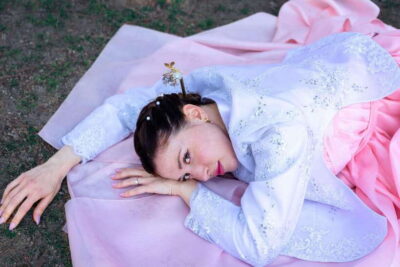
Hanbok Photoshoot and History Tour at Gyeongbokgung Palace
Read our review →
Professional Hanbok Photography at Gyeongbok Palace
Read our review →
Browse the lists this tour appears in