
Review · CHATEAU AND WINE ESTATE TOURS
Guided Private Full Day Tour to Baalbek, Anjar and Chateau Ksara
Baalbek is the main event here: a huge Roman sanctuary where the Temple of Jupiter and Temple of Bacchus still rise above the Beqaa Valley. Add the Umayyad ruins at Anjar and a wine tasting in an old cave at Ksara, and you get a full day that moves from ancient religion to Islamic architecture to modern Lebanese wine.
I like the private vehicle and hotel pickup, since you avoid arranging transport across a long day. I also like the mix of major ruins and smaller stops, especially the Stone of the Pregnant Woman and the Mosque of Sayyeda Khawla. The main drawback is extra cost: entrance fees, wine tasting, and lunch are not included in the $100 price.
Key points
- Baalbek gives you two of the Roman world’s grandest surviving temples, with about three and a half hours allocated to the site and its surrounding stops.
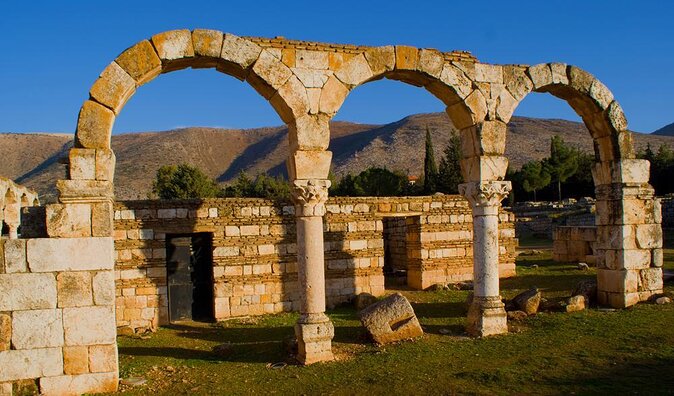
- Anjar adds a different layer of history, with Umayyad palaces, a mosque, baths, and Roman-style columns.
- Ksara’s wine tasting takes place in a cave, giving the final stop a distinctly local setting.
- Albert and Georgette are named guide options from past departures, and both are described as flexible, enthusiastic, and strong on history.
- The private format keeps the day personal, with hotel pickup and drop-off in Beirut rather than a meeting point.
- The $100 price is only part of the budget, since site admissions, wine tasting, and lunch come separately.
Why Baalbek makes this Beirut day trip worth the drive
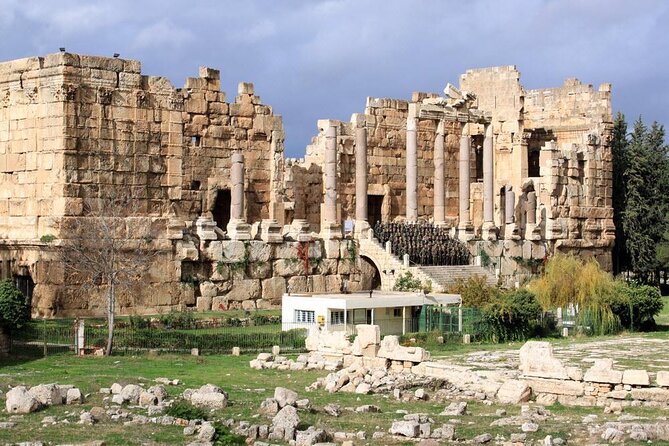
Beirut has plenty to occupy you, but Baalbek gives you a sense of scale that city sightseeing cannot. The sanctuary was known as Heliopolis during the Hellenistic period and later became a major Roman religious center. Its sacred triad joined Jupiter, Venus, and Bacchus, blending Roman names with an older Phoenician religious tradition.
The setting matters. Baalbek sits in the Beqaa Valley at about 1,150 meters, near the foot of the Anti-Lebanon range. The trip from Beirut is not just a transfer between attractions. You move into a broad agricultural valley and toward a monumental complex built over more than two centuries.
I would choose this tour if you want major archaeology without piecing together transport yourself. The guide adds useful context to stones that can otherwise become a blur of columns and fallen blocks. Past departures have included Albert and Georgette, with Albert described as flexible and reflective, and Georgette praised for her enthusiasm and detailed explanations.
The tour runs for about eight hours. That is enough time for the three headline stops, but not enough for a slow archaeological study of every corner. Think of it as a strong first look at the Beqaa Valley, not a specialist excavation tour.
More Chateau and Wine Estate Tours in the world:
- Versailles Château and Gardens Walking Tour
★ 4.5 · 727 reviews - Versailles Château and Gardens Walking Tour from Paris by Train
★ 4.5 · 714 reviews - Loire Valley: Château Royal d’Amboise Entrance Ticket
★ 4.6 · 476 reviews
Walking among the Temple of Jupiter and Temple of Bacchus
The Baalbek complex is the day’s clear highlight. The Temple of Jupiter is famous for its massive scale, while the Temple of Bacchus is one of the best-preserved Roman temples anywhere. Together, they show the ambition of Imperial Roman building at its height.
You will see colossal stonework designed to impress pilgrims who came to honor the Heliopolitan gods. The complex was not simply a collection of temples. It was a functioning sanctuary that drew people from across the Roman world, with worship focused on Jupiter, Venus, and Bacchus.
The planned time is about two hours at Baalbek, followed by another hour and a half for the temple complex. Those time labels appear to overlap in practical terms, since the temples are the heart of Baalbek itself. In real use, expect a substantial visit to the archaeological site rather than two entirely separate attractions.
The entry fee is not included. That is an important budgeting point because the tour description lists free admission for the general Baalbek stop but separately says the temple complex requires a ticket. Your guide can explain the site as you go, but you should still allow for an admission charge.
Wear shoes suited to uneven ancient paving and open archaeological ground. The provided information does not specify accessibility details, so anyone with mobility concerns should confirm the conditions before booking.
The Stone of the Pregnant Woman and Baalbek’s giant building blocks
The Stone of the Pregnant Woman gets only about 15 minutes, but it is a useful stop because it gives you a closer look at the engineering behind Baalbek. This worked Roman monolith, along with another nearby block, ranks among the largest stones ever quarried.
The blocks were likely intended for the nearby temple complex. Their size helps explain why Baalbek feels so different from an ordinary Roman ruin. The question is not only how the temples were decorated or used, but how builders moved and placed stones of such astonishing weight.
Do not expect a long guided visit here. Fifteen minutes is enough to see the monolith, hear the basic explanation, and take in the scale. It is best treated as a quick companion to the main temple visit.
The stop at the Mosque of Sayyeda Khawla adds a religious site from a much later period. It is built where people in Baalbek believe Sayyida Khawla, the daughter of Imam al-Hussein, was buried after the caravan of captives from Karbala passed through the city. This is a meaningful local tradition, and it shows that Baalbek remains a living religious place, not only an archaeological site.
Anjar’s Umayyad streets and palace ruins
Anjar shifts the story from Roman imperial religion to the Umayyad period. The ancient city was an inland commercial center at the meeting point of routes connecting Beirut with Damascus and the Beqaa with Homs and Tiberiade.
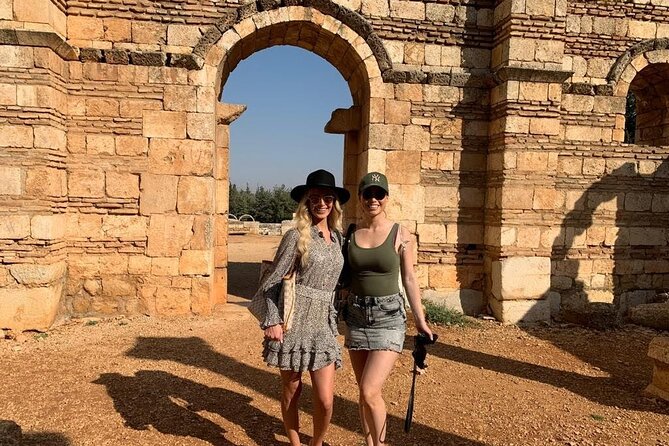
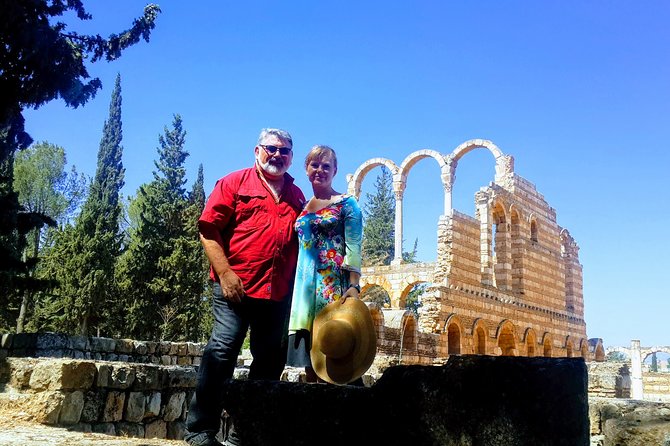
The site was only found by archaeologists in the late 1940s. Today, you can see remains of the Umayyad palace, harems, mosque, caliph’s great palace, thermal baths, walls, and rows of columns. Some columns and building details show Roman architectural influence, which makes Anjar a useful place to compare periods rather than view each site in isolation.
You have about 45 minutes here. That is enough for a guided walk through the main ruins, but it will feel brisk if you want to study every wall or take extensive photographs. I would pay close attention to the city plan and the relationship between public, religious, and residential buildings. The appeal is not one famous monument. It is the sense of an organized trading city laid out across the site.
Admission is not included. Since Anjar is a separate archaeological attraction, you should expect another entry charge in addition to Baalbek. The guide is especially valuable here because the remains can be harder to read than Baalbek’s tall temples.
More Palace Day Trips in the world:
- Neuschwanstein & Linderhof Castle-Fairytale Day Tour from Munich
★ 4.5 · 7,275 reviews - Neuschwanstein Castle and Linderhof Palace Day Trip from Munich
★ 4.5 · 1,756 reviews - From Paris: Giverny and Versailles Palace Guided Day Trip
★ 4.5 · 1,324 reviews - Downton Abbey Village, Blenheim Palace and Cotswolds Day Trip from London
★ 4.5 · 1,139 reviews
Chateau Ksara, Lebanese wine in an underground setting
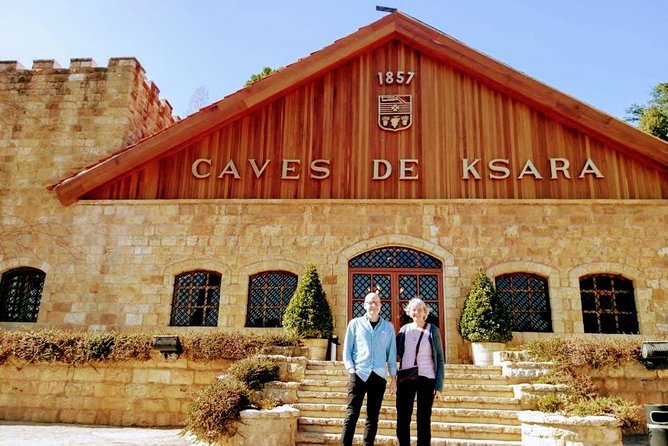
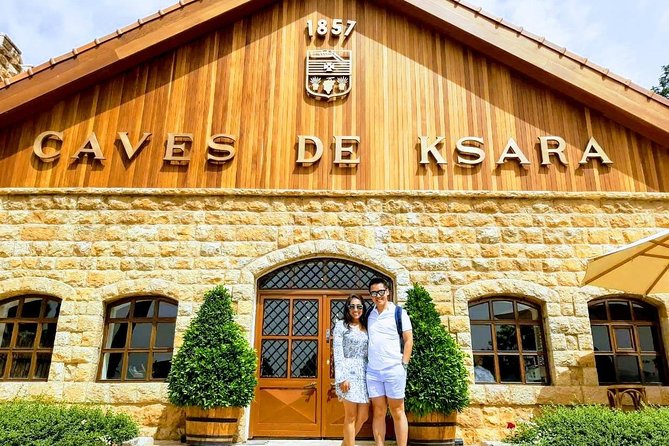
Chateau Ksara provides a welcome change of pace after several hours among ruins. Founded by Jesuit priests in 1857, the winery developed Lebanon’s first dry wine and now produces about three million bottles a year. Its wines are exported to more than 40 countries.
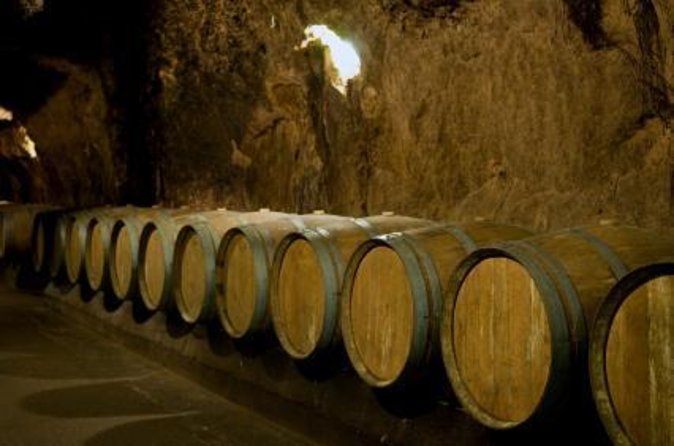
The distinctive part of the visit is the cave setting. You can sample local wine while seated in a cave, which gives the stop a strong sense of place rather than making it feel like a generic tasting room. The visit lasts about one hour.
Wine tasting is not included in the tour price. That should be clear before you set out, especially because the headline fare can otherwise appear to cover more than it does. You may also want to confirm the tasting cost and available selections when booking.
The stop is not only for serious wine enthusiasts. It breaks up a demanding history day and lets you experience one of Lebanon’s established food and drink traditions. If you do not drink wine, the tour still has value for the caves and winery setting, but this part will naturally matter less to you.
How the private transport changes the day
Hotel pickup and drop-off from Beirut are included. That removes one of the biggest practical headaches of a Beqaa Valley day trip: finding transport, coordinating several stops, and returning to the city after a long outing.
You travel in a private, air-conditioned vehicle with your own group. That means no unrelated passengers and more room for the guide to adjust the pace within the available eight hours. Albert is described as flexible during the day, which matters when you want a little longer at Baalbek or need to keep moving after a short stop.
The private format does not mean the day is unhurried. Baalbek, Anjar, and Ksara are spread across the valley, and the schedule includes several major sites. You should expect a full day with road time, guided visits, and short transitions rather than a relaxed stay at each attraction.
The vehicle is one of the strongest practical reasons to choose this tour over trying to arrange the route independently. It also makes the $100 per-person price easier to assess. For a solo visitor, the cost may feel substantial once admissions and tasting fees are added. For two or more people sharing a private departure, the convenience and direct transport make the value more convincing, especially if group discounts apply.
What the $100 price really covers
At $100 per person, the tour includes private transportation, air conditioning, hotel pickup and drop-off, a tour leader, and a professional guide. It does not include lunch, entrance fees, or wine tasting.
That makes the price fair for a private full-day service, but not an all-inclusive day. You should set aside additional money for Baalbek, Anjar, Ksara, and food. The exact total is not provided, so I would ask for the current admission and tasting costs before departure.
The price also buys time and simplicity. You do not need to find a driver in Beirut, work out a route to three separate sites, or arrange the return journey. You are paying for a coordinated day with a guide who can connect the Roman, Umayyad, religious, and wine-related parts of the valley.
Lunch is not planned as an included feature. Since the tour lasts roughly eight hours, ask how the lunch break is handled when you book. The supplied details do not name a restaurant or meal stop, so do not assume one is covered.
The guide can make or break the ruins
Baalbek is impressive on its own, but a guide helps you understand what you are seeing. The key is not just identifying Jupiter or Bacchus. It is explaining how a Phoenician religious tradition became the Romanized Triad of Heliopolis, why pilgrims came here, and how the later history of the valley fits around the ruins.
Georgette is described as enthusiastic and full of information, with a strong interest in sharing the history of each place. Albert is described as flexible and able to offer reflections on both the sites and the present-day setting. Those details suggest that the guiding style may vary by departure, but the named guides add useful expectations when you request or confirm a guide.
Because this is a private tour, you can ask questions without worrying about slowing down a large group. That is especially useful at Anjar, where the remains need explanation, and at the Mosque of Sayyeda Khawla, where local belief and religious tradition are central to understanding the stop.
Who should book this Beqaa Valley tour?
I would recommend it to you if you are staying in Beirut and want to see Lebanon’s major inland monuments in one day. It suits first-time visitors who value a guide, private transport, and a clear route more than independent wandering.
It is also a good match for couples, families, or small groups who can share the private vehicle. History fans will get the most from Baalbek and Anjar, while wine enthusiasts will appreciate the Ksara finish. The mixed program works well if your interests are broad.
You may want a different plan if you dislike long sightseeing days, want extensive time at each archaeological site, or prefer to control every stop yourself. The schedule is efficient, and the 45-minute Anjar visit in particular will not satisfy someone who wants a slow archaeological study.
Book at least 24 hours before the start time if you need the free cancellation option. Cancellation less than 24 hours before departure is not refundable, and changes inside that window are not accepted. Most people can participate, but the tour information does not provide detailed accessibility guidance, so ask before booking if that matters to you.
Should you book this private Baalbek, Anjar, and Ksara tour?
Book it if you want the easiest way to combine Baalbek’s monumental Roman temples, Anjar’s Umayyad ruins, and a Lebanese wine tasting in one day from Beirut. The private vehicle, hotel pickup, and named guides such as Albert and Georgette add real practical value.
Before paying, confirm the separate entrance fees, wine tasting price, and lunch arrangements. If you are comfortable with those extra costs and a busy eight-hour schedule, this is a strong choice for seeing the Beqaa Valley without transport hassles.
FAQ
Where does the tour begin and end?
The tour offers pickup and drop-off from your hotel in Beirut.
How long does the tour last?
The experience lasts approximately eight hours.
Is the transportation private?
Yes. The tour includes comfortable private transportation in an air-conditioned vehicle, and only your group participates.
Are Baalbek and Anjar entrance fees included?
No. Entrance fees are not included in the tour price.
Is the wine tasting at Chateau Ksara included?
No. The wine tasting is not included in the cost.
Is lunch included?
No. Lunch is not included.
Can I cancel for a full refund?
Yes, if you cancel at least 24 hours before the experience start time. Cancellations made less than 24 hours before the start time are not refundable.
More Full-Day Visits in the world
- Versailles Full Day Bike Tour with Palace, Gardens, & Picnic
★ 5.0 · 2,217 reviews - Beijing Classic Full-Day Tour including the Forbidden City, Tiananmen Square, Summer Palace and Temple of Heaven
★ 4.0 · 610 reviews - Versailles: Full Day Tour & Shuttle from Paris
★ 3.5 · 356 reviews - Full-Day; Castle, Palace, Cathedral & Viking ships Tour
★ 5.0 · 326 reviews
More Private Palace Tours in the world
- Alhambra Private/Small Group Tour & Nasrid Palaces Skip the Line
★ 4.5 · 921 reviews - Bangkok: Grand Palace, Wat Pho, and Wat Arun Private Tour
★ 4.8 · 855 reviews - Mutianyu Great Wall&Summer Palace Excursion:Group/Private Options
★ 5.0 · 816 reviews - Private Tour of Sintra, Cabo da Roca and Cascais with 2 Palaces
★ 5.0 · 770 reviews
Newly added in the world
- Ayutthaya Full-Day Tour with Bang Pa In (Summer Palace)★ 5.0 · 2 reviews
- Bali: Gate Of Heaven and Water Palace Tirta Gangga Package★ 4.7 · 3 reviews
- Avignon: Around The Palace Tour★ 4.5 · 13 reviews
- Aranjuez: Royal Palace Guided Tour★ 4.5 · 93 reviews
- Asia Continent & Topkapı Palace & Harem. Guided, Small group★ 4.9 · 3 reviews
- Kornik Castle and Rogalin Palace Half-Day Private Tour★ 5.0 · 2 reviews
- Antananarivo: Guided Tour and sunset in queen’s palace★ 3.9 · 13 reviews
- Royal Palace of Aranjuez Small-Group Tour with Entry Ticket★ 5.0 · 2 reviews
Chateau and Wine Estate Tours, compared.

Medoc or Saint Emilion Wine Tasting and Chateau from Bordeaux
Read our review →

Guided Tour of the Fairmont Le Chateau Frontenac in Quebec City
Read our review →
Versailles Château and Gardens Walking Tour from Paris by Train
Read our review →

Loire Valley: Château Royal d’Amboise Entrance Ticket
Read our review →
Fontainebleau & Vaux-le-Vicomte Châteaux Day Tour from Paris
Read our review →Browse the lists this tour appears in