
Review · CHATEAU AND WINE ESTATE TOURS
Guided tour of the Château de Chambord
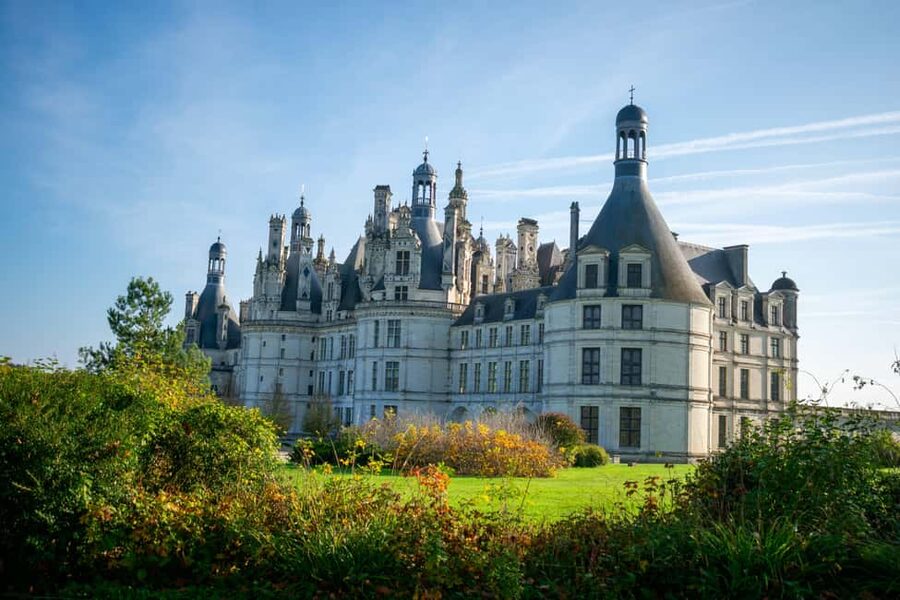
Château de Chambord is the sort of building that can leave you staring upward before you know anything about its story. This 90-minute guided tour helps turn that grand French Renaissance façade into a place with a human tale, centered on Francis I and his bold plan for a royal retreat.
I like the small-group format, limited to 10 people, and the way guide Sarah Guibout-Chatelain makes the visit interactive rather than delivering a dry speech. I also like that the tour ends on the terraces, after you have tackled Chambord’s famous double-revolution staircase and seen the architecture from inside.
The main catch is practical: your castle admission is not included in the $53 tour price. You must buy it separately, and the building can be cold and drafty. There is also no elevator, so this is not a good fit for wheelchair users or people who have trouble with stairs.
Key points at a glance
- Francis I’s ambitious project: Learn how Chambord became known as a jewel of the French Renaissance.
- A guide who keeps you involved: Sarah uses questions, humor, and role-play instead of asking you to simply listen.
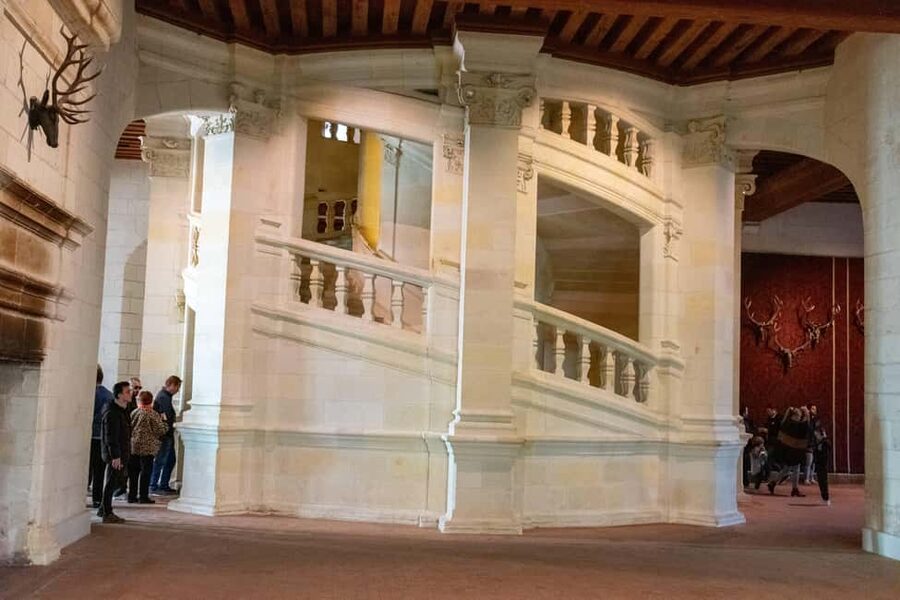
- The double-helix staircase: See the castle’s best-known architectural feature and imagine moving through court life.
- A small group of 10 or fewer: The size gives you a better chance to hear the guide and join the discussion.
- Terraces at the finish: The tour ends outdoors, giving you a final view of Chambord’s dramatic design.
- Cold interiors and many stairs: Warm clothing and sturdy shoes matter, especially outside the summer months.
Why a guide changes the Chambord visit
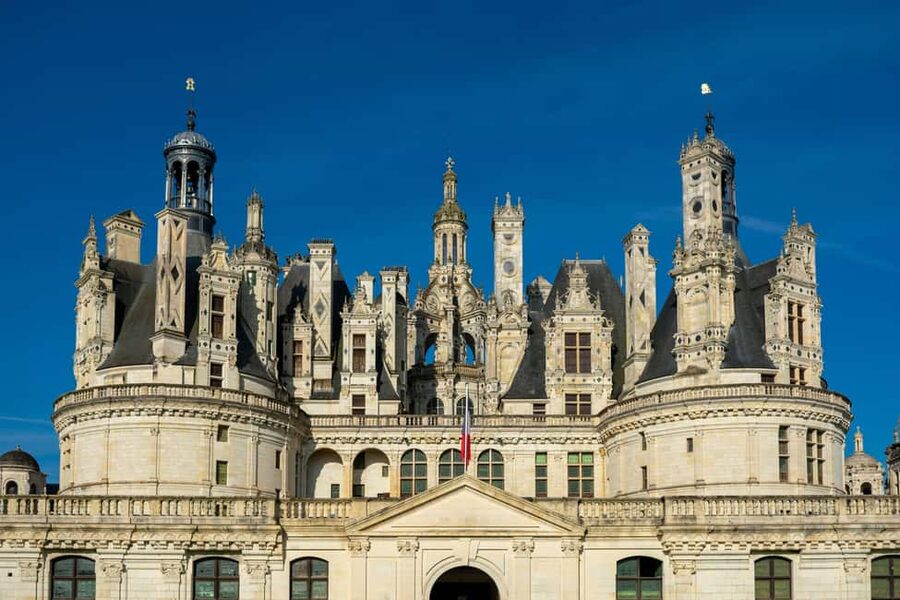
Chambord is enormous in appearance, but its meaning is not always easy to grasp when you walk through it alone. You see towers, staircases, rooms, stonework, and ornate details. Without context, they can blur into one impressive sequence of grand spaces.
This tour gives you a story to follow. Sarah explains Francis I’s plan to create a castle that would become one of the defining works of the French Renaissance. That focus matters because Chambord is less about a simple royal home and more about ambition, design, and spectacle.
I would choose this tour if you want the building explained in plain language. The guide does not only point at features and name them. You are asked questions, invited to picture yourself as a French courtier, and encouraged to take part as the tour moves through the castle.
That approach should work well for families and mixed-age groups. The activity is designed for people from age 7 to 97, but children still need to remain with an adult. Unaccompanied minors are not allowed.
The live guide is available in English and French. Some content is shown in its original language, so ask for clarification if you need it. Headphones and a microphone are provided, a useful touch inside a large stone building where sound can carry unevenly.
More Chateau and Wine Estate Tours in France
- Medoc or Saint Emilion Wine Tasting and Chateau from Bordeaux
★ 5.0 · 1,415 reviews - From Paris: Full-Day Loire Valley Chateaux Tour
★ 4.4 · 1,269 reviews - Versailles Château and Gardens Walking Tour
★ 4.5 · 727 reviews
Meeting Sarah at the castle entrance
The tour begins at the Château de Chambord entrance. The exact meeting point can vary according to the option booked, so check your confirmation carefully before arriving. The supplied meeting information lists Château de Chambord as the starting location.
The guide is easy to identify from the tour details, but still allow enough time to find the entrance and get your castle ticket sorted. Sarah has been praised for being easy to find and communicative, which is helpful at a major site with a large entrance area.
Most important, do not arrive with only the tour booking. The $53 price covers the guide, microphone, and headphones, but not admission to the castle. You need to purchase the entrance ticket separately through the castle’s own ticket office or website.
That extra cost changes the value calculation. The tour is not a bargain admission package. You are paying for interpretation and company inside the castle. If you are content to wander on your own with a self-guided iPad option, the additional tour fee may not suit your plans. If you want the story explained and questions answered, the cost is easier to justify.
Inside Chambord, from royal idea to Renaissance showpiece
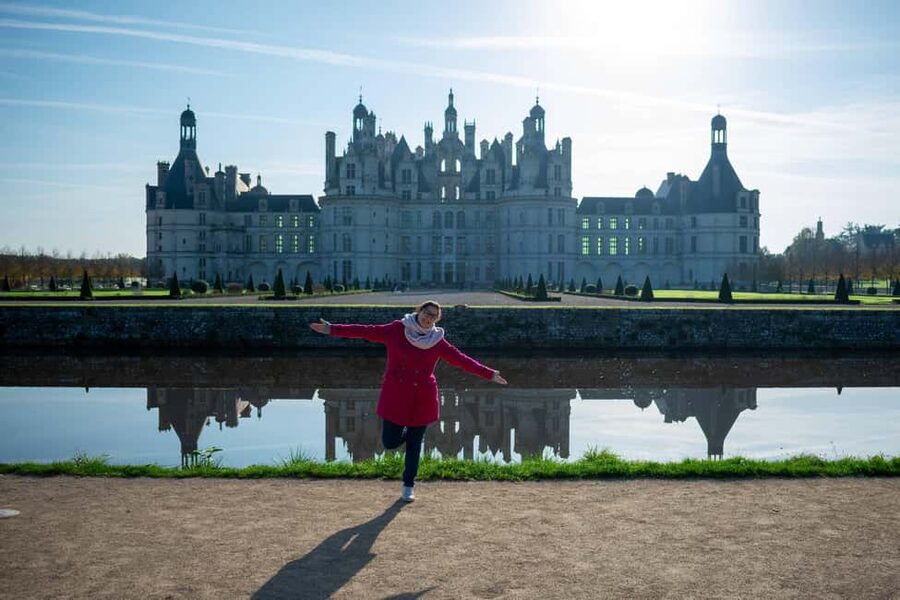
The first part of the visit sets up the castle’s story. Francis I’s project was ambitious enough to produce a building that still feels almost extravagant several centuries later. Sarah connects the ruler’s plans with the design, so you can see how the castle’s unusual shape supports its role as a grand royal statement.
I would pay attention to the contrast between the scale of the building and the length of the tour. Ninety minutes is long enough to give you a clear framework, but it is not enough to examine every room at leisure. You are getting a focused visit, not a full-day study of every corner.
That is a benefit for most people. A huge castle can wear you down when you try to cover everything without a plan. A guide helps you concentrate on the parts that explain Chambord best, while still leaving you time to look around on your own after the tour.
The visit involves walking and standing for the full hour and a half. Wear shoes that feel secure on stairs and hard floors. The advice is especially important for children and anyone who finds prolonged standing tiring.
The double-revolution staircase
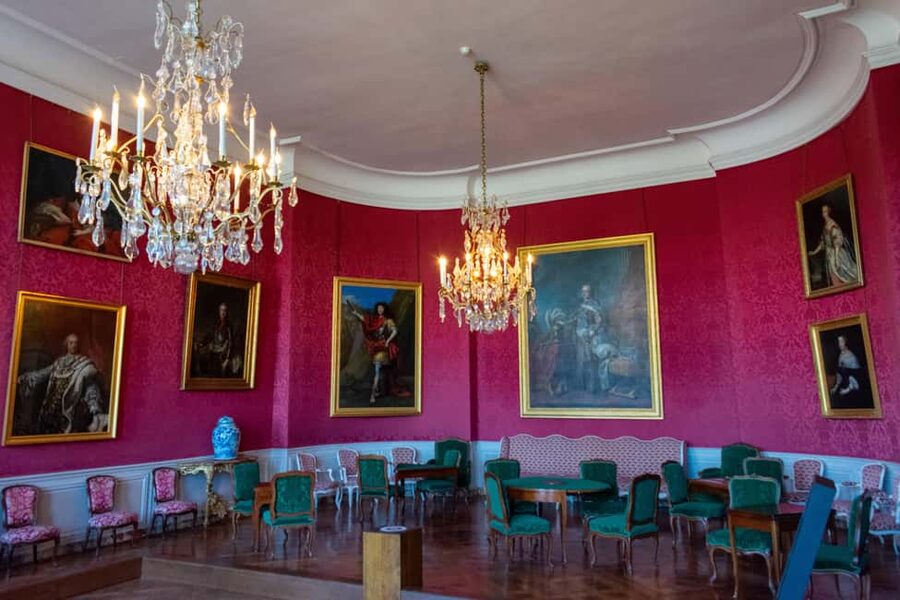
The double-helix staircase is the tour’s main architectural moment. It is one of those features that is easy to admire but much more interesting once someone explains how it works.
You are encouraged to picture yourself as a French courtier using the staircase. That small role-playing element gives the feature a practical and social angle. Instead of seeing only an elegant spiral, you begin to think about how people moved through a royal building and how architecture could shape encounters.
The staircase is also the point where the tour’s interactive style makes the most sense. Sarah asks questions and draws people into the explanation. You do not need specialist knowledge or a rehearsed answer. The point is to look closely and take part.
The drawback is clear: you must climb. There is no elevator, and the tour is not suitable for wheelchair users or people with mobility impairments. If you have limited stamina but can manage stairs, consider asking about the exact route before booking. The supplied details do not promise an adapted alternative.
Strollers can be used on the ground floor, but they must be left downstairs for the upstairs part of the tour. Families with young children should plan around that rule.
Same city, another grand address:
- Paris: Versailles Palace and Gardens Full Access Ticket
★ 4.6 · 41,579 reviews - Versailles: Skip-the-Line Tour of Palace and Gardens Access
★ 4.7 · 10,429 reviews - From Paris: Versailles Palace & Gardens with Transportation
★ 4.6 · 6,222 reviews - Versailles: Skip-the-Line Guided Palace Tour and Full Access
★ 4.6 · 5,214 reviews
Finishing on the terraces
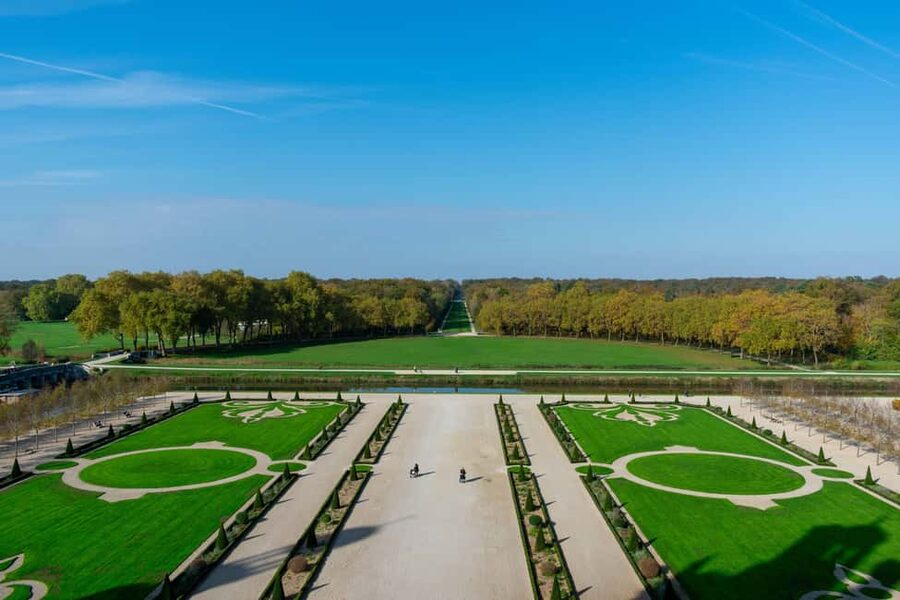
The tour ends on the terraces, which gives the visit a strong finish. After spending time inside the castle, the terraces let you step back and take in the building’s roofline and architecture from above.
The ending also breaks up the indoor portion of the tour. That matters because Chambord is open to the outside in places, and the interior can feel cold. The terraces are not a warm refuge, of course, so you should dress for the day rather than assume the castle will shelter you from the weather.
Bring a coat in winter and during colder months. One person specifically found the lack of heating a drawback and suggested visiting in summer. That is useful advice, not a minor complaint. The building’s drafts are part of the experience, but they can make a 90-minute visit uncomfortable if you arrive in light clothing.
The terrace finish gives you a natural point to continue independently. Once the guided portion ends, you can take more time with the castle if your admission allows it. The tour itself is fixed at 90 minutes, so do not expect the guide to stay with you for an open-ended visit.
Sarah’s guiding style

The strongest praise for this experience centers on Sarah. She is described as enthusiastic, quick to share information, humorous, and able to make the past feel close at hand. That combination is important at a site like Chambord, where facts alone can become a long list of dates and names.
Her style is active. You answer questions, imagine yourself in a court role, and respond to the building rather than simply trailing behind a guide. This makes the tour more engaging for people who prefer conversation to a recorded explanation.
Sarah also appears to adjust well to group size. With as many as 10 people, the visit remains small enough for questions. If only a few people book a time slot, the experience may feel almost private, though that cannot be guaranteed.
The language choice is English or French. If your group includes both languages, check the booking option and meeting details in advance. The tour information confirms both languages, but it does not promise that every departure is bilingual.
Is the $53 tour worth it?
At $53 per person, this is a paid guiding service on top of the castle entrance ticket. I would not book it simply because you need access to Chambord. It does not include that access.
I would book it for the explanation. The value lies in having Sarah connect the architecture to Francis I’s project, explain the double-helix staircase, and keep the visit moving through questions and stories. The small group and listening equipment add practical value, particularly in a large building.
The tour makes the most sense for:
- First-time visitors who want context rather than a self-guided walk.
- Families with older children who enjoy questions and role-play.
- People who like architecture but want the history explained without academic language.
- Visitors who have limited time and want a focused 90-minute introduction.
- Anyone who finds large historic buildings confusing without a guide.
It may be less suitable for:
- Anyone trying to keep the total castle visit as cheap as possible.
- Visitors who prefer complete freedom to stop, read, and wander.
- People who cannot climb stairs or stand for 90 minutes.
- Families bringing a stroller for the upstairs portion.
- Visitors who dislike cold interiors or plan to visit in winter without warm clothes.
The tour received a 4.9 rating from 25 reviews, with repeated praise for Sarah’s energy, humor, communication, and ability to explain the castle. One especially useful detail is that the guide was considered more engaging than the available iPad guide. That comparison helps define the product: you are paying for a live, responsive explanation, not just a way to receive basic information.
How to prepare for the 90 minutes
Buy your castle entrance ticket before the visit. The tour does not include it, and you should not treat the guide reservation as your admission.
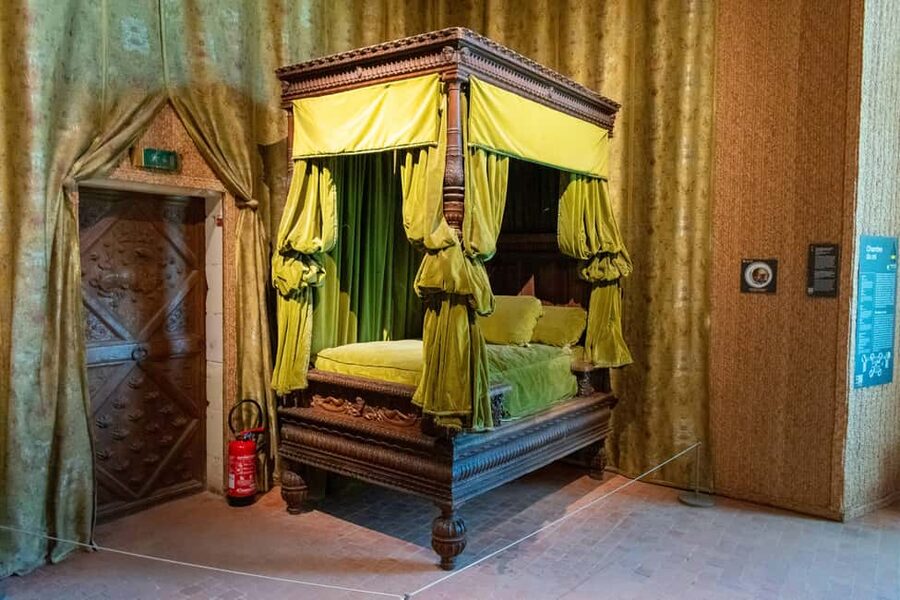
Dress more warmly than you might expect for a famous French castle. The building is continually open to the outside in places, and drafts are common. Winter visitors should take that warning seriously.
Wear comfortable shoes with good support. You will walk, stand, and climb stairs for the whole tour. Avoid bringing large bags or luggage, since these are not allowed.
Leave the selfie stick at home, and do not use flash photography. Touching exhibits is also prohibited. Children need identification, and a passport or ID card is specifically required for children.
If you are bringing a stroller, use it only on the ground floor. It must be left downstairs for the upstairs tour. Wheelchair users and people with mobility impairments should choose another way to experience the château, since this activity is not suitable for them.
The cancellation policy is traveler-friendly: you can cancel up to 24 hours before the activity for a full refund. You can also reserve now and pay later, which helps if your Loire Valley schedule is still shifting.
Who should book this Chambord tour?
I would book this experience if I wanted to understand why Chambord looks the way it does, not just photograph it. The double-helix staircase, Francis I’s bold plan, and the terrace finish give the 90-minute route a clear shape.
I would also choose it for a family group with children old enough to take part in questions. The interactive format is more likely to hold their attention than a long formal lecture, though the stairs and standing still require some stamina.
I would skip it if I already prefer exploring alone and do not want to pay extra for a guide. I would also skip it if stairs are difficult, since there is no elevator and no accessible alternative described.
For most first-time visitors who can manage the physical demands, the guide adds the missing piece at Chambord: a way to connect the wild architecture with the people and plans behind it. Book the castle admission separately, dress warmly, arrive ready to participate, and you will get the best value from the experience.
FAQ
Is the castle entrance ticket included in the $53 tour price?
No. The entrance ticket is not included. You need to purchase admission separately through the castle’s ticket office or website.
How long does the guided tour last?
The tour lasts 90 minutes, or one and a half hours.
Which languages are available?
The live tour is offered in English and French. Some content is shown in its original language.
How large is the group?
The group is limited to 10 participants.
Where does the tour begin?
The tour begins at Château de Chambord, in front of the castle entrance. The exact meeting point can vary according to the option booked.
Is the tour suitable for wheelchair users?
No. The tour is not suitable for wheelchair users or people with mobility impairments. It includes walking, standing, and climbing stairs, and there is no elevator.
What should I bring and wear?
Wear suitable shoes for walking and stairs, and bring warm clothing because the castle can be cold and drafty. Children should bring a passport or ID card. Large bags, luggage, selfie sticks, flash photography, and touching exhibits are not allowed.
Newly added in France
- Discovery Tour of Château Haut Breton Larigaudière★ 5.0 · 2 reviews
- The Blending Tour at Château de La Dauphine★ 5.0 · 5 reviews
- Luxury Tour of Château de La Dauphine★ 5.0 · 11 reviews
- Discovery visit of Château Rol Valentin with tasting★ 5.0 · 34 reviews
- Wine Gaming at Chateau Lamothe★ 5.0 · 3 reviews
- Wine Tour at Chateau Lanessan★ 4.5 · 13 reviews
- Picnic at the Château de la Selve!★ 5.0 · 26 reviews
- Private Tour in Fontainebleau Palace with Skip-The-Line Ticket★ 5.0 · 9 reviews
Chateau and Wine Estate Tours, compared.

Medoc or Saint Emilion Wine Tasting and Chateau from Bordeaux
Read our review →
Guided Tour of the Fairmont Le Chateau Frontenac in Quebec City
Read our review →
Versailles Château and Gardens Walking Tour from Paris by Train
Read our review →

Loire Valley: Château Royal d’Amboise Entrance Ticket
Read our review →
Fontainebleau & Vaux-le-Vicomte Châteaux Day Tour from Paris
Read our review →Browse the lists this tour appears in