
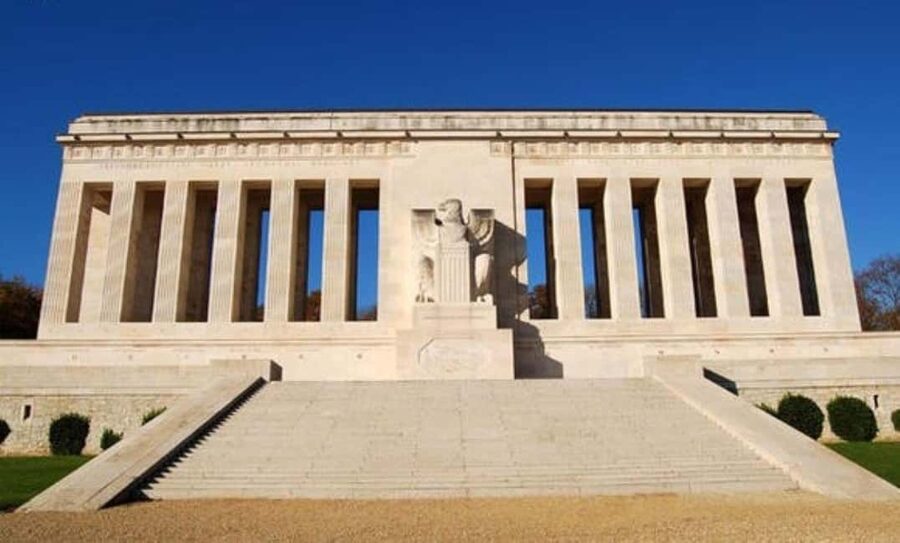
Review · CHATEAU AND WINE ESTATE TOURS
Château-Thierry: Belleau Wood & the 2nd Battle of the Marne
Belleau Wood is not one neat battlefield with a single monument and a clear walking route. The fighting spread through villages, wheat fields, farms, woods, and hills, which makes a guide especially useful. This private seven-hour tour follows that scattered story from Lucy-le-Bocage to the Oise Aisne American Cemetery.
I like the way the route connects battlefield remains with real people, including Lieutenant Osborne, Captain Duncan, Joyce Kilmer, and Quentin Roosevelt. I also like the chance to walk among the foxholes and trenches in Belleau Wood rather than only viewing the battle from a museum panel. The main drawback is the pace: seven hours of emotionally heavy military sites may feel demanding, especially for anyone with only a casual interest in World War I.
Key points to know
- Frederic brings military experience: The guide is a former French army colonel with years of experience explaining the Belleau Wood campaign.
- The battlefield is spread out: Private transport links villages, woods, cemeteries, monuments, and fortified farm positions.
- You walk through Belleau Wood: Expect to see surviving foxholes and trenches, not a reconstructed battlefield display.
- The cemeteries are central to the story: Aisne-Marne and Oise Aisne provide important stops for remembering individual soldiers.
- Hill 204 explains the wider fight: Its height and panoramic view help you understand why the position mattered to both sides.
- The price favors a small group: At $759 for up to four people, the cost works out to $189.75 each if you fill all four places.
Why Belleau Wood is easier with a guide
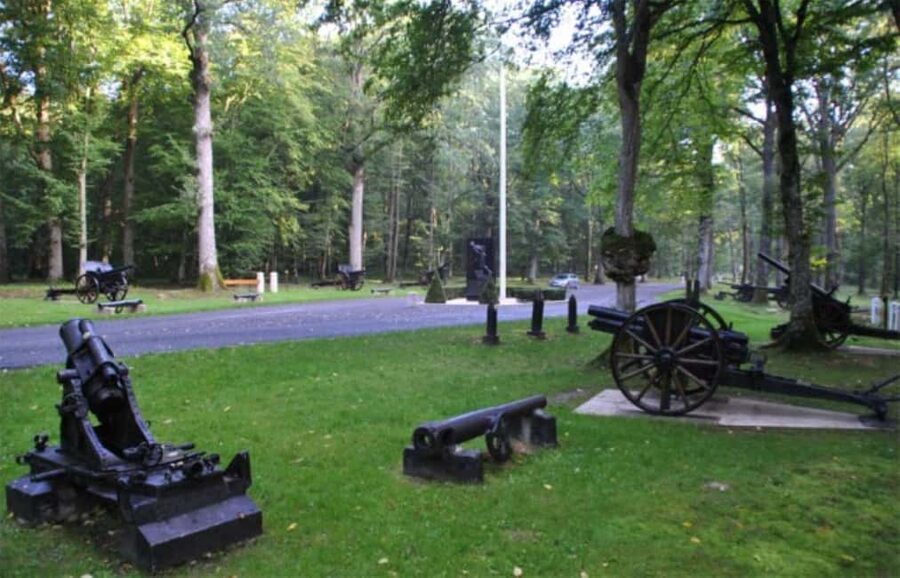
The first thing to understand is that Belleau Wood is a confusing battlefield to visit alone. The key actions did not happen in one compact park. They unfolded across several communities and positions, with roads, farms, cemeteries, and wooded ground separating one site from the next.
A private guide can connect those pieces while you travel in a dedicated vehicle. That matters here because the meaning of a trench or monument depends on what happened several miles away. Frederic, the guide for this experience, is described as a former French army colonel who has studied and led tours of Belleau Wood for years. His military background should be particularly useful when the route turns from personal stories to troop movements and tactical decisions.
You should expect a serious, respectful day rather than a light sightseeing outing. The focus is the 1918 fighting involving American forces, especially the Marines, during the German spring offensive and the 2nd Battle of the Marne.
More Chateau and Wine Estate Tours in France
- Medoc or Saint Emilion Wine Tasting and Chateau from Bordeaux
★ 5.0 · 1,415 reviews - From Paris: Full-Day Loire Valley Chateaux Tour
★ 4.4 · 1,269 reviews - Versailles Château and Gardens Walking Tour
★ 4.5 · 727 reviews
Lucy-le-Bocage and the 2nd Division monument
The tour begins in the center of Lucy-le-Bocage, where the 2nd Division monument provides an early anchor for the story. From there, you walk across the village and see places connected with the 6th Marine Regiment.
This opening stop helps you picture the battle as something that reached directly into ordinary communities. The village is not simply a backdrop for a military lecture. Its roads and buildings form part of the ground over which troops moved and fought.
I like starting here because it gives you context before you enter the woods. If you arrive at Belleau Wood without understanding the villages around it, the surviving trenches can seem isolated and difficult to interpret. Lucy-le-Bocage helps you begin with the wider movement of the battle.
The walk across the village also means you should wear comfortable shoes. The tour is private, but it is not a drive-only experience. You will be getting out repeatedly and walking at several locations.
Bouresches and the Marine attack
The next stop is Bouresches, a village tied to the Marine attack. Here, the guide explains the assault on the village, the action of Captain Duncan, and the story of Lieutenant Osborne of the US Navy, who received the Medal of Honor.
That personal focus gives the stop its weight. Military operations can become a blur of dates and unit names, but a village attack becomes easier to grasp when linked to specific people and decisions. Lieutenant Osborne is later remembered at Aisne-Marne American Cemetery, so the route connects his action with his final resting place.
Bouresches is also a good example of why this tour suits people with a particular interest in the American Expeditionary Forces. You are not simply stopping at a famous name on a map. You are following the people and units from the fighting ground to the cemetery.
The tour does not appear designed for young children. Anyone under 11 is excluded, and that makes sense given the subject matter, the walking, and the concentration needed to follow the military story.
Walking the foxholes and trenches of Belleau Wood
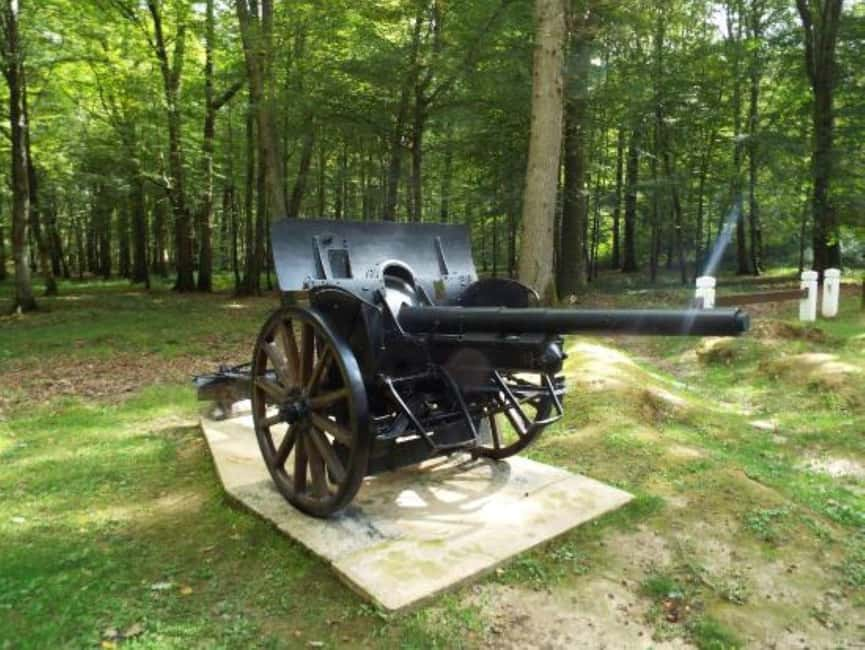
Belleau Wood is the emotional center of the day. You walk through the wood to see surviving battlefield remains, including foxholes and trenches.
These are not polished attractions with a great deal of staging. Their value comes from their physical presence. A shallow depression, a trench line, or a disturbed patch of ground can make the fighting feel immediate in a way that a monument alone cannot.
The woods also require imagination. The ground has changed since 1918, and you should not expect every position to be clearly marked or easy to identify without explanation. This is where Frederic’s role becomes most important. He can point out what you are seeing and place it within the larger action.
One of the strongest reasons to book this tour is the chance to walk the ground with someone who treats the site with respect. A Marine visitor can connect with the regiment’s role in a direct way, while someone less familiar with Marine history can still follow the basic story through the terrain and memorials.
Allow yourself time to be quiet here. The day covers many locations, but Belleau Wood deserves more than a quick photograph from beside the vehicle.
Same city, another grand address:
- Paris: Versailles Palace and Gardens Full Access Ticket
★ 4.6 · 41,579 reviews - Versailles: Skip-the-Line Tour of Palace and Gardens Access
★ 4.7 · 10,429 reviews - From Paris: Versailles Palace & Gardens with Transportation
★ 4.6 · 6,222 reviews - Versailles: Skip-the-Line Guided Palace Tour and Full Access
★ 4.6 · 5,214 reviews
Belleau village and Aisne-Marne American Cemetery
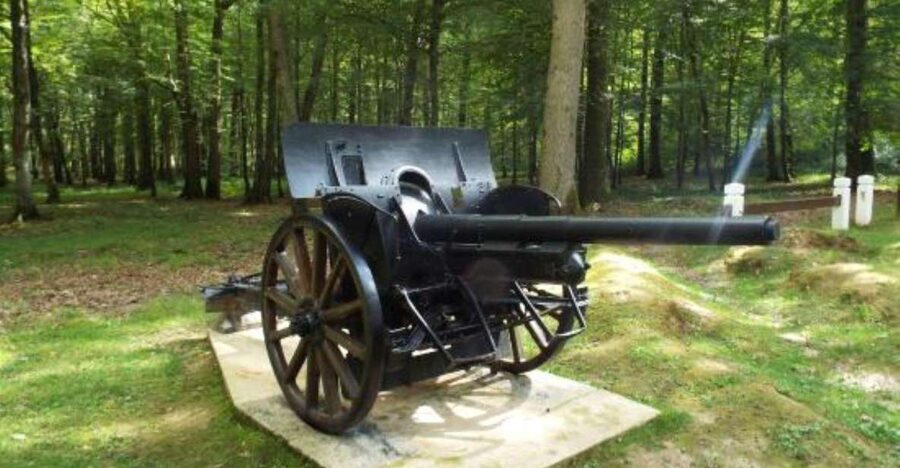
After the wood, the route continues to Belleau village and Aisne-Marne American Cemetery. The cemetery is the burial place of Lieutenant Osborne, whose story you heard at Bouresches, and the chapel provides another important point on the visit.
The wall records the names of missing Marines and soldiers. This is one of the most meaningful parts of the route because it widens the focus beyond famous officers and decorated individuals. The names on the wall represent people whose remains were not identified or recovered.
I like the way this stop pairs the village with the cemetery. You see the place connected to the fighting, then enter a carefully maintained memorial setting where the human cost is easier to absorb. The change from battlefield ground to cemetery lawns is quiet but powerful.
The cemetery is not just a final stop for the fallen. It helps explain how the United States chose to remember its dead overseas. If you have visited American military cemeteries elsewhere in Europe, this will feel familiar in its order and dignity, but the connection to the nearby battlefield gives it special force.
The German cemetery and the view across the battlefield
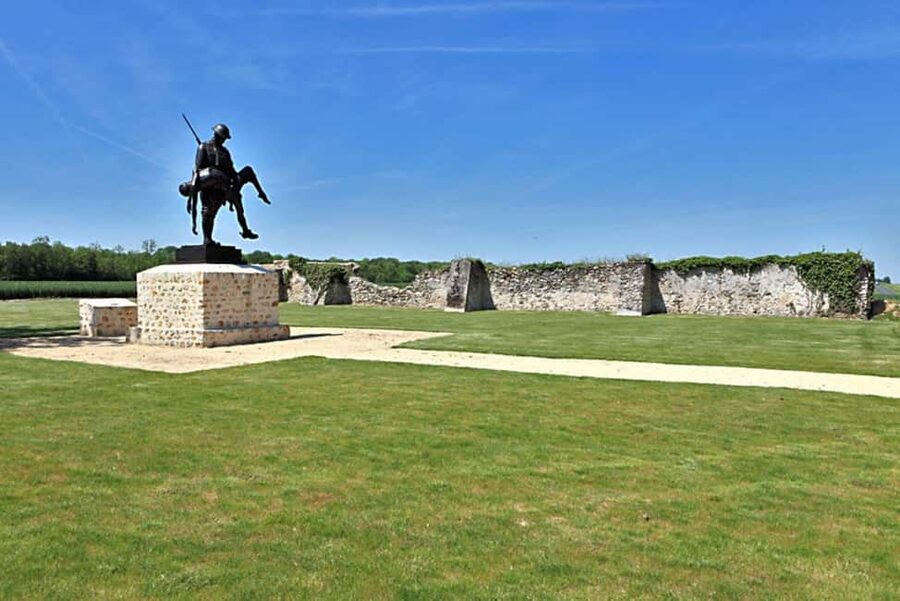
The tour then stops at the German Cemetery, where you can look across a panorama of the battlefield. This change of viewpoint matters. The day is not presented as a one-sided memorial tour. You also get a physical sense of the German position and the contested ground.
A broad view can reveal why a small village, wood, or hill mattered to both armies. From the cemetery, the guide can help you connect the separate sites you have already visited. What seemed like isolated stops begins to form one battle area.
The German Cemetery also adds balance to the experience. You are still following the American story, but the dead on the other side are part of the same conflict. That makes the visit more thoughtful and less like a simple victory narrative.
Hill 204 and the importance of height
Hill 204 offers one of the clearest strategic views of the day. The monument and panorama show why the Germans and Allies cared about this high ground.
From above, you can better understand the logic behind the fighting. Roads, villages, fields, and wooded areas take on a different relationship when viewed from a raised position. The hill is not important only because of what happened there. Its height helps explain why control of it affected operations across the surrounding area.
The interpretive center adds another layer to the stop. After spending much of the day outdoors, it gives you a place to gather the details and reinforce the larger picture.
This is also a useful point for anyone who finds battlefield tours difficult to follow. Maps and displays can make the sequence of events clearer than the ground alone. You still need to listen closely, but the combination of monument, view, and interpretation should help.
Croix Rouge Farm and the 42nd Division
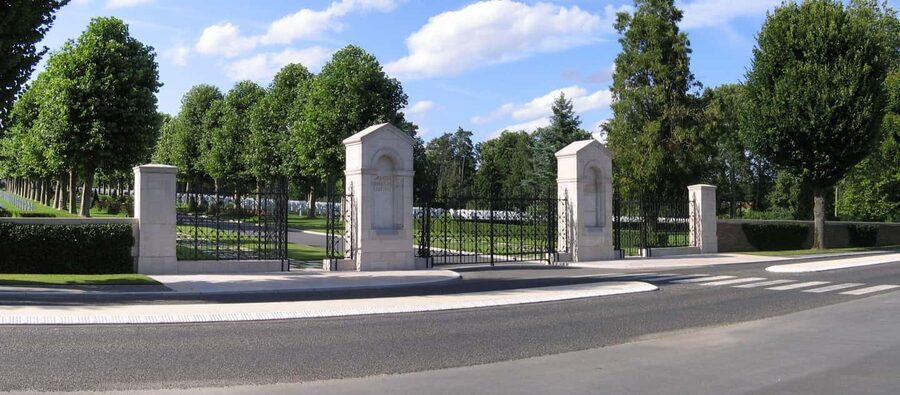
At Croix Rouge Farm, you see the remains of a fortified position occupied by the Germans. The guide explains the action involving the 42nd Division and the attack by the 167th Infantry Regiment from Alabama.
The site makes clear how hard it was to take even a strongly held farm position. The 167th suffered heavy losses during the attack, and the monument honors those who died. This is an important stop for understanding that the battle was not only a Marine story. Other American units faced severe fighting across the same area.
I appreciate the inclusion of Croix Rouge Farm because it broadens the day beyond the most famous Belleau Wood references. If your interest is family history, a unit connection, or the role of the 42nd Division, this may become one of the most useful stops.
The remains also show why a private vehicle and guide help. A fortified farm is not necessarily self-explanatory. Without context, you may see old walls or damaged structures without understanding their military purpose.
Oise Aisne Cemetery and Joyce Kilmer
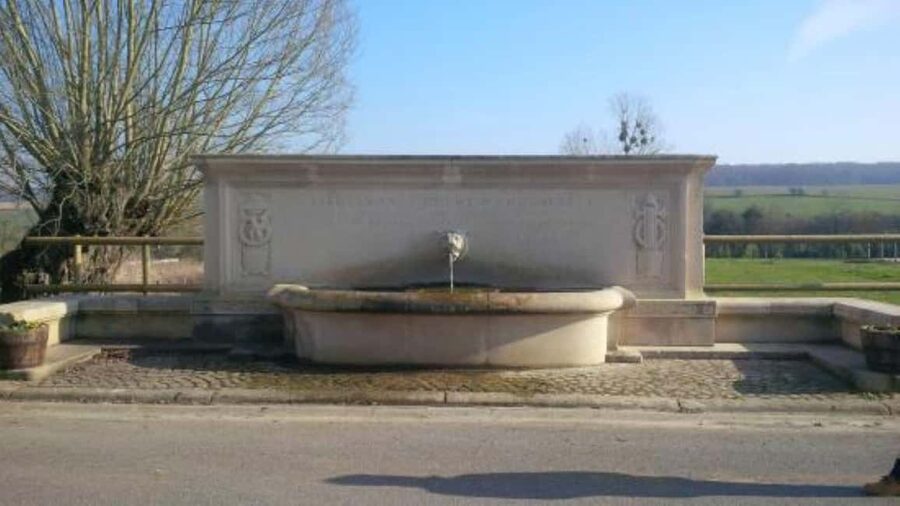
The tour continues to Oise Aisne American Cemetery, where you stop at the grave of Joyce Kilmer. Kilmer was a poet serving with the 165th Infantry Regiment of the 42nd Division, and he was killed in action on July 30, 1918.
His grave adds a personal and cultural dimension to the tour. You have already considered officers, Marines, infantrymen, and missing soldiers. Here, the story includes a writer whose work made him well known beyond the army.
The stop is especially worthwhile if you enjoy the connection between wartime service and literature. It also reinforces the scale of the losses. The cemetery does not allow the battle to remain an abstract contest between units. Each grave points back to a person with a name and a life beyond the fighting.
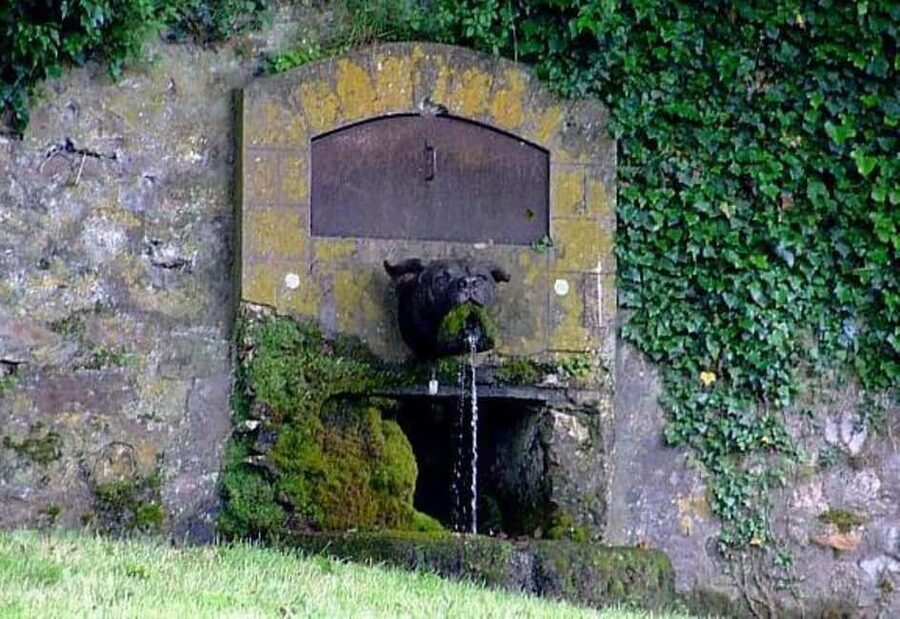
The Quentin Roosevelt Fountain
The final stop is the Quentin Roosevelt Fountain, given to the village by the Roosevelt family in memory of their son.
It is a fitting ending because the fountain shifts the focus from military positions to public remembrance. Like the cemeteries and monuments, it shows how the events of 1918 remained part of local memory long after the fighting ended.
The fountain is also one of the day’s more unusual details. It is not simply another battlefield marker. It connects an American family, a French village, and the long work of remembering the dead.
By the end, you have seen memorials for units, individuals, the missing, and civilians connected to the places where the battle occurred. That range gives the tour more depth than a simple visit to Belleau Wood alone.
What the $759 private price buys you
The tour costs $759 for a private group of up to four people. If four people share it, the price works out to $189.75 per person. For two people, it is a much steeper $379.50 each, so the value depends heavily on group size and how important the subject is to you.
The fee includes an English or French speaking guide, private transportation, and bottled water in the vehicle. Food, drinks beyond the supplied water, snacks, and personal expenses are not included, so plan around the seven-hour duration.
I think the price is reasonable for a full-day private battlefield service when shared by four people, especially because the sites are spread across villages, woods, cemeteries, and farms. It is harder to justify if you are only mildly curious about World War I or mainly want a quick look at the wood.
The private format has another advantage: you can ask focused questions about a family member, a Marine regiment, or a particular phase of the battle. The experience is not a fixed large-group walk where the guide must keep to a general script.
Who should book this experience
You should book this tour if you have a Marine connection, a family story from Belleau Wood, or a serious interest in the American fighting in France. It also suits anyone who wants a guide to explain military ground rather than simply point out monuments.
The route is particularly useful for first-time visitors because it links the main sites in a logical order. You do not need to solve the geography yourself. Frederic’s military background should help if you want to ask about tactics, troop movements, or the meaning of terrain.
I would be more cautious if your group includes children under 11, anyone who cannot walk comfortably at several outdoor stops, or people who prefer a lighter historical outing. Wheelchair users cannot be accommodated according to the tour information.
You should also be ready for a long, concentrated day. The tour lasts seven hours and includes several cemeteries and memorials. It is moving, but not easygoing sightseeing.
Practical details before you go
The experience is offered as a private group in English or French. Starting times depend on availability, so check the schedule before making other plans for the day.
Comfortable walking shoes are a sensible choice because the itinerary includes village walks and a walk through Belleau Wood. Bring anything you personally need for several hours out, since food and snacks are not supplied. Bottled water is provided in the vehicle.
The tour allows cancellation up to 24 hours before departure for a full refund, and you can reserve now and pay later. Those policies help if your wider France itinerary is still taking shape.
Should you book the Belleau Wood tour?
Book it if you want the battlefield explained rather than merely visited. The strongest parts are the walk through Belleau Wood, the connections between Bouresches and Lieutenant Osborne, the panoramic views from Hill 204, and the quiet cemetery stops for Osborne and Joyce Kilmer.
I would especially recommend it to Marines, military families, and anyone tracing a relative who served in 1918. If four people share the $759 price, the cost becomes far more attractive. Skip it if you want a short stop, dislike cemetery visits, or have little patience for a full day of detailed military interpretation.
For the right audience, this is a serious and well-focused way to understand why Belleau Wood still matters.
FAQ
How long does the Belleau Wood tour last?
The tour lasts seven hours.
How much does the private tour cost?
The price is $759 for a private group of up to four people.
What languages does the guide speak?
The tour is available in English or French.
Is transportation included?
Yes. Private transportation is included, along with bottles of water in the vehicle.
Which battlefield sites are included?
The route includes Lucy-le-Bocage, Bouresches, Belleau Wood, Belleau village, the German Cemetery, Hill 204, Croix Rouge Farm, and the Quentin Roosevelt Fountain.
Which American cemeteries are visited?
The tour visits Aisne-Marne American Cemetery and Oise Aisne American Cemetery.
Can I see Lieutenant Osborne’s grave?
Yes. Lieutenant Osborne is buried at Aisne-Marne American Cemetery, which is included in the tour.
Is the tour suitable for children?
The experience is not suitable for children under 11.
Can wheelchair users join the tour?
No. The tour information states that it is not suitable for wheelchair users.
Newly added in France
- The Blending Tour at Château de La Dauphine★ 5.0 · 5 reviews
- Discovery Tour of Château Haut Breton Larigaudière★ 5.0 · 2 reviews
- Discovery visit of Château Rol Valentin with tasting★ 5.0 · 34 reviews
- Wine Gaming at Chateau Lamothe★ 5.0 · 3 reviews
- Luxury Tour of Château de La Dauphine★ 5.0 · 11 reviews
- Wine Tour at Chateau Lanessan★ 4.5 · 13 reviews
- Picnic at the Château de la Selve!★ 5.0 · 26 reviews
- Private Tour in Fontainebleau Palace with Skip-The-Line Ticket★ 5.0 · 9 reviews
Chateau and Wine Estate Tours, compared.

Medoc or Saint Emilion Wine Tasting and Chateau from Bordeaux
Read our review →
Guided Tour of the Fairmont Le Chateau Frontenac in Quebec City
Read our review →

Versailles Château and Gardens Walking Tour from Paris by Train
Read our review →

Loire Valley: Château Royal d’Amboise Entrance Ticket
Read our review →
Fontainebleau & Vaux-le-Vicomte Châteaux Day Tour from Paris
Read our review →Browse the lists this tour appears in