
Review · PALAZZO VECCHIO AND PITTI PALACE TOURS
Florence: Uffizi Gallery Tour with Palazzo Vecchio Entry
Florence’s Renaissance story makes the most sense when you connect the Medici family’s office with their palace. This experience does exactly that: a guided visit through the Uffizi, followed by a priority ticket for Palazzo Vecchio, just across Piazza della Signoria.
I like the small group limit of nine, and I like that the Uffizi guide does more than point at famous paintings. You’ll get the ideas behind Botticelli’s Birth of Venus, Leonardo’s Annunciation, and Michelangelo’s Tondo Doni. The catch is simple: Palazzo Vecchio is self-guided, so you need to plan extra time and bring your own curiosity there.
Key points at a glance
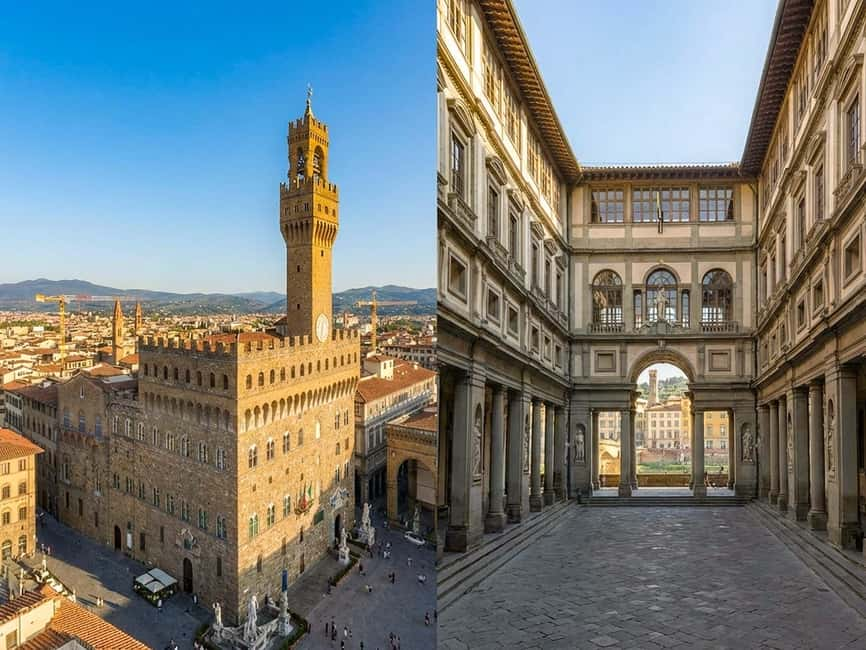
- Two Medici buildings, one clear story: See the Uffizi as the family’s administrative center and Palazzo Vecchio as its seat of political power.
- A focused 90-minute Uffizi tour: Follow art from Giotto through Botticelli, Leonardo, and Michelangelo without trying to cover every room.
- Small groups capped at nine: The format should make it easier to hear the guide and ask questions.
- A useful Palazzo Vecchio bonus: Your priority ticket lets you continue independently after walking two minutes from the Uffizi.
- Three major Renaissance works take center stage: Expect Birth of Venus, Primavera, Annunciation, and Tondo Doni among the key stops.
- A practical terrace break: The Uffizi terrace offers views toward Palazzo Vecchio, the Duomo, and the Tuscan hills.
The Medici story begins at the Uffizi
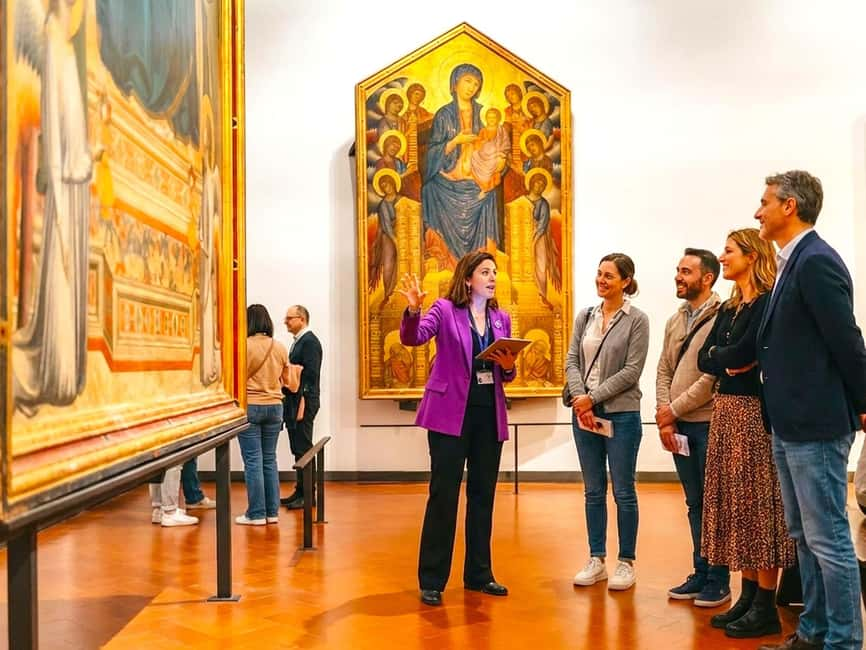
The tour starts in the Uffizi courtyard, on the right side of the gallery entrance. Look for the representative holding a Florence with Locals Tours flag beneath the Leonardo da Vinci statue, opposite Door 3.
That meeting point matters. The Uffizi has several doors and a busy courtyard, so identifying the statue and Door 3 before you arrive will save time. You are not meeting at Palazzo Vecchio, and you do not need to make your own way through the gallery entrance first.
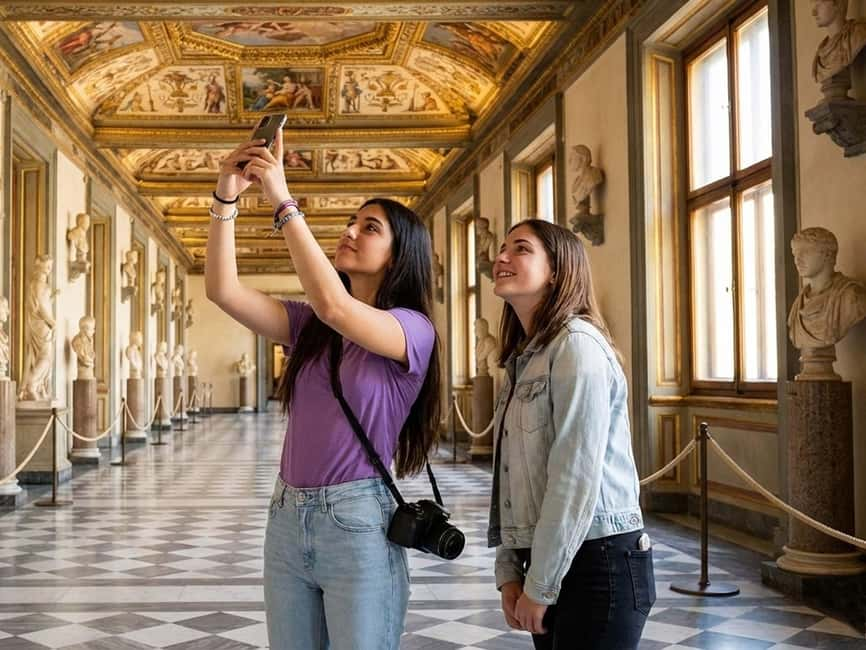
The Uffizi was commissioned in 1560 by Duke Cosimo I de’ Medici. Giorgio Vasari designed it to house government offices, which explains the name Uffizi, meaning offices. The building later became one of the world’s great art museums.
At the same time, Vasari worked on Palazzo Vecchio, the Medici seat of political power. The two buildings were connected by the Vasari Corridor, a private route that allowed the ruling family to move between home, office, and government business.
You will not visit the corridor on this tour. Still, knowing that it linked the two buildings gives the day a helpful frame. The Uffizi shows how art was collected and displayed. Palazzo Vecchio shows how power was announced and defended.
More Palazzo Vecchio and Pitti Tours in Florence:
- Florence: Palazzo Vecchio Entrance Ticket & Audioguide
★ 4.4 · 4,822 reviews - Florence: Uffizi, Pitti Palace & Boboli Combined 5-Day Pass
★ 4.5 · 1,726 reviews - Florence: Palazzo Vecchio Guided Tour
★ 4.8 · 1,260 reviews
From Giotto’s icons to Renaissance perspective
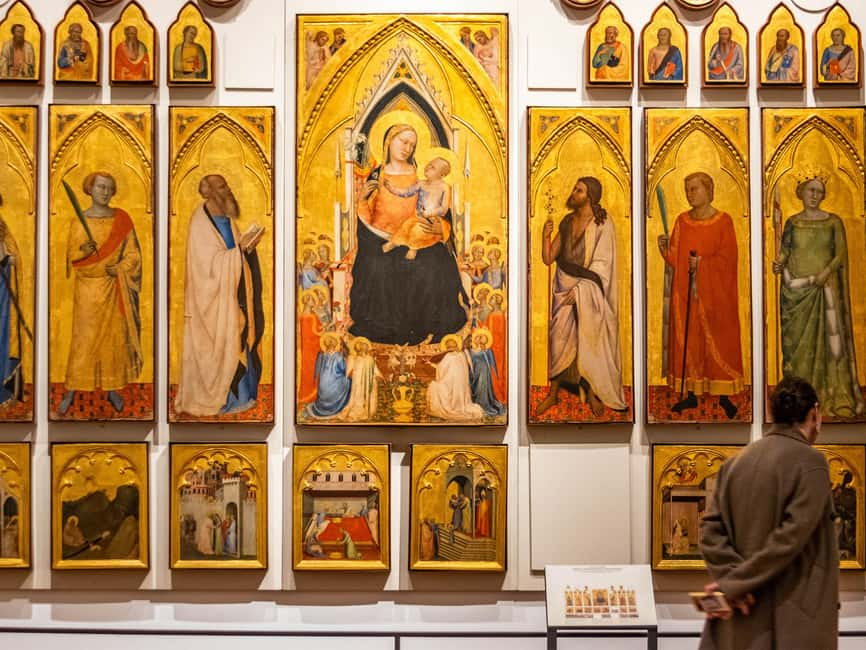
Inside the Uffizi, the guide begins with the development of Italian painting. You start with Giotto, whose work helped move religious art away from the stiff, symbolic style associated with Byzantine painting.
That early change is worth seeing in person. Giotto’s figures have more weight and human presence than earlier icons. The shift is not sudden, and the gallery gives you a chance to watch artists test new ways of showing bodies, space, and emotion.
The route continues through Early Renaissance masters such as Masaccio and Paolo Uccello. Masaccio is important for his direct, solid figures and his command of space. Uccello is remembered for his fascination with perspective, the system that made a flat surface suggest real depth.
You will also see portraits by Piero della Francesca. His precise use of perspective and calm, controlled compositions show how Renaissance artists turned observation into a serious artistic tool.
This opening section is one reason a guide helps. On your own, you might hurry toward Botticelli and miss the visual changes that made the later masterpieces possible. The 90-minute format is short, but it gives the tour a sensible spine: first the problem of how to make pictures look real, then the artists who pushed that problem in new directions.
Botticelli’s rooms and the puzzles behind Venus
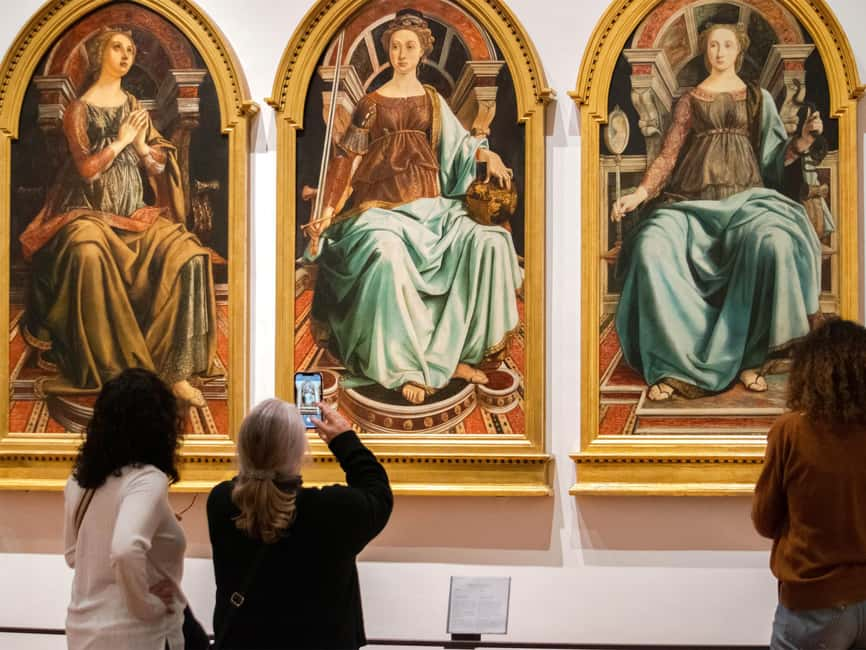
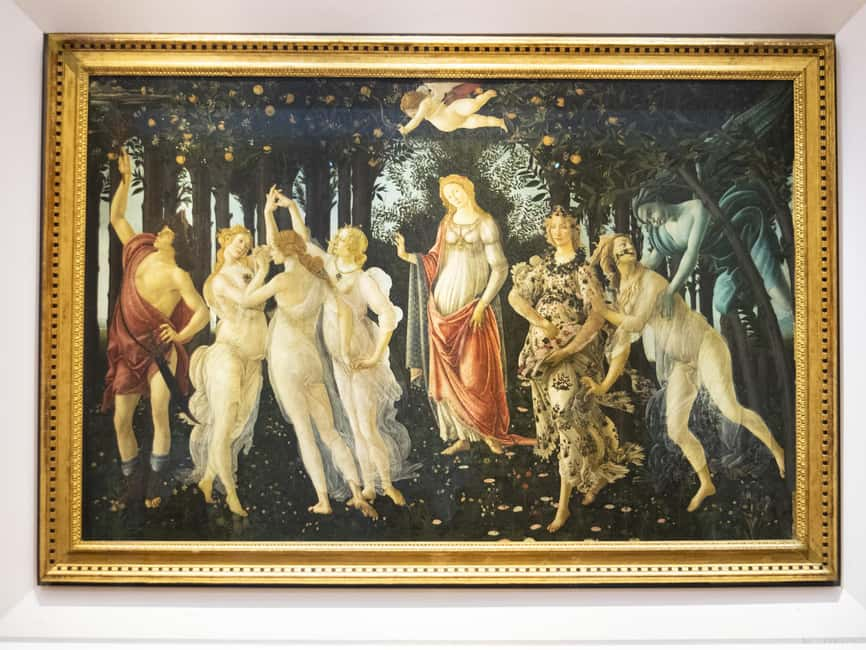
The emotional center of the visit is the group of rooms devoted to Sandro Botticelli. Here you see The Birth of Venus and Primavera, two paintings that have become symbols of Florence itself.
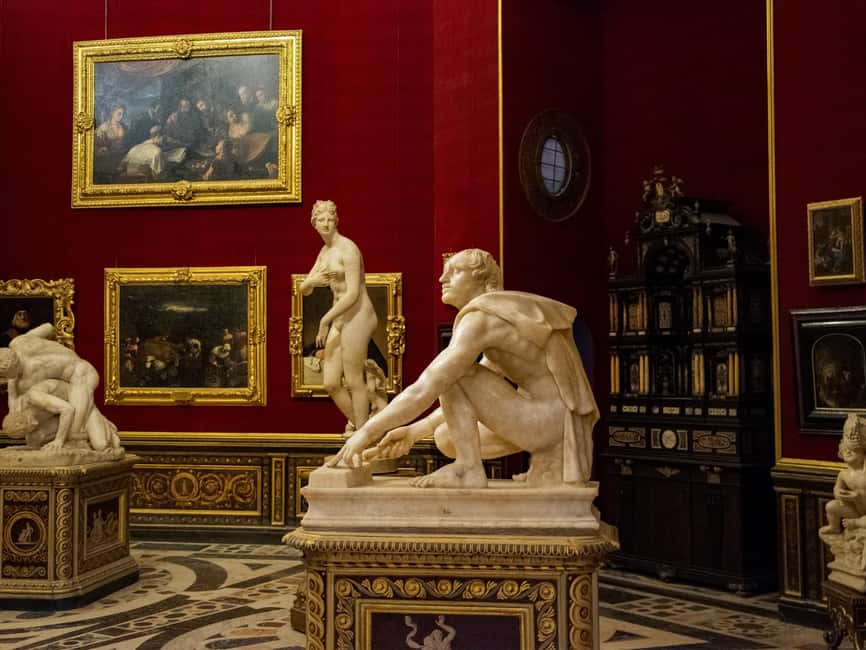
The Birth of Venus shows the goddess arriving on shore, while Primavera presents a crowded garden of mythological figures. Both works were linked to the Medici world, and both invite more questions than a quick photograph can answer.
Your guide explains the Neoplatonic ideas connected with the paintings, along with their symbols and possible meanings. You’ll also hear how a banker’s commission connected to a family wedding became part of the story behind these works.
That context is useful because Botticelli’s paintings can look simple from a distance. The graceful figures and clear colors are easy to admire, but the scenes are loaded with references to mythology, love, virtue, beauty, and Medici identity.
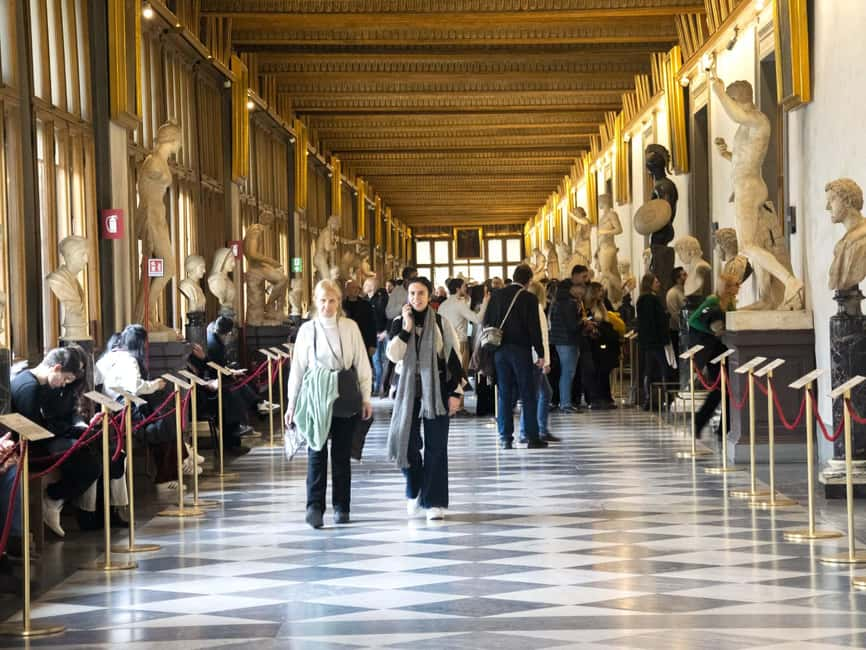
The room can also be one of the busiest parts of the visit. You may need to share the space with other groups and museum visitors, so do not expect a quiet, private encounter with each painting. The advantage of a guide is that you can focus quickly on the important details instead of trying to read every label while people move around you.
Leonardo at twenty and Michelangelo in color
Leonardo da Vinci’s Annunciation offers an earlier look at an artist who would later become one of the most famous figures of the Renaissance. He painted it when he was about twenty years old.
The guide points out optical effects and small visual decisions in the work. This is a good stop for anyone interested in how Leonardo observed nature. The painting is not simply an account of a biblical event. It also shows an artist testing space, atmosphere, light, and the way the eye reads a scene.
The next major stop is Michelangelo’s Tondo Doni, described here as his only easel painting in Florence. It is immediately different from the softer, more graceful style associated with Botticelli.
The painting’s strong colors and twisting figures point toward a new artistic direction. Michelangelo gives the human body unusual force, and the arrangement feels more energetic than the balanced compositions that came before it.
I like the way these stops complement the Botticelli rooms. You see several competing ideas about beauty within a short walk: Botticelli’s elegant mythology, Leonardo’s careful observation, and Michelangelo’s muscular drama. A good guide can make those differences clear without turning the visit into a lecture.
Headsets are included, which should help in crowded rooms. The small group is limited to nine participants, another practical benefit. You will still be inside a busy public museum, but you should have a better chance of hearing the explanation and staying with the group.
More Palace Museums in Florence:
- Florence: Pitti Palace, Boboli Garden, Palatine Gallery Tour
★ 4.9 · 558 reviews - Pitti Palace, Boboli Garden & Palatina Gallery Guided Tour
★ 5.0 · 264 reviews - Florence: Pitti Palace and Palatina Gallery Ticket and Tour
★ 4.9 · 255 reviews - Pitti Palace, Palatina Gallery and the Medici: Arts and Power in Florence.
★ 4.5 · 223 reviews
The Uffizi terrace gives the visit some air

The tour includes a stop at the Uffizi’s panoramic terrace. Use it as a pause after the densely packed galleries.
From here, you can look toward Palazzo Vecchio and its tower, the Duomo, and the Tuscan hills beyond. This view reinforces the connection between the two buildings. You are not just moving from one attraction to another. You are seeing how the Medici center of Florence fit into the city around it.
The terrace is also a useful moment to reset your attention. Ninety minutes of art can feel fast, especially when the paintings are famous and the rooms are full. A short view outside helps separate the guided gallery portion from the independent palace visit.
The terrace should not be confused with a full city sightseeing stop. The tour does not include a broader walking tour of Florence, and there is no food or drink included. Think of the terrace as a scenic part of the Uffizi visit, not a lengthy break.
Crossing Piazza della Signoria to Palazzo Vecchio
After the guided Uffizi portion, Palazzo Vecchio is only about a two-minute walk away across Piazza della Signoria. Your ticket gives you priority entry, but the visit inside is self-guided.
This arrangement is both a strength and a limitation. You get the freedom to move at your own pace, stop for photographs, and spend more time in rooms that interest you. You also do not have a guide to explain each ceiling, fresco, and political reference.
Allow at least two additional hours for Palazzo Vecchio if you want to see it properly. The complete outing can easily take four hours once you include the Uffizi tour, the walk, entry, and independent palace visit.
Palazzo Vecchio began as Florence’s fortress-palace and has dominated Piazza della Signoria since 1299. Its defensive exterior gives way to grand rooms designed to present Medici authority.
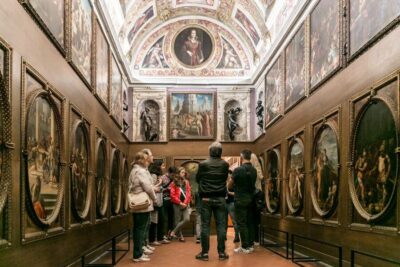
The most important interior is the Salone dei Cinquecento, or Hall of Five Hundred. Five hundred citizens once gathered here to govern the Florentine Republic. Under Duke Cosimo I, Vasari transformed the hall with huge frescoes celebrating Medici victories.
The room is meant to impress. Its scale turns government into theater, while the painted victories make political power appear permanent and justified. After seeing the Uffizi as a place connected to Medici administration, this room gives you the other side of the story: the family’s public image and control of Florence.
Leonardo’s lost battle and the Cerca Trova clue
Palazzo Vecchio also carries one of Florence’s great art mysteries. Somewhere behind the walls of Vasari’s Battle of Marciano fresco may be Leonardo da Vinci’s lost Battle of Anghiari.
The possibility adds an extra layer to the palace visit. You have already seen Leonardo’s Annunciation at the Uffizi, so the story of a missing Leonardo work feels connected rather than random.
Look for the inscription Cerca Trova, meaning Seek and You Shall Find, within Vasari’s fresco. The clue is also associated with Dan Brown’s Inferno, which brought Palazzo Vecchio to the attention of many modern readers.
The book connection is fun, but the room is worth seeing without it. The real interest is how art, political messaging, and the Medici family’s ambitions overlap. This is the sort of place where your own pace helps. You can pause, look up at the huge paintings, and consider how very different this setting is from Botticelli’s mythological scenes.
The standard entry does not include the climb up Arnolfo’s Tower. If the tower is a priority, you will need to check separately rather than assume it comes with this ticket.
Is $91 good value for this Florence combination?
At $91 per person, the price is not low for a 90-minute guided museum visit. The value depends on how much structure you want and how carefully you plan to use the Palazzo Vecchio ticket.
You are paying for several useful elements: skip-the-line Uffizi entry, a licensed English-speaking guide, a small group, headsets, reservation fees, taxes, and priority entry to Palazzo Vecchio. Buying two separate visits could cost more once you add advance reservations and the time needed to organize them.
The strongest value comes from the pairing. The Uffizi tour gives you interpretation at the paintings where it helps most. Palazzo Vecchio then gives you room to explore independently, without paying for a second guided tour.
The weak point is also clear. If you want a guide inside both buildings, this is not the right package. You will need to read labels, use your own guidebook, or simply explore by instinct at Palazzo Vecchio.
The short guided portion also means you should not expect an exhaustive Uffizi visit. The museum is large, and this route focuses on the major Renaissance story. That is a sensible choice for a first visit, but art lovers wanting lesser-known rooms or a slower look at individual works may prefer more time inside the gallery.
Timing, meeting details, and practical planning
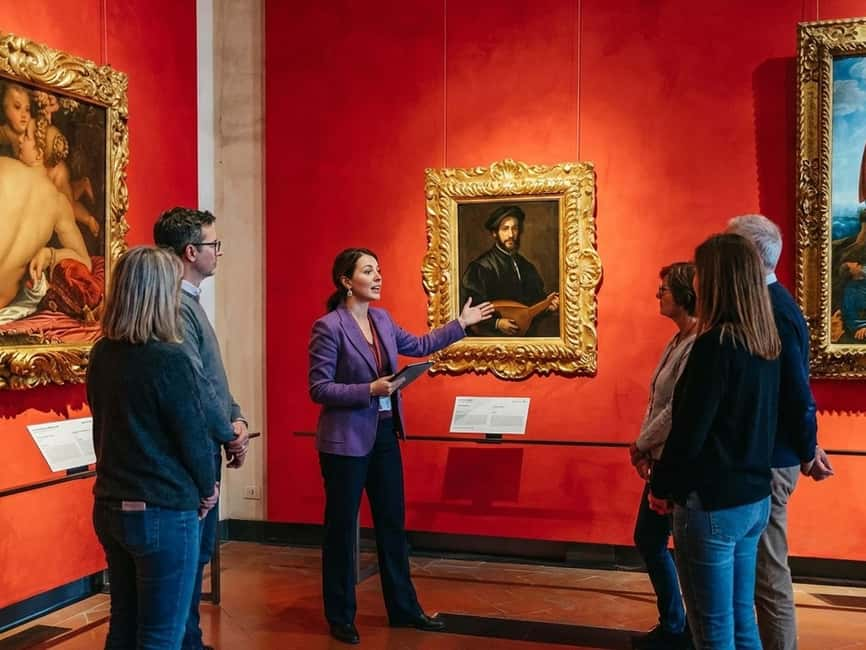
The stated tour duration is 1.5 hours, but you should reserve at least four hours for the full experience. That allows about 90 minutes for the guided Uffizi visit and two hours for Palazzo Vecchio, with a little time for the short walk and entry.
Check the available start time when booking. The tour is offered in English, with a live guide. The small group can include up to nine people, although one booking experience had a guide working with only one participant.
The meeting point is Piazzale degli Uffizi, 1, in the courtyard on the right side of the gallery entrance. Find the Leonardo statue opposite Door 3 and look for the Florence with Locals Tours flag.
The operator can communicate through WhatsApp, which is useful if the timing changes. One booking had its schedule rearranged, and the communication was handled through that channel. I would still arrive early, since a missed meeting point can ruin a tightly timed museum entry.
The experience is wheelchair accessible. Hotel pickup and drop-off are not included, and food and drinks are not included either, so plan those separately.
Cancellation is free up to 24 hours before the scheduled experience, and you can reserve now while paying later. Those terms help if your Florence plans are still shifting.
Who will get the most from this tour?
I would choose this for a first visit to Florence, especially if you want the famous Uffizi works explained without spending half a day planning a museum route.
It also suits you if your interests include the Medici family, Renaissance politics, or the link between art and power. The Uffizi and Palazzo Vecchio make a strong pair because they show different sides of the same ruling family.
Families and mixed-interest groups may appreciate the format. The guide keeps the Uffizi section moving, while the self-guided palace visit lets each person spend more or less time where they choose.
Independent art specialists may find the 90-minute Uffizi route too brief. People who dislike self-guided visits should also think twice, since Palazzo Vecchio is not guided.
The strongest praise attached to this experience concerns the human side of the service. The guide is described as informative, friendly, pleasant, interested, and competent. Anna S is one specifically named guide, and communication about a changed schedule was handled smoothly through WhatsApp. Those details matter in Florence, where a clear meeting point and a responsive operator can save a great deal of stress.
Should you book it?
Book this tour if you want the Uffizi’s major Renaissance works explained by a guide, then want a practical way to enter Palazzo Vecchio without arranging a second ticket. The combination is especially useful for a first Florence visit and for anyone who likes a clear historical thread.
Skip it if you want a long, slow Uffizi visit, a guided tour of Palazzo Vecchio, or access to Arnolfo’s Tower included in the price. At $91, the experience earns its value through the two-site plan, small group, and advance arrangements, not through a long guided itinerary.
For most first-time visitors with four hours available, I think the pairing makes sense. Go in knowing exactly what you are buying: guided art at the Uffizi, independent history at the Medici palace.
FAQ
How long does the experience last?
The guided Uffizi portion lasts 1.5 hours. You should allow about two additional hours to explore Palazzo Vecchio independently, making at least four hours sensible for the complete visit.
Is Palazzo Vecchio guided?
No. The package includes a priority entrance ticket to Palazzo Vecchio, but that portion is self-guided.
Where do I meet the guide?
Meet in the Uffizi courtyard at Piazzale degli Uffizi, 1, on the right side of the gallery entrance. Look under the Leonardo da Vinci statue opposite Door 3 for the representative holding a Florence with Locals Tours flag.
What language is the tour in?
The live guided tour is in English.
How large is the group?
The group is limited to nine participants.
Which artists and paintings are included?
The route covers artists including Giotto, Masaccio, Paolo Uccello, Piero della Francesca, Botticelli, Leonardo da Vinci, and Michelangelo. Featured works include The Birth of Venus, Primavera, Annunciation, and Tondo Doni.
Is Arnolfo’s Tower included?
No. The standard entry does not include the Tower of Arnolfo climb.
Is the tour wheelchair accessible?
Yes, the experience is listed as wheelchair accessible.
Newly added in Florence
- the Medici family in Florence: Palazzo Medici and Medici Chapels★ 4.5 · 10 reviews
- FLORENCE: Uffizi Gallery + Palazzo Vecchio monolingual Guided Tour – Small Group★ 5.0 · 9 reviews
- Palazzo Vecchio Tales – into Medici’s secrets and mythology simbols★ 5.0 · 18 reviews
- The Pitti Palace private tour: Splendours of the Royal Residence★ 5.0 · 4 reviews
- Uffizi and Palazzo Vecchio Combo Private Tour★ 5.0 · 3 reviews
- Pitti Palace, Palatina Gallery and the Medici: Arts and Power in Florence.★ 4.5 · 223 reviews
- The Medicis: The Movie, The Family, The Palace!★ 5.0 · 9 reviews
- Small-Group Palazzo Vecchio Secret Passages Tour with Lunch Or “Gelato”★ 4.0 · 92 reviews
Palazzo Vecchio and Pitti Palace Tours, compared.
Uffizi, Pitti Palace & Boboli Combined 5-Day Pass
Read our review →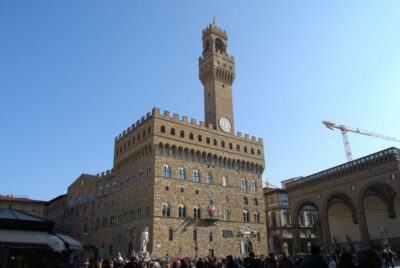
Palazzo Vecchio: Skip-the-Line Entry and Secret Passage Tour
Read our review →
Browse the lists this tour appears in