
Review · PRIVATE PALACE TOURS
Fontainebleau: Palace Private Guided Tour with Ticket
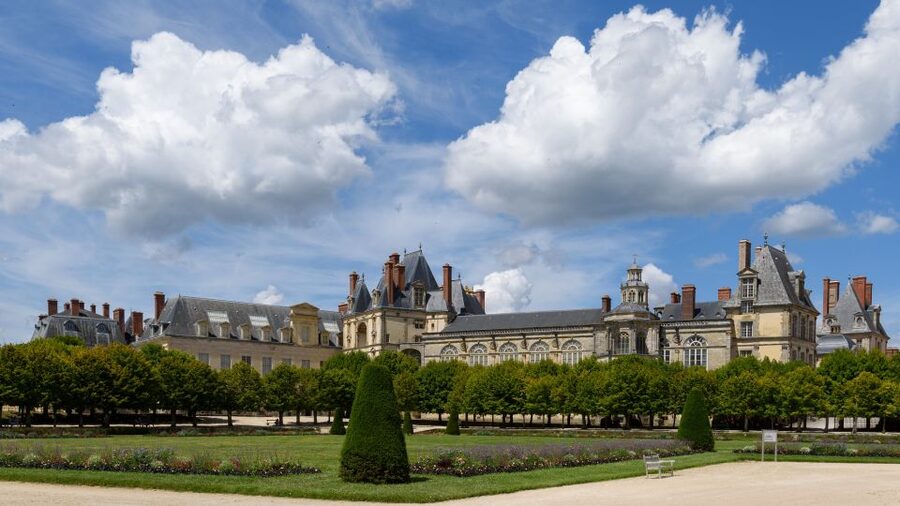
Fontainebleau is not just another royal residence outside Paris. It is a palace where Renaissance decoration, royal apartments, imperial rooms, and one enormous ballroom come together under one roof. The Francis I Gallery gives you the artistic high point, while Napoleon I’s rooms show how the building kept serving France long after the monarchy ended.
I like the private format, since a two-hour visit moves at your pace and leaves room for questions. I also like the range of interiors, from Italian Renaissance frescoes and stucco to the emperor’s bedroom. The main drawback is price: at $323 per person, this is a serious splurge for a two-hour palace visit, especially since transportation is not included.
Key points to know
- The Francis I Gallery is the artistic centerpiece, with work by Primaticcio and Il Rosso in the Fontainebleau Renaissance style.
- The tour covers both monarchy and empire, including royal apartments, the ballroom, and Napoleon I’s imperial bedroom.
- A private guide leads the entire two-hour visit, with live guiding available in English, French, Italian, Spanish, German, Russian, Chinese, Portuguese, and Japanese.
- Antoine has received especially warm praise for making Fontainebleau’s story lively and easy to follow.
- The $323 price buys personal attention and palace entry, but not transportation to or from Fontainebleau.
- The tour is not suitable for people with mobility impairments, and strollers, baby carriages, luggage, and large bags are not allowed.
Why Fontainebleau deserves your time
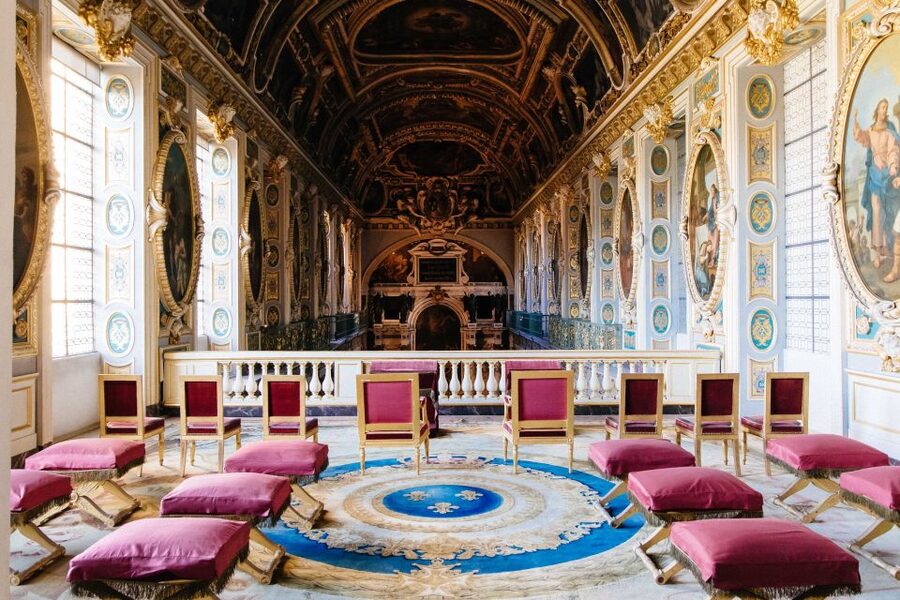
Fontainebleau grew from a royal hunting lodge into a family home for French kings. That change explains much of its appeal. Instead of feeling like a single-period museum, the palace shows how rulers kept altering the same residence to match changing tastes, politics, and ideas of luxury.
You will see Italian Renaissance decoration connected with Primaticcio and Il Rosso, then rooms furnished in styles ranging from the Renaissance through the 19th century. Later, the tour turns to Napoleon I, whose apartments add a sharp imperial chapter to the visit.
That mixture gives Fontainebleau more variety than a palace devoted to one ruler or one era. You are not simply walking through grand rooms. You are watching the building change as French power changed hands.
The tour lasts two hours, which is long enough to cover the main highlights without turning into an all-day march. You should still expect a steady pace. Fontainebleau is large, and the route includes decorated galleries, royal apartments, the ballroom, and the imperial rooms.
More Private Palace Tours in France
- Versailles Royal Palace & Gardens Private Tour by Golf Cart
★ 5.0 · 399 reviews - Versailles Palace Private Tailored Guided Tour With Hotel Pickup
★ 5.0 · 308 reviews - Versailles Palace & Marie-Antoinette’s Estate Private Guided Tour with Lunch
★ 5.0 · 193 reviews
Meeting your guide at the golden gate
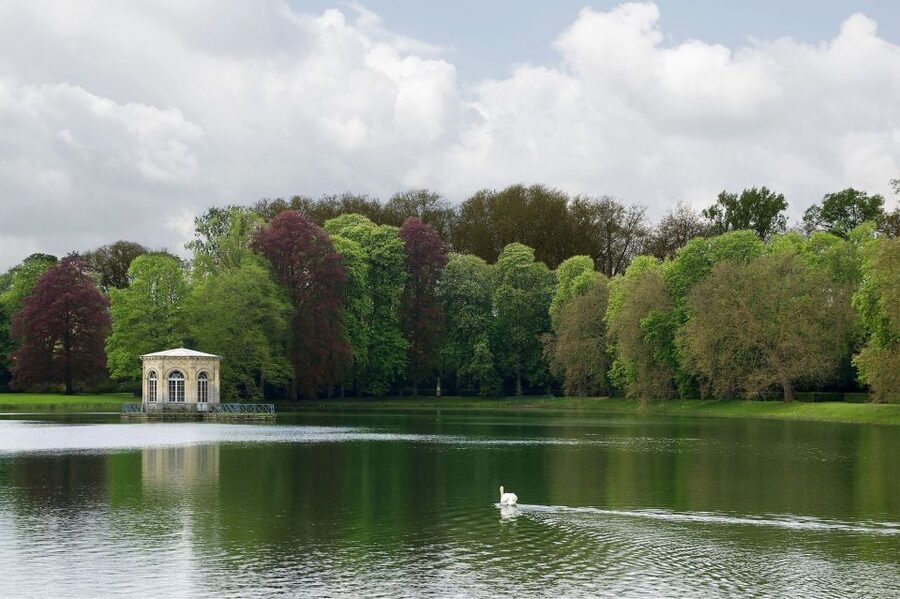
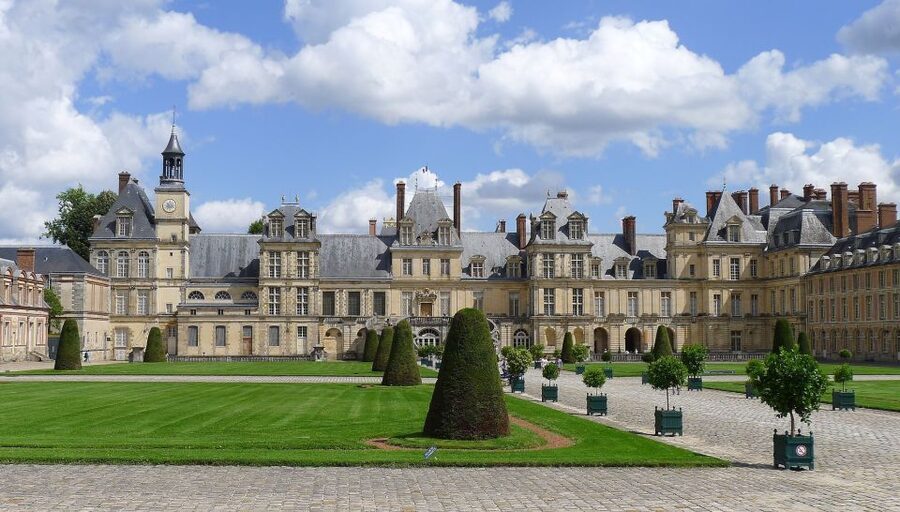
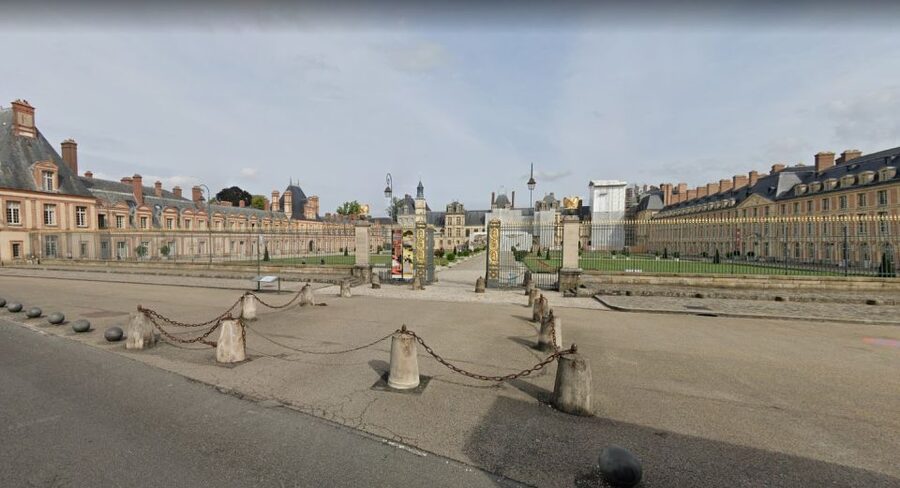
The stated meeting point is in front of the palace’s main entrance, at the golden gate. Your guide carries a sign with your name, which should make the first meeting straightforward.
There is one practical detail to check before booking. The itinerary lists 43 Bd Magenta as both the starting and ending location, but the meeting instructions say to meet directly at the palace entrance, and transportation is specifically excluded. I would confirm the exact meeting point with the provider before the day of the tour rather than assume a transfer from Paris is included.
That matters because Fontainebleau is outside central Paris, and this experience does not provide the ride. You need to arrange your own way there and back. The tour itself begins once you meet at the palace.
The private setup is useful here. If your group has questions, you can ask them without waiting for a large crowd to catch up. You can also tell the guide what interests you most, although the supplied details do not promise a custom route or extra time beyond two hours.
The palace route, from royal residence to imperial home
Your guide takes you inside with the palace entry ticket included. The ticket also lets you skip the ticket line, a useful benefit when you want to spend your limited time looking at rooms rather than waiting outside.
The opening part of the tour sets up Fontainebleau’s long connection with French rulers. You learn how the building changed from a hunting lodge into a residence used by kings and their families. This background makes the rooms easier to read. Their size and decoration were not random. They reflected status, ceremony, family life, and the needs of court.
The palace’s royal apartments follow, with furnishings from several periods. This is where a private guide can add real value. Without context, a sequence of richly decorated rooms can blur together. A good guide helps you notice which details belong to the Renaissance, which came later, and how royal taste shifted over time.
The supplied feedback points to Antoine as a particularly engaging guide. He has been praised for explaining the château clearly and keeping the experience enjoyable. One other highly rated guide had previously worked at Fontainebleau, an unusual connection that can bring extra practical insight into the building and its past. The guide assigned to your visit may differ, so treat those names as examples rather than a guarantee.
The Francis I Gallery and the Fontainebleau school
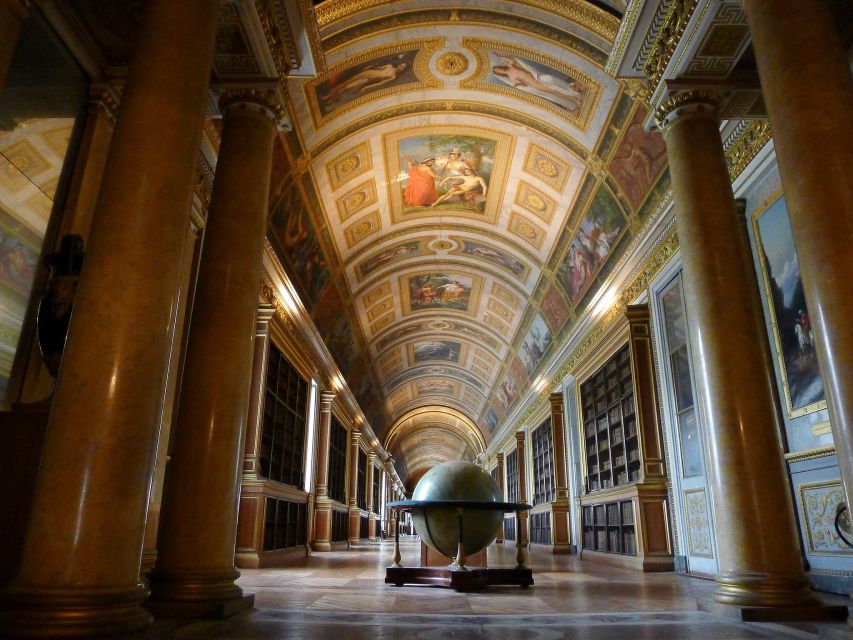
The Francis I Gallery is the artistic centerpiece of this visit. It is decorated with frescoes and stucco in the Renaissance style, giving you a concentrated look at the artistic program that helped make Fontainebleau important in France.
The gallery is linked with Primaticcio and Il Rosso, Italian artists associated with the School of Fontainebleau. You do not need to know the technical history of Renaissance art to enjoy it. Look for the contrast between painted scenes and raised stucco decoration. The combination gives the walls a more elaborate, layered effect than a simple painted gallery.
This is also the point where the tour connects French royalty with Italian artistic ideas. The palace was not isolated from Europe’s cultural currents. Its decoration shows how French rulers borrowed and adapted Renaissance style to make their residence feel sophisticated and powerful.
I would give this room your full attention. The rest of the palace offers a broad sequence of interiors, but the gallery provides one of the clearest visual identities. If you are interested in art, this part alone helps justify choosing a guided visit rather than walking through without explanation.
Same city, another grand address:
- Paris: Versailles Palace and Gardens Full Access Ticket
★ 4.6 · 41,579 reviews - Versailles: Skip-the-Line Tour of Palace and Gardens Access
★ 4.7 · 10,429 reviews - From Paris: Versailles Palace & Gardens with Transportation
★ 4.6 · 6,222 reviews - Versailles: Skip-the-Line Guided Palace Tour and Full Access
★ 4.6 · 5,214 reviews
The ballroom and the theater of royal life
Next comes the immense ballroom. The scale is the first thing to absorb. Standing in the middle gives you a better sense of how court life worked than viewing the room from a doorway.
Your guide explains what royal parties were like and how a room of this size served ceremony and entertainment. The ballroom was not designed for quiet domestic life. It was a stage for rank, display, movement, and formal gatherings.
That makes it an important stop even if you are more interested in architecture than social history. A huge room tells you something about the people who commissioned it. Royal events needed space, and the setting had to make power visible to everyone present.
The ballroom also breaks up the smaller, more detailed rooms in the apartments. After examining wall decoration and furnishings at close range, you get a chance to appreciate scale. I would pause here rather than hurry through. The room’s size is difficult to understand from photographs alone.
Royal apartments across several centuries
The monarchs’ apartments offer the broadest look at Fontainebleau as a working residence. These rooms are luxurious, but their real interest lies in the layers of style. Furnishings range from the Renaissance to the 19th century, so the route shows how the palace kept changing instead of being frozen in one moment.
A private guide is especially helpful in these rooms because the story can otherwise become a list of names and dates. You can ask why one room feels different from another, how a particular monarch used the palace, or which details belong to an earlier period.
The supplied information does not identify every apartment on the route, so you should not expect a complete tour of every room in Fontainebleau. Think of this as a focused visit to the principal interiors, with the guide selecting the sections that best explain the palace.
Two hours is a sensible length for this approach. You get a clear introduction to the royal residence without trying to inspect every object. If you want a slow museum visit with extensive time for every furnishing, you may find the pace brisk.
Napoleon I’s apartments and imperial bedroom
The final section turns from kings to Emperor Napoleon I. His apartments give the tour a different mood. Here you see how the palace continued to function as a seat of power after the monarchy’s main era had passed.
The imperial rooms include Napoleon’s beautiful bedroom. This is more than a final decorative stop. It shows the personal side of imperial residence, after the formal galleries and public rooms have established the scale of royal life.
I like the way this ending gives the tour a clear historical arc. You begin with Fontainebleau’s development as a royal home, pass through Renaissance and courtly spaces, and finish with Napoleon’s imperial use of the palace. The building becomes a record of changing government, not just a collection of attractive rooms.
If Napoleon is your main interest, the two-hour format may leave you wanting more. The tour covers his apartments as part of a larger route, not as a standalone Napoleon program. If your priority is the palace as a whole, however, the imperial bedroom is a strong closing point.
What $323 per person really buys
At $323 per person, this is expensive. One past booking described the experience as very good but too costly, and that criticism is fair. The palace entry ticket is included, but transportation is not, so the price is paying mainly for private guiding, skip-the-line access, and the convenience of a focused route.
The value improves if you are traveling as a small group that wants personal attention. You can ask questions freely, avoid being tied to a large group’s pace, and receive explanations tailored to your interests. A private tour can also be worthwhile when one member of your group cares deeply about art, another prefers royal history, and another wants to understand Napoleon’s rooms.
The value is weaker if you mainly want to enter the palace and look around on your own. Fontainebleau’s interiors can be appreciated without a guide, and two hours is not a long visit for such a large site. In that case, the premium may feel hard to justify.
I would book this for a special occasion, a first visit when you want structure, or a group that places a high value on expert storytelling. I would skip it if you are watching your budget or already comfortable reading palace displays independently.
Languages, access, and what to carry
Live guiding is offered in English, French, Italian, Spanish, German, Russian, Chinese, Portuguese, and Japanese. Confirm your preferred language when selecting the tour, since the available guide depends on the booking.
The experience is not suitable for people with mobility impairments. Strollers and baby carriages are not allowed, and luggage or large bags are also prohibited. Plan to arrive ready to enter the palace without bulky items.
The tour lasts two hours, and starting times depend on availability. Free cancellation is offered up to 24 hours before the tour for a full refund. You can also reserve now and pay later, which helps if your Paris plans are still shifting.
The provider is TOUR FRANCE EXPERIENCE. The overall rating is 4.9 from 11 reviews, with repeated praise for clear storytelling and guide engagement. Antoine is the guide name that appears most often in the positive comments, but you should not assume he will lead every departure.
Who should book this Fontainebleau tour?
I would recommend it to you if you want the main palace highlights explained in a compact, private visit. It suits couples, families with older children, and small groups who prefer questions and conversation over a fixed large-group script.
It is also a good match if the Francis I Gallery matters to you. The Renaissance decoration is easier to appreciate when someone points out the relationship between frescoes, stucco, and the School of Fontainebleau.
History-minded visitors will like the route’s broad span. You move from the palace’s transformation into a royal home to the apartments of the monarchy and then to Napoleon’s imperial rooms. That range gives you a useful framework for exploring more on your own afterward.
I would think twice if you have mobility concerns, need a stroller, are carrying luggage, or want transportation from Paris. I would also compare the private price with a self-guided visit if the $323 cost per person would limit the rest of your trip.
Should you book it?
Book this tour if you want a private, tightly organized introduction to Fontainebleau and are willing to pay for a guide’s attention. The Francis I Gallery, ballroom, royal apartments, and Napoleon’s bedroom give you a strong two-hour route through the palace’s most important themes.
Skip it if transportation, low cost, or a slow independent pace matters more. The tour is not cheap, and the lack of included transport means you still need to arrange the journey yourself. For the right group, though, the guide can turn a very large palace into a clear story rather than a long string of rooms.
FAQ
Is transportation to Château de Fontainebleau included?
No. Transportation is not included. The meeting instructions say to meet your guide at the palace’s main entrance, at the golden gate.
Where do I meet the guide?
Meet in front of the palace’s main entrance at the golden gate. The guide will hold a sign with your name.
How long does the guided tour last?
The guided tour lasts two hours.
What does the tour visit?
The route includes the palace’s royal apartments, the Francis I Gallery, the large ballroom, and Emperor Napoleon I’s apartments, including the imperial bedroom.
Which languages are available?
Live guiding is available in Italian, Spanish, German, Russian, Chinese, Portuguese, Japanese, English, and French.
Can I cancel the booking?
Yes. You can cancel up to 24 hours in advance for a full refund. You can also reserve now and pay later.
Newly added in France
- The Blending Tour at Château de La Dauphine★ 5.0 · 5 reviews
- Discovery Tour of Château Haut Breton Larigaudière★ 5.0 · 2 reviews
- Luxury Tour of Château de La Dauphine★ 5.0 · 11 reviews
- Discovery visit of Château Rol Valentin with tasting★ 5.0 · 34 reviews
- Wine Gaming at Chateau Lamothe★ 5.0 · 3 reviews
- Wine Tour at Chateau Lanessan★ 4.5 · 13 reviews
- Picnic at the Château de la Selve!★ 5.0 · 26 reviews
- Private Tour in Fontainebleau Palace with Skip-The-Line Ticket★ 5.0 · 9 reviews
Private Palace Tours, compared.
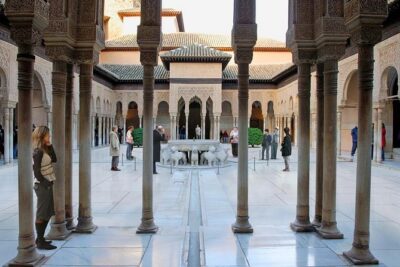
Alhambra Private/Small Group Tour & Nasrid Palaces Skip the Line
Read our review →
Mutianyu Great Wall&Summer Palace Excursion:Group/Private Options
Read our review →
Private Tour of Sintra, Cabo da Roca and Cascais with 2 Palaces
Read our review →
Private 4hrs Venice Tour: Doge’s Palace, Grand Canal & St Mark’s
Read our review →
Knossos Palace Skip-the-Line Ticket & Private Guided Tour
Read our review →

Private Tour Sintra from Lisbon Palaces of Pena and Regaleira
Read our review →
Browse the lists this tour appears in