
Review · FRANCE PALACE TOURS
Narbonne: visit the Archbishops’ Palace and Cathedral
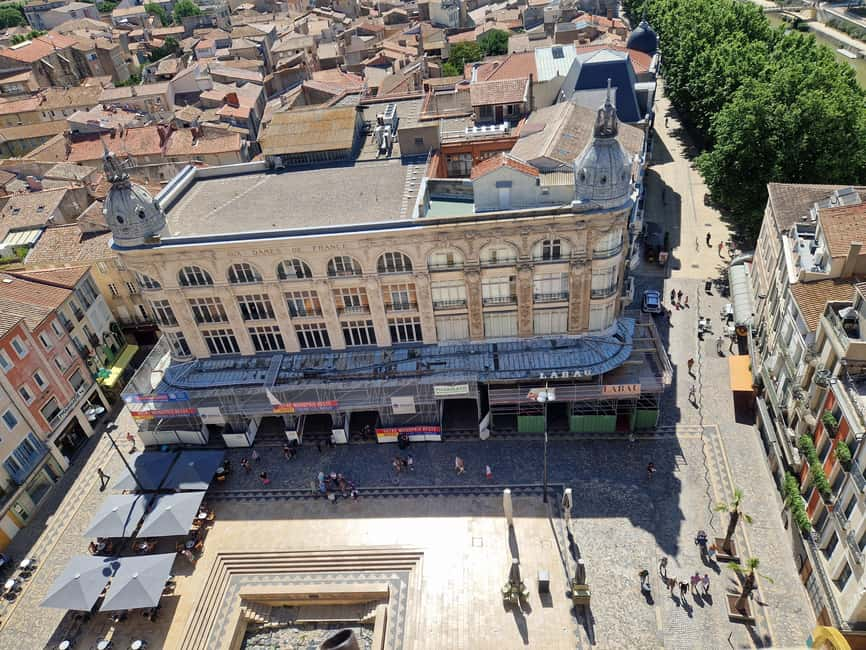
Narbonne’s story is packed into a surprisingly small area. In two hours, you move from the ancient Via Domitia to the medieval Archbishops’ Palace, then into Saint-Juste and Saint-Pasteur Cathedral, with a final walk beside the Canal de la Robine toward Les Halles and Pont des Marchands. It is a smart introduction to the city because the buildings are not treated as isolated sights.
I like the way the tour connects the palace, cathedral, cloister, and old streets into one continuous story. I also like the chance to finish at Les Halles, where Narbonne’s daily life is easier to sense than in a grand monument. The main consideration is language: the advertised tour languages are French and Sangro, with some content presented in its original language, so confirm that the guide’s language suits you before booking.
Key points at a glance
- A compact route through old Narbonne: The Via Domitia, palace, cathedral, cloister, riverfront, and market all fit into a two-hour walk.
- Marion Quart leads the visit: Her style is described as warm, clear, humorous, and full of historical detail without becoming a lecture.
- The cathedral is the visual high point: Look for the soaring vaults, monumental organ, 17th-century altarpiece, and 14th-century carved altarpiece.
- The palace is more than a façade: You enter the main courtyard, see the Grand Staircase, pass through the Passage de l’Ancre, and visit the archbishop’s garden.
- The finish at Les Halles feels local: The route ends near Narbonne’s emblematic covered market, rather than leaving you at a monument with nowhere to continue.
- The $23 price covers the main guided route: The Donjon, town art collection, and Treasure Room require a separate $12 admission ticket.
Why this two-hour walk works so well
Narbonne can seem like a collection of separate attractions at first: a Roman road here, a cathedral there, a market near the canal. This walk gives those pieces an order. You begin with the city’s ancient roots, step into the power center of the medieval church, then finish among the places people still use.
That structure matters. A palace and cathedral are easier to understand when you know they were part of the same center of authority. The old road makes more sense when you can see how later buildings grew around it. And the final stop at Les Halles gives the tour a useful change of pace after so much stone and ceremony.
The group is private, which is a real advantage in a compact historic center. You can hear the guide more easily, ask questions, and spend a little longer at a detail that catches your eye. The published duration is two hours, so this is not a slow, exhaustive study of every room. It is a focused introduction with enough substance for a first visit.
Marion Quart is the guide named for this experience. Her approach comes across as especially strong for people who want history explained in plain language. She is repeatedly praised for enthusiasm, humor, simplicity, and an ability to hold attention for the full two hours. That combination is useful in Narbonne, where dates and church politics could otherwise pile up quickly.
More Palaces to Tour in France:
- Paris: Versailles Palace and Gardens Full Access Ticket
★ 4.6 · 41,579 reviews - Versailles: Skip-the-Line Tour of Palace and Gardens Access
★ 4.7 · 10,429 reviews - From Paris: Versailles Palace & Gardens with Transportation
★ 4.6 · 6,222 reviews
Starting at the Via Domitia
The meeting point is in front of the main entrance to Les Halles de Narbonne, near the war memorial. Look for Marion wearing a green neckerchief and carrying her professional card. Starting here is practical because the market is easy to identify, and it lets you begin near the final part of the route before turning toward the old center.
The first major stop is the Via Domitia, the ancient road that helps explain Narbonne’s importance long before the archbishops arrived. You are not simply looking at old paving stones. You are seeing evidence of the city’s place on a major route through southern France.
This is a good opening because it puts the city into a wider setting. Narbonne was not founded as a quiet medieval backwater. Its location made it important, and the road is a direct, physical reminder of that early role.
You may want comfortable shoes here and throughout the walk. The route is urban and accessible, but historic centers often mean uneven surfaces, stone paving, and frequent stops. The exact route and amount of walking can vary with the guide and the group, but the experience is built around moving between nearby sights rather than riding from one site to another.
Reading the façade of the Archbishops’ Palace
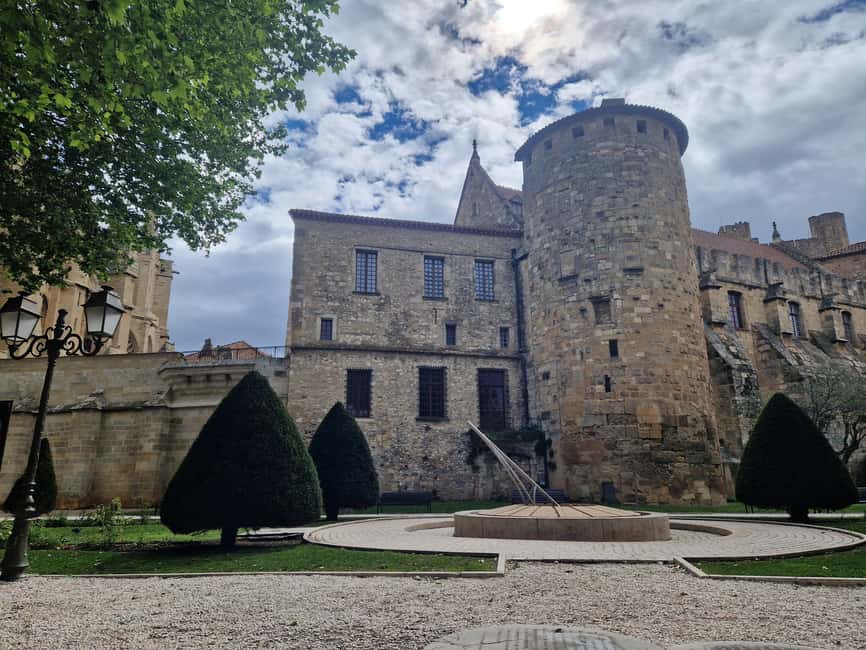
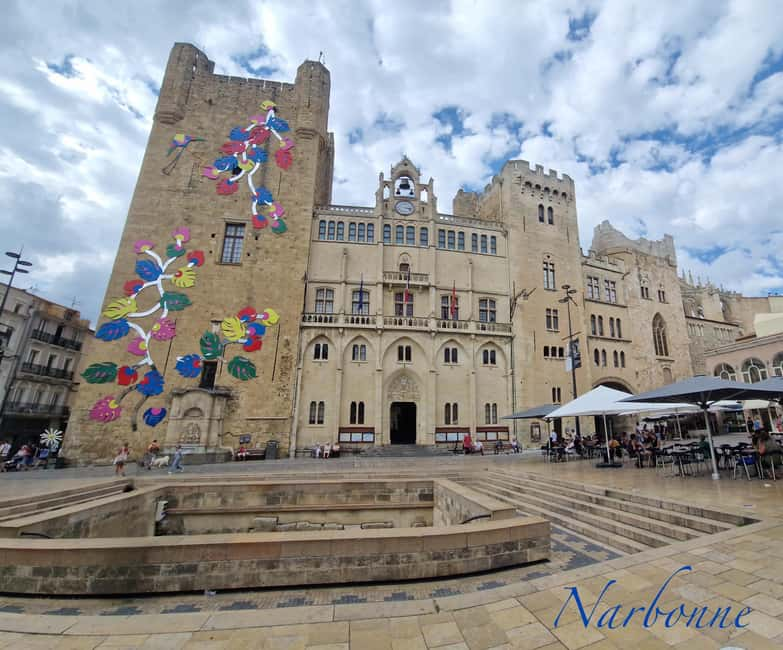
The tour then turns to today’s Place de l’Hôtel de Ville, the former home of the archbishops. The façade has plenty to explain, and this is where Marion’s storytelling matters. Instead of treating the building as a backdrop for photographs, she uses its design to show how the city’s religious and civic power was arranged.
The palace is one of the strongest parts of the route because you see it from both outside and inside. The exterior gives you the grand public face. The main courtyard gives you a closer view of the building’s scale and structure.
Inside, the Grand Staircase is a key stop. A staircase may sound less exciting than a cathedral, but it tells you how people moved through the palace and how ceremonial the building was meant to feel. It is also the sort of detail you could easily pass without a guide.
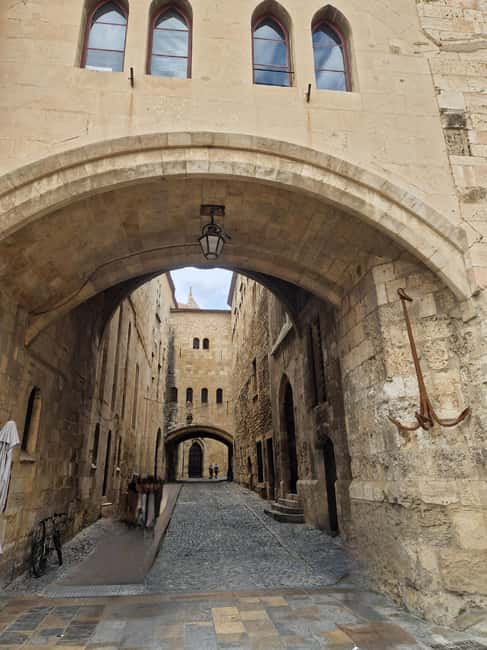
The Passage de l’Ancre is included as well. This adds another layer to the palace visit, taking you beyond the obvious square and into a passage connected with the historic complex. The tour also includes the archbishop’s garden, giving you a quieter contrast to the formal rooms, courtyard, and public façade.
Keep your expectations measured. This is a guided visit to selected palace spaces, not a ticket to every paid attraction in the complex. The Donjon, the town’s art collection, and the Treasure Room are not included. If you want those, a separate €12 admission ticket is available.
Crossing the cloister beneath the gargoyles
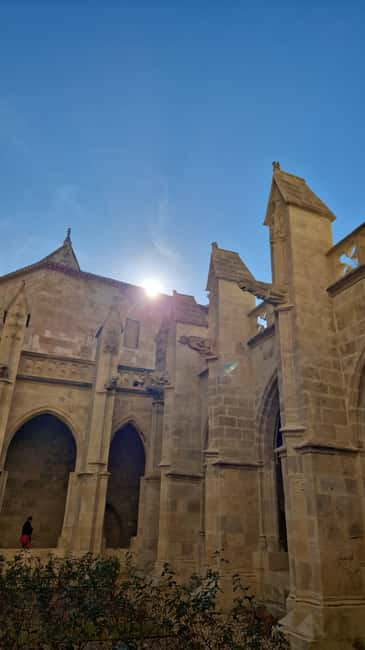
From the palace, you follow the archbishops toward the cathedral. The route crosses the cloister, where gargoyles look down from above. This is one of the most atmospheric transitions in the tour because it links the palace to the church without a sudden change of subject.
A cloister rewards a slower pace. Look up at the stonework, notice how the space frames the sky, and give yourself a moment to understand its position between public city life and the religious world. The gargoyles add a touch of medieval humor and menace, even if your main interest is architecture.
The cloister is also a helpful stop for people who find grand churches hard to read. Before you enter the cathedral, you get a sense of the building’s outer details and the way the church complex was organized. Marion can connect those details to the wider story instead of leaving you to guess what each part was for.
Because the route is private, you can ask questions here without worrying about holding up a large group. That is especially useful if you want to focus on sculpture, construction, or the role of the archbishops.
Same city, another grand address:
- Versailles: Skip-the-Line Guided Palace Tour and Full Access
★ 4.6 · 5,214 reviews - From Paris: Versailles Palace Guided Tour & Gardens Access
★ 4.7 · 3,574 reviews - Versailles Palace and Gardens Tour from Paris
★ 4.5 · 3,390 reviews - Versailles Palace Bike Tour with Market & Marie-Antoinette hamlet
★ 5.0 · 2,680 reviews
Looking up inside Saint-Juste and Saint-Pasteur Cathedral
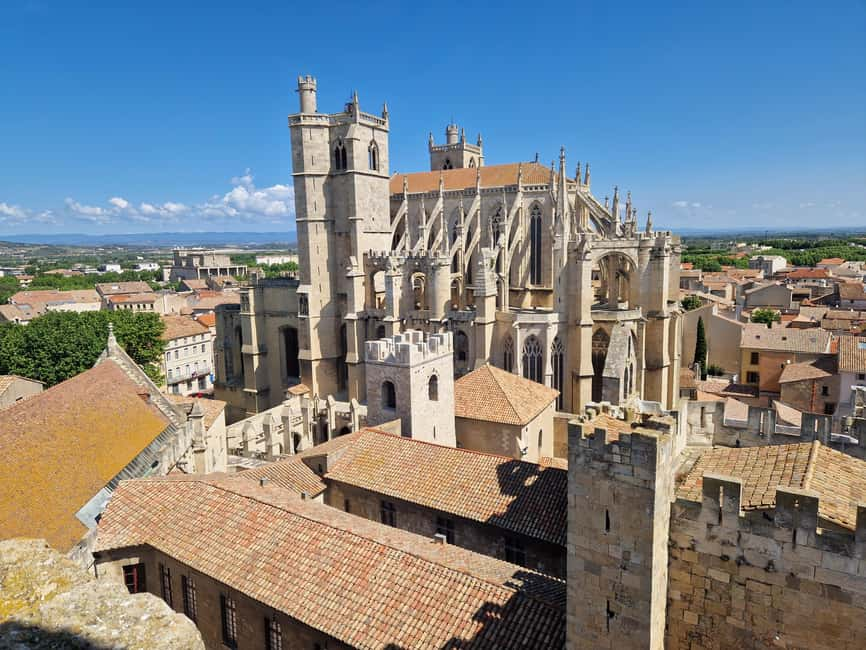
The cathedral is the tour’s grand interior moment. Its 14th-century Gothic design is known for its height, and the first thing to do is look up. The vaulted ceiling gives the building its force. You feel the ambition of the project before you start examining individual objects.
A guide helps you avoid the usual cathedral problem: walking in, taking one wide-angle look, and walking out. The visit stops at the monumental organ, the 17th-century altarpiece, and a 14th-century sculpted altarpiece described as a picture book in stone.
Those details give the interior variety. The vaults show the building’s scale. The organ adds a powerful musical and architectural feature. The altarpieces bring the focus down to craftsmanship, religious images, and the way medieval and later generations shaped the same sacred space.
The cathedral visit includes both exterior and interior views. That matters because the outside tells you how the building fits into the palace complex, while the inside shows what all that height was designed to achieve.
This is not an organ concert or a specialist architecture course. You are there to understand the main features and their place in Narbonne’s story. If you want a long, silent period for personal contemplation, the guide-led pace may feel brisk. If you want a clear explanation of what you are seeing, the pace should suit you well.
From the cathedral to the riverfront
After the palace and cathedral, the route changes character. You leave the church complex and stroll along the Promenade des Barques. This is a useful ending because it opens the view and gives your feet a break from concentrated monument viewing.
The promenade leads toward Les Halles and the Pont des Marchands. The bridge is one of the city’s distinctive features, and including it gives the tour another kind of historical clue. Here, the focus shifts from church authority and carved stone to movement, trade, water, and the practical life of the city.
Do not rush this section. The final walk is part of the experience, not merely the route back to the meeting point. You can ask Marion to connect the buildings you have seen with the streets and waterways around them. That helps the city feel like a living place instead of a museum district.
The Promenade des Barques also gives you a chance to reset after the cathedral. The route has a pleasing rhythm: ancient road, palace, cloister, Gothic church, then open-air city life. That is one reason the experience feels fuller than a simple palace admission.
Ending at Les Halles de Narbonne
Les Halles is the emblematic meeting place of Narbonne, and it is a sensible finish. A covered market gives you a view of the city’s everyday side, even if your visit does not include a food tasting or a market meal.
I like tours that end somewhere useful. After this walk, you can stay near the market and explore on your own, or use it as a landmark while continuing around the center. The market also makes the experience more practical for a first-time visit, since you finish with an obvious place to eat or orient yourself.
The tour includes access to Les Halles, but it does not promise a guided food tour. Think of it as a cultural walk that ends at a working market, not a culinary experience built around tastings. That distinction will help you choose correctly.
What the $23 price actually covers
At $23 per person, the tour is good value if you want a guide to connect the major sights. You are paying for a private, two-hour route and guided access to the Via Domitia, palace courtyards, Passage de l’Ancre, cloister, cathedral, archbishop’s garden, Promenade des Barques, Pont des Marchands, and Les Halles.
The value is strongest for first-time visitors and history-minded people. You get context that is difficult to assemble from plaques, and you avoid spending your limited time wondering which part of the palace or cathedral deserves attention.
The extra €12 ticket should be factored in only if you specifically want the Donjon, the town’s art collection, or the Treasure Room. Those additions are optional, so the basic price remains fairly clear. Still, if your ideal visit includes every interior in the palace complex, your total cost will be higher than $23.
A 4.9 rating based on 43 reviews supports the idea that the guide makes a major difference here. The strongest praise centers on Marion’s ability to explain a lot without making the visit feel heavy. Several comments describe her as passionate, professional, amusing, and thoughtful. That is exactly the skill this itinerary needs.
Who should book this experience
I would recommend it to you if you want a structured first look at Narbonne and prefer human explanation to a self-guided walk. It is particularly well suited to people interested in medieval architecture, church art, city history, and the way old buildings fit into modern daily life.
It should also work well for couples, families, or small private groups who want to ask questions and keep the visit personal. The wheelchair-accessible format is useful, though historic surfaces and the exact access within individual spaces can still vary, so discuss any specific mobility needs when booking.
You should be comfortable with the listed languages. French and Sangro are given as the tour languages, and some content is presented in its original language. English is not listed, so do not assume an English tour.
This is less suitable if you want a long museum session, a food-focused experience, or free time at each monument. It is also not the best choice if you plan to see the Donjon, art collection, and Treasure Room as part of the same guided visit. Those require the separate €12 admission.
The experience lasts two hours, which is enough to cover the main sights without taking up the entire day. You can then return to Les Halles, continue around the center, or use the cathedral and palace area as a base for your own exploration.
Should you book the Narbonne palace and cathedral tour?
Book it if you want Narbonne explained as a connected city rather than a checklist of monuments. The Via Domitia, palace, cloister, cathedral, market, and bridge each have appeal on their own, but Marion Quart’s strength appears to be joining them into one readable story.
The best reasons to choose it are the private format, the modest price, the cathedral’s exceptional interior, and Marion’s clear, engaging style. The main reasons to pause are the limited two-hour schedule, the extra fee for several palace attractions, and the lack of English among the advertised languages.
For a first visit, I would book this as an orientation walk, then return to any place that deserves more time. It gives you the city’s main historical framework without eating up your whole day.
FAQ
How long does the Narbonne tour last?
The tour lasts two hours.
Where is the meeting point?
Meet in front of the main entrance to Les Halles de Narbonne, near the war memorial. The guide wears a green neckerchief and carries a professional card.
Who guides the experience?
The guide is Marion Quart.
What languages are available?
The listed languages are French and Sangro. Some content is presented in its original language.
Is the Donjon included?
No. Admission to the Donjon, the town’s art collection, and the Treasure Room is not included. These attractions are available with a separate €12 admission ticket.
Is the tour wheelchair accessible?
Yes, the activity is listed as wheelchair accessible.
Newly added in France
- The Blending Tour at Château de La Dauphine★ 5.0 · 5 reviews
- Discovery Tour of Château Haut Breton Larigaudière★ 5.0 · 2 reviews
- Luxury Tour of Château de La Dauphine★ 5.0 · 11 reviews
- Discovery visit of Château Rol Valentin with tasting★ 5.0 · 34 reviews
- Wine Gaming at Chateau Lamothe★ 5.0 · 3 reviews
- Wine Tour at Chateau Lanessan★ 4.5 · 13 reviews
- Picnic at the Château de la Selve!★ 5.0 · 26 reviews
- Private Tour in Fontainebleau Palace with Skip-The-Line Ticket★ 5.0 · 9 reviews
France Palace Tours, compared.

Versailles Palace and Gardens Full Access Ticket
Read our review →
Skip-the-Line Tour of Palace and Gardens Access
Read our review →
Versailles Palace & Gardens with Transportation
Read our review →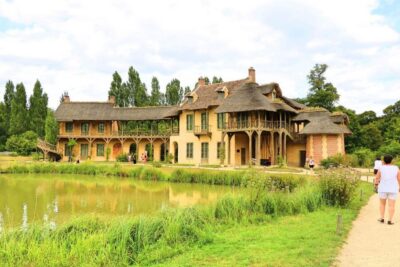
Skip-the-Line Guided Palace Tour and Full Access
Read our review →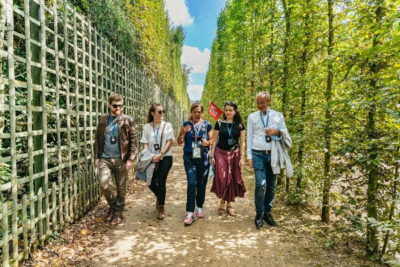
Versailles Palace Guided Tour & Gardens Access
Read our review →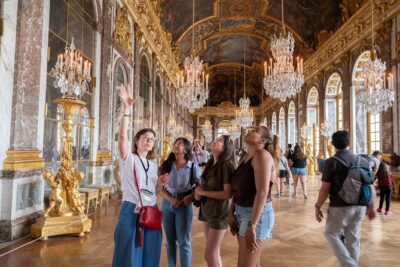
Versailles Palace and Gardens Tour from Paris
Read our review →
Versailles Palace Bike Tour with Market & Marie-Antoinette hamlet
Read our review →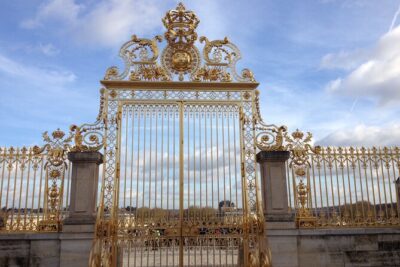
Versailles Palace Guided Tour with Reserved Entry
Read our review →Browse the lists this tour appears in