
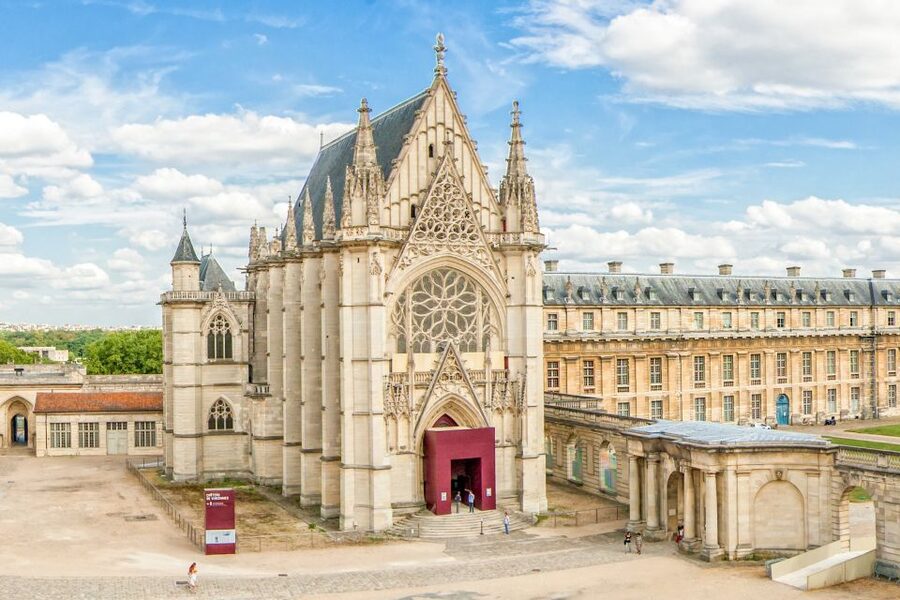
Review · CHATEAU AND WINE ESTATE TOURS
Paris: Château de Vincennes Entry Ticket
The most surprising thing about Château de Vincennes is its sheer height and purpose. This was not a pretty country retreat, but a fortified royal machine built to guard Paris and protect the monarchy from revolt. I like the chance to climb the 52-meter medieval keep, and I like that one ticket connects royal power, prison history, Napoleon’s military reforms, and France’s modern armed forces. The main drawback is that the regular guided tours are in French, so you may prefer the self-guided option if you do not understand the language.
The 365-day validity gives you useful breathing room, especially if your Paris schedule changes. Just remember that this is an entry ticket rather than a transport package, and the castle sits in Vincennes, east of central Paris.
Key points at a glance
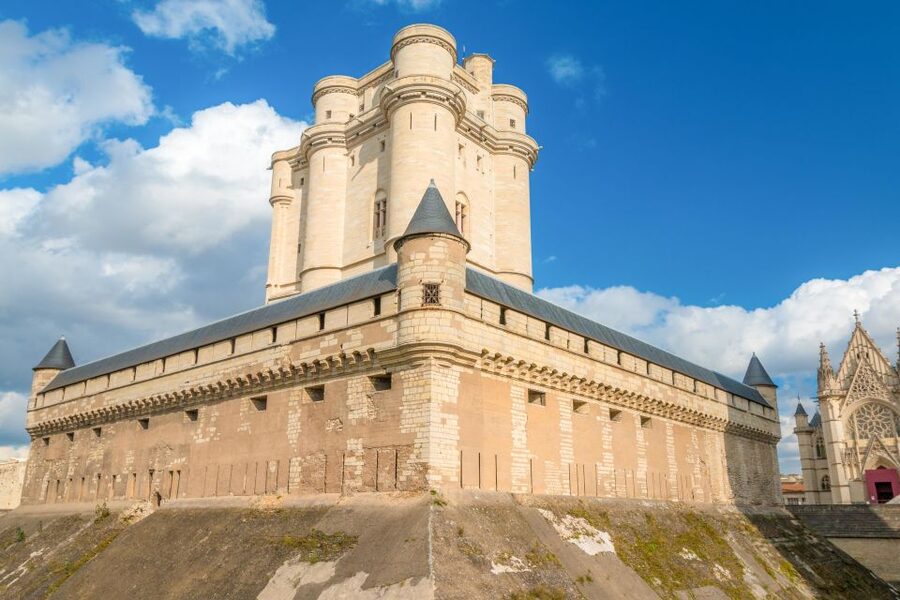
- Climb Europe’s tallest medieval fortified tower: The 52-meter keep gives the visit its main physical challenge and historic focus.
- See rooms tied to famous prisoners: Fouquet, the Marquis de Sade, and Mirabeau were held inside the keep.
- Follow the monarchy from the 14th century to 1682: Château de Vincennes served as a royal center before Louis XIV moved to Versailles.
- Explore a fortress with a military afterlife: Napoleon I turned the complex into a barracks and arsenal.
- Choose between French tours and independent visits: Guided tours run daily at 2:15 PM and 3 PM, with no reservation required.
- Use the ticket over a long window: Admission is valid for 365 days, though it remains non-refundable once booked.
Why Château de Vincennes feels different from central Paris
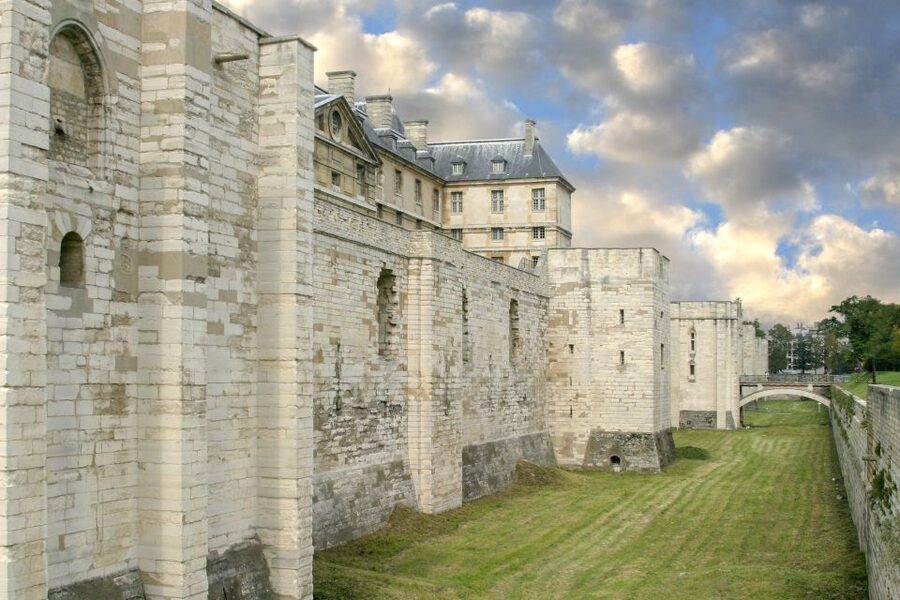
Paris is full of grand palaces, but Château de Vincennes gives you a tougher, more defensive version of French power. Its walls and tower were built in the 14th century to affirm royal authority, guard the capital, and offer the king protection during unrest.
That purpose shapes the whole visit. You are not simply walking through decorated state rooms. You are moving through a fortress that became a royal residence, a prison, a military base, an arsenal, and a place of national remembrance.
I find that sequence especially useful for understanding France. Versailles can make the monarchy look polished and distant. Vincennes shows the machinery behind it: thick defenses, controlled access, a tall keep, and a royal household ready to retreat behind stone walls.
The setting also changes the pace of your day. The castle is in Vincennes, a short journey from eastern Paris. You leave the central museum circuit behind and visit a monument that feels tied to the capital’s defenses rather than its boulevards and cafés.
More Chateau and Wine Estate Tours in France
- Medoc or Saint Emilion Wine Tasting and Chateau from Bordeaux
★ 5.0 · 1,415 reviews - From Paris: Full-Day Loire Valley Chateaux Tour
★ 4.4 · 1,269 reviews - Versailles Château and Gardens Walking Tour
★ 4.5 · 727 reviews
The medieval keep and its 52-meter climb
The keep is the main event. At 52 meters, it is the tallest fortified medieval tower of its kind in Europe. Reaching the upper levels means climbing stairs, so you should be comfortable with a vertical visit rather than expecting a flat museum walk.
The height matters because it explains the tower’s role. A keep was both refuge and command point. From here, the royal household could occupy a protected position within the wider fortress. The ticket highlights the climb, and it is the part of the experience I would prioritize if your time is limited.
Expect the stairs to be part of the story, not merely a way to reach a view. The ascent gives you a physical sense of how strongly the building was designed to separate its occupants from threats outside. Each level reflects the practical logic of a fortified tower.
The listing does not provide details about views from the top, so I would not book this solely for a panoramic outlook. Come for the structure itself, the climb, and the chance to move through a genuine medieval defensive tower.
If stairs are difficult for you, this deserves careful thought before booking. The keep is a central feature, and the experience specifically calls attention to climbing into it. The available information does not state whether alternative access arrangements exist.
From royal residence to the move to Versailles
Château de Vincennes remained at the heart of the French monarchy until 1682. That date gives the visit a clear turning point. When Louis XIV chose Versailles, Vincennes lost its role as the main royal center, but the building did not become irrelevant.
The earlier royal connection makes the fortress more than a military curiosity. Kings used it to project power close to Paris, where unrest could threaten the crown. The castle’s position and heavy defenses sent a direct message: the monarchy had a stronghold near the capital.
You can use the visit to compare two royal ideas. Versailles represents ceremony, display, and controlled magnificence. Vincennes represents security, authority, and the need to withstand pressure. That contrast helps explain why the French monarchy needed both types of place.
The experience is especially suitable if you want French history in a single site rather than a narrow look at one reign. The timeline begins in the 14th century and reaches the present, so the castle works as a long historical thread.
Prison rooms connected to Fouquet, Sade, and Mirabeau
The keep later served as a prison from the 16th through the 19th century. That change gives the tower a darker tone. Its thick walls were useful not only against armies, but also for holding people the state wanted to isolate.
The visit identifies rooms connected with Fouquet, the Marquis de Sade, and Mirabeau. These names bring different parts of French political and cultural life into the same building. Their presence also reminds you that royal and state power could be expressed through confinement, not just ceremony.
You can also see the room where King Henry V died. This detail adds a personal and human layer to a site often described in terms of walls, towers, and military purpose. A room associated with a king’s death sits alongside rooms used to confine prisoners, showing how dramatically the building’s roles changed over time.
The prison material may be the strongest reason to choose a self-guided visit. You can pause at the rooms that interest you instead of following a fixed explanation. The multilingual visitor guide should help, and an augmented reality terminal is available in Charles V’s study.
The supplied details do not name a particular guide, and the included guided tours are in French. If you want the history explained aloud, attend at 2:15 PM or 3 PM. If you need another language, the self-guided route and multilingual guide are the safer choice.
More Palace Entry Tickets in France
- Loire Valley: Château Royal d’Amboise Entrance Ticket
★ 4.6 · 476 reviews - Paris: Palais Garnier Mystery Game with Entry Ticket
★ 4.3 · 400 reviews - Chateau Gaillard Royal Domain Admission Ticket
★ 4.5 · 250 reviews - Angers: Château d’Angers Entrance Ticket
★ 4.6 · 191 reviews
Napoleon I turns the castle into a military base
After its royal and prison chapters, the castle took on a new role under Napoleon I. It was transformed into a barracks and arsenal, and the fortress helped protect Paris during invasions in the 19th century.
This is an important part of the visit because it prevents you from seeing Vincennes as a medieval relic frozen in time. The building continued to serve the state long after kings left for Versailles. Its military use shows how older fortifications could be adapted to new national needs.
The 19th-century defense role also connects the castle to a broader period of French upheaval and invasion. The details provided do not specify particular battles or displays, so you should expect the visit to explain the building’s changing function rather than provide a full military museum.
Today, the castle houses the historical services of France’s three armed forces. It is also considered a place of national remembrance. That modern role gives the monument a practical link to the French state, not only a historical one.
War damage and the modern meaning of Vincennes
Château de Vincennes suffered extensive damage during the Second World War and was later restored. This matters when you look at the monument. What you see today reflects both medieval construction and the effort to preserve a building damaged by modern conflict.
The restoration story adds another layer to the site’s meaning. The castle is not simply an untouched survival from the Middle Ages. It has been altered, repaired, and given new uses as France changed around it.
The phrase place of national remembrance is useful here. It signals that the castle carries public memory as well as architecture. France’s military history is present in the institution housed there, while the restored fortress recalls older forms of authority and defense.
I would give yourself enough time to notice the shifts in purpose. Medieval royal stronghold, royal residence, prison, barracks, arsenal, wartime survivor, and military historical center are not separate attractions. They are chapters of one building’s life.
Guided French tour or self-guided visit?
The admission includes self-guided access, a visitor guide in several languages, and the augmented reality terminal in Charles V’s study. Those options make the ticket workable for independent visitors and for anyone who prefers to read at their own pace.
French guided tours run every day at 2:15 PM and 3 PM. No reservation is required for those tours, but you should plan around the times if hearing a spoken explanation matters to you. Since no guide’s name is provided, you should not expect to book a particular individual.
The French tour is most useful if you understand French and want a set narrative. It can give the castle’s many historical phases a clear order. The self-guided route is better if you need another language, want to linger in the prison rooms, or have limited time.
The included augmented reality terminal in Charles V’s study is a welcome extra. The available details do not explain exactly what it shows, so treat it as a supplementary feature rather than the main reason to visit. The keep, rooms, and long historical timeline are the core experience.
Is the $15 ticket good value?
At $15 per person, the ticket is fairly priced for a major historic monument with a substantial story and a distinctive tower climb. You are paying for more than a quick look at one room. The visit covers royal history, prison history, military adaptation, wartime damage, and France’s current armed forces.
The value is strongest if you enjoy sites that reward context. You can spend time with the keep, former prison rooms, Charles V’s study, and the changing role of the fortress. The multilingual guide also means you are not limited to a French explanation.
The price is less compelling if you only want a quick photo stop or a polished palace interior. The castle’s interest comes from its defensive architecture and historical transitions. It is not presented as a lavish decorative residence in the style of Versailles.
Because the ticket is valid for 365 days, it offers unusual flexibility. That does not mean you can visit endlessly without checking conditions, but it gives you a large window to use the admission. The activity is non-refundable, so choose your date with care even though the ticket validity is long.
Timing, arrival, and practical details
The meeting point is Château of Vincennes, Avenue de Paris, 94300 Vincennes, France. Transport is not included, so you need to arrange your own journey from Paris. The supplied information describes the trip as short from eastern Paris, but it does not specify a transport route or travel time.
Bring a passport or identity card. Visitors under 18 and European Union citizens under 26 can enter free, but they must first show photo identification at the ticketing station before going to the monument entrance.
Last entry is 45 minutes before closing. That rule matters at a large site with a tower climb. Arriving late could leave you with too little time for the keep and the prison rooms, so I would avoid treating the final admission window as a convenient arrival time.
The castle closes on January 1, May 1, and December 25. Free entrance is offered on the first Sunday of January, February, March, November, and December, as well as during European Heritage Days on the third weekend of September each year.
The activity is described as a small group with a limit of 10 participants. That limit is most relevant to the guided element. The ticket itself also supports independent visits, so you are not required to spend the whole experience in a group.
Who will enjoy this castle most?
I would recommend Château de Vincennes to you if you like fortifications, royal politics, prisons, and buildings that change purpose over time. It is also a good choice if you have already seen the central Paris highlights and want a major historic site with a different mood.
Families with older children may appreciate the tower and prison stories, though the stairs deserve attention. The site also suits history-minded visitors who want more than a decorative palace.
You may want to skip it if your main goal is ornate royal interiors, if you have trouble with stairs, or if you need an English-speaking guided tour specifically. The available guided tours are in French, while the independent material is offered in several languages.
The 4.5 rating from 342 reviews, along with short comments describing the castle as interesting, engaging, and beautiful, fits the experience’s strongest qualities. The praise is easy to understand: Vincennes combines a dramatic tower with a broad, unusual history. Just keep your expectations focused on the fortress and its story rather than a grand palace visit.
Should you book Château de Vincennes?
Book it if you want a substantial historical site outside the usual central Paris circuit, especially if the idea of climbing a 52-meter medieval keep appeals to you. The $15 price is reasonable for the number of historical periods covered, and the 365-day validity makes scheduling easy.
I would choose the self-guided option if you need a language other than French or want to set your own pace. Choose the 2:15 PM or 3 PM tour if you understand French and prefer a guided explanation.
Skip it if stairs are a serious problem or if you are looking only for royal luxury. For everyone else, Château de Vincennes offers a memorable look at how one fortress followed France from medieval monarchy to the modern state.
FAQ
How much does the Château de Vincennes ticket cost?
The listed price is $15 per person.
How long is the ticket valid?
The ticket is valid for 365 days. Check availability for the applicable starting times.
Are guided tours included?
A guided tour in French is included every day at 2:15 PM and 3 PM. No reservation is required for these tours.
Are self-guided visits available?
Yes. Self-guided visits are included, along with a visitor guide in several languages.
Is there an augmented reality feature?
Yes. An augmented reality terminal is available in Charles V’s study.
Is transport included?
No. Transport to Château de Vincennes is not included. The meeting point is Château of Vincennes, Avenue de Paris, 94300 Vincennes, France.
Who can enter for free?
Visitors under 18 and European Union citizens under 26 can enter free with suitable photo identification. Identification must be shown at the ticketing station before going to the monument entrance.
When is Château de Vincennes closed?
The castle is closed on January 1, May 1, and December 25. Free entrance is also offered on the first Sunday of January, February, March, November, and December, and during European Heritage Days on the third weekend of September.
Newly added in France
- Avignon: Around The Palace Tour★ 4.5 · 13 reviews
- Avignon: Full-Day Châteauneuf du Pape Wines & Luberon Tour★ 4.8 · 42 reviews
- Angers: Château d’Angers Entrance Ticket★ 4.6 · 191 reviews
- Tours: Chateaux Azay-le-Rideau and Villandry Morning Tour★ 4.9 · 71 reviews
- Versailles Palace Private Half Day Guided Tour including Hotel Pickup from Paris★ 5.0 · 70 reviews
- Versailles Palace & Marie-Antoinette’s Estate Full Day Private Tour from Paris★ 5.0 · 62 reviews
- Sainte-Chapelle, Conciergerie & Palais de Justice Private Tour★ 5.0 · 72 reviews
- Versailles Palace, Garden Entry Ticket – Optional Private Guide★ 3.5 · 147 reviews
Chateau and Wine Estate Tours, compared.

Medoc or Saint Emilion Wine Tasting and Chateau from Bordeaux
Read our review →
Guided Tour of the Fairmont Le Chateau Frontenac in Quebec City
Read our review →
Versailles Château and Gardens Walking Tour from Paris by Train
Read our review →

Loire Valley: Château Royal d’Amboise Entrance Ticket
Read our review →
Fontainebleau & Vaux-le-Vicomte Châteaux Day Tour from Paris
Read our review →Browse the lists this tour appears in